December is the quiet, cold-weather sweet spot in Nepal’s trekking calendar – after the big October-November crowds have thinned out, and before the deep-winter snows close the real high passes. But not every trek works well in December, and a lot of generic “best treks” lists just recycle the same Everest Base Camp and Annapurna Circuit entries without asking whether December is actually the right month for them. It often isn’t.
This guide covers six specific treks that genuinely suit December conditions in Nepal: Ghorepani Poon Hill, Pikey Peak, Khopra Danda, Mardi Himal, Langtang Valley, and Helambu. None of them tops 4,600 m, none of them crosses a high pass that regularly closes in winter snow, and all six reward you with the clearest mountain views of the year. For each one you’ll find exact quick-facts, a day-by-day outline itinerary, why December specifically works for that route, who it suits, and a realistic budget – in bullet points, not a wall of marketing prose.
Why December Actually Works for Trekking in Nepal
December sits right after Nepal’s main autumn trekking season, and it keeps most of autumn’s advantages while thinning out the crowds considerably. Here’s why it works, and where the real limits are:
- Dry, stable weather continues. December is deep in Nepal’s post-monsoon dry season – skies are clear, trails are dry, and you get some of the clearest mountain visibility of the entire year, with roughly ten hours of daylight to trek in.
- Lower-altitude nights are cold but very manageable. In the Kathmandu and Pokhara valleys and on lower trail sections, expect daytime temperatures around 18-20°C and nighttime lows of roughly 2-5°C. In the mid-hills – Ghorepani, Poon Hill, Khopra ridge, Helambu’s villages – daytime temperatures typically run 5-12°C with nights dropping to around -5 to -10°C. Cold, but entirely teahouse-manageable with a proper sleeping bag.
- Higher viewpoints and base camps get seriously cold. Above roughly 3,500-4,000 m – Mardi Himal’s High Camp and viewpoint, Kyanjin in Langtang, Pikey Peak’s summit at dawn – night temperatures regularly fall below -10°C and can reach -15°C or colder. This is where proper down gear stops being optional.
- This is exactly why altitude and route choice matters so much in December. Routes that cross genuinely high passes – Thorong La on the Annapurna Circuit, the Everest Three Passes, a full winter attempt on Manaslu Circuit – carry real risk of fresh-snow closures and demand serious winter mountaineering experience. None of the six treks in this list cross a pass anywhere near that altitude, which is precisely why they hold up so well in December when bigger, higher routes become a gamble.
- Teahouses stay open on all six of these routes. Unlike some very high, remote circuits where lodges close for the season, the villages along Poon Hill, Pikey Peak, Khopra, Mardi Himal, Langtang, and Helambu all see enough December traffic to stay open and running.
1. Ghorepani Poon Hill Trek
The classic short trek in the Annapurna region, and arguably the easiest, most reliable entry on this entire list for December.
Quick Facts
- Duration: 4-5 days
- Maximum Altitude: 3,210 m / 10,531 ft (Poon Hill viewpoint)
- Region: Annapurna Conservation Area, near Pokhara
- Difficulty: Easy to moderate
- Starting Point: Nayapul (short drive from Pokhara)
- Permits Required: ACAP (Annapurna Conservation Area Permit) and TIMS card
Why December Works for This Trek
- It never goes above 3,210 m, so you stay well clear of the altitude where December nights turn seriously cold.
- The stone-paved trail through Ulleri and Ghorepani stays walkable even after a light snowfall – it doesn’t rely on a high, exposed pass that could close.
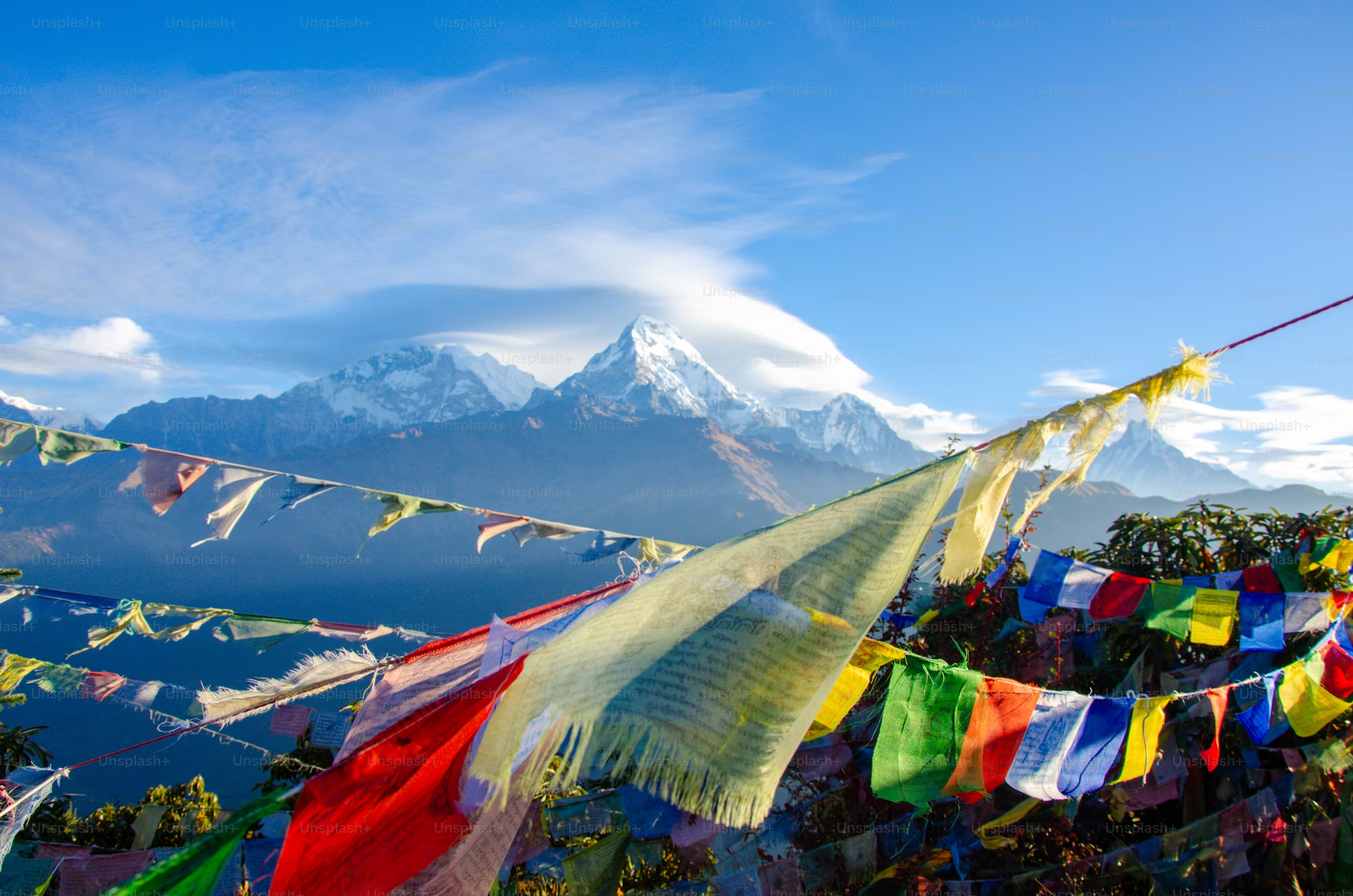
- December’s clear dawn skies make the signature Poon Hill sunrise – Dhaulagiri, Annapurna South, Machhapuchhre – even more reliable than in the hazier pre-monsoon months.
- Teahouses along this route stay fully open and heated through December, since it’s one of the most-trekked short routes in Nepal year-round.
- Because the whole trek stays under 3,300 m, you can comfortably do it with a mid-weight jacket rather than a full expedition-grade down suit.
Why This Trek, Specifically
- The single best sunrise mountain panorama you can reach on a short trek anywhere in Nepal, for the amount of walking required.
- Stone steps and rhododendron forest (bare in December, but the trail itself is gentle underfoot) through genuine Gurung and Magar villages.
- Short enough to combine easily with a longer trip, or to do as a standalone long weekend from Pokhara.
- Well-maintained stone staircases and clear trail markers make navigation simple even for a first solo trek.
Outline Itinerary
- Day 1: Drive from Pokhara to Nayapul, trek to Tikhedhunga or Ulleri
- Day 2: Ulleri to Ghorepani, via Banthanti – this is the main uphill stone-staircase day
- Day 3: Pre-dawn climb to Poon Hill for sunrise, then descend to Ghorepani and trek on to Tadapani
- Day 4: Tadapani to Ghandruk, a Gurung village with Annapurna views, or direct to Nayapul depending on itinerary
- Day 5: Trek to Nayapul, drive back to Pokhara
Who Should Do This Trek
- First-time trekkers and families with older kids
- Anyone short on time who still wants a genuine high-mountain sunrise payoff
- Trekkers who want a December trek with minimal cold-weather gear investment
Estimated Budget
Roughly USD 350-550 for a fully guided 4-5 day package including permits, guide, and accommodation.
View the full Ghorepani Poon Hill Trek itinerary and pricing →
2. Pikey Peak Trek
A lower-Solukhumbu viewpoint trek with one of the widest mountain panoramas in Nepal, and a fraction of the Everest Base Camp trail’s foot traffic.
Quick Facts
- Duration: 7-9 days
- Maximum Altitude: 4,065 m / 13,337 ft (Pikey Peak summit)
- Region: Lower Solukhumbu, Everest region
- Difficulty: Moderate
- Starting Point: Dhap or Jiri (drive from Kathmandu), ending around Phaplu
- Permits Required: Local area permit and TIMS card (no restricted-area permit needed)
Why December Works for This Trek
- At just over 4,000 m, Pikey Peak sits comfortably below the altitude where December snow becomes a serious trail-closing problem.
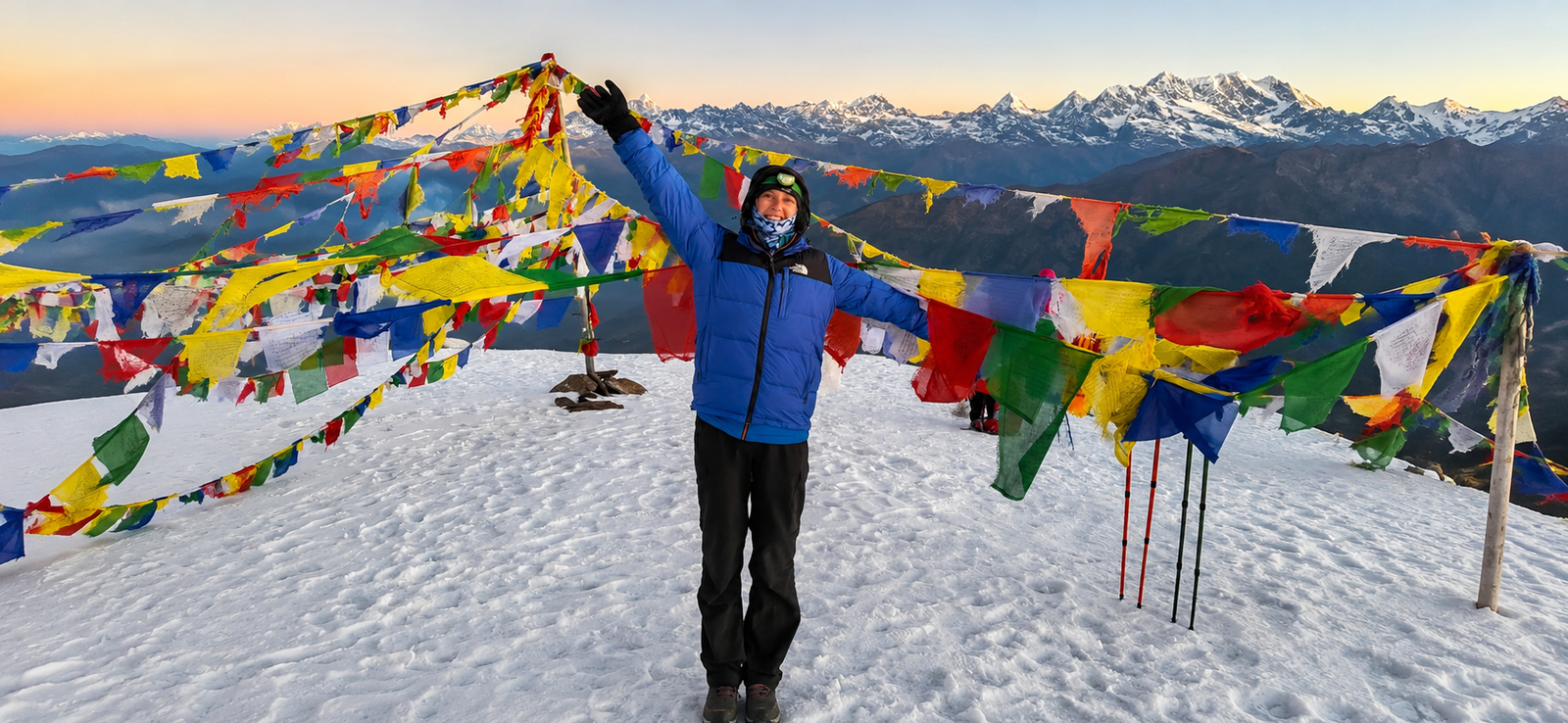
- December’s dry, haze-free air is exactly what makes the summit’s panoramic payoff – Everest, Lhotse, Makalu, and Kanchenjunga all visible in one sweep – worth the early, cold start.
- Because it’s a lower-Solukhumbu trek rather than a high Khumbu one, you avoid the Lukla flight delays that winter weather can cause for Everest-region flights.
- Village teahouses along this route operate year-round for local trade as well as trekkers, so December closures are not a concern.
- The lower starting altitude around Dhap means your first few acclimatization days are gentler than on most Khumbu routes, which matters when nights are already cold.
Why This Trek, Specifically
- One of the widest single-viewpoint mountain panoramas in Nepal, reached without the crowds or logistics of a Khumbu flight.
- Genuine Sherpa villages – Dhap, Jhapre, Junbesi – and the historic Thupten Choling Gompa, a working monastery founded by refugee monks from Tibet.
- A realistic, road-accessible alternative for trekkers who want Everest-region mountain views without the Everest Base Camp trail’s foot traffic or cost.
- Forest sections lower down stay sheltered from wind, making the early and later days of the trek noticeably more comfortable than the exposed summit morning.
Outline Itinerary
- Day 1: Drive from Kathmandu to Dhap Bazaar
- Day 2: Dhap to Jhapre, through rhododendron and pine forest
- Day 3: Jhapre to Pikey Base Camp
- Day 4: Pre-dawn climb to Pikey Peak summit for sunrise, descend to Junbesi
- Day 5: Junbesi, with a side visit to Thupten Choling Monastery
- Day 6: Junbesi to Ringmo or Phaplu
- Day 7: Phaplu, drive back to Kathmandu
Who Should Do This Trek
- Trekkers who want Everest-scale mountain views without flying into Lukla
- Repeat visitors to Nepal looking for a quieter, culturally rich route
- Photographers chasing a genuinely wide sunrise panorama
Estimated Budget
Roughly USD 600-900 for a fully guided 7-9 day package including ground transport, permits, guide, and accommodation.
View the full Pikey Peak Trek itinerary and pricing →
3. Khopra Danda Trek
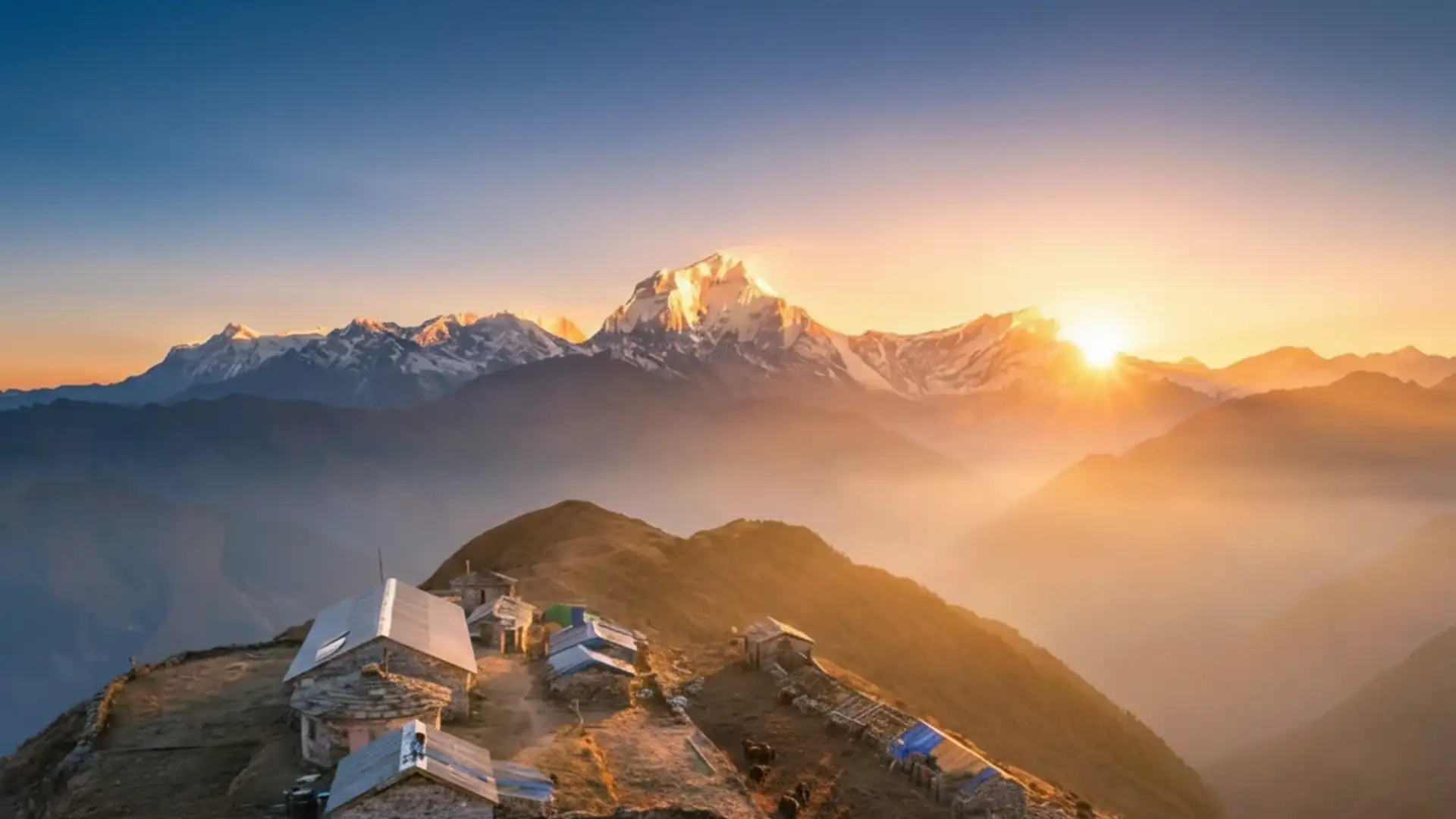
A ridge-top Annapurna trek that trades Poon Hill’s crowds for a quieter, community-run alternative with arguably better close-up views of Annapurna South.
Quick Facts
- Duration: 7-9 days
- Maximum Altitude: 3,660 m / 12,007 ft (Khopra Ridge); optional Khayer Lake side trip to around 4,600 m
- Region: Annapurna range, on the Myagdi-Kaski border, northeast of Pokhara
- Difficulty: Moderate
- Starting Point: Nayapul or Phedi (drive from Pokhara)
- Permits Required: ACAP and TIMS card; a licensed guide has been mandatory on this route since March 2023
Why December Works for This Trek
- The main ridge tops out at 3,660 m – cold at night in December, but nowhere near the altitude where winter conditions become genuinely dangerous.
- December’s dry air gives the open ridge-top sections their best possible visibility, with nothing blocking the Annapurna South and Dhaulagiri views.
- If you want a true high-altitude taste, the optional Khayer Lake side trip to ~4,600 m is there for experienced trekkers with the right gear – it’s an add-on, not a requirement.
- Community-run lodges along this route stay open through December specifically because they depend on steady winter trekking income.
- The route’s mix of forest and open ridge sections means you get sheltered walking on cold mornings and open views once the sun is up.
Why This Trek, Specifically
- Noticeably quieter than the neighboring Poon Hill trail, while sharing the same Annapurna foothills region.
- Lodges here are run as a community-tourism model, with proceeds supporting the local villages directly.
- The ridge walk itself – long, open, grassy, and mostly above the treeline – is one of the most scenic walking sections in the whole Annapurna region.
- Fewer lodge options than Poon Hill means your guide typically pre-books rooms, so you’re not competing for space during the busier winter weekends.
Outline Itinerary
- Day 1: Drive from Pokhara to Nayapul, trek to Tikhedhunga
- Day 2: Tikhedhunga to Ghorepani
- Day 3: Ghorepani to Bayeli Kharka, via the Poon Hill viewpoint
- Day 4: Bayeli Kharka to Khopra Ridge
- Day 5: Acclimatization day at Khopra, optional side trip toward Khayer Lake
- Day 6: Khopra Ridge down to Swanta village
- Day 7: Swanta to Ghandruk
- Day 8: Ghandruk to Nayapul, drive back to Pokhara
Who Should Do This Trek
- Trekkers who have already done Poon Hill and want a quieter, longer Annapurna foothills route
- Anyone who wants to directly support community-run tourism in Nepal
- Trekkers comfortable with 6-7 hours of daily walking on moderate terrain
Estimated Budget
Roughly USD 650-950 for a fully guided 7-9 day package including permits, guide, and accommodation.
View the full Khopra Danda Trek itinerary and pricing →
4. Mardi Himal Trek
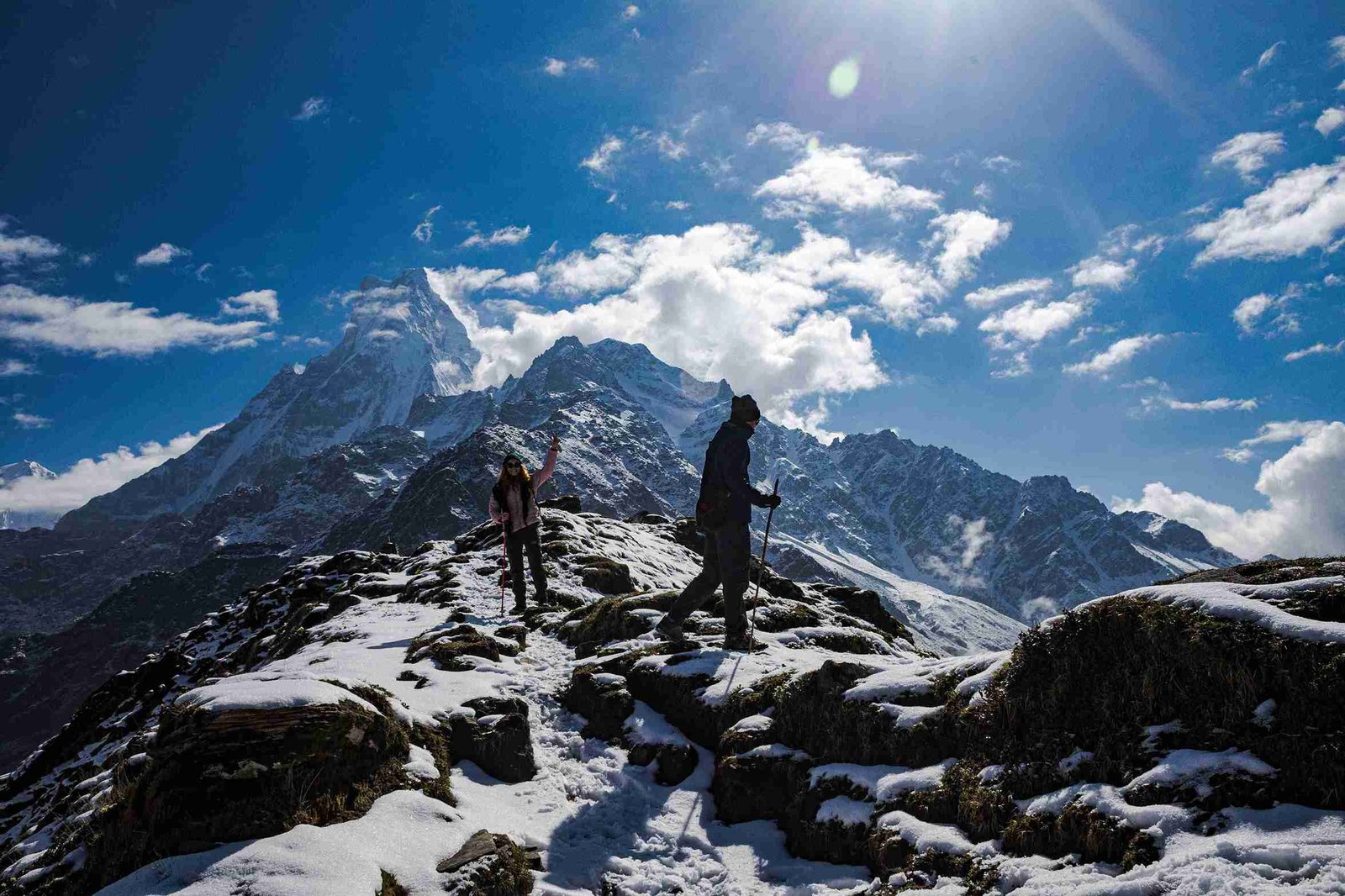
The closest thing to a secret trek left in the Annapurna region – short, increasingly popular, and genuinely dramatic in December’s snow-dusted conditions.
Quick Facts
- Duration: 5-7 days
- Maximum Altitude: Upper Viewpoint around 4,200 m / 13,780 ft; Base Camp around 4,500 m / 14,764 ft for those continuing on
- Region: Annapurna Conservation Area, near Pokhara
- Difficulty: Moderate
- Starting Point: Kande or Dhampus (short drive from Pokhara)
- Permits Required: ACAP (Annapurna Conservation Area Permit)
Why December Works for This Trek
- December typically brings a light snow dusting to the upper sections above High Camp – this is one of the few treks on this list where that snow adds to the experience rather than threatening it, since the route stays below 4,500 m throughout.
- Machhapuchhre (Fishtail), Annapurna South, and Hiunchuli sit extremely close to the trail here, and December’s clear air makes them look even closer.
- Because the final push to High Camp and the viewpoint is a dedicated out-and-back day, you can turn back early if a particular December morning brings unexpectedly heavy snow – the route doesn’t force you over an exposed pass.
- It’s short enough that you can time your summit push for the clearest-looking morning rather than being locked into a fixed schedule over many days at altitude.
- The forested lower sections offer good wind shelter on the colder mornings, while the open ridge near High Camp is reserved for when the views are at their best.
Why This Trek, Specifically
- Noticeably quieter than both Annapurna Base Camp and Poon Hill, despite sitting in the same general region.
- One of the closest base-camp-style mountain views achievable in under a week from Pokhara.
- Passes through genuine Gurung villages and small, family-run teahouses rather than large lodges.
- A realistic trek for travelers with limited vacation time who still want a true base-camp-style mountain payoff.
Outline Itinerary
- Day 1: Drive from Pokhara to Kande, trek to Pitam Deurali
- Day 2: Pitam Deurali to Low Camp, through rhododendron forest
- Day 3: Low Camp to High Camp (around 3,550-3,580 m)
- Day 4: Pre-dawn climb to the Upper Viewpoint (~4,200 m), descend back to Low Camp or Siding
- Day 5: Siding or Lwang village, drive back to Pokhara
Who Should Do This Trek
- Trekkers short on time who still want a genuine high-altitude viewpoint payoff
- Prepared beginners who have done at least one moderate hike before
- Anyone who wants to avoid the crowds of Annapurna Base Camp without sacrificing the mountain scale
Estimated Budget
Roughly USD 450-700 for a fully guided 5-7 day package including permits, guide, and accommodation.
View the full Mardi Himal Trek itinerary and pricing →
5. Langtang Valley Trek
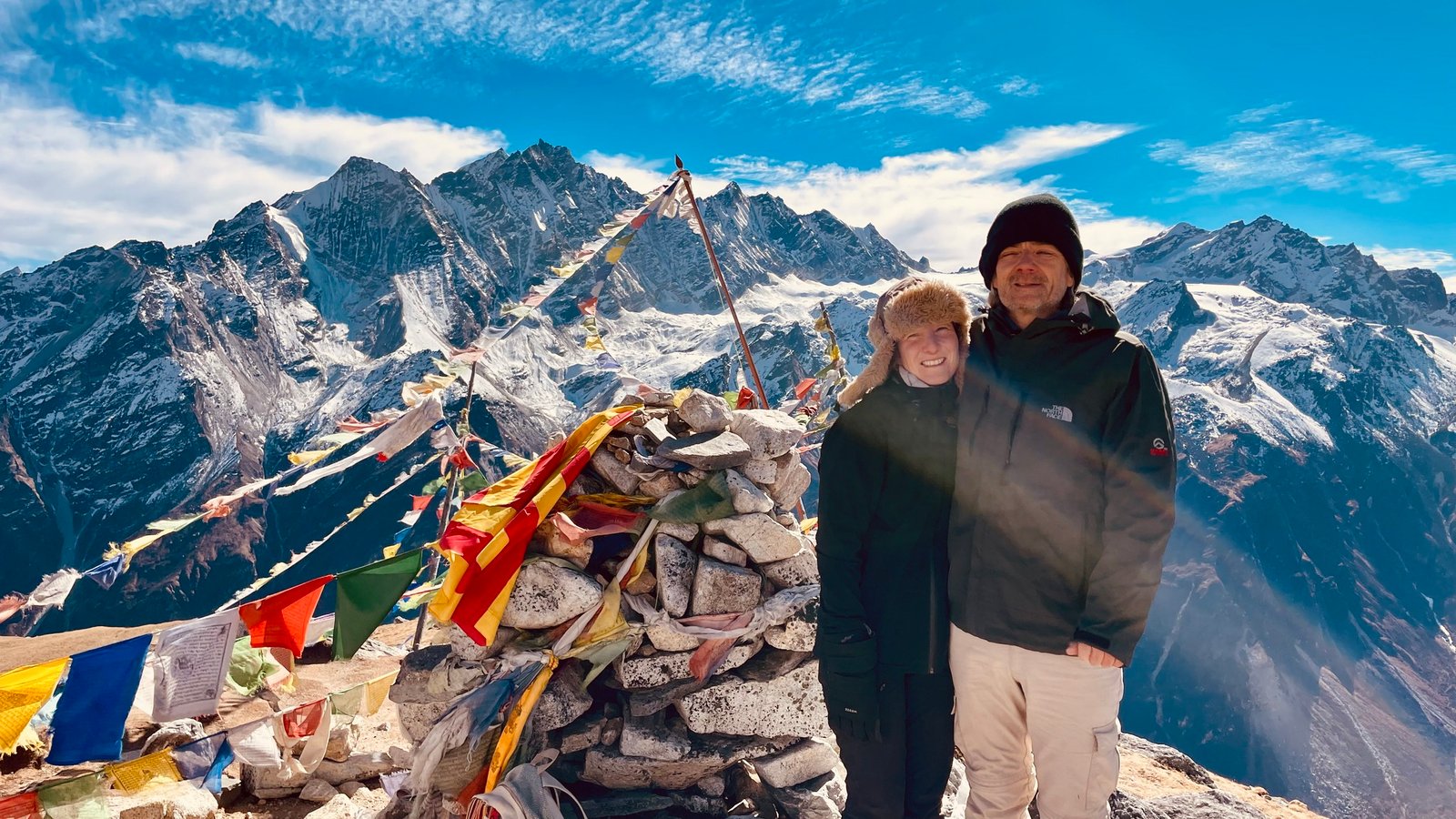
The closest major Himalayan valley trek to Kathmandu, and one that rewards a December visit with genuinely empty trails through a valley still rebuilding after the 2015 earthquake.
Quick Facts
- Duration: 7-10 days
- Maximum Altitude: 3,870 m / 12,696 ft (Kyanjin Gompa), with an optional Kyanjin Ri viewpoint climb to around 4,773 m
- Region: Langtang National Park, directly north of Kathmandu
- Difficulty: Moderate
- Starting Point: Syabrubesi (drive from Kathmandu)
- Permits Required: Langtang National Park entry permit and TIMS card
Why December Works for This Trek
- The main valley floor and Kyanjin Gompa sit under 3,900 m, keeping this comfortably within December’s manageable cold range rather than its genuinely dangerous one.
- Langtang is already one of the less-crowded major valley treks, and December drops visitor numbers further still – you can expect long stretches of trail with no one else on it.
- The valley’s glacier and peak views – Langtang Lirung chief among them – show up with far more clarity in December’s dry air than in the hazier autumn peak season.
- If you want one genuine high-altitude push, the optional Kyanjin Ri climb (~4,773 m) is a single acclimatized day hike from Kyanjin Gompa, not a mandatory pass crossing.
- Because the valley floor itself gains altitude gradually over several days, December’s cold has time to feel normal rather than sudden, unlike routes that climb fast to a single high point.
Why This Trek, Specifically
- The fastest way to reach genuine high-Himalayan scenery from Kathmandu – no domestic flight required.
- A chance to see firsthand how Langtang village has rebuilt since the 2015 earthquake, and to put your trekking spend directly into that recovery.
- A working yak cheese factory at Kyanjin Gompa, and strong Tamang cultural influence throughout the valley.
- Close enough to Kathmandu that a delayed start or an early finish barely affects your overall trip schedule.
Outline Itinerary
- Day 1: Drive from Kathmandu to Syabrubesi
- Day 2: Syabrubesi to Lama Hotel
- Day 3: Lama Hotel to Langtang Village
- Day 4: Langtang Village to Kyanjin Gompa
- Day 5: Acclimatization day at Kyanjin Gompa – optional climb to Kyanjin Ri or Tserko Ri viewpoint
- Day 6: Kyanjin Gompa back down to Lama Hotel
- Day 7: Lama Hotel to Syabrubesi, drive back to Kathmandu
Who Should Do This Trek
- Trekkers who want genuine high-Himalayan scenery without flying anywhere
- Anyone who wants a quieter alternative to the Everest and Annapurna regions in December
- Trekkers interested in Tamang culture and post-earthquake community recovery
Estimated Budget
Roughly USD 700-1,100 for a fully guided 7-10 day package including permits, guide, and accommodation.
View the full Langtang Valley Trek itinerary and pricing →
6. Helambu Trek
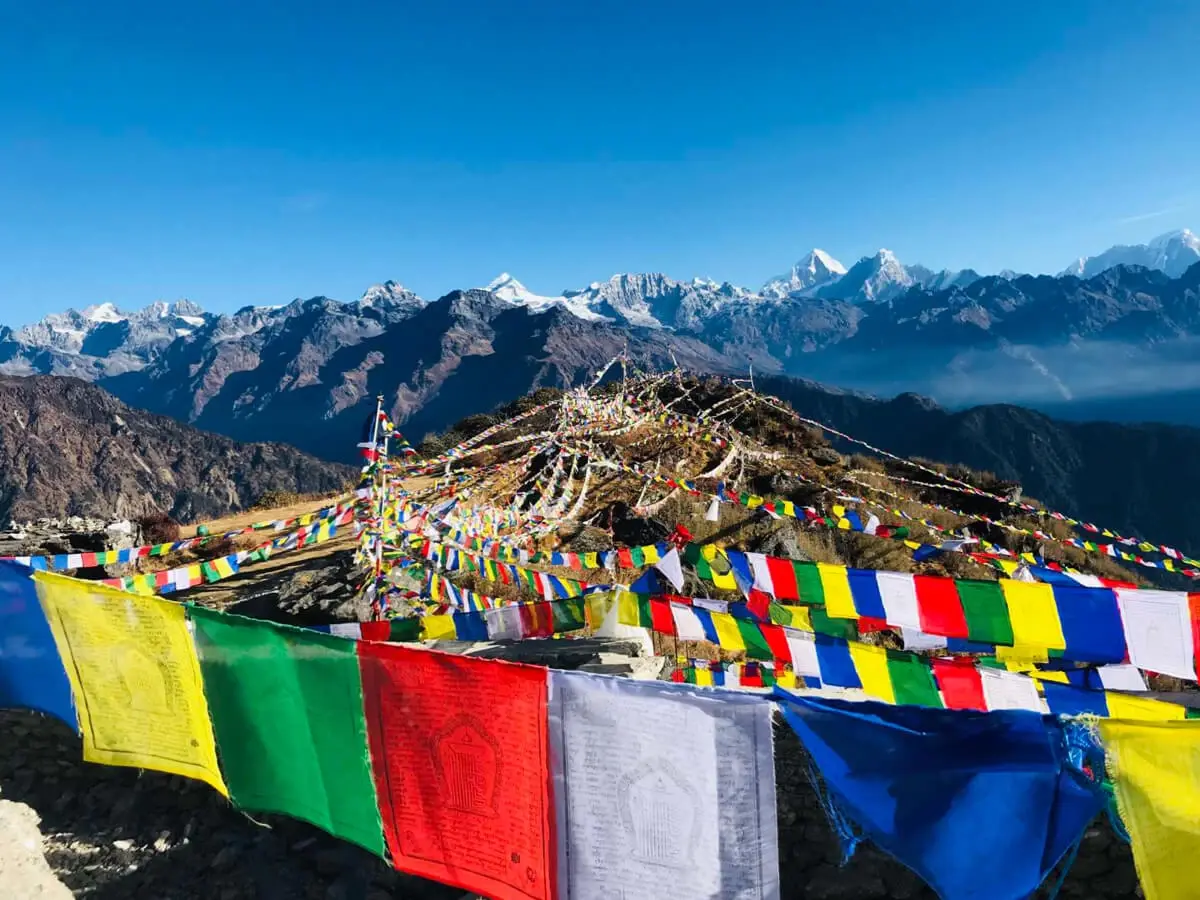
The lowest-altitude trek on this list, and arguably the easiest route to justify in December if cold weather is your main concern.
Quick Facts
- Duration: 6-7 days on the trail (some itineraries run to 9-10 days with Kathmandu buffer days)
- Maximum Altitude: 3,690 m / 12,106 ft (Tharepati Pass)
- Region: Helambu, directly north of Kathmandu, starting inside Shivapuri Nagarjun National Park
- Difficulty: Moderate
- Starting Point: Sundarijal, about an hour’s drive from Kathmandu
- Permits Required: Shivapuri Nagarjun National Park entry permit, plus a local trekking permit for the Helambu area; a licensed guide has been mandatory since April 2023
Why December Works for This Trek
- At under 3,700 m, this is the second-lowest-altitude trek on this entire list – the cold-weather gear requirement is noticeably lighter than anything else here.
- Its single highest point, Tharepati Pass, is a day hike over a ridge rather than a committing high pass – a light December snowfall there is rarely trip-ending.
- December’s clear air gives genuinely good views from the Ama Yangri viewpoint (3,771 m) near Tarke Gyang, without the haze that can build up in busier seasons.
- Because it starts an hour from Kathmandu with no flight required, a bad weather day anywhere else in Nepal doesn’t put this itinerary at risk.
- Lower daily altitude gain than any other trek on this list means less strain on your body in cold morning air, which matters more than people expect in December.
Why This Trek, Specifically
- The most accessible genuine multi-day Himalayan trek from Kathmandu – no long drive, no domestic flight.
- A strong, authentic Sherpa and Hyolmo cultural experience, distinct from the more Tibetan-influenced culture further north in Langtang.
- Genuinely “tourism-light” villages, since Helambu sees a fraction of the visitor numbers that Everest and Annapurna draw.
- A realistic trek for anyone recovering from illness or injury who still wants a proper multi-day Himalayan trek without the altitude risk of a higher route.
Outline Itinerary
- Day 1: Drive to Sundarijal, trek into Shivapuri Nagarjun National Park to Chisapani (2,215 m)
- Day 2: Chisapani to Kutumsang (2,470 m)
- Day 3: Kutumsang to Tharepati (3,690 m) – the trek’s hardest climbing day
- Day 4: Tharepati down to Tarke Gyang (2,600 m), with an optional side hike to the Ama Yangri viewpoint
- Day 5: Tarke Gyang to Sermathang (2,590 m)
- Day 6: Sermathang down to Melamchi Bazaar
- Day 7: Drive back to Kathmandu
Who Should Do This Trek
- Trekkers who want a genuine multi-day Himalayan trek with the lightest possible gear and altitude commitment
- Anyone short on total trip time who still wants real villages and real mountain views, not just a short day hike
- First-timers to Nepal who want a gentler introduction before attempting a higher route another season
Estimated Budget
Roughly USD 500-750 for a fully guided 6-7 day package including permits, guide, and accommodation.
View the full Helambu Trek itinerary and pricing → – or read our complete Helambu Trek guide for a deeper route breakdown.
Quick Comparison: Which December Trek Fits You?
| Trek | Duration | Max Altitude | Difficulty | Best For |
|---|---|---|---|---|
| Ghorepani Poon Hill | 4-5 days | 3,210 m | Easy-Moderate | First-timers, short trips, families |
| Pikey Peak | 7-9 days | 4,065 m | Moderate | Wide Everest-region panoramas without Lukla |
| Khopra Danda | 7-9 days | 3,660 m (4,600 m optional) | Moderate | Quieter alternative to Poon Hill |
| Mardi Himal | 5-7 days | 4,200-4,500 m | Moderate | Short, dramatic, close-up mountain views |
| Langtang Valley | 7-10 days | 3,870 m (4,773 m optional) | Moderate | Nearest major valley trek to Kathmandu |
| Helambu | 6-7 days | 3,690 m | Moderate | Lightest gear/altitude commitment, closest start to Kathmandu |
What to Pack for December Trekking in Nepal
All six of these routes are achievable in standard good-quality trekking gear, but December specifically changes what matters most:
- A down jacket rated for at least -15°C – non-negotiable for any night above 3,000 m in December.
- A four-season sleeping bag or a liner added to a three-season bag – teahouse rooms are not heated overnight.
- Thermal base layers, top and bottom, plus a mid-layer fleece and a wind/waterproof outer shell.
- Insulated, waterproof trekking boots, broken in well before you arrive – frozen puddles and icy patches are common on shaded trail sections.
- Trekking poles – genuinely more useful in December’s icy or frost-hardened sections than in other seasons.
- A warm hat, insulated gloves, and a buff or neck gaiter for exposed ridge and viewpoint sections.
- UV-rated sunglasses and strong sunscreen – snow glare at altitude is a real and often underestimated risk.
- A good headlamp with spare batteries – December’s shorter daylight hours mean more pre-dawn starts and earlier dusk arrivals at lodges.
- A power bank – cold weather drains phone and camera batteries noticeably faster.
- Water purification tablets or a filter – some exposed taps and pipes can freeze overnight at higher villages.
Permits You’ll Need Across These Routes
Permit requirements vary by region, and all of them are arranged through your trekking agency before you set out:
- ACAP (Annapurna Conservation Area Permit): required for Ghorepani Poon Hill, Khopra Danda, and Mardi Himal, issued under the National Trust for Nature Conservation.
- Langtang National Park entry permit: required for the Langtang Valley Trek, issued under Nepal’s Department of National Parks and Wildlife Conservation.
- Shivapuri Nagarjun National Park permit and a local Helambu-area trekking permit: required for the Helambu Trek.
- A local area permit: required for the Pikey Peak Trek (no restricted-area permit needed).
- TIMS card: required on most of these routes, and arranged for you as part of any guided package through the Nepal Tourism Board‘s system.
- A licensed guide: mandatory on all of these routes under current Nepal trekking regulations.
How to Choose Between These Six Treks
If you’re still deciding, work from what actually matters to you rather than from a generic ranking:
- If you have 4-5 days total: choose Ghorepani Poon Hill or Mardi Himal – both deliver a genuine mountain payoff on a short timeline.
- If you want the single widest mountain panorama: choose Pikey Peak – its 360-degree summit view takes in four separate 8,000 m-class peaks.
- If you’ve already done Poon Hill or ABC and want something quieter: choose Khopra Danda – same general region, far fewer people on the trail.
- If you want the coldest-weather-tolerant, most dramatic snow scenery: choose Mardi Himal – a light December dusting here genuinely improves the experience rather than threatening it.
- If you don’t want to fly anywhere and want real high-Himalayan scale: choose Langtang Valley – the closest major valley trek to Kathmandu by road.
- If you want the absolute lightest gear list and gentlest altitude profile: choose Helambu – the easiest route on this list to justify for a December first-timer.
- If budget is the deciding factor: Ghorepani Poon Hill is the least expensive of the six; Langtang Valley, at 7-10 days, typically costs the most.
- If you’re traveling with children or older family members: Ghorepani Poon Hill and Helambu are the two routes with the gentlest daily altitude gain.
Common December Trekking Mistakes to Avoid
- Packing an autumn-weight sleeping bag. A three-season bag that was fine in October will not keep you warm at 3,500 m-plus in December – bring a proper four-season bag or a good liner.
- Underestimating how early it gets dark. December days are noticeably shorter than peak-season autumn days; plan to reach each day’s lodge well before dusk, not after.
- Skipping sunglasses because “it’s not snowing.” Reflected glare off frost and old snow patches causes real eye strain and even snow blindness, even on a clear, dry day.
- Assuming every teahouse has reliable heating. Most common rooms have a central stove lit in the evening, but bedrooms are typically unheated – this is exactly why your sleeping bag rating matters more than the teahouse’s.
- Choosing a high-pass route “because it’s shorter.” A route like Thorong La or the Everest Three Passes can save you a few days on paper, but December snow risk can just as easily cost you several extra days waiting it out – or force a costly reroute.
- Not budgeting extra time for weather contingency. Even on these six lower-altitude routes, build in one spare day before your international flight home in case of a delayed start.
- Traveling without proper travel insurance that covers high-altitude trekking. Confirm your policy explicitly covers trekking at your planned maximum altitude, not just general travel.
Why Book a December Trek With a Local, TAAN-Registered Company
December trekking adds a few extra variables – route selection, cold-weather gear, shorter daylight windows – that a properly registered local operator is set up to manage:
- Local, current knowledge of trail conditions. A Nepal-based agency with guides actively running these routes knows within days whether a particular pass or ridge has had fresh snowfall – information that rarely makes it into generic blog posts.
- Properly equipped guides and porters. A TAAN-registered trekking company is expected to outfit its staff for the conditions it sends them into, which matters more in December than in any other season.
- Flexible rerouting if conditions change. If a specific section looks unsafe after fresh snow, a local operator with on-the-ground contacts can adjust your itinerary in real time rather than leaving you to figure it out at altitude.
- Accurate, trek-specific permit handling. Each of these six routes has a different permit combination – ACAP, national park entry, local-area permits, TIMS – and getting this wrong can cost you a day at a checkpoint.
- Honest route matching. A good local operator will tell you if your preferred trek genuinely doesn’t suit December conditions this particular year, rather than booking you onto it regardless.
A Few More December-Specific Questions
Is December cheaper than October-November for these treks?
Generally yes. Lower demand in December means more flexible teahouse availability and, on some routes, better rates from guides and porters who have more open dates. The savings are modest rather than dramatic, but they are real.
Will I get snowed in on any of these six routes?
It’s unlikely but not impossible. A heavy, unseasonal snowfall can delay a single day’s walking on any of these routes, which is exactly why building one spare day into your itinerary, as mentioned above, is worth doing regardless of which trek you choose.
Do these treks get fully booked in December?
No – December is one of the quieter months on all six routes. You generally have far more flexibility on start dates than you would in peak October-November season.
What’s the single biggest factor in choosing a December trek over a trek in any other month?
Altitude and pass exposure, more than anything else. The six routes here were chosen specifically because none of them forces you over a high, exposed pass that regularly closes or turns dangerous in winter conditions – that single factor matters more in December than trail length, crowd levels, or even difficulty rating.
Frequently Asked Questions
Is it safe to trek in Nepal in December?
Yes, on routes chosen with December in mind. All six treks on this list stay below 4,600 m and avoid any high passes that regularly close in winter snow. The real risk in December is picking a route that doesn’t suit the season – a high pass like Thorong La or the Everest Three Passes is a very different proposition in December than any of these six.
Which of these treks is easiest for a first-timer in December?
Ghorepani Poon Hill and Helambu are the two gentlest options here, both in terms of altitude and daily walking demands. Poon Hill gives you the bigger single-view payoff in less time; Helambu gives you a slightly longer, lower-altitude cultural route starting closer to Kathmandu.
Why isn’t Everest Base Camp or Annapurna Circuit on this list?
Both are still doable in December by well-prepared, experienced trekkers, but neither is a straightforward “best for December” recommendation. Annapurna Circuit crosses Thorong La at 5,416 m, which carries real closure risk after fresh snow. Everest Base Camp stays open, but nights at Gorak Shep regularly drop well below -15°C, and Lukla flights see more weather delays in winter. Both demand significantly more cold-weather gear and experience than the six routes covered here.
Do I need crampons or microspikes for any of these treks in December?
Not typically. Microspikes can be useful on icy, shaded trail sections after a cold snap, particularly on Mardi Himal above High Camp or on Khopra’s exposed ridge, but none of these six routes require technical snow or ice equipment under normal December conditions.
How cold does it actually get at night in December on these routes?
At lower altitudes (under 2,500 m) expect roughly 2-5°C overnight. In the mid-hills (2,500-3,200 m, where Poon Hill, Khopra’s lower stretches, and most of Helambu sit) expect roughly -5 to -10°C. At the higher points on these routes (Mardi Himal’s High Camp and viewpoint, Langtang’s Kyanjin Gompa, Pikey Peak’s summit) expect -10 to -15°C or colder right before dawn.
Can I book any of these treks as a solo trekker?
Yes. Under current Nepal regulations a licensed guide is mandatory on all of these routes regardless of group size, so a solo trekker is never walking without a guide – you simply book as an individual rather than joining a fixed group departure.
December rewards trekkers who pick the right route for the season rather than forcing a high-altitude bucket-list trek into the coldest months of the year. Any of these six – Ghorepani Poon Hill, Pikey Peak, Khopra Danda, Mardi Himal, Langtang Valley, or Helambu – will give you clear Himalayan views, thinner crowds, and a genuinely manageable cold-weather trek. If you want help deciding between them based on your fitness, time, and budget, get in touch with us directly – we run all six of these as guided packages.