Introduction
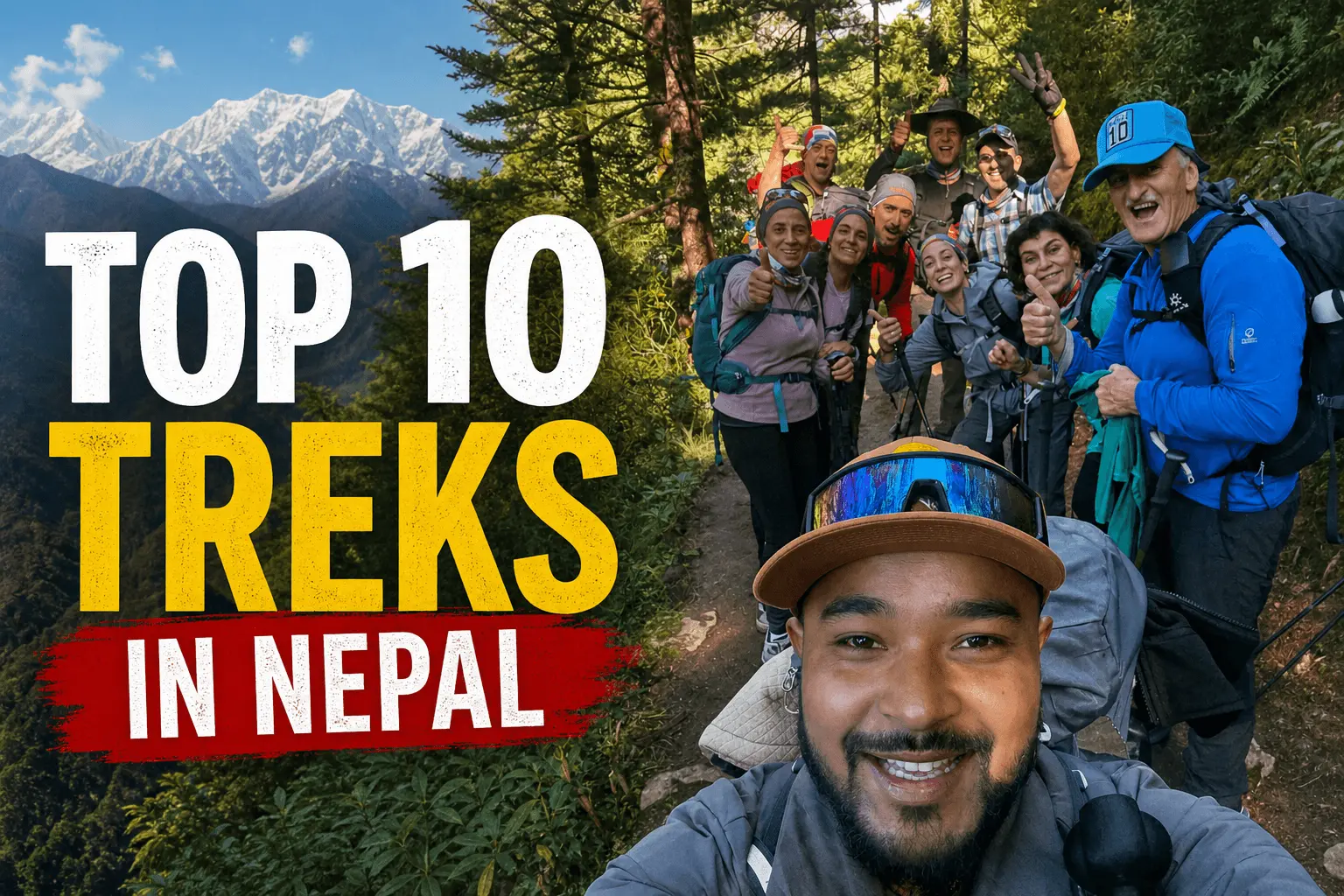
There’s a reason Nepal is the world’s best trekking destination. You walk for days through Sherpa villages, past spinning prayer wheels and monasteries clinging to cliff edges, until you’re standing at the foot of the highest mountains on earth. It’s not just a trek – it’s a journey that reshapes you.
Whether you’re dreaming of the iconic Everest Base Camp, the wild and remote Manaslu Circuit, or the cultural immersion of Upper Mustang, Nepal offers treks for every level of adventurer. From 4-day introductions to 3-week expeditions, from comfortable teahouses to remote wilderness camping, there’s a perfect Himalayan trail waiting for you.
In this comprehensive guide, we’ll walk you through the top 10 treks in Nepal, share insider tips from our local guides at Next Trip Nepal, break down the costs and permits, and help you choose the trek that matches your fitness, time, and dreams. Let’s get started.
1. Everest Base Camp Trek
There’s a reason Everest Base Camp is the most famous trek on earth. You walk for nearly two weeks through Sherpa heartland – past spinning prayer wheels, monasteries clinging to cliff edges, and yak trains kicking up dust on stone paths – until you’re standing at the foot of the highest mountain on the planet. It is, quite simply, the trek of a lifetime.
Key Details
- Duration: 12-14 days
- Difficulty: Challenging
- Maximum Altitude: 5,545 m / 18,193 ft (Kala Patthar viewpoint)
- Best Season: March-May, September-November
- Permit Cost: Approximately USD 50 (Sagarmatha National Park USD 30 + Khumbu local fee USD 20)
- Starting Point: Lukla (after a thrilling 35-min flight from Kathmandu or Ramechhap)
Why This Trek is Special
What makes Everest Base Camp so special isn’t just the headline view of Everest. It’s the daily drumbeat of Sherpa culture – chanting monks at Tengboche, butter lamps glowing inside Pangboche, the way Namche Bazaar feels like an alpine bazaar from another century. And the moment you crest Kala Patthar at sunrise and see Everest, Lhotse and Nuptse light up in front of you? You’ll forget every cold morning that got you there.
Day-by-Day Highlights
After landing in Lukla you trek to Phakding, then climb to lively Namche Bazaar (3,440 m) for an essential acclimatisation day. From there it’s a steady push through Tengboche, Dingboche and Lobuche, with rest days built in to help your body adjust. The big day takes you to Gorak Shep, then onward to Everest Base Camp itself, with a sunrise climb up Kala Patthar the following morning.
What to Expect
Expect comfortable teahouses with hot dal bhat, warm dining rooms heated by yak-dung stoves, and trails that range from rocky moraine to snow-dusted ridges. The terrain isn’t technical, but altitude and long daily distances are no joke.
Who Should Do This Trek
Best suited to trekkers with solid cardio fitness, the patience to acclimatise properly, and at least a couple of multi-day hikes already on their resume. Beginners can absolutely do it – many do – but you’ll want to train.
Estimated Budget
Around USD 1,400 to 2,500 for a fully guided 12-14 day package, depending on group size and season.
Pro Tip: Book the early-morning Lukla flight, sleep low at Pheriche on your acclimatisation day, and carry a foam pad to sit on at Base Camp – those rocks are cold.
View Detailed Everest Base Camp Trek Itinerary & Pricing →
Explore the Beauty of Nepal with Us!
Make Inquiry Now2. Annapurna Circuit Trek
The Annapurna Circuit is the original Himalayan loop – and despite road construction nibbling at its edges, it’s still one of the most varied and spectacular treks in Nepal. You start in subtropical lowlands, climb through pine and rhododendron, and finish in the high desert of Mustang, all in one continuous journey.
Key Details
- Duration: 12-18 days (depending on side trips)
- Difficulty: Moderate to Challenging
- Maximum Altitude: 5,416 m / 17,769 ft (Thorong La Pass)
- Best Season: March-May, September-November
- Permit Cost: ACAP USD 25
- Starting Point: Besisahar / Jagat / Chame (depending on how far you drive in)
Why This Trek is Special
Few treks pack as much variety into a single route. You’ll cross five climate zones, see Annapurna II, III, IV, Gangapurna, Manaslu and Dhaulagiri at different angles, and stand on Thorong La – one of the highest mountain passes you can cross on foot anywhere in the world. Add the holy temple at Muktinath and the apple orchards of Marpha, and you’ve got a true classic.
Day-by-Day Highlights
From Jagat or Chame the trail climbs gently through Manang, where most trekkers spend an extra day to acclimatise (and to watch chough birds wheel above the valley). The big day is the pre-dawn push from Thorong Phedi over Thorong La to Muktinath. After that, descend through Kagbeni to Jomsom and either fly out or trek further toward Tatopani and the famous Poon Hill viewpoint.
What to Expect
Expect well-maintained teahouse trekking, gradually changing landscapes, and the unique experience of dropping into an entirely different culture – Buddhist, Tibetan-influenced, dry and windswept – once you’re north of the pass.
Who Should Do This Trek
A great pick for moderately fit trekkers who want variety. You don’t need previous high-altitude experience, but consistent training (think long weekend hikes for two months) makes a huge difference.
Estimated Budget
Roughly USD 1,100-1,800 for a guided 14-day itinerary, including permits, accommodation, meals, and a Pokhara stay.
Pro Tip: Take the side trip to Tilicho Lake (4,919 m) if you’ve got two extra days – it’s one of the most jaw-dropping detours in the Himalayas.
Explore Annapurna Circuit Trek Details →
3. Manaslu Circuit Trek
If we had to recommend just one trek, this would be it. The Manaslu Circuit Trek is what the Annapurna Circuit was thirty years ago – wild, raw, deeply cultural, and gloriously crowd-free. It loops around the world’s eighth-highest mountain (Manaslu, 8,163 m) and feels like the Himalayas you see in old documentaries.
Key Details
- Duration: 13-16 days
- Difficulty: Moderate to Challenging
- Maximum Altitude: 5,160 m / 16,929 ft (Larkya La Pass)
- Best Season: March-May, September-November
- Permit Cost: Restricted Area Permit USD 100 (Sept-Nov) / USD 75 (Dec-Aug) + MCAP USD 30 + ACAP USD 25
- Starting Point: Soti Khola or Machha Khola (drive from Kathmandu)
Why This Trek is Special
Because Manaslu is a restricted area, you’ll trek with a licensed guide and at least one other trekker – which keeps numbers low and the experience genuine. You’ll wind through Tibetan-influenced villages like Samagaun and Samdo, sip butter tea in low-roofed homes, and cross Larkya La with the entire Himalayan skyline laid out around you. It’s the trek our team at Next Trip Nepal is most passionate about – and we’d love to share it with you.
Day-by-Day Highlights
From Soti Khola the trail follows the Budhi Gandaki river upward through humid forest, crosses dozens of swaying suspension bridges, and slowly climbs into yak country. Acclimatisation days at Samagaun (3,530 m) include side trips to Manaslu Base Camp or the sacred Birendra Lake. The crux is the long pre-dawn ascent of Larkya La, followed by a knee-busting descent to Bimthang. You finish in the Marsyangdi valley, joining the lower Annapurna route at Dharapani.
What to Expect
Expect basic but warm teahouses, simple food, friendly hosts, and absolutely zero phone signal in some sections. The terrain is steeper than the Annapurna Circuit and the Larkya La crossing is a serious day. But the silence, the stars, and the views – they more than pay you back.
Who Should Do This Trek
Best for trekkers with prior multi-day hiking experience, strong knees, and a sense of adventure. If you’ve already done EBC or the Annapurna Circuit and want something less commercial, Manaslu is your trek.
Estimated Budget
Typically USD 1,500-2,200 for a 14-day guided package, including all permits and porters.
Pro Tip: Don’t skip the day hike to Pungyen Gompa from Samagaun – it’s one of the most peaceful spots in all of Nepal, with Manaslu rising right behind you.
Book Your Manaslu Circuit Trek →
4. Langtang Valley Trek
Just a few hours’ drive north of Kathmandu, the Langtang Valley feels worlds away. It’s short, scenic, deeply meaningful (the valley was hit hard by the 2015 earthquake and has been beautifully rebuilt by the Tamang community), and ideal for trekkers who don’t have weeks to spare.
Key Details
- Duration: 7-10 days
- Difficulty: Moderate
- Maximum Altitude: 4,984 m / 16,352 ft (Tserko Ri viewpoint)
- Best Season: March-May, September-December
- Permit Cost: Langtang National Park USD 30 + TIMS USD 20
- Starting Point: Syabrubesi (7-8 hour drive from Kathmandu)
Why This Trek is Special
Langtang gives you serious Himalayan drama in less than half the time of EBC. You walk through ancient forests where red pandas hide, past glacial moraines, and into a valley ringed by Langtang Lirung (7,234 m), Dorje Lakpa, and Yala Peak. Visiting also directly supports the rebuilding of Tamang villages – every cup of milk tea you buy matters.
Day-by-Day Highlights
From Syabrubesi the trail climbs through Lama Hotel into the upper valley, past Ghoda Tabela, and into Langtang Village – rebuilt with care after 2015. A day at Kyanjin Gompa lets you climb either Kyanjin Ri (4,773 m) or the more demanding Tserko Ri for sunrise panoramas of the Langtang Himal.
What to Expect
Friendly Tamang teahouses, fresh yak cheese from the Kyanjin cheese factory, and a peaceful trail that sees a fraction of the traffic of Annapurna or Everest.
Who Should Do This Trek
Perfect for first-time Himalayan trekkers, families with teens, or anyone with limited holiday time. Reasonable fitness is enough – no special experience required.
Estimated Budget
Around USD 700-1,200 for a fully guided 8-day trip including transport.
Pro Tip: Combine Langtang with Gosaikunda Lakes for a stunning two-week loop that ends in Dhunche or Sundarijal.
View Langtang Valley Trek Package →
Explore the Beauty of Nepal with Us!
Make Inquiry Now5. Annapurna Base Camp Trek
If you only have 7 to 10 days but want to walk into the heart of a Himalayan amphitheatre, the Annapurna Base Camp Trek is hard to beat. The final approach is one of the most dramatic in the world – a glacial bowl ringed by peaks that tower three vertical kilometres above you.
Key Details
- Duration: 7-12 days
- Difficulty: Moderate
- Maximum Altitude: 4,130 m / 13,549 ft (Annapurna Base Camp)
- Best Season: March-May, September-November
- Permit Cost: ACAP USD 25
- Starting Point: Pokhara to Nayapul or Phedi
Why This Trek is Special
The Annapurna Sanctuary is a geological miracle – a near-perfect circle of summits including Annapurna I, Annapurna South, Hiunchuli, Machapuchare and Gangapurna. Standing in the middle of it at sunrise, with prayer flags fluttering and ice cliffs glowing pink, is one of those moments that lives in you forever.
Day-by-Day Highlights
The trail climbs through Ghandruk’s slate-roofed Gurung houses, Chhomrong’s stone steps, and the narrow Modi Khola gorge. After two days of bamboo and rhododendron forest you emerge at MBC and then ABC, where the world opens up around you. Many trekkers add a soak in the Jhinu Danda hot springs on the way down – your legs will thank you.
What to Expect
Excellent teahouses with hot showers (lower down), warm Gurung hospitality, varied terrain that changes daily, and surprisingly steep stone staircases. Avalanche risk is real in winter and early spring; check current conditions with a local agency like Next Trip Nepal.
Who Should Do This Trek
Suits moderately fit trekkers, including beginners with some hiking background. It’s also one of the most family-friendly Himalayan treks for older teenagers.
Estimated Budget
USD 800-1,400 for a guided 9-10 day package out of Pokhara.
Pro Tip: Start very early on the day from Deurali to MBC if there’s been recent snow – the avalanche zones are safer in the cool morning hours.
Book Annapurna Base Camp Trek →
6. Upper Mustang Trek
Upper Mustang is Nepal’s last forbidden kingdom. Tucked behind the Annapurna massif in the rain-shadow, it’s a high desert of red cliffs, sky caves, and walled medieval towns that feel more Tibetan than Nepalese. If you want a trek that feels like time travel, this is it.
Key Details
- Duration: 10-14 days
- Difficulty: Moderate
- Maximum Altitude: 3,810 m / 12,500 ft (Lo Manthang)
- Best Season: May-October (one of the few treks excellent in monsoon)
- Permit Cost: Restricted Area Permit USD 500 for first 10 days + USD 50/day after + ACAP USD 25
- Starting Point: Jomsom (flight from Pokhara)
Why This Trek is Special
Lo Manthang, the walled capital of the old Lo Kingdom, is straight out of a fairy tale – whitewashed monasteries, painted cave murals over 600 years old, and a king who still lives in his palace. The trek itself is moderate in altitude but spectacular in landscape.
Day-by-Day Highlights
From Jomsom you walk through Kagbeni, Chele and Syangboche, climbing through wind-sculpted canyons until you reach Lo Manthang. Two days exploring Lo Manthang’s gompas, Chhoser cave temples, and surrounding villages are a must. The return loop via Ghami and Drakmar offers different scenery and ancient sky caves.
What to Expect
Dry, dusty trails, intense sun, strong afternoon winds, basic but cosy teahouses, and a culture that feels closer to Tibet than to Kathmandu. Because of the rain shadow, this is one of the few Nepal treks you can do in the monsoon months of June, July and August.
Who Should Do This Trek
Great for trekkers who care about culture as much as scenery, photographers, and anyone who wants to escape the crowds. Altitude is moderate, so it suits most fit travellers.
Estimated Budget
USD 2,200-3,500 – the high cost is largely the restricted area permit. It’s worth every dollar.
Pro Tip: Time your visit to coincide with the Tiji Festival (usually May), when monks perform three days of masked dances in Lo Manthang’s main square.
7. Kanchenjunga Base Camp Trek
Kanchenjunga, the world’s third-highest mountain, sits in Nepal’s far east – and the trek to its base camp is one of the most remote, demanding and rewarding in the entire country. You’ll see almost no other trekkers for weeks.
Key Details
- Duration: 22-26 days
- Difficulty: Strenuous
- Maximum Altitude: 5,143 m / 16,873 ft (Pangpema – Kanchenjunga North Base Camp)
- Best Season: March-May, September-November
- Permit Cost: Restricted Area Permit USD 20/week + KCAP USD 20
- Starting Point: Suketar (fly from Kathmandu via Bhadrapur to Taplejung)
Why This Trek is Special
This is full-on expedition trekking. You walk through Limbu and Sherpa villages no road has ever reached, climb past Yalung Glacier on the south side or Pangpema on the north, and stand at the foot of a mountain so vast it has five summits. The Kanchenjunga Conservation Area is also a stronghold of red panda and snow leopard.
Day-by-Day Highlights
The classic itinerary covers both the south base camp at Oktang (with views of the giant south face) and the north base camp at Pangpema. Highlights include the dramatic Mirgin La Pass connecting the two valleys, monasteries at Ghunsa, and the slow build of altitude that makes acclimatisation manageable.
What to Expect
Expect long days (6-8 hours of walking is normal), basic teahouses, simple meals (rice, dal, noodles), and stretches with no mobile signal at all. Bring a serious mindset and good company.
Who Should Do This Trek
Only for experienced trekkers with prior high-altitude experience. Kanchenjunga rewards those who can handle three weeks of consistent effort and rough conditions.
Estimated Budget
USD 2,800-4,000 for a fully supported expedition with porters and a cook.
Pro Tip: Travel as a small group of 2-4 to keep costs manageable while still satisfying the restricted area requirements.
8. Makalu Base Camp Trek
Makalu is the world’s fifth-highest mountain (8,485 m) and one of its most beautiful – a near-perfect four-sided pyramid. The trek to its base camp is wild, solitary, and stunning, taking you through pristine cloud forest into one of the most remote glacial cirques in the Himalayas.
Explore the Beauty of Nepal with Us!
Make Inquiry NowKey Details
- Duration: 18-22 days
- Difficulty: Strenuous
- Maximum Altitude: 4,870 m / 15,977 ft (Makalu Base Camp)
- Best Season: March-May, September-November
- Permit Cost: Makalu Barun National Park USD 30 + TIMS USD 20
- Starting Point: Tumlingtar (flight from Kathmandu)
Why This Trek is Special
Makalu Barun is one of the few national parks on earth where you can walk from subtropical lowlands to alpine ice in a single trek – and from the Sherpani Col viewpoint, you can see Everest, Lhotse and Makalu lined up in a row. It rivals anything else in the Himalayas.
Day-by-Day Highlights
From Tumlingtar the trail climbs through Sedua and Tashigaon, then crosses three big passes – Kongma La, Sano Pokhari La, and Keke La – before dropping into the upper Barun valley. The final push to Makalu Base Camp gives you front-row seats to the south face.
What to Expect
Few teahouses (some camping may still be needed in shoulder seasons), unpredictable weather, leech-infested forest in the lower sections (April-June), and total wilderness in the upper valley. The rewards are huge.
Who Should Do This Trek
Suited to fit, experienced trekkers comfortable with rough trails and basic conditions. Previous high-altitude trekking experience is strongly recommended.
Estimated Budget
USD 2,400-3,600 for a guided expedition with full support.
Pro Tip: Combine the Makalu trek with a side hike to Sherpani Col base for the iconic three-8000ers panorama.
9. Gokyo Lakes Trek
If Everest Base Camp is the world’s most famous trek, Gokyo Lakes is its quieter, arguably more beautiful cousin. You walk through the same Khumbu region but instead of heading straight to EBC, you climb a side valley to a chain of impossibly turquoise glacial lakes.
Key Details
- Duration: 12-14 days
- Difficulty: Moderate to Challenging
- Maximum Altitude: 5,357 m / 17,575 ft (Gokyo Ri)
- Best Season: March-May, September-November
- Permit Cost: Sagarmatha NP USD 30 + Khumbu local fee USD 20
- Starting Point: Lukla
Why This Trek is Special
From the summit of Gokyo Ri at sunrise you’ll see four 8,000-metre peaks – Cho Oyu, Everest, Lhotse and Makalu – plus the Ngozumpa, Nepal’s largest glacier, snaking below you. And the lakes themselves, ringed by snow peaks, look almost photoshopped.
Day-by-Day Highlights
From Lukla the route follows the EBC trail until Namche, then branches west via Dole and Machhermo to Gokyo village (4,790 m). A pre-dawn climb up Gokyo Ri is the centrepiece. Many trekkers continue over the dramatic Cho La pass (5,420 m) to join the EBC trail at Dzongla – combining both treks into one epic loop.
What to Expect
Excellent teahouses, the same Sherpa hospitality as the EBC route, but a fraction of the foot traffic. The Cho La crossing is technical in places – fixed ropes and crampons may be needed in late season.
Who Should Do This Trek
Suits trekkers who want EBC-level scenery without EBC-level crowds. Moderate to good fitness; previous trekking experience helps.
Estimated Budget
USD 1,400-2,400 for a guided 12-14 day package.
Pro Tip: Skip the standard EBC out-and-back and do the Gokyo Cho La EBC loop instead. It’s the single most spectacular itinerary in the Khumbu.
10. Poon Hill Trek
Don’t let the modest altitude fool you – the Poon Hill Trek delivers some of the most beautiful sunrises in the Himalayas, all in just 4 to 5 days. It’s the perfect introduction to Nepal trekking, a brilliant family-friendly option, and a long-weekend gem for travellers short on time.
Key Details
- Duration: 4-5 days
- Difficulty: Easy
- Maximum Altitude: 3,210 m / 10,531 ft (Poon Hill viewpoint)
- Best Season: Year-round (best September-May)
- Permit Cost: ACAP USD 25
- Starting Point: Pokhara to Nayapul or Hile
Why This Trek is Special
From the top of Poon Hill at sunrise, you’ll see Dhaulagiri (8,167 m), Annapurna South, Annapurna I, Machhapuchhre and Hiunchuli all glow gold in front of you. It’s a short trek with a five-star view.
Day-by-Day Highlights
Drive from Pokhara to Nayapul, hike up the famous 3,200 stone steps to Ulleri (a workout, but worth it), continue to Ghorepani, and wake before dawn for the climb to Poon Hill. Descend through Tadapani and Ghandruk’s terraced fields back to Pokhara.
What to Expect
Comfortable teahouses with private rooms and Wi-Fi, hot showers, big portions of dal bhat, and a beautifully maintained trail. The stone steps are the only real challenge.
Who Should Do This Trek
Perfect for absolute beginners, families with kids over 8, anyone with limited time, and trekkers wanting to test their legs before something bigger. No prior experience needed.
Estimated Budget
USD 350-600 for a fully guided 5-day trip including transport from Pokhara.
Pro Tip: Combine Poon Hill with a few extra days to Mardi Himal Base Camp (4,500 m) for a stunning week-long combo.
Book Ghorepani Poon Hill Trek →
How to Choose the Right Trek for You
With ten incredible options on the table, the real question isn’t whether to trek in Nepal – it’s which trek matches you. Here’s how to narrow it down without overthinking it.
Start with your fitness level. If you can comfortably walk 5-7 hours a day for several days in a row, most moderate treks (Langtang, ABC, Manaslu) are within reach. If you’re a seasoned hiker who’s already done multi-day trips, the strenuous options (Kanchenjunga, Makalu, Three Passes) open up. New to all this? Poon Hill or a short Langtang itinerary is exactly where to start.
Next, look at your time budget. A 4-5 day window? Poon Hill or a Mardi Himal mini-trek. One week? Langtang or short ABC. Two weeks? You can do EBC, Manaslu Circuit, Annapurna Circuit, or Gokyo Lakes properly. Three weeks or more? The remote eastern giants – Kanchenjunga and Makalu – are yours.
Then think about money. Permits alone vary from USD 25 (ACAP) to USD 500+ (Upper Mustang). A typical guided trek runs USD 80-150 per person per day all-in for popular routes; restricted areas can be USD 200+ per day. Solo trekking is now banned across Nepal, so factor a guide and (often) a porter into every plan.
Season matters too. October is genuinely the best month in Nepal – clear skies, mild temps, festive Dashain and Tihar atmosphere in the villages. April is a close second, with rhododendron forests in full red bloom. December and January are gorgeous if you can handle the cold, while June-August is monsoon for most regions (except rain-shadow Mustang and Dolpo, which are perfect then).
Finally, decide whether you want crowd or quiet. EBC, Annapurna Circuit and ABC Everest View Trek are popular for a reason – but if you crave solitude, look at Manaslu, Kanchenjunga, Upper Mustang or Makalu. There’s no wrong answer here. Just be honest about what’ll make you happiest at 4,500 metres.
Quick Comparison Table
| Trek | Days | Max Altitude | Difficulty | Best Season |
|---|---|---|---|---|
| Everest Base Camp | 12-14 | 5,545 m | Challenging | Mar-May, Sep-Nov |
| Annapurna Circuit | 12-18 | 5,416 m | Moderate-Challenging | Mar-May, Sep-Nov |
| Manaslu Circuit | 13-16 | 5,160 m | Moderate-Challenging | Mar-May, Sep-Nov |
| Langtang Valley | 7-10 | 4,984 m | Moderate | Mar-May, Sep-Dec |
| Annapurna Base Camp | 7-12 | 4,130 m | Moderate | Mar-May, Sep-Nov |
| Upper Mustang | 10-14 | 3,810 m | Moderate | May-Oct |
| Kanchenjunga BC | 22-26 | 5,143 m | Strenuous | Mar-May, Sep-Nov |
| Makalu Base Camp | 18-22 | 4,870 m | Strenuous | Mar-May, Sep-Nov |
| Gokyo Lakes | 12-14 | 5,357 m | Moderate-Challenging | Mar-May, Sep-Nov |
| Poon Hill | 4-5 | 3,210 m | Easy | Year-round (best Sep-May) |
Essential Nepal Trekking Information
Now for the practical stuff. This is the section we wish every first-time Nepal trekker had before booking. Read it carefully – it’ll save you stress, money, and probably a headache or two at altitude.
Permits Required for Nepal Trekking
Almost every trek in Nepal needs at least one permit, and several need two or three. The most common are the Annapurna Conservation Area Permit (ACAP, USD 25), Sagarmatha National Park Permit (USD 30), Langtang National Park Permit (USD 30), and the Khumbu Pasang Lhamu local entry fee (USD 20) for the Everest region.
Restricted areas like Manaslu, Upper Mustang, Tsum Valley and Kanchenjunga need additional Restricted Area Permits, which can only be issued through a registered trekking agency – you cannot get them as an independent trekker.
As of recent regulations, solo trekking is no longer allowed in Nepal; a licensed guide is mandatory on all trekking routes for foreign visitors.
Trekking Costs Breakdown
Budget treks (Poon Hill, short Langtang) start around USD 350-600 fully guided. Mid-range classics (EBC, ABC, Annapurna Circuit) typically run USD 1,100-2,000. Restricted area treks (Manaslu, Mustang) run USD 1,500-3,500, and full-on expeditions (Kanchenjunga, Makalu) can climb to USD 4,000+.
Costs include permits, licensed guide, porter (one porter per two trekkers usually), all teahouse accommodation, three meals a day on the trail, and ground transport. Tips for guides and porters (USD 8-15 per day each) and Kathmandu/Pokhara hotels are usually extra.
Best Time to Trek in Nepal – Month by Month
March to May is spring – warm days, blooming rhododendrons, occasional afternoon clouds.
June to August is the monsoon – leeches in lower forests but excellent in rain-shadow zones (Upper Mustang, Dolpo).
September to November is autumn – the gold standard, with crystal skies and mild temps; October is the single best month.
December to February is winter – quiet, magical, snow-dusted, but you’ll need serious cold-weather gear and some passes (Larkya La, Cho La, Thorong La) may be closed.
Altitude Sickness – Take It Seriously
Anything above 3,000 m can affect you, regardless of fitness. Climb slowly (no more than 300-500 m of sleeping altitude gain per day above 3,000 m), build in acclimatisation days at Namche, Manang, Samagaun and Kyanjin, drink 3-4 litres of water daily, eat well, and never push through worsening symptoms.
Carry Diamox (acetazolamide) after consulting a doctor, and know the rule: if you have headache, nausea, dizziness or insomnia that don’t improve with rest, descend immediately. No view is worth your life.
What to Pack
Layer for temperature swings of 30°C+ between dawn and midday. Essentials: 4-season sleeping bag (down to -10°C for high treks), waterproof shell, down jacket, fleece, thermal base layers, broken-in waterproof boots, gaiters, sunglasses (UV at altitude is brutal), sunscreen, lip balm, headlamp, water purification tablets or a SteriPen, basic first-aid kit, blister care, and a 30-40L daypack.
Most gear can be rented or bought cheaply in Thamel, Kathmandu – but get your boots properly fitted at home.
Travel Insurance
Non-negotiable. Your insurance must cover trekking up to your maximum altitude (most policies cap at 3,000 m or 4,000 m – check the fine print) and must include helicopter evacuation. World Nomads, Global Rescue and IMG Signature are popular options for Himalayan trekkers.
Carry your policy number and emergency contact on paper, not just on your phone.
Why Trek with a Local Company
Here’s something we feel strongly about. Trekking in Nepal isn’t just an outdoor adventure – it’s also a chance to put money directly into the hands of mountain communities who’ve been welcoming travellers for generations. Choosing a local company matters, and it matters in ways most trekkers never see.
Local guides know more than routes. They know which teahouse owner just had a baby, which family in Samagaun makes the best butter tea, which ridge has the cleanest view at sunrise, and which weather signs to trust. That kind of knowledge isn’t on Google. It’s earned over years of walking these trails as home, not as work.
Booking locally also keeps the money in Nepal. International agencies often subcontract to Kathmandu operators anyway, but the trekker pays a 30-50% markup along the way. Going direct means more of what you pay supports porters, guides, teahouse families and rural economies – which is exactly where it should go.
And then there’s safety and expertise. Licensed Nepali guides are trained in altitude sickness recognition, evacuation procedures, and the kind of judgement calls that come from a lifetime in these mountains. We’ve seen treks saved (and lives saved) by guides who knew when to turn back and when to push on.
At Next Trip Nepal we’re a small, locally-owned trekking company headquartered in Kathmandu, and the Manaslu Circuit is our specialty – we run it more often than any other trek and we love it like our own backyard (because it sort of is). Whether you trek with us or with another reputable Nepali company, please choose local. The mountains, the people, and your trip will all be better for it.
Frequently Asked Questions
What is the best trek in Nepal for beginners?
The Poon Hill Trek is the most beginner-friendly classic – only 4-5 days, max altitude 3,210 m, well-graded trails, and stunning sunrise views over the Annapurna and Dhaulagiri ranges. The short Langtang Valley Trek and a 7-day Annapurna Base Camp Trek are excellent next steps for those wanting more.
What is the hardest trek in Nepal?
Among the listed routes, the Kanchenjunga Base Camp Trek and the Makalu Base Camp Trek are the most demanding – long durations (3 weeks+), high altitudes, basic facilities, and remote terrain. The Three Passes Trek in the Everest region is also notoriously challenging.
How much does it cost to trek in Nepal?
Costs vary widely by trek and style. Short popular treks like Poon Hill start around USD 350-600 fully guided, classic 12-14 day treks like EBC or Annapurna Circuit run USD 1,100-2,000, and restricted area treks like Manaslu or Upper Mustang typically cost USD 1,500-3,500 due to higher permit fees.
Do I need a guide to trek in Nepal in 2026?
Yes. Solo trekking has been banned across Nepal, and a licensed Nepali guide is now mandatory for all foreign trekkers on every recognised trekking route. This rule was introduced for safety reasons after a sharp rise in incidents involving solo independent trekkers.
What permits do I need for trekking in Nepal?
Each region has its own permits: ACAP (USD 25) for Annapurna routes, Sagarmatha National Park (USD 30) plus Khumbu local fee (USD 20) for Everest, Langtang National Park (USD 30) for Langtang, and Restricted Area Permits for Manaslu, Mustang, Tsum Valley, Kanchenjunga and Dolpo. Restricted permits must be obtained through a registered agency.
When is the best time to trek in Nepal?
Autumn (September to November) is the best overall season – clear skies, stable weather, mild temperatures. Spring (March to May) is a close second with warmer days and rhododendron blooms. Winter is quiet and beautiful but cold, while June to August is monsoon season except in rain-shadow regions like Upper Mustang and Dolpo.
How fit do I need to be to trek in Nepal?
It depends on the trek. For Poon Hill or short Langtang, basic fitness from regular walks is enough. For EBC, ABC, Annapurna Circuit and Manaslu Circuit, train for 8-12 weeks beforehand with long hill walks, stair climbs and cardio. For Kanchenjunga or Makalu, you should be a confirmed multi-day hiker with previous high-altitude experience.
What is the highest point on a trek in Nepal?
Among the major teahouse treks, Kala Patthar on the Everest Base Camp Trek (5,545 m) and Gokyo Ri on the Gokyo Lakes Trek (5,357 m) are the highest viewpoints, while Thorong La (5,416 m) on the Annapurna Circuit and Larkya La (5,160 m) on the Manaslu Circuit are the highest passes you’ll cross.
Can I trek in Nepal during the monsoon?
Yes, but only in the right places. Most Himalayan regions are wet and leech-filled from June to August. However, Upper Mustang, Lower Dolpo and parts of the Nar Phu valley sit in the rain shadow north of the main Himalayan range and are excellent monsoon trekking destinations.
Is altitude sickness a real risk in Nepal?
Yes, it’s the single biggest risk on any high-altitude trek. Acute Mountain Sickness (AMS) can affect anyone above 2,500 m regardless of fitness or age. Climb slowly, build in acclimatisation days, hydrate well, and never ignore symptoms. Descent is the only reliable cure.
How long does the Manaslu Circuit Trek take?
Most Manaslu Circuit itineraries run 13 to 16 days from Kathmandu back to Kathmandu, with the actual trekking portion taking 11-14 days from Soti Khola to Dharapani. Add side trips to Tsum Valley or Manaslu Base Camp for an extra 3-7 days.
What’s the difference between Annapurna Circuit and Manaslu Circuit?
The Annapurna Circuit is more developed, easier to access, and busier – but parts now have road access. The Manaslu Circuit is wilder, more culturally Tibetan, requires a restricted area permit and a licensed guide, and feels far more remote. If you want untouched Nepal, choose Manaslu.
Can I do Everest Base Camp without flying to Lukla?
Yes. You can do the classic Jiri to Everest Base Camp Trek, which adds about 6 extra days of beautiful low-altitude walking through Solu region villages – it’s how legendary climbers approached Everest before the Lukla airstrip existed.
What should I eat on a Nepal trek?
Dal bhat – lentil soup, rice, vegetable curry and pickle – is the staple and free refills are usually included. It’s nutritious, easy to digest at altitude, and locally made. Other reliable options include momos, fried noodles, garlic soup (great for acclimatisation), and porridge with honey for breakfast.
Is travel insurance required for trekking in Nepal?
It’s not legally required at every checkpoint, but every reputable trekking agency including Next Trip Nepal will require it before you start. Make sure your policy explicitly covers trekking up to your trek’s maximum altitude and includes helicopter evacuation.
Conclusion: Your Top Trek in Nepal is Waiting
Nepal isn’t just a country with mountains – it’s a country made of mountains, of stories, of warm kitchens and high passes and people who have spent generations making travellers feel at home. Whether you choose the cathedral silence of Manaslu, the iconic pull of Everest, the rhododendron blaze of Poon Hill, or the desert-light strangeness of Upper Mustang, you’re stepping into one of the great walking landscapes on earth.
Don’t wait too long. The mountains aren’t going anywhere, but the seasons are short, the permits change, and there’s something about the Himalayas that reshapes everyone who walks here. The hardest part is just deciding to go.
When you’re ready, the team at Next Trip Nepal would love to help you plan it – no advance payment, customised itineraries, expert local guides, and 24/7 human support from people who’ve walked every one of these trails. Drop us a message, ask us anything, and let’s get you onto a trail that fits you.
Ready to start planning your Nepal trek?
Contact Next Trip Nepal Today →
View All Trekking Packages →
Customize Your Own Trek →