Why The Operator You Choose Matters More On A Quiet Route Like Pikey Peak
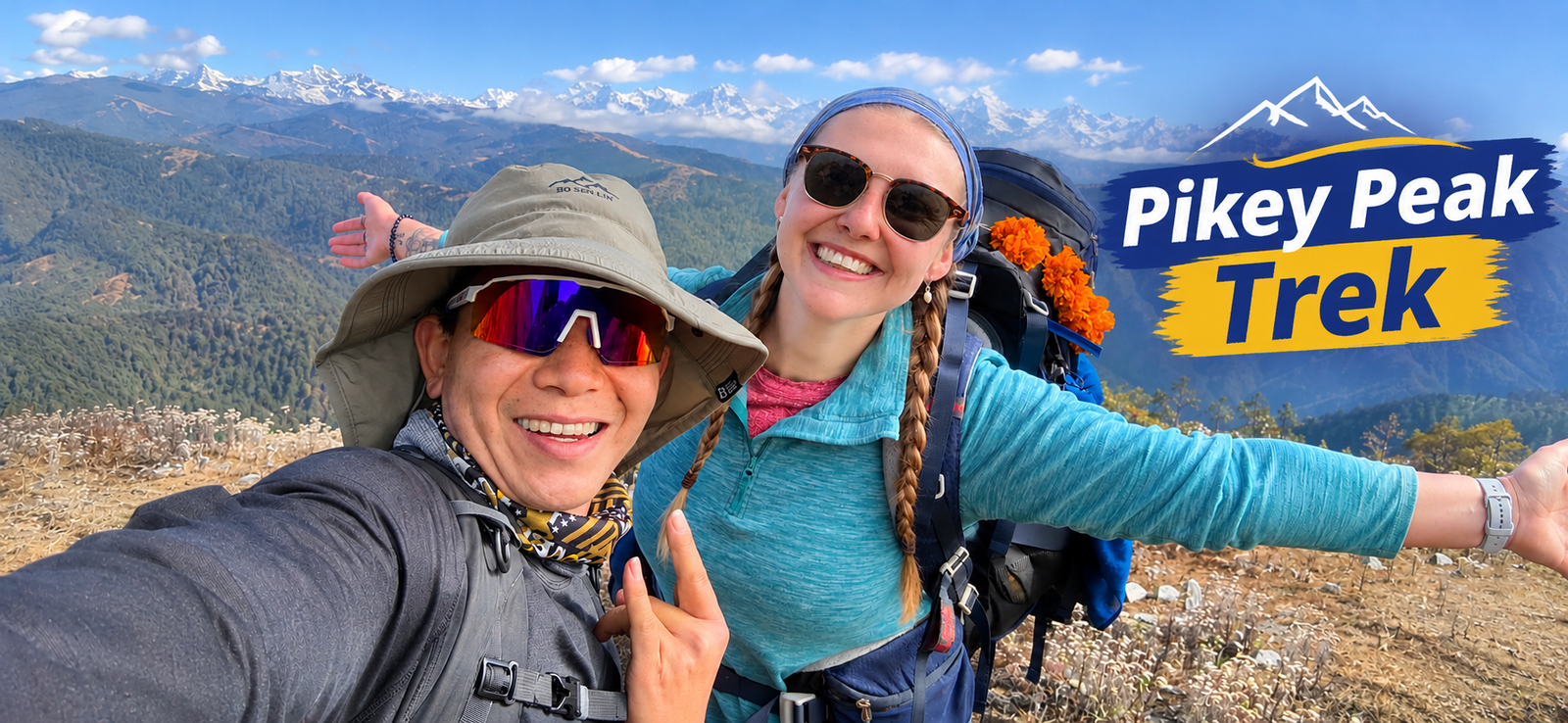
Searching for the best company for Pikey Peak Trek turns up pages that all sound confident. Star ratings, claims of local ownership, promises of small groups and fair treatment for porters. The problem is that on a popular, heavily documented route like Everest Base Camp, a trekker has dozens of independent sources, forum threads, and review platforms to cross check a company’s claims against. Pikey Peak Trek does not have that volume of public scrutiny yet. It is a genuinely rewarding route, often recommended as a first high altitude trek and known among guides for a breathtaking panoramic view of Himalayan peaks from the summit ridge without the crowds of the Everest corridor, but because fewer trekkers have written about it in detail, a prospective trekker has fewer independent voices to rely on when deciding who to book with.
That gap is exactly where marketing fills in the blanks. An operator writing about itself can describe its own licensing, its own guides, and its own safety record in whatever language sounds most reassuring, and a reader searching for the best company for Pikey Peak Trek has no easy way to verify most of it from a single article. This piece is written differently. Instead of asking you to trust adjectives, it lays out the actual, checkable criteria that separate a properly run trekking company from one that simply sounds properly run, and then applies those criteria, point by point, with the specific registration details, licenses, and named reviews involved, to Next Trip Nepal, the Kathmandu based trekking company publishing this article. Where a detail is not yet available, for example because Pikey Peak Trek itself is one of the newer named packages in the company’s lineup and does not yet carry its own batch of published reviews, that gap is stated directly rather than papered over with an invented testimonial. The goal here is not to sound impressive. The goal is to give a trekker planning the Pikey Peak Trek the information needed to make an informed choice, and to show, with specifics rather than superlatives, why Next Trip Nepal holds up under that scrutiny.
There is also a practical safety dimension specific to a quieter route. Pikey Peak Trek passes through villages and teahouses that see far less foot traffic than the main Everest or Annapurna trails, which means a guide’s actual competence, a company’s relationship with local lodges, and its ability to coordinate a change of plan if someone develops altitude symptoms or the weather turns matter in a very concrete way. A trek rated easy to moderate, with only a brief stretch above 4,000 meters, is by most standards the kind of route that can be done safely by a reasonably fit beginner, provided the operator behind it actually does the basic things well: licensed guides, honest permit handling, and a real point of contact if something goes wrong on the trail. That is the lens this article uses throughout.
The Real Criteria For Judging Any Trekking Company
Before naming any single company as a good fit for the Pikey Peak Trek, it helps to agree on what actually matters. None of the criteria below are unique to Next Trip Nepal or to this article. They are the same baseline standards that any experienced trekker, travel insurer, or responsible tourism organization operating in Nepal would recognize as reasonable minimums for a trekking company working in the Himalaya. The difference between operators is rarely in which criteria they claim to meet. Almost every operator’s homepage claims to meet all of them. The real difference is whether each claim can actually be checked against something outside the company’s own marketing copy.
Government Registration You Can Actually Check
A legitimate trekking company in Nepal operates as a registered business, typically a private limited company, with a company registration certificate from the Office of the Company Registrar, a PAN registration certificate from the Inland Revenue Department, and a renewed tax clearance certificate that has to be renewed each fiscal year. None of this is exotic or difficult to produce if a company is genuinely registered. The test is simple. Does the company publish these documents, or a clear statement of them, somewhere a reader can see, or does it simply assert that it is government registered without showing anything behind the claim.
Guides With Real Government Licenses, Not Just Experience
Experienced guide is a phrase every trekking company uses, and on its own it is nearly meaningless. Nepal’s Department of Tourism issues official trekking guide licenses, and a guide who holds one has gone through a recognized process rather than simply being hired informally. On top of that baseline license, additional training that specifically matters at altitude, wilderness first aid and high altitude safety training from a recognized training institute, separates a guide who can competently manage an altitude related problem on the trail from one who is simply personable. A company that can point to actual license and training certificates for its guides is offering something a vague claim of experience cannot.
Written Permit Handling, Especially Important For Pikey Peak
Permit rules in Nepal vary by region and change over time, and the Pikey Peak Trek sits in a part of the country where requirements are reported inconsistently across different operator websites, since the route runs near the edge of more than one administrative zone. A trekker reading three different company websites might see three different answers about which permits apply. A company that is honest about this will say plainly that it checks current requirements directly at the time of booking rather than quoting a fixed rule that might already be outdated, and ideally it will have a demonstrated track record of processing permits, including more complex restricted area permits elsewhere in Nepal, as evidence that it actually knows how to navigate this process rather than guessing.
Porter Welfare Backed By A Real Standard
Porter welfare is one of the easiest things for a company to claim and one of the hardest for a trekker to verify directly, since most trekkers never see how porters are paid, equipped, or loaded on a trek that is not their own. The meaningful version of this claim references an actual external standard, most commonly the International Porter Protection Group, known as IPPG, whose guidelines cover fair pay, proper equipment such as adequate footwear and clothing for altitude, and safe working loads rather than leaving weight limits to informal judgment. A company that states its porter welfare practices align with IPPG guidelines is making a claim that can be checked against a known, independent standard, rather than inventing its own definition of fair treatment.
Insurance, Both The Company’s And Yours
Two separate kinds of insurance matter here, and operators sometimes blur them together. The company itself should carry liability insurance covering its operations, which protects against operational failures on its end. Separately, and just as importantly, the trekker needs their own travel insurance that specifically covers high altitude trekking and emergency evacuation, since a company’s own insurance is not a substitute for the trekker’s personal coverage. A company that is clear about this distinction, rather than implying its own insurance covers everything, is being straightforward about where its responsibility ends and the trekker’s own preparation begins.
Transparent, Itemized Pricing
A headline price on its own tells a trekker very little. What matters is whether the company states clearly what that price includes and excludes, for example whether it covers guide fees, ground transport, permits, and accommodation, and whether it says so in writing on the trip page itself rather than leaving major costs to be discovered after booking. A transparent operator publishes its cost breakdown alongside the price, and a trekker should be able to read exactly what is and is not covered before committing any money.
Reviews You Can Actually Check
Reviews matter, but only if they can be checked somewhere beyond the company’s own website. A testimonial consisting of a first name, an initial, a country, and a month, with no link to any named platform, cannot be verified by anyone, no matter how specific or glowing it sounds. A real review on a named platform such as TripAdvisor, Trustpilot, or Google can be looked up independently, cross referenced against other reviews of the same company, and checked for a pattern over time. The platform name itself is part of what makes a review checkable. A vague claim of a high average rating across an unspecified number of reviews, with no platform named anywhere, is not something a reader can verify at all.
A Real Local Address And Responsive Contact
A trekking company operating in Nepal should have a real, stated office address in the country, not just a booking form or a contact page with no location behind it. A phone number, a WhatsApp line, and an email address that actually get answered, along with stated office hours, give a trekker a way to ask direct questions before booking and a way to reach someone if plans change.
24/7 Support During The Trek Itself
Support that matters most is support during the trek, not just before booking or after the invoice is paid. Altitude symptoms, an injury, a weather delay, or a change in group plans can happen at any point on the trail, and a company that states clear availability before, during, and after the trip is addressing the period when a trekker is actually most likely to need help.
No Pressure To Book
A legitimate company answers direct questions about its registration, its guides, and its pricing without evasion and without pushing a trekker toward an immediate decision. If a company’s response to specific questions is vague, or if the sales process relies on urgency rather than information, that itself is worth noticing.
How Next Trip Nepal Measures Up Against Each Criterion
With that framework in place, here is how Next Trip Nepal, the company publishing this article, holds up against each of the criteria above, using the specific, checkable details the company has published rather than restating the criteria as a promise.
Registration And Legal Standing
Next Trip Nepal operates under the legal name Next Trip Nepal Treks & Expedition Pvt. Ltd., registered in Nepal as a private limited company. The company publishes a dedicated page on its own website, titled Government Registered Trekking Company in Nepal, that lists its documents directly rather than simply asserting them: a Company Registration Certificate from the Office of the Company Registrar, a PAN Registration Certificate from the Inland Revenue Department, a Local Business Registration Certificate from Kathmandu Metropolitan City, and a Renewed Tax Clearance Certificate, each renewed per fiscal year as required. This article does not reproduce a registration number here, since the honest approach is to point a reader toward the company’s own published documents page rather than quoting a number secondhand. The point that matters is that the documents exist and are shown openly, which is a meaningfully different claim than simply writing the words government registered with nothing behind them.
Tourism Licenses And Industry Membership
Beyond basic company registration, the same page lists the tourism specific licenses and memberships that actually govern trekking operations: registration with the Nepal Tourism Board, an active membership certificate with the Trekking Agencies Association of Nepal, known as TAAN, and an affiliation certificate with the Nepal Mountaineering Association, known as NMA. The company also holds a Restricted Area Trekking Authorization from the Department of Immigration, which allows it to process restricted area permits, including for the Manaslu region, on behalf of trekkers. That authorization is relevant here for a reason beyond Manaslu itself. Processing restricted area permits is a more demanding bureaucratic task than handling standard trekking permits, and a company with an active track record of doing it has demonstrated permit processing competence that carries over directly to a route like Pikey Peak, where permit requirements are reported inconsistently across other operator sites.
Guide Licensing And Safety Training
The same documents page lists Government Licensed Trekking Guide Certificates from the Department of Tourism, confirming that the company’s lead guides hold official government trekking guide licenses rather than simply being described as experienced. It also lists Wilderness First Aid and High Altitude Safety Training certificates from a recognized training institute. For a route like Pikey Peak Trek, which the package describes as rated easy to moderate with a licensed guide included as standard, this matters directly. The guide assigned to a Pikey Peak departure is covered by the same licensing and safety training framework as the company’s guides on its longer established routes, not a separate, lower standard reserved for a newer package.
Porter Welfare
The documents page includes a Porter Welfare Compliance Statement, which the company states is aligned with International Porter Protection Group guidelines covering fair pay, proper equipment, and safe working loads. This is the specific external standard described in the criteria section above, rather than an invented internal promise, and it applies across the company’s treks rather than being written for one route only.
Insurance
The company lists company liability insurance covering its operations among its published documents. As with every operator, this is separate from, and not a substitute for, the personal travel insurance a trekker needs to carry for high altitude trekking and emergency evacuation. A trekker booking the Pikey Peak Trek should still arrange their own travel insurance regardless of which company they book with.
Contact Details And Office
Next Trip Nepal states a registered office address in Thamel, Kathmandu, Nepal, with a stated Post Box number, 20561. Its founder and CEO is named as Kiran Basnet. The company lists a phone and WhatsApp number, +977 9869225929, plus an email address, nexttripnepal@gmail.com, and states office hours of Monday to Friday 9 am to 6 pm, Saturday 9 am to 3 pm, with Sunday closed. These are the kind of details a reader can actually use to make contact and ask direct questions before booking, rather than a contact form with no company identity behind it.
An Open Invitation To Verify
Rather than simply listing these documents and licenses, the company explicitly invites verification. It states that travelers, partner agencies, and search engines can check its registration, licenses, memberships, insurance, and staff certifications directly on its published documents page, and that anyone can also contact the company directly or read client reviews to double check independently. That stance, inviting scrutiny rather than discouraging it, is itself a meaningful signal, since a company with something to hide in its paperwork would have little reason to point readers toward checking it.
It is also worth noting, without overstating the point, that the same registered legal entity behind Next Trip Nepal appears to be connected to a sister operation called Manaslu Treks & Expedition, referenced on the company’s government registration page. This is mentioned here only as evidence that the registered company behind Next Trip Nepal has an operating history across more than one branded trekking operation, not as a claim about which brand runs the Pikey Peak Trek. That remains Next Trip Nepal.
Criteria At A Glance
The table below summarizes the criteria against what Next Trip Nepal publishes. It is meant as a quick reference alongside the fuller explanation above and below, not a replacement for it.
| Criteria | What a trekker should look for | What Next Trip Nepal publishes |
|---|---|---|
| Government registration | A company registration certificate, PAN certificate, and tax clearance that can be seen, not just claimed | Company Registration Certificate, PAN Registration Certificate, Local Business Registration Certificate, and Renewed Tax Clearance Certificate, listed on its own documents page |
| Tourism licensing | Nepal Tourism Board registration and relevant association membership | Nepal Tourism Board registration, active TAAN membership, NMA affiliation certificate |
| Guide licensing | Government issued trekking guide license, not just a claim of experience | Government Licensed Trekking Guide Certificates from the Department of Tourism |
| Safety training | Wilderness first aid and altitude safety training | Wilderness First Aid and High Altitude Safety Training certificates from a recognized training institute |
| Permit handling | A clear process and a track record with complex permits | Restricted Area Trekking Authorization from the Department of Immigration, including Manaslu region permit processing |
| Porter welfare | Reference to an external standard such as IPPG | Porter Welfare Compliance Statement stated to align with IPPG guidelines |
| Insurance | Company liability cover, plus guidance to carry personal travel insurance | Company liability insurance listed among published documents |
| Pricing | Transparent, itemized pricing | Pikey Peak Trek published at 650 US dollars per person, with a cost includes and excludes section on the trip page |
| Reviews | Real reviews on a named, checkable platform | Named TripAdvisor listing with 22 reviews and a Trustpilot listing, plus a published site wide reviews aggregate |
| Contact | Real local address, phone, email, stated hours | Office in Thamel, Kathmandu, phone and WhatsApp number, email address, stated office hours |
| Support | 24/7 availability during the trek | States 24/7 support before, during, and after the trip |
Pikey Peak Trek Is Newer To The Lineup, And Here Is What That Actually Means
Here is the part of this article that a less honest competitor would be tempted to skip. Pikey Peak Trek is one of the newer named route packages Next Trip Nepal has built out with its own dedicated itinerary and content, distinct from the company’s longer established Everest Base Camp, Annapurna, and Manaslu programs, which already carry a track record of named client reviews published on the company’s own site. Because the Pikey Peak Trek package is newer, it does not yet have its own batch of published client reviews specific to that route. Saying so plainly, rather than inventing a Pikey Peak testimonial that cannot be checked anywhere, is the entire point of writing this article the way it is written.
What actually matters is whether that gap changes anything about the trek’s safety, guiding, or standards, and the honest answer is that it does not. The same guide team, drawn from the same pool of government licensed guides with wilderness first aid and high altitude safety training, the same company registration and tourism licensing, and the same porter welfare commitments documented on the company’s registration page apply equally to a Pikey Peak departure as they do to an Everest Base Camp or Manaslu Circuit departure. A guide license, a wilderness first aid certificate, and a porter welfare statement are not route specific documents that apply to one trek and not another. They describe the standards the company and its staff operate under everywhere it runs trips in Nepal, Pikey Peak Trek included.
What follows are real, named, dated reviews drawn from the company’s own published reviews page. Each one is about a specific trek, and each is labeled accurately here with which trek it actually describes, because none of them are about Pikey Peak Trek, and presenting them otherwise would be exactly the kind of misleading substitution this article is trying to avoid.
A reviewer identified as Bea j reviewed the Everest Base Camp Trek and described guide Kiran as knowledgeable, with excellent English. A reviewer identified as luka i reviewed the Manaslu Circuit Trek. Two further named reviewers, Tander M and Eva S, left additional dated reviews describing the experience as friendly and fun and praising guide Kiran by name for patience and flexibility. The summary of those two reviews used in researching this article does not make the exact trek for each one obvious, so this article does not assign them to a specific trek beyond noting them honestly as further named, dated reviews about the company’s guiding team rather than inventing a trek name for them.
A reviewer named Mia Kowalski, from Poland, dated June 2026, described the Australian Base Camp Trek, a short two day trek from Pokhara, as a good first trek for newcomers to the mountains, with a helpful guide. Separately, on the company’s homepage, a reviewer named Nathan Cooper, from Canada, praised the Manaslu Circuit Trek as the best guided trek he has done anywhere in the world, specifically crediting how well prepared the company made the group feel before the trek.
Beyond these individual reviews, the company’s homepage also links to a broader reviews aggregate described as View All 237+ Reviews, with individual trip level counts shown per trek, for example the Everest Base Camp Trek listing showing 5 of 21 reviews and the Manaslu Circuit Trek listing showing 5 of 14 reviews. The exact platform mix behind the 237+ figure is not detailed on the page itself, so this article describes it honestly as the company’s own published aggregate rather than attributing that total figure to any single named third party source. On top of that, the company maintains a dedicated TripAdvisor presence, listed as Next Trip Nepal Treks and Expedition with 22 TripAdvisor reviews, linked from its own reviews page. No exact average star score is stated in the page text itself, so this article does not quote a specific decimal rating for that listing. A separate search also found the company listed on Trustpilot under Next Trip Nepal Treks and Expedition Pvt. Ltd., with a small number of reviews, around 8 at the time of research. Again, no specific star score is quoted here since that figure was not independently confirmed to the decimal. What can be said fairly is that the company maintains active, named, checkable listings on more than one independent review platform, which is a meaningfully different position than relying on a single unnamed rating with no platform behind it.
Put together, the honest basis for confidence in Next Trip Nepal for the Pikey Peak Trek is not a Pikey specific star rating, because that does not exist yet. It is the fact that the same registered company, the same licensed and trained guide team, and the same porter welfare commitment that generated these reviews on other routes are the same team and standards assigned to Pikey Peak departures. As the Pikey Peak Trek package continues to run, it is reasonable to expect it will build its own published review history over time, the same way the company’s other routes have.
Pricing Transparency For The Pikey Peak Trek Specifically
The Pikey Peak Trek is published on Next Trip Nepal’s own trip page as a 7 day, 6 night package, running from Kathmandu to Kathmandu. It uses shared jeep transport at both ends, from Kathmandu to Dhap on day 1 and from Phaplu back to Kathmandu on day 7, with no flight required at any point in the itinerary. That detail matters for a transparent cost comparison, since routes requiring a mountain flight carry additional cost and weather related cancellation risk that a jeep based itinerary does not.
The package is listed at 650 US dollars per person, published directly and live on the Pikey Peak Trek trip page. As with most group trekking packages in Nepal, the exact price can depend on group size and the season booked, and the trip page’s own cost section is where that detail is spelled out rather than being buried after booking. A licensed guide is included as standard on the package, consistent with the government guide license certification the company documents on its registration page.
What a trekker should actually do with a published price like this is read the trip page’s cost includes and excludes section directly before booking, rather than assuming a headline figure covers everything. This article will not restate that itemized breakdown here, since it already lives on the trip page itself and is kept current there, but the existence of a dedicated cost includes and excludes section on the trip page, alongside a full itinerary and frequently asked questions, is itself part of what transparent pricing looks like. A company confident in its pricing publishes the breakdown rather than leaving major costs to be discovered later.
Comparing a 650 dollar published price across different operators is only meaningful once a trekker checks what is actually included behind it. The same headline number can represent very different packages depending on whether it includes ground transport, permits, accommodation, and guide fees, or only some of them. The honest approach, for any operator and not just this one, is to ask for the itemized breakdown before comparing price tags side by side.
Pikey Peak Trek is rated easy to moderate difficulty, with the summit altitude most commonly cited at 4,065 meters, though some sources give 4,067 or 4,068 meters, a minor survey discrepancy rather than a meaningful difference in the hiking itself. It is widely recommended as a first high altitude trek, with only a brief stretch of the route above 4,000 meters. That difficulty profile is relevant to pricing because it is part of what a trekker is actually paying for: a shorter, less logistically demanding route than Everest Base Camp or Manaslu Circuit, run with the same guide licensing and safety standards used on those longer treks.
Permits And Safety On The Pikey Peak Route
Permit requirements for the Pikey Peak Trek are reported inconsistently across different operator websites. This is not necessarily a reflection of any single company doing something wrong. It reflects the fact that the route sits near the edge of more than one administrative zone, and permit or local fee requirements in Nepal can depend on the exact villages a specific itinerary passes through, as well as on local rule changes that do not always get updated quickly on every operator’s website.
Next Trip Nepal’s own Pikey Peak Trek trip page addresses this directly rather than quoting a fixed rule that might be outdated. It states that the operator checks current requirements directly at the time of booking, rather than relying on a static claim written once and left unchanged. For a trekker, that is a more useful commitment than a confident sounding list of permit names that may or may not reflect the current rule by the time of travel.
This is also where the company’s broader permit processing track record becomes genuinely relevant, rather than a vague credential. Next Trip Nepal holds a Restricted Area Trekking Authorization from the Department of Immigration, which allows it to process restricted area permits, including for the Manaslu region, on behalf of trekkers. Restricted area permit processing is more demanding than standard permit handling, since it typically involves more agencies and more documentation. A company that routinely manages that more complex process has the operational infrastructure to check and manage permit rules in a less standardized region like Pikey Peak, rather than treating permit handling as an afterthought added to a trip page once and never revisited.
On the safety side, the same guide licensing and training described earlier applies directly to the Pikey Peak Trek’s rated easy to moderate difficulty profile. A route with only a brief stretch above 4,000 meters is not technically demanding, but altitude related symptoms can still occur even on relatively moderate elevation gains, and a guide with wilderness first aid and high altitude safety training is positioned to recognize and respond to early symptoms rather than simply push on with a fixed schedule regardless of how a client is feeling. Company liability insurance, as listed among the company’s published documents, covers the operational side of a trek. The trekker’s own travel insurance, covering high altitude trekking and emergency evacuation specifically, remains the trekker’s own responsibility regardless of which company is booked.
The practical advice for anyone booking the Pikey Peak Trek with any company, not only this one, is to ask directly, before paying anything, exactly which permits or local fees apply to the specific itinerary being booked, and to ask when that information was last confirmed. A company that answers that question specifically and promptly is demonstrating the same kind of transparency described throughout this article. A company that gives a vague or evasive answer is a signal worth taking seriously.
Warning Signs Worth Watching For In Any Operator’s Marketing
Choosing an operator for the Pikey Peak Trek, or any trek in Nepal, means reading through a lot of marketing language that sounds reassuring without actually saying very much. A few patterns are worth watching for, not because they prove a company is dishonest, but because they are the kind of gaps that a genuinely transparent company does not usually leave open.
- A star rating with no named platform. A claim such as a high average rating across a large number of reviews means very little if no specific platform, such as TripAdvisor, Trustpilot, or Google, is named. Without a named platform, there is nowhere for a reader to go and check the claim directly.
- No stated company registration. A company that claims to be government registered or licensed but does not point to any actual registration certificate, PAN certificate, or tax clearance document is asking to be trusted on the claim alone, with nothing to check it against.
- Inconsistent numbers across the same website. Group size figures, review counts, or other key numbers that differ between one section of a website and another are a sign that the content was not checked carefully, which raises a reasonable question about what else on the site was not checked carefully.
- Testimonials that cannot be checked anywhere. A testimonial consisting only of a first name, an initial, a country, and a month, with no link to any named review platform, cannot be verified by a reader no matter how specific or glowing it sounds. Genuine named reviews on an external platform can at least be looked up independently.
- No stated founding year or trip count, paired with confident superlative claims. A company can be newer or smaller and still be entirely legitimate, but vague confidence without any concrete operating history, combined with superlative claims about being the single best option available, is worth noticing as a pattern.
- Pressure to book quickly, paired with vague answers to direct questions. A legitimate company welcomes direct questions about registration, guide licensing, permits, and pricing, and answers them specifically. Urgency combined with evasiveness is a combination worth being cautious about.
None of this means a company using vague language is necessarily unsafe or dishonest on its own. It means the burden of proof has not been met, and a trekker is entitled to ask for specifics before committing money and, more importantly, trusting a company with a high altitude trek in a remote part of the country.
How To Actually Book, From First Contact To Departure
Initial Contact
A trekker can reach Next Trip Nepal by phone or WhatsApp at +977 9869225929, or by email at nexttripnepal@gmail.com. The company states office hours of Monday to Friday 9 am to 6 pm and Saturday 9 am to 3 pm, with Sunday closed, so a message sent outside those hours should expect a response once the office reopens rather than an immediate reply.
Ask Direct Questions Before Paying Anything
This is the point to ask about current permit requirements for the specific Pikey Peak itinerary being booked, to confirm what the published 650 dollar price includes and excludes for the dates being considered, and to ask about the guide who would be assigned, including confirmation of their government guide license and safety training. A transparent operator answers these specifically rather than redirecting to generic marketing language.
Review The Trip Page Itself
The Pikey Peak Trek trip page lays out the full itinerary day by day, a cost includes and excludes section, and frequently asked questions, which is the primary place to confirm details before booking rather than relying on a summary written secondhand by anyone else, including this article.
Booking And Paperwork
Once a trekker decides to proceed, the company’s registered office in Thamel, Kathmandu handles the booking. Because the company holds a Restricted Area Trekking Authorization and an established tourism license structure through the Nepal Tourism Board and TAAN, the administrative side of permit processing is handled by a company with institutional experience managing exactly this kind of paperwork, rather than figuring it out for the first time on a trekker’s behalf.
Arrival And Pre Trek Preparation
Before departure, a guide introduction and a review of the itinerary, along with any last minute permit or weather updates, is standard practice for a properly run trekking departure, consistent with the kind of licensed, insured operation described throughout this article. Trekkers should use this window to confirm gear needs and ask any remaining questions about the route itself.
During The Trek
Once on the trail, the guide assigned holds the government trekking guide license and wilderness first aid and high altitude safety training described earlier, and the company states 24/7 support availability before, during, and after the trip for exactly the kind of situation where a trekker might need to reach someone quickly.
After The Trek
The Pikey Peak Trek itinerary returns by shared jeep from Phaplu to Kathmandu on day 7, with no flight required. Afterward, trekkers have the option to leave a review on a named platform such as TripAdvisor or Trustpilot, contributing to the same kind of checkable record described earlier in this article. This is also how a newer package like Pikey Peak Trek will, over time, build its own published review history rather than remaining without one indefinitely.
Frequently Asked Questions
What is the best company for the Pikey Peak Trek?
There is no single verifiable best company for any trek, including Pikey Peak Trek, in the sense of a ranked, independently audited list. What can be verified is whether a specific company meets the concrete criteria described in this article: government registration, licensed guides, honest permit handling, porter welfare aligned with a real standard, insurance, transparent pricing, and checkable reviews. Next Trip Nepal publishes documentation for each of these criteria and explicitly invites verification of its registration, licenses, and certifications.
Does Next Trip Nepal have reviews specifically for the Pikey Peak Trek?
Not yet. Pikey Peak Trek is one of the newer named route packages in the company’s lineup, and it does not yet have its own batch of published client reviews. The company’s named, dated reviews that are currently published are for other treks, including Everest Base Camp, Manaslu Circuit, and the Australian Base Camp Trek, and this article has described those reviews accurately rather than suggesting any of them are about Pikey Peak.
How difficult is the Pikey Peak Trek?
It is rated easy to moderate difficulty and is widely recommended as a first high altitude trek, with only a brief stretch of the route above 4,000 meters. The summit altitude is most commonly cited at 4,065 meters, with some sources giving 4,067 or 4,068 meters, a minor survey discrepancy.
How long is the Pikey Peak Trek and does it require a flight?
It is a 7 day, 6 night package, Kathmandu to Kathmandu, using shared jeep transport at both ends rather than a flight, from Kathmandu to Dhap on day 1 and from Phaplu back to Kathmandu on day 7.
How much does the Pikey Peak Trek cost?
Next Trip Nepal publishes the package at 650 US dollars per person, live on the Pikey Peak Trek trip page, which also lays out what is included and excluded. Exact pricing can depend on group size and season, and the trip page’s own cost section is where that detail is confirmed.
What permits are needed for the Pikey Peak Trek?
Permit requirements for this route are reported inconsistently across different operator websites, since it sits near the edge of more than one administrative zone. Rather than quoting a fixed rule, Next Trip Nepal’s trip page states that current requirements are checked directly at the time of booking.
Is Next Trip Nepal actually government registered?
The company publishes a dedicated page listing its Company Registration Certificate, PAN Registration Certificate, Local Business Registration Certificate, and Renewed Tax Clearance Certificate, alongside its Nepal Tourism Board registration, TAAN membership, and NMA affiliation. These documents are described on the company’s own published page rather than only asserted in marketing text.
How are porters treated on Next Trip Nepal’s treks?
The company publishes a Porter Welfare Compliance Statement, which it states is aligned with International Porter Protection Group guidelines covering fair pay, proper equipment, and safe working loads.
Where can I check real reviews of Next Trip Nepal?
The company maintains a named TripAdvisor listing with 22 reviews at the time this article was researched, and is also listed on Trustpilot with a small number of reviews, around 8 at the time of research. Its own site also links to a broader reviews aggregate described as 237+ reviews, with individual trip level counts shown per trek, though the exact platform mix behind that total figure is not detailed on the page itself.
What should I look for if I am comparing other companies for the Pikey Peak Trek?
Apply the same criteria used throughout this article to any company under consideration: a visible company registration, licensed guides rather than a vague claim of experience, a clear written approach to permits, a real external standard behind any porter welfare claim, stated insurance, itemized pricing, checkable reviews on a named platform, a real local address, and 24/7 support during the trek itself. Any company that meets all of these, with documents rather than adjectives, deserves serious consideration regardless of which company it turns out to be.
Making The Decision
Choosing the best company for Pikey Peak Trek is not actually about finding the operator with the most impressive sounding claims. It is about finding one whose claims can be checked, and then confirming that what can be checked actually holds up under a close look. Next Trip Nepal publishes its company registration documents, its tourism licenses and association memberships, its guide licensing and safety training certificates, and its porter welfare statement openly, and explicitly invites travelers, partner agencies, and search engines to verify all of it directly rather than taking any of it on faith.
On the specific question of the Pikey Peak Trek, the honest picture is straightforward. The package itself, a 7 day, 6 night route from Kathmandu to Kathmandu with no flight required, published at 650 US dollars per person with a licensed guide included as standard, is newer to the company’s lineup and does not yet carry its own published reviews. What it does carry is the same registered company, the same licensed guides, the same wilderness first aid and high altitude safety training, the same porter welfare commitment, and the same permit processing track record that already stand behind the company’s longer established, reviewed treks across Everest Base Camp, Manaslu Circuit, Annapurna, and the Australian Base Camp Trek.
Whichever company a trekker ultimately chooses for the Pikey Peak Trek, the same approach applies everywhere: ask to see the registration, ask about the guide’s actual license and training, ask exactly which permits apply and when that was last confirmed, and look for reviews on a named platform rather than settling for an unverifiable number with no source behind it. For readers who want to go further, the Pikey Peak Trek trip page on nexttripnepal.com lays out the full route, the cost includes and excludes, and current frequently asked questions directly. The same site also publishes a detailed comparison between the Pikey Peak Trek and the Everest Base Camp Trek for anyone deciding between the two, a full packing list and gear guide for the Pikey Peak Trek covering what to bring and what to leave behind, a dedicated guide to the culture and monasteries along the Pikey Peak Trek including Thupten Choling and Chiwong monasteries, a day by day difficulty and altitude guide for the Pikey Peak Trek for anyone weighing fitness and acclimatization, and a month by month guide to the best time to trek Pikey Peak for anyone still choosing dates. Reading the specifics in those pages, alongside the registration and licensing details covered here, is a far more reliable way to choose an operator than relying on any single company’s own claim to be the best.