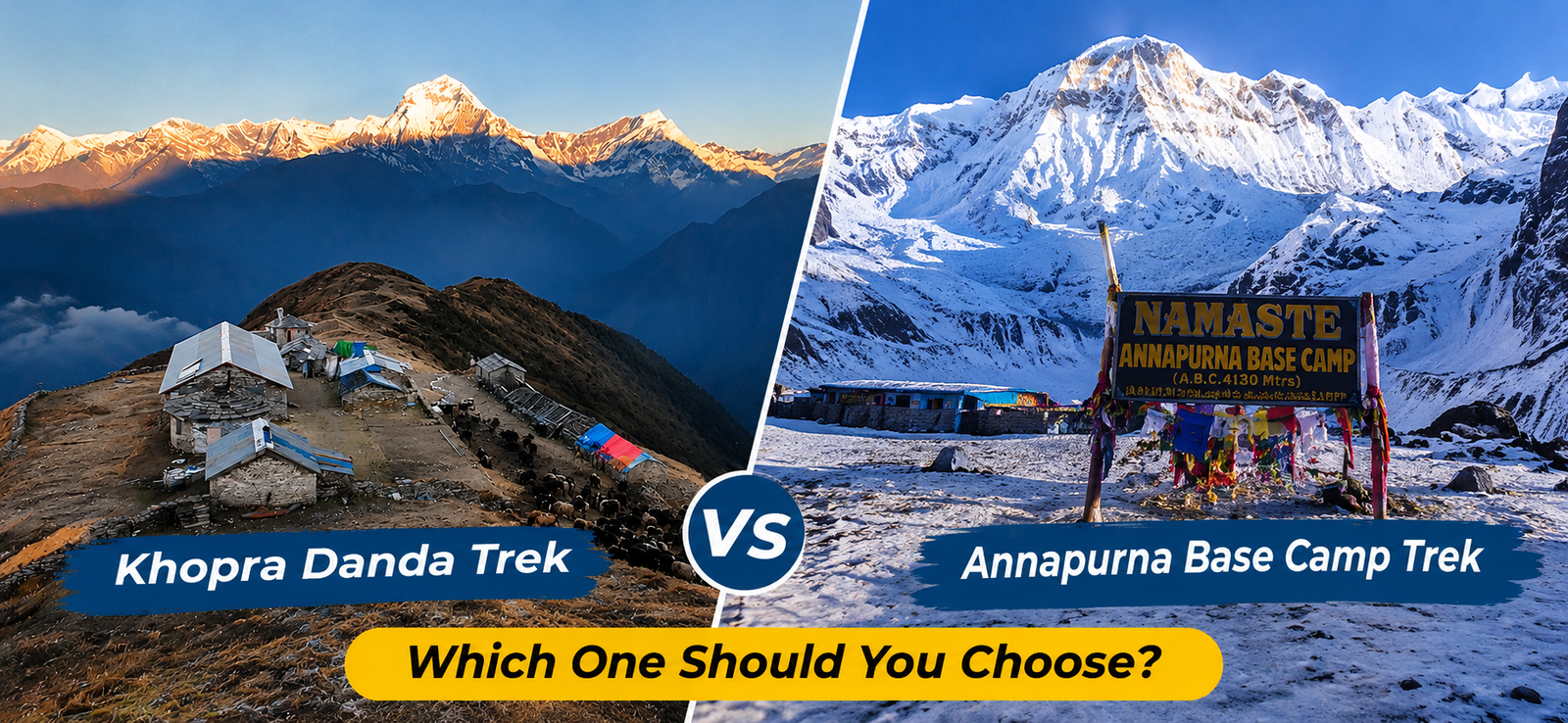
Khopra Danda Trek vs Annapurna Base Camp is the comparison most Nepal bound trekkers eventually run into once they start researching the Annapurna region. Every year, thousands of trekkers arrive in Pokhara with the same question on their minds. Should they walk the well worn trail to Annapurna Base Camp, or should they take the quieter path up to Khopra Ridge and Khayer Lake instead? Both routes sit inside the same conservation area, both deliver genuine close up mountain scenery, and both can be completed in under two weeks. Yet the experience of walking each one is different enough that the choice matters, and it is worth working through honestly rather than assuming that the more famous name is automatically the better pick.
This guide compares the Annapurna Base Camp Trek and the Khopra Danda Trek across the things that actually affect a traveler’s decision: scenery, crowds, difficulty, cost, food and lodging, and the kind of traveler each route tends to suit. Neither trek is objectively better than the other. They are simply built for slightly different priorities, and understanding those differences before you book will save you from comparing prices and photos online and still feeling unsure which one is right for you.
What the Annapurna Base Camp Trek Actually Offers
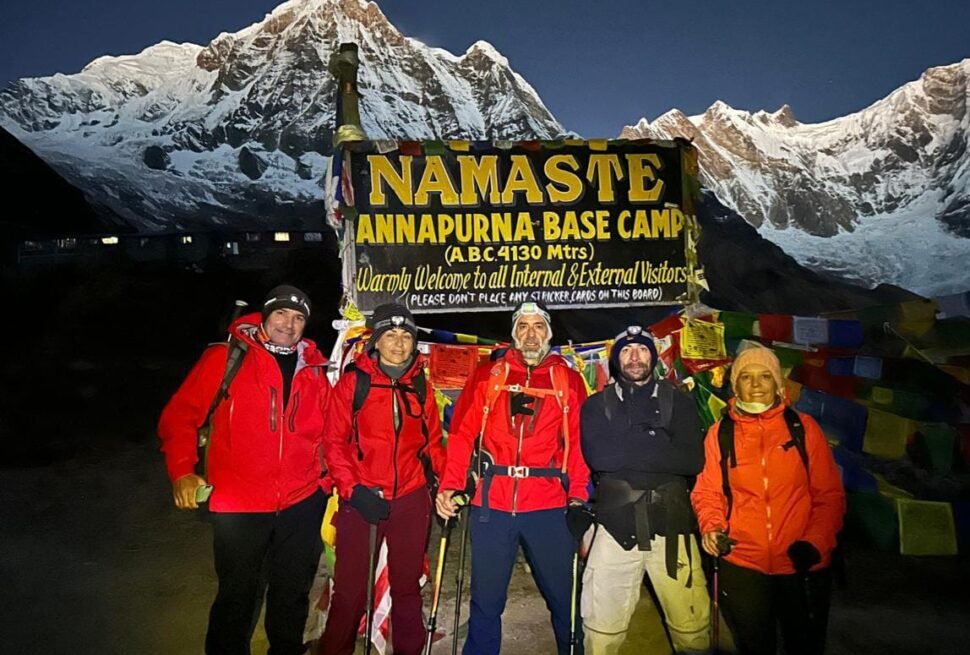
Annapurna Base Camp sits at roughly four thousand one hundred and thirty meters, directly inside the Annapurna Sanctuary, a natural amphitheater ringed by Annapurna I, Annapurna South, Hiunchuli, and Machhapuchhre. The defining feature of this trek is the sanctuary itself. For two days you walk steadily uphill through a narrow valley, and then quite suddenly the terrain opens into a wide glacial basin with peaks rising almost directly above camp on every side. It is one of the most complete mountain amphitheaters accessible by trekking anywhere in Nepal, and reaching base camp at sunrise, when the first light hits Annapurna’s south face, remains one of the signature moments in Himalayan trekking.
The standard itinerary runs between seven and twelve days depending on the operator and the exact route chosen, usually starting from Pokhara via Nayapul or Kimche and climbing through Ghandruk, Chhomrong, Dovan, and Machhapuchhre Base Camp before reaching Annapurna Base Camp itself. The trail is well developed, well signed, and dotted with frequent teahouses, which makes logistics simple and the trek accessible to a wide range of fitness levels. This accessibility is exactly why it draws the volume of visitors it does. During peak season in October and November, Chhomrong and the villages beyond it can feel genuinely busy, with lodges filling early in the afternoon and dining halls crowded every evening.
What the Khopra Danda Trek Actually Offers
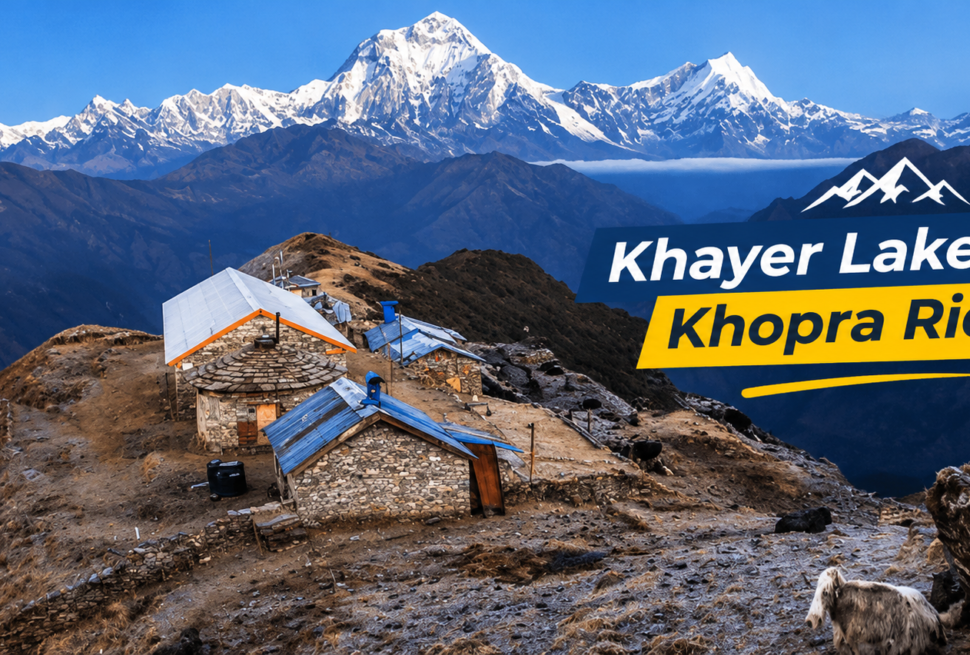
The Khopra Danda Trek, also known locally as the Khopra Ridge Trek, takes a different branch out of the same general region. Instead of climbing into the Annapurna Sanctuary, it follows a side trail that peels away near Tadapani and climbs to an open ridge at roughly three thousand six hundred and sixty meters, where a small cluster of lodges looks directly across at Dhaulagiri, Annapurna South, and Machhapuchhre without another settlement in sight. From that ridge, a full day excursion leads up to Khayer Lake, a glacier fed alpine lake sitting at close to four thousand six hundred and sixty meters and considered sacred by both Hindus and Buddhists in the surrounding communities.
Our standard itinerary for the Khopra Danda Trek runs thirteen days from arrival in Kathmandu to final departure, covering the loop from Kimche through Ghandruk, Tadapani, Dobato, Chistibung, Khopra Ridge, the Khayer Lake excursion, Swanta, and Ghorepani, before finishing with the classic sunrise at Poon Hill and the descent to Nayapul. The trail receives a fraction of the traffic that the base camp route sees, largely because it requires a short detour away from the main Annapurna Sanctuary path and is simply less well known to travelers planning their first trip to Nepal. For anyone who has already done research into Himalayan trekking and wants something with a comparable payoff but a noticeably quieter trail, this is often the route that surprises them most.
Comparing the Scenery
Both treks deliver genuine high mountain scenery, but the character of the views differs. Annapurna Base Camp places you physically inside a ring of peaks, which creates a sense of enclosure and scale that is hard to replicate anywhere else. The mountains are not just visible, they surround you on every side at the end of the trek, and the experience of waking up inside that amphitheater is unlike anything on the Khopra route.
Khopra Ridge, by contrast, offers a wide open panorama rather than an enclosed one. Standing at the ridge or at the nearby Mulde viewpoint, you look out across a long horizontal sweep that includes Dhaulagiri, Tukuche, Nilgiri, Annapurna South, Hiunchuli, Machhapuchhre, and on clear days even distant peaks toward the Manaslu and Ganesh Himal ranges. Khayer Lake then adds something the base camp trek does not have at all, a still high altitude lake that mirrors the surrounding peaks on calm mornings and carries genuine religious and cultural meaning for local communities. If you want to feel surrounded by mountains, Annapurna Base Camp wins. If you want a sweeping open panorama plus a unique alpine lake destination, Khopra Danda has the edge.
Comparing Crowds and Trail Atmosphere
This is probably the single biggest practical difference between the two treks. Annapurna Base Camp is, by a wide margin, one of the most popular treks in Nepal, and during the main autumn season the trail and its lodges can feel genuinely crowded. This is not necessarily a bad thing. Many trekkers enjoy the social atmosphere of a busy teahouse, the chance to meet other travelers from around the world each evening, and the reassurance of walking a trail where help is never far away. But it does mean lodges can fill up, dining halls get loud, and the sense of remoteness that many people imagine before their first Himalayan trek is diluted somewhat by the sheer number of people on the same path.
The Khopra Danda Trek sees a small fraction of that traffic. Villages like Chistibung and Swanta, and the ridge itself, rarely host more than a handful of other trekking groups even in peak season. This creates a noticeably quieter, more personal experience, with more direct interaction with your guide and the local lodge owners, and a stronger sense of having found something that most visitors to Nepal never see. If solitude and a feeling of discovery matter more to you than social atmosphere and trail infrastructure, this is where Khopra Danda pulls ahead decisively.
Comparing Difficulty and Altitude
Both treks are generally classified as moderately challenging, suitable for trekkers with reasonable fitness and some hiking background, though neither requires technical climbing skills or specialized mountaineering equipment. Annapurna Base Camp tops out at around four thousand one hundred and thirty meters, with altitude gain spread fairly evenly across the itinerary and several nights at progressively higher elevations before reaching base camp itself. Acclimatization is generally manageable because the standard seven to twelve day itineraries, especially the longer ones, build in a sensible pace.
Khopra Danda reaches a higher maximum elevation at Khayer Lake, close to four thousand six hundred and sixty meters, which places it slightly above Annapurna Base Camp in terms of peak altitude exposure. However, our itinerary is built specifically to manage this, with the Khayer Lake excursion planned as a day hike from Khopra Ridge rather than an overnight stay at the lake itself, following the standard principle of climbing high and sleeping low. Daily walking hours on both treks range from roughly three to eight hours depending on the day, with the Khayer Lake round trip and the final descent through Ghorepani and Ulleri being the most physically demanding single days on the Khopra route. Overall, the two treks are comparable in physical difficulty, with Khopra Danda asking slightly more of trekkers purely because of its higher point of exposure to altitude.
Comparing Duration and Itinerary Structure
Annapurna Base Camp itineraries vary more widely than Khopra Danda ones, ranging from compact seven day trips for travelers with limited time to more relaxed twelve day versions that include extra acclimatization and buffer days. This flexibility is one of its practical advantages, since it can be adapted to fit a shorter holiday window more easily than some other treks in the region.
The Khopra Danda Trek is typically run as a thirteen day package covering arrival, the trek itself, and departure, since the route to Khopra Ridge and Khayer Lake naturally takes longer to loop through than a direct climb into the Annapurna Sanctuary. If your available time is genuinely limited to a week or less, Annapurna Base Camp’s shorter options make it the more practical choice. If you have closer to two weeks and are not trying to compress your trip into the shortest possible window, the extra days on the Khopra route buy you a meaningfully different experience rather than simply adding padding to the schedule.
Comparing Cost
Package pricing for both treks depends heavily on group size, season, and exactly what is included, so direct comparisons should be treated as a general guide rather than a fixed rule. As a rough pattern, Annapurna Base Camp packages from reputable operators often sit in a similar range to Khopra Danda once group discounts are applied, since both routes require similar numbers of trekking days, guide and porter services, permits, and teahouse accommodation. Our own Khopra Danda Trek pricing runs from nine hundred dollars per person for a solo traveler down to six hundred dollars per person for a group of five or six, which is broadly comparable to what a similarly structured Annapurna Base Camp package would cost for an equivalent group size and duration. Neither trek is dramatically more expensive than the other once you compare similar inclusions, so cost alone should rarely be the deciding factor between them.
Comparing Accommodation and Food
Teahouse quality along the Annapurna Base Camp route tends to be slightly more developed on average, simply because of the volume of trekkers the route supports and the corresponding investment lodge owners have made in facilities, hot showers, and more varied menus. This is a genuine practical advantage for anyone who wants reliable amenities throughout the trek.
Khopra Danda’s teahouses, particularly at the higher and more remote points like Chistibung and Khopra Ridge, are simpler, with more basic bathroom facilities and a narrower food menu built mostly around dal bhat and other staple Nepali dishes. This is not a shortcoming so much as a natural consequence of lower visitor numbers and a more remote location. Food is still plentiful and reasonably varied in the lower villages such as Ghandruk and Tadapani, and most trekkers find the simplicity at the higher stops to be part of the charm rather than a hardship, though it is worth setting expectations accordingly if comfort and variety are a high priority for you.
Who Should Choose Annapurna Base Camp
Annapurna Base Camp makes the most sense for first time trekkers in Nepal who want a dependable, well supported introduction to Himalayan trekking with a genuinely spectacular payoff at the end. It suits travelers with limited time who need a shorter itinerary option, those who enjoy a social trekking atmosphere with other travelers each evening, and anyone who specifically wants the experience of standing inside a complete mountain amphitheater rather than looking at peaks from a distance. It is also a sound choice if reliable infrastructure, frequent charging points, and more developed teahouse amenities matter more to you than solitude.
Who Should Choose Khopra Danda
Khopra Danda suits travelers who have already read enough about Nepal trekking to know that the most famous routes are also the busiest ones, and who would rather trade a small amount of convenience for a quieter trail and a more personal experience. It is a strong choice for anyone who wants wide open panoramic views rather than an enclosed amphitheater, who is drawn to the idea of visiting a genuinely sacred alpine lake as part of their itinerary, and who has roughly two weeks available rather than one. It also appeals to repeat visitors to Nepal who have already done Annapurna Base Camp, Everest Base Camp, or the Ghorepani Poon Hill Trek and are specifically looking for something in the Annapurna region that most other trekkers have not done.
Can You Combine the Two
Some trekkers ask whether it is possible to link Khopra Danda with an extension toward Annapurna Base Camp in a single trip. It is possible, since both routes sit within the broader Annapurna Conservation Area and share some common access points, though combining them adds a meaningful number of extra days and requires careful planning around acclimatization given the altitude both routes reach. If this interests you, our team can design a custom itinerary that properly accounts for the additional distance and the acclimatization needs of combining two high altitude routes in one trip, rather than simply joining them together without adjustment.
A Quick Note on Ghorepani and Poon Hill
It is worth mentioning that the Khopra Danda Trek already includes the classic Poon Hill sunrise viewpoint as part of its final days, descending through Ghorepani exactly as the standalone Ghorepani Poon Hill Trek does. This means that choosing Khopra Danda is not an either or decision against Poon Hill specifically, since you get that experience built into the longer itinerary as well as the ridge and lake sections that the short Poon Hill trip does not include. If you are deciding purely between a short four to five day introduction to the region and the longer thirteen day Khopra Danda route, the extra days buy you considerably more than just a longer version of the same walk.
What About Mardi Himal
A third option worth a brief mention is the Mardi Himal Trek, another moderately challenging, comparatively quiet route in the Annapurna region that leads to a high viewpoint facing Machhapuchhre. It shares some of the same appeal as Khopra Danda in terms of lower crowds, though it is generally a shorter trip and does not include anything comparable to the Khayer Lake excursion. Trekkers choosing between all three routes should weigh available time, desired trek length, and whether a high alpine lake destination specifically appeals to them, since that single feature is what most clearly sets Khopra Danda apart from both Mardi Himal and the standard Poon Hill route.
Weather and Season Side by Side
Both treks share the same two main windows for good weather, spring from March through May and autumn from late September through November, since both sit within the same general climate zone of the Annapurna region. Autumn is generally considered the more reliable season for both routes, with stable weather, clear mountain views, and comfortable daytime temperatures, which is why it draws the largest number of trekkers to both trails at the same time. Spring brings rhododendron blooms to the forested lower sections of both routes, a particularly striking sight on the walk between Ghandruk and Tadapani that both itineraries share, along with slightly less predictable afternoon cloud compared to autumn.
Where the two treks diverge somewhat is in how winter and the shoulder months affect them. Annapurna Base Camp remains a fairly common winter destination, since its lower maximum altitude and well developed teahouse infrastructure make cold weather more manageable, with some lodges offering better heating options during the colder months. Khopra Danda is also doable in winter, but the higher altitude reached at Khayer Lake and the more exposed nature of the ridge itself mean that winter conditions here are more serious, with a greater chance of snow affecting the trail to the lake and colder nights at the simpler lodges along the way. Trekkers considering a winter trip to either region should discuss current conditions with their operator closely, and for Khopra Danda specifically, should be prepared for a greater likelihood that the final push to Khayer Lake may need to be adjusted based on snow conditions on the day.
Cultural Experience Along Each Route
Annapurna Base Camp passes through Gurung villages including Ghandruk and Chhomrong, both of which have developed significant tourism infrastructure over several decades of hosting trekkers, giving them a polished, welcoming feel with museums, cultural centers, and well established homestays alongside standard teahouses. This makes the cultural element of the trek easy to access, with clear information available about local traditions and daily life.
The Khopra Danda route shares the same Ghandruk starting point, since both treks begin from similar trailheads near Kimche or Nayapul, so trekkers on either trip can experience this well developed Gurung village early in their journey. Where Khopra Danda differs is in villages like Swanta and Chistibung, which see so few visitors that daily life continues largely unaffected by tourism, offering a more unfiltered glimpse of rural life in the hills compared to the more tourism oriented experience further along the base camp trail. Neither style of cultural contact is better, but trekkers specifically interested in seeing village life that has not been significantly shaped by decades of trekking tourism will find more of that on the Khopra Danda side.
A Day by Day Feel for Each Trek
Numbers and comparisons only tell part of the story, so it helps to picture what a typical day actually feels like on each route. On the Annapurna Base Camp trail, a middle day might start with breakfast in a busy lodge dining hall in Chhomrong, surrounded by trekkers from a dozen different countries comparing notes on the previous day’s walk. The trail itself is clearly marked, well used, and you are rarely out of sight of other groups for long. By afternoon you arrive at your next stop, often one of several lodges clustered together, and the evening brings another round of shared meals, card games, and conversation in a warm dining room while the generator hums outside.
A middle day on the Khopra Danda route looks noticeably different. Walking from Dobato toward Chistibung, for example, you might go an hour or more without seeing another trekking group at all, with only the sound of wind through rhododendron forest and the occasional call of a Himalayan bird for company. The lodge at the end of the day is usually small, often family run, with a handful of rooms and a single dining area heated by a wood stove. Conversation in the evening tends to be quieter and more personal, often involving the lodge owner themselves rather than a rotating cast of other trekkers. Neither atmosphere is better than the other, but they are genuinely different experiences, and picturing which one appeals to you more is often the clearest way to make this decision.
Guides and Porters on Both Routes
Both treks are typically done with a licensed guide and porter support, and the quality of guiding available for each route is comparable, since many guides working in the Annapurna region are familiar with both trails. The practical difference is that guides who specialize in Khopra Danda tend to know the smaller, less documented details of the route more intimately simply because fewer companies run it regularly, including which of the modest teahouses at Chistibung and Swanta offer the most reliable hot water, and how trail conditions on the climb to Khayer Lake change across the season.
Porter service on both treks typically follows the same structure, with one porter assigned to carry the bags of two trekkers up to a combined weight limit, usually around twenty kilograms per trekker. Given that Khopra Danda’s higher stops see fewer visitors and correspondingly less frequent resupply, porters on this route sometimes carry a slightly heavier role in keeping lodges stocked, which is one more reason that hiring a reputable operator with established relationships along the trail matters more here than it might on the busier base camp path.
Permits Required for Each Trek
Both routes fall within the Annapurna Conservation Area, so both require the Annapurna Conservation Area Permit, along with the Trekkers Information Management System card that is standard for independent and guided trekking throughout most of Nepal. Fees for these permits are modest, generally in the range of a few thousand Nepali rupees each for foreign trekkers, and are arranged by your operator as part of a standard package. Because both treks use the same permit system, there is no meaningful cost or paperwork advantage to choosing one over the other on this front, though it is always worth confirming current fees with your operator before departure since rates are reviewed periodically by the conservation area authorities.
Packing Differences Worth Knowing
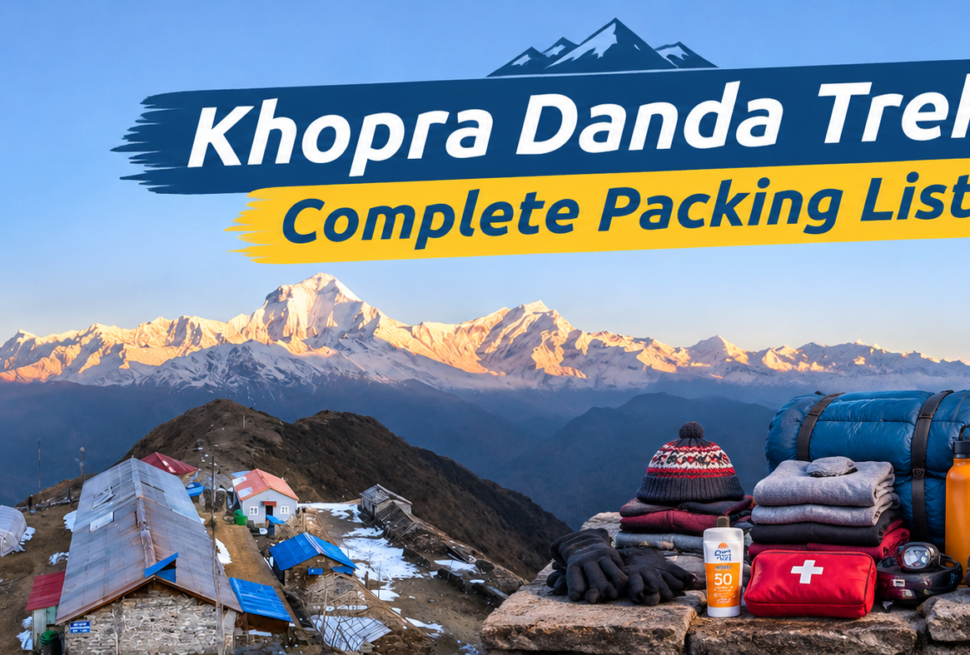
Packing for Annapurna Base Camp and packing for Khopra Danda overlap heavily, since both require warm layers, a good sleeping bag, sturdy broken in trekking boots, and standard trekking essentials like a headlamp and trekking poles. The one meaningful difference is that Khopra Danda’s higher point at Khayer Lake, close to four thousand six hundred and sixty meters, runs noticeably colder than Annapurna Base Camp’s four thousand one hundred and thirty meters, particularly in the early morning hours before and during the day hike to the lake. Trekkers heading to Khopra Danda should pack slightly warmer gloves and an extra insulating layer beyond what they might bring for base camp alone, along with sun protection for the exposed ridge walking, where there is little tree cover compared to the forested lower sections of the base camp trail.
Safety and Emergency Support Compared
Safety standards on both treks follow the same general framework, with licensed guides trained in wilderness first aid, a comprehensive first aid kit carried on the trail, and mandatory travel insurance covering emergency evacuation for every client. The practical difference between the two routes comes down to response time in the event of a genuine emergency. Annapurna Base Camp’s higher trekker volume means that help, whether from other guides, nearby lodges, or coordination with rescue services, tends to be slightly faster to mobilize simply because more people and resources are moving through the same corridor at any given time.
On Khopra Danda, particularly during the Khayer Lake excursion and the stretch through Chistibung and Swanta, the lower trekker volume means your own guide’s judgment and preparation matter even more, since you may be the only group in the immediate area for a period of time. This is precisely why choosing an experienced operator with guides who know this specific route well is especially important for Khopra Danda, more so than it might be on a route with more built in redundancy from passing traffic. Every group with Next Trip Nepal is assigned a guide trained specifically for the conditions of whichever route they are walking, and our team maintains regular contact with lodges along both trails to stay informed of current conditions.
Booking and What to Expect
Whichever trek you choose, the booking process with Next Trip Nepal follows the same straightforward steps. You contact our team to discuss your preferred dates and group size, we confirm availability and begin processing permits once we have copies of your passport and passport photographs, and a deposit secures your booking with the remaining balance typically due on arrival in Kathmandu. After booking, you receive a detailed pre departure package covering the full itinerary, a packing list tailored to your chosen route and season, and practical advice from our team, who remain available to answer questions in the weeks leading up to your trip.
Both treks begin and end in the same general area around Pokhara, which means it is entirely possible to decide late, even after arriving in Nepal, if you remain genuinely undecided between the two options right up until departure. That said, booking in advance is still recommended, particularly during the busy autumn season, since guide and porter availability can tighten as the season approaches and lodges along both routes can fill during the most popular weeks.
What Past Trekkers Tend to Say
Feedback from travelers who have completed both routes tends to follow a consistent pattern. Those who did Annapurna Base Camp first often describe it using words like iconic, dramatic, and unforgettable, and few regret choosing it as an introduction to Himalayan trekking. Those who later add Khopra Danda to their Nepal trips frequently describe it as a pleasant surprise, noting that they expected a lesser experience given its lower profile, only to find the views from the ridge and the walk to Khayer Lake just as memorable, delivered with far fewer other people around. Very few travelers report the reverse pattern of being disappointed by Khopra Danda after having built up expectations from Annapurna Base Camp, which suggests that the quieter trek genuinely delivers on its own terms rather than simply serving as a lesser alternative.
Bringing It All Together
Stepping back from the individual comparisons, the real choice here is less about which trek is objectively superior and more about which kind of experience you are hoping to have in the Annapurna region. Annapurna Base Camp rewards you with an enclosed amphitheater of peaks, a well worn and socially rich trail, and a shorter time commitment, all wrapped into one of the most proven trekking experiences Nepal has to offer. Khopra Danda rewards patience and a willingness to trade some convenience for solitude, delivering a wide open ridge panorama, a genuinely special high altitude lake, and villages that still feel relatively untouched by large scale tourism. Both routes sit inside the same conservation area, both are supported by capable local guides, and both are well within reach of a reasonably fit traveler with some preparation beforehand.
Our Honest Recommendation
If this is your first trip to Nepal, if your schedule only allows for about a week of trekking, or if you specifically want the feeling of standing inside a ring of eight thousand meter and seven thousand meter peaks, choose Annapurna Base Camp. It remains one of the most rewarding short treks in the world for good reason, and there is no shame in choosing the well proven classic over the quieter alternative.
If you have slightly more time, if you have already done one or two treks in Nepal, or if the idea of a sacred high altitude lake and a near empty ridge trail genuinely appeals to you more than a busier, more developed route, the Khopra Danda Trek is likely to leave a stronger impression. Many of our clients who have done both tell us that Annapurna Base Camp is the trek they are glad they did first, but that Khopra Danda is the one they talk about more years later, precisely because fewer of their friends have been there.
Whichever route you choose, both treks pass through genuinely beautiful parts of the Annapurna Conservation Area, and both are well supported by experienced local guides who know the terrain in every season. If you are still unsure which one fits your plans, travel dates, and fitness level, our team is glad to talk through the details and help you decide, or to put together a custom itinerary if neither standard package quite matches what you are looking for.