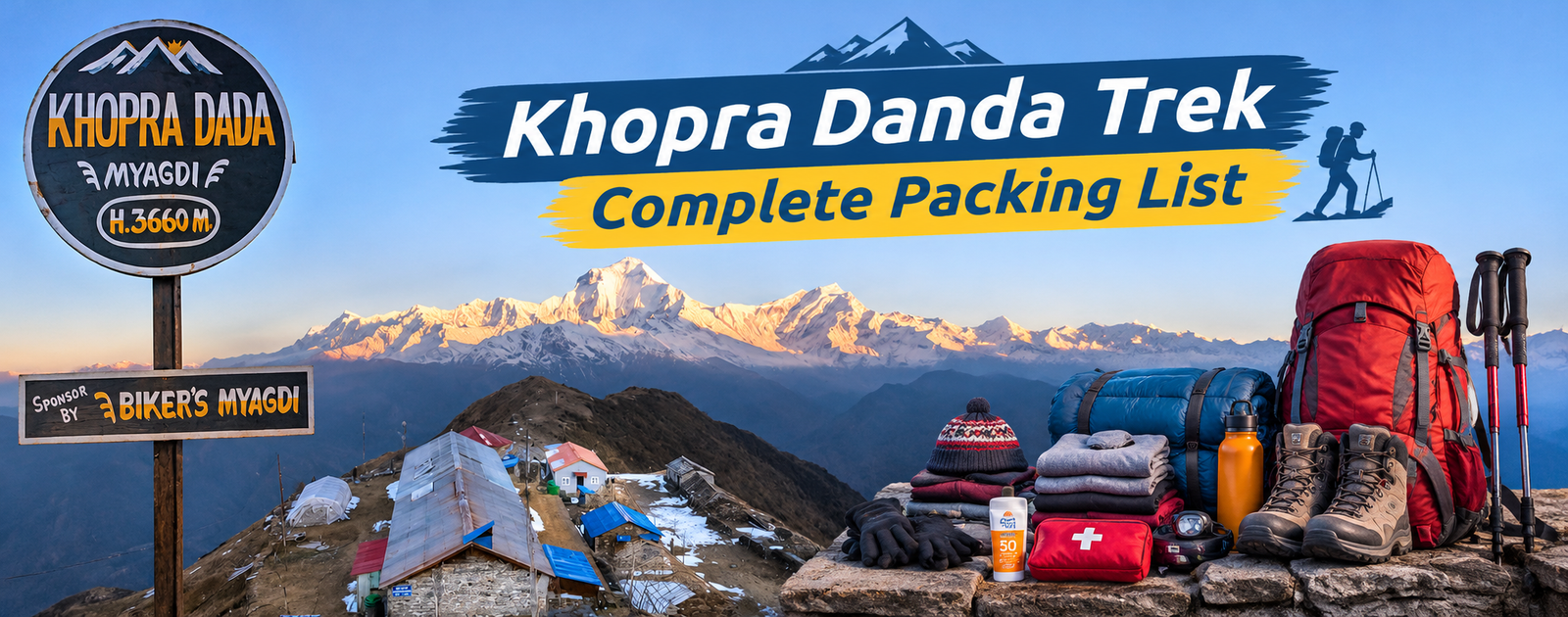
Packing list for Khopra Danda Trek is one of the most common requests we get from clients once their booking is confirmed, and for good reason given how much comfort depends on getting this part right. Packing correctly for the Khopra Danda Trek matters more than it might for a shorter, lower altitude walk, simply because the route spans such a wide range of conditions in a single trip. You begin in the relatively warm, low lying streets of Kathmandu and Pokhara, move through humid, forested hill country around Ghandruk and Tadapani, and finish with a day hike up to nearly four thousand six hundred and sixty meters at Khayer Lake, where temperatures can sit well below freezing even in seasons that feel comfortable lower down. Getting your gear right for that full range, without overpacking and overloading your porter in the process, takes a bit of thought, and that is exactly what this guide is for.
Rather than simply handing you a checklist with no context, we want to walk through why each category of gear matters, what actually works well on this specific route based on years of running this trek, and where you can cut corners safely versus where it genuinely pays to invest in better equipment. By the end, you should have a clear, realistic picture of what to bring, what to rent locally, and what to leave at home entirely, along with an understanding of why each recommendation exists rather than a list you simply follow without knowing the reasoning behind it.
Understanding the Layering System
Nearly every piece of clothing advice for this trek comes back to the same basic principle, layering. Rather than packing one or two heavy items meant to handle everything, you want several lighter layers you can add or remove through the day as temperature and exertion change, since a typical day can start cold, warm up considerably under direct sun, and cool rapidly again the moment you stop moving.
- Base layer: sits directly against your skin, and its job is moisture management rather than warmth. A good moisture wicking long sleeve top and matching bottoms, made from merino wool or a synthetic blend rather than cotton, pulls sweat away from your body so you do not end up cold and damp once you stop exerting yourself. Cotton is worth actively avoiding, since it holds moisture rather than moving it away.
- Mid layer: provides the bulk of your insulation, typically a fleece or lightweight synthetic insulated jacket. This is the piece you will add and remove most often, so look for something that packs down small and is easy to put on or take off without removing your pack.
- Outer shell: a waterproof and windproof jacket worn over the mid layer, protecting against rain, snow, and wind without necessarily providing much insulation on its own. A good shell combined with the right mid layer handles the vast majority of conditions on this route.
- Down jacket: for the coldest stretches, particularly mornings at Khopra Ridge and the approach to Khayer Lake in autumn and winter, worn as your outermost insulating layer when stationary or during the coldest parts of the day. This is one item worth investing in rather than skimping on.
Bottoms and Trekking Trousers
- Trekking trousers: comfortable, quick drying, ideally with some stretch for steep sections. Many trekkers prefer zip off legs that convert to shorts for warmer lower elevation days, though that is a matter of preference.
- Thermal leggings: worn underneath for extra warmth on cold mornings and evenings, particularly at the higher camps, rather than as a separate outer layer.
- Waterproof trousers: worth packing even outside the core monsoon season, since sudden showers are possible in spring and early autumn, and a dry, windproof layer adds real comfort during the coldest part of the Khayer Lake excursion.
Footwear and Socks
- Trekking boots: arguably the single most important piece of gear on this trip. A sturdy pair with good ankle support, broken in through at least a few weeks of regular walking beforehand, handles this route’s terrain far better than lighter trail shoes, particularly the stone steps between Kimche and Tadapani and the rockier ground near Khopra Ridge and Khayer Lake. Blisters from new or poorly fitted boots are one of the most common and most avoidable problems we see, so breaking your boots in before Nepal is genuinely high value preparation.
- Hiking socks: several pairs of quality wool or wool blend socks rather than ordinary cotton, which holds moisture and contributes to blisters.
- Liner socks: a thinner sock worn underneath your main hiking sock, worthwhile for anyone prone to blisters since it reduces friction.
- Camp shoes or sandals: lightweight and comfortable, giving your feet a break from boots and making evening walks around the lodge more pleasant.
Sleeping Gear
- Sleeping bag: teahouse blankets are often not warm enough for the colder nights at higher elevations, particularly Chistibung, Khopra Ridge, and autumn/winter months, so bring your own rated for temperatures at or below freezing. This single item does more for your overall comfort than almost anything else on this list.
- Sleeping bag liner: adds a further layer of warmth and keeps your bag cleaner over a multi night trek, a small addition worth the modest extra weight.
- Renting: if you do not already own a suitable cold weather bag, renting one in Kathmandu or Pokhara is a practical, economical option, and our team can point you to reliable rental shops once you arrive.
Headwear, Hands, and Extremities
- Warm hat: covering your ears, essential for colder mornings and evenings throughout the trek.
- Sun hat or cap with a brim: equally important for the exposed, higher elevation sections where direct sun exposure is intense even when the air feels cool.
- Gloves (two pairs): a lighter pair for general use throughout most of the trek, plus a warmer, insulated pair specifically for the coldest mornings and the Khayer Lake excursion, which reaches a genuinely cold elevation where one thin pair is rarely enough.
- Sunglasses: quality, with strong ultraviolet protection, essential rather than optional at these elevations, where reflected light off snow near Khopra Ridge or Khayer Lake can cause real eye strain without adequate protection.
- Buff or neck gaiter: a small, versatile addition that works as sun protection, wind protection, and an extra layer of warmth around the neck and lower face.
Your Daypack and What Goes In It
Since your main duffel bag travels with your porter, you only need to carry a daypack of around thirty liters, large enough for each day’s essentials:
- Water, snacks, and an extra layer
- Your camera, sun protection, and other personal essentials
- A rain cover, a worthwhile small addition protecting your electronics and spare layers if weather turns unexpectedly
- Quick access items such as sunscreen, lip balm, and your water bottle, kept where you can reach them without stopping
Trekking Poles
Trekking poles are genuinely useful on this route, particularly on the long descent from Ghorepani through Ulleri near the end of the itinerary, which involves a notably long and relentless stretch of stone steps that can be hard on the knees without additional support. Poles also help considerably on the steeper, less even terrain approaching Khopra Ridge and Khayer Lake, providing extra stability and reducing strain on your legs across the cumulative walking days of a thirteen day itinerary. If you do not already own a pair, lightweight collapsible poles are inexpensive and widely available to rent or buy in both Kathmandu and Pokhara before you begin trekking.
Electronics and Keeping Devices Charged
- Charging: most lodges offer device charging for a small fee, though reliability drops the higher and more remote you travel, noticeably less consistent at Chistibung, Khopra Ridge, and Swanta than the larger villages lower on the route.
- Spare camera batteries: one or two if photography matters to you on this trip.
- Portable power bank: to top up whenever reliable electricity is available at an earlier stop.
- Universal adapter: lightweight, since outlet types and voltage can vary between lodges.
- Cold weather tip: cold temperatures at higher elevations drain batteries considerably faster, so keep spares in an inner pocket close to your body rather than an outer pocket, particularly for the Khayer Lake excursion.
Documents, Money, and Essentials
- Passport, travel insurance details, and permits: including your Annapurna Conservation Area Permit and Trekkers Information Management System card, kept in a secure, easily accessible pocket, since these are checked at several official checkpoints along the route.
- Cash: a reasonable amount of Nepali rupees for personal expenses during the trek, since card payment is essentially unavailable once you leave Pokhara, covering bottled drinks, hot showers, device charging, and souvenirs.
- No ATMs on route: there are no ATMs or banking facilities anywhere along the trekking route itself, so withdraw or exchange enough cash in Pokhara before heading to the trailhead.
First Aid and Personal Health Items
- Personal medication: any regular medication you take, in enough quantity to cover your entire trip plus a reasonable buffer in case of delays, even though your guide also carries a comprehensive first aid kit.
- Blister plasters and pain relief: whatever you normally use.
- Rehydration salts.
- Altitude medication: a small supply if your doctor has recommended it, discussed ahead of time given the elevation reached at Khayer Lake.
- Hand sanitizer and tissues or toilet paper: not always provided at lodges along the route, particularly the higher, more remote stops.
Toiletries and Personal Care
- Biodegradable soap: a small bottle serves for both washing and basic laundry along the trail.
- Sunscreen: strong protection, essential given the intensity of sun exposure at altitude.
- Lip balm with sun protection: prevents the cracked, sun damaged lips that are a common minor complaint among trekkers who forget this small item.
- Quick drying travel towel: takes up little space and dries faster than a standard towel, which matters given limited laundry and drying opportunities along the route.
Food and Snacks
Meals are provided throughout the trek at the lodges where you stay, generally built around dal bhat and other standard Nepali dishes, with reasonably varied options available at the lower villages and a narrower selection at the higher, more remote stops. Many trekkers still like to bring a modest supply of personal snacks such as energy bars, nuts, or dried fruit for the longer walking days, particularly the Khayer Lake excursion and the final descent through Ghorepani and Ulleri, both of which are physically demanding enough that extra energy on hand is genuinely useful rather than simply a comfort item.
What to Rent Versus What to Buy
- Bring your own if you already own it: quality trekking boots, a warm sleeping bag, and a good down jacket are worth bringing from home, since familiar, already broken in equipment reduces the chance of unexpected discomfort on the trail.
- Rent if you do not: both Kathmandu and Pokhara have numerous outdoor gear shops offering rental and purchase options for sleeping bags, down jackets, trekking poles, and even boots, at prices considerably lower than buying premium new equipment for a single trip. Renting makes particular sense for bulky items like sleeping bags and down jackets, while boots and base layers are generally worth owning and breaking in yourself given how much comfort depends on a proper personal fit.
- Our recommendation: we are glad to point you toward reliable rental shops once you arrive, and generally suggest allowing a bit of extra time in Pokhara before heading to the trailhead to sort out any last minute gear needs, since the selection and prices there tend to be excellent.
How Many of Each Item You Actually Need
- Base layers: two to three sets, since you can rinse and dry items along the way at the lower, warmer villages, and moisture wicking fabrics dry faster than cotton even in cooler mountain air.
- Hiking socks: four to five pairs, enough rotation to keep feet comfortable without overloading your duffel bag.
- Mid layer and outer shell: one good quality piece of each is usually enough, worn repeatedly rather than rotated daily.
- Down jacket, sleeping bag, and waterproof trousers: one of each, used repeatedly rather than needing multiples.
- Underwear: pack a slightly higher quantity than other items, since comfort here matters disproportionately over a multi day trek, and quick drying synthetic options outperform cotton.
Laundry Along the Trail
Laundry options along the route are limited but not entirely absent, particularly at the larger, lower villages such as Ghandruk and Tadapani, where some lodges offer basic washing services for a small fee, or where you can rinse lighter items yourself using a small amount of biodegradable soap. Drying conditions vary considerably by season, with sunny autumn afternoons offering reasonably quick drying times for lightweight synthetic fabrics hung outside a lodge, while damp spring conditions or the cold of winter can make overnight drying unreliable. For this reason, packing slightly more of your lightest, quickest drying items, such as base layers and socks, gives you more flexibility than relying heavily on laundry working out exactly when you need it to.
At the higher, more remote stops such as Chistibung, Khopra Ridge, and Swanta, laundry facilities are essentially nonexistent, so plan to arrive at these points with enough clean layers already in rotation to get through that stretch of the itinerary without needing to wash anything until you descend again to a larger village.
Renting Gear: Kathmandu Versus Pokhara
- Kathmandu (Thamel): one of the highest concentrations of trekking gear shops in the country, with extensive experience outfitting travelers heading to every major trekking region, and often slightly better selection for less common sizes.
- Pokhara (Lakeside): more specifically tuned to Annapurna region treks given the volume of trekkers passing through on their way to trailheads like Kimche and Nayapul, with prices frequently a little more competitive.
- Our suggestion: handle any last minute gear needs in Pokhara rather than Kathmandu, since it sits closer to the actual start of your trek, rather than carrying rented gear across the bus or flight journey between the two cities.
What Experienced Guides Say Surprises First Time Trekkers
- Lip balm with sun protection: mentioned more often than almost anything else, since the combination of wind, sun, and altitude near Khopra Ridge chaps lips faster than most people expect, even in cooler weather.
- Buff or neck gaiter: comes up almost as often, one of the smallest, cheapest items that ends up getting used constantly, from sun protection to dust control to extra warmth in the evening.
- Cold hands on the Khayer Lake climb: first time trekkers consistently underestimate how cold their hands get during the early morning climb, even when the rest of their body feels adequately dressed, which is why a genuinely warm, dedicated pair of gloves for that single excursion is worth taking seriously.
Adjusting Your Packing List by Season
Exactly what you need shifts meaningfully depending on when you travel, a topic we cover in detail in our guide to the best time to trek Khopra Danda. In short, autumn and winter trekkers need to prioritize serious cold weather gear given colder overnight temperatures, particularly from late October onward, while spring trekkers can generally pack slightly lighter insulation but should prioritize reliable rain protection given the gradually increasing chance of afternoon showers as the season progresses. Whatever season you choose, our pre departure information package includes a packing list tailored specifically to your travel dates, so you are not left guessing which version of this general advice applies most directly to your trip.
Porter Weight Limits and Your Duffel Bag
Porter service on this trek is based on a combined weight limit of around twenty kilograms per trekker, typically with one porter assigned to carry the bags of two trekkers. A sturdy duffel bag, which we provide as part of your package and which you are welcome to keep after the trip, is the standard way to pack everything your porter will carry, while your daypack holds what you need during the day. If your packed duffel bag exceeds the standard weight limit, you will need to either remove some items before departure or arrange and pay for an additional porter, since overloading a single porter beyond a safe and fair limit is not something we allow for the wellbeing of our staff. Most trekkers find that following this packing list keeps them comfortably within the standard allowance without needing to make difficult last minute cuts.
Packing Strategy Inside Your Duffel Bag
- Packing cubes or stuff sacks: separate clothing by category, such as base layers, sleep clothing, and spare socks, which makes evening and morning routines considerably faster and helps you spot anything missing or still damp.
- Sleeping bag placement: keep it near the top or in its own easily accessible compartment, saving time at the end of a long walking day when getting warm quickly matters most.
- Dry bag or sealed plastic bag: for anything electronic or any spare layer you might need mid trek, an extra safeguard against moisture even though the duffel itself is generally weather resistant, meaningfully reducing the risk of a damp sleeping bag or wet electronics after an unexpected shower during transport.
Balancing Weight Against Comfort
Every item on this list adds some weight, and the natural tension in packing for any multi day trek is balancing genuine comfort against staying within a reasonable, porter friendly load. Our general advice is to be strict about redundancy, meaning avoid packing two items that serve essentially the same purpose, while being generous specifically with the items that address the coldest, most exposed parts of the itinerary, since skimping there has a disproportionate effect on your overall experience compared to skimping on, say, a fourth pair of trekking trousers you are unlikely to need.
A useful exercise before you finish packing is to lay everything out and ask, for each item, whether it addresses a real anticipated condition on this specific trek or whether it is simply something you packed out of general habit from other trips. Gear suited to a beach holiday or a city break has no place in a duffel bag headed to Khopra Ridge, and being honest with yourself during this final check is often the easiest way to shed a kilogram or two of genuinely unnecessary weight before you hand your bag over to your porter.
Common Packing Mistakes We See
- Boots that have not been properly broken in: the most frequent mistake we see, and one that significantly affects overall trek comfort.
- Underestimating the cold at Khopra Ridge and Khayer Lake: particularly in late autumn and winter, leading some trekkers to pack adequately for the lower, forested sections but not quite enough for the exposed higher camps.
- Overpacking: bringing far more clothing than needed for a thirteen day trip, adding unnecessary weight for both yourself and your porter, when laundry and reasonable reuse of clothing is entirely normal and expected.
- Forgetting enough cash before leaving Pokhara: there is no opportunity to correct this once on the trail given the complete absence of banking facilities, so double check your cash supply the night before departure, alongside your permits and passport.
A Sample Packing Checklist
Pulling everything together, here is what a well prepared trekker heading out on this route typically carries. This is not a rigid or exhaustive list, and personal preferences will always shift the details slightly, but it reflects the core of what consistently works well for trekkers completing this route across every season we operate it.
- Broken in trekking boots and lightweight camp shoes
- Several pairs of quality hiking socks
- Moisture wicking base layers
- A fleece or synthetic mid layer
- A warm down jacket
- A waterproof and windproof shell
- Trekking trousers, with thermal leggings underneath for cold mornings
- Waterproof trousers for unexpected rain
- A warm hat and a separate sun hat
- Two pairs of gloves of differing warmth
- Quality sunglasses
- A buff or neck gaiter
- A sleeping bag rated for freezing or below, ideally with a liner
- A personal first aid kit
- Basic toiletries and a quick drying towel
- A modest supply of personal snacks
- A reusable water bottle
- Trekking poles
- A camera with spare batteries (kept warm in an inner pocket)
- A portable power bank
- Sunscreen and lip balm
- A rain cover for your daypack
- Passport, travel insurance details, and permits
A Word on Quality Over Quantity
If your budget for gear is limited, we consistently advise spending more on fewer, better items rather than spreading a modest budget thinly across many cheaper pieces. A genuinely warm down jacket, a properly broken in pair of boots, and a sleeping bag rated for the conditions you will actually face matter far more to your overall comfort and safety than a wider wardrobe of mediocre layers. Secondhand or rental gear for the big ticket items, combined with a few well chosen personal pieces you already own or are willing to invest in, is a perfectly sound strategy for trekkers who do not plan to make high altitude trekking a frequent habit beyond this single trip.
Final Thoughts on Packing Well
Packing well for the Khopra Danda Trek is less about bringing an enormous quantity of gear and more about bringing the right items for the specific range of conditions this particular route covers, from the relatively mild lower villages to the genuinely cold, exposed ridge near Khayer Lake. Prioritize a properly broken in pair of boots, a warm sleeping bag, and a reliable layering system over your torso, and the rest of this list falls into place fairly naturally around those core essentials.
If you still have questions about what to bring, whether something specific is worth renting locally, how your packing list should shift based on your planned travel dates, or whether a particular item on this list genuinely applies to your situation, our team at Next Trip Nepal is glad to help before you arrive. Every confirmed client booking the Khopra Danda Trek receives a complete, detailed packing list as part of their pre departure information, tailored to their specific season and itinerary, so you can prepare with genuine confidence rather than guessing at what a route combining warm lowland villages, cold high ridges, and a sacred alpine lake actually demands from your gear.