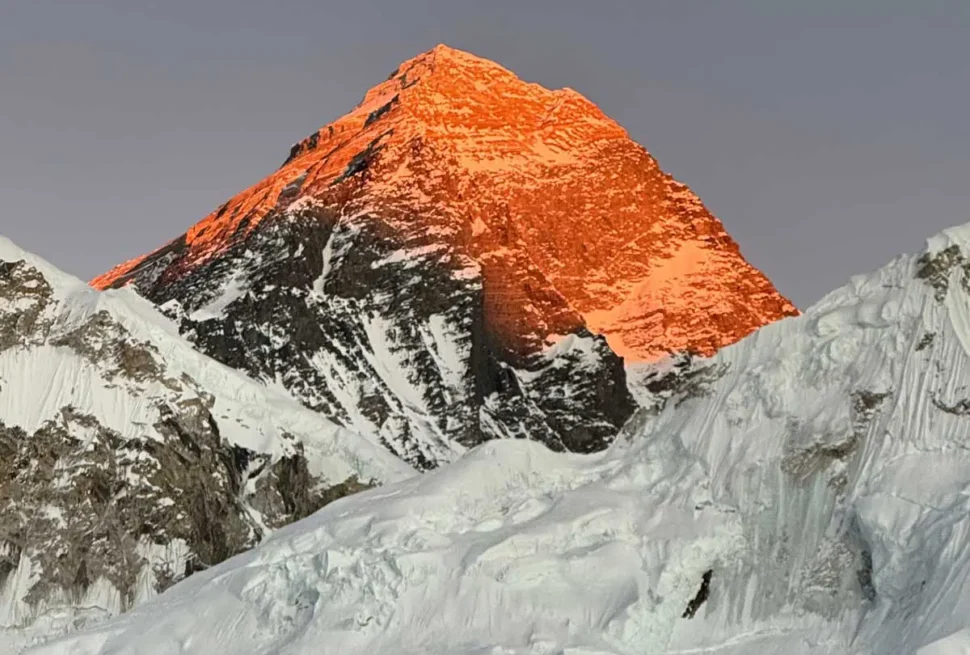
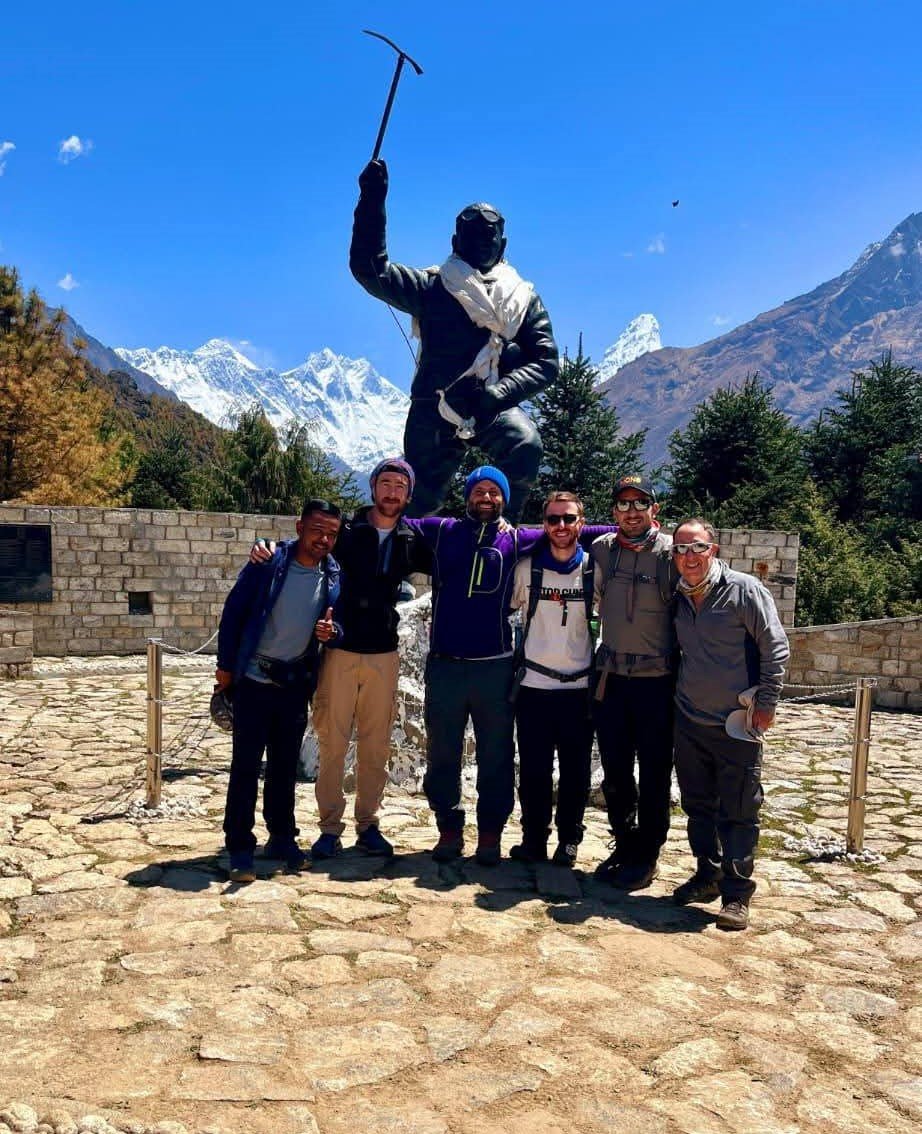
On the 17 day Everest Base Camp with Gokyo Lake Trek, Day 4 looks unremarkable on paper. It reads as a single word in most itineraries: acclimatization. No new village, no pass, no big mileage number to post on social media. Yet after guiding groups through Namche Bazaar for years on this exact route, we can say plainly that this is the single day most likely to decide whether a trekker reaches Gokyo Ri, crosses Cho La Pass, and stands at Everest Base Camp, or turns back early with a headache and a bruised sense of what went wrong.
This guide is not a general tourist introduction to Namche. For that, our full Namche Bazaar guide covers the village in more depth. What follows here is narrower and more useful for anyone about to walk this specific route: how to actually use the Namche acclimatization day so that it does its job, what the science behind it really means in practice, a realistic hour by hour plan, the mistakes that quietly sabotage this day, and the warning signs that our guides watch for with a pulse oximeter every morning and evening from this point onward.
Why This Day Exists: The Climb High, Sleep Low Principle
Altitude problems are not caused by height alone. They are caused by how fast the body is asked to adapt to reduced oxygen availability. At sea level, the air is thick with oxygen molecules per breath. By 3440 meters, where Namche sits, there is roughly two thirds of the oxygen pressure found at sea level. The body can adjust to this, but adjustment takes time measured in days, not hours, and it happens through a set of physiological changes rather than a single switch flipping.
The core idea behind this rest day is simple to state and easy to underestimate: climb high during the day, then sleep low at night. Here is what is actually happening inside the body when a trekker follows that pattern correctly.
- Breathing rate and depth increase at higher elevation, which is the body’s fastest response to lower oxygen pressure, kicking in within minutes of gaining altitude.
- The kidneys begin to adjust blood chemistry over the following one to three days, which helps the blood carry oxygen more effectively.
- Over several days, the body increases the number of red blood cells in circulation, improving long term oxygen carrying capacity. This process is slower and is only beginning during a short trek, but the earlier stages of adaptation are already active by Day 4.
- Short exposure to higher altitude during the day acts as a mild stimulus for these adaptations without keeping the body under that oxygen stress for a full 24 hours.
- Returning to sleep at a lower elevation matters because sleep is when breathing naturally becomes shallower and slower for everyone, altitude or not. Combining reduced oxygen with reduced breathing depth overnight is exactly when acute mountain sickness symptoms tend to intensify, so sleeping lower removes that compounding effect.
In practical terms for this itinerary, that means hiking up toward the Everest View Hotel at 3880 meters or Khumjung village at 3790 meters during the day, then walking back down to sleep at Namche’s 3440 meters that same night. The gain during the excursion is roughly 400 to 450 meters, enough to give the body a genuine altitude stimulus, but the trekker never actually sleeps at that higher point. For a deeper explanation of how acute mountain sickness develops and how it is managed on this trek, our dedicated page on altitude sickness on the Everest Base Camp trek covers the medical detail in full.
We tell every group the same thing before this day begins: the rest day is not really about resting. It is about controlled, deliberate exposure to altitude in the safest possible window, followed by proper recovery. A trekker who spends the day lying in a lodge room burns the opportunity that this day is built around.
Why This Day Matters More Here Than on the Standard EBC Trek
Every itinerary to Everest Base Camp includes a Namche rest day. What separates this specific Gokyo and Cho La route is what comes immediately after it. On the standard out and back Everest Base Camp trek, trekkers get a second major acclimatization opportunity later at Dingboche, usually with a hike up toward Nangkartshang or the Chukhung side valley. That second buffer day gives the body another supervised, low risk chance to adjust before pushing to the highest points of the trip.
This Gokyo route does not follow that pattern in the same way. After leaving Namche on Day 5 for Phortse Thanga at 3680 meters, the trek heads into the Gokyo valley and then over Cho La Pass, spending many consecutive nights above 4000 meters and crossing three separate points above 5300 meters before the trip is finished:
- Gokyo Ri at 5360 meters, a demanding early morning viewpoint climb from Gokyo village.
- Cho La Pass at 5420 meters, a technical high pass crossing that typically involves snow and sometimes ice underfoot.
- Everest Base Camp itself at 5364 meters, reached later in the itinerary after the pass.
- Kala Patthar at 5555 meters, the highest point of the entire trip, climbed near the end.
That is a lot of sustained time in thin air with far less structural redundancy built into the itinerary than the standard route has. In practice, this means the Namche acclimatization day, combined with the gradual, well paced village to village elevation gain that follows through Phortse Thanga, Machhermo, and Gokyo, is doing most of the acclimatization work for the entire trek. There is no second Dingboche style safety net waiting later to correct for a rushed or wasted day in Namche. If a trekker treats this day casually, the itinerary does not automatically give them another equivalent chance to fix that mistake before the altitude gets serious.
We are direct with clients about this before they even leave Kathmandu: on the Gokyo Lake and Cho La Pass itinerary, the Namche day is not one of several acclimatization opportunities. For long stretches of the trek, it is close to the only one. That single fact should change how seriously a trekker approaches it.
Everest View Hotel or Khumjung Village: Which Hike to Choose
Guides offer two realistic acclimatization hike options from Namche on this day, and groups often ask which one is better. The honest answer is that both work for the purpose of climb high, sleep low, but they suit different trekkers and different goals. Below is a direct comparison based on what each hike actually delivers.
| Factor | Everest View Hotel (3880 m) | Khumjung Village (3790 m) |
|---|---|---|
| Altitude gained from Namche | About 440 meters | About 350 meters |
| Physical difficulty | Steeper, more sustained climbing, feels harder in thin air | Moderate, gentler grade, easier pacing |
| Views of Everest and surrounding peaks | Excellent, considered one of the best easily reached viewpoints of Everest, Lhotse, and Ama Dablam | Good views, though generally less dramatic than the hotel’s terrace |
| Cultural and village experience | Limited, mainly a lodge and viewpoint | Real Sherpa farming village, monastery with a relic said to be a yeti scalp, local school built with Sir Edmund Hillary’s support |
| Best suited for | Trekkers who feel strong, want maximum altitude stimulus, and prioritize the classic Everest photograph | Trekkers who want a gentler acclimatization gain, or want cultural context alongside the altitude benefit |
| Typical round trip time from Namche | About 4 to 5 hours including rest stops | About 3 to 4 hours including rest stops |
Some groups combine both in one longer loop, visiting the Everest View Hotel first and descending through Khumjung and Khunde on the way back to Namche. This is a good option for trekkers who are feeling strong on Day 4 and want to maximize the acclimatization value of the day, since the extra time at moderate altitude adds to the stimulus without adding real risk, as long as the group still returns to sleep in Namche that night. For trekkers who arrived in Namche the day before feeling any early symptoms, we recommend the shorter Khumjung option rather than pushing for the Everest View Hotel simply for the view.
What to Pack for the Acclimatization Hike Itself
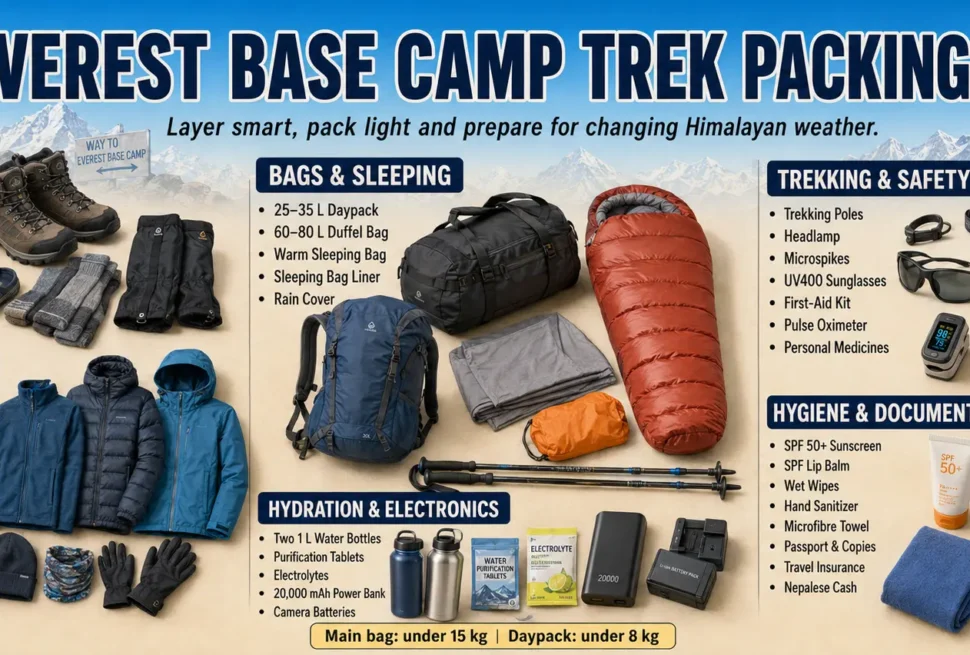
Because the weather above Namche can change quickly, and because the point of this hike is to gain height and actually feel the effect of altitude rather than simply walk fast, it is worth carrying a small dedicated day bag rather than heading out with nothing. Guides on this route generally ask clients to bring the following.
- A warm mid layer and a wind resistant outer shell, since the ridge above Namche is more exposed than the sheltered river valley below it and temperatures drop noticeably once the trail climbs above the tree line.
- Sun protection including sunglasses, sunscreen, and a hat, since the sun at this altitude is far stronger than it feels, even on a cool or partly cloudy morning.
- At least one liter of water, refilled at Namche before departure, plus a few high energy snacks such as biscuits, dried fruit, or chocolate for the rest stops.
- A camera or phone with a charged battery, since cold temperatures drain batteries faster than usual and the views from the Everest View Hotel terrace are genuinely worth capturing.
- Basic personal medication, including anything prescribed for altitude, along with simple pain relief in case a mild headache develops during the walk.
- Trekking poles if you normally use them, since the descent back into Namche is steep in places and poles reduce strain on the knees after an already tiring first few days of trekking.
A Realistic Hour by Hour Plan for the Day
Trekkers often imagine a rest day as unstructured, but the days that go best on this route are the ones with a clear plan. Below is the schedule we typically run with groups on the combined Everest View Hotel and Khumjung loop, adjusted slightly depending on group fitness and weather.
| Time | Activity |
|---|---|
| 6:30 am to 7:00 am | Wake up, guide checks pulse oximeter readings for every group member before breakfast |
| 7:00 am to 8:00 am | Breakfast, hydration check, and a slow start rather than a rush out the door |
| 8:00 am to 8:30 am | Depart Namche, walk up through the Sagarmatha National Park entrance area toward the ridge trail |
| 8:30 am to 10:00 am | Climb to the Everest View Hotel, slow and steady pace, several short rest stops |
| 10:00 am to 10:45 am | Rest at the hotel terrace, photographs of Everest, Lhotse, and Ama Dablam, tea or hot drink |
| 10:45 am to 12:00 pm | Walk down to Khumjung village, visit the monastery and the school |
| 12:00 pm to 1:00 pm | Lunch in Khumjung or Khunde |
| 1:00 pm to 2:30 pm | Walk back down to Namche, arriving with plenty of daylight left |
| 2:30 pm to 4:00 pm | Free time in Namche for errands, market browsing, or resting in the lodge |
| 4:00 pm to 5:30 pm | Sagarmatha National Park visitor center and museum visit, or gear shop browsing |
| 5:30 pm to 6:30 pm | Rest, journaling, or reading in the lodge, avoid strenuous activity from here onward |
| 6:30 pm to 8:00 pm | Dinner, guide runs the evening pulse oximeter and symptom check with each trekker |
| 8:00 pm to 9:00 pm | Wind down, hydrate, prepare gear for Day 5, lights out early |
The pattern worth noticing here is that the physically demanding part of the day is finished by early afternoon. The second half of the day is deliberately built around lower exertion activities. That structure is not accidental. It reflects how the climb high, sleep low principle is meant to work: a genuine altitude stimulus in the first part of the day, followed by real recovery, food, fluids, and sleep preparation in the second half.
How Weather and Timing Affect This Day
Namche sits at the point where the Dudh Kosi and Bhote Kosi valleys meet, and cloud cover often builds through the late morning even on otherwise clear days. This matters directly for how the rest day should be planned, since the views from both the Everest View Hotel and the ridge above Khumjung depend heavily on timing.
- Mornings are almost always clearer than afternoons in this part of the Khumbu, which is the main reason our groups leave Namche by 8:00 am or 8:30 am rather than later in the morning.
- A late departure often means arriving at the Everest View Hotel just as cloud begins to build around Everest and Lhotse, which can turn a highlight of the day into a disappointing walk to a viewpoint with no view.
- During the main spring and autumn trekking seasons, the trail above Namche can be genuinely busy with other groups on their own rest days, so an early start also means a quieter, more pleasant walk before the crowds build.
- In winter months, an early start matters even more, since temperatures on the exposed ridge above Namche drop quickly once the sun moves behind the surrounding peaks in early afternoon.
- If the weather looks poor for the whole day, guides will still take the group up to at least Khumjung for the altitude benefit, since the acclimatization value of the hike does not depend on a clear view, even though the experience is obviously better with one.
What Else to Do With the Rest of the Day
Once the acclimatization hike is finished, trekkers usually have several free hours in Namche before dinner. How that time gets used matters more than most people expect. Here is what we recommend, and what we steer clients away from.
Exploring Namche’s Market Streets
- Namche is the main Sherpa administrative and trading hub of the Khumbu, and its stepped market streets are worth a slow walk, not a rushed one.
- A Saturday market draws traders and farmers from surrounding villages, so if the rest day happens to fall on a Saturday, it is worth timing the afternoon around it.
- Bakeries and cafes around the main square are good places to sit, drink tea or coffee, and let the body settle after the morning hike rather than continuing to move around at pace.
- Local shops sell everything from trekking snacks to religious items to warm clothing, and simply walking these streets at an easy pace is itself gentle, useful activity rather than wasted time.
Sagarmatha National Park Visitor Center and Museum
- The visitor center sits above the main village and gives useful context on the park’s ecology, the peaks visible from the area, and the mountaineering history of the region.
- The walk up to it adds a small amount of extra gentle elevation gain, which is a bonus rather than a problem on an acclimatization day, as long as the trekker is not already showing symptoms.
- It is a good option for the late afternoon slot, after the main hike and after lunch, since it does not require much stamina but still gets people out of the lodge.
Gear Shop Browsing for Last Minute Items
- Namche has the best selection of gear shops anywhere on the trail, genuine and replica alike, and this is the last realistic point to fix a gear gap before the trek moves into more remote territory.
- Common last minute purchases include extra warm layers, down jackets, gloves, sunglasses, trekking poles, and basic medication.
- Namche also has the region’s only ATMs, run by Standard Chartered and Global IME Bank, though these frequently run out of cash during peak trekking season. Trekkers should not assume they can withdraw money reliably here and should carry enough cash from Kathmandu or Lukla to cover the rest of the trek.
- Buying gear should be treated as a short errand, not an excuse for a long walk up and down the village’s steep steps repeatedly.
Laundry and Charging Logistics
- Namche is generally the best place on the entire trek to get laundry done properly, since higher villages have limited water and drying conditions.
- Electricity and charging services are more available and often cheaper here than at higher altitude lodges, so charging phones, cameras, and power banks in Namche saves money and hassle later.
- Handling these errands in the early afternoon, once the main hike is finished, keeps the body in recovery mode rather than adding unnecessary walking later in the day.
Resting Properly Versus Overexerting on a Rest Day
This is the part where trekkers most often go wrong, in both directions.
- Some trekkers treat the rest day as a day off entirely and stay in bed or in the lodge dining room all day. This wastes the acclimatization value of the day, since there is no altitude stimulus without actually gaining height.
- Other trekkers, feeling strong and eager to prove their fitness, turn the rest day into an unofficial extra trekking day, adding long side excursions beyond the recommended hike, sometimes without telling their guide.
- The correct approach sits between these two extremes: a deliberate, moderate hike in the morning, followed by genuine rest in the afternoon and evening, with light activity such as walking the market streets rather than further climbing.
- Napping is generally fine in the early afternoon if a trekker is tired, but late afternoon naps that run into evening can disrupt nighttime sleep, which is exactly what the day is trying to protect.
Why Skipping or Rushing This Day Is One of the Most Costly Mistakes on This Route
We see the same handful of situations repeat every season, and almost all of them trace back to how the Namche day was handled.
- Trekkers on a tight schedule sometimes ask guides to skip the rest day entirely and continue straight to Phortse Thanga a day early, usually because of flight bookings or limited vacation time. This removes the itinerary’s main acclimatization buffer at exactly the point where it matters most for this route.
- Some trekkers technically stay in Namche for the extra night but do not actually hike higher during the day, either resting in the lodge or only walking around the village itself, which stays at the same 3440 meter elevation. Without gaining altitude and returning, the climb high, sleep low benefit simply does not happen.
- Groups that feel strong sometimes decide to push through both the Everest View Hotel and Khumjung hikes at a fast pace with minimal rest stops, treating it as a fitness challenge rather than an acclimatization exercise. Moving too fast reduces the time the body has to register the altitude exposure and can also cause unnecessary fatigue heading into Day 5.
- Our own experience, echoed by broader data from the region, is that AMS affects roughly one quarter of trekkers arriving in Namche without prior acclimatization. That statistic alone should be reason enough to take this day seriously, since it means a meaningful share of every group is genuinely vulnerable at this altitude, not just a rare unlucky few.
- Because this specific itinerary goes on to spend many consecutive days above 4000 meters, with three separate points above 5300 meters still ahead, a trekker who arrives at Phortse Thanga already under recovered from Namche is starting the hardest section of the trek from a weaker position than the itinerary intends.
In our direct experience running this itinerary repeatedly, this single rest day, combined with the gradual altitude gain built into the rest of the route, is what prevents the majority of altitude related turnbacks. Trekkers who skip it, rush it, or misuse it are disproportionately represented among the small number of clients who end up needing to descend early or abandon the Gokyo and Cho La sections of the trip.
A pattern worth mentioning directly, since it shows up repeatedly on this route, is what happens to trekkers who feel completely fine through Namche, skip or shorten the rest day, and then start showing symptoms several days later at Machhermo or Gokyo. By that point, the options are far more limited than they would have been in Namche. Descent takes longer, communication is harder, and lodges are smaller and less equipped. A problem that could have been solved with one extra low risk day near 3440 meters can turn into a forced early exit from the trek entirely once it appears at 4470 meters or higher. This is the practical reason guides push back so consistently when a rushed schedule threatens this specific day.
Signs and Symptoms to Watch For During This Day
Part of what makes the Namche day useful is that it gives guides and trekkers an early, relatively low risk opportunity to see how a person’s body is actually responding to altitude, before the stakes get higher later in the trek. Everyone on the trip should know what to watch for, both in themselves and in trekking companions.
- Mild headache that comes and goes, especially one that responds to rest, fluids, and basic pain relief. This alone is common and not automatically a reason for concern.
- Persistent headache that does not improve with rest, hydration, or standard medication, which is a more meaningful warning sign.
- Loss of appetite or mild nausea during or after the acclimatization hike.
- Unusual fatigue that feels disproportionate to the actual effort of the hike, such as exhaustion after a moderate walk that would normally feel easy.
- Dizziness or a sense of unsteadiness, particularly when standing up quickly or during the climb itself.
- Shortness of breath that continues well after stopping to rest, rather than settling within a minute or two.
- Disturbed or unusually shallow sleep the night before this day, which can be an early indicator that the body is already under some altitude stress.
- Swelling in the hands, face, or ankles, which can appear at this altitude and is worth mentioning to a guide even if it seems minor.
- A resting pulse oximeter reading that is noticeably lower than it was in Phakding or Lukla, or one that is trending downward across the morning and evening checks rather than stabilizing.
- Any confusion, difficulty with coordination, or unusual clumsiness, which are more serious signs and should be reported immediately rather than waited out.
This is exactly why our guides carry a pulse oximeter and check every group member each morning and evening from Namche onward. A single reading on its own is not especially meaningful, since normal blood oxygen levels vary between individuals and change naturally with altitude. What matters is the trend across the day and across several days. A reading that drops sharply, or one that fails to recover after a full night’s rest at the same altitude, tells a guide far more than any single number does. Combining pulse oximeter trends with a direct conversation about how a trekker is actually feeling gives a much more reliable picture than either method alone. For a full breakdown of AMS symptoms and how they are managed at each stage of the trek, see our guide to altitude sickness on the Everest Base Camp trek.
If a trekker shows any of the more serious signs on this list during the Namche day, the right response is not to push on to Phortse Thanga as scheduled. It is to consider an additional rest day in Namche itself before continuing. Namche is one of the few places on this route with reasonably accessible medical support and communication, including a well known clinic, which makes it a sensible place to pause an extra day if there is genuine doubt about how someone’s body is coping, rather than gambling that things will improve automatically at higher altitude.
Practical Tips for Sleep Quality and Hydration on This Day
Since this day is fundamentally about giving the body the best possible conditions to adapt, sleep and hydration deserve the same attention as the hike itself.
Hydration
- Aim for noticeably more water on this day than usual, since altitude increases fluid loss through faster breathing and increased urination, even when a person does not feel unusually thirsty.
- Carry water on the acclimatization hike itself and drink at every rest stop, rather than waiting until returning to the lodge.
- Herbal tea and soup at meals count toward daily fluid intake and are a good way to warm up while also rehydrating.
- Limit alcohol completely on this day. It disrupts sleep quality and worsens dehydration at altitude, both of which work directly against the point of the rest day.
- Limit caffeine in the evening specifically, even though it is fine earlier in the day, since it can interfere with the deep sleep this day is designed to protect.
Sleep
- Avoid long naps in the late afternoon or evening, since these can make it harder to fall asleep at the normal bedtime and reduce the amount of deep, restorative sleep overnight.
- Keep the room as dark and quiet as reasonably possible, using an eye mask and earplugs if needed, since Namche lodges can be busy with other trekking groups.
- Avoid screens and bright device use for at least 30 minutes before trying to sleep, which helps the body wind down naturally.
- Use a properly rated sleeping bag liner or extra layer if the room feels cold, since being too cold overnight fragments sleep even when altitude itself is not the main issue.
- If sleep feels unusually disturbed or broken by frequent waking, mention this to the guide the next morning rather than assuming it is unimportant, since disrupted sleep at this stage can be an early sign worth tracking.
The Role of Food and Diet on This Day
What a trekker eats on the rest day also plays a real part in how well the body recovers and adapts, even though this gets far less attention than the hike itself.
- Favor carbohydrate rich meals such as rice, potatoes, pasta, and bread, since these are the easiest fuel source for the body to use at altitude and support the extra energy demand of the acclimatization hike.
- Include some protein at each meal where possible, whether from eggs, lentils, or meat if it is available and appeals to you, since protein supports general recovery after exertion.
- Garlic soup is a Namche staple for a reason beyond taste alone, many trekkers and guides believe it helps with acclimatization, and at minimum it is warm, hydrating, and easy on the stomach.
- Avoid unusually heavy, greasy, or unfamiliar foods on this specific day, since digestive upset combined with altitude adjustment makes it harder to tell which symptom is causing which problem.
- Keep portions reasonable rather than either skipping meals due to reduced appetite or overeating out of boredom, both of which are common at this stage of a trek and both of which can affect how well a person sleeps that night.
How This One Rest Day Compares to the Standard EBC Trek’s Acclimatization Margin
It is worth being honest with trekkers about how this specific route’s acclimatization structure compares to the standard Everest Base Camp trek, since the two are not identical in risk profile even though they share the first four days.
- The standard out and back EBC trek includes a Namche rest day and typically a second rest and acclimatization day later at Dingboche, giving two clearly separated buffer points before the highest altitudes are reached.
- This Gokyo and Cho La itinerary relies far more heavily on the Namche day itself, plus the gradual, carefully staged elevation gain through Phortse Thanga, Machhermo, and Gokyo, since there is no equivalent second dedicated rest day built in before the Gokyo Ri and Cho La Pass sections.
- This route also reaches its first point above 5300 meters, Gokyo Ri at 5360 meters, notably earlier in relative trekking days than the standard route reaches Kala Patthar, which means the body has less total time to adapt before facing serious altitude.
- Crossing Cho La Pass at 5420 meters adds a technical, physically demanding high altitude crossing that does not exist on the standard route at all, which increases the value of arriving at that point already well acclimatized rather than still catching up.
- Because of this tighter structure, the Namche acclimatization day on this specific itinerary should be treated as more important, not equally important, compared to how it functions on the standard trek. The margin for error is genuinely smaller.
This does not mean the Gokyo and Cho La route is unsafe. It means the itinerary is designed with a different acclimatization architecture, one that depends on trekkers and guides using the Namche day correctly and respecting the paced walking days that follow it, rather than relying on a second major buffer to correct mistakes later. This is also part of why we are cautious about recommending this particular route to complete first time trekkers without adequate preparation. Anyone considering it as their first major trek should read our honest assessment of whether the Everest Base Camp trek is good for beginners before committing, since the answer changes depending on fitness, prior altitude experience, and how much time is available for a properly paced itinerary.
Why You Should Never Pressure Your Guide to Skip or Shorten This Day
Every season, at least a few trekkers who feel genuinely fine in Namche ask their guide whether the group can skip the rest day and get a head start on Day 5. The logic feels reasonable from the trekker’s side: they feel strong, the weather looks good, and an extra day sounds like a chance to bank time or add an extra activity elsewhere in the trip. We understand the impulse, but we do not agree with it, and here is why.
- Feeling fine at 3440 meters says very little about how the same person will feel after several more days climbing toward 5000 meters and beyond. Early altitude tolerance is not a reliable predictor of tolerance at much higher elevation, since AMS risk increases with both altitude and rate of ascent, not just one or the other.
- The rest day is not primarily for the fittest member of the group. Guides are responsible for the safety of every trekker in a group, and mixed ability groups are common. Skipping the day because one or two people feel strong ignores the real risk to others who may need it more.
- Our guides are trained to recognize early symptoms that trekkers themselves often dismiss or fail to notice, including subtle changes tracked through pulse oximeter readings. A trekker’s own sense of feeling fine is not the same as an objective assessment.
- Once a rest day is skipped, there is no way to retroactively give the body the adaptation time it would have had. If problems appear two or three days later at higher altitude, options for managing them safely are far more limited than they would have been back in Namche, which has better access to help, communication, and lower elevation for a rapid descent if needed.
- Reputable guides on this route, including ours, will decline a request to skip or shorten this day, not out of rigidity, but because the entire itinerary’s safety margin depends on it. A guide who agrees to skip it under pressure is not doing the group a favor.
If a trekker is genuinely concerned about time, the better solution is to plan the itinerary with enough total days from the outset, which is exactly how the 17 day Everest Base Camp with Gokyo Lake Trek itinerary is structured. The rest day is factored into the schedule for a reason, and treating it as optional undermines the very structure that makes the rest of the trek achievable.
Frequently Asked Questions
Do I really need to hike anywhere on the rest day, or can I just stay in Namche village?
You need to actually gain altitude and come back down for the day to provide any real acclimatization benefit. Staying at Namche’s own elevation of 3440 meters all day, even if you walk around the village itself, does not create the climb high, sleep low effect the day is designed around. The hike to the Everest View Hotel or Khumjung is not optional sightseeing, it is the functional purpose of the day.
Which hike should a beginner choose, Everest View Hotel or Khumjung?
For most first time high altitude trekkers, Khumjung is the gentler and generally safer choice, with a smaller altitude gain and an easier grade. The Everest View Hotel hike is steeper and gains more height, which is better suited to trekkers who already feel strong and have no early symptoms. Some groups combine both in one loop if energy and time allow.
What if I feel completely fine and think I do not need this rest day?
Feeling fine at 3440 meters is common and does not reliably predict how you will feel days later above 5000 meters. AMS risk builds with both altitude and pace of ascent, and symptoms can appear well after a person felt fine at a lower point. The rest day exists precisely because feelings in the moment are not a reliable safety signal on their own.
How often do guides check oxygen levels during this day?
Our guides check every group member’s pulse oximeter reading each morning and evening from Namche onward, continuing through the rest of the trek. A single reading matters less than the trend across several checks, so consistent monitoring at the same times each day gives a much clearer picture than one off measurements.
Can I shower and do laundry on the rest day, or will that use up too much energy?
Showering and laundry are fine and worth doing in Namche specifically, since services here are more reliable and often better than at higher villages later on the route. These are low effort activities and fit naturally into the afternoon window after the main acclimatization hike is finished.
Is it true that Namche has ATMs, and can I rely on them for cash?
Namche does have two ATMs, run by Standard Chartered and Global IME Bank, and this is the only place on the entire route with ATM access. However, these machines frequently run out of cash during busy trekking seasons, so it is safer to carry enough cash from Kathmandu or Lukla to cover your needs for the rest of the trip rather than counting on withdrawing money here.
What happens if I show symptoms during the rest day itself?
If you notice a headache that will not go away, unusual fatigue, nausea, dizziness, or any of the more serious warning signs, tell your guide immediately rather than waiting to see if it passes on its own. Depending on severity, the response may range from extra rest and monitoring to considering an additional rest day in Namche before continuing to Phortse Thanga. Our guides carry a pulse oximeter and are trained to make this call based on trends, not guesswork.
Is one rest day in Namche really enough for a route this demanding?
For most healthy, reasonably fit trekkers who use the day correctly, one properly used rest day combined with the gradual elevation gain built into the rest of this itinerary is generally sufficient. However, this route has less built in redundancy than the standard out and back EBC trek, since it lacks an equivalent second major rest day later at Dingboche. That makes using this one day correctly more important, not less, and it is also why guides remain willing to add an extra rest day later in the trek if trends on the pulse oximeter or a trekker’s symptoms suggest it is needed.
Can I contact the company before the trip to ask questions about this specific day or the route’s acclimatization plan?
Yes, this is exactly the kind of question we are happy to answer before departure. You can reach us directly on WhatsApp at +977 9869225929 or by email at nexttripnepal@gmail.com, and we can walk through the itinerary’s acclimatization structure in detail based on your fitness level and prior altitude experience.
Will an extra rest day in Namche ruin my flight or schedule if I need one?
If our guides recommend an extra rest day based on symptoms or pulse oximeter trends, we build that into the group’s planning as early as possible and communicate with you about the implications for the rest of the itinerary. It is always better to lose one day in Namche than to force a continuation that risks a much more serious problem, or a forced evacuation, higher up the route. When you book the Everest Base Camp with Gokyo Lake Trek, we recommend building at least one or two buffer days into your total trip length specifically for this reason.
Does age or previous trekking experience change how important this day is?
Age and fitness affect general trekking stamina, but they do not reliably predict who will struggle with altitude. Some very fit, experienced trekkers still develop AMS symptoms, while some older or less experienced trekkers acclimatize with no issues at all. Because of this, we treat the Namche rest day as equally important for every trekker in a group, regardless of fitness level or trekking history, rather than assuming stronger or more experienced trekkers can safely skip steps that others follow.
What is the single biggest mistake trekkers make on this specific day?
The most common mistake is treating the day as either a full rest with no hiking at all, or as an unofficial extra trekking day pushed at a fast pace. Both approaches reduce the acclimatization value the day is designed to provide. The second most common mistake is skipping the day entirely to save time, which removes the itinerary’s main safety buffer before the long high altitude section through Gokyo and Cho La Pass begins.
The Namche acclimatization day on this route is not a formality to get through before the trekking resumes. It is the foundation that the entire high altitude section of the Gokyo and Cho La route is built on. Used well, with a genuine altitude hike in the morning, real rest and hydration in the afternoon, and honest communication with your guide about how you actually feel, it dramatically improves the odds of reaching Gokyo Ri, crossing Cho La Pass, and standing at Everest Base Camp and Kala Patthar later in the trip. If you have questions about how this day fits into the full itinerary, or want to talk through your own preparation before booking, reach out to us on WhatsApp at +977 9869225929 or by email at nexttripnepal@gmail.com, and we will help you plan it properly from the start.
\n
Related Reading
\n
- Food and Nutrition on the Everest Base Camp with Gokyo Lake Trek
- \n
- Climbing Gokyo Ri at Sunrise: The Complete Guide
- \n
- Travel Insurance for the Cho La Pass Crossing
- \n
\n