
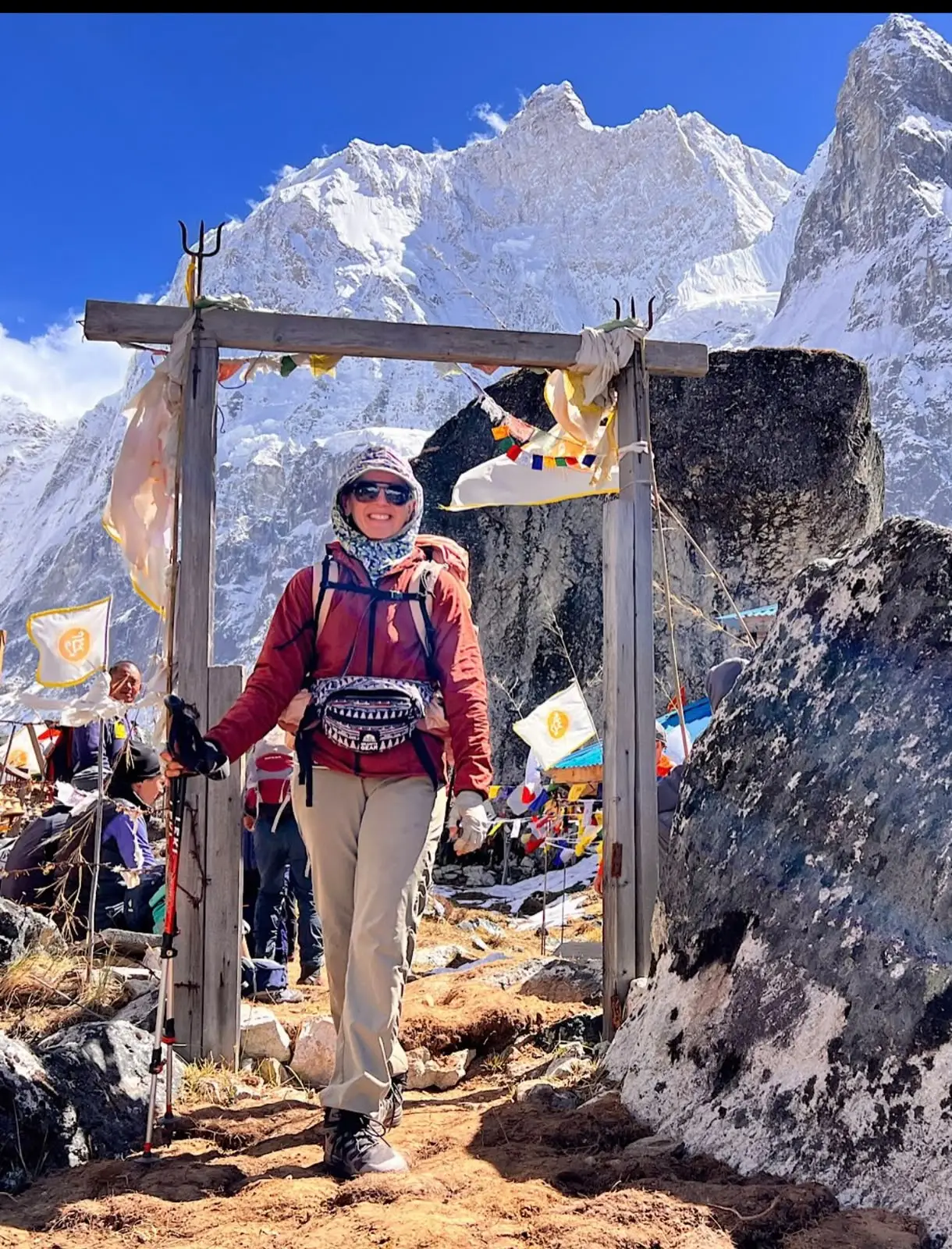
A Kanchenjunga Trek in September is a genuine trade off, not a simple yes or no. Early September still carries real monsoon influence in this far eastern corner of Nepal, with cloud, humidity and the occasional washed out trail section between Sekathum and Ghunsa. Late September, on the other hand, starts to look and feel like true autumn, with clearing skies and firmer ground underfoot. If you can accept a real chance of socked in views at Lhonak and Pang Pema in exchange for near total solitude on the trail and quieter teahouses, September rewards you. If guaranteed mountain visibility matters more to you than having the trail to yourself, wait three or four weeks and go in October instead.
This article is written specifically for someone weighing up a Kanchenjunga Trek in September, not a generic Kanchenjunga overview. We cover what the weather actually does across the month, what the trail and river crossings look like after the summer runoff, what a September itinerary costs, and how September genuinely compares with August before it and October after it. Everything below reflects Next Trip Nepal’s own operating experience running the Kanchenjunga Circuit Trek through this transitional window.
Kanchenjunga Trek in September at a Glance
Before the detail, here is the short version. Use this table to decide whether it is worth reading on, then use the rest of the article to plan around the specifics of your own travel dates.
| Factor | September snapshot |
|---|---|
| Daytime temperature (lower valleys) | 14 to 20 degrees Celsius, cooling toward 10 to 16 by late month |
| Night temperature (mid altitude villages) | 6 to 12 degrees Celsius early month, 0 to 6 by late month |
| Rain risk | High in the first two weeks, moderate mid month, low to moderate by late month |
| Mountain visibility | Unreliable early, improving through the month, genuinely good by the last week |
| Crowd level | Very low all month, effectively empty in the first two weeks |
| Permit note | Same restricted area rules apply all year, confirm current fees before booking |
| Overall rating for this month | Fair to good, strongest in the final week, weakest in the first two |
That last row is the honest summary. A Kanchenjunga Trek in September is not one consistent experience, it is at least two, maybe three, depending on exactly when you fly into Bhadrapur.
Kanchenjunga Weather in September: Temperature, Rain, Cloud and Wind
Kanchenjunga weather in September has to be understood against the region’s own monsoon timeline, not against what is happening in Kathmandu or Pokhara at the same time. Nepal’s monsoon typically reaches the eastern hills, including the Kanchenjunga region, earlier in the year than the rest of the country, often by the first half of June, and it also tends to withdraw here later. Central Nepal can feel dry by mid September while the far east is still catching the tail end of the wet season. This is the single biggest reason a Kanchenjunga Trek in September behaves differently from a Manaslu or Annapurna trek booked for the same dates.
Our own baseline autumn range for the region, once the season is fully established from late September into November, is daytime 8 to 16 degrees Celsius and night minus 5 to 8 degrees Celsius at the higher villages. Monsoon conditions through June to August run considerably warmer and wetter, daytime 15 to 23 degrees and night 10 to 12 degrees, with reduced visibility and muddy trails. September sits directly between those two patterns and moves through them as the weeks pass rather than sitting still.
| Condition | Early September | Mid September | Late September |
|---|---|---|---|
| Daytime temperature, lower valley | 16 to 20 degrees | 14 to 18 degrees | 12 to 16 degrees |
| Night temperature, Ghunsa area | 8 to 12 degrees | 5 to 9 degrees | 1 to 6 degrees |
| Rainfall | Frequent, often daily showers | Intermittent, shorter spells | Occasional, usually brief |
| Cloud cover at altitude | Persistent, mornings often clearer than afternoons | Variable, breaks becoming more common | Regular clear windows, especially mornings |
| Wind | Generally light, humid | Picking up slightly as air dries | Cooler, occasionally gusty at the passes |
Two things about this table matter for planning. First, mornings are consistently the more reliable window for mountain views throughout September, the same pattern that holds through autumn and spring, but the effect is more pronounced early in the month when afternoon cloud tends to build fast and thick. Second, the numbers in this table describe the villages up to roughly Ghunsa. At Kambachen, Lhonak and Pang Pema, add a meaningful cold margin, night temperatures at 4,000 to over 5,000 meters can sit well below what a lower valley reading suggests, even in September.
Humidity is the other factor worth naming honestly. Kanchenjunga weather in September, especially in the first half, is genuinely humid at lower and middle elevations. Gear dries slowly, socks and liner gloves that get wet on a river crossing often stay damp overnight, and condensation inside tea house rooms is common. This eases noticeably by the final week as the air dries out ahead of the true autumn window.
Early, Middle and Late September on the Kanchenjunga Circuit
Treating September as one uniform month is the most common planning mistake we see. The three sub periods below genuinely differ in what a trekker experiences, and picking your travel window inside September matters almost as much as picking September itself.
| Period | What to expect | Best suited to |
|---|---|---|
| Early September (roughly days 1 to 10) | Still meaningfully monsoon influenced, regular rain, humid forest sections, leeches active between Sekathum and Gyabla, socked in high country | Trekkers prioritizing solitude over views, flexible schedules, experienced wet weather hikers |
| Mid September (roughly days 11 to 20) | Genuinely transitional, trails drying but not dry, some clear days mixed with wet ones, views at Lhonak and Pang Pema still a gamble | Trekkers who can build in a spare day or two and are comfortable with mixed odds |
| Late September (roughly days 21 to 30) | Starts to feel like true autumn, firmer trails, clearing skies, first trickle of autumn arrivals, cooler nights | Trekkers who want autumn conditions but still want a quiet trail |
Kanchenjunga Trek in Early September
A Kanchenjunga Trek in early September is the most weather affected option in this article’s comparison set. Expect rain most days, sometimes as a short afternoon burst, sometimes as a longer overnight soaking. The forest sections between Sekathum, Amjilosa and Gyabla are at their wettest and muddiest, and this is also when leeches are most active in this belt, a genuine and expected nuisance rather than a rare event. Streams that are stepping stone crossings in October can be knee deep, fast moving glacial and rain fed torrents in early September, and some crossings may require a longer detour to a safer point or a short wait for a guide to assess the flow.
The upside is real, though. Trekkers who choose a Kanchenjunga Trek in early September are choosing near total solitude, teahouses that are otherwise standing empty, and a lower valley landscape that is genuinely lush and green in a way the dry autumn months never show. If your priority is being alone on one of Nepal’s quietest treks and you are comfortable with wet gear management and a real chance of missing summit views at Pang Pema and Oktang, early September can work. If mountain photography is the main goal of the trip, this is the weakest two week window of the whole month.
Kanchenjunga Trek in Mid September
Mid month is the hardest period to give a confident forecast for, and we say that honestly rather than papering over it. Some years the transition is well underway by the second week, other years the wet pattern holds on stubbornly into the third. Trails are visibly drying, mud is less constant, and cloud starts to break more often, but Lhonak and Pang Pema still cannot be counted on for a clear morning. A contingency day built into the itinerary before the Sele La crossing earns its keep in this window more than in almost any other part of the season, since a socked in pass day is still a realistic outcome.
Kanchenjunga Trek in Late September
Late September is where the month turns a corner. Nepal’s monsoon typically completes its withdrawal across most of the country by late September to early October, and the Kanchenjunga region, while it lags slightly behind the national pattern, usually shows the same shift in its final week. Trails firm up, river levels drop from their monsoon peak, mornings become reliably clear more often than not, and the first small wave of autumn trekkers starts to appear on the trail, though for context, a busy day on this circuit in late September might mean passing another two or three groups all day, nothing close to the crowding seen on Everest or Annapurna trails in the same week. A Kanchenjunga Trek in late September is, in most years, close in character to an early October trip, just with fewer people around.
Route Conditions by Elevation in September
Route conditions change enough by elevation that a single description of “the trail” in September is not useful. Here is what to expect section by section.
| Section | Elevation range | September conditions |
|---|---|---|
| Lower trail, Sekathum to Gyabla | 1,650 to 2,730 m | Wettest, muddiest section all month, leech risk in forest patches, stream crossings running high early month, road access point can be affected by landslide damage |
| Middle section, Gyabla to Kambachen | 2,730 to 4,050 m | Drying out through the month, still occasional slippery ground and localized washouts, forest thins so leech risk drops noticeably above Ghunsa |
| High altitude, Kambachen to Lhonak | 4,050 to 4,780 m | Cold overnight even in September, cloud frequently sits in the valley especially early and mid month, ground firmer than lower sections since less forest and mud |
| Base camp areas, Pang Pema and Oktang | 4,730 to 5,140 m | Views genuinely weather dependent, early month odds are poor, late month odds are good, always check the guide’s real time read on the day rather than relying on a forecast alone |
The road approach deserves its own mention, since it is genuinely different in September from the rest of the season. The Bhadrapur to Taplejung road runs through hill terrain that takes real monsoon damage most years, landslides, temporary blockages and rough surface sections are common by the tail end of the wet season, and this can add hours to what is normally a two day road transfer. This is one of the most concrete reasons a September booking needs schedule flexibility built in, both at the start and the end of the trip. Guides based in Taplejung track road conditions closely and reroute or delay transfers as needed, but travelers should not assume the same tight road schedule that works in October will hold in early or mid September.
River and stream crossings on the lower trail also deserve honest treatment. Snowmelt and monsoon runoff both feed the drainages below Ghunsa, and flow is at or near its annual peak through early and into mid September. Bridges on the main trail are generally sound and maintained, but side streams without permanent bridges can require a guide’s judgment call on timing, particularly after a heavy overnight rain. This is a genuine, not theoretical, reason the guide requirement on this route matters in September specifically.
Kanchenjunga Trek Difficulty in September
Kanchenjunga Trek difficulty in September is not fundamentally different from the rest of the year in terms of distance or altitude gain, the route is the same 22 day circuit covering roughly 200 to 220 kilometers with daily walking hours regularly running 5 to 9 hours. What September adds is a layer of physical difficulty on top of the standard strenuous grading.
- Wet, sometimes slick trail surfaces on the lower and middle sections increase the effort and concentration needed on descents, particularly around Amjilosa and Gyabla.
- Stream crossings can require more caution and occasionally a longer detour, adding time and energy to days that are already long.
- Humidity at lower elevation makes the walking feel more draining even at moderate temperatures, since sweat does not evaporate as efficiently.
- Reduced visibility at altitude means acclimatization days at Ghunsa and Kambachen may not offer the reward of a clear view, though the physiological benefit of the extra day is unchanged.
- The Sele La crossing, a long day of 8 to 10 hours over four named passes, Sele La, Sinion La, Mirgin La and Sinelapche La, is weather sensitive in any month, and early to mid September adds the possibility of a socked in, cold, wet crossing day on top of its already serious length.
None of this changes the fundamental profile of the trek, it remains unsuitable as a first ever high altitude trek and genuinely demanding even for fit, experienced trekkers. What changes in September is the margin for error on wet ground and the honest chance that your hardest day, the pass crossing, coincides with poor visibility. Anyone reviewing Kanchenjunga trek difficulty before booking a September date should build in the contingency day before Sele La without hesitation, since it does more useful work in this month than in October or November.
The Kanchenjunga Circuit Trek takes you around the base of the world's third highest mountain in the far eastern corner…
Kanchenjunga Trek Cost and Permits in September
Kanchenjunga Trek Cost in September
Kanchenjunga Trek cost in September does not differ dramatically from the rest of the year on the package price itself, since guide, porter, permit and standard teahouse costs are largely fixed regardless of season. Where September genuinely helps the budget conscious trekker is in group size and negotiating position, since low demand in this window can make it easier to fill a small group departure or agree favorable terms with an agency.
| Group size | Price per person (USD) |
|---|---|
| 1 traveller | 2,095 |
| 2 to 4 travellers | 1,995 |
| 5 to 8 travellers | 1,895 |
| 9 to 13 travellers | 1,795 |
This is Next Trip Nepal’s own published group pricing for the full 22 day Kanchenjunga Circuit Trek, and it typically includes permits, a licensed guide and porter, teahouse accommodation and meals on trek, and the flight and jeep transfers built into the standard itinerary. Always confirm exactly what is and is not included before paying a deposit, since inclusions can vary between operators even at similar headline prices.
For readers building their own line item budget, rough components to plan around are restricted area and conservation permits together at roughly USD 90 to 130 per person depending on trip length, the Kathmandu to Bhadrapur flight at roughly USD 130 to 200 per sector, teahouse accommodation on trek at roughly USD 3 to 10 per night, and meals on trek at roughly USD 4 to 10 per dish, more at the higher elevation stops where everything must be carried in. Because solo, unguided trekking is not legally possible on this restricted route, there is no realistic budget option that skips the guide and porter costs, whatever the season.
One cost consideration specific to September is contingency. Given the genuine possibility of road delays on the Bhadrapur to Taplejung stretch and the value of a spare day around the Sele La crossing, travelers booking a Kanchenjunga Trek in September should budget for the possibility of an extra night or two on the road or on the trail, and should choose travel insurance and flight dates with that buffer in mind rather than scheduling a same day onward international flight.
Kanchenjunga Permits and Guide Requirements
Permit rules do not change by month, but they are worth restating clearly for anyone planning around a September date, since lead times matter more when road conditions are already less predictable. The Kanchenjunga Restricted Area Permit costs USD 20 per person per week for the first four weeks and USD 25 per person per week beyond that, and it can only be arranged through a government registered trekking agency in Kathmandu, it is not available to independent applicants. The Kanchenjunga Conservation Area Permit is currently NPR 2,000 per person for foreign nationals on Next Trip Nepal’s own live figure, though some third party sources cite NPR 3,000, so confirm the exact current fee with your agency rather than treating either number as fixed. A TIMS card is required alongside these and is arranged by the agency at the same time.
A licensed trekking guide is mandatory on this route in every month of the year, September included. An important update from March 2026 is worth knowing about if you are traveling alone, Nepal’s Department of Immigration removed the old minimum requirement of two foreign trekkers for restricted area permits, so a solo foreign trekker can now obtain a Kanchenjunga restricted area permit provided they are accompanied by a licensed guide and the trip is arranged through a registered agency. This does not mean solo, unguided travel through the restricted area is allowed, the guide requirement stands regardless of group size. Because permits are processed in Kathmandu before departure, plan to send passport details and photographs to your agency with real lead time, and build in extra buffer if you are traveling in September given the added uncertainty around road access to Taplejung.
Readers researching the shorter Kanchenjunga Base Camp Trek in September, which typically visits only the north side to Pang Pema rather than completing the full circuit, should note that the same restricted area permit and guide rules apply to that shorter itinerary too. Next Trip Nepal’s primary recommended package remains the full Kanchenjunga trek permits covered circuit rather than the base camp only version, since the circuit reaches both the north and south base camps and gives a far more complete picture of the range for a relatively modest increase in trip length.
What to Pack for a September Kanchenjunga Trek
Packing for a Kanchenjunga Trek in September means packing for wet conditions early in the trip and drier, cooler conditions by the end, sometimes within the same two week window. Layer flexibility matters more this month than almost any other.
- Clothing: quick drying hiking shirts, a light insulated jacket, a warmer mid layer for Kambachen and Lhonak, trekking trousers that dry fast rather than cotton, spare socks in higher quantity than you think you need since wet socks are common early month.
- Footwear: broken in waterproof boots with good tread for muddy sections, gaiters to help with both mud and leech protection on the lower trail, camp shoes or sandals that can get wet without concern.
- Sleep: a four season sleeping bag rated to at least minus 15 degrees Celsius given the cold nights at Lhonak and Ramche, a compression dry bag to keep the sleeping bag dry through wet lower valley days, a liner for extra warmth and hygiene.
- Rain and sun protection: a genuinely waterproof jacket and trousers, not just water resistant, a pack cover or dry bags for electronics and documents, sun hat and sunscreen for the clearer late month days when UV at altitude is strong despite cooler air.
- Documents: passport with sufficient validity, passport photos for permit processing, printed permit and insurance copies, travel insurance confirmation that explicitly covers high altitude trekking to at least 5,500 to 6,000 meters plus helicopter evacuation, commonly recommended at USD 100,000 or more of medical and evacuation cover given the region’s limited rescue infrastructure.
- First aid: standard trekking first aid kit, blister care, anti diarrheal medication, a basic altitude sickness medication after consulting a doctor, and given the September leech risk, salt or a leech repellent for boots and gaiters on the lower forest sections.
- Electronics: a solid power bank given increasingly solar dependent and inconsistent charging above Ghunsa, a headlamp with spare batteries, a dry bag or waterproof case for phones and cameras.
Readers who want a more exhaustive, item by item packing reference can also check Next Trip Nepal’s Annapurna Circuit Trek packing list, which covers similar teahouse trekking essentials in more depth, then adjust for the wetter conditions and more basic facilities specific to Kanchenjunga above Ghunsa.
Advantages and Disadvantages of a September Kanchenjunga Trek
| Advantages | Disadvantages |
|---|---|
| Near total solitude, especially in the first two weeks | Real chance of missed or partial mountain views, particularly early to mid month |
| Lush, green lower valley scenery unique to this transitional window | Wet, muddy trail sections and leech risk between Sekathum and Gyabla |
| Easier availability at teahouses and with guide and porter staff | Elevated risk of road delays between Bhadrapur and Taplejung after monsoon damage |
| Late month conditions approach October quality without October crowds | Higher stream and river levels can slow or complicate lower trail crossings |
| A genuinely different, quieter experience for repeat Nepal trekkers | Forecasting is harder, itineraries need more built in flexibility |
August, September and October Compared: Choosing the Right Month
Understanding September properly means placing it between the month before and the month after. August, which does not have its own dedicated guide on this site, is still deep in the monsoon pattern for this region, with the operator’s own monsoon range of daytime 15 to 23 degrees and night 10 to 12 degrees, frequent heavy rain, the highest leech activity of the year, and the greatest likelihood of road disruption on the Bhadrapur to Taplejung approach. Very few trekkers book Kanchenjunga in August, and for good reason, mountain visibility odds are at their weakest and trail conditions at their most difficult.
September is the transition out of that pattern, uneven early, genuinely improving by the back half. October is where the region settles into its most dependable window, part of the broader autumn range of daytime 8 to 16 degrees and night minus 5 to 8 degrees, with the most stable weather and the best mountain visibility of the three months, alongside a modest but noticeably larger number of trekkers on the trail.
| Factor | August | September | October |
|---|---|---|---|
| Rain and trail conditions | Wettest, most difficult | Wet early, drying through the month | Generally dry, firm trails |
| Mountain visibility odds | Poor | Poor early, good by late month | Good to very good |
| Crowd level | Extremely low | Very low, rising slightly by late month | Low by Nepal standards, but the highest of the three |
| Leech and stream crossing risk | Highest | High early, moderate to low by late month | Low |
| Best suited to | Not generally recommended | Solitude seekers comfortable with mixed odds | Trekkers prioritizing reliable views and firmer trails |
Put simply, August wins on nothing that matters to most trekkers except absolute emptiness, and even Kanchenjunga’s very low baseline crowd numbers do not make that trade off worthwhile given how poor the odds on views and trail conditions are. September wins on a genuine, if imperfect, combination of solitude and improving conditions, particularly in its final two weeks, and it is meaningfully cheaper on effort and easier to book at short notice than the more popular autumn months. October wins outright on dependability, if a single set of clear photographs at Pang Pema and Oktang is close to a non negotiable goal of the trip, October is the safer choice, and readers weighing that trade off directly should read our full guide to the Kanchenjunga Circuit Trek in October before deciding between the two months.
Is September the Best Month for the Kanchenjunga Circuit Trek? Our Verdict
A Kanchenjunga Trek in September is a genuinely reasonable choice for the right traveler, and a genuinely poor choice for the wrong one, and the difference comes down to what you actually want from the trip. If solitude on one of Nepal’s quietest long treks is close to the whole point, if you are comfortable managing wet gear and muddy trail sections for the first stretch of the trip, and if you can build real flexibility into both your road transfer days and your pass crossing schedule, September rewards that flexibility with an experience almost nobody else is having at the same time. Late September in particular delivers conditions that are honestly close to early October, minus the extra trekkers.
If your trip has a hard deadline for photographs of Kanchenjunga’s north and south faces, if you are not able to absorb a delayed road transfer or an extra contingency day at the Sele La crossing, or if you are simply risk averse about weather on what is already a serious, remote undertaking, September is not the month to gamble on, and October is the more sensible choice on this circuit. Either way, talk directly with your agency about your specific travel dates within September, since the difference between a trip booked for September 3rd and one booked for September 27th is larger than the difference between many other consecutive months on this trek. Next Trip Nepal is happy to walk through exact dates and help you decide whether to book the Kanchenjunga Circuit Trek for September or shift a few weeks later.
Frequently Asked Questions
Is September a good month for the Kanchenjunga Circuit Trek?
It depends heavily on which part of September. Early September still carries meaningful monsoon influence with wet trails and unreliable mountain views, while late September starts to resemble true autumn with clearing skies and firmer ground. Treat September as three different sub periods rather than one uniform month when deciding.
Will it rain the whole time on a Kanchenjunga Trek in September?
No, but rain is a real possibility, especially in the first two weeks. Expect frequent showers or overnight rain early in the month, becoming more intermittent by mid month, and generally occasional and brief by the final week. Pack genuinely waterproof gear rather than water resistant gear regardless of exactly when you go.
Are mountain views realistic in September on this trek?
Views at Pang Pema and Oktang are a real gamble in the first half of the month and considerably better odds in the last week or so. Mornings are consistently the more reliable time of day for clear views throughout the month, since afternoon cloud tends to build quickly, particularly early in September.
Are the trails passable in September or does the monsoon block them?
The trails are passable throughout September with a licensed guide, this is not a month when the route is closed. Expect muddy, sometimes slippery sections on the lower and middle trail, particularly between Sekathum and Gyabla, and higher stream levels than you would find in October, but the route itself remains open and walkable all month.
Are there leeches on the Kanchenjunga trek in September?
Yes, leeches are a genuine and expected presence in the forest sections between Sekathum, Amjilosa and Gyabla during September, most active early in the month while conditions are still humid. Gaiters, salt or a leech repellent on boots, and periodic checks during rest stops handle this without much difficulty.
What are the road conditions to Taplejung like after the monsoon?
The Bhadrapur to Taplejung road can carry real monsoon damage into September, including landslide affected stretches and rough surfaces that slow the normal two day road transfer. This eases through the month as the wet season fully withdraws. Build extra buffer time into both ends of a September trip rather than scheduling a tight connection.
Is a Kanchenjunga Trek in September too risky to book?
Not inherently, but it requires more flexibility than booking in October or November. With a licensed guide, sensible contingency days built around the Sele La crossing, and realistic expectations about views early in the month, a September trip is a legitimate, well managed choice rather than a reckless one.
What is the real difference between early and late September on this trek?
Early September behaves much like the tail end of monsoon, wet, humid, with poor visibility odds at altitude and leeches active on the lower trail. Late September behaves much like early autumn, drier trails, cooler nights, and meaningfully better odds of clear views at Lhonak and Pang Pema. The gap between the two halves of the same month is genuinely large on this route.
How does a Kanchenjunga Trek in September compare with October?
October is the more dependable month overall, with firmer trails and considerably better mountain visibility odds throughout, plus a modest rise in trekker numbers compared with September’s near empty trails. Late September specifically comes closer to October’s conditions than early or mid September does. Readers who cannot compromise on reliable views should read our dedicated guide to the Kanchenjunga Circuit Trek in October and compare it directly against this article before booking.
Does the Kanchenjunga Trek cost more or less in September?
The core package price is not seasonally adjusted in the way flight prices sometimes are, so a September date carries the same published group pricing as other months. Where September can genuinely help is availability, since low demand in this window can make it easier to join or fill a small group departure at the standard rate.
Is the Kanchenjunga Base Camp Trek a better choice than the full circuit in September?
The shorter Kanchenjunga Base Camp Trek, which typically covers only the north side to Pang Pema, follows the same permit and weather patterns described in this article, since it uses the same lower valley approach. Next Trip Nepal generally recommends the full circuit rather than the shorter base camp version, since it reaches both the north and south base camps for a relatively modest increase in trip length, but the seasonal advice in this article applies to either option.
Do I need a guide for a Kanchenjunga Trek in September specifically, or only in other months?
A licensed guide is mandatory on this restricted route in every month of the year, not only September. In September the guide requirement carries extra practical value, since a guide’s real time judgment on stream crossing safety, trail conditions and road status is genuinely more important during the wetter, less predictable stretch of the season than it is once conditions stabilize in October and November.


