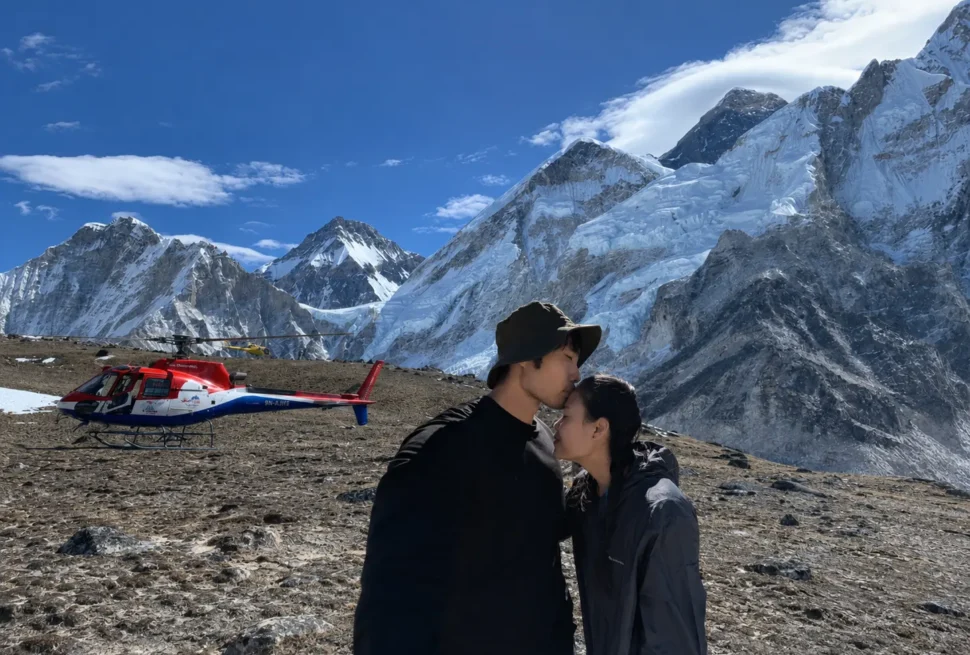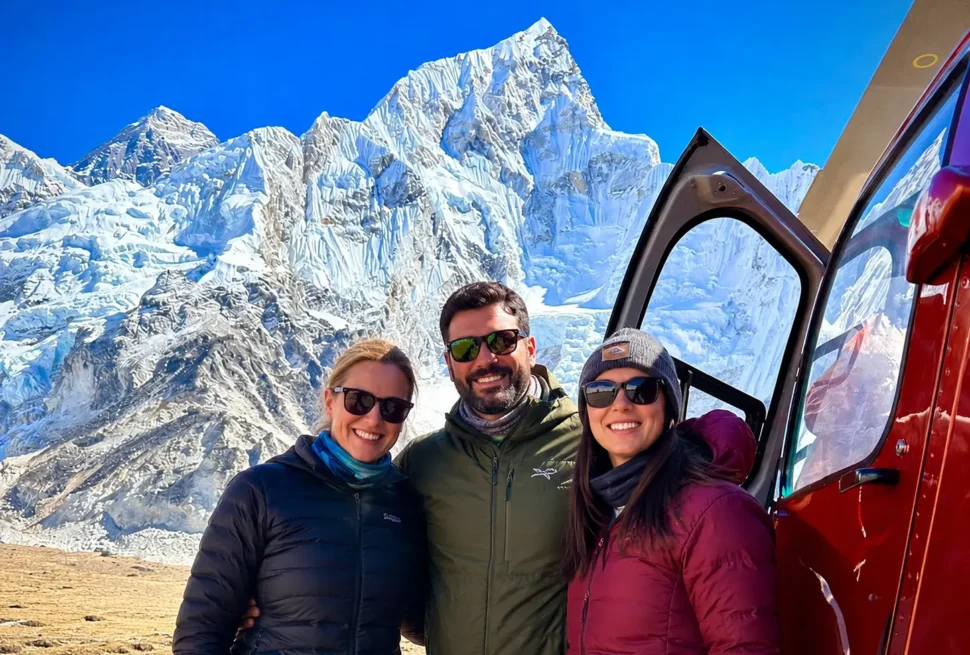
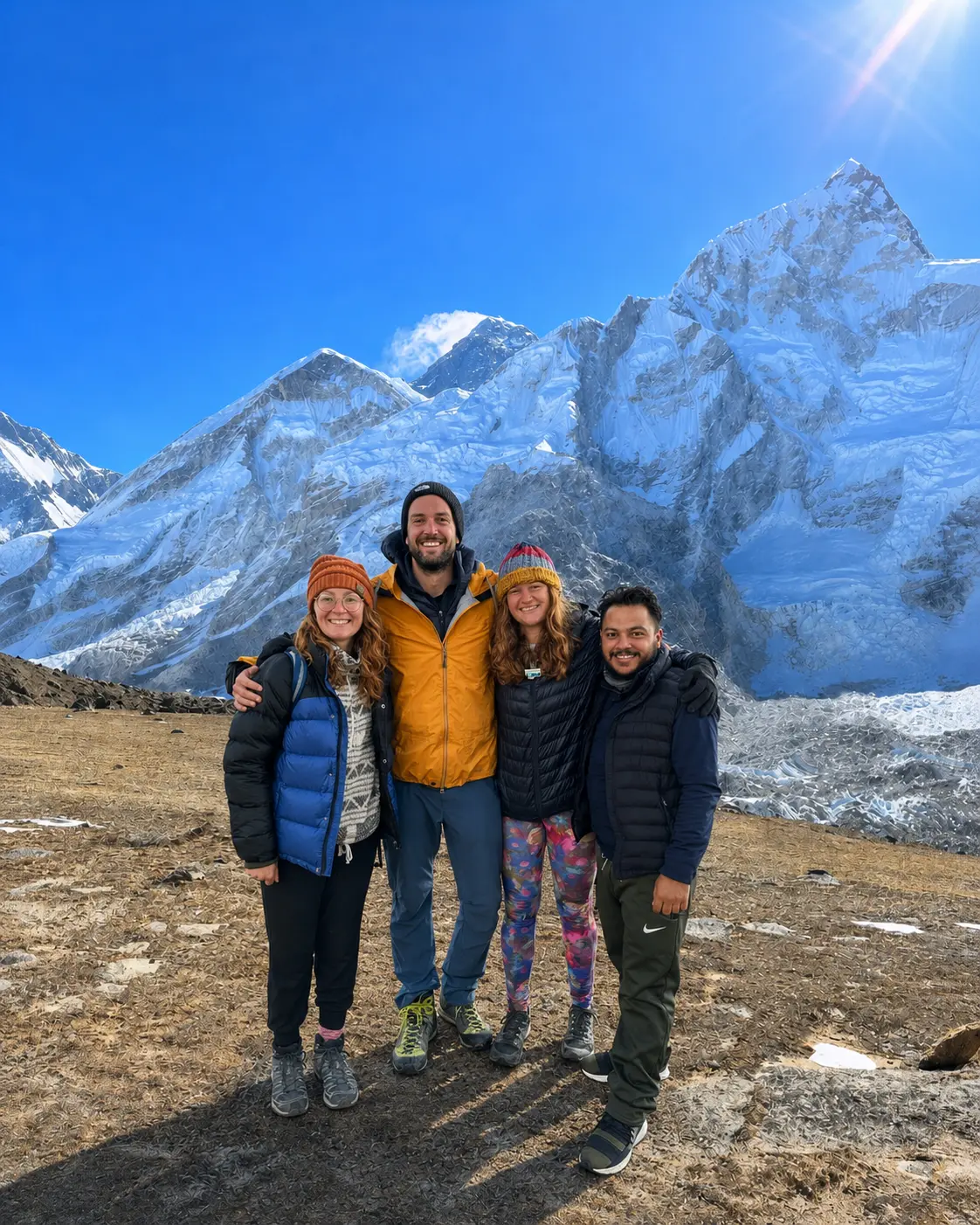
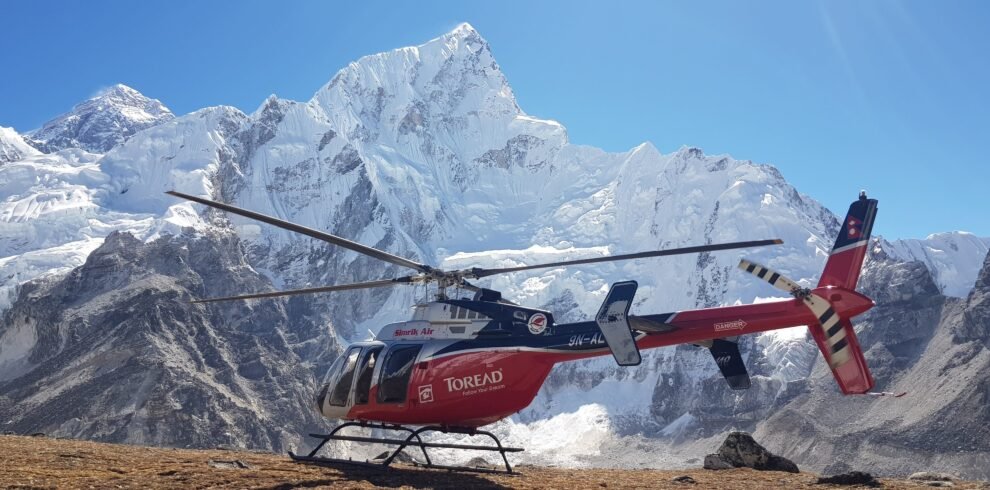
The Everest helicopter tour Kala Patthar landing at 5,545 meters is the defining moment of the entire experience. Kala Patthar is the highest point reached by the Everest Base Camp helicopter tour, and from its summit you see Everest without the crowds of Everest Base Camp, without the effort of the two week approach, and without the obscuring moraine ridges that block the direct Everest view from the glacier below.
Kala Patthar’s landing point is one highlight among several. If you would rather reach Everest Base Camp on foot first and still skip the walk back down, our Everest Base Camp Trek with Helicopter Return guide explains how that combined itinerary works, including exactly what happens on the flight back to Kathmandu.
The ten to fifteen minutes you spend on the ground at Kala Patthar are the centerpiece of the entire Everest Base Camp Helicopter Tour experience. Understanding what those minutes look like, feel like, and what you can realistically do in them helps you prepare properly and get the most from what is, for most people, a once in a lifetime moment.
What Is Kala Patthar?
Kala Patthar (the name means “black rock” in Nepali) is a prominent rocky peak at the end of the Pumori ridgeline at the edge of the Khumbu valley. It sits directly above Gorakshep, the highest overnight stop on the standard EBC trek, and its summit ridge provides the most accessible panoramic view of the Everest south face available to non technical visitors.
- Elevation: 5,545 meters (18,192 feet)
- Location: Khumbu, Solukhumbu District, Sagarmatha Zone, Nepal
- Peaks visible from summit: Everest (8,849m), Lhotse (8,516m), Nuptse (7,861m), Changtse (7,583m), Pumori (7,161m), Ama Dablam (6,812m)
- Helicopter landing site: Small designated helipad area near the upper ridge
- Nearest settlement: Gorakshep village, approximately 40 minutes walk below
On the trekking route, reaching Kala Patthar typically requires a predawn start from Gorakshep after 10 to 12 days of walking from Lukla. On the helicopter tour, you are there in 90 minutes from Kathmandu.
Planning your Everest Helicopter Tour?
The Approach: What the Flight to Kala Patthar Looks Like
The helicopter departs Kathmandu’s Tribhuvan International Airport in the pre dawn morning, typically between 6:00 and 7:30 AM. The flight east toward the Khumbu takes approximately 90 minutes one way, following the Dudh Koshi river valley and gradually gaining altitude as the terrain rises toward the Himalaya.
What you see during the approach:
- Kathmandu valley from above as the helicopter departs, the city and its surrounding hills visible in the morning light
- The ridgeline of the lower Himalaya as you pass into the mountain zone, with peaks beginning to emerge above the foothills
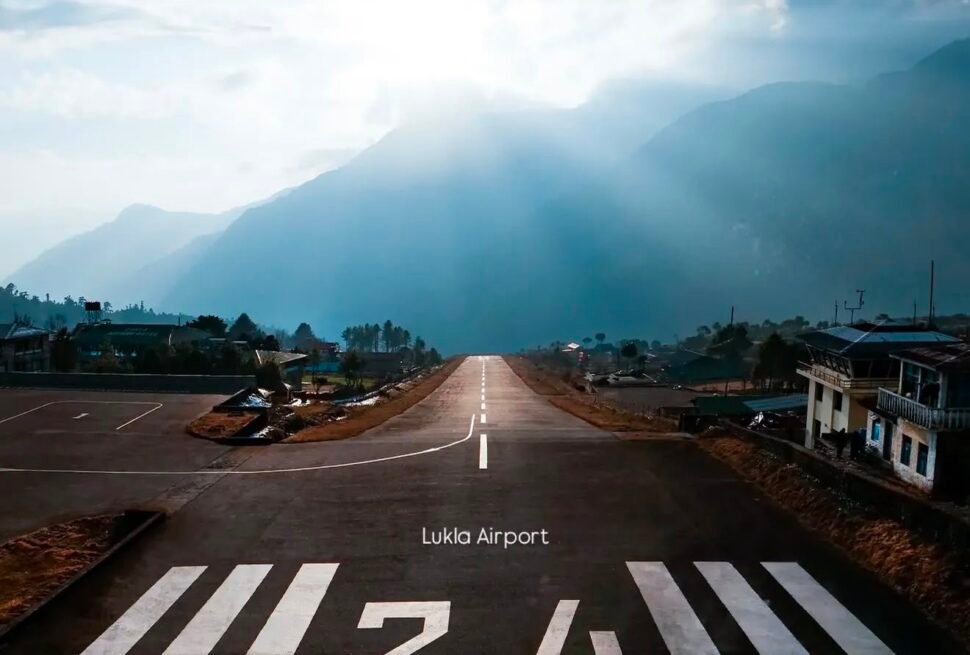
- Lukla airstrip visible below on a narrow mountain shelf
- The deep Dudh Koshi gorge and the river system draining the Khumbu glaciers, winding far below
- Namche Bazaar’s characteristic horseshoe shaped village setting coming into view from above
- The Ama Dablam pyramid, recognizable from its distinctive shape, appearing as the helicopter gains altitude
- The upper Khumbu and the first views of the Everest massif as the helicopter clears the intervening ridges
- The Khumbu Glacier terminal moraine, the Khumbu Icefall visible above it, and Everest Base Camp’s characteristic tent clusters if the expedition season is active
Planning your Everest Helicopter Tour?
The Landing at Kala Patthar: What Actually Happens
The Kala Patthar helipad is a small cleared area on the upper ridge. The helicopter makes its approach from below the ridge, the rotors creating the characteristic sound echo against the surrounding rocky faces as it settles onto the landing pad. At 5,545 meters, the thinner air means the rotors work harder and the landing sequence is more deliberate than at lower altitudes.
When the helicopter settles:
- The pilot signals when it is safe to exit
- Passengers step out one at a time onto the rocky ground of the Kala Patthar ridge
- The immediate sensation is the altitude: even standing still, you may feel breathless within the first minute
- The wind on the ridge can be significant. Your down jacket and gloves should be on before you exit the helicopter, not after
- The view of Everest opens immediately as you step away from the helicopter, the south face and the Khumbu icefall visible without any obstruction
- You have 10 to 15 minutes on the ground. This time passes faster than it sounds.
What You See From Kala Patthar: The Full 360 Degree View
| Direction | What You See | Notable Details |
|---|---|---|
| North | Mount Everest (8,849m) | The south face and southwest ridge, Khumbu Icefall visible below the summit pyramid |
| Northeast | Lhotse (8,516m) | Fourth highest mountain in the world, Lhotse face and couloir visible |
| East | Nuptse (7,861m) | Long ridge extending east from Everest, often forming a frame for the Khumbu basin |
| Northeast | Changtse (7,583m) | The north peak of Everest, visible beyond Everest from Kala Patthar angle |
| Northwest | Pumori (7,161m) | The parent peak of the Kala Patthar ridgeline, directly above you |
| South/Southeast | Ama Dablam (6,812m) | The most recognizable Himalayan peak by shape, its distinctive profile visible from Kala Patthar |
| Below (North) | Khumbu Glacier | The glacier flowing from the Western Cwm, serac fields and crevasses visible from above |
| Below (South) | Gorakshep and upper valley | The highest teahouse settlement and the moraine valley leading back toward Lobuche |
Understanding the Scale: The Everest Massif
Standing on Kala Patthar for the first time, many visitors find the scale disorienting. Everest does not look as dramatically tall from this angle as photos suggest because you are at 5,545 meters yourself. The summit is only 3,300 meters higher than where you are standing. The sense of enormity comes not from the height difference but from the scale of the faces: the Lhotse face is the largest continuous wall of rock and ice visible in any direction, rising over 3,000 meters from the valley floor in a nearly vertical plane.
The Khumbu Icefall, visible from Kala Patthar between Everest and the Nuptse ridge, is the first major obstacle on the Everest South Face route. From 5,545 meters you can see why it takes climbers 3 to 5 hours to cross what is only a few kilometers of terrain.
Photography at Kala Patthar: Making the Most of 10 to 15 Minutes
- When you exit the helicopter, take 60 seconds just to look and absorb the view before raising your camera
- The Everest composition with Khumbu Glacier below and Lhotse to the right is the classic frame: face north from the landing area
- The Pumori composition looking west and up from the landing area is often overlooked because everyone faces Everest
- Self portraits with Everest require a tripod or assistance from another passenger
- Cold affects phone batteries rapidly at 5,545 meters. Keep your phone in an inside pocket until you need it
- Better to get 3 to 4 very good Everest compositions than 20 mediocre ones of everything
The light at Kala Patthar in the morning hour of most departures is excellent: it is the golden hour or just past it, with low angle directional light from the east illuminating the Lhotse face and the Everest southwest ridge. Morning departures are not just about beating cloud: the light quality in the first hour of a flight is significantly better than flat midday light.
Planning your Everest Helicopter Tour?
The Altitude Experience: What Your Body Does at 5,545 Meters
On a helicopter tour, you fly directly from 1,400 meters to 5,545 meters in 90 minutes. Your body has essentially no time to acclimatize. What most people experience during the ground stop:
- Noticeable breathlessness when walking even a few steps, even if you are fit
- Possibly a mild headache beginning within the first few minutes
- A sensation of heaviness or slight light headedness
- The feeling that you need to breathe more deliberately than at sea level
- Cold much more sharply than you expected, even with warm layers, because the altitude and potential wind combine
These effects are expected and normal. They begin resolving immediately as the helicopter descends after departure. Serious altitude sickness requiring medical intervention on a helicopter tour ground stop is rare. The brief exposure duration is the key safety factor.
After Kala Patthar: Hotel Everest View Breakfast Stop
The standard Everest helicopter tour includes a second stop at Hotel Everest View (3,880m) before returning to Kathmandu.
- Hotel Everest View is at 3,880 meters, comfortable for most visitors without the breathlessness of the 5,545m stop
- The breakfast typically includes eggs, toast, tea, coffee, and juice
- The hotel terrace has a direct view of Ama Dablam from a low angle that is one of the best mountain photography compositions in the Khumbu
- Mount Everest is not directly visible from Hotel Everest View (despite the name) but Ama Dablam, Lhotse, Thamserku and other surrounding peaks are clearly visible
- The stop is typically 30 to 45 minutes, enough for a full meal and time to absorb the experience
The Full Day Timeline
| Time | Activity | Notes |
|---|---|---|
| 5:00 to 5:30 AM | Hotel pickup in Kathmandu | Vehicle arrives at your hotel for airport transfer |
| 5:45 to 6:15 AM | Check in at airport, safety briefing | Arrive at least 45 minutes before departure |
| 6:15 to 7:30 AM | Helicopter departure | Exact time depends on weather clearance |
| 7:45 to 8:15 AM | Flight to Lukla area | First aerial views of Himalayan foothills and lower Khumbu |
| 8:15 to 8:45 AM | Upper Khumbu approach | Ama Dablam, Namche Bazaar, glacier systems visible |
| 8:45 to 9:00 AM | Kala Patthar landing | 10 to 15 minutes at 5,545m with Everest view |
| 9:00 to 9:30 AM | Hotel Everest View stop | 30 to 45 minutes for breakfast at 3,880m |
| 9:30 to 11:00 AM | Return flight to Kathmandu | Approximately 90 minutes return |
| 11:00 to 11:30 AM | Return to Kathmandu hotel | Vehicle transfer back to your hotel |
Planning your Everest Helicopter Tour?
What to Wear for the Kala Patthar Stop
The temperature at Kala Patthar ranges from -5 degrees C in April/May to -20 degrees C or colder in winter months, plus wind chill. Proper layering is not optional.
- Base layer: Thermal or merino wool base layer top and bottom
- Mid layer: Fleece or light down jacket
- Outer layer: Full down jacket with hood rated for mountain cold
- Gloves: Warm gloves, not light ones. Wind chill at 5,545m makes thin gloves useless
- Head: Warm hat or beanie that covers the ears
- Sunglasses: UV protection is intense at 5,545m. Sunglasses or glacier glasses are important
- Footwear: Warm trekking or hiking boots. The ground is rocky and cold
You cannot add layers at Kala Patthar after you land. Put on everything before the helicopter sets down.
Common Questions About the Kala Patthar Landing
Can I walk around at Kala Patthar or is it just standing near the helicopter?
You can walk within a safe area on the upper ridge, approximately 30 to 50 meters from the helicopter in any direction that the terrain allows. Most of the walking is simply moving to the best view angles for photography rather than any extended exploration.
Is the Kala Patthar stop always included or do some tours just fly over?
Not all Everest helicopter tours land at Kala Patthar. Some budget or basic tours are flyover tours that do not land on the ridge. Confirm explicitly that your booked tour includes a Kala Patthar landing before paying. The landing is the difference between seeing Everest from a moving helicopter and standing at 5,545 meters looking directly at the south face.
Can children come on this tour and land at Kala Patthar?
Children can fly on the Everest helicopter tour. Most operators have a minimum age of 4 to 6 years. The brief altitude exposure at Kala Patthar is manageable for healthy children but they may be more sensitive to the breathlessness and cold than adults. Keep children close during the ground stop and return to the helicopter quickly if they show signs of discomfort.
Book your Everest Base Camp Helicopter Tour with Next Trip Nepal for a confirmed Kala Patthar landing, breakfast at Hotel Everest View, and full professional support from departure to return.