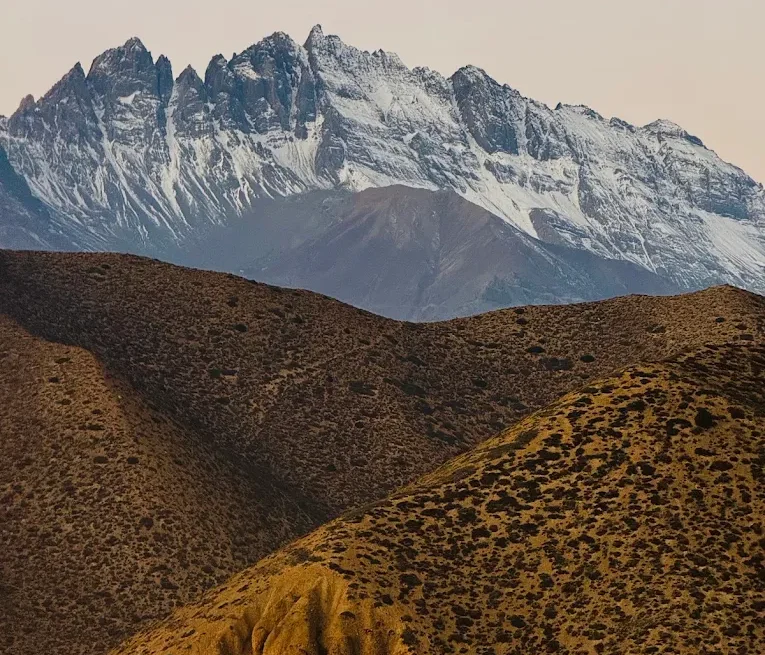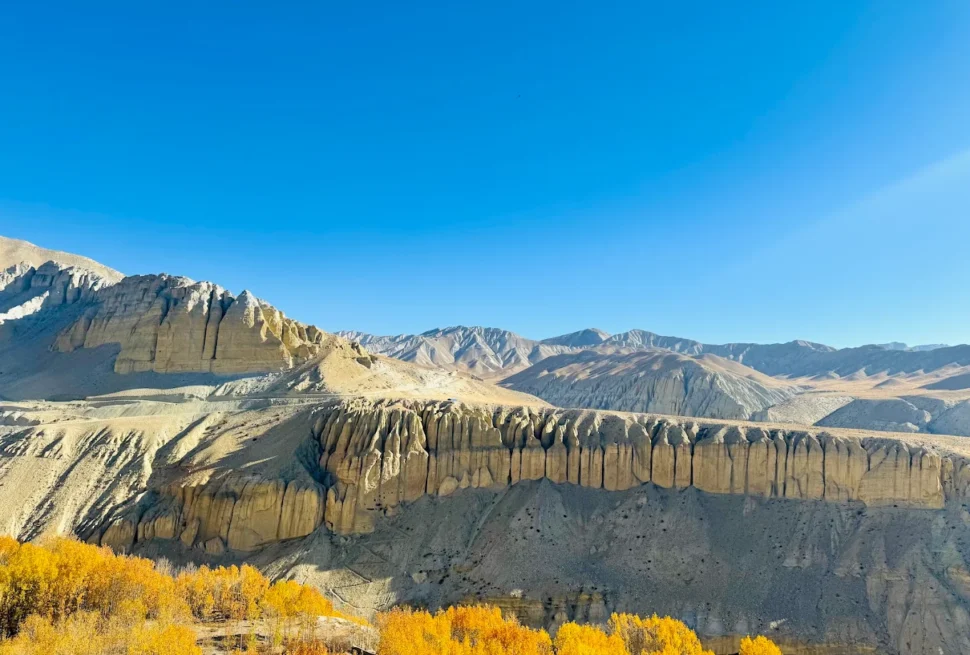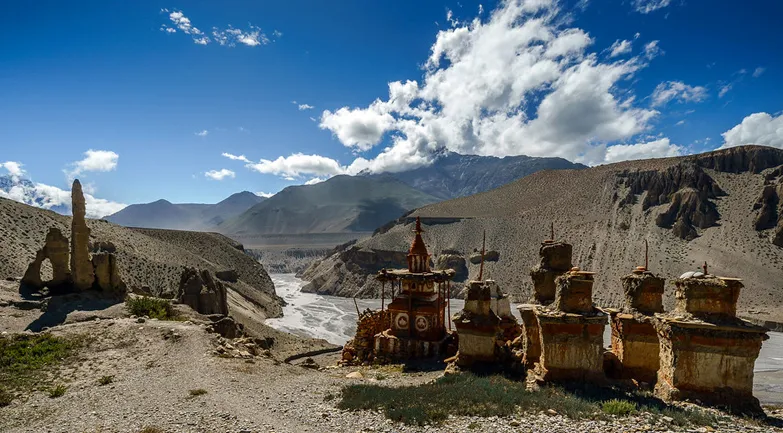
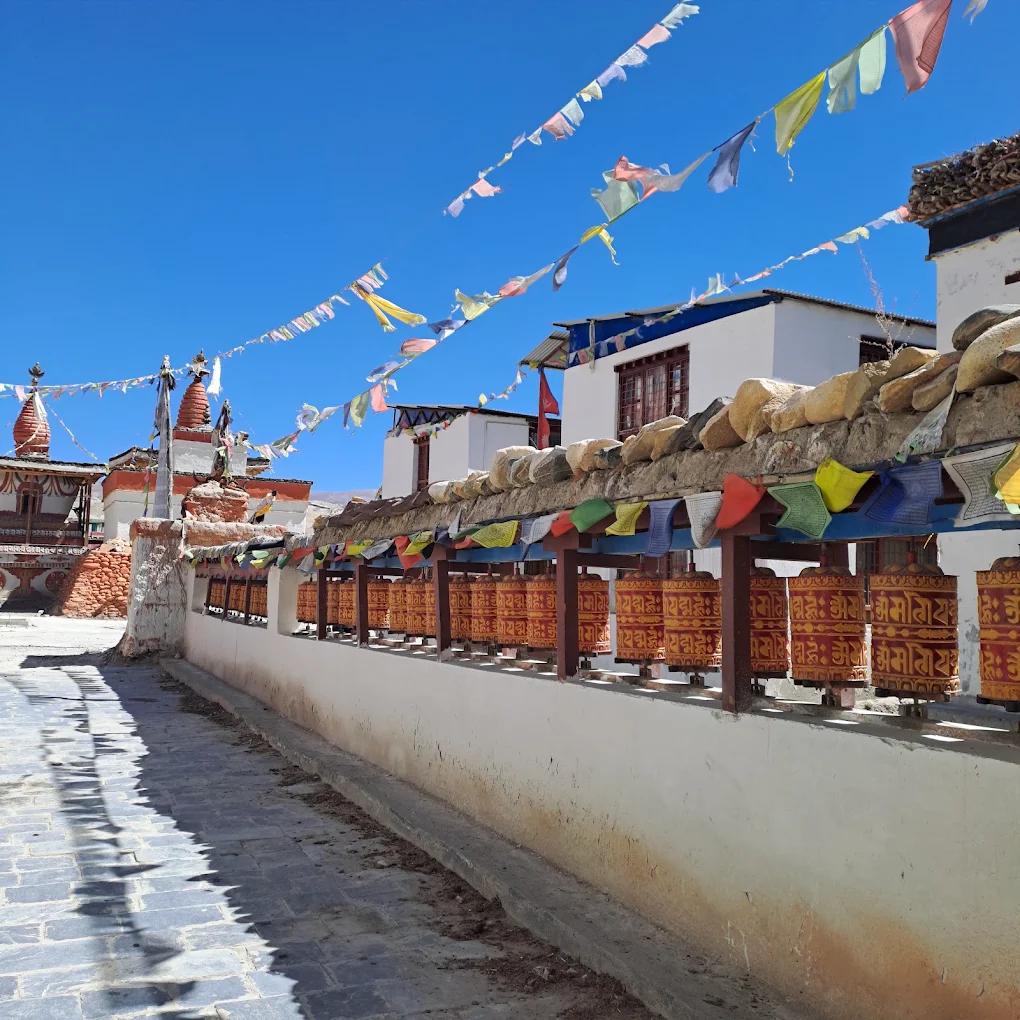
September is the month Upper Mustang wakes up.
This guide covers what to expect on an Upper Mustang Trek in September, including the latest 2026 permit rules, weather, and a day by day route.
After three months of monsoon season quiet, the plateau begins its transition back toward the autumn trekking peak that defines October. The monsoon weakens across the broader Himalayan region through September. The air clarity that makes October famous starts returning in the second half of the month. Temperatures are cooling from their August peaks. And the trekking community, which largely stayed away from Nepal through June, July, and August, is beginning to arrive again.
September occupies a genuinely interesting position in the Upper Mustang calendar. It is better than the monsoon months for air quality and improving conditions. It is less crowded than October. It offers a transitional experience that combines the residual quiet of the monsoon season with the first signs of autumn’s return. For trekkers who want the best of both worlds without committing to either extreme, September delivers a compelling middle ground.
Planning your Upper Mustang Trek?
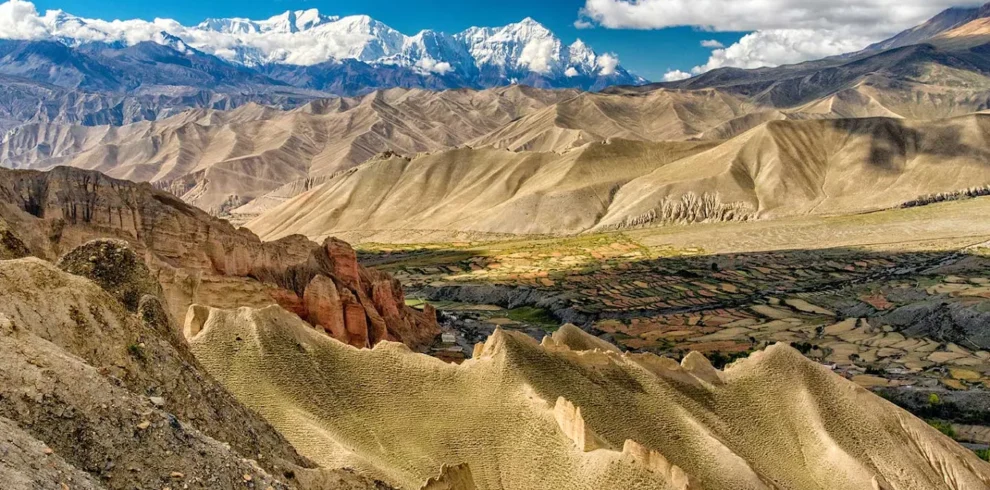
Upper Mustang Trek — Complete Guide 2026 Few places on earth stop you in your tracks the way Upper Mustang…
At a Glance: September Upper Mustang Trek
| Best for | Trekkers wanting autumn conditions without October crowds, flexible schedule travelers |
| Temperature at Jomsom (2,720m) | Night: 8°C to 14°C | Day: 18°C to 25°C |
| Temperature at Lo Manthang (3,840m) | Night: 3°C to 10°C | Day: 10°C to 18°C |
| Precipitation | Low and declining through the month |
| Wind | Light to moderate, beginning to increase late September |
| Crowd level | Low in early September, building to moderate by month end |
| UMAP Permit | USD 50 per day per person (no minimum) |
| Duration | 12 to 15 days typical |
| Overall rating | Very good, particularly late September |
September Weather: The Transition
September in Upper Mustang follows a clear weather arc. Early September, particularly the first two weeks, is still in transition from the monsoon pattern. Mornings are somewhat hazy and afternoons occasionally see cloud buildup over the southern peaks. The air quality is better than August but has not reached October clarity.
By mid September, the post monsoon clearing accelerates. The Himalayan region’s monsoon withdrawal is typically complete across most of Nepal by mid to late September. For Upper Mustang, which was dry all through the monsoon anyway, the change is felt mainly as improving air quality and increasing atmospheric clarity. By late September some mornings deliver views that are close to October’s legendary crystal clarity. The mountain profiles sharpen. The distant peaks appear as clean cut geometric forms rather than the slightly soft monsoon atmosphere shapes.
Temperature wise, September represents the pleasant middle. Days are warm but not the peak summer heat of July and August. Nights are cool but not the cold of November onward. Jomsom daytime highs of 18°C to 25°C and Lo Manthang highs of 10°C to 18°C create genuinely comfortable active trekking conditions. The layering needs are light compared to winter months.
The first autumn Kali Gandaki breeze reappears in late September as temperature differentials between the plateau and lower regions start rebuilding. It is not yet the April and May gale but you will notice the afternoon wind increasing by the last week of September, particularly on exposed ridge sections.
Trail Conditions in September
September trail conditions in Upper Mustang are excellent throughout. The plateau is dry, the trails are firm, and the summer’s warm temperatures have cleared any residual snow from the previous winter. The jeep road is in good condition. The older trail sections are clear and walkable.
River levels in the Kali Gandaki begin their autumn decline through September as glacial melt reduces and the monsoon ends. By late September the river is returning to levels similar to spring. Crossing points become easier as the month progresses. Early September river levels are still relatively high from the summer melt peak.
The lower valley around Jomsom and Kagbeni in early September may still occasionally see cloud and very light rain from the retreating monsoon edge. By mid September this is rarely an issue. From mid September onward the trail conditions across the entire Upper Mustang route are essentially perfect.
Planning your Upper Mustang Trek?
Crowds: Between Quiet and Peak
September permit entries into Upper Mustang follow a distinct curve: low in early September (similar to August), building steadily through the month, and arriving at a noticeably higher level by the last week of September as the early October crowd begins filtering in.
Early September feels like a monsoon month extension in terms of solitude. You will have the trail and Lo Manthang largely to yourself in the first two weeks. By late September you will encounter other trekking groups daily, particularly in the Kagbeni to Lo Manthang corridor. Teahouses that had only you as a guest in early September are filling up by month’s end.
This crowd trajectory means September rewards trekkers who can time their trek to start in early September and arrive in Lo Manthang by mid month. You get the best of both worlds: the improving late monsoon clarity for the approach and the beginning of autumn for Lo Manthang and the return.
Upper Mustang Trek — Complete Guide 2026 Few places on earth stop you in your tracks the way Upper Mustang…
Permits and Logistics
September permits are unchanged from other months. UMAP at USD 50 per day per person with no minimum purchase, ACAP at NPR 3,000, TIMS at NPR 2,000. A licensed guide is mandatory, but solo travelers are welcome and simply hire one individually rather than travel as part of a larger group.
Guide availability in early September is still relatively good (monsoon season availability). By late September guides start filling up for October. If targeting late September or early October, book your guide 2 to 3 months in advance through an agency like Next Trip Nepal’s Upper Mustang Trek.
Domestic flights from Pokhara to Jomsom improve significantly through September as the monsoon clears. Early September has better reliability than July or August but not yet the near perfect reliability of October. By late September flights are operating with high success rates.
Accommodation and Food
September sees teahouses transitioning from monsoon quiet to autumn busy. Early September still has the relaxed hospitality of the quiet season. By late September teahouses are increasingly in peak season mode with busier kitchens and shorter wait times for service.
Food in September includes the broadest selection of the year because the summer growing season has just peaked. Fresh vegetables from the village fields are at their most abundant. The September dal bhat with its fresh green sides and local vegetable curries represents Upper Mustang teahouse food at its seasonal best.
The September Experience
September Upper Mustang is the transition between two exceptional states. The monsoon quiet gives way to autumn clarity. The summer warmth gives way to autumn cool. The empty trail becomes a shared trail. The private monastery visit becomes the organized visit. These transitions happen gradually through the month and trekkers experience different versions of Upper Mustang depending on exactly when their trek falls within September.
One distinctive September element is the harvest season beginning in the lower valley. The barley harvest, one of the most important events in the Lo-pa agricultural calendar, begins in September at the lower elevations around Jomsom and Kagbeni. Watching the community harvest the crop that the entire year’s agricultural work has produced, using traditional methods including animal threshing on the communal threshing floors, is an experience available uniquely in September and early October.
The high altitude wildflowers at their autumn peak in September add color to the plateau landscape that summer lacks. These are subtle rather than dramatic but they reward the botanically curious trekker with small discoveries at every rocky section of trail above 3,500 meters.
Day by Day September Route
The standard 12 to 14 day route from Jomsom to Lo Manthang and return works perfectly in September. The improving conditions through the month mean late September trekkers should expect conditions similar to October in terms of clarity and dryness.
Departure timing in September: morning departures remain important but the absence of spring wind pressure and the moderate temperatures mean you have more flexibility than in April. Starting by 8 AM is comfortable rather than the 7 AM discipline needed in spring.
Consider using the return leg of the trek to extend into areas east of the main route that the standard itinerary does not include. September’s still relatively quiet atmosphere makes route variation more practical than peak October when teahouse availability along alternative routes can be uncertain.
Packing for September
September packing bridges the summer and autumn requirements. Early September is essentially summer packing. Late September needs slightly heavier layers.
Sleeping bag: a bag rated to 0°C is comfortable throughout September including at Lo Manthang. Late September nights at Lo Manthang approach -3°C to 5°C and benefit from a slightly warmer bag or a liner supplement.
Clothing: a mid layer fleece plus a light down jacket for mornings and evenings covers September’s range well. Lightweight trekking clothes for daytime walking. A packable windproof shell for the rebuilding late September afternoon breeze on exposed sections.
Sun protection: still critical. September altitude sun is intense particularly at Lo Manthang. SPF 50 sunscreen, UV400 sunglasses, and a sun hat remain daily essentials through the entire month.
Getting to Jomsom
Flights from Pokhara to Jomsom in September improve steadily from early monsoon reliability toward peak season reliability. By mid September they are operating with good success rates. Book morning departures. By late September book in advance as early autumn trekkers start competing for seats.
Budget
| Item | September Cost (per person) |
|---|---|
| UMAP Permit (USD 50/day, no minimum) | USD 600 to 700 (12 to 14 days) |
| ACAP + TIMS | NPR 5,000 (approx USD 37) |
| Guide (12 to 14 days) | USD 300 to 500 early Sep / USD 380 to 580 late Sep |
| Teahouse accommodation per night | USD 7 to 15 |
| Meals per day | USD 10 to 20 |
| Pokhara to Jomsom flights return | USD 120 to 190 |
Total organized September trip through Next Trip Nepal’s Upper Mustang Trek: approximately USD 1,800 to 2,600 per person for 12 to 14 days. Early September closer to the monsoon season value pricing, late September approaching peak season pricing.
Planning your Upper Mustang Trek?
Upper Mustang Trek — Complete Guide 2026 Few places on earth stop you in your tracks the way Upper Mustang…
September FAQ
Is September better than October for Upper Mustang?
They offer different things. October has better guaranteed air clarity, warmer teahouse atmosphere with full services, and peak season energy. September offers less crowded conditions, the harvest season cultural experience, and transitional light that some photographers prefer over October’s uniform clarity. Neither is objectively better. Your priorities determine which suits you.
Can I see the harvest festival in September?
The main barley harvest begins in September in the lower valley. The community harvest activity is observable as you walk through villages in September and early October. Specific harvest ceremonies vary by village. Your guide will know if any are occurring during your trek dates.
Is the Kali Gandaki wind a problem in September?
Early September has very little wind. Late September sees the beginning of the autumn wind pattern rebuilding but nothing approaching the spring intensity. September is the most comfortable wind wise of the autumn transition months.
Are mountain views better in late September or early October?
Early October is marginally better because the post monsoon clearing is complete and the air is at its driest and clearest. Late September is very close to October in clarity on good days and noticeably better than early September. The difference between late September and early October is smaller than between early and late September.
September Vs October: The Decision
The September vs October decision is one of the most common questions for Upper Mustang planning. Here is the direct comparison.
October wins on: guaranteed air clarity, peak season teahouse service efficiency, maximum mountain view reliability, and the social energy of the full autumn trekking season. October is the month where everything in Upper Mustang is running at its optimized best.
September wins on: lower crowds, harvest cultural experience, transitional light quality, better guide availability, and slightly lower costs particularly in early September. September is the month where Upper Mustang is returning to its best without yet reaching the crowd levels that come with it.
For first time Upper Mustang visitors: October. For repeat visitors or experienced trekkers who value less crowded conditions: late September is an excellent alternative to October that delivers 85 to 90 percent of October’s visual experience at considerably lower crowd levels.
Final Verdict
September Upper Mustang is a genuinely excellent trekking month that often gets overlooked in the binary of “monsoon season” versus “peak season” thinking. The reality is more nuanced. September, especially the second half, offers conditions that approach October quality at lower crowd density and better value. The harvest season cultural dimension adds something October cannot match. The air is clearing. The light is improving. The ancient kingdom is waking up but has not yet filled with visitors.
If you have flexibility in your Nepal travel dates and October feels too busy or too booked, late September may be your ideal Upper Mustang window. Start planning for the Upper Mustang Trek and ask our team about late September availability.
September Upper Mustang and the Harvest: A Cultural Deep Dive
The agricultural calendar of the Lo-pa people in Upper Mustang is one of the most complete examples of high altitude farming tradition in the Himalayan world. September marks the harvest season, when the year’s cultivation work comes to its conclusion, and for culturally curious trekkers this timing offers something that October’s peak season cannot provide.
The barley crop, the single most important agricultural product of the Upper Mustang plateau, reaches maturity at the lower village altitudes around September. Barley has been grown at these elevations for over a thousand years, adapted to the short growing season, extreme cold, and low precipitation of the rain shadow plateau. The varieties cultivated in Upper Mustang are traditional landrace strains that local farmers have selected over centuries for their specific adaptation to these conditions.
The harvest itself is a community event. The entire village mobilizes when the barley is ready. Men and women work the fields together, cutting the stalks with traditional curved sickles. The cut grain is brought to the communal threshing floor, a large flat stone paved area near each village center, where horses and yaks are led in circles over the spread grain to separate the kernels from the stalks. This is threshing as it has been done here for generations, unchanged in its basic method despite every other aspect of Lo-pa life touching the modern world at various points.
The winnowing that follows threshing uses the natural wind resource of Upper Mustang in a particularly elegant way. The threshed grain is tossed into the air from flat baskets. The autumn breeze, which blows at a useful but not overwhelming pace in September, carries the lighter chaff away while the heavier grain falls back to the threshing floor. This is wind used as a tool, the same Kali Gandaki breeze that trekkers curse in April performing a specific function in September’s agricultural cycle.
Trekkers who arrive in Kagbeni or Chele in September during the active harvest period can observe this process from the edges of the threshing floors with simple respect for the community’s work space. Photography of the harvest activity is generally welcomed but always ask your guide about current village protocols. The community’s relationship with photography has evolved as trekking numbers have grown, and respecting the current norms is important for maintaining the welcome that September trekkers still receive.
Upper Mustang in September: The Light Quality
Photographers who have trekked Upper Mustang in multiple seasons consistently describe September light as distinctive from both the summer months and the autumn peak. Understanding why helps you decide whether September specifically serves your photographic goals.
Early September light carries residual monsoon atmosphere moisture that creates a slightly soft, diffused quality. This is not unflattering for landscape photography but it lacks the hard edge definition of October or April. Shadows are softer. Colors are slightly muted. The peaks have a watercolor quality rather than the oil painting crispness of October.
By mid September this softness begins resolving. The atmosphere clears progressively and by late September some mornings offer views that approach October clarity. The interesting September light phenomenon happens at this transition point, when the morning is clear and crisp but the afternoon still builds some cloud before clearing again for sunset. This cycle creates golden hour opportunities at both ends of the day that October’s consistent clarity does not always produce with the same drama.
The harvest landscape in September adds golden tones to the Lower valley that October lacks. The ripening barley fields around Kagbeni and lower Mustang villages have a warm amber color in September that the already harvested brown stubble fields of October cannot provide. For trekkers timing their descent from Lo Manthang to coincide with the Kagbeni area harvest at the tail end of their trek, September delivers a visual sequence that runs from high altitude desert drama to low valley agricultural gold.
Planning your Upper Mustang Trek?
Practical Advantages of September Over October
Beyond the atmospheric and cultural advantages, September offers several practical advantages over October that are worth naming directly.
Guide quality and availability: the best Upper Mustang guides are fully booked in October often 3 to 6 months in advance. In September, particularly early to mid September, the same quality guides are more available and sometimes more flexible in their schedule. Booking a September trip 2 to 3 months out secures better guide options than a late booking attempt for October.
Teahouse availability: October is when Lo Manthang accommodation fills. In September, particularly early in the month, the teahouse situation is relaxed. You choose your preferred guesthouse rather than taking what is available.
Cost: September teahouse costs track the transition from monsoon season pricing (lower) to peak season pricing (higher). Early September closer to monsoon pricing. Late September closer to October pricing. The difference is not enormous but it is consistent and real.
Flight competition: October Pokhara to Jomsom flights are under significant booking pressure. September flights are easier to book at preferred times and more available for last minute changes. This matters if your overall Nepal schedule has any flexibility concerns.
These practical advantages combine with the cultural and atmospheric qualities to make September a genuinely compelling alternative to October for the right trekker. Not everyone. The trekker who specifically wants peak October clarity, full teahouse services, and the social energy of the busy season should stick with October. But the trekker who values guide quality, accommodation flexibility, cost efficiency, harvest culture, and transitional light quality alongside very good trekking conditions should take September seriously.
Book your Upper Mustang Trek to compare September and October availability for your target travel window and get our honest recommendation for which suits your specific goals. We also run the Everest Three Passes Trek, Annapurna Circuit Trek, and other classic routes that are also excellent in September and October for comparison planning.
September Upper Mustang: A Timeline of the Month
Understanding exactly what September looks like week by week helps you pick the right entry date for your specific priorities.
Week 1 (September 1 to 7): Monsoon tail end conditions. The plateau is dry but atmospheric moisture is still elevated. Mountain views are available but slightly soft. Crowd levels are minimal, essentially monsoon season quiet. Flight reliability is improving from August. The harvest has not yet begun at most village elevations. This week suits trekkers who want maximum solitude and are willing to accept imperfect mountain clarity in exchange for complete trail ownership.
Week 2 (September 8 to 14): The atmosphere is noticeably clearing. Some mornings deliver genuine autumn clarity. Mountain views are sharper. Crowd numbers begin to tick upward but the trail is still quiet. The lowest elevation village harvests may be beginning. Flights are increasingly reliable. This week combines the best elements of the monsoon season quiet with genuinely improving conditions. Many experienced Upper Mustang travelers who know the September secret target this specific window.
Week 3 (September 15 to 21): The post monsoon transition is well advanced. Conditions are close to October quality on clear days. The harvest season is active in the lower valley. Crowds have increased but are still far below October levels. All teahouses are open and fully stocked. This week suits trekkers who want near October quality without October crowds.
Week 4 (September 22 to 30): Late September increasingly resembles early October in conditions. The autumn trekking season is fully underway. The trail has more groups. Lo Manthang accommodation is beginning to fill. Mountain views are excellent. Temperatures at night are beginning to cool toward October levels. This week suits trekkers who want October conditions but slightly lower crowds and are flexible enough to target the very end of September departure.
Choose your September week based on your priorities. All four weeks deliver good to excellent Upper Mustang trekking. The specific mix of solitude, clarity, cultural events, and practical logistics varies meaningfully between weeks 1 and 4. A 14 day trek starting in week 1 or 2 captures multiple stages of the September transition and is the most complete September experience available.
September and the Long Term Trekker
Among the Upper Mustang repeat visitor community, a fascinating pattern has emerged. First visit is typically October. Second visit, if it happens, is often September. Not because September is universally better, but because once you have done October you have the reference point to appreciate what September offers differently.
October Upper Mustang is brilliant. It is fully realized, peak condition, maximum infrastructure Upper Mustang. Everything is at its best. But having experienced that baseline, the repeat visitor often wonders what the same route looks like at transition, at harvest time, at the edge of the quiet season. September answers that question.
The repeat visitor in September finds that the fundamental qualities of Upper Mustang, the landscape, the monasteries, Lo Manthang, the cultural depth, are intact and in some ways more accessible than in October. The specific differences of September, the harvest activity, the improving light, the lower crowds, the teahouse families who have time to talk, become the features rather than the footnotes.
If you have already done October Upper Mustang and are considering when to return, September is the honest recommendation. The ancient kingdom in its harvest season, at the turn of the year from summer to autumn, with the air clearing and the mountains beginning to sharpen, is a genuinely different experience from the peak season version you already know. Both are excellent. Together they constitute a more complete understanding of this extraordinary place.
Plan your September return trip or your first Upper Mustang adventure for the Upper Mustang Trek. Our team’s experience across every season of the calendar year gives you the most nuanced advice on exactly which September week to target for your specific goals.
Acclimatization and Health Considerations for September
September’s comfortable temperatures make acclimatization to Lo Manthang’s 3,840 meters feel easier than in cold winter months. The gradual ascent from Jomsom over 5 to 6 days remains the standard and appropriate profile. Most healthy adults acclimatize successfully to this altitude if they follow basic protocols.
September specific health considerations are minimal compared to other months. There is no extreme cold risk. No dust storm risk (the spring wind is gone). No heat risk at altitude (temperatures are moderate). The main health concerns are the universal Upper Mustang realities: sun protection at altitude, hydration, and basic AMS awareness.
Drink 3 to 4 liters of water daily regardless of how little you feel thirsty. At altitude the body’s thirst response is often delayed. The warm September temperatures combined with active walking create sweat loss that the reduced atmospheric pressure environment makes harder to notice than at sea level.
Acclimatization days built into the standard itinerary remain important even in September. Do not try to reach Lo Manthang in fewer days than the standard 5 to 6 day approach because the route feels physically easy in September’s temperatures. The altitude gain is the same regardless of comfort level and the consequences of AMS at 3,840 meters are as real in September as in any other month.
Carry a basic first aid kit including altitude medication (Diamox if prescribed by your doctor before the trip), blister treatment, antibiotic course, and anti diarrheal medication. Your guide carries their own first aid competencies and knows the nearest medical facilities. The basic Jomsom hospital provides emergency services for altitude related illness.
September is an excellent month for trekkers with limited cold weather experience because the temperatures are non threatening and the weather is stable and clear by mid month. If you have been hesitant about Upper Mustang because of the cold in the guide descriptions, late September shows you that the trek does not require extreme cold tolerance. It requires fitness, sun protection awareness, and the willingness to walk 5 to 7 hours per day over 12 to 14 days. In September that walking happens in conditions that most active adults find physically enjoyable.
September Upper Mustang is a gateway month: good enough in its own right to be a destination choice, and comfortable enough to be an introduction to Upper Mustang for trekkers who plan to return for October, April, or the monsoon season months once they understand what the place offers. Start your Upper Mustang journey in September for your Upper Mustang Trek and build from there.
September is often called the overlooked month by trekkers who discover it. Once discovered, it tends to become a favorite. Book your September Upper Mustang Trek at Upper Mustang Trek and find out why.
September Upper Mustang offers the harvest season, the transitional light, the improving air quality, and a crowd level that makes the ancient kingdom feel genuinely accessible rather than managed. Early to mid September is the sweet spot: most of October’s quality, a fraction of October’s crowds, and the unique cultural dimension of the Lo-pa harvest season active around you. Plan your Upper Mustang Trek and compare our Everest Three Passes Trek and Annapurna Base Camp Trek for other September Nepal trekking options across different regions and altitude profiles.
The transition that September represents in Upper Mustang mirrors what happens in any great destination at the turn of its season: the energy is neither the full bloom of peak nor the contemplative hush of deep off season. It is the interesting in between, where you catch the place changing and can observe both what it was and what it is becoming. September Upper Mustang is Upper Mustang at its most dynamic and, for the right traveler, its most fascinating. Start your September journey at Upper Mustang Trek.
September is worth discovering.
Upper Mustang Trek — Complete Guide 2026 Few places on earth stop you in your tracks the way Upper Mustang…