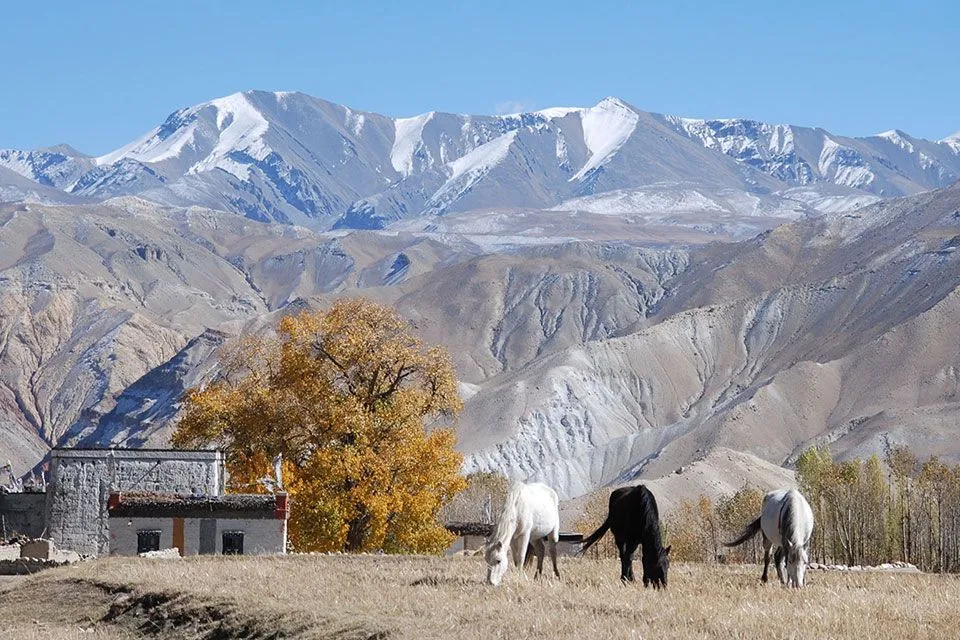
August in Upper Mustang is July’s quieter twin and, for many trekkers who discover it, the single most satisfying month in the annual calendar.
This guide covers what to expect on an Upper Mustang Trek in August, including the latest 2026 permit rules, weather, and a day by day route.
The rain shadow that keeps Upper Mustang dry throughout the Nepal monsoon continues in full effect through August. While Pokhara is recording some of its heaviest annual rainfall and the southern Himalayan slopes are running with water, the plateau north of the Annapurna wall is dry, warm, and available. The distinction matters and most people do not know it.
August adds a specific advantage over July: it marks the very beginning of the transition back toward autumn conditions. By late August the peak monsoon intensity is easing across the broader region. The glacial melt that drives peak river flow in July begins to moderate. The atmospheric moisture over the plateau decreases slightly. The first hints of the crystal post monsoon clarity that defines October begin appearing on some mornings. August trekkers catch Upper Mustang at the turn of its seasonal tide.
Planning your Upper Mustang Trek?
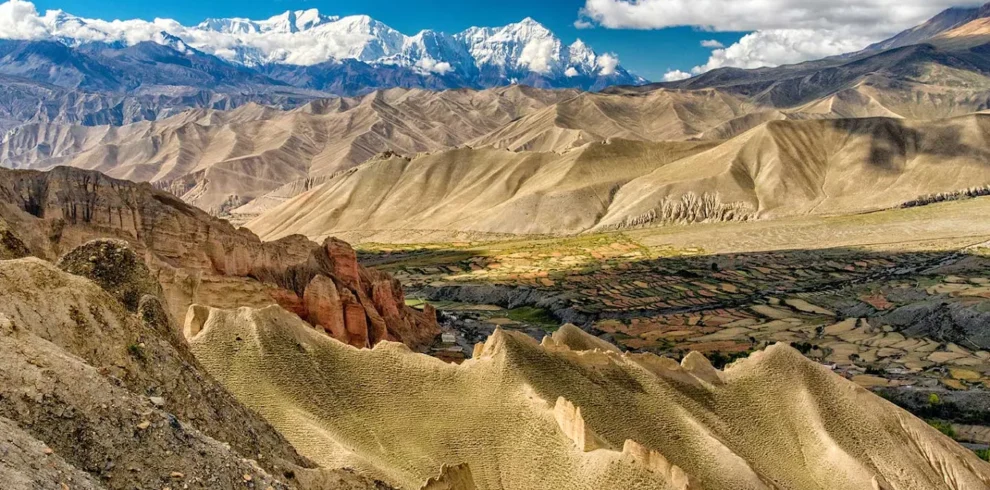
Upper Mustang Trek — Complete Guide 2026 Few places on earth stop you in your tracks the way Upper Mustang…
At a Glance: August Upper Mustang Trek
| Best for | Maximum solitude, budget value, warm easy walking, flexible date travelers |
| Temperature at Jomsom (2,720m) | Night: 12°C to 18°C | Day: 20°C to 28°C |
| Temperature at Lo Manthang (3,840m) | Night: 7°C to 14°C | Day: 12°C to 20°C |
| Precipitation in Upper Mustang | Very low (rain shadow at full strength) |
| Wind | Low to minimal |
| Crowd level | Minimal (second quietest after July) |
| UMAP Permit | USD 50 per day per person (no minimum) |
| Duration | 12 to 15 days typical |
| Overall rating | Excellent for the informed, flexible traveler |
August Weather: Warm, Dry, Transitioning
August temperatures closely mirror July across Upper Mustang. Jomsom daytime highs remain at 20°C to 28°C. Lo Manthang daytime temperatures reach 12°C to 20°C. These are genuinely comfortable trekking temperatures at altitude: warm enough that you are not spending energy on cold management, cool enough at elevation that you are not overheating.
The subtle but meaningful difference from July is what happens in the second half of August. As the monsoon system begins its gradual weakening across the Indian subcontinent, the moisture dynamics over the Himalaya start changing. By late August, some of the crystal clarity that defines September and October begins appearing in the early mornings over Upper Mustang. The mountain views from the plateau ridges show occasional days of exceptional clarity that feel like a preview of autumn.
Night temperatures remain warm in August compared to spring or autumn. Lo Manthang nights at 7°C to 14°C do not require the serious cold weather sleeping kit of January. A moderate sleeping bag is all you need. The warm nights mean early morning departure from your sleeping bag is comfortable rather than the cold discipline required in winter.
The Kali Gandaki afternoon wind is at its annual minimum in August. The spring gale is long gone. The autumn temperature differential that drives the wind has not returned. August afternoons in Upper Mustang are the calmest of the year. Walking at 2 PM is genuinely pleasant rather than the wind management exercise of April. This is an often overlooked advantage of the monsoon months that photographers and relaxed pace trekkers particularly appreciate.
Trail Conditions
August trail conditions in Upper Mustang are among the best of the year. The trails are dry throughout the restricted area. No snow, no ice, no monsoon mud. The jeep road surface is in good condition having been maintained through the spring season and not yet affected by autumn frost cycles. The older trail sections are dry and firm.
River levels in the Kali Gandaki in August are similar to July in the early part of the month and begin declining by late August as glacial melt reduces. Crossing points used by the standard trekking route are established and safe for August water levels. Do not improvise new crossing points.
The transition zone around Jomsom occasionally sees light showers in August, similar to July. These are brief and the trail dries quickly. Once above Kagbeni into the restricted area, the dryness is essentially complete. August visitors universally report surprise at how bone dry the restricted Upper Mustang area is while heavy rain is occurring at lower elevations to the south.
Planning your Upper Mustang Trek?
Crowds: Even Quieter Than July
If July is quiet, August is quieter. The total number of trekkers entering Upper Mustang in August is typically among the lowest two or three months of the year. The combination of Nepal monsoon perception and the fact that most international travelers planning Nepal trips have either already come in spring or are waiting for October means that August permit entries are minimal.
What this means on the ground: you may pass entire days on the Upper Mustang trail without seeing another trekking group. In Lo Manthang you may be the only international visitor for multiple consecutive days. The monastery visits, the cave site excursions, the village morning circuits, all occur in an atmosphere of genuine quiet that no other season can reliably provide.
For trekkers who have done Upper Mustang in a busier season and want to experience the same route stripped of its tourist infrastructure, August is the month to return. The landscape and culture do not change with the season. The experience of being present in them does.
Upper Mustang Trek — Complete Guide 2026 Few places on earth stop you in your tracks the way Upper Mustang…
Permits and Logistics
August permits are identical to all other months: UMAP USD 50 per day per person with no minimum purchase, ACAP NPR 3,000, TIMS NPR 2,000.
Guide booking in August requires 3 to 6 weeks advance notice at most. The quiet season means even the most in demand guides have August availability. Teahouse accommodation requires no advance booking stress: rooms are available at every major stop. Domestic flight timing still requires morning preference but the availability of flights (if not always the reliability) is better in August than peak months because there is no seat competition.
A note on the Nepal solo trekking law: as of March 2026 every Upper Mustang trekker must have a licensed guide. This applies in August just as in any month, but solo travelers are welcome and simply hire that guide individually rather than travel as part of a larger group. Your agency handles guide arrangement and the permit documentation that must accompany you through all checkpoints.
Book your August Upper Mustang Trek through Next Trip Nepal’s Upper Mustang Trek for fully organized arrangements at the most flexible pricing of the year.
Accommodation and Food
All main teahouses on the Upper Mustang route operate in August. The quiet season hospitality that July delivers continues through August: personal attention, flexible meal timing, genuine family level interaction that busy season prevents. Teahouse food in August includes the broadest vegetable selection of the year as the summer growing season peaks. Fresh greens, tomatoes, cucumbers, and local herbs enhance the standard dal bhat and noodle menu.
The August Upper Mustang Experience
August carries the same experiential qualities as July but with one additional dimension: you are trekking in the final weeks before Upper Mustang begins its transition toward the busy season. There is a specific quality to experiencing a place right before it wakes up to a crowd cycle. The locals who have had the plateau largely to themselves since June are quietly preparing. The teahouse families are starting to think about October supply orders. The monastery schedule continues without disruption.
August is when you can spend extended time at the ancient cave sites north of Lo Manthang without time pressure or competing groups. The Chhoser sky caves in August get the day hike to yourself. The 10,000 year old chambers, the ancient burial deposits, the Buddhist paintings in the accessible caves, all available for slow exploration in August warmth and silence.
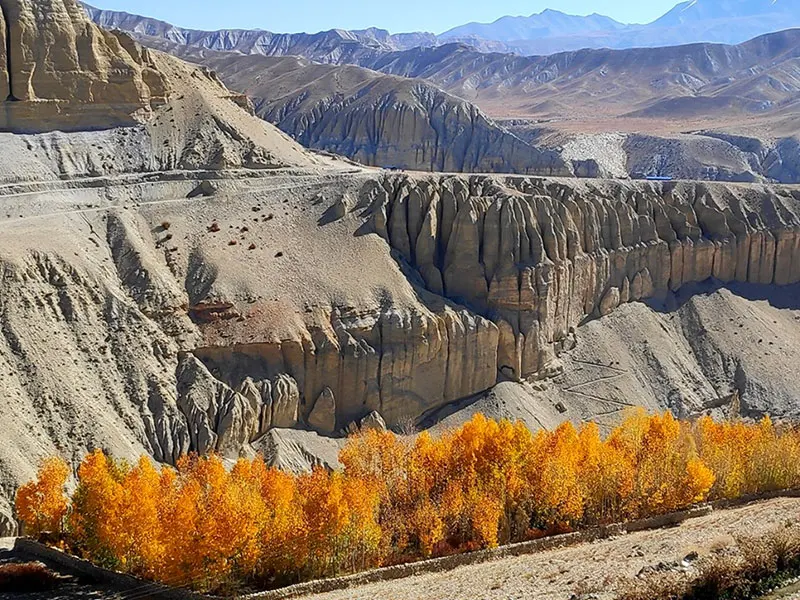
The agricultural landscape in August shows the Upper Mustang growing season at its peak. Fields that were bare desert in January and bright mustard yellow in March are in August a patchwork of green barley, buckwheat in white flower, and ripening vegetables. The contrast of these green cultivated patches against the surrounding red and brown desert plateau, with the Annapurna and Dhaulagiri peaks rising behind in the summer sky, is a visual uniquely available to August visitors.
Day by Day August Route
The standard 12 to 14 day route works perfectly in August. The comfortable temperatures and long daylight hours allow a relaxed daily pace. Most August trekkers find they consistently arrive at their destinations well before afternoon, leaving time for extended exploration at each stop rather than the efficient point to point movement that winter’s shorter days require.
Consider a 15 day version with extra days built in for the northern exploration beyond Lo Manthang. August’s complete solitude makes extended itinerary options in the northern valleys more practical than in any busier season. Ask your guide about the Nyphu Gompa route and other northern options that the standard 12 day itinerary does not include.
Packing for August
August packing is nearly identical to July. Light is the operative word.
Sleeping bag: a summer weight bag comfortable to +10°C is adequate for August including at Lo Manthang. A silk liner adds some versatility for the occasional cooler late August night.
Clothing: lightweight breathable trekking clothes for daytime. A light synthetic or down jacket for Lo Manthang evenings. A packable windproof shell for rain showers in the Jomsom zone and general versatility.
Sun protection: August sun at altitude is intense. SPF 50 sunscreen with full face and ear coverage, UV400 sunglasses, sun hat. Apply sunscreen at the start of every walking day and reapply at midday breaks.
Water: 2 to 3 liters carrying capacity minimum. The warm temperatures and active walking create significant fluid loss. Treat all water from natural sources. Teahouse supplied boiled or filtered water is safe throughout the route.
Getting to Jomsom
The Pokhara to Jomsom domestic flight in August operates with slightly better reliability than peak July monsoon because the monsoon is beginning to ease. Morning flights remain the best option. Build 1 to 2 days of flexibility into your schedule for potential delays.
The Beni to Jomsom jeep road is operational in August and a reliable backup for any flight cancellation. The road stays clear of monsoon flooding because it enters the rain shadow zone well before reaching Jomsom. Many August trekkers use the jeep road in one direction and fly the other for variety and schedule insurance.
Planning your Upper Mustang Trek?
Upper Mustang Trek — Complete Guide 2026 Few places on earth stop you in your tracks the way Upper Mustang…
Budget
August costs are similar to July, among the most flexible of the Upper Mustang year.
| Item | August Cost (per person) |
|---|---|
| UMAP Permit (USD 50/day, no minimum) | USD 600 to 700 (12 to 14 days) |
| ACAP + TIMS | NPR 5,000 (approx USD 37) |
| Guide (12 to 14 days) | USD 280 to 480 |
| Teahouse accommodation per night | USD 5 to 12 |
| Meals per day | USD 10 to 18 |
| Pokhara to Jomsom flights return | USD 110 to 170 |
Total organized August trip through Next Trip Nepal’s Upper Mustang Trek: approximately USD 1,700 to 2,400 per person for 12 to 14 days including all permits, guide, accommodation, and flights. Best value of any comfortable trekking month.
August FAQ
Is August drier than July in Upper Mustang?
Marginally, particularly in the second half of August as the broader monsoon system begins weakening. The restricted Upper Mustang area north of Kagbeni is essentially bone dry in both July and August. The difference is more noticeable around Jomsom and in the approach flight reliability than on the plateau itself.
Are mountain views better in August than July?
Late August offers the first glimpses of the post monsoon clarity returning. Some mornings in late August show mountain definition that is closer to September quality than peak July monsoon atmosphere. Mornings are generally the best time for mountain views in both months. By afternoon some atmospheric haze builds.
What are trekkers doing in rest of Nepal in August?
The Everest Base Camp trail sees its lowest traffic of the year in August. The Annapurna Circuit is quiet and somewhat muddy in the lower sections. Upper Mustang is dry and available while these routes experience monsoon conditions. The contrast is stark and knowing this is what drives the small but growing number of informed August Upper Mustang trekkers.
Can I book last minute for an August Upper Mustang Trek?
Last minute is possible in August in a way that is impossible in October or May. Because the demand is low, guide availability is high, teahouse accommodation needs no advance reservations, and domestic flight seats are available. Booking 3 to 4 weeks out is comfortable rather than the months of advance planning required for peak season. That said, earlier is always better for permit processing and the best guide selection.
Is Upper Mustang in August the same experience as in October?
Fundamentally different in character, similar in landscape. The visual content of the trek is the same: Lo Manthang, the cave systems, the monasteries, the desert plateau. The experience of it differs completely. October gives you peak conditions and maximum infrastructure efficiency with significant crowds. August gives you maximum solitude and direct cultural access at lower cost. Which is better depends entirely on what you value. Both are genuinely excellent.
August Vs September: What Changes
August and September share the same basic weather pattern but September marks the beginning of the transition toward autumn that culminates in October’s peak conditions.
September sees the monsoon retreat accelerating across Nepal. By mid September the southern slopes of the Himalaya are drying out. The post monsoon clearing process begins. In Upper Mustang, which was already dry through the monsoon, the change in September is felt mainly as improving air clarity and slightly cooler nights by month’s end. The first hints of autumn leaf color appear in the lower valley vegetation around Jomsom in September.
September crowd levels in Upper Mustang begin increasing from the July and August minimums as the early autumn trekking season starts building. By late September the numbers are noticeably higher than August though still well below October peaks.
Choose August if you want monsoon quiet and warmth. Choose September if you want the transition between quiet season and autumn peak, with improving views and slightly lower crowds than October at better value pricing. Both are good choices for different reasons.
Final Verdict
August Upper Mustang is the quietest comfortable trekking month available in Nepal, combining the rain shadow magic of the monsoon season with warm temperatures, excellent trail conditions, and the unique satisfaction of having an ancient Tibetan kingdom essentially to yourself. The flight reliability is slightly lower than non monsoon months and requires schedule flexibility. Everything else about August is an advantage for the informed and flexible traveler.
If October is Upper Mustang in the spotlight, August is Upper Mustang when the house lights are off and you are the only one in the room with it. Both experiences are valid. The August one is rarer and in the view of many who have done both, more profound.
Book your August Upper Mustang Trek through Next Trip Nepal’s Upper Mustang Trek and experience Nepal’s most extraordinary trekking destination in its most quietly magnificent month.
The Rain Shadow in August: Understanding Why This Works
The rain shadow phenomenon that makes August Upper Mustang trekking possible is worth understanding deeply because it counters decades of received trekking wisdom about Nepal’s monsoon season.
Nepal’s monsoon arrives from the Bay of Bengal, pushed north by the large scale atmospheric circulation that drives South Asian summers. The moisture carried by this system is enormous. When the monsoon air mass meets the Himalayan range, it is forced upward. As it rises it cools. Cooling air cannot hold as much water vapor as warm air. The moisture condenses and falls as rainfall on the southern slopes. By the time the air has crossed the main Himalayan ridge and begins descending on the northern side, it has lost the bulk of its moisture content. The descending dry air warms as it compresses and the rain shadow is complete.
Upper Mustang sits in the heart of this rain shadow. The plateau’s annual average rainfall of around 250 millimeters compares to over 4,000 millimeters on the Annapurna south face. In August, when the monsoon is still fully active on the southern slopes, this contrast is at its absolute maximum. Walking north through Kagbeni in August, leaving the slightly damp Jomsom zone behind and entering the completely dry plateau, is a physically tangible experience of atmospheric geography.
The implication for trekkers is practical and significant: Upper Mustang is one of very few places in the greater Himalayan region where high quality trekking is available in August. The Tibetan plateau proper is accessible from the China side but involves significant permits and organized tours. The Zanskar region of Ladakh in India has a similar rain shadow effect. In Nepal, Upper Mustang stands alone as the premier destination for August trekking.
Understanding this helps you explain your August Upper Mustang plan to Nepal trekking veterans who question your timing. The rain shadow is not a marginal effect or a good year exception. It is a consistent annual geographic reality that has been the same for thousands of years, which is why the Lo-pa people were able to develop their agricultural civilization in this location in the first place. August visitors are not adventurous outliers defying the monsoon. They are simply better informed than most.
Planning your Upper Mustang Trek?
Photography Opportunities Unique to August Upper Mustang
August photography in Upper Mustang occupies the visual space between the July monsoon sky drama and the October crystal clarity. It captures elements of both without being either.
The green agricultural valley photography that July offers continues through August. The barley and buckwheat crops that were young in July are approaching harvest in August. The fields in late August have a golden quality as the grain matures, creating a brief visual echo of the mustard fields of March at a completely different scale and color. The green fields turning gold at altitude, with the desert plateau surrounding them and the cloud topped peaks behind, is an August specific composition.
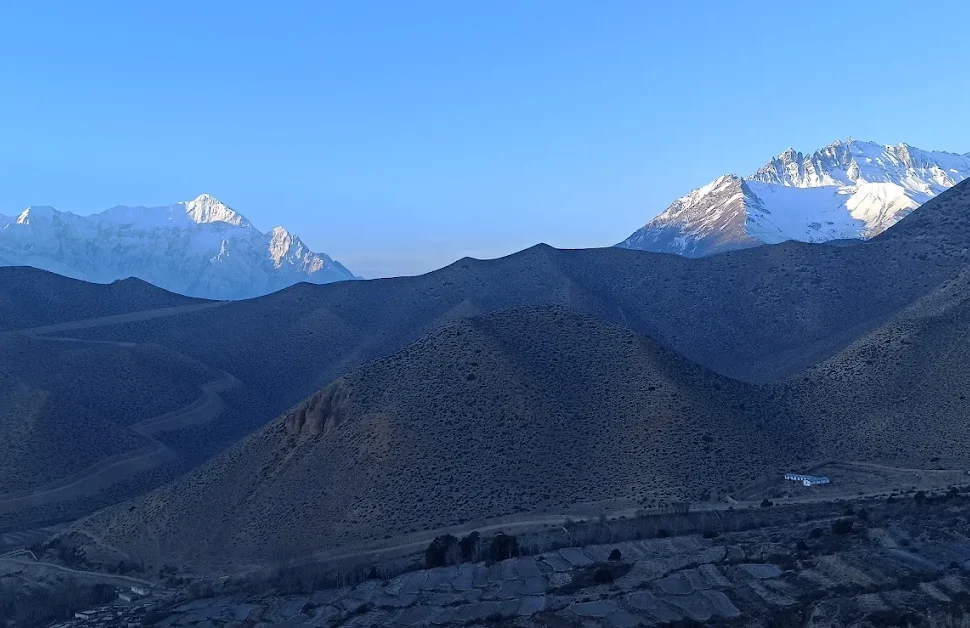
The late August clearing effect on some mornings produces mountain clarity that approaches October quality. These clear morning windows, before midday clouds build, give you Lo Manthang under a crystal sky with Nilgiri and the Annapurna range sharply defined behind. Having this view with zero other trekkers or camera tripods in the foreground is the August photographer’s specific advantage.
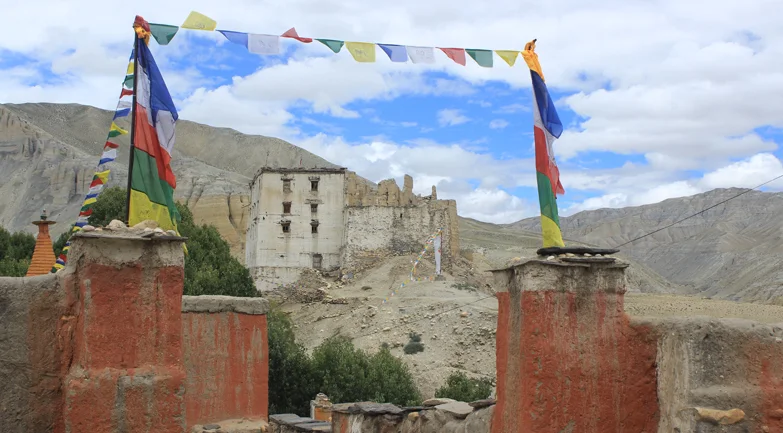
The monastery photography in August benefits from the same solitude advantage as every other aspect of the experience. Thubchen Gompa’s interior, with its extraordinary 15th century murals depicting the life of the Buddha and the Tibetan Buddhist pantheon, is available for long exposure low light photography in August with no other visitors moving through the frame. The quality of interior monastery photography in absolute quiet is categorically different from the October version.
The cave cliff photography at Chhoser benefits from August’s occasional partial cloud cover, which creates the soft diffused light that architectural photographers prefer over the harsh midday sun shadows. The intricate cliff face structure with its thousands of cave openings, some with preserved wooden window frames and doors, photographs most impressively in the soft light conditions that only partially cloudy days provide.
August Upper Mustang for Repeat Visitors
Among the most enthusiastic August Upper Mustang advocates are trekkers who have already done the route in October or April and return specifically for the monsoon season experience.
The first visit is typically in the safe comfortable choice month, October or occasionally April. The trekker experiences the landscape, the culture, the monasteries, Lo Manthang. They are impressed. The scenery is extraordinary. But in the back of their mind is a nagging awareness that they experienced it through a layer of organized tourism infrastructure running at capacity. They wonder what it would be like if they could somehow have it without all the other people.
The return visit in August answers that question completely. The route is the same. The landscape is the same. But the experience of it is so fundamentally different in character that many August returnees describe it as their first real Upper Mustang experience. The October visit was the introduction. August is the relationship.
This phenomenon is not unique to Upper Mustang but Upper Mustang demonstrates it more dramatically than almost anywhere else in the Nepal trekking world because the gap between its busy season and its quiet season is so extreme. From 2,000 plus trekkers in October to fewer than 100 in August is a transformation that completely changes what the destination is and means.
If you have already done Upper Mustang and are reading this guide, you are probably already thinking about the return visit. August is the answer. Book your Upper Mustang Trek about August availability and let us plan the version of Upper Mustang you have been imagining since you first visited.
Also consider combining an August Upper Mustang trip with a few days around Pokhara on either end. Pokhara in August has a lush green beauty around the lake that the dry season cannot offer. The contrast between monsoon Pokhara and rain shadow Upper Mustang in a single trip gives you two completely different faces of the same mountain range in a single Nepal journey.
The Upper Mustang Network: What to See Beyond Lo Manthang in August
Most Upper Mustang trekking guides focus on the standard route from Jomsom through Kagbeni to Lo Manthang and back. This route is excellent and captures the essential Upper Mustang experience. But August’s quiet creates space for extensions that the crowded seasons cannot easily accommodate.
The valley north of Lo Manthang toward the Tibetan border contains villages that see almost no trekking visitors even in peak season and essentially none in August. Namgyal village, Dhakmar with its famous red cliff faces, and the high pastures used by yak herders in summer are accessible on day trips and overnight extensions from Lo Manthang. Your guide can advise on permit coverage and the specific routing for these extensions.
The Nyphu Gompa monastery complex, reachable on a long day trip from Lo Manthang, is one of the most isolated monasteries in the Upper Mustang region. In August, with no other trekking groups around, the journey there and back through high altitude desert terrain has the quality of genuine exploration. The monastery itself is small and ancient, maintained by a handful of monks who follow a schedule that has not changed in centuries.
The various side valleys that branch off the main Kali Gandaki route between Jomsom and Lo Manthang contain hidden monasteries, cave systems, and villages that are rarely included in standard itineraries. In August your guide has the flexibility to incorporate these off route elements without the schedule pressure that peak season logistics impose.
Muktinath temple at 3,800 meters sits at the southern edge of the Upper Mustang approach, accessible from Jomsom as a half day excursion or as part of the return journey. The temple, simultaneously sacred to both Hindus and Buddhists, is one of the most important pilgrimage sites in the Himalayan world. In August the pilgrimage traffic is lower than in spring and autumn and the temple complex has an atmosphere of devotional quiet that the busy seasons cannot always provide.
The Marpha village apple orchards south of Jomsom are in full summer green in August. The apple brandy distillery that operates in Marpha using the famous local apple harvest produces some of the most distinctive spirit in the Himalayan world. A stop at Marpha for apple products on your return journey is worth building into your schedule. In August the village is relaxed and the shop owners have time for conversation.
August Upper Mustang is not just the standard route done quietly. It is the entire Upper Mustang experience, the standard route plus extensions plus the off route valleys plus the return stops, done in an atmosphere of total exploratory freedom. It is the month that rewards curiosity and repays flexibility with experiences that the organized peak season cannot deliver.
To build a custom August Upper Mustang itinerary that includes extended exploration, book the Upper Mustang Trek. Our guides know every corner of this extraordinary place and in August they have the time to take you to the corners that October groups never reach.
Preparing Mentally for August Upper Mustang
The practical preparation for August Upper Mustang is straightforward: light packing, sun protection, flexible flight schedule, and a good guide. But there is a mental preparation aspect that experienced off season travelers talk about that deserves mention.
Going into a celebrated destination in its quietest month requires a slight reframing of expectations. The Instagram version of Upper Mustang, the packed posts, the Tiji Festival crowd photography, the dramatic morning light with trekkers silhouetted against Lo Manthang, none of that is the August experience. The August experience is quieter, smaller in scale, more personal, and in many ways harder to photograph in a way that communicates its value to others.
The value is internal. It is the value of being somewhere truly extraordinary in genuine solitude. It is the quality of attention you can give to the 700 year old murals in Thubchen Gompa when you are standing in front of them alone with a flashlight and a monk who has nowhere else to be. It is the understanding of the Lo-pa agricultural year that comes from spending three evenings at a teahouse with the family who owns it, eating what they eat and listening to what they talk about. It is the specific silence of a desert plateau at night at 3,800 meters, with no other human sound for miles.
None of this can be photographed in a way that goes viral. All of it stays with the traveler who experiences it. August Upper Mustang is a private experience in a public place. That is a combination almost impossible to find in modern high altitude trekking and it is exactly why the August visitors who discover it keep coming back.
If this sounds like the Upper Mustang you want, August is waiting for you. Plan your Upper Mustang Trek to start planning. The ancient kingdom is dry, warm, and quiet. You will essentially have it to yourself.
August Upper Mustang rewards the traveler who has learned to look past the obvious season choices. The rain shadow keeps it dry. The summer warmth makes it comfortable. The monsoon keeps everyone else away. For informed, flexible trekkers this is not a compromise month. It is the preferred one. Start your August journey for the Upper Mustang Trek.
August Upper Mustang proves that the best time to visit somewhere is often when nobody else thinks to. The rain shadow delivers dry skies while the rest of Nepal shelters from monsoon. The warm temperatures make walking comfortable. The absence of crowds makes the cultural encounters genuine. The budget value is the best of any comfortable month. Come in August and discover the version of Upper Mustang that most trekkers never find. Plan your Upper Mustang Trek. Also compare with the Manaslu Circuit Trek, another rain shadow option that is excellent in August for the same reasons.
Upper Mustang Trek — Complete Guide 2026 Few places on earth stop you in your tracks the way Upper Mustang…