What Actually Happens at Lukla Airport
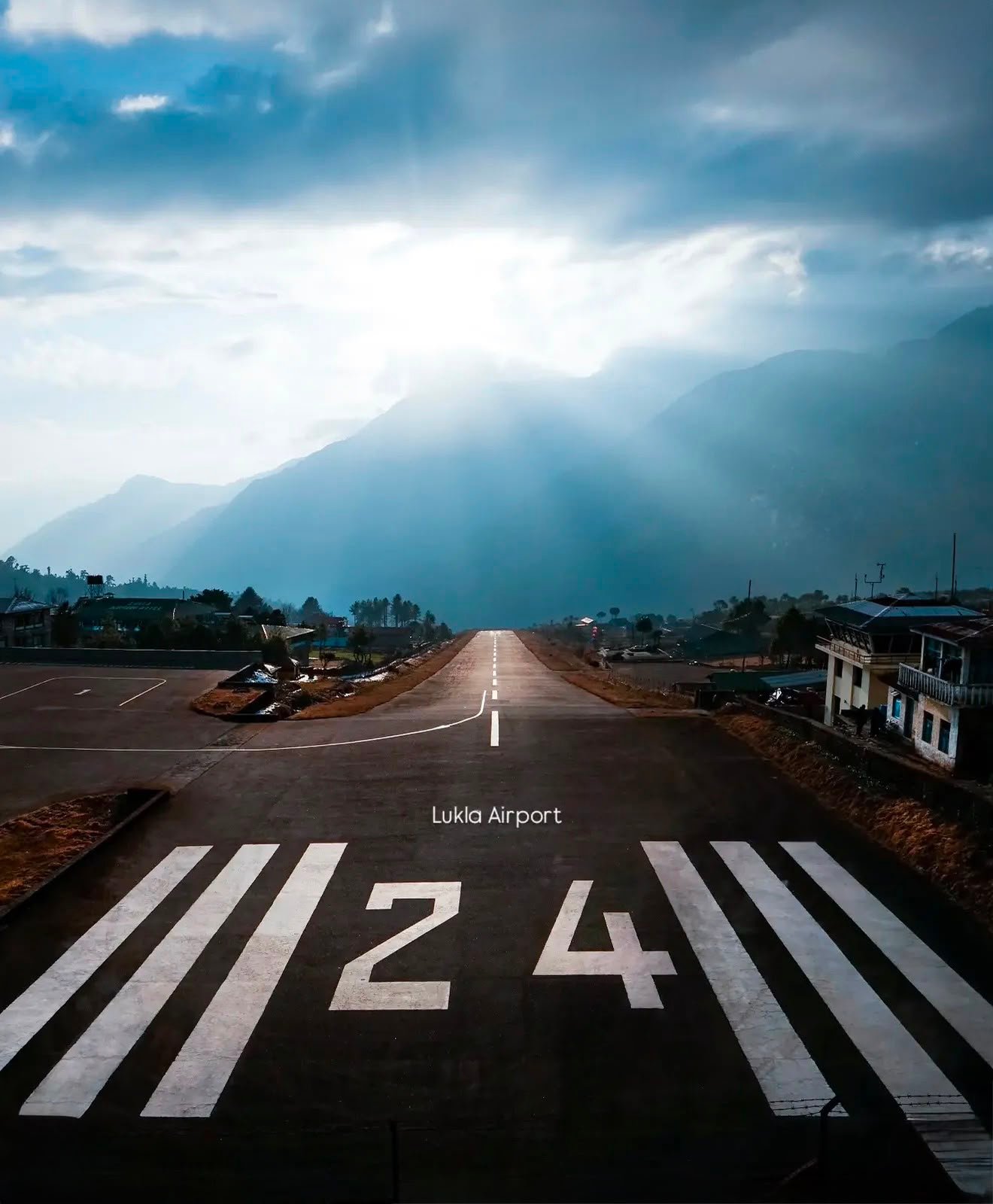
Every Everest Base Camp trek starts and ends with a flight into Tenzing Hillary Airport at Lukla, and it is the single most talked about airport in Nepal trekking. Here are the numbers that matter. The runway is 527 metres long, sits at 2,840m, slopes uphill at roughly a 12 percent gradient, and ends directly at a mountainside on the upper end and a steep drop on the lower end. The flight from Kathmandu takes about 35 minutes through mountain passes in a small propeller aircraft, usually a Twin Otter or Dornier carrying 16 to 19 passengers. I have flown this route more times than I can count, both as a passenger and coordinating flights for guests, and the two things worth understanding before you fly are simple: the pilots are exceptionally skilled at this specific approach, and the weather, not the runway, is what determines whether you fly on schedule.
Weather related delays at Lukla have a close parallel on the helicopter return itself. Our guide to weather delays on the Everest Base Camp Trek with Helicopter Return explains how the same mountain weather affects that flight.
Why Lukla Has a Reputation It Does Not Entirely Deserve
Lukla is often described online as one of the most dangerous airports in the world, and this framing misses the actual risk profile. Pilots who fly this route hold specific STOL, short takeoff and landing, mountain certification and fly this exact approach hundreds of times each season, building a level of route specific experience that few other commercial flights require. The runway’s slope and short length are accounted for in the aircraft performance calculations for every flight, and landings use the upward slope to help the aircraft decelerate quickly, while takeoffs use the downward slope to help the aircraft gain speed. The actual operational risk on this route is weather related delays and cancellations, not the physical characteristics of the runway itself.
Kathmandu to Lukla Direct: What to Expect
| Detail | Information |
|---|---|
| Flight time | Approximately 35 minutes |
| Aircraft type | Twin Otter or Dornier 228, 16 to 19 seats |
| Departure time | Early morning, typically 6am to 8am |
| Runway length | 527 metres |
| Runway elevation | 2,840m |
| Baggage allowance | 15kg checked plus 5kg hand luggage typical |
| Operating airlines | Tara Air, Summit Air, and other domestic carriers on rotation |
Morning departures are standard practice on this route because mountain weather in the Khumbu is most stable in the early hours, before afternoon cloud and wind build up over the peaks. This is also why flight schedules shift earlier, not later, when delays occur, rather than pushing flights into the afternoon.
The Manthali Airport Diversion: What It Actually Means for You
During peak trekking months, October, November, April, and May, Lukla flights are frequently rerouted through Manthali Airport in Ramechhap district, roughly 130km southeast of Kathmandu, rather than departing from Kathmandu directly. This diversion exists because Kathmandu’s single runway becomes congested with commercial international and domestic traffic during peak season, and routing Lukla flights through a quieter regional airport keeps the schedule moving reliably.
Practically, this means a predawn departure from your Kathmandu hotel, usually between 3am and 4am, a four hour drive to Manthali, then a 20 minute flight to Lukla. We arrange the vehicle and driver as part of every EBC package and build the early start into your Day 2 schedule from the outset, so it is not a surprise sprung on you the night before. The drive itself is quieter than it sounds on paper. Most trekkers doze for a good portion of it, and arriving as the sun comes up over the eastern hills is, more often than not, a genuinely pleasant start to the trekking portion of your trip rather than the ordeal it is sometimes made out to be online.
Understanding Why Flights Get Delayed
Lukla flight delays come down to visibility, not wind strength in most cases. The approach requires clear visual conditions since it relies on visual flight rules rather than instrument landing systems, given the mountainous terrain surrounding the airport. Low cloud, fog, or poor visibility at either Kathmandu, Manthali, or Lukla itself can ground flights, sometimes for a few hours, occasionally for a full day or more during a sustained weather system.
| Season | Delay Frequency | Typical Cause |
|---|---|---|
| October to November | Low to moderate | Morning fog at Kathmandu or Manthali, clears by midday |
| December to February | Low | Generally stable weather, occasional high wind |
| March to May | Moderate | Afternoon cloud buildup, pre monsoon haze |
| June to September | High | Monsoon rain and low cloud, frequent multi day delays |
Flights typically operate in the early morning specifically because visibility tends to be best before the sun heats the valley and generates afternoon cloud. A delay in the morning slot often means the entire day’s flights get pushed or cancelled, since conditions rarely improve enough by afternoon for safe operation on this particular route.
Why We Build a Buffer Day Into Every Itinerary
This is the single most important practical piece of advice in this entire guide: build at least one buffer day between the end of your trek and your international flight home. Flight delays on this route are common enough, not rare exceptions, that planning without a buffer day means genuinely risking a missed international connection. Trekkers who build in a buffer day and do not need it spend it relaxing in a Thamel cafe or getting a well earned massage. Trekkers who skip the buffer and hit a weather delay spend it anxious, rebooking flights, and sometimes missing connections that cost far more to fix than a single extra hotel night would have cost to prevent.
What Happens If Your Flight Is Delayed or Cancelled
If your Lukla flight is delayed, you wait, typically at the domestic terminal or a nearby cafe, and airlines rebook to the next available slot as conditions allow. If a full day is lost, most trekkers simply shift the entire itinerary back by a day, which is straightforward if you have that buffer built in and considerably more stressful if you do not. On the return leg, if your flight home from Lukla is delayed, helicopter shuttles become available as a paid alternative once a backlog builds up, typically costing more than the standard flight but guaranteeing you make it back to Kathmandu that day. We coordinate this option directly for our trekkers if a return delay threatens an international connection, since by that stage in the trip getting you home on schedule matters more than the extra cost.
Tara Air, Summit Air, and Other Operators
Several domestic carriers operate the Kathmandu to Lukla and Manthali to Lukla routes, rotating based on aircraft availability and scheduling agreements, most commonly Tara Air and Summit Air. Ticketing is typically handled through your trekking package rather than booked individually, and which specific airline operates your flight on a given day is usually decided close to departure based on aircraft rotation. This is normal practice on this route and not something to be concerned about, since all operators flying into Lukla hold the same mountain certification requirements.
Packing and Baggage Rules for the Lukla Flight
Baggage allowance on Lukla flights is stricter than standard domestic Nepal flights due to the aircraft’s weight limitations on a short, high altitude runway. Typical allowance is 15kg checked baggage plus 5kg hand luggage, and excess baggage is charged per kilogram if you exceed this. Pack efficiently for this leg specifically, since gear you do not need until the trek itself, rather than in Kathmandu, can often be left at your hotel for your return rather than carried both ways. Duffel bags rather than hard suitcases are strongly preferred, since they pack more efficiently into the aircraft’s limited cargo space and are what your porter will actually carry on the trail itself.
Weather Patterns Around Lukla: A Closer Look
The Khumbu’s weather pattern follows a fairly predictable daily cycle for most of the trekking season: clear mornings, building cloud through the afternoon, and possible precipitation by evening. This is precisely why flights are scheduled early and why afternoon flights into Lukla are essentially never scheduled during normal operations. Multi day weather systems, most common during the monsoon shoulder periods of late May and early June, and again in late September, can disrupt this pattern entirely and ground flights for consecutive days. We monitor forecasts closely in the days leading up to your departure and will flag well in advance if a system looks likely to affect your specific dates.
Alternatives to Flying: The Jiri Route
For trekkers who want to avoid the Lukla flight risk entirely, or who simply want a more authentic, less crowded approach to the Khumbu, walking in from Jiri is the classic alternative, following the same route Sir Edmund Hillary’s 1953 expedition originally used before Lukla’s airstrip existed. This adds roughly seven to eight days of additional walking on each end of the standard itinerary and considerably more elevation change, but removes any dependence on Lukla flight scheduling entirely for your inbound journey. Our 21 Day EBC Trek via Jiri is built specifically for trekkers who want this experience, and it remains one of the most rewarding, least crowded ways to reach Everest Base Camp precisely because so few trekkers choose it over the faster flight option.
Common Mistakes Trekkers Make With Lukla Flights
- Booking an international departure flight for the same day or the day immediately after the trek ends, with no buffer for a possible delay
- Assuming a delay means the trip is ruined, when in most cases it simply means a one day schedule shift that a buffer day absorbs easily
- Overpacking for the Lukla flight leg and getting hit with excess baggage charges that could have been avoided by leaving non essential items at the Kathmandu hotel
- Not confirming the specific departure point, Kathmandu or Manthali, the night before during peak season, and being caught off guard by a 3am pickup
- Panicking and trying to arrange an independent helicopter charter at inflated last minute prices instead of working through the queue system airlines use for delayed flights
How We Handle Flight Logistics for Our Trekkers
Every EBC package includes full flight coordination as standard, not an add on. We monitor weather in the days before your departure, confirm your specific departure point the evening before during peak season, arrange the Manthali transport when required, and stay in direct contact with airline operations if delays occur. If a return flight delay threatens an international connection, we coordinate helicopter alternatives directly rather than leaving you to navigate an unfamiliar airport queue alone. This is one of the areas where working with a company that guides this exact route regularly, rather than a generalist agency, makes a genuine practical difference during the two days of your trip when things are most likely to not go exactly to plan.
A Short History of Lukla Airport
Lukla’s airstrip was built in 1964 under the direction of Sir Edmund Hillary, originally as a dirt runway intended to support the construction of the Khunde hospital and local schools that Hillary’s foundation was building in the Khumbu region at the time. It was paved in 2001 and officially named Tenzing Hillary Airport in 2008, honoring both Hillary and Tenzing Norgay, the two men who first summited Everest in 1953. What began as basic infrastructure to support a hospital project has since become the primary gateway for the entire Everest trekking and climbing economy, handling tens of thousands of passengers each trekking season. Understanding this history helps explain why the airport exists exactly where it does, on a small shelf of relatively flat ground that was the best available option in a valley otherwise dominated by steep terrain, rather than a location chosen for convenience.
How Lukla Compares to Other Mountain Airports
| Airport | Location | Runway Length | Notable Feature |
|---|---|---|---|
| Lukla (Tenzing Hillary) | Nepal | 527 metres | Sloped runway ending at a mountainside |
| Paro Airport | Bhutan | 1,964 metres | Surrounded by peaks up to 5,500m, requires specially certified pilots |
| Courchevel Altiport | France | 537 metres | Similarly steep sloped runway used for ski resort access |
| Saba Airport | Caribbean | 400 metres | One of the shortest commercial runways in the world |
Lukla is frequently mentioned alongside these other short, challenging runways in discussions of demanding commercial aviation, and it shares the same fundamental safety principle with all of them: specialized pilot certification and conservative operating procedures, particularly around weather minimums, are what make these airports safe to operate despite their physical constraints.
Helicopter as a Flight Alternative
If you specifically want to avoid the fixed wing Lukla flight, or if you are traveling on a tighter schedule with less tolerance for weather delays, a helicopter charter to Lukla or directly to Namche Bazaar (skipping the first two trekking days entirely) is available as a paid alternative. Helicopters have somewhat more flexibility in marginal weather conditions than fixed wing aircraft, though they are not immune to weather grounding either, and the cost is substantially higher than a standard flight. This option is most commonly used by trekkers on a tight schedule facing a backlog of delayed fixed wing flights, or by those specifically booking our EBC Trek with Helicopter Return package, which uses a helicopter for the return leg from Gorak Shep or Lukla rather than walking the full descent.
What to Do During a Flight Delay
Waiting out a Lukla flight delay is a normal, if mildly frustrating, part of trekking this route, and a little planning makes it far more comfortable. Keep essential items, medication, a phone charger, snacks, and a layer of warm clothing, in your carry on rather than checked baggage, since you may be waiting at the airport for several hours. Kathmandu’s domestic terminal has basic food and coffee options nearby, and many trekkers use an unexpected delay day to visit Boudhanath or Swayambhunath, both a short taxi ride away, rather than sitting at the airport the entire time if the delay is confirmed for a full day. Our guides stay in direct contact with airline staff during any delay and will let you know realistically whether waiting at the airport or heading back into the city for a few hours makes more sense for your specific situation.
Travel Insurance and Flight Delay Coverage
Most comprehensive travel insurance policies include some level of trip delay coverage, which can reimburse costs like an unexpected extra hotel night or rebooked onward travel if a Lukla flight delay causes you to miss a connection. Check your specific policy wording for how many hours of delay trigger coverage and what documentation the airline needs to provide, since requirements vary by insurer. This is a good reason to keep any delay confirmation or rebooking documentation from the airline, since insurers typically want this as evidence when processing a delay related claim.
Lukla Village While You Wait
If your flight is delayed and you find yourself spending an unplanned night in Lukla itself, either on the way in or the way out, the village has more to offer than a simple waiting room. Lukla has a genuine trekking town atmosphere, with bakeries, gear shops, and teahouses that cater specifically to trekkers passing through, many run by families who have been part of the Everest tourism economy for decades. It is a good place to buy any last minute gear you discovered you needed once you saw the trail conditions, and a reasonable place to sample your first taste of Sherpa culture before heading deeper into the valley. Trekkers who treat an unplanned Lukla night as an inconvenience miss what is often a genuinely pleasant, low key evening in a village built entirely around welcoming people exactly like you.
The Psychology of Flight Anxiety and How to Manage It
A fair number of trekkers arrive at Kathmandu domestic terminal more nervous about the Lukla flight than about the trek itself, largely due to dramatic online descriptions of the airport that do not reflect the actual operational safety record. If you are feeling anxious about this leg specifically, it helps to know that pilots on this route fly it constantly, that the aircraft used are specifically suited to short runway operations, and that flights simply do not depart in the first place if conditions are not within safe operating parameters, which is precisely why delays happen rather than flights proceeding in marginal weather. The wait for a delayed flight is the actual cost of this safety margin, not a sign that something is wrong. Trekkers who understand this distinction generally find the anxiety fades considerably once the aircraft is airborne and the mountain views begin.
Photography From the Lukla Flight
However you feel about the flight itself, it offers some of the best aerial mountain photography of the entire trip, and it is worth being prepared for it. Request a window seat when checking in, keep your camera or phone easily accessible rather than packed away, and be ready from the moment the aircraft climbs out of the Kathmandu valley, since the terrain transitions from hills to genuine high mountains remarkably quickly on this short flight. Many trekkers get their first proper view of the Himalayan range, sometimes including distant views of Everest itself on a clear day, during this 35 minute flight rather than waiting until later in the trek, and it is a moment worth photographing properly rather than fumbling for a phone at the last second. In practice, the aircraft climbs out over the Kathmandu valley rim within the first few minutes, and from that point onward the terrain below shifts quickly from terraced hillside farmland to genuine high mountain ridgelines, a transition that still catches my attention even after flying this route more times than I can count.
Domestic Terminal Logistics in Kathmandu
Kathmandu’s domestic terminal, separate from the international terminal, is where all Lukla flights depart from on days they run from Kathmandu directly rather than Manthali. Check in typically opens a couple of hours before departure, and security screening follows standard domestic procedures. Bring your passport even for domestic flights, since it is standard identification required for check in on this route given the significant number of foreign trekkers using it. We handle check in logistics directly as part of your package, meeting you at the terminal and managing the process so this is one less thing to navigate on an already early morning.
Return Flight From Lukla: What Changes
The return leg from Lukla to Kathmandu at the end of your trek follows the same operational logic as the inbound flight, but with one important difference: by this point you have completed your acclimatization and the trek itself, so a delay is purely a logistics problem rather than anything affecting your health or trek experience. That said, return delays carry higher stakes for your onward travel, since they sit closer to your international departure. This is the exact scenario the buffer day exists for. If a queue of trekkers builds up in Lukla waiting for delayed flights, airlines generally process bookings on a first come basis tied to your original ticket date, and our guides work directly with airline staff to keep your group’s position in that queue rather than leaving you to manage it independently in an unfamiliar, busy airport.
Weight Distribution and Why Baggage Limits Are Strict
The strict baggage allowance on Lukla flights, tighter than most domestic routes in Nepal, comes down to basic aircraft performance physics rather than an arbitrary airline policy. A short, sloped, high altitude runway leaves less margin for a heavily loaded aircraft to safely take off and land within the available distance, particularly as air density decreases with altitude and reduces engine and wing performance compared to sea level. Every kilogram matters more on this route than it would on a longer runway at a lower elevation airport, which is why the 15kg checked and 5kg hand luggage allowance is enforced consistently rather than treated as a loose guideline. Trekking companies that quote unrealistically generous baggage allowances for this specific route are setting inaccurate expectations, since the aircraft physically cannot accommodate significantly more.
Combining the Lukla Flight With Other Khumbu Activities
Some trekkers use an unplanned delay day, or simply build in a planned rest day, to explore Kathmandu’s Everest related sights before or after their trek, connecting the flight experience to the broader story of Everest exploration. The Everest Museum near Namche Bazaar, which you will pass during your trek itself, covers the history of Everest expeditions in detail, while Kathmandu’s own mountaineering museums and Sherpa cultural centers offer context before you even reach Lukla. Building one of these into a delay day, if one occurs, turns an inconvenience into an opportunity to deepen your understanding of the region you are about to walk through.
What Our Guides Do Differently for Flight Days
Flight days, Day 2 and the final trekking day of every EBC itinerary, get more attention from us than almost any other part of trip logistics, precisely because they are the two days most likely to not go exactly as planned. We check weather forecasts daily in the week leading up to your departure, confirm your specific departure airport the evening before during peak season rather than leaving it as a surprise, and keep a direct line to airline operations staff so we know about delays as early as possible rather than waiting in an uninformed queue with everyone else. If a significant delay is forecast, we tell you in advance rather than letting you discover it at 4am on departure morning, giving you the chance to adjust expectations or, in rare cases, discuss alternative options like a helicopter transfer before the situation becomes urgent. This kind of proactive management is a direct result of guiding this exact route repeatedly, season after season, and understanding its patterns rather than treating every flight day as a fresh unknown.
Final Thoughts on Flying Into the Khumbu
The Lukla flight has an outsized reputation relative to its actual operational risk, largely built on dramatic online content rather than the airport’s genuine safety record under the pilots and aircraft that operate it daily. The real practical consideration is not danger but scheduling: weather delays are common enough that they should be planned around, not treated as a remote possibility. Build a buffer day into your itinerary, pack within the baggage allowance, and trust that the pilots flying this route professionally, day after day, know this approach far better than any online article describing it from a distance. Once you are airborne and the Himalayan peaks come into view for the first time, most trekkers forget any pre flight nerves within the first few minutes, and the memory that remains is the view, not the anxiety that preceded it.
Insurance for the Aircraft Leg Specifically
While the general travel insurance guidance for this trek covers high altitude trekking and medical evacuation, it is worth confirming your policy also covers standard trip delay and cancellation scenarios tied to domestic flight disruption, since this is a distinct coverage category from the high altitude specific provisions. Read your policy’s trip delay section specifically, note the minimum delay threshold that triggers coverage, commonly six or twelve hours depending on the insurer, and keep any official delay documentation the airline provides. This is separate paperwork from anything related to altitude sickness or medical evacuation, and claims processes typically require it as a distinct submission.
A Realistic Set of Expectations
Most Lukla flights, across most of the trekking season, depart and arrive without any drama at all, on schedule, with nothing more eventful than a genuinely spectacular view out the window. Delays happen often enough that planning for one is sensible, but they are the exception within any given week rather than the norm, and a well built itinerary with a buffer day absorbs them without meaningfully affecting your trip. Trekkers who arrive expecting either a terrifying ordeal or a guaranteed smooth flight are both working from an inaccurate picture. The accurate picture is a well managed, professionally operated short haul mountain flight with a real, planned for chance of a weather related delay, nothing more dramatic than that.
A Closing Perspective From the Cockpit’s Perspective
I have talked with several of the pilots who fly this route regularly over the years, and the consistent theme in those conversations is professional respect for the mountains rather than fear of them. These pilots train specifically for this terrain, fly it season after season, and treat weather minimums as a hard line rather than a suggestion, which is precisely why delays happen instead of flights proceeding in conditions that push those limits. That discipline is the actual safety mechanism behind this route’s strong operational record, not luck, and it is worth remembering the next time a delay tests your patience at the domestic terminal.
Before You Fly: A Quick Checklist
Confirm your departure point, Kathmandu or Manthali, the evening before if you are traveling during peak season. Pack essential items in carry on baggage rather than checked, in case of a multi hour wait. Weigh your bags before you leave your hotel to avoid an unexpected excess baggage charge at check in. Build at least one buffer day into your schedule before any international departure. Keep your passport accessible, since it is required identification even for this domestic route. Bring a light layer for the terminal itself, since early morning departures mean a cold wait before the sun is fully up.
Frequently Asked Questions
Is Lukla airport actually dangerous?
The airport itself is safely operated by pilots holding specific mountain certification who fly this exact approach routinely. The real risk factor is weather related delay, not the physical safety of the runway or the flight operation itself.
How long is the flight from Kathmandu to Lukla?
Approximately 35 minutes for a direct Kathmandu departure. During peak season Manthali diversions, the total journey includes a four hour drive plus a 20 minute flight instead.
Why do Lukla flights get diverted to Manthali Airport?
Kathmandu’s single runway becomes congested with commercial traffic during peak trekking months, October, November, April, and May, so Lukla flights are routed through the quieter Manthali Airport in Ramechhap to keep schedules reliable.
What happens if my Lukla flight is cancelled?
You are rebooked onto the next available flight as conditions allow, which may mean a same day delay or, during sustained weather systems, a shift of a full day or more. Building a buffer day into your itinerary absorbs this without disrupting your international travel plans.
How much luggage can I bring on the Lukla flight?
Typically 15kg checked baggage plus 5kg hand luggage. Excess baggage is charged per kilogram, so pack efficiently and consider leaving non trek items at your Kathmandu hotel for the duration.
Can I avoid the Lukla flight entirely?
Yes, by walking in from Jiri, the classic overland approach route used before Lukla’s airstrip existed. This adds seven to eight days of additional walking but removes any dependence on flight scheduling for your inbound journey.
Should I book my international flight home for the same day my trek ends?
No. Build at least one buffer day between your trek’s end and your international departure. Lukla flight delays are common enough that skipping this buffer genuinely risks a missed international connection.
Do I need to reconfirm my Lukla flight the night before?
During peak season, yes, since your departure point, Kathmandu or Manthali, is confirmed close to departure based on scheduling. We handle this confirmation directly for our trekkers as part of standard package coordination.
Which airlines fly to Lukla?
Tara Air and Summit Air are the most common operators, rotating based on aircraft availability and scheduling. All operators flying this route hold the same mountain certification requirements, so which specific airline operates your flight is not a safety consideration.
Is the Manthali diversion permanent or seasonal?
Seasonal. It applies during the peak trekking months of October, November, April, and May when Kathmandu’s runway congestion is highest. Outside these months, flights typically depart from Kathmandu directly.
How far in advance should I book my EBC trek to secure Lukla flight availability?
Three to four months ahead for October, the busiest single month, and slightly less lead time for other months. Early booking secures better flight time slots and gives more buffer for rebooking if your preferred dates shift.
Can weight be redistributed between checked and carry on baggage?
Some flexibility exists, but the combined total, checked plus carry on, is what matters for aircraft weight calculations, so redistributing weight between the two categories does not increase your total allowance.
Do children or elderly trekkers face different rules on the Lukla flight?
No special rules apply, though the same general age considerations that apply to the trek itself, discussed in our safety guide, are worth thinking through before committing to the full itinerary. The flight itself has no age restrictions beyond standard airline policy.
What is the best seat position on the Lukla flight for views?
Either side offers strong views given the narrow valley the flight passes through, though the left side flying out of Kathmandu often catches the more direct mountain views as the route curves toward the Khumbu. Request a window seat regardless of side at check in.
I am Kiran Basnet, founder of Next Trip Nepal, based in Kathmandu. I have coordinated Lukla flights for our trekkers across every season this route operates, and the guidance in this article reflects what actually happens on the ground, not a generic airline description.
Related reading: Everest Base Camp Trek Safety Guide, Everest Base Camp Trek Distance and Duration, Best Time to Trek to Everest Base Camp, Everest Base Camp Trek Cost 2026 2027, Everest Base Camp Trek 14 Days trip page