The Langtang Valley Trek is a moderate trek — not easy, but not technical. There are no fixed ropes, no glacier crossings, no scrambling sections that require hands-and-feet climbing. What it does require is a reasonable baseline of fitness, the willingness to walk 5–7 hours per day on a consecutive basis, and the patience to acclimatize properly rather than rushing. The altitude is where most people underestimate the challenge.
The elevation gain from the trailhead at Syabrubesi (1,460m) to the highest point most trekkers reach at Kyanjin Gompa (3,870m) is 2,410 vertical meters. That’s spread over 4 days of walking, which means roughly 600m of net elevation gain per trekking day. For context, that’s less aggressive than the Everest Base Camp trek’s push to Namche Bazaar or the Annapurna Circuit’s climb to Thorong La — but altitude sickness doesn’t care about comparative rankings. It cares about how fast you ascend and how your individual body responds.
Day-by-Day Difficulty Profile
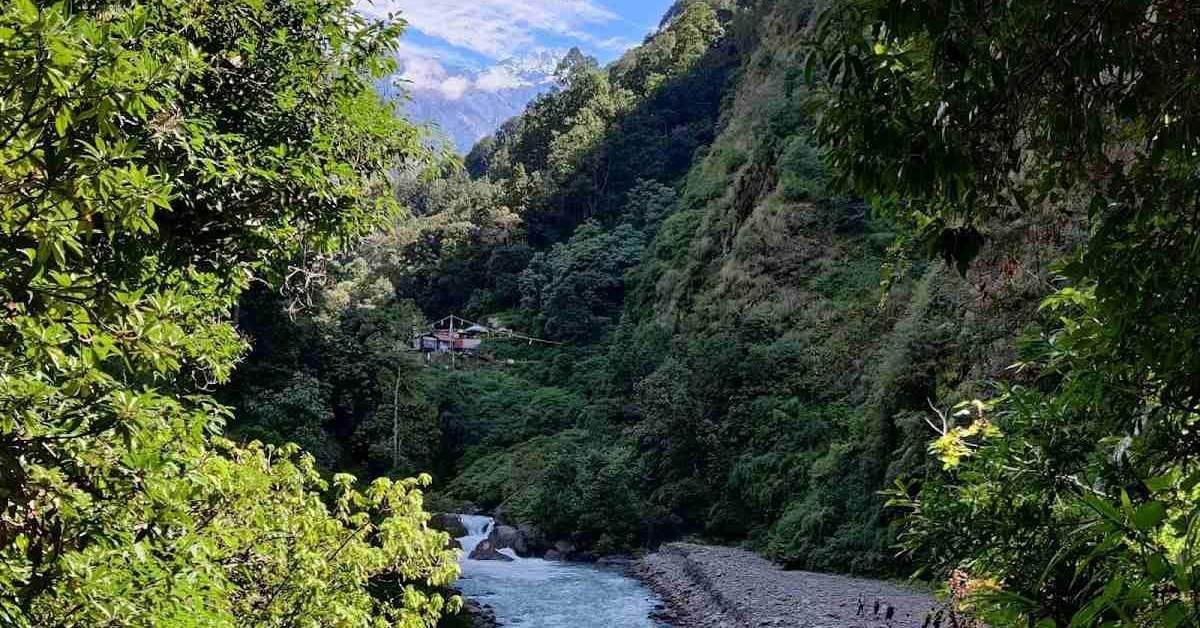
Day 1 — Syabrubesi to Lama Hotel (5–6 hours, 1,010m elevation gain): The first day starts easier than it feels by the end. You leave Syabrubesi at 1,460m and follow the Langtang Khola gorge uphill through dense forest. The trail is well-graded and mostly shaded. By the final two hours before Lama Hotel, the climb steepens noticeably. You’ll arrive at 2,470m — over 1,000m higher than your starting point. It’s a solid first day.
Day 2 — Lama Hotel to Langtang Village (5–6 hours, 960m elevation gain): The trail opens up as the valley widens. You pass through Ghoda Tabela (3,010m), which has an army checkpoint — have your permits ready. The gradient is steady rather than steep. The valley views improve dramatically as you gain height. By the time you reach Langtang Village (3,430m), you’ve been walking at meaningful altitude for several hours. Some trekkers feel the first whispers of altitude fatigue here.
Day 3 — Langtang Village to Kyanjin Gompa (3–4 hours, 440m elevation gain): The shortest walking day is intentional — your body needs to arrive at Kyanjin Gompa (3,870m) without having exhausted itself getting there. The trail is relatively flat compared to previous days, crossing the wide valley floor with dramatic views of Langtang Lirung ahead. A well-paced half-day walk.
| AMS Symptom | Mild | Severe (descend immediately) |
|---|---|---|
| Headache | Dull, responds to ibuprofen | Severe, doesn’t respond to medication |
| Nausea | Mild queasiness | Vomiting that won’t stop |
| Breathing | Slightly laboured on climbs | Breathless at rest, gurgling sounds (HAPE) |
| Balance | Normal | Loss of balance (HACE) |
| Mental clarity | Normal or mildly foggy | Confusion, disorientation (HACE) |
Planning a Langtang Valley Trek? Contact our local team for expert advice and trip planning.
Trek the Langtang Valley with Next Trip Nepal. 8-day package from USD 650, covering all permits, guide, porter and teahouse accommodation. Langtang National Park, Kyanjin Gompa and Tserko Ri viewpoint included.
Altitude Sickness: The Real Difficulty
Altitude sickness (acute mountain sickness, or AMS) is the primary risk on the Langtang trek — more so than any physical challenge on the trail itself. The symptoms to know: headache, nausea, fatigue beyond what walking should cause, dizziness, loss of appetite, and difficulty sleeping. Mild AMS is common and manageable; severe AMS is a medical emergency requiring immediate descent.
The standard acclimatization rule — don’t gain more than 300–500m of sleeping elevation per day above 3,000m — becomes relevant once you’re at Langtang Village. The push from Lama Hotel (2,470m) to Kyanjin Gompa (3,870m) in a single day is technically within the limit but leaves no margin. Most experienced trekkers either spend an acclimatization night at Langtang Village or take a very slow pace on the Kyanjin push day.
Warning signs to take seriously: if your headache doesn’t improve after rest and a liter of water, if you feel confused or unusually uncoordinated, or if someone in your group seems unaware of how bad they feel — descend. The nearest medical help is in Kathmandu. Don’t push through severe symptoms hoping they’ll improve at altitude. They won’t.
Diamox (acetazolamide) helps some people acclimatize more easily. Talk to a doctor in Kathmandu or at home before the trek if you want to consider it. It’s not a substitute for acclimatizing properly — it just reduces symptoms enough to continue ascending at the normal pace.
The Tsergo Ri Day Hike: The Hardest Section
If you do only the standard Kyanjin Gompa route, the trek is moderate. Add the Tsergo Ri summit day hike (4,984m) from Kyanjin, and you’ve added the most physically demanding section of the entire experience.
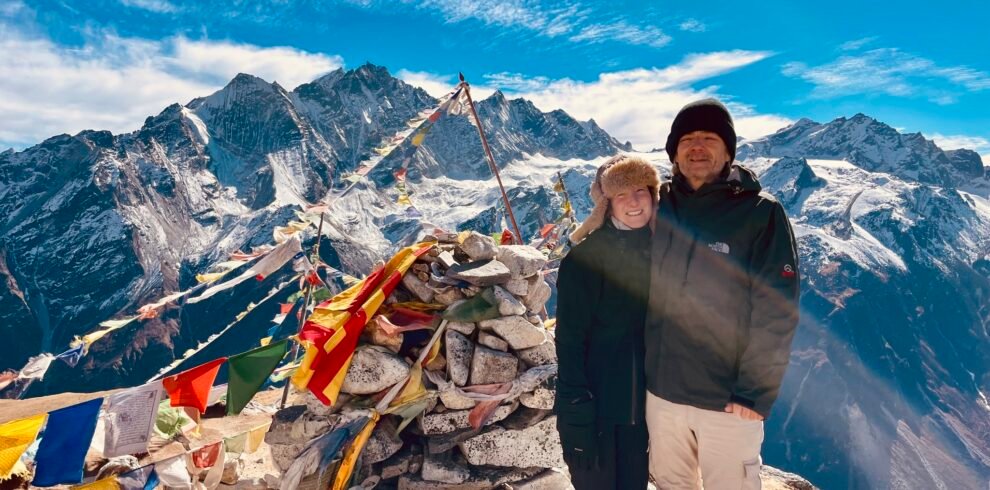
Tsergo Ri is a 5–6 hour round trip from Kyanjin Gompa, gaining 1,114m in altitude in a half day. The lower section is steady trail through pasture and rocky slope. The upper section above about 4,500m involves loose scree and steep grass — nothing requiring technical skill, but it’s demanding on legs and lungs at that altitude. The 360-degree view from the summit — Langtang Lirung, Gangchenpo, Dorje Lakpa, and a sweep of the entire Langtang Valley — makes the effort worthwhile.
Start by 6am to avoid afternoon clouds obscuring the summit views. Bring snacks, water, sun protection, and warm layers — it can be bitterly cold at the top even on a sunny day. Most trekkers who are reasonably fit and properly acclimatized can complete Tsergo Ri without technical difficulties.
The alternative day hike is Kyanjin Ri (4,773m) — a 2–3 hour round trip, less demanding, and with excellent views of the valley. If you’re not feeling 100% after the climb to Kyanjin or you want a less intense option, Kyanjin Ri is the right call.
| Day | Route | Distance | Altitude Gain | Difficulty |
|---|---|---|---|---|
| Day 1 | Syabrubesi → Lama Hotel | 11 km | +970 m | Hard |
| Day 2 | Lama Hotel → Langtang Village | 14 km | +960 m | Moderate–Hard |
| Day 3 | Langtang Village → Kyanjin Gompa | 5 km | +400 m | Easy–Moderate |
| Day 4 | Kyanjin Gompa (acclimatisation / Kyangjin Ri) | 0–8 km | 0–943 m | Rest day or Strenuous |
| Day 5 | Kyanjin Gompa → Lama Hotel | 16 km | –1,360 m | Moderate (descent) |
| Day 6 | Lama Hotel → Syabrubesi | 11 km | –970 m | Moderate (descent, knee strain) |
Physical Preparation: What Level of Fitness Do You Need?
The Langtang trek doesn’t require elite fitness, but it does require more preparation than people often assume. Walking 5–7 hours per day for 4–5 consecutive days at altitude is significantly harder than 5–7 hours on flat terrain at sea level. Your cardiovascular system works harder at 3,000–4,000m regardless of how fit you feel at home.
If you have eight weeks before your trek, use them. Three to four days per week of sustained aerobic exercise — hiking with a loaded pack, running, cycling, swimming — will make a measurable difference. Focus on building time on your feet rather than just pace or intensity. If you can do a 4-hour hike with a 10kg pack without feeling destroyed the next day, you’re in reasonable shape for Langtang.
Your knees matter as much as your lungs. The descent from Kyanjin Gompa back to Syabrubesi covers 2,400m of downhill. That’s hard on knees, especially for trekkers over 40 or anyone with prior knee issues. Trekking poles are worth bringing specifically for the descent. Strengthen your quads before the trek (wall sits, step-downs) and you’ll thank yourself on the way down.
Planning a Langtang Valley Trek? Contact our local team for expert advice and trip planning.
Trek the Langtang Valley with Next Trip Nepal. 8-day package from USD 650, covering all permits, guide, porter and teahouse accommodation. Langtang National Park, Kyanjin Gompa and Tserko Ri viewpoint included.
How Langtang Compares to Other Nepal Treks
vs. Everest Base Camp: EBC is harder — more elevation gain overall (3,550m from Lukla to base camp), more days, higher altitude, and more technical terrain on some sections. Langtang is a good preparation trek if EBC is your eventual goal.
vs. Annapurna Base Camp: ABC and Langtang are broadly similar in difficulty — both are 7–10 days, both involve significant elevation gain, both are non-technical. ABC has more infrastructure and slightly warmer temperatures at the base camp itself. Langtang is less crowded.
vs. Poon Hill: Poon Hill is significantly easier. Three days, maximum altitude 3,210m, well-established tourist trail. If you want to test whether Nepal trekking suits you before committing to Langtang, Poon Hill is a good first step.
The Langtang Valley Trek sits squarely in the moderate-challenging range. Get the preparation right, respect the altitude, don’t rush the schedule, and the physical difficulty becomes part of the experience rather than an obstacle to it.
| Trek | Max Altitude | Duration | Daily Walking | Difficulty |
|---|---|---|---|---|
| Langtang Valley | 3,870 m (4,773 m optional) | 7–9 days | 5–7 hrs | Moderate |
| Poon Hill / Ghorepani | 3,210 m | 4–5 days | 4–6 hrs | Easy–Moderate |
| Everest Base Camp | 5,364 m | 12–14 days | 5–8 hrs | Moderate–Strenuous |
| Annapurna Circuit (Thorong La) | 5,416 m | 14–21 days | 5–9 hrs | Strenuous |
| Gosainkunda (via Laurebina) | 4,380–4,610 m | 7–10 days | 5–7 hrs | Moderate–Strenuous |
Planning a Langtang Valley Trek? Contact our local team for expert advice and trip planning.
Trek the Langtang Valley with Next Trip Nepal. 8-day package from USD 650, covering all permits, guide, porter and teahouse accommodation. Langtang National Park, Kyanjin Gompa and Tserko Ri viewpoint included.