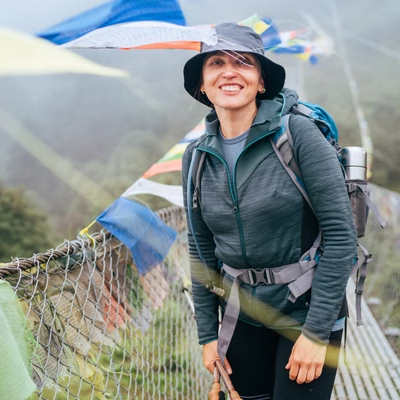
The Rara Lake Trek leads into Nepal’s remote far western region to reach the country’s largest lake, a strikingly clear high altitude body of water surrounded by pine forest within Rara National Park, a destination that sees a genuine fraction of the visitors found anywhere in the more famous Everest or Annapurna regions. This guide covers the real itinerary, an honest difficulty assessment, the actual permit requirements, and exactly what makes this far flung trek worth the additional travel time it demands, whether you are drawn by the promise of genuine wilderness solitude or simply researching what a trip to Nepal’s least visited major trekking region actually involves.
The short answer: Rara Lake is a 10 to 11 day trek centered on reaching Rara Lake at 2,990 meters within Rara National Park in the remote Jumla and Mugu districts of far western Nepal, with the surrounding ridgelines offering additional viewpoints up to roughly 3,710 meters, all within a region so remote that simply reaching the trailhead requires considerably more travel time than any of Nepal’s more mainstream trekking destinations.
Rara Lake Trek at a Glance
| Factor | Detail |
|---|---|
| Duration | 10 to 11 days including Kathmandu and Jumla travel |
| Maximum Altitude | 3,710 meters on surrounding ridgelines, Rara Lake itself at 2,990 meters |
| Difficulty | Difficult, largely due to remoteness |
| Starting Point | Jumla, reached by flight from Kathmandu or Nepalgunj |
| Trek Style | Camping supplemented by basic teahouses |
| Best Seasons | March to May and September to November |
| Typical Price Range | USD 1,200 to 1,800 per person, group rate |
Why Rara Lake Remains Nepal’s Least Visited Major Destination
Rara Lake sits in Nepal’s far western Karnali region, considerably further from Kathmandu than any of the country’s more established trekking areas, and reaching the trailhead at Jumla typically requires a flight routed through Nepalgunj given the limited direct connections from the capital. This genuine remoteness, combined with the region’s historical lack of tourism infrastructure investment compared to the Everest and Annapurna regions, has kept visitor numbers to Rara Lake dramatically lower than anywhere else in Nepal’s major trekking landscape. For trekkers who have already experienced Nepal’s more famous routes and are specifically seeking an experience defined by genuine solitude and untouched wilderness, Rara Lake offers something increasingly difficult to find elsewhere in the country, a major natural attraction that remains, for now, almost entirely free of the crowds and commercial development seen across Nepal’s better known trekking regions.
Sample Rara Lake Trek Itinerary
| Day | Route |
|---|---|
| Days 1 to 2 | Kathmandu to Nepalgunj to Jumla via flight connections |
| Day 3 | Trek from Jumla to Chere Chaur or Padmara |
| Day 4 | Trek from Padmara to Bumra or Ghorosingha |
| Day 5 | Trek to the shores of Rara Lake (2,990m) |
| Day 6 | Explore Rara Lake, day hike to a surrounding viewpoint |
| Day 7 | Trek around the lake or to a nearby ridge for extended views |
| Day 8 | Begin the return trek toward Sinja Valley or the standard route back |
| Day 9 | Continue the return trek toward Jumla |
| Day 10 | Trek to Jumla, prepare for return flight |
| Day 11 | Flight from Jumla to Nepalgunj to Kathmandu |
How Difficult Is the Rara Lake Trek
Rara Lake is genuinely rated difficult, though this rating reflects the trek’s remoteness and logistical demands considerably more than any single technically challenging section of trail. The walking itself is moderate in physical terms, involving five to six hours of trekking on most days across forested hills and ridgelines without extreme altitude gain or technical terrain. What makes this trek genuinely demanding is the combination of limited infrastructure, the extended flight dependent journey simply to reach the trailhead, and the general unpredictability that comes with trekking in a region far less developed for tourism than Nepal’s more established routes. Trekkers should approach Rara Lake with realistic expectations about self sufficiency and flexibility, since weather related flight delays to and from Jumla are genuinely more common than on Nepal’s busier air routes.
Altitude Profile and Acclimatization
The Rara Lake Trek reaches a comparatively moderate maximum altitude, with the lake itself at 2,990 meters and surrounding viewpoint ridges reaching up to approximately 3,710 meters, meaning altitude sickness risk is considerably lower here than on Nepal’s higher trekking routes. This lower altitude profile makes Rara Lake a genuinely more accessible option from a pure acclimatization standpoint, though trekkers should still stay attentive to hydration and pacing given the sustained daily walking hours this itinerary involves. The trek’s real challenges lie in logistics and remoteness rather than altitude, a meaningful distinction worth understanding when comparing this route to Nepal’s higher, more altitude focused treks.
Permits Required for the Rara Lake Trek
| Permit | Cost |
|---|---|
| Rara National Park Entry Permit | Approximately NPR 3,390 for foreign trekkers, roughly USD 25 |
Rara Lake sits within Rara National Park, requiring a standard national park entry permit rather than the more involved restricted area permit process required for regions like Upper Mustang or Kanchenjunga. This comparatively straightforward permit requirement is one of the few ways in which Rara Lake is genuinely less complicated than some of Nepal’s other remote trekking regions, though the overall trip logistics remain considerably more demanding given the region’s limited flight connectivity. Next Trip Nepal arranges the park permit on your behalf when you book. For a broader breakdown of how permits work across other Nepal trekking regions, see our Nepal Trekking Permits guide.
Rara Lake Compared to Other Remote Nepal Treks
| Factor | Rara Lake Trek | Upper Dolpo Trek | Kanchenjunga Circuit |
|---|---|---|---|
| Duration | 10 to 11 days | 18 to 25 days | 22 days |
| Max Altitude | 3,710m | 5,250m | 5,140m |
| Restricted Area | No | Yes | Yes |
| Primary Draw | Nepal’s largest lake, deep solitude | Remote Tibetan culture | World’s third highest peak |
| Access | Flight to Jumla via Nepalgunj | Flight to Juphal via Nepalgunj | Flight and road to Taplejung |
This comparison highlights exactly where Rara Lake fits among Nepal’s more remote trekking options: genuinely the shortest and lowest altitude of the three, without restricted area permit requirements, making it a comparatively more accessible entry point into far western and remote Nepal trekking despite the flight dependent access all three routes share.
Best Time to Trek Rara Lake
Spring, from March to May, brings pleasant temperatures and blooming rhododendron forest through the lower approach to the lake, a genuinely rewarding season for both weather and scenery. Autumn, from September to November, offers the clearest skies and most stable flight conditions to and from Jumla, making it the preferred season for trekkers specifically prioritizing reliable travel logistics alongside good trekking weather. Winter trekking from December to February is possible at the lake’s comparatively moderate altitude, though snow can affect trail conditions on the surrounding higher ridges and flight reliability to Jumla decreases further during this period. Monsoon season from June to August is not recommended, given both general trail conditions and the additional flight disruption risk that monsoon weather typically brings to this already less reliable air route.
Frequently Asked Questions
Is Rara Lake suitable for beginners?
The walking itself is moderate and accessible to reasonably fit beginners, though the trek’s remoteness and flight dependent logistics make it a better fit for trekkers comfortable with some genuine travel uncertainty rather than a true first Nepal trek.
Why is Rara Lake rated difficult if the walking is only moderate?
The difficulty rating reflects the trek’s genuine remoteness, limited infrastructure, and flight dependent access rather than technical trail difficulty, a distinction worth understanding when comparing this trek to higher altitude routes elsewhere in Nepal.
How do I reach the Rara Lake trailhead?
Most itineraries fly from Kathmandu to Nepalgunj, then take a second flight from Nepalgunj to Jumla, since direct flights from Kathmandu to Jumla are limited and seasonal.
What makes Rara Lake worth the extra travel time?
Rara Lake is Nepal’s largest lake, set within a national park that sees dramatically fewer visitors than anywhere else in the country’s major trekking regions, offering a genuinely rare level of solitude and untouched natural scenery.
Is camping required for this trek?
Some camping is typically necessary given limited teahouse infrastructure in this remote region, though basic lodges have gradually developed near the lake itself and along parts of the standard route.
Packing List for the Rara Lake Trek
Given the trek’s remoteness and partial reliance on camping, packing thoroughly matters more here than on Nepal’s more developed teahouse routes: moisture wicking base layers, a thermal mid layer, fleece jacket, down or synthetic insulated jacket, waterproof and windproof outer shell, waterproof trousers, a warm hat, gloves, and several pairs of trekking socks, wool preferred. For footwear, well broken in waterproof trekking boots with good grip are essential given variable forest and ridge terrain. Additional gear should include a proper four season sleeping bag given the camping components of this itinerary, a headlamp with ample spare batteries, water purification tablets or a filter, and a comprehensive personal first aid kit given the region’s genuine remoteness from medical facilities. A more complete general packing breakdown that applies well to this altitude range is available in our Everest Base Camp Packing List, adjusted for the additional camping gear this route requires.
Accommodation Along the Route
Accommodation along the Rara Lake Trek is a genuine mix of basic teahouses and organized camping, reflecting the region’s limited but gradually developing tourism infrastructure. Jumla itself offers reasonably comfortable lodging given its role as the region’s administrative center, while the trail beyond relies more heavily on tented camps set up by your trekking crew, supplemented by a small number of basic lodges that have appeared near Rara Lake itself in recent years as the destination has slowly gained recognition. Trekkers should approach this trek with realistic expectations about accommodation comfort, understanding that the genuinely rare solitude this route offers comes with meaningfully more basic infrastructure than Nepal’s more established trekking regions provide.
Rara National Park and Its Wildlife
Rara National Park, established specifically to protect the lake and surrounding forest ecosystem, is home to a range of wildlife including Himalayan black bear, musk deer, and a notably rich variety of bird species drawn to the lake’s clear, cold waters. The park’s forest, dominated by blue pine and various oak species, remains considerably less disturbed than forest corridors in more heavily trekked Nepal regions, a direct result of the area’s continued low visitor numbers and its comparatively recent inclusion in most travelers’ Nepal itineraries. Trekkers with a specific interest in wildlife and undisturbed alpine forest ecosystems often find Rara National Park among the most rewarding destinations in Nepal specifically for this kind of experience, given how genuinely intact the surrounding habitat remains compared to more accessible national parks elsewhere in the country and region.
The Lake Itself: Nepal’s Largest Body of Water
Rara Lake spans roughly 10.8 square kilometers, making it Nepal’s largest lake by surface area, and its water clarity and striking blue color under clear skies genuinely rival any of the country’s more famous natural attractions. The lake’s setting, surrounded by dense pine forest and framed by the distant peaks of the Api and Saipal ranges on clear days, creates a genuinely different visual character from the high mountain scenery most trekkers associate with Nepal, closer in feeling to an alpine lake region than a typical Himalayan trekking destination. Trekkers who make the considerable journey to reach Rara Lake consistently describe the payoff as genuinely exceeding expectations, particularly given how comparatively few photographs and travel accounts of this remote destination circulate compared to Nepal’s more famous trekking highlights.
Training Recommendations Before Departure
Given the trek’s sustained daily walking hours and the general unpredictability that comes with remote area trekking, arriving with reasonable physical preparation meaningfully improves the overall experience. A training period of four to six weeks before departure, focused on cardiovascular endurance and leg strength, is a reasonable target for trekkers without significant recent hiking experience. Beyond physical preparation, trekkers should also mentally prepare for the genuine logistical flexibility this trip demands, since flight delays and itinerary adjustments are considerably more common on this route than on Nepal’s more established trekking circuits.
Solo Trekkers and Group Considerations
Since April 2023, all trekkers in Nepal, including those on the Rara Lake route, must travel with a licensed guide, meaning solo trekkers will not be walking entirely alone even without companions of their own. Given the trek’s genuine remoteness, having an experienced guide and support crew familiar with this specific region adds considerable value beyond the standard navigation and safety benefits found on more established routes. Trekkers traveling in a small group often find the shared experience of reaching such a genuinely remote destination particularly rewarding, given how few other visitors they are likely to encounter along the way.
Common Mistakes Trekkers Make on This Route
A few specific mistakes come up repeatedly among trekkers planning Rara Lake, and understanding them in advance helps avoid unnecessary difficulty. Underestimating flight related schedule risk, booking a tight return itinerary without buffer days for potential Jumla flight delays, is the most common mistake, since weather disruptions to this remote air route are genuinely more frequent than on Nepal’s busier flight corridors. Underpacking for the camping components of the itinerary, assuming full teahouse comfort similar to more developed trekking regions, is a second common oversight worth avoiding through careful attention to the packing recommendations above. Treating the trek’s difficult rating as purely physical rather than largely logistical is a third mistake, since the greatest challenge this trek presents is genuinely one of remoteness and self sufficiency rather than technical trail difficulty.
Why Next Trip Nepal Recommends This Route
Next Trip Nepal genuinely considers Rara Lake one of the most rewarding destinations in Nepal for trekkers specifically seeking authentic wilderness solitude, a quality that has become increasingly rare across the country’s more accessible and heavily promoted trekking regions. We arrange the full logistics this remote trip requires, including flight coordination through Nepalgunj, experienced local guides and camping crew, and appropriate buffer time built into the itinerary to accommodate the genuine possibility of flight delays. Every itinerary includes a licensed guide, all necessary camping and cooking support, the national park permit, and accommodation throughout.
What Previous Trekkers Say About This Route
Feedback from trekkers who have completed the Rara Lake Trek consistently highlights the genuine sense of discovery and solitude as the trip’s defining feature, with many specifically comparing the experience favorably to Nepal’s more famous but considerably more crowded trekking destinations. The lake’s striking clarity and color receive particular praise, along with the genuinely rich forest and wildlife encountered along the approach trail. Many trekkers specifically describe Rara Lake as feeling like a different country entirely compared to their prior Nepal trekking experiences, a sentiment that speaks directly to how distinct this far western region remains from the country’s more internationally recognized trekking landscape.
Mobile Coverage and Connectivity
Mobile network coverage along the Rara Lake Trek is genuinely limited given the region’s remoteness and Nepal’s telecommunications infrastructure investment being considerably lower in the far western districts than in the Everest or Annapurna regions. Trekkers should expect largely unavailable mobile signal through most of the trail beyond Jumla itself, with connectivity returning only once back in the town or in Nepalgunj on the return journey. Given this limited connectivity, guides on this route carry appropriate emergency communication equipment, and trekkers should set realistic expectations with family about being largely unreachable for the majority of the trek.
Food and Water on the Trail
Food along the Rara Lake Trek is typically prepared by an accompanying camping crew given the limited teahouse infrastructure in this remote region, offering more control over meal quality and variety than trekkers might expect from a route this far off the beaten path. Dal bhat remains a staple, supplemented by pasta, soup, and other simple dishes prepared from supplies carried in or sourced locally in Jumla before the trek begins. Drinking water should always be treated, either through boiled water, purification tablets, or a filter, since untreated water anywhere along this remote route carries a genuine risk of gastrointestinal illness that is considerably harder to manage given the limited access to medical support throughout the region.
Understanding Far Western Nepal’s Distinct Character
The Karnali region surrounding Rara Lake carries a genuinely distinct cultural and geographic character compared to the more internationally recognized Everest, Annapurna, and Langtang regions that dominate most visitors’ mental image of Nepal trekking. This far western part of the country has historically received considerably less government and private tourism investment, a legacy of both its remoteness and its more limited road and air connectivity compared to central and eastern Nepal. Trekkers who venture into this region encounter a genuinely different Nepal, with local communities around Jumla shaped by different historical trade routes, agricultural patterns, and cultural influences than the more commonly visited trekking regions further east, adding a meaningful dimension of cultural discovery to the trek’s natural scenery.
Extending Your Trip Beyond Rara Lake
Trekkers with additional time and a genuine appetite for further far western exploration sometimes combine Rara Lake with a visit to the nearby Sinja Valley, considered the historical birthplace of the Nepali language and home to significant archaeological and cultural sites tied to the medieval Khasa kingdom. Trekkers with less additional time can instead build in a rest day in Jumla before or after the main trek, both to acclimatize to the region’s rhythm and to explore the town’s own distinct character as the administrative center of this remote district. Given the genuine flight dependency of this trip, building buffer days into any extension plans is particularly important given how commonly weather affects the Jumla air route.
Who Should Choose the Rara Lake Trek
Rara Lake genuinely suits trekkers who have already experienced Nepal’s more established trekking regions and are specifically seeking a destination defined by authentic solitude and minimal crowds rather than the highest possible altitude or most technically demanding trail. It fits trekkers comfortable with genuine logistical uncertainty, given the flight dependent access and more basic infrastructure this route involves, and anyone with a specific interest in Nepal’s less visited far western region and its distinct cultural and natural character. This is genuinely not the ideal first Nepal trek for visitors seeking maximum infrastructure reliability, and trekkers considering this route should approach it with realistic expectations about the trade offs that come with visiting one of the country’s most remote major destinations.
Weather Patterns Specific to the Rara Lake Region
Weather around Rara Lake follows a broadly similar seasonal pattern to the rest of Nepal, with the clearest, most stable conditions during autumn and a genuinely pleasant spring season bringing rhododendron bloom to the lower forest sections. The region’s far western location means weather systems can behave somewhat differently than in central Nepal, and flight conditions to Jumla specifically can be affected by localized weather patterns that do not necessarily mirror conditions in Kathmandu or Pokhara. Trekkers should build genuine flexibility into their travel plans around the Jumla flight days specifically, since this remains the single most weather sensitive component of the entire itinerary.
Booking Considerations for This Remote Route
Booking the Rara Lake Trek requires somewhat more advance planning than Nepal’s more established routes, given the limited flight capacity to Jumla and the value of coordinating camping crew and logistics well ahead of departure. Next Trip Nepal recommends booking at least four to six weeks ahead of your intended departure date, allowing sufficient time to secure flight seats on this limited capacity route and properly organize the camping and guide support this remote trek requires. Trekkers should also build at least one or two buffer days into their overall Nepal itinerary around the Jumla flight segments specifically, given how commonly weather affects this particular air route compared to Nepal’s busier domestic connections.
Health and Safety Considerations Given the Trek’s Remoteness
Beyond the standard precautions that apply to any Nepal trek, Rara Lake’s genuine remoteness introduces additional health and safety considerations worth understanding honestly before departure. Emergency evacuation from this region takes considerably longer than from Nepal’s more accessible trekking areas, given the limited transport infrastructure and the general difficulty of accessing this far western district quickly. Comprehensive travel insurance covering trekking in remote far western regions and emergency evacuation is genuinely essential for this trek, and a well stocked personal first aid kit, including basic wound care supplies and all personal medications, is considerably more important here given the extended distance from medical facilities throughout most of the trip.
Guide and Camping Crew Costs Beyond the Package Price
Tipping guides and camping crew is a well established and genuinely expected practice on Nepal treks, including Rara Lake, and trekkers should budget for this separately from the package price itself. Given the additional camping crew this trek typically involves compared to standard teahouse routes, including cooks and camp staff alongside the guide, total tipping costs tend to run somewhat higher than on more standard Nepal treks, typically in the range of USD 120 to 200 per trekker across the full trip when the entire crew is accounted for. This reflects both the extended duration and the genuinely more demanding logistical support required to run a partially camping based trek through such a remote region.
Photography Opportunities Along the Route
Rara Lake offers genuinely exceptional photography opportunities precisely because so few photographers have captured this particular combination of pristine alpine lake, dense pine forest, and far western Nepali village life compared to the country’s more frequently photographed trekking regions. The lake itself, especially in the calm early morning light before wind creates ripples across its surface, delivers reflection shots of the surrounding forest and distant peaks that rival any of Nepal’s more famous alpine lakes. The forest sections along the approach trail, with their genuinely undisturbed blue pine and oak canopy, offer a meaningfully different visual character from the rhododendron dominated forest more commonly photographed on Nepal’s central and eastern trekking routes.
Comparing Rara Lake to Nepal’s Other Lake Destinations
Nepal is home to several notable high altitude lakes popular with trekkers, and understanding how Rara Lake compares helps clarify exactly what makes this particular destination distinctive. Against Gokyo Lakes in the Everest region, Rara Lake is considerably larger and sits at a meaningfully lower altitude, trading the dramatic high mountain backdrop of Gokyo for a gentler, forest framed setting and a far quieter overall trekking experience. Against Tilicho Lake near the Annapurna Circuit, Rara Lake requires a fundamentally different and more remote approach, without the option to combine it easily with a more mainstream circuit trek the way Tilicho connects to the standard Annapurna route. This distinct positioning is precisely why Rara Lake appeals specifically to trekkers who have already experienced Nepal’s more accessible lake destinations and are seeking something genuinely different.
Local Communities Around Jumla and the Trail
The communities encountered along the approach to Rara Lake, particularly around Jumla itself, offer a genuinely distinct cultural experience shaped by the region’s historical isolation and its position along old trade routes connecting Nepal’s far west with Tibet. Jumla’s own history as an important regional trading and administrative center predates much of the tourism development seen in Nepal’s more famous trekking regions, and the town retains a character shaped considerably more by this regional history than by trekking tourism, which remains a genuinely minor part of the local economy compared to agriculture and regional trade. Trekkers passing through these communities often find the interactions considerably less commercially oriented than in Nepal’s busier trekking regions, a natural consequence of how comparatively recently and modestly tourism has developed in this remote and historically overlooked part of the country.
Environmental Considerations at Rara National Park
Rara National Park’s comparatively pristine condition, a direct result of its historically low visitor numbers, makes responsible trekking practices particularly important for preserving what remains one of Nepal’s most genuinely undisturbed protected areas. Trekkers should carry out all non biodegradable waste, avoid disturbing wildlife habitat away from established trails, and support the park’s conservation goals by working with agencies that follow proper waste management and environmental practices throughout the trek. The lake’s exceptional water clarity, one of its most celebrated features, depends directly on maintaining minimal human impact around its shores, and trekkers visiting this rare, still largely unspoiled destination should approach their visit with genuine awareness of how much their own conduct contributes to preserving it for future visitors.
Training and Mental Preparation for This Remote Route
Beyond the standard cardiovascular and strength training recommended for any moderate Nepal trek, preparing for Rara Lake genuinely benefits from a degree of mental preparation specific to the trip’s remoteness and logistical unpredictability. Trekkers accustomed to the well developed, predictable infrastructure of Nepal’s more established routes should approach this trek with a genuinely more flexible mindset, understanding that flight delays, itinerary adjustments, and more basic accommodation are simply part of what this particular destination requires in exchange for the solitude and authenticity it delivers. This kind of mental preparation matters just as much as physical fitness for a genuinely satisfying experience on a route defined less by physical difficulty and more by the patience and flexibility remote area travel genuinely demands.
Seasonal Flight Reliability to Jumla
Understanding the practical realities of flying to Jumla helps trekkers plan a genuinely realistic itinerary around this route’s single greatest logistical variable. Flights on this route operate on smaller aircraft than the routes serving Nepal’s more popular destinations, and both mountain weather and general operational factors mean cancellations and delays occur meaningfully more often than on flights to Pokhara or even Lukla. Trekkers should build at least one full buffer day into their schedule on both ends of the Jumla flight segments, ideally scheduling the Rara Lake portion of a broader Nepal trip with enough flexibility that a delayed flight does not jeopardize onward travel plans, including any international departure flights booked too close to the very end of the trekking itinerary.
Final Word on the Rara Lake Trek
The Rara Lake Trek delivers a genuinely rare experience within Nepal’s trekking landscape: real wilderness solitude, Nepal’s largest and most strikingly clear lake, and a far western regional character entirely distinct from the country’s more famous mountain trekking routes, all within a comparatively moderate altitude and physical demand profile once the genuine logistical commitment of simply reaching the trailhead is accepted. For trekkers who have already experienced Nepal’s more established routes and are specifically seeking a destination that still offers authentic discovery, minimal crowds, and a genuinely different regional character, Rara Lake deserves serious consideration as one of Nepal’s most underappreciated major trekking destinations, rewarding the additional travel commitment with an experience that few other places in the country can still genuinely provide. Trekkers who make the genuinely considerable journey to this far corner of Nepal consistently come away with a renewed appreciation for just how much genuine wilderness and cultural diversity the country still holds beyond its most internationally recognized trekking routes, a perspective that few other single trips within Nepal can genuinely offer in quite the same concentrated and memorable form.