
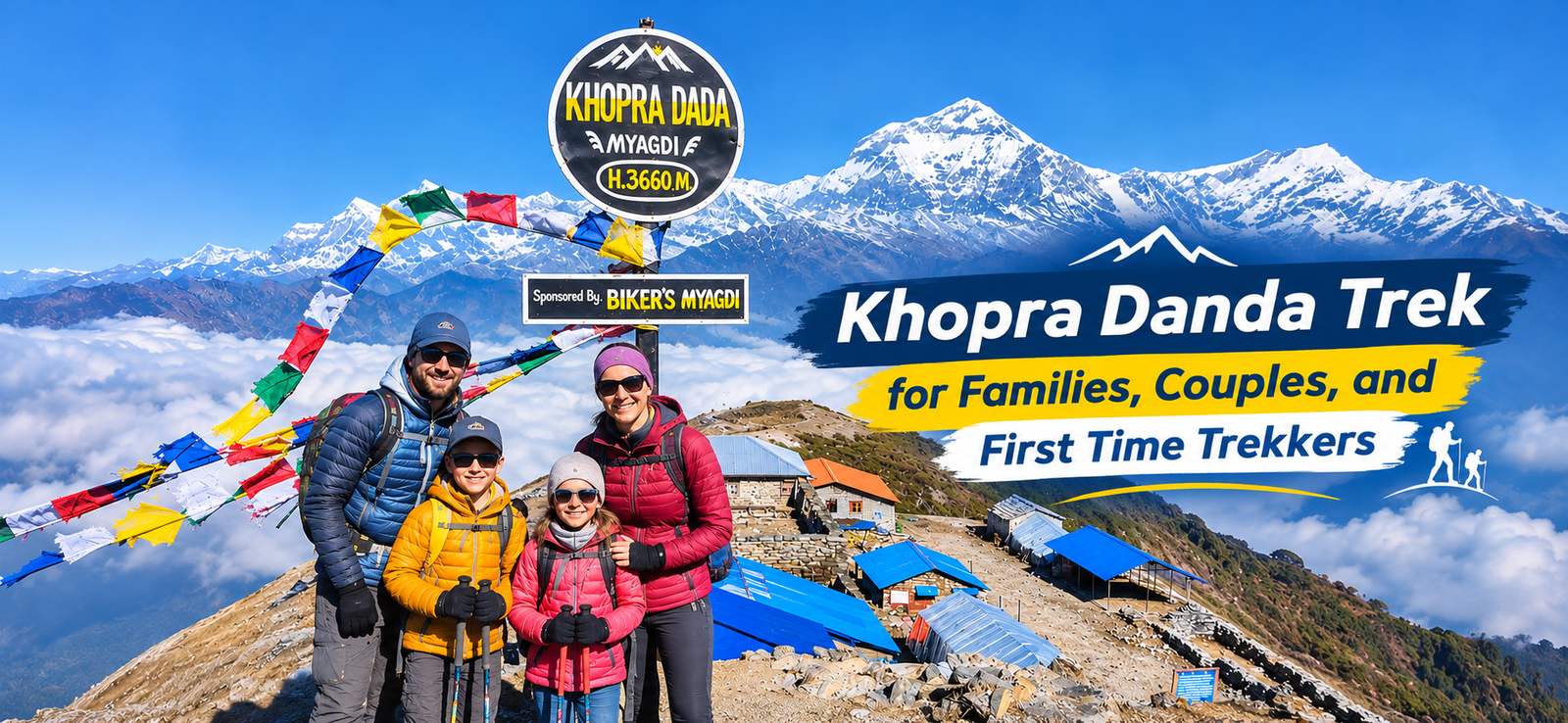
Not every trek in Nepal suits every traveler. Some routes demand serious altitude experience, others involve long isolated stretches far from any help, and some are simply too physically demanding for anyone without a significant fitness base. The Khopra Danda Trek sits in a different category. It is a route that genuinely works well for families with older kids, couples looking for a scenic but manageable trip, and first time trekkers who want a real Himalayan experience without jumping straight into something extreme.
This guide walks through what each of these three groups should realistically expect, how the standard itinerary can be adjusted, and what questions to ask before you book. We will not promise guaranteed weather, guaranteed comfort, or a guaranteed easy time for every individual body, because no honest guide can. For the full day by day itinerary and current pricing, see our main Khopra Danda Trek page.
Why This Trek Works Well for Families, Couples, and First Timers
A few practical features of this specific route make it more approachable than many other Himalayan treks without making it any less rewarding.
- Shorter than the big name treks: at around 13 days total including arrival and departure buffer, it is noticeably shorter than Everest Base Camp or the full Annapurna Circuit, which matters for travelers with limited vacation time or less trekking stamina.
- Lower maximum altitude than the headline treks: the highest points on this route sit meaningfully below Everest Base Camp’s elevation, which generally means a lower, though never zero, risk profile for altitude related issues.
- Teahouses the entire way: you are never camping or carrying your own shelter, so nights involve a real bed, a roof, and hot food, which matters a great deal for families and first timers who are not looking for a wilderness survival experience.
- Genuinely spectacular scenery without the busiest crowds: you get sunrise viewpoints, a high altitude lake, and a multi day ridge panorama, much of it quieter than the most heavily trafficked routes in the region.
- A well established trail with good infrastructure: teahouses, basic supplies, and local support are consistently available along the standard route, which reduces the logistical uncertainty that can make a first trek intimidating.
An Honest Difficulty Assessment: What Moderate Actually Means
Trekking companies describe routes as easy, moderate, or strenuous, but these labels mean little without specifics. Here is what moderate actually looks like day to day on this trek.
- Daily walking time typically runs five to seven hours: most days involve a morning session, a lunch stop, and an afternoon session, with built in breaks rather than continuous walking.
- Elevation gain varies significantly by day: some days are relatively gentle ridge walking, while others involve sustained climbing, particularly around Khopra Ridge itself and the Khayer Lake excursion.
- Trail surfaces are mixed: expect stone steps, dirt paths, forest trail, and some rockier sections, none of which require technical climbing skill but all of which reward sturdy footwear and basic trail awareness.
- The Khayer Lake day is the most demanding single day: this long round trip excursion from Khopra Ridge is noticeably harder than the rest of the itinerary and is optional within the standard plan.
- Fitness, not technical skill, is the main requirement: you do not need climbing or mountaineering experience, but a reasonable baseline of cardiovascular fitness and comfort walking for multiple consecutive days makes a real difference to how much you enjoy it.
We cannot assess your personal fitness or guarantee that any specific difficulty level will feel easy or hard for your body. If you have any underlying health conditions, speak with a physician before committing to any high altitude trek.
Is Khopra Danda a Good First Trek in Nepal?
For many first time trekkers, yes, though the right choice always depends on your specific fitness, schedule, and goals.
- Compared to Everest Base Camp: Khopra Danda involves lower altitude, a shorter overall timeline, and generally quieter trails, making it a gentler introduction to multi day teahouse trekking.
- Compared to the Annapurna Circuit: this route is considerably shorter and does not involve a high pass crossing, which removes one of the more demanding and altitude sensitive elements of circuit style trekking.
- Compared to shorter day hikes near Pokhara: this is a genuine multi day commitment with real altitude exposure, so it is a step up in seriousness from a single day excursion, and should not be treated as equivalent.
- It still involves real altitude and real physical demand: being a relatively approachable trek does not mean it is undemanding, and first timers should still prepare physically and mentally for consecutive trekking days.
- A good first trek is the one that matches your actual fitness and interests: we can describe the trek honestly, but only you and, where relevant, your physician can assess whether it suits your personal situation.
Trekking With Older Kids and Teens
This trek can work well for families, though it is generally better suited to older children and teens than to toddlers or very young kids.
- Realistic minimum age is a family decision, not a fixed rule: many operators informally suggest children roughly ten and older tend to manage multi day trekking better, but maturity, fitness, and prior hiking experience matter more than age alone.
- Talk to your kids honestly before booking: explain the daily walking hours, the cold mornings, the basic teahouse facilities, and the lack of entertainment they may be used to at home, so expectations are set before you leave.
- Watch for genuine red flags, not just complaints: normal tiredness or occasional grumbling is expected on any multi day trek, but persistent headache, unusual lethargy, loss of appetite, or confusion in a child should be treated seriously and discussed with your guide immediately.
- Pace the itinerary around your child’s capability, not an adult’s: a slower, more flexible schedule with extra rest built in is almost always a better choice for a family than trying to keep to a faster standard pace.
- Involve kids in simple trail decisions where appropriate: letting older children help choose a snack break timing or a short detour can make the experience feel more like an adventure they are part of rather than something imposed on them.
- We are not medical professionals: any specific concern about whether your child is fit for high altitude trekking should be discussed with a pediatrician familiar with your child’s health before you travel.
Trekking as a Couple
Khopra Danda is a popular choice for couples who want a scenic, moderately challenging trip without the crowds of the most famous routes.
- Private double rooms are generally available: most teahouses along this route offer private twin or double rooms, though availability can tighten in peak season, so booking through an established operator helps secure a room rather than arriving and hoping.
- Facilities remain basic even in a private room: expect simple furnishings, shared bathrooms in many teahouses, and no guarantee of hot showers every night, so set romantic expectations around the scenery and experience rather than hotel style comfort.
- Pacing together matters more than people expect: if one partner is noticeably fitter than the other, discuss this honestly beforehand, since mismatched pacing is a common source of frustration on multi day treks.
- A slower, more flexible itinerary can suit couples well: if neither of you is in a hurry, a gentler pace with more time to enjoy viewpoints together is easy to arrange by discussing this with your operator in advance.
- Sunrise viewpoints offer a genuinely memorable shared experience: watching dawn break over the Annapurna and Dhaulagiri ranges together from Mulde Viewpoint or Poon Hill is, for many couples, a trip highlight worth the early wake up.
What First Time Trekkers Should Expect From Teahouse Life
If you have never done a multi day teahouse trek before, a few practical realities are worth knowing ahead of time so nothing comes as an unpleasant surprise.
- Rooms are simple: expect a bed with a mattress, blankets, and basic walls, often with limited insulation, so your own sleeping bag or liner adds meaningful comfort on colder nights.
- Bathrooms vary by teahouse: some have attached private bathrooms, many have shared facilities down the hall, and squat toilets are common in more remote sections, so pack accordingly.
- Hot showers are not guaranteed everywhere: some teahouses charge a small fee for hot water, and availability can be inconsistent at higher elevations, so treat a hot shower as a welcome bonus rather than an expectation.
- Charging and wifi usually cost extra: most teahouses charge a small fee to charge devices, and wifi, where available at all, is often slow or unreliable, particularly at higher elevations.
- Food is simple but generally plentiful: dal bhat, noodle dishes, soups, and basic breakfast items are standard, and portions are usually generous, though variety decreases the higher and more remote you go.
- Early nights are normal: with early starts and limited evening entertainment, most trekkers are in bed well before what might be a normal bedtime at home, which first timers sometimes find an adjustment.
A Gentler Pacing Option for Families and First Timers
The standard itinerary is built for a reasonably fit trekker, but it can be adjusted for groups who want a gentler experience.
- Extra acclimatization days can be added: building in an additional rest or short exploration day, particularly around Khopra Ridge, reduces the daily demand and gives bodies more time to adjust.
- Daily walking distances can be shortened: splitting a longer standard day into two gentler days is a common adjustment for families or less experienced trekkers.
- The Khayer Lake excursion can be skipped entirely: since it is the most physically demanding single day on the route, families or first timers who want a gentler trip often choose to omit it without significantly changing the rest of the experience.
- A custom pace is a conversation, not a fixed menu option: discuss your group’s specific needs, ages, and fitness levels with your operator when you enquire, so the itinerary can be built around your actual situation rather than a generic template.
- A gentler pace may add a day or two to the total trip length: factor this into your available vacation time and budget when planning.
Altitude and Health: What Families and First Timers Should Know
Altitude sickness, properly called acute mountain sickness, is a genuine risk on this trek, even though the maximum elevation is lower than on routes like Everest Base Camp. We take this seriously and want you to as well.
- Altitude sickness can affect anyone regardless of fitness: being physically fit does not make you immune, and susceptibility varies between individuals for reasons that are not fully predictable.
- Common early symptoms include headache, nausea, and fatigue: these should never be ignored or pushed through, and should be reported to your guide immediately.
- Children may struggle to describe symptoms clearly: parents should watch for behavioral changes such as unusual irritability, loss of appetite, or withdrawal, which can sometimes be early signs in kids who cannot articulate how they feel.
- We are not doctors and this is not medical advice: any question about preventive medication such as Diamox, or about whether high altitude trekking is appropriate for a specific person’s health, should be directed to a physician, ideally one with travel medicine experience, before your trip.
- Our guides are trained to recognize and respond to altitude symptoms: they will make real time calls about pacing, descent, or rest based on how your group is doing, and we ask that you follow their guidance even if it affects your plans.
- A slower pace is one of the most effective ways to reduce risk: this is a major reason we encourage families and first timers to consider the gentler itinerary option discussed above.
Fitness Preparation Timeline
You do not need elite fitness for this trek, but reasonable preparation genuinely improves how much you enjoy it. We cannot guarantee any specific outcome from a training plan, since individual bodies respond differently, but general preparation along these lines is commonly recommended.
- Two to three months before: build a baseline of regular cardiovascular activity such as brisk walking, hiking, cycling, or swimming several times a week.
- One to two months before: start incorporating hill walks or stair climbing with a loaded backpack to simulate trekking conditions more closely.
- Two to four weeks before: take longer practice hikes of several hours if possible, ideally on consecutive days to build familiarity with multi day fatigue.
- For families: involve kids in some of this preparation through family hikes, which also helps gauge realistically how your child handles sustained walking before committing to the trek.
- In the final week: focus on rest, hydration, and finalizing gear rather than intense new training, since this is not the time to attempt new physical challenges.
Packing Differently for Families and First Timers
Our full packing list applies to every trekker on this route, but families and first timers often benefit from a few additional considerations.
- Comfort items matter more than you might expect, especially for kids: a familiar stuffed animal, a favorite snack, or a small travel game can make a real difference to a child’s mood on a long trekking day.
- Extra layers for kids specifically: children can lose body heat faster than adults, so err on the side of packing more warm layers for younger trekkers than you think necessary.
- A basic first aid kit tailored to your family: include any medications your family regularly uses, along with basic blister care and any pediatric specific items if traveling with kids.
- Entertainment for evenings: cards, a small book, or a simple travel game can help fill the early evening hours in a teahouse, particularly for first timers adjusting to the lack of typical evening entertainment.
- Review our complete packing list before you pack: our detailed packing list for the Khopra Danda Trek covers the full gear list in depth and is worth reading alongside these family specific additions.
Food and Keeping Kids and First Timers Happy on the Trail
Food can make or break the experience for picky eaters, kids, or anyone unfamiliar with teahouse style meals.
- Most teahouse menus offer some variety: alongside traditional dal bhat, you will typically find noodle dishes, fried rice, soups, and simple breakfast items like porridge or eggs.
- Bring familiar snacks from home: energy bars, favorite treats, or familiar packaged snacks can be a comforting backup, particularly for kids adjusting to unfamiliar food.
- Mention dietary restrictions when you book: let us know in advance about allergies or dietary needs so we can help you plan around them, though options narrow the higher and more remote you travel.
- Hydration matters as much as food: encourage kids especially to drink water consistently throughout the day, since dehydration can worsen fatigue and altitude symptoms.
- Treat mealtimes as a chance to rest and recover: especially for first timers, slowing down at lunch and dinner rather than rushing through meals helps with overall energy management across the trek.
Guides and Porters for Families
Extra support can make a meaningful difference for families and first timers specifically.
- A dedicated guide per family is often worth the extra consideration: rather than joining a larger mixed group, some families prefer a guide focused specifically on their pace and needs, which is worth discussing when you enquire.
- Porters can carry more than just your main bag: hiring a porter for a child’s gear, or for extra family supplies, reduces the physical burden on parents who are already managing a child’s needs on the trail.
- Guides are a resource, not just a navigator: use them for advice on pacing your child, recognizing fatigue versus genuine concern, and making real time decisions about the day’s plan.
- Experienced guides have seen many family groups before: do not hesitate to ask them directly about what has worked well for other families on this specific route.
Permits and Paperwork for Families
Every trekker on this route, including children, generally needs the same permits required for the Annapurna Conservation Area.
- Permit requirements apply regardless of age: children typically need the same ACAP permit as adults, though specific fee structures can change, so confirm current rules when you book.
- We handle permit arrangements as part of our standard service: you do not need to navigate this process alone, though having passports and necessary documentation ready for every family member speeds things along.
- For full detail on permits, guide requirements, and solo versus guided trekking rules, see our dedicated guide: our solo trekking and permits guide covers this in depth, and much of it applies to understanding the paperwork even if you are trekking as a family or couple rather than solo.
Managing Expectations Honestly
A good trip starts with realistic expectations, and we would rather set them honestly now than have you discover a mismatch on the trail.
- Weather is never guaranteed: clear mountain views, comfortable temperatures, and dry trails are common but never certain on any given day.
- Some days will be harder than others, for everyone: even with good preparation, fatigue, cold, or a tough trail day can affect anyone, and that is a normal part of multi day trekking rather than a sign something has gone wrong.
- Teahouse quality varies along the route: some are more comfortable than others, and this is simply part of trekking in a remote region rather than a service failure.
- Crowds exist even on a relatively quiet route: Poon Hill in particular can be busy in peak season, so set expectations accordingly rather than expecting total solitude everywhere.
- Flexibility improves the experience more than rigid expectations: going in with willingness to adjust plans around weather, energy levels, or how your group is feeling leads to a better overall trip than insisting on a fixed schedule no matter what.
A Sample Day: What a Typical Trekking Day Actually Looks Like
For first time trekkers especially, it helps to know the actual rhythm of a trekking day rather than just the distance or elevation numbers on a map.
- Early wake up, often before full daylight: many days start with a wake up call well before sunrise, particularly on the days built around a sunrise viewpoint, though not every day on the itinerary requires this.
- A warm breakfast before setting out: teahouses typically serve breakfast before departure, giving you a chance to fuel up and layer appropriately for the morning cold.
- A morning walking session, often the longer of the day’s two segments: mornings tend to be cooler and clearer, so guides generally plan the bulk of the day’s walking before midday where possible.
- A lunch stop at a teahouse along the trail: this is typically a proper sit down meal and a genuine rest, not a rushed snack, and a good opportunity to dry out layers, refill water, and check in with how everyone in your group is feeling.
- An afternoon walking session, usually shorter: clouds often build through the afternoon in mountain environments, so this portion of the day may offer less dramatic visibility even when the morning was clear.
- Arrival at the next teahouse with daylight to spare: itineraries are generally planned so you are not walking in the dark, leaving time to settle in, rest, wash up, and relax before dinner.
- An early dinner and an early night: with limited evening entertainment and an early start ahead, most trekkers are winding down well before what might be a typical evening at home.
Common Mistakes Families and First Timers Make on This Trek
A few avoidable mistakes come up repeatedly among families and first time trekkers attempting this route, and knowing them in advance can save you a difficult day.
- Underestimating how cold the mornings and evenings actually get: daytime walking can feel comfortably warm, but temperatures drop sharply once the sun goes down or before it rises, catching underprepared trekkers off guard.
- Pushing through early symptoms instead of reporting them: a mild headache or unusual tiredness is often dismissed as normal fatigue when it should be mentioned to your guide immediately, particularly for children who may not describe symptoms clearly.
- Booking the standard pace without discussing alternatives: many families and first timers simply accept the default itinerary without realizing a slower, customized pace was available and often better suited to their group.
- Not practicing with a loaded daypack before the trip: carrying even a light daypack for several hours feels different from an unburdened walk, and first timers sometimes discover this only on the trail itself.
- Assuming kids will adapt to teahouse food and routine without any preparation: talking through what meals, bedtime, and bathroom facilities will actually look like before you leave home reduces surprises and complaints once you are on the trail.
- Packing too lightly on warm layers to save weight: this is one area where it is better to have a layer you do not end up needing than to be genuinely cold at a high viewpoint or during an early morning start.
- Not building in any buffer time in the overall travel schedule: flight delays, weather related trail adjustments, or an added rest day can all shift your return date, so avoid booking onward travel with no flexibility immediately after the trek.
Travel Insurance and Emergency Planning
This is a practical planning step every family, couple, and first time trekker should take seriously before departure, and it is not something we can arrange on your behalf.
- Travel insurance covering high altitude trekking is strongly recommended: confirm that any policy you purchase specifically covers trekking at the altitudes reached on this route, since some standard travel policies exclude activities above a certain elevation.
- Check that your policy covers emergency evacuation: helicopter evacuation from remote trekking areas is expensive, and a policy that covers this cost can make a significant difference if a genuine emergency arises.
- Arrange insurance for every member of your family or group individually: do not assume a single family policy automatically covers each traveler at the same level, and check the specific terms for children if you are trekking with kids.
- Keep physical and digital copies of your policy details with you: your guide may need this information quickly in an emergency, so do not leave it only in an email you cannot access without signal.
- Discuss emergency procedures with your guide at the start of the trek: knowing in advance how communication and evacuation would work in a genuine emergency gives everyone in your group more confidence and clarity.
Comparison Table: Three Traveler Types Compared
The table below summarizes key considerations across the three traveler types this guide addresses.
| Traveler type | Pacing recommendation | Key extra consideration |
|---|---|---|
| Families with older kids or teens | Slower pace, extra rest days, consider skipping Khayer Lake | Watch children closely for altitude symptoms, pack extra warm layers |
| Couples | Standard or slower pace depending on fitness match | Book early for private double rooms, discuss pacing honestly beforehand |
| First time trekkers | Standard pace is usually fine with good preparation, slower pace reduces risk | Set expectations about basic teahouse facilities and early nights |
What We Offer
We regularly support families, couples, and first time trekkers on the Khopra Danda Trek, and we build our service around their specific needs rather than a one size fits all approach.
- Flexible itinerary pacing: we can adjust the standard schedule with extra rest days, shorter daily distances, or an omitted Khayer Lake excursion based on your group’s needs.
- Experienced guides comfortable with families and first timers: our guides are used to adjusting pace, explaining what to expect, and watching closely for early signs of fatigue or altitude symptoms in less experienced trekkers and children.
- Help securing private rooms for couples: booking ahead through us improves your chances of a private double room along the route, particularly in peak season.
- Honest conversations before you book: we would rather talk through your group’s realistic fitness and needs upfront than have you discover a mismatch on the trail.
- Support with permits and logistics for every family member: we handle the paperwork so you can focus on preparing for the trip itself.
You can see our full standard itinerary and current pricing on our main Khopra Danda Trek page, and mention your group type, ages, and any specific concerns when you enquire so we can talk through pacing and customization directly. Our starting point comparison guide covers the route options in detail, and our packing list guide is worth reviewing well before departure.
Frequently Asked Questions
What is the minimum age for this trek?
There is no single fixed rule. Many families find children roughly ten and older tend to manage multi day trekking better, but maturity, prior hiking experience, and fitness matter more than age alone. Discuss your specific child with us when you enquire.
Is this trek safe for first time trekkers?
It is a commonly chosen first trek for many visitors to Nepal, but it still involves real altitude and real physical demand. With reasonable preparation and honest attention to how your body responds, most reasonably fit first timers manage it well, though we cannot guarantee any individual outcome.
Should I take Diamox for altitude sickness prevention?
We are not medical professionals and cannot advise on medication. Speak with a physician, ideally one with travel medicine experience, before your trip to discuss whether preventive medication is appropriate for you or your family.
Can couples get a private room along the whole route?
Private double rooms are generally available at most teahouses on this route, though availability can tighten in peak season. Booking through an established operator in advance improves your chances significantly.
Can the itinerary be slowed down for my family or group?
Yes. Extra acclimatization days, shorter daily walking distances, and skipping the Khayer Lake excursion are all common adjustments. Discuss your group’s needs with us when you enquire so we can build a pace that fits you.
Is there wifi or phone signal along the route?
Some teahouses offer wifi for a small fee, though it is often slow or unreliable, particularly at higher elevations. Phone signal is patchy and should not be relied upon for regular communication during the trek.
What are the toilets like on this trek?
Facilities vary. Some teahouses have attached private bathrooms, many have shared facilities, and squat toilets are common in more remote sections. Pack any personal comfort items accordingly.
Can you accommodate food allergies or dietary restrictions?
Let us know about any allergies or dietary needs when you book so we can help plan around them. Options do narrow the higher and more remote you travel, so some flexibility is still important.
Is it better to trek with a small group or hire a private guide for our family?
Both options exist. Some families prefer a dedicated guide focused specifically on their pace and needs rather than joining a larger mixed group. Discuss this preference with us when you enquire.
Does a slower, customized itinerary cost more?
A longer itinerary with extra days generally increases the overall cost compared to the standard schedule, since it adds nights of accommodation, meals, and guide time. Discuss specific pricing for your customized plan when you enquire.
What happens if someone in our group gets altitude sickness?
Our guides are trained to recognize symptoms and will make real time decisions about rest, descent, or further medical attention if needed. Report any symptoms immediately rather than trying to push through them.
What is the best season for families to do this trek?
Autumn, roughly October to November, and spring, roughly March to April, generally offer the most stable weather and trail conditions, which can make them more comfortable choices for families and first timers specifically.
How should I physically prepare if I have never trekked before?
Building cardiovascular fitness through regular walking, hiking, or cycling in the months before your trip, along with some longer practice hikes closer to departure, is commonly recommended. We cannot guarantee any specific outcome from a training plan, since individual bodies vary.
Do children need their own trekking permits?
Children typically need the same ACAP permit required for adults, though specific fee structures can change. We handle permit arrangements for every member of your group as part of our standard service.
Is this trek romantic or private enough for a couples trip?
Many couples find the quieter viewpoints and shared sunrise moments genuinely memorable. Facilities remain basic even in private rooms, so set expectations around scenery and shared experience rather than hotel style romance.
What if my child wants to turn back partway through the trek?
Listen to them seriously rather than dismissing it as ordinary complaining. Talk through whether it is simple fatigue that a rest can fix or something more concerning, and let your guide help assess the situation. Your guide can also help arrange a safe way back down if a genuine turnaround is needed.
Do you recommend travel insurance for this trek?
Yes, strongly. Confirm that any policy you buy specifically covers trekking at this route’s altitudes and includes emergency evacuation coverage. Arrange individual coverage for every member of your family or group rather than assuming one policy covers everyone equally.
How many people are typically in a group on this trek?
Group sizes vary depending on how you book. Families and couples can often arrange a private departure focused entirely on their own group, or join a small mixed group of other trekkers, depending on preference and availability. Discuss your preference with us when you enquire.