Khayer Lake and Khopra Ridge form one of the most underrated combinations anywhere in the Annapurna region, and understanding why is the whole point of this guide. Some places earn their reputation purely through visibility rather than merit, simply because enough people have written about them that newcomers assume they must be the obvious choice. Ask ten travelers planning their first trip to Nepal to name a trek in the Annapurna region, and nearly all ten will say Annapurna Base Camp. Ask the same ten travelers about Khayer Lake, and most will have never heard the name at all. That gap between fame and genuine merit, a gap that shows up again and again across travel more broadly, is exactly what makes this particular destination worth writing about in detail, since the ridge above Khopra and the sacred alpine lake that sits beyond it deliver scenery and atmosphere that stand up to almost anything else in the region, while remaining almost entirely unknown outside a relatively small circle of experienced trekkers and local guides.
This piece is less a practical itinerary guide, since we cover that in detail elsewhere, and more an attempt to explain why this particular stretch of trail deserves far more attention than it currently gets, drawing on years of leading trekkers to this exact ridge and lake across every season the region has to offer. If you are trying to decide whether the Khopra Danda Trek is worth your time compared to more famous alternatives, understanding what actually makes Khayer Lake and Khopra Ridge special, rather than simply taking our word for it, should help settle the question for yourself.
What Khayer Lake Actually Is
Khayer Lake is a small glacier fed alpine lake sitting at close to four thousand six hundred and sixty meters, reached by a long day hike from the lodges at Khopra Ridge. It is not a large lake by any measure, and photographs sometimes undersell its scale, but what it lacks in size it makes up for in setting. The lake sits in a stark, high altitude basin with almost no vegetation nearby, directly facing Dhaulagiri, one of the ten highest mountains in the world, which rises dramatically close by with no foothills or ridgelines interrupting the view. On a still morning, the lake’s surface turns into a near perfect mirror, doubling the mountain in reflection in a way that few other accessible locations in Nepal can match, and trekkers who time their arrival well often describe this specific moment as the single most memorable image of their entire trip.
Outside the main trekking seasons, particularly through the winter months, the lake can be partially or fully frozen, which adds an entirely different, almost otherworldly character to the setting, with ice replacing the mirrored water but the same dramatic backdrop remaining in place. Whether you see it liquid and reflective in autumn or frozen and stark in winter, the lake rewards the effort of reaching it in a way that is genuinely difficult to convey through photographs alone.
Why the Lake Is Considered Sacred
Khayer Lake holds real religious significance for communities in the surrounding region, considered sacred by both Hindus and Buddhists who live in the villages below. This dual significance across two major faith traditions is itself somewhat unusual, and it reflects the broader pattern across much of the Annapurna region where Hindu and Buddhist practices and beliefs have coexisted and blended for generations among the Gurung, Magar, and other communities who call these hills home. Local pilgrims occasionally make the journey to the lake for religious purposes, treating the site with the same reverence that high altitude lakes receive in many other parts of the Himalayas, where water sources at extreme elevation are frequently regarded as pure, powerful, and spiritually significant.
For trekkers, this context adds a dimension to the visit that goes beyond simple scenery. You are not simply looking at a remote lake because it happens to be photogenic, you are visiting a place that carries genuine meaning for the people whose home region you are passing through, and approaching it with that awareness tends to deepen rather than diminish the experience of finally arriving at the water’s edge after a demanding morning of walking.
Dhaulagiri: The Mountain That Dominates the View
No description of Khayer Lake is complete without spending some time on Dhaulagiri itself, since the mountain is as much a part of the experience as the lake in front of it. Rising to over eight thousand meters, Dhaulagiri was once believed to be the highest mountain in the world before more accurate surveying placed it within the current rankings, and it remains one of the most physically imposing peaks in the entire Himalayan range due to the sheer scale of its rise from surrounding terrain relative to its neighbors. Unlike some eight thousand meter peaks that sit somewhat recessed behind closer ridgelines when viewed from popular trekking routes, Dhaulagiri looms directly and completely over Khayer Lake with essentially nothing obstructing the view.
This unobstructed relationship between a single, dominant peak and a reflective body of water beneath it is relatively rare among Nepal’s trekking destinations, many of which offer wide panoramas of multiple peaks rather than one overwhelming, singular mountain presence. For photographers and casual admirers alike, there is something clarifying about a view built around one mountain rather than many, and Dhaulagiri’s sheer bulk from this angle leaves a different kind of impression than the broader panoramic sweeps found at viewpoints like Poon Hill or Mulde, where attention is pulled across a wide horizon rather than fixed on a single overwhelming presence.
The Approach: What the Hike Actually Feels Like
Reaching Khayer Lake is not a casual stroll. The round trip hike from Khopra Ridge typically takes eight to nine hours depending on conditions and pace, making it the single most physically demanding day of the entire thirteen day itinerary. The trail climbs steadily away from the lodges at Khopra Ridge, crossing increasingly open, exposed terrain with little tree cover, which means you are walking directly under full sun exposure for much of the ascent even as the air temperature itself remains cold given the elevation.
As you climb higher, the landscape shifts from alpine meadow to a starker, rockier environment, with the full bulk of Dhaulagiri growing steadily larger and more dominant in your field of view with each hour of ascent. There is a particular quality to walking in this kind of terrain, with almost no other trekkers in sight and the only sounds being wind and your own footsteps on loose rock, that is genuinely difficult to find on busier Himalayan trails. By the time the lake itself comes into view, tucked into its basin with Dhaulagiri rising directly behind it, the physical effort of the morning tends to fade quickly against the visual payoff of finally arriving.
The descent back to Khopra Ridge retraces the same route, and while it is physically easier than the climb, the cumulative length of the day means trekkers should be reasonably prepared and well rested before attempting it, which is exactly why our itinerary builds in a rest day beforehand rather than scheduling the lake excursion immediately after a long trekking day.
Khopra Ridge Itself
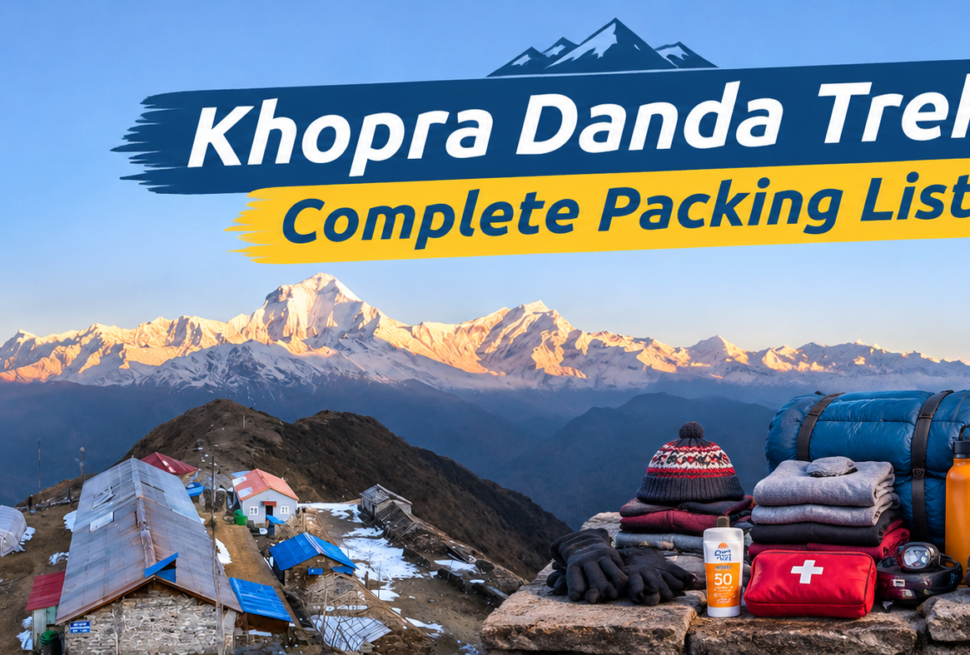
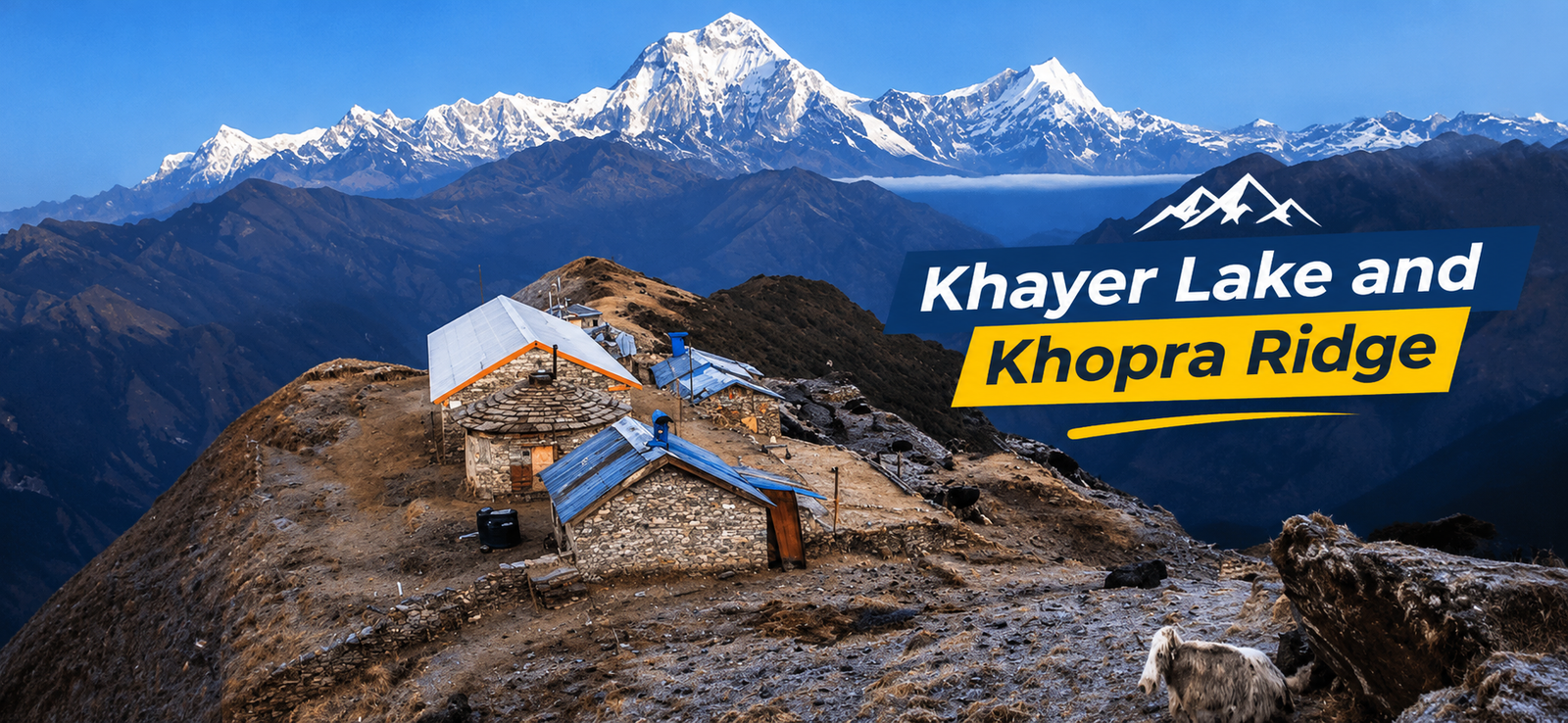
Even without the lake excursion, Khopra Ridge would be worth the trip on its own merits. Sitting at roughly three thousand six hundred and sixty meters, the ridge hosts a small cluster of lodges facing an almost uninterrupted wall of Himalayan peaks, including Dhaulagiri, Annapurna South, Hiunchuli, and Machhapuchhre, visible without another settlement or significant ridgeline breaking the view. Nearby Mulde viewpoint, reachable via a short early morning walk from the lodges, offers one of the widest panoramic sweeps in the entire Annapurna region, and watching sunrise from this spot, with light gradually striking peak after peak along the horizon, is one of the understated highlights of the whole trek.
What makes the ridge itself notable is not just the view but the almost complete absence of other trekkers compared to equivalent viewpoints elsewhere in the region, a quality that becomes obvious the moment you arrive and realize you can hear almost nothing but wind and distant birdsong. Where a similar vantage point along the Annapurna Base Camp or Everest Base Camp routes might host dozens of trekkers jostling for the same photograph at sunrise, Khopra Ridge frequently offers the same quality of view to a handful of people at most, which fundamentally changes the character of the experience from a shared spectacle into something closer to a private, personal encounter with the mountains.
Visiting a Sacred Site Respectfully
Given the religious significance of Khayer Lake to both Hindu and Buddhist communities, trekkers visiting the site should approach it with a degree of awareness and respect beyond simply treating it as a scenic photo stop. This means avoiding swimming or wading into the water, refraining from leaving any litter or disturbing the immediate surroundings, and maintaining a reasonably quiet, respectful demeanor if any local pilgrims happen to be present at the same time. Your guide will typically brief your group on these expectations before the final approach, but it is worth understanding the context ahead of time rather than treating this purely as an item to check off an itinerary.
This kind of respectful visiting is increasingly important as more trekkers discover this route over time, since many of Nepal’s most treasured natural sites have suffered from the cumulative impact of visitors who did not take the same care their first visitors did. Helping keep Khayer Lake as pristine as it currently is benefits everyone who hopes to experience it in the future, local communities and trekkers alike.
Photographing the Lake and Ridge
Photographers visiting this location benefit from understanding a few practical details about light and timing. The lake’s reflective quality is strongest in the earliest hours after arrival, before any wind picks up and disturbs the water’s surface, which means an early departure from Khopra Ridge genuinely pays off beyond simply avoiding afternoon cloud. Shooting with Dhaulagiri positioned directly behind the water, ideally with some foreground interest from the rocky shoreline, tends to produce the most striking compositions, and a polarizing filter can meaningfully cut glare off the water’s surface if you are shooting with a dedicated camera rather than a phone.
Back at Khopra Ridge itself, the golden hour both at sunrise and sunset produces dramatic side lighting across the full panorama of peaks, with Mulde viewpoint offering slightly elevated sightlines that work particularly well for capturing the full sweep of the horizon in a single wide frame. Because so few other trekkers are typically present at either location, photographers have considerably more freedom to take their time composing shots without the crowding common at more famous viewpoints elsewhere in Nepal.
How This Fits Into a Broader Nepal Trip
For travelers building a longer itinerary across Nepal, Khopra Ridge and Khayer Lake pair naturally with time in Pokhara before or after the trek, given the city’s role as the gateway to this entire region, as well as with a few additional days in Kathmandu to explore its temples and old city districts. Some travelers with more time available choose to combine this trek with a visit to Chitwan National Park for wildlife viewing in the lowlands, creating a trip that spans high altitude mountain scenery, lakeside relaxation in Pokhara, and subtropical wildlife in a single broader Nepal itinerary.
Others choose to pair this trek with a shorter additional trek elsewhere in the Annapurna region, such as a few extra days around the Mardi Himal Trek area, for travelers who have the time and fitness to handle back to back high altitude excursions. Our team is glad to help design a broader itinerary around your Khopra Danda trip if you are interested in combining it with other experiences during your time in Nepal, rather than treating it purely as a standalone trip.
Why This Trail Stayed So Quiet
The relative obscurity of Khopra Ridge and Khayer Lake compared to Annapurna Base Camp or the standard Poon Hill route is mostly a matter of geography and awareness rather than any genuine shortfall in the experience itself. The trail to Khopra Ridge branches away from the main Annapurna Sanctuary route near Tadapani, requiring trekkers to commit to a path that does not lead toward the most famous and heavily marketed destination in the region. For travelers doing initial research into Nepal trekking, the sheer volume of content about Annapurna Base Camp and Everest Base Camp naturally crowds out awareness of alternatives, even strong ones, simply because those two names dominate search results and guidebook coverage so completely.
There is also a practical factor. Because fewer operators run trips to Khopra Danda regularly, fewer reviews, photographs, and personal accounts exist online compared to the base camp routes, which creates a kind of self reinforcing obscurity where the trek remains under the radar partly because it is under the radar. We think that is beginning to change as more experienced trekkers look specifically for alternatives to the busiest routes, but for now, choosing this trek still means choosing something that the vast majority of visitors to Nepal have never heard of.
Comparing the Experience to Nearby Alternatives
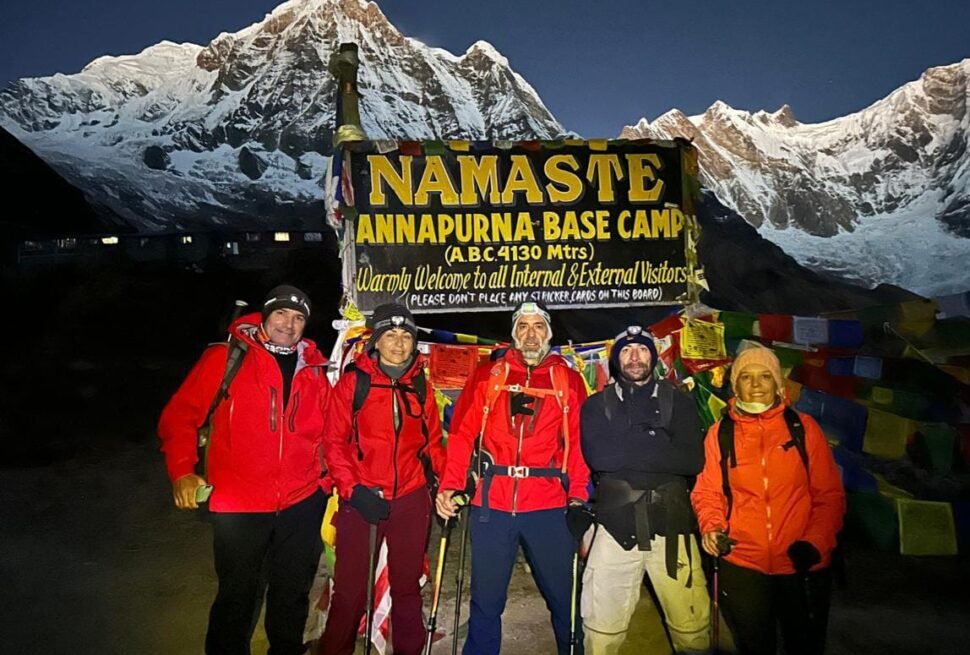
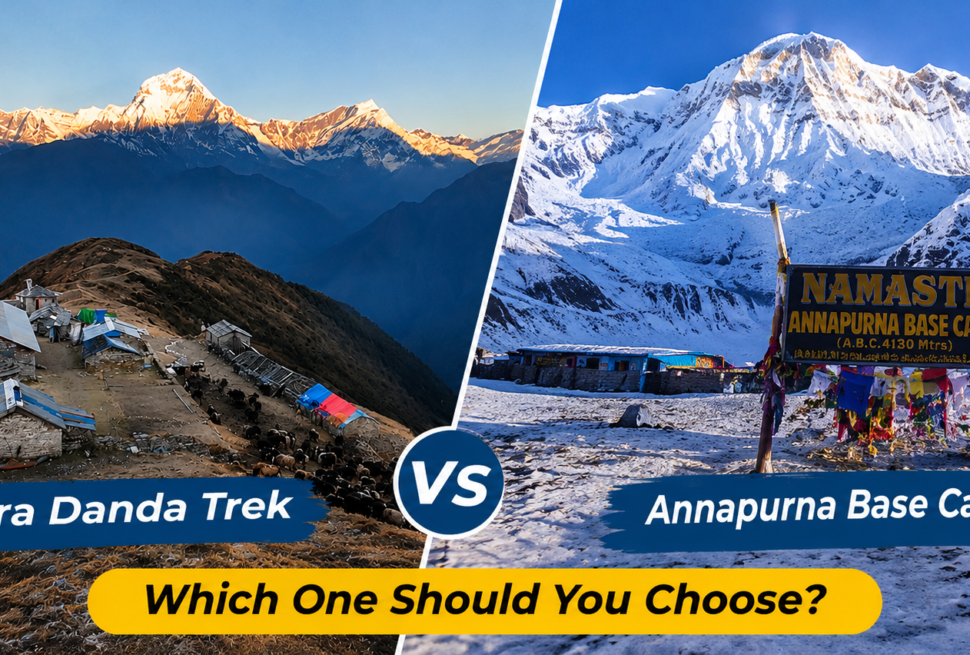
We cover the detailed comparison between this trek and Annapurna Base Camp at length elsewhere, but it is worth touching on here specifically in terms of the Khayer Lake experience. Annapurna Base Camp delivers an enclosed amphitheater of peaks, an undeniably powerful setting, but one that thousands of other trekkers experience in exactly the same way each season. Khayer Lake offers something categorically different, a destination with religious meaning, a dramatic single mountain backdrop in Dhaulagiri rather than a surrounding ring of peaks, and a near guarantee of experiencing it with minimal company.
The standard Ghorepani Poon Hill Trek, which the Khopra Danda itinerary actually includes as its finale, offers a different kind of payoff again, a wide sunrise panorama reached after a short, accessible trek rather than a demanding high altitude excursion. Trekkers who complete the full Khopra Danda route essentially experience three distinct highlights across one trip, the open ridge panorama, the sacred high altitude lake, and the classic Poon Hill sunrise, which is part of why we consider the extra length of this itinerary compared to shorter alternatives to be genuinely worthwhile rather than simply padding.
Khayer Lake Among Nepal’s Sacred Lakes
Nepal has several high altitude lakes considered sacred by local communities, and Khayer Lake takes its place within that broader tradition rather than standing entirely alone. Gosaikunda, in the Langtang region, is probably the most widely known example, drawing significant numbers of Hindu pilgrims each year during a specific festival period, with a correspondingly well developed trail and pilgrim infrastructure built up around it over a long period of time. Tilicho Lake, along the Annapurna Circuit, is another frequently mentioned high altitude lake, drawing trekkers primarily for its dramatic scale and elevation rather than pilgrimage specifically.
Khayer Lake sits somewhere distinct from both of these comparisons. It carries genuine religious significance similar to Gosaikunda, yet without anything approaching the same volume of organized pilgrimage traffic or developed infrastructure, and it offers a dramatic high altitude setting comparable to Tilicho, yet reached via a route that remains far less trafficked by trekkers generally. In some ways, Khayer Lake represents a middle ground between a developed pilgrimage site and a purely scenic trekking destination, carrying real meaning for local communities while still feeling almost entirely undiscovered from the perspective of international travelers.
The Physical Sensation of Altitude at the Lake
Arriving at close to four thousand six hundred and sixty meters produces a physical sensation that is worth describing honestly rather than glossing over. The air is noticeably thinner, and even a short uphill scramble near the lake’s edge can leave you more breathless than the same movement would at lower elevation. Temperatures, even during relatively mild seasons, drop quickly the moment you stop moving and your body heat from the climb begins to fade, which is why layering up immediately upon arrival rather than waiting until you feel cold is standard practice among experienced guides on this route.
Despite the physical demands, most reasonably fit trekkers who have followed a sensible acclimatization schedule, including the rest day built into our itinerary before this excursion, handle the altitude at Khayer Lake without serious difficulty. Mild symptoms such as slight headache or faster breathing than usual are common and generally resolve with rest, hydration, and the return to lower elevation at the end of the day, though your guide remains attentive throughout the excursion specifically because this is the single highest point reached anywhere on the trek.
Supporting Local Communities Along a Quieter Trail
Choosing a less traveled route like this one has a meaningful, if often overlooked, economic dimension. The small family run lodges at Chistibung, Khopra Ridge, and Swanta rely heavily on the comparatively modest number of trekking groups who do choose this path, and the income generated supports these households directly in villages where alternative economic opportunities remain limited. Unlike the more developed tourism economies around Ghandruk and the Annapurna Sanctuary route, where a broader range of income sources has developed over decades, the communities supporting the Khopra Danda route depend more heavily on each individual group of trekkers who passes through.
Choosing to trek this route, and choosing an operator who works directly and fairly with these local lodges and guides, genuinely matters to the communities along the way in a way that is sometimes less visible on busier, more developed trekking corridors where tourism income is already well established and diversified. This is one more reason, beyond the scenery itself, that we encourage travelers to seriously consider this quieter alternative rather than defaulting automatically to the most famous option.
The Villages Along the Way
Part of what makes the full journey to Khayer Lake meaningful is the sequence of villages you pass through to get there. Ghandruk, a well established Gurung village with decades of trekking tourism experience, offers an accessible, welcoming introduction to local culture early in the itinerary, with museums and cultural centers that give genuine context to the communities living throughout this region. Tadapani, set within rhododendron forest, serves as the branching point where the trail to Khopra Ridge diverges from the busier path toward the Annapurna Sanctuary.
Beyond Tadapani, villages like Dobato, Chistibung, and Swanta see dramatically fewer visitors, and daily life here continues largely shaped by subsistence farming and animal husbandry rather than tourism, offering a noticeably more unfiltered glimpse of rural hill life in Nepal than the more developed villages lower on the route. Staying in these smaller settlements, often in family run lodges with only a handful of rooms, adds a layer of genuine cultural texture to the trip that is easy to miss when focused purely on the mountain scenery waiting at the end of each day’s walk.
Flora and Fauna Around the Ridge and Lake
The lower and middle sections of the route, particularly between Ghandruk and Tadapani, pass through dense rhododendron forest that bursts into bloom each spring, drawing birdlife and occasional sightings of Himalayan langurs among the branches. As the trail climbs toward Khopra Ridge, forest gradually gives way to alpine meadow and then increasingly sparse, rocky terrain as you approach Khayer Lake itself, where vegetation thins to little more than hardy grasses and lichen capable of surviving the combination of altitude, cold, and intense sun exposure found at this elevation.
Wildlife sightings become less frequent the higher you climb, though the open terrain around the ridge occasionally rewards patient observers with sightings of mountain birds of prey riding thermals along the ridgeline, a fitting visual complement to the already dramatic mountain backdrop. The ecological transition across a single trek, from dense subtropical forest near the trailhead to stark high alpine terrain near the lake, is itself one of the understated pleasures of this particular route, offering a condensed tour through multiple distinct ecosystems within a relatively short overall distance.
Timing Your Visit for the Best Experience
As we cover in more detail in our guide to the best time to trek Khopra Danda, autumn generally offers the clearest, most reliable conditions for experiencing both the ridge panorama and the lake at their best, with stable weather maximizing your chances of an unobstructed view of Dhaulagiri from the water’s edge. Spring offers its own appeal, with the forested lower sections of the route in full rhododendron bloom, even if visibility at the lake itself can occasionally be slightly less consistent than in autumn.
Winter visitors see an entirely different version of the lake, frozen and stark rather than reflective, which some photographers and experienced trekkers specifically seek out despite the colder, more demanding conditions involved in reaching it during this season. Whichever season you choose, timing your departure from Khopra Ridge early in the morning gives you the best chance of clear visibility before any afternoon cloud has a chance to build, a detail your guide will manage carefully regardless of which month you travel.
What to Bring Specifically for This Excursion
We cover full packing guidance for the entire trek in a separate detailed guide, but the Khayer Lake day in particular deserves a specific mention given how much colder and more exposed it is than the rest of the itinerary. A genuinely warm pair of gloves, a windproof outer shell, and strong sun protection all matter more on this single day than on almost any other stretch of the trek, given the combination of high altitude cold and intense, unfiltered sun exposure across the open terrain leading to the lake. Trekking poles also prove particularly useful on the looser, rockier sections of this specific approach.
Why Our Guides Consider This the Highlight of the Trip
Ask any of our guides who regularly lead this route which single day stands out most across the whole thirteen day itinerary, and the near universal answer is the Khayer Lake excursion. Part of this is simply the visual drama of the destination itself, but guides consistently mention something else as well, the reaction of their clients upon arrival. Because so few trekkers have seen photographs of this specific lake beforehand, unlike the heavily documented viewpoints at Everest Base Camp or Annapurna Base Camp, the moment of first seeing Khayer Lake tends to arrive without the slightly diminished impact that comes from having already viewed a destination in hundreds of photographs online before experiencing it in person.
This element of genuine surprise, increasingly rare in an era where most major trekking destinations have been extensively photographed and shared, is something our guiding team specifically values about leading trips to this part of the Annapurna region, and it is a large part of why many of them name this particular excursion as their own personal favorite day of guiding work across the entire season.
Comparing Crowds at Each Viewpoint
To put the solitude of this route in concrete terms, consider a typical autumn morning. At the main viewpoint above Annapurna Base Camp, it is common to share the sunrise with dozens of other trekkers, all gathered in roughly the same small area waiting for first light to strike the surrounding peaks. At Poon Hill during the same season, the crowd is often considerably larger still, with the tower at the summit sometimes hosting a genuinely dense gathering of visitors on a clear morning. At Mulde viewpoint above Khopra Ridge, by contrast, it is entirely common to be one of only a handful of people present, and at Khayer Lake itself, many groups experience the site with nobody else in sight for the entire duration of their visit.
This is not a criticism of the busier viewpoints, which earn their popularity honestly through genuinely spectacular scenery. It is simply a factual difference in what you can expect, and for travelers who specifically value solitude as part of a meaningful outdoor experience, that difference is significant enough to shape an entire trip decision on its own.
A Guide’s Perspective
One of our senior guides, who has led trekking groups to Khopra Ridge and Khayer Lake across nearly every season for several years, describes a recurring moment that sticks with him. Groups often fall almost completely silent for several minutes upon first reaching the lake, a reaction he rarely sees at busier, more anticipated viewpoints where clients have typically already mentally rehearsed the moment based on photographs seen online beforehand. He describes the silence as a kind of genuine, unscripted reaction, the sort that is becoming harder to produce at destinations that have been thoroughly documented and shared across travel content for years. For him, that reaction alone is worth more than any single statistic about elevation or distance in explaining why this place deserves wider recognition, and after years of guiding on this exact trail he still describes himself as genuinely moved each time he watches a new group experience it for the first time.
Why This Deserves More Attention
None of this is meant to suggest that Annapurna Base Camp or Everest Base Camp are somehow lesser experiences. They remain genuinely spectacular treks for good reason, and we recommend them regularly to clients for whom they are the right fit. What we want to push back against is the assumption, common among travelers newer to Himalayan trekking, that the most famous routes are automatically the best available options simply because they are the most discussed online. Khayer Lake and Khopra Ridge demonstrate clearly that some of the most rewarding experiences in the Annapurna region remain genuinely underexplored, not because they lack merit, but because fame in trekking, much like fame anywhere else, tends to compound on itself regardless of whether a quieter, equally worthy alternative exists just one valley over.
If you have already done one of the more famous treks in Nepal, or if you specifically want an experience built around solitude, genuine surprise, and a destination carrying real cultural and religious weight rather than simply scenic value, Khayer Lake and the ridge above Khopra are very much worth your consideration, and they tend to leave a longer lasting impression on the trekkers who choose them than many more heavily documented alternatives. Our team at Next Trip Nepal has been running trips to this exact route for years and would be glad to help you plan a trip that includes this often overlooked but genuinely remarkable corner of the Annapurna Conservation Area, whether as a standalone trek or as part of a longer custom itinerary through the wider region.
To see full details on cost, itinerary, and booking, visit our complete guide to the Khopra Danda Trek, or reach out to our team directly with any questions about whether this particular route fits what you are hoping to find on your next trip to Nepal. We are always happy to talk through the details, share honest advice based on current trail conditions, and help you decide whether this quieter corner of the Annapurna region belongs on your itinerary.