Best time to trek Khopra Danda is one of the first questions serious planners ask once they settle on this route over the busier alternatives in the Annapurna region. Choosing when to travel is one of the most consequential decisions you will make when planning a trek in Nepal, and it deserves more thought than simply picking whichever dates happen to fit around flight prices or annual leave. Timing a trek to Khopra Ridge and Khayer Lake is not quite the same decision as timing a trip to a lower, more heavily trafficked trail. Because the Khopra Danda Trek climbs to nearly four thousand six hundred and sixty meters at its highest point, and because a meaningful stretch of the route sits on an exposed ridge rather than tucked inside a forested valley, the season you choose has a real effect on comfort, visibility, and even whether the final push to the lake is advisable on a given day. This guide walks through each season in turn, explains what you can realistically expect month by month, and gives a straightforward, honest recommendation for when to book depending on what you personally care about most, whether that is clear mountain photography, blooming forests, festival timing, or simply avoiding crowds.
Why Timing Matters More on This Particular Trek
Most treks in Nepal share the same two broad windows of good weather, spring and autumn, and Khopra Danda is no exception in that general sense. What makes timing slightly more important here than on some other routes is the combination of altitude and exposure. The walk from Kimche to Ghandruk and on to Tadapani passes mostly through forest, which offers some shelter from wind and precipitation. Once you climb past Dobato toward Chistibung and Khopra Ridge, however, the trail becomes noticeably more open, and the final approach to Khayer Lake crosses terrain with little tree cover at an elevation where afternoon weather can change quickly. A season that works perfectly well for a lower altitude trek can leave you looking at cloud instead of mountains on the one day of the itinerary built specifically around a panoramic payoff, so getting the timing right matters more here than it might elsewhere.
Spring: March Through May
Spring is one of the two strongest seasons for this trek, and for many trekkers it is the more visually rewarding of the two. As temperatures rise through March and into April, the forests between Kimche, Ghandruk, and Tadapani fill with blooming rhododendron, Nepal’s national flower, turning entire hillsides shades of red, pink, and white for several weeks. This is one of the most photographed stretches of trail in the whole Annapurna region during this window, and walking through it in full bloom is reason enough on its own for some travelers to choose spring over autumn.
Daytime temperatures in the lower and middle sections of the route are generally comfortable in spring, often reaching into the teens Celsius in villages like Ghandruk and Tadapani, though mornings remain cool and nights at higher points such as Dobato and Khopra Ridge can still drop close to or below freezing, particularly in March. By May, the lower elevations warm further, though this is also when the first signs of the approaching monsoon can begin to appear in the form of more frequent afternoon cloud buildup, especially later in the month. Visibility in spring is generally good in the mornings, with the clearest views typically available before midday, after which haze and cloud can sometimes reduce visibility of the most distant peaks, even if the immediate surroundings remain pleasant.
Spring is a strong choice if you want to see the rhododendron forests at their best, if you are traveling in March or April specifically, and if you are comfortable with slightly less reliable long range visibility in exchange for the forest scenery and generally mild temperatures. Early risers who reach viewpoints before late morning clouds build up are typically rewarded with excellent views even during this season.
The Monsoon: June Through Early September
We generally advise against attempting the Khopra Danda Trek during the monsoon season, which typically runs from June through early September. Heavy and often sudden rainfall during these months makes trails slippery, particularly on the stone steps and forest paths between Kimche and Tadapani, and leeches become common in the lower forested sections, which many trekkers find unpleasant even if they are not medically concerning. Cloud cover is persistent through much of this period, which significantly reduces the chances of clear mountain views, undermining much of the reason to do this particular trek in the first place, since the panoramic payoff from Khopra Ridge and the sight of Khayer Lake reflecting the surrounding peaks depend heavily on clear conditions.
Beyond visibility and trail conditions, monsoon season also brings a higher chance of flight delays and disruption to road transport between Kathmandu and Pokhara, which can complicate the logistics of a tightly scheduled trip. For these combined reasons, we do not recommend this trek during the core monsoon months, and if your travel dates genuinely cannot be moved outside this window, it is worth discussing alternative, lower altitude options with our team rather than attempting Khopra Danda specifically during the wettest part of the year.
Autumn: Late September Through November
Autumn is widely regarded as the single most reliable season for trekking throughout Nepal, and Khopra Danda benefits from the same stable high pressure weather patterns that make this period so popular across the entire Annapurna region. Once the monsoon clears, typically by mid to late September, the air becomes notably drier and clearer, and this clarity tends to hold through October and into November with far fewer disrupted days than spring typically offers.
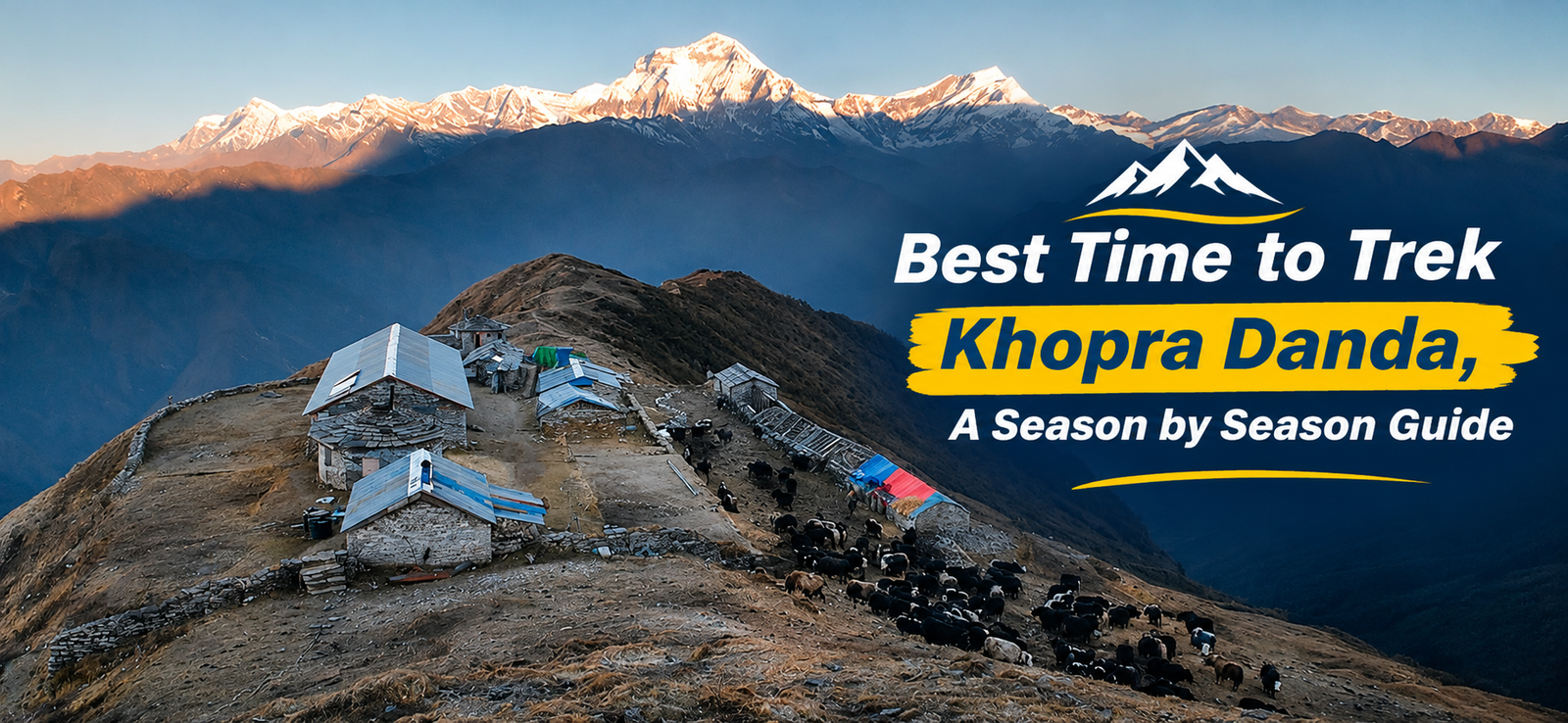
Daytime temperatures in October remain comfortable at lower elevations, cooling steadily as November progresses and as you gain altitude toward Khopra Ridge and Khayer Lake. Nights at the higher points of the trek can be genuinely cold by November, often well below freezing, which makes a properly rated sleeping bag and warm layers essential rather than optional during this stretch of the season. In exchange for the colder nights, trekkers are rewarded with some of the clearest, most reliable mountain views of the year, and the chance of a clean, unobstructed sight of Dhaulagiri and the surrounding peaks from the ridge is higher in autumn than in any other season.
Autumn also coincides with Dashain and Tihar, the two largest festivals in the Nepali calendar, both of which typically fall within this window. Trekking during these festivals can be a genuinely rewarding cultural experience, since you may see festival preparations and celebrations in villages along the route, though it is worth noting that domestic transport and certain services in Kathmandu and Pokhara can be busier or run on a different schedule around the main festival days themselves. If your travel dates overlap with Dashain or Tihar, our team will factor this into your logistics and let you know in advance of anything that might affect your specific schedule.
For travelers who want the single most dependable combination of good weather, clear views, and manageable trail conditions, autumn is our strongest recommendation for the Khopra Danda Trek, and it is correspondingly the busiest season to book, so earlier planning is worthwhile if you want to secure your preferred dates.
Winter: December Through February
Winter is a realistic option for this trek, though it comes with a different set of considerations than spring or autumn. Daytime skies in winter are often extremely clear, since the drier air of this season frequently delivers some of the sharpest, most crisp mountain views available at any point in the year, particularly in December before the coldest part of winter fully sets in. The tradeoff is temperature. Nights at higher points such as Chistibung, Khopra Ridge, and especially on the approach to Khayer Lake can fall well below freezing, and snow becomes a genuine possibility on the higher sections of the trail, particularly from late December through February.
Snow at Khayer Lake itself is common during winter, and the lake can be partially or fully frozen for weeks at a time, which actually adds a striking, otherworldly quality to the setting for trekkers who make it there, though it also means the final approach may need to be adjusted or occasionally postponed by a day depending on conditions at the time. Winter trekking on this route is best suited to travelers who are comfortable with cold temperatures, who pack appropriately heavy gear, and who build some flexibility into their schedule in case a short weather delay affects the Khayer Lake day specifically. It is not a season we recommend for first time trekkers unfamiliar with cold weather conditions, but for well prepared and experienced trekkers, winter can deliver some of the clearest and most dramatic photography of the entire year.
How Humidity and Trail Surface Change Through the Year
Trail surface conditions on the Khopra Danda route shift noticeably across the seasons, and this is worth understanding beyond simply knowing which months bring rain. The stretch between Kimche and Tadapani includes long sections of stone steps, a common feature of trails throughout the hill regions of Nepal, and these steps behave very differently depending on moisture levels. In dry autumn conditions they offer solid, predictable footing even when descending quickly. During spring, occasional light rain can leave sections slick, particularly in shaded forest areas where the stone stays damp longer after a shower. In full monsoon conditions these same steps become genuinely hazardous, with a combination of mud, standing water, and persistent moisture that significantly increases the risk of a slip, which is one of the more concrete, practical reasons we steer clients away from this trek during the wettest months.
Higher up, the trail approaching Khopra Ridge and the final stretch to Khayer Lake transitions to rockier, more uneven ground, occasionally crossing patches of scree. In autumn and dry spring conditions this terrain is straightforward for anyone with reasonable fitness and proper footwear. In winter, this same stretch can be partially covered in snow or ice, which is where good trekking poles and sturdy, well broken in boots with solid ankle support make a genuine difference, not just for comfort but for basic safety on the steeper sections near the lake itself.
Wildlife and Birdlife Through the Seasons
The forested lower sections of the Khopra Danda route, particularly between Ghandruk and Tadapani, support a meaningful range of wildlife, and what you are likely to see shifts with the season. Spring is generally the richest time for birdlife, as many species become more active and vocal during the breeding season, and the blooming rhododendron forest draws numerous species that feed on nectar during these weeks. Keen birdwatchers often report their best sightings of the year on this route during April specifically, when both flowering trees and animal activity peak together.
Autumn offers somewhat quieter forests in terms of birdlife compared to spring, though clearer weather and better visibility make it easier to spot wildlife at a distance when it does appear, including occasional sightings of Himalayan langurs in the forested sections lower on the route. Winter brings the least overall wildlife activity given colder temperatures, though the crisp, clear conditions typical of this season can make for excellent visibility when animals do appear. None of this should be a primary factor in choosing your season, but it is a pleasant secondary consideration worth knowing about if you have a particular interest in the natural environment beyond the mountain views themselves.
Photography Considerations by Season
Photographers planning this trek should weigh season carefully, since light quality and subject matter both shift considerably throughout the year. Autumn delivers the clearest air and the sharpest long range mountain photography, with crisp definition on distant peaks like Dhaulagiri that is harder to achieve in hazier spring conditions. The tradeoff is that autumn forests are less visually dramatic than spring ones, given the absence of flowering rhododendron.
Spring, by contrast, offers some of the most colorful foreground subject matter of the year thanks to the rhododendron blooms, which pair beautifully with mountain backdrops on partly clear days, even if ultimate long range clarity is occasionally a notch below what autumn typically delivers. Winter offers a genuinely different photographic character, with snow covered ridgelines, a frequently frozen Khayer Lake, and some of the clearest skies of the year, rewarding photographers willing to work in colder conditions with images that look meaningfully different from what most visitors capture during the busier seasons. Early morning light, particularly around sunrise at Poon Hill near the end of the itinerary, tends to be strongest in autumn and winter when atmospheric haze is at its lowest.
Group Departures and Season
Group size and the makeup of fellow trekkers on any given departure can shift somewhat by season as well. Autumn departures tend to attract the largest and most diverse mix of travelers, given it is the most popular season overall for trekking throughout Nepal, which can be an appealing factor for solo travelers hoping to join a lively small group. Spring departures usually see a slightly smaller but still healthy volume of bookings, often skewing toward travelers who have specifically researched the rhododendron season and timed their trip around it.
Winter departures are the most modest in size, often running as smaller or more private groups given the overall lower demand during these colder months, which can actually appeal to travelers who prefer a more intimate trekking experience with greater flexibility around pace and daily schedule. If group size and the social dynamic of your trip matter to you as much as weather and scenery, it is worth factoring this pattern into your season choice alongside the purely climatic considerations covered elsewhere in this guide.
Month by Month Summary
March tends to open the spring season with cooler temperatures and the earliest rhododendron blooms beginning at lower elevations. April is usually the peak month for rhododendron forest scenery, with generally mild and pleasant conditions throughout the lower and middle sections of the trek. May brings warmer lower elevation temperatures but also the first signs of approaching monsoon instability, particularly in the back half of the month, making early May still reasonable but late May somewhat riskier for weather.
June through August represent the core monsoon period, and as covered above, this window is not one we recommend for this particular trek given the combination of poor visibility, difficult trail conditions, and leeches in the lower forest sections. September begins to clear from the monsoon as the month progresses, with the second half of September often delivering the first genuinely good trekking days of the approaching autumn season. October and November represent the heart of autumn, with October offering slightly milder temperatures and November delivering the clearest skies at the cost of colder nights, particularly toward the end of the month.
December opens winter with still reasonably moderate conditions and often excellent visibility, while January tends to be the coldest month of the year, with the greatest likelihood of snow on the higher sections of the trail. February begins to show early signs of transition toward spring, though nights remain cold and snow is still a realistic possibility at altitude. Trekkers planning around a specific window should keep this general pattern in mind rather than fixating purely on named seasons, since conditions can shift meaningfully within a single month depending on the specific year.
Understanding Nepal’s Trekking Seasons in General
For travelers newer to planning a trip in the Himalayas, it helps to understand why Nepal’s trekking calendar is shaped the way it is in the first place. The country sits under the influence of the South Asian monsoon system, which draws moisture up from the Bay of Bengal and delivers the bulk of the country’s annual rainfall between June and September. Once this system withdraws in September, a stable high pressure pattern typically settles over the region, bringing the dry, clear conditions that make autumn the most dependable trekking window across nearly every route in the country, not just Khopra Danda specifically.
Spring forms a second, shorter window of generally good weather as temperatures rise ahead of the monsoon’s arrival, though this period is somewhat less stable than autumn since the atmosphere is building toward the eventual monsoon onset rather than settling away from it. Winter sits in a separate category entirely, governed less by the monsoon cycle and more by the simple fact that cold air at altitude makes high passes and exposed ridgelines more physically demanding, even when the skies themselves remain clear. Understanding this bigger picture helps explain why so many operators, ourselves included, consistently point travelers toward the same two core windows across nearly all of our treks, Khopra Danda very much included.
Acclimatization Considerations Across Seasons
Altitude acclimatization works the same way regardless of season, since it depends on gradual elevation gain and adequate rest rather than temperature, but the practical experience of managing it does shift with the time of year. In warmer months, trekkers sometimes underestimate how much hydration they need, since the exertion of walking at altitude continues to demand significant water intake even when the air itself does not feel particularly hot. In colder months, the opposite mistake is more common, with some trekkers drinking less than they should simply because the cold reduces the sensation of thirst, even though proper hydration remains just as important for managing the effects of altitude.
Our itinerary builds in the same acclimatization structure regardless of when you travel, with the rest day before the Khayer Lake excursion remaining fixed in the schedule across every season. What changes is the advice your guide gives you day to day, with more emphasis on proactive hydration in colder months and more attention to pacing and sun protection in warmer ones. Whichever season you choose, following your guide’s specific guidance on hydration and pacing matters more than any general seasonal pattern.
What Our Guides Say About Each Season
Guides who have led this route across many years and every season tend to have strong, specific opinions about the differences between them, and it is worth sharing some of that perspective here. Many of our senior guides name autumn as their personal favorite for the sheer reliability of the views, noting that they can count on one hand the number of autumn departures in recent years where Khayer Lake was not clearly visible from the ridge on a scheduled attempt. At the same time, several guides mention a particular fondness for early April departures, describing the rhododendron forest in full bloom as one of the most beautiful sights on any trek they lead in the entire Annapurna region, autumn included.
Winter departures draw a smaller but notably enthusiastic following among our guiding team as well, with several describing the sight of a frozen Khayer Lake under a clear December sky as one of the most striking and memorable images the trek can produce, precisely because so few trekkers ever see it that way. This range of genuine, differing opinions among experienced guides is itself a useful signal that there is no single objectively correct season for this trek, only a season that best matches what you personally want from the experience.
How Season Affects the Khayer Lake Day Specifically
Because the excursion to Khayer Lake represents the single highest and most exposed day of the entire itinerary, it is worth addressing separately from the rest of the trek. In autumn, this day typically offers the most reliable combination of clear skies and manageable trail conditions, making it the season in which trekkers are most likely to experience the full visual impact of the lake against a backdrop of Dhaulagiri without any weather related compromise. In spring, the lake day is still generally good, though afternoon cloud can occasionally reduce visibility if the hike runs later into the day than planned, which is one reason our itineraries build in an early departure for this specific excursion.
In winter, the lake itself often appears frozen or partially frozen, which many trekkers find strikingly beautiful in its own right, though snow on the approach trail can occasionally require your guide to adjust pace or, in rare cases, delay the attempt by a day if conditions are judged unsafe. Monsoon season essentially removes the reliable visual payoff of this day entirely, given the near constant cloud cover typical of the period, which is the single strongest reason we advise against this trek during the wettest months of the year.
Packing Adjustments by Season
Your packing list should shift meaningfully depending on which season you choose. Spring trekkers should prioritize layers that can be added or removed easily through the day, given the wider temperature swing between cool mornings and warmer afternoons at lower elevations, along with reliable rain protection given the gradually increasing chance of afternoon showers as the season progresses toward May. Autumn trekkers should focus on strong insulation for cold nights, particularly from late October onward, since daytime conditions are usually comfortable but overnight temperatures at higher points drop substantially.
Winter trekkers need the most serious cold weather gear of any season, including a sleeping bag rated well below freezing, heavier insulated layers, and reliable traction for potentially icy or snowy sections of trail near Khopra Ridge and on the approach to Khayer Lake. If you are trekking during monsoon season despite our general recommendation against it, waterproofing becomes the dominant packing concern, along with leech protection for the lower forested stretches of the route. Whatever season you choose, our team provides a detailed, season specific packing list as part of your pre departure information once your trip is booked.
Matching Season to Trip Length and Flexibility
Your overall travel flexibility should also factor into your season choice, beyond pure weather preference. If your dates are fixed well in advance and cannot shift, autumn remains the safest bet precisely because its weather is the most consistent, reducing the chance that a string of unlucky days coincides with your specific window. If you have more flexibility, perhaps a longer stay in Nepal or the ability to adjust your departure by a few days based on a short range forecast, spring becomes a more attractive option, since you can use that flexibility to avoid the less settled stretches that occasionally appear within the season.
Winter trekkers benefit most from building a buffer day or two into their overall Nepal itinerary beyond the core trek dates, specifically to allow for the possibility that the Khayer Lake excursion needs to shift by a day due to snow. Travelers with a tightly fixed return flight and no flexibility at all are generally better served by autumn or by choosing a different trek entirely if their dates fall squarely within the monsoon window, rather than attempting to force a winter or monsoon season trek into an inflexible schedule.
Booking Timing and Availability
Because autumn is both the most reliable and the most popular season for this trek, lodge space and guide availability can tighten as the season approaches, particularly for the smaller teahouses at higher points like Chistibung and Khopra Ridge, which have limited capacity compared to the larger villages lower on the route. Travelers hoping to trek in October or November are encouraged to book several months ahead where possible, particularly if traveling during a specific window such as a public holiday period or around Dashain and Tihar.
Spring bookings generally have a little more flexibility given slightly lower overall demand compared to autumn, though early April remains popular given the rhododendron bloom and is worth booking ahead for if that is a specific priority for your trip. Winter trips can usually be arranged with less advance notice given lower overall demand, though travelers should confirm current trail and weather conditions with our team closer to departure given the greater day to day variability of this season.
A Note on Permits and Season
One small practical detail worth mentioning is that permit requirements for the Khopra Danda Trek do not change with the season. The Annapurna Conservation Area Permit and the Trekkers Information Management System card are required year round, regardless of whether you travel in the busy autumn window or during the quieter winter months, and fees for both remain the same across the calendar year. The only seasonal variable worth checking with our team ahead of time is whether any specific checkpoint along the route adjusts its operating hours around major festivals such as Dashain and Tihar, since this can occasionally affect the exact timing of permit checks on the trail, even though it does not affect the underlying cost or requirement itself.
Our Season by Season Recommendation
After weighing visibility, temperature, trail safety, cost, and the general character of each season against one another, here is where we land. If we had to recommend a single season for most travelers, it would be autumn, specifically October through mid November, for the most dependable combination of clear mountain views, manageable temperatures, and stable trail conditions throughout the itinerary. For travelers who specifically want to see the Annapurna region’s famous rhododendron forests in full bloom and who are comfortable with slightly less predictable afternoon visibility, April is an excellent alternative that delivers a genuinely different and equally memorable version of the same trek.
Well prepared and experienced trekkers comfortable with cold weather should seriously consider December for exceptionally clear skies, while anyone without significant cold weather experience should avoid the heart of winter from January through February unless they are confident in both their gear and their tolerance for genuinely cold conditions. Monsoon season from June through early September remains the one window we consistently advise against for this particular trek, given how directly the appeal of Khopra Ridge and Khayer Lake depends on clear, unobstructed mountain views.
Whichever season fits your schedule, our team at Next Trip Nepal can help you plan around current conditions, suggest the best specific dates within your chosen window, and build a complete itinerary for the Khopra Danda Trek suited to exactly when you plan to travel. If you are also considering nearby alternatives such as the Ghorepani Poon Hill Trek, the Annapurna Base Camp Trek, or the Mardi Himal Trek, the same seasonal guidance broadly applies, since all of these routes sit within the same general climate zone of the Annapurna Conservation Area.
Ultimately, there is no single wrong season to attempt this trek, only tradeoffs that suit different priorities. A traveler chasing the clearest possible photographs of Dhaulagiri from the ridge should lean toward autumn. One who wants to see the forest at its most colorful should lean toward April. One who is comfortable with cold and wants an experience that almost nobody else shares should seriously consider winter. Reading this guide before you book, rather than simply choosing dates based on when a flight happens to be cheapest, is the single best way to make sure the version of the Khopra Danda Trek you experience matches the one you were hoping for when you first started researching the route.