Crossing Thorong La Pass is the single day every Annapurna Circuit trekker asks about before they book, and for good reason. At 5,416 meters, it is the highest point most trekkers will ever reach on foot, and it is crossed in one long, continuous push rather than spread across several easier days the way some other high passes are. This guide breaks down exactly what makes this day hard, what does not, and how to prepare for it honestly, using real trail data and pricing from a company that runs this route regularly.
The short answer: Thorong La Pass is a demanding but very achievable single day, roughly 7 to 8 out of 10 in difficulty, with altitude and a long sustained effort being the dominant factors rather than technical climbing skill. Trekkers who acclimatize properly in Manang beforehand, start early, and pace themselves through a 7 to 9 hour day generally complete the crossing without serious difficulty. The trekkers who struggle are almost always the ones who skipped acclimatization, started too late in the day, or ignored early altitude symptoms.
Quick Difficulty Summary
| Difficulty Factor | Rating (out of 10) | Why |
|---|---|---|
| Overall difficulty of the crossing day | 7 to 8 | A long single day combining high altitude with sustained walking effort in both directions |
| Altitude difficulty | 9 | The single hardest factor, reaching 5,416m, the highest point of the entire Annapurna Circuit |
| Walking effort on crossing day | 7 to 8 | Typically 7 to 9 hours covering both the ascent to the pass and the long descent to Muktinath |
| Technical climbing skill required | 1 | No ropes, no crampons, no climbing experience needed on the standard route in normal conditions |
| Trail terrain difficulty | 5 to 6 | Steep switchbacks, loose scree in places, and a long, knee jarring descent to Muktinath |
Reading this table correctly matters. Thorong La Pass is not hard in a technical sense. It is hard because it compresses a large amount of altitude gain and loss into a single day, at a point in the trek where your body has already spent a week or more adjusting to progressively thinner air, and where there is no teahouse partway through the crossing itself to rest at overnight.
Why This Single Day Is Harder Than It Looks on Paper
Most of the Annapurna Circuit’s daily stages are genuinely moderate, gaining a few hundred meters across five or six hours of walking with a warm teahouse waiting at the end. The Thorong La Pass crossing breaks that pattern entirely. Starting from High Camp at roughly 4,925 meters, trekkers gain another 490 meters to the pass itself at 5,416 meters, then descend nearly 1,600 meters all the way down to Muktinath at 3,760 meters, all in one continuous day with no shorter alternative. There is no village, teahouse, or shelter directly on the pass itself, which means once you commit to the crossing in the early morning, turning back partway is a genuinely difficult and often worse option than continuing forward to Muktinath.
| Location | Altitude | Approximate Oxygen Availability Versus Sea Level |
|---|---|---|
| Manang | 3,519m | Roughly 65 percent |
| Yak Kharka | 4,018m | Roughly 61 percent |
| Thorong Phedi | 4,450m | Roughly 58 percent |
| High Camp | 4,925m | Roughly 54 percent |
| Thorong La Pass | 5,416m | Roughly 51 percent |
| Muktinath | 3,760m | Roughly 63 percent |
This is the clearest way to understand why the pass day feels so much harder than any other day on the route. You are walking the steepest, most sustained stretch of the entire trek at the exact point where oxygen availability is lowest, roughly half of what it is at sea level, and you are doing it in one continuous push rather than with an overnight rest partway through.
Daily Walking Distance and Hours Approaching the Pass
| Day | Route Segment | Approximate Walking Time | Elevation Change |
|---|---|---|---|
| 1 | Manang, acclimatization day | 3 to 4 hours (day hike) | Short acclimatization hike, often to Ice Lake or Gangapurna viewpoint |
| 2 | Manang to Yak Kharka | 3 to 4 hours | Gain roughly 500m |
| 3 | Yak Kharka to Thorong Phedi or High Camp | 4 to 5 hours | Gain roughly 430 to 900m depending on whether you stop at Phedi or continue to High Camp |
| 4 | High Camp to Thorong La Pass to Muktinath | 7 to 9 hours | Gain roughly 490m to the pass, then descend roughly 1,650m to Muktinath |
Notice that day 4, the crossing day itself, is dramatically longer and covers far more total elevation change than any other single day on the approach. This is precisely why the acclimatization day in Manang and a properly paced approach through Yak Kharka and Thorong Phedi matter so much. Trekkers who rush this section to save a day risk arriving at High Camp already under acclimatized, right before the hardest single push of the entire trek.
Terrain: What the Crossing Actually Feels Like Underfoot
- A steady, exposed climb from High Camp to the pass, walked in the dark or near dark for most groups, since an early start is essential to cross before winds pick up later in the morning.
- Loose scree and rocky sections in places on the ascent, requiring careful footing rather than technical skill.
- A long, sustained descent from the pass to Muktinath that is significantly harder on the knees than anything else on the route, dropping nearly 1,650 meters over several hours.
- Wind, often the most underestimated factor, since the pass itself is regularly windy and can feel dramatically colder than the still air lower on the route.
None of this requires ropes, harnesses, or prior climbing experience in normal conditions. A trekking pole, good gloves, and a genuinely warm layer for the early morning departure handle the vast majority of what the crossing throws at you. Trekking poles in particular make a meaningful difference on the long knee jarring descent to Muktinath, which is where many trekkers report more discomfort than on the ascent itself.
How Cold Does It Actually Get at the Pass?
| Season | Pre Dawn Departure Temperature at High Camp | Temperature at the Pass Itself |
|---|---|---|
| Autumn (September to November) | Minus 10 to minus 15 Celsius | Minus 15 to minus 20 Celsius with wind chill |
| Spring (March to May) | Minus 8 to minus 12 Celsius | Minus 12 to minus 18 Celsius with wind chill |
| Winter (December to February) | Minus 15 to minus 25 Celsius | Minus 20 to minus 30 Celsius with wind chill, pass may close after heavy snow |
The pre dawn start from High Camp is genuinely the coldest part of the entire Annapurna Circuit. Most groups depart between 4am and 5am specifically to reach and cross the pass before mid morning winds intensify, which means the first two or three hours of walking happen in genuinely harsh cold, well before the sun clears the surrounding ridgelines and begins to warm the air.
Who Struggles Most on This Crossing
| Trekker Profile | Why They Struggle | How to Mitigate It |
|---|---|---|
| Trekkers who skip or rush the Manang acclimatization day | Arriving at High Camp already under acclimatized dramatically increases altitude sickness risk right before the hardest single day | Take the full acclimatization day in Manang regardless of how strong you feel |
| Trekkers who start the crossing too late | Later starts mean crossing the pass in stronger winds and reaching Muktinath in fading afternoon light | Follow your guide’s recommended early departure time without pushing for a later, more comfortable start |
| Trekkers with weak trekking poles or none at all | The long descent to Muktinath is significantly harder on the knees without poles | Bring genuine trekking poles and use them from High Camp all the way to Muktinath |
| Trekkers who under dress for the pre dawn cold | The first two hours from High Camp are the coldest sustained stretch of the entire trek | Layer properly, including a genuinely warm outer shell, gloves, and a hat rated for well below freezing |
How to Train for the Thorong La Pass Crossing
Training for this single day is really training for the entire Annapurna Circuit, since the crossing’s difficulty is the cumulative product of everything that came before it as much as the day itself.
| Weeks Before Departure | Focus | Sample Activities |
|---|---|---|
| 10 to 12 weeks out | Build a cardiovascular base | Brisk walking, hiking, cycling, or stair climbing, 3 to 4 times per week, 30 to 45 minutes |
| 6 to 9 weeks out | Add elevation gain, load, and long descents specifically | Hill walks with a daypack, focusing on downhill sections to prepare the knees for the descent to Muktinath |
| 2 to 5 weeks out | Simulate a long single day effort | A back to back long hike of 7 to 9 hours, wearing your actual boots and using trekking poles throughout |
| Final 1 to 2 weeks | Taper and recover | Reduce volume significantly, prioritize sleep and hydration before departure |
The single most useful training habit specific to this day is practicing long descents with trekking poles, since the descent to Muktinath is genuinely where many trekkers feel the most lasting discomfort, more so than the ascent to the pass itself.
Age and the Thorong La Pass Crossing: How Old Is Too Old?
There is no hard age cutoff for this crossing. Trekkers in their sixties and seventies complete it successfully every season, provided they train appropriately and follow a properly paced itinerary with the Manang acclimatization day included. What matters far more than age itself is cardiovascular fitness, knee health given the long descent, and a properly paced approach. Older trekkers who are disciplined about pacing themselves and using trekking poles consistently on the descent often report an easier experience than younger, fitter trekkers who move too fast and arrive at Muktinath with sore knees and joints.
What Happens if You Cannot Continue
A small percentage of trekkers who attempt the crossing turn back partway, most commonly due to altitude sickness symptoms that appear or worsen on the ascent from High Camp. Turning back once significantly committed to the ascent is genuinely difficult logistically, since there is no teahouse directly on the pass, which is precisely why the decision to continue or turn back needs to be made early and clearly, ideally before symptoms become severe. A licensed guide, mandatory on this route, is trained specifically to recognize early warning signs and make this call before the situation becomes dangerous, which is one of the strongest practical arguments for trekking with a guide on this specific day beyond the legal requirement itself.
Difficulty Compared to Other Major Nepal Trekking Passes and Peaks
| Trek or Pass | Maximum Altitude | Overall Difficulty | How It Compares to Thorong La Pass |
|---|---|---|---|
| Thorong La Pass (Annapurna Circuit) | 5,416m | 7 to 8 out of 10 | Baseline for this comparison |
| Everest Base Camp and Kala Patthar | 5,364m (5,545m at Kala Patthar) | 7 to 8 out of 10 | Comparable overall difficulty, though spread across two separate high altitude days rather than one concentrated push |
| Annapurna Base Camp | 4,130m | 5 to 6 out of 10 | Meaningfully easier, no single day comes close to the altitude or elevation change of the pass crossing |
| Larke La Pass (Manaslu Circuit) | 5,106m | 7 to 8 out of 10 | Comparable difficulty and structure, another single day high pass crossing with a long descent on the far side |
| Renjo La or Cho La (Everest region passes) | Roughly 5,360m to 5,420m | 7 to 8 out of 10 | Very similar in character, single day high passes requiring an early start and a long descent |
Thorong La Pass sits firmly among Nepal’s harder single day high altitude crossings, comparable to Larke La on the Manaslu Circuit and the high passes of the Everest region’s three passes route, and meaningfully harder as a single day than anything on the standard Annapurna Base Camp itinerary.
Gear That Actually Affects Difficulty on Crossing Day
| Item | Why It Affects Difficulty |
|---|---|
| Trekking poles | Meaningfully reduce knee strain on the long descent to Muktinath, arguably the single most useful piece of gear for this specific day |
| A genuinely warm outer layer and gloves | The pre dawn start from High Camp is the coldest sustained stretch of the entire trek |
| A headlamp with fresh batteries | Most groups depart from High Camp well before sunrise |
| Sunglasses or glacier glasses | Snow glare near the pass itself can be intense once the sun rises |
| Well broken in, supportive boots | The long descent is harder on ill fitting footwear than almost any other section of the trek |
Mental Difficulty: The Part Most Guides Do Not Mention
The physical demand of the crossing gets most of the attention, but the mental aspect catches many trekkers off guard. A pre dawn departure in serious cold, several hours of sustained climbing at the trek’s highest altitude, and the knowledge that there is no easy shorter option once committed all combine into a genuinely different kind of day than anything earlier in the itinerary. Trekkers who mentally prepare for a long, singular effort, rather than expecting it to feel like just another trekking day, generally report a smoother experience, while those expecting a routine walk are sometimes caught off guard by how sustained and singular the challenge actually is.
Frequently Asked Questions
Do I need prior high altitude experience to cross Thorong La Pass?
No prior high altitude experience is strictly required, though general hiking fitness and a solid cardiovascular base make the crossing considerably more comfortable. Many trekkers cross successfully as part of their first major Himalayan trek.
What time do groups typically start the crossing?
Most groups depart High Camp between 4am and 5am, specifically to reach and cross the pass before mid morning winds intensify and to reach Muktinath with enough daylight remaining for the long descent.
Is the pass ever closed?
Thorong La Pass can close temporarily after significant snowfall, most commonly in winter. A properly organized trekking company monitors conditions and will adjust timing accordingly rather than attempting a crossing in unsafe conditions.
Can I cross without a guide?
No. A licensed guide is legally required for the Annapurna Circuit, in addition to being genuinely valuable for altitude monitoring and route guidance on this specific day.
How much of the difficulty is altitude versus the physical distance covered?
Both matter, but altitude is the dominant factor. A trekker with only moderate fitness who acclimatizes properly generally has a better outcome than a highly fit trekker who rushes the approach and arrives at High Camp under acclimatized.
How Guides Actually Manage the Crossing Day
An experienced guide’s role on this specific day goes well beyond simply knowing the route. A good guide reads the group’s pace and energy levels from the very start at High Camp, adjusts the departure time based on current wind and weather conditions rather than a fixed schedule, and watches closely for early altitude symptoms during the ascent when they are easiest to address. On the descent, an experienced guide also paces the group to avoid the common mistake of moving too fast simply because the destination feels close, which is precisely when knee strain and fatigue related stumbles become more likely. This real time judgment, built from repeated experience on this exact crossing, is a meaningful part of why the same printed itinerary can feel noticeably more manageable with an experienced guide than without one.
Recognizing Altitude Sickness Symptoms During the Crossing
Understanding what altitude sickness actually feels like before you are on the ascent itself is one of the most practical things a trekker can do. Acute Mountain Sickness typically begins with a headache, mild nausea, and fatigue beyond what the exertion alone would normally cause. These symptoms are common enough at this altitude that a mild version is not automatically a reason to turn back, but they are a clear signal to inform your guide immediately and monitor closely rather than push through silently.
| Symptom Severity | What It Looks Like | What To Do |
|---|---|---|
| Mild | Headache, mild nausea, fatigue, reduced appetite | Inform your guide, slow the pace, hydrate, continue only if symptoms do not worsen |
| Moderate | Worsening headache unresponsive to medication, vomiting, increasing fatigue, mild coordination difficulty | Stop, assess with your guide, descent may be necessary even mid crossing |
| Severe | Confusion, severe coordination loss, extreme shortness of breath at rest | Emergency descent and evacuation required immediately, this is life threatening |
A licensed guide is trained to distinguish between the very common mild symptoms and the moderate to severe symptoms that require immediate action, which matters enormously on this specific day given how far the nearest reliable shelter can be from certain points along the crossing.
Diet, Hydration and Sleep Before Crossing Day
The night before the crossing matters as much as the day itself. Trekkers should eat a genuinely substantial dinner the evening before at High Camp despite reduced appetite being common at that altitude, since the body needs real fuel for the following day’s sustained effort. Hydration the night before and during the early morning start meaningfully reduces headaches and fatigue on the ascent. Sleep at High Camp is often poor for nearly everyone due to both the altitude itself and the early alarm, and trekkers should not be alarmed if they feel they slept little before the crossing, since this is a nearly universal experience rather than a sign something is wrong.
What a Typical Crossing Day Actually Feels Like
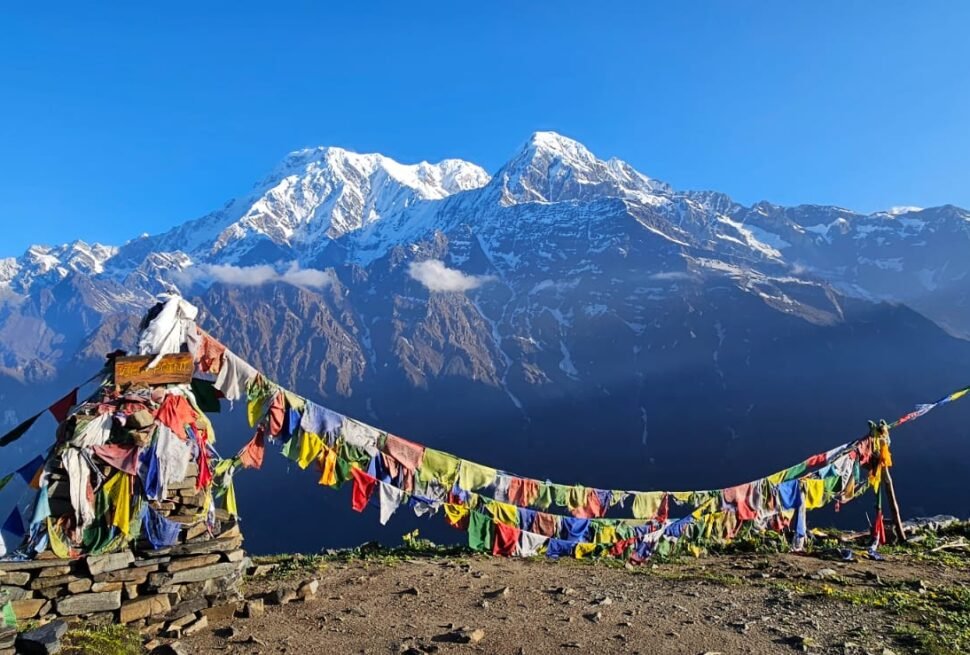
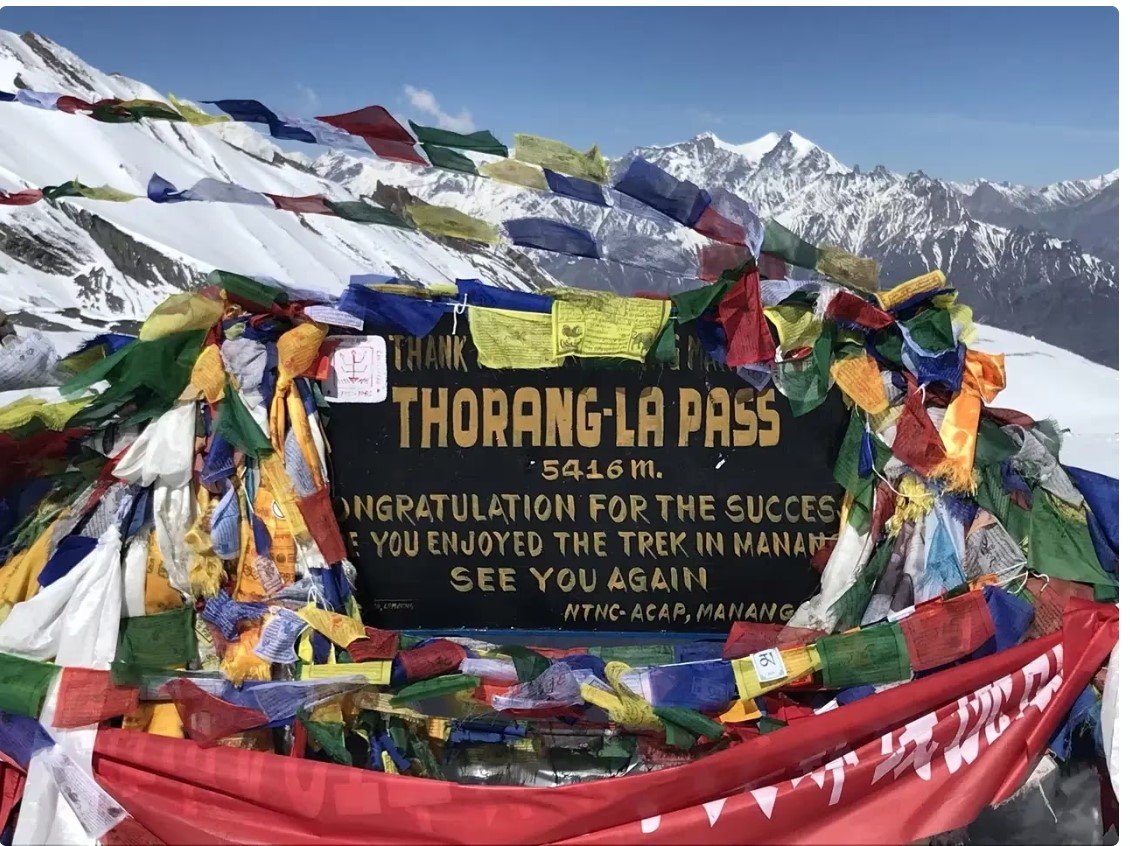
The day begins in darkness, with headlamps lighting a steady line of trekkers moving up from High Camp. The first hour or two is the coldest and often the hardest psychologically, since the pass itself is not yet visible and the cold makes every short break feel less appealing than continuing to move. As dawn breaks, usually while still climbing, the surrounding peaks become visible, which meaningfully lifts morale for most trekkers at exactly the point fatigue is beginning to set in. Reaching the pass itself, marked by prayer flags and a small sign noting the altitude, is a genuine high point, both literally and emotionally, though most groups do not linger long given the wind and cold. The descent that follows is long, and by the final hour into Muktinath, tired knees rather than altitude tend to be the dominant sensation for most trekkers.
Solo Female Trekkers and Crossing Day Considerations
The physical difficulty of the crossing does not differ meaningfully by gender, but solo female trekkers sometimes ask about additional considerations specific to this particular day given the early, dark departure. Joining a group departure rather than crossing entirely alone, and booking with a company that pairs solo trekkers with a professional, vetted guide, as Next Trip Nepal does, are the most practical steps for reducing the ordinary risks of an early, low visibility departure, applicable to any trekker regardless of gender.
How Weather Changes the Crossing Experience
Season and weather meaningfully shift which aspects of the crossing feel hardest. Clear autumn and spring conditions, the two peak seasons, offer the most predictable footing and best visibility of the surrounding peaks from the pass itself, though these are also the busiest periods with more trekkers crossing on the same morning. Winter crossings involve genuinely harder cold and carry real risk of the pass closing temporarily after heavy snowfall, requiring flexibility in your itinerary. Unexpected wind, rather than the season’s average conditions, is often what actually determines how hard a specific trekker’s specific crossing feels, since a windier than usual morning can meaningfully change the experience even within an otherwise reliable season.
Preparing Mentally: What to Expect Before You Go
Reading detailed accounts from other trekkers who have completed this specific crossing, understanding the actual rhythm of the day rather than a vague sense of “the big pass day,” and setting realistic expectations about the pre dawn cold and the length of the descent all reduce the number of small surprises that can otherwise compound into frustration when you are already tired and short on oxygen. Trekkers who arrive expecting exactly what the day actually involves consistently report a smoother experience than those who arrive with mismatched expectations.
Insurance and the Crossing: An Often Overlooked Connection
Proper travel insurance with high altitude and helicopter evacuation coverage does not change the crossing’s physical difficulty, but it changes what happens if something goes wrong on a day when the nearest reliable shelter can be genuinely far away in either direction. A trekker who knows a genuine medical evacuation is financially covered can make clearer, less pressured decisions if altitude symptoms appear during the ascent, since the decision to continue or turn back is not complicated by cost anxiety at exactly the moment clear thinking matters most.
What Returning Trekkers Say Was Harder Than Expected
Across the common patterns reported by trekkers who have completed this crossing, a few specific difficulties consistently surprise first timers more than the general framing of “a big altitude day” suggests. The cold during the pre dawn departure from High Camp is frequently cited as harder than expected. The long descent to Muktinath, rather than the ascent to the pass itself, is also frequently cited as the more physically demanding part of the day, catching trekkers off guard who expected the hardest part to be behind them once they reached the pass. Conversely, many trekkers report that the actual altitude related discomfort felt more manageable than anticipated, provided they had genuinely acclimatized properly in Manang beforehand.
Realistic Success Rates
Precise industry wide completion statistics for the crossing specifically are not centrally published, but based on data commonly reported by trekking agencies operating this route, the overwhelming majority of trekkers who follow a properly paced itinerary with the Manang acclimatization day and a licensed guide do complete the crossing successfully. The trekkers most likely to turn back are disproportionately those who skipped or rushed the Manang acclimatization day, and those who ignored early altitude symptoms during the ascent rather than informing their guide promptly.
What Next Trip Nepal’s Itinerary Does Differently
Next Trip Nepal’s standard Annapurna Circuit package includes a full acclimatization day in Manang before the push toward the pass, rather than the bare minimum some budget itineraries use to shorten the overall trip length. This is the single biggest factor within a trekker’s control for reducing altitude sickness risk on crossing day specifically, and it is a meaningful reason the standard itinerary is structured the way it is rather than compressed to save a day. For the full cost breakdown of the Annapurna Circuit, including permits, guide fees, and transport, see our complete Annapurna Circuit Trek Cost guide. For a broader comparison of how this trek stacks up against Nepal’s other major route, see our guide to Everest Base Camp versus the Annapurna Circuit.
Muktinath and What Comes After the Crossing
Reaching Muktinath is a genuine milestone, both physically and culturally, since the descent from the pass drops trekkers into a completely different landscape and climate within a matter of hours. Muktinath itself is a significant pilgrimage site for both Hindus and Buddhists, and most trekkers spend at least a portion of the following morning visiting the temple complex before continuing onward toward Jomsom. Physically, the day after the crossing is noticeably easier for most trekkers, since the remaining route toward Jomsom and eventually Pokhara involves considerably less net elevation change than anything in the days immediately before and during the pass crossing. Many trekkers report that the psychological relief of having the crossing behind them, combined with the genuinely different high desert scenery around Muktinath and Jomsom, makes the day after the pass one of the more enjoyable and relaxed days of the entire trek.
Common Mistakes Trekkers Make on Crossing Day
- Starting too late. Trekkers who push for a later, more comfortable departure time from High Camp often end up crossing the pass itself in stronger winds and descending to Muktinath in fading light, adding unnecessary difficulty to an already long day.
- Underestimating the descent. Many trekkers mentally treat reaching the pass as the finish line, then are caught off guard by how physically demanding the long descent to Muktinath actually is on tired legs and knees.
- Not eating enough the night before or morning of. Reduced appetite at altitude is normal, but skipping a real meal before a 7 to 9 hour effort day leaves little energy reserve for the descent.
- Packing away trekking poles too early. Some trekkers stow their poles after reaching the pass, only to regret it on the long, knee jarring descent that follows.
- Ignoring mild symptoms out of a desire to finish. Because there is no easy shorter option once committed to the crossing, some trekkers push through worsening symptoms rather than informing their guide promptly, which is precisely the wrong instinct on this specific day.
Group Size and Crossing Day Dynamics
Group size meaningfully affects how crossing day actually feels, independent of individual fitness. Larger groups departing High Camp at the same early hour can create a natural, spaced out line of headlamps up the initial ascent, which some trekkers find reassuring in the pre dawn cold and darkness, while others prefer the quieter experience of a smaller group moving at their own pace without needing to match a larger group’s rhythm. An experienced guide manages this well regardless of group size, but solo trekkers or very small groups booked with Next Trip Nepal are still paired with a dedicated guide who paces the day specifically around that trekker’s own fitness and acclimatization, rather than an average pace set for a larger, more varied group.
What to Carry and Eat During the Crossing Itself
Since there is no teahouse directly on the pass, what you carry for the crossing day itself matters more than on almost any other day of the trek. A reasonable amount of high energy snacks, enough water carried in an insulated bottle or with an insulating cover to prevent freezing, and a headlamp with fresh or spare batteries are the essentials. Many trekkers find that eating small amounts steadily throughout the ascent, rather than a single large breakfast beforehand, helps maintain energy across the long effort. Water bottles left uninsulated can genuinely freeze during the coldest pre dawn stretch, which is a small but commonly overlooked detail that catches first time high altitude trekkers off guard.
Comparing a West to East Versus East to West Crossing
The overwhelming majority of Annapurna Circuit trekkers cross Thorong La Pass from Manang toward Muktinath, the direction this guide has described throughout, since it is considered the gentler and more common direction for acclimatization reasons, allowing a longer, more gradual ascent through Manang, Yak Kharka, and Thorong Phedi before the push to the pass. Crossing in the opposite direction, starting near Muktinath and ascending toward Manang, is possible but considerably more difficult from an acclimatization standpoint, since it compresses the altitude gain into a much shorter approach. Nearly every established trekking company, including Next Trip Nepal, structures its standard Annapurna Circuit itinerary in the Manang to Muktinath direction specifically because of this meaningful difference in acclimatization safety.
How This Guide Was Put Together
The figures in this guide are drawn directly from Next Trip Nepal’s own published trip data for the Annapurna Circuit, cross checked against current altitude and distance figures for the standard route through Manang, Yak Kharka, Thorong Phedi, High Camp, the pass itself, and Muktinath. Difficulty ratings reflect the same methodology used across our other trek difficulty guides, weighing altitude, daily walking demand, and terrain independently rather than collapsing them into a single vague score. Where a specific detail, such as exact typical departure times, varies between different guiding companies, this guide reflects the pattern most consistently reported across established operators running this route regularly.
Photography on the Pass: What to Expect and When to Capture It
Trekkers who prioritize photography should plan around the light conditions specific to this day rather than treating it like any other trekking day. The pre dawn ascent offers little to photograph beyond headlamp lines and star filled skies, but the window just after sunrise, typically reached while still climbing toward the pass, offers some of the most dramatic light of the entire trek, with the surrounding peaks catching early sun while the valley below remains in shadow. The pass itself, marked by its now famous string of prayer flags and altitude sign, is a popular photo stop, though most groups do not linger long given the wind and cold, so trekkers hoping for a longer photography session at the summit should communicate this to their guide in advance rather than assuming ample time will be available. The descent toward Muktinath offers a completely different visual character, opening into the stark, high desert landscape typical of the Mustang region, a striking contrast to the glaciated high alpine scenery of the ascent.
Booking Lead Time and Seasonal Planning Around the Crossing
Trekkers planning their Annapurna Circuit trip specifically around a successful Thorong La Pass crossing should factor seasonal timing into their booking decision, not just general trek dates. Autumn and spring remain the most reliable windows for a smooth crossing, offering the most predictable weather and the lowest chance of the pass closing due to snow. Trekkers booking a winter departure should build genuine flexibility into their schedule, since a multi day delay waiting for the pass to reopen after heavy snowfall is a realistic possibility rather than a rare edge case, and a rigid return flight booked with no buffer can turn an otherwise manageable weather delay into real added stress. Next Trip Nepal’s guides monitor current pass conditions closely in the days leading up to a scheduled crossing and will adjust the itinerary’s pacing, including adding an extra buffer night near High Camp if needed, rather than pushing a crossing attempt in genuinely unsafe conditions.
Related Planning Guides
For a broader look at altitude sickness prevention and symptom management that applies directly to this crossing, see our complete altitude sickness guide. To time your Annapurna Circuit trip for the best pass conditions, see our best time to trek in Nepal guide. For how this crossing compares to Everest Base Camp’s own high point, see our Everest Base Camp difficulty guide.
Final Word on Thorong La Pass Difficulty
Thorong La Pass is a genuinely demanding single day, but it is demanding in a specific and largely manageable way: altitude and sustained effort more than technical skill, and pacing more than raw athleticism. A trekker who trains for two to three months, takes the Manang acclimatization day seriously, starts early on crossing day, and travels with an experienced licensed guide gives themselves a strong chance of a successful, genuinely memorable crossing, regardless of age or prior trekking experience. The trekkers who struggle most are almost always the ones who treated the pass as a minor formality rather than the central challenge of the entire trek that it actually is.