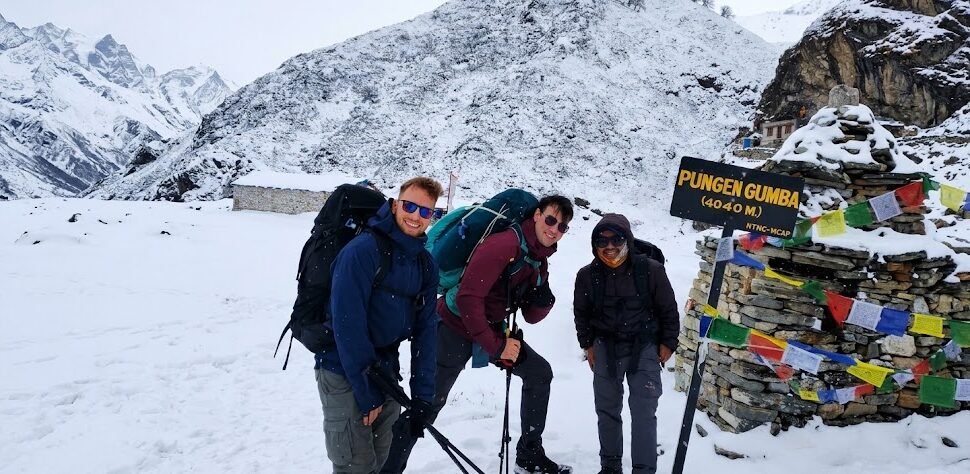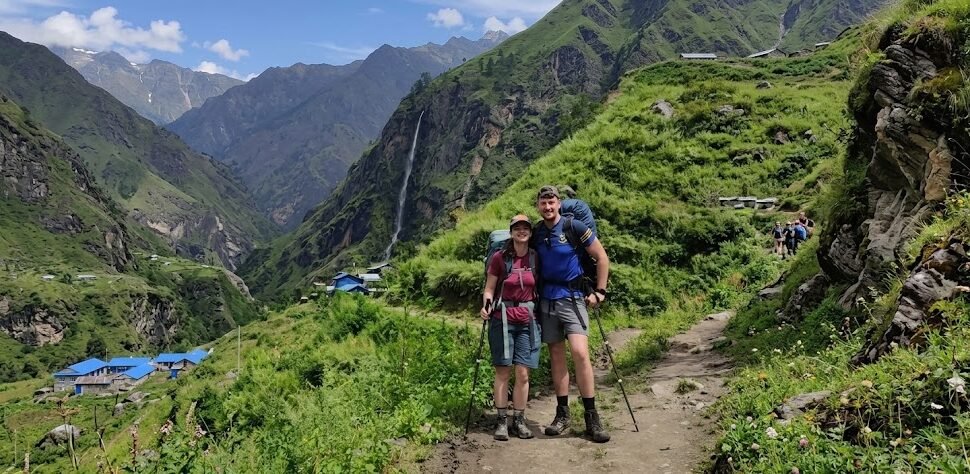

March is when the Manaslu Circuit Trek genuinely starts to change character. Winter loosens its grip, the rhododendron forests around Jagat and Philim begin to bloom, and Larkya La becomes a far more predictable crossing than it was in December, January, or February. At Next Trip Nepal, March is one of our busier booking months precisely because it sits right at the start of the spring window without the full crowds that arrive in April. This guide covers what the route actually looks like this month, based on what our guides record on the ground.
March is not quite spring and not quite winter. Early March can still carry a cold snap left over from February, while late March often feels like a completely different trek, with warm days, blooming forests, and a steady stream of trekkers heading up the valley. Understanding where in the month your trip falls makes a real difference in what you should expect and pack.
Early March Versus Late March
This is the single most important thing to understand about trekking the Manaslu Circuit in March. Early in the month, conditions still resemble February in many respects, with cold nights at altitude and a real chance of fresh snow on Larkya La. By the final week of March, the transformation is often dramatic, with noticeably warmer days, clearer and more stable weather patterns, and the rhododendron forests at their most colorful.
Trekkers with flexible dates who want the best of both worlds, meaning fewer crowds than April along with genuinely pleasant spring conditions, often aim for the last ten days of March specifically. Our guides can help you pick the exact window based on how the season is progressing that particular year, since the pace of spring warming varies somewhat from year to year.
We get a fair number of questions from trekkers trying to decide between March and the more obviously popular April and October windows. Our honest answer is that March rewards trekkers who value a quieter trail and lower permit costs enough to accept a bit more variability in conditions, particularly early in the month. It is not the safest possible choice on paper, but for the right traveler it often turns out to be the most memorable one.
Families and first time Himalayan trekkers sometimes ask whether March is appropriate for them specifically. For late March departures with a reasonable fitness level, our answer is generally yes, provided expectations are set correctly around the physical demands of the pass crossing. For early March, we tend to steer complete beginners toward April instead, reserving the first half of March for trekkers with some prior high altitude or cold weather experience.
Weather and Temperature on the Manaslu Circuit in March
At lower elevations around Machha Khola and Jagat, roughly 700 to 1,400 meters, March daytime temperatures typically run from 12 to 23 degrees Celsius, comfortable and often genuinely warm by the end of the month. Nights remain cool but rarely uncomfortable at this elevation.
At Samagaon, around 3,530 meters, March days are pleasant with good sun exposure, while nights still drop toward freezing, typically between minus 5 and 2 degrees Celsius depending on where in the month you are trekking. Higher up at Samdo, Dharamsala, and on Larkya La itself at 5,106 meters, nighttime temperatures commonly range from minus 10 to 0 degrees Celsius, a meaningful improvement over the deep winter months but still cold enough to require proper gear.
March skies are generally clear, though this is also a transition month for cloud patterns, with occasional afternoon buildup starting to appear, especially toward the end of the month as the season moves closer to the pre monsoon period. Visibility on clear March mornings is excellent, often rivaling October for sharpness before any afternoon haze develops.
Larkya La Pass Conditions in March
Larkya La in March sits in a genuine middle ground. Early March crossings can still encounter significant snow left over from winter storms, and our guides approach these crossings with the same caution and flexibility they apply throughout the coldest months. By mid to late March, the snowpack has typically begun retreating meaningfully, and crossings become noticeably more straightforward, though conditions can still vary year to year depending on how much snow fell during the preceding winter.
We still recommend building at least a small buffer into a March itinerary, particularly for trips scheduled in the first half of the month. By the last week of March, the pass crossing generally resembles what trekkers experience in April, stable and predictable on most days, though a late season storm is always a possibility this early in spring.
The Rhododendron Bloom on the Lower Trail
One of the genuine highlights of a March trek is timing your walk through the lower and middle sections of the trail, particularly around Jagat, Philim, and the forests below Namrung, to catch the rhododendron bloom. Nepal’s national flower turns entire hillsides shades of red, pink, and white during March, and this lower altitude forest section of the Manaslu Circuit is one of the less crowded places in the country to experience it, compared with the busier Annapurna and Langtang rhododendron trails.
The exact peak of the bloom shifts somewhat from year to year depending on the preceding winter’s weather, but it generally falls somewhere between mid March and mid April, with the lower elevation forests blooming first and the bloom line moving upward as the weeks progress. Trekkers specifically interested in seeing this should mention it when booking so we can advise on timing based on what our guides are currently seeing on the trail.
Trail Conditions From Machha Khola to Samagaon
The lower trail through Jagat, Philim, and Deng is dry, increasingly green, and comfortable throughout March, with none of the monsoon mud that shows up later in the year. This is genuinely one of the more pleasant times to walk this section, combining good weather with the rhododendron color described above.
Above Namrung, snow becomes progressively less common as March progresses, though early in the month patches can still linger on shaded sections of trail near Lho and Samagaon. By late March, the trail up to Samagaon is typically clear and firm underfoot, with only the highest sections near Samdo, Dharamsala, and the pass itself still carrying meaningful snow cover.
Crowd Levels and Teahouse Availability
March sees a steady increase in trekker numbers compared with the winter months, particularly as the month progresses, but it remains noticeably quieter than the peak April and October windows. Early March still feels close to a winter level of quiet, while the final two weeks of the month bring a clear uptick in both foreign trekkers and reopening teahouses as lodge owners gear up for the coming high season.
Booking rooms in advance is not yet strictly necessary in March the way it becomes in April, but toward the end of the month it is worth having your guide call ahead for the more popular stops, particularly Samagaon, since this is when demand starts climbing noticeably.
Permits and Paperwork for a March Manaslu Trek
Three permits are required for this route in every month: the Restricted Area Permit, the Manaslu Conservation Area Permit, and the Annapurna Conservation Area Permit for the section beyond the pass toward Dharapani. March falls within the December to August pricing window for the Restricted Area Permit, currently around 75 US dollars for the first week and 10 US dollars per additional day per person, cheaper than the September to November peak season rate that applies to autumn trekking.
The Manaslu Conservation Area Permit and Annapurna Conservation Area Permit each cost roughly 3,000 Nepali rupees for foreign nationals. Following the March 2026 update from Nepal’s Department of Immigration, the previous minimum group requirement for the Restricted Area Permit was removed, so solo trekkers can now apply, though a licensed guide is still mandatory and all permits must be arranged through a registered trekking agency such as ours.
What to Pack for a March Trek
Packing for March depends heavily on where in the month you are trekking. For an early March departure, pack close to what you would bring for February, with a sleeping bag rated to at least minus 10 to minus 15 degrees Celsius and a genuinely warm down jacket for the high camps. For a late March departure, you can generally scale back slightly, with a sleeping bag rated to around minus 10 degrees Celsius being sufficient for most trekkers, though we still recommend erring toward warmer gear rather than lighter gear given how much altitude and temperature swing this route covers.
A solid layering system remains essential regardless of exact dates: a moisture wicking base layer, a fleece or synthetic mid layer, and a windproof and waterproof outer shell. Sturdy waterproof trekking boots, a warm hat, gloves, and sunglasses with strong UV protection for the pass are all standard kit. Microspikes are worth carrying for an early March trip in case of leftover snow near Larkya La, though they become less necessary as the month progresses.
Physical Preparation for a March Trek
Expect six to seven hours of walking most days, with a significant altitude gain over the course of the trip and a demanding final push over Larkya La. We suggest six to eight weeks of preparation beforehand for trekkers without recent hiking experience, combining cardio work such as hiking, running, or stair climbing with strength training for the legs and core, particularly to protect your knees on the long descent from the pass toward Bimtang.
Breaking in your boots ahead of time remains important in any month, and March is no exception, since the trail still covers a mix of surfaces from dry dusty lower sections to potentially icy patches near the pass depending on the timing of your trip.
Cost Breakdown for a March Manaslu Circuit Trek
| Item | Approximate Cost |
|---|---|
| Restricted Area Permit (December to August rate) | US $75 first week plus US $10 per extra day |
| Manaslu Conservation Area Permit | Around NPR 3,000 |
| Annapurna Conservation Area Permit | Around NPR 3,000 |
| Licensed guide and porter | Included in most package prices |
| Teahouse room | Often free or very low cost with meals purchased on site |
| Meals on the trail, per day | Roughly US $20 to $30, rising with altitude |
| Gear rental in Thamel | Varies by item, ask our office for a current list |
Since March falls in the cheaper permit season, it can offer meaningfully better value than an October or November booking while still providing very good trekking conditions, particularly in the second half of the month.
Acclimatization and Altitude Safety in March
Our guides run the same gradual ascent profile in March that they run in every other month, with a full acclimatization day at Samagaon built into every itinerary. Milder temperatures do not reduce altitude sickness risk in any way, and trekkers sometimes underestimate this specifically because a warmer, more pleasant March day can feel deceptively easy compared with a harsh winter trek.
Drink water consistently throughout the day rather than waiting until you feel thirsty, and discuss preventive Diamox with a travel doctor before your trip if you are concerned about altitude sickness risk. Our guides watch closely for headache, nausea, disturbed sleep, and unusual fatigue above Samagaon and will adjust the schedule immediately if anyone in the group shows symptoms.
Food and Accommodation Along the Trail
Teahouse menus in March begin to broaden slightly compared with the depths of winter, as fresh supplies become easier to bring up the valley with improving trail conditions and warmer weather. Dal bhat, noodle soups, fried rice, and simple pasta dishes remain the backbone of the menu at every stop, with more vegetable variety typically available than you would find in January or February.
Rooms remain basic twin share setups without bedroom heating, so a good sleeping bag is still your primary source of night time warmth even as daytime temperatures improve. Hot water for washing is generally more reliably available in March than in the coldest winter months, as lodges have more fuel and supply available with warmer weather and increasing trekker numbers.
Sample Itinerary for a March Departure
For an early March departure, we generally still recommend the fourteen day itinerary to allow flexibility around pass conditions. For a late March departure, the standard nine day itinerary becomes a genuinely reasonable option for trekkers comfortable with a faster pace, since pass conditions are typically much more settled by this point.
A typical structure looks like this: drive from Kathmandu to Machha Khola, walk to Jagat, then Deng, then Namrung, then Lho or Samagaon, take an acclimatization day at Samagaon with an optional side trip toward Manaslu Base Camp, continue to Samdo, then Dharamsala, cross Larkya La to Bimtang, descend through Tal and Dharapani, then drive back to Kathmandu.
The Manaslu Base Camp Side Trip in March
The acclimatization day side trip toward Manaslu Base Camp, often combined with a stop at Pungen Gompa, is a genuine highlight in March, since improving weather combines with clear views of the southern face of Manaslu. Snow on the approach trail is generally less of an obstacle than in the deep winter months, particularly by late March, making this an easier and more consistently rewarding side trip than in January or February.
Our guides still make the final call on how far the group pushes based on conditions that day, since the point of the acclimatization day remains helping your body adjust to altitude, not reaching a specific marker on the map at all costs.
Travel Insurance for a March Himalayan Trek
Travel insurance is required for this trek in every month, and March is no exception, even as conditions become milder than deep winter. Your policy needs to explicitly cover trekking above 5,000 meters, since Larkya La sits at 5,106 meters and many standard travel policies cap altitude coverage well below that height. Helicopter evacuation coverage is essential given how remote this restricted area is, with limited road access throughout the region.
Providers commonly used by our past clients include World Nomads, Battleface, True Traveller, and Global Rescue for dedicated evacuation coverage. Read the fine print on altitude limits and activity coverage carefully before purchasing, since not every policy that sounds comprehensive actually covers trekking at these altitudes.
Getting to the Trailhead From Kathmandu
Most March departures begin with a drive from Kathmandu to Machha Khola or Soti Khola, taking roughly seven to nine hours depending on road conditions along this partly unpaved stretch. Road conditions in March are generally good, without the monsoon damage that affects this route later in the year, making for a smoother start to the trip than you might get in the wetter months.
We recommend arriving in Kathmandu at least one full day before your trek starts, both for a final gear check and briefing at our office and to allow a buffer against any flight delays. That extra day is also a good opportunity to visit Swayambhunath, Boudhanath, or Pashupatinath, and to pick up or check any rental gear from the shops in Thamel.
Solo Trekkers and the Tsum Valley Extension in March
Following the March 2026 immigration update removing the old minimum group size requirement, solo trekkers can now obtain the Restricted Area Permit on their own. March is a genuinely good month for a solo booking, since trail numbers are moderate enough that you are unlikely to feel isolated, while still being quiet compared with the peak weeks of April. A licensed guide remains mandatory regardless of group size.
March is also a strong month to consider adding a Tsum valley extension to your Manaslu Circuit itinerary. The additional permit required for Tsum adds cost and days to your trip, but rewards you with access to some of the most preserved traditional village culture in Nepal, and March timing means you avoid both the coldest winter conditions and the busiest spring crowds in this particular side valley. Ask our office about combining a March Manaslu Circuit trek with a Tsum valley extension if your schedule allows the extra days.
Manaslu Circuit in March Versus Other Months
| Factor | March | February | April |
|---|---|---|---|
| High altitude night temperature | Minus 10 to 0 C | Minus 13 to minus 5 C | Minus 5 to 5 C |
| Crowd level | Rising through the month | Low, rising toward month end | High |
| Pass conditions | Improving, still variable early month | Snow covered, weather dependent | Generally stable |
| Scenery highlight | Rhododendron bloom begins | Possible Lhosar celebrations | Rhododendron bloom peaks |
| Permit season | Lower season rate | Lower season rate | Lower season rate |
Pros and Cons of Trekking the Manaslu Circuit in March
The advantages of March include noticeably improving weather as the month progresses, the rhododendron bloom on the lower trail, a permit cost that remains in the cheaper season, and a crowd level that stays manageable even as it rises. For trekkers who want spring conditions without the fullest crowds of April, late March is often the sweet spot on this route.
The drawbacks are mostly concentrated in the first half of the month, when pass conditions can still resemble winter and cold gear remains genuinely necessary. Trekkers with very tight, inflexible schedules booking an early March trip should still plan for the possibility of a weather delay, even though the overall risk is lower than in December through February.
Wildlife and Nature in March
Spring brings increased activity from the wildlife that calls the Manaslu Conservation Area home, and March is a good month for trekkers hoping to spot some of it, even though sightings are never guaranteed on any single trip. The conservation area supports populations of Himalayan tahr, musk deer, and occasionally snow leopard at higher elevations, along with more commonly spotted species like the colorful Danphe, Nepal’s national bird, which becomes more active and visible as the weather warms.
Bird activity in general picks up noticeably in the forested lower sections of the trail in March, as migratory species return and resident birds become more vocal ahead of the breeding season. Trekkers with an interest in birding should bring a compact pair of binoculars, since the forest sections between Machha Khola and Namrung offer some of the better opportunities for this on the whole route.
Photography in March
March offers a genuinely unique photographic opportunity that neither deep winter nor peak spring quite matches, combining reasonably clear high altitude visibility with the color of the rhododendron bloom at lower elevations. Photographers who time a March trip well can capture both dramatic snow covered peaks and vibrant forest color within the same trip, a combination that is harder to get in October or November when the lower forests have already lost their spring color.
As with any Himalayan trek, early morning and late afternoon light tends to be the most dramatic for photographing the peaks, while the middle of the day is often better spent photographing the forest and village scenes at lower elevation, where the light is less harsh under tree cover.
Nine Day Versus Fourteen Day Itinerary in March
Whether the shorter nine day itinerary makes sense for your March trip depends heavily on your exact dates. For a trip departing in the first half of the month, we still lean toward the fourteen day version, since it builds in a buffer day at Dharamsala that can absorb a late winter storm without derailing your entire schedule, including any onward international flights.
For a trip departing in the final two weeks of March, the nine day itinerary becomes a genuinely solid option for fit, reasonably experienced trekkers, since pass conditions by this point typically resemble the more settled patterns of April. If you are unsure which version fits your specific dates, our office can advise based on how the season is progressing that year at the time you are ready to book.
Health and Hygiene on the Trail
Standard precautions apply throughout March: wash your hands regularly and carry hand sanitizer, drink only water that has been boiled, filtered, or treated, and use sunscreen and good sunglasses given the strong UV exposure at altitude, which does not diminish just because temperatures are milder than in winter.
Foot care remains important as trail conditions vary from dry dusty lower sections to potentially icy patches near the pass depending on timing, so changing into dry socks at the end of each day and addressing any hot spots on your feet immediately are good habits to maintain throughout the trek.
Village Life and Culture in Spring
March brings a noticeable shift in the rhythm of village life along the trail, as farming communities in the lower valley begin spring planting and villages in the Nubri region prepare for the coming trekking season. Trekkers passing through often see fields being worked, animals being moved to different pastures, and general activity that reflects the changing season, adding another layer of interest beyond the trail and mountain views themselves.
In the higher villages around Samagaon and Lho, monasteries and gompas remain open to respectful visitors throughout March, and with trekker numbers still moderate rather than at their peak, there is often more opportunity for a genuine conversation with local residents than you would find during the busiest weeks of April or October. Our guides, many of whom have deep local connections in these villages, are usually happy to facilitate these interactions when the opportunity arises naturally.
Tips From Our Guides for a March Trek
If seeing the rhododendron bloom is a priority, ask us about current conditions when booking, since the exact timing shifts year to year and our guides track it closely as the season develops. Pack in layers you can add and remove throughout the day, since March temperature swings between morning, midday sun, and evening can be significant even at lower elevations.
If your trip falls in the first half of the month, do not assume pass conditions will automatically be easy just because spring has technically started on the calendar. Trust your guide’s assessment on crossing day, and build in flexibility if your schedule allows it.
Bring sun protection seriously from day one, even though the trip starts in relatively mild lower valley conditions. March sun at altitude is strong, and trekkers who wait until they feel the effects of sunburn or wind exposure before applying sunscreen and lip balm often regret it by the time they reach the higher villages.
Group Departures Versus Private Trips in March
March sits in an interesting position for group versus private trip planning. Early in the month, fixed group departures can be a little harder to fill given the smaller pool of trekkers willing to risk lingering winter conditions, so a private trip with flexible dates is often the more practical choice if you are booking for this window. By the final two weeks of March, group departures become easier to join as demand rises toward the April peak, giving budget conscious trekkers a good chance to join others and share costs while still avoiding the fullest crowds.
If a private trip fits your plans better regardless of group availability, March is also one of the more flexible months for adjusting your daily pace, since teahouse capacity is rarely a limiting factor the way it can be in October. This makes March a good month for trekkers who want more control over their itinerary, including extra rest days or a slower pace through the lower valley to enjoy the rhododendron bloom at a relaxed speed.
Frequently Asked Questions About the March Manaslu Trek
Is March a good month to trek the Manaslu Circuit
Yes, particularly the second half of the month, when conditions are generally stable, crowds are still manageable, and the rhododendron bloom adds real scenic value to the lower trail.
Is early March or late March better for this trek
Late March generally offers more reliable weather and a more developed rhododendron bloom, while early March can still carry winter like conditions at altitude. Choose based on your priorities and flexibility.
Will I see the rhododendrons blooming in March
Often yes, particularly at lower elevations around Jagat and Philim, though the exact timing varies year to year and our guides can advise based on current conditions when you book.
Do I need a guide for a March Manaslu trek
Yes, a licensed guide is legally required for this restricted area route in every month, and their knowledge of current pass and trail conditions remains valuable throughout the transition from winter to spring.
How does March compare in cost to April or October
March permit costs remain in the cheaper December to August pricing window, making it noticeably less expensive on the permit side than September through November departures.
Can I trek Manaslu solo in March
Yes, following the March 2026 immigration rule change removing the minimum group requirement, solo trekkers can obtain the Restricted Area Permit, though a licensed guide remains mandatory for the route in every case.
Should I book the nine day or fourteen day itinerary for a March trek
For early March, the fourteen day itinerary is generally safer given lingering winter conditions on the pass. For late March, the nine day itinerary is a reasonable option for fit trekkers, since conditions typically resemble April by that point.
Is the Tsum valley extension worth adding in March
Yes for trekkers with the extra days and budget, since March offers a good balance of mild weather and manageable crowds in this side valley, avoiding both the coldest winter conditions and the busiest spring season.
Booking a March Manaslu Circuit Trek with Next Trip Nepal
March rewards trekkers who understand the month is really two different experiences depending on the date, cautious early winter remnants giving way to genuine spring conditions by the final weeks. If you want help choosing the right week within March, understanding current rhododendron bloom timing, or comparing a March booking against April or the autumn season, our team at Next Trip Nepal is glad to talk through the specifics with you based on what our guides are currently seeing on the trail.
We plan every March itinerary around the actual conditions of that particular year rather than a fixed assumption, since the pace of the spring transition genuinely does shift from one year to the next, and that firsthand, current knowledge is what makes the difference between a good trip and a great one.
Whether you are drawn to March for the rhododendron bloom, the lower permit cost, the moderate crowd levels, or simply because it fits your travel schedule better than other months, we would rather set accurate expectations upfront than oversell the month. Tell us your travel window and priorities, and we will help you decide on the exact dates, itinerary length, and any extensions that make the most sense for your trip.
As with every month we cover in this series, our aim is to give you an honest, ground level picture rather than a generic seasonal summary, drawing on what our own guides and porters experience on the trail week to week throughout March, so that whatever decision you make about your dates, it is based on real current conditions rather than assumptions.
Explore Other Months
Curious how the Manaslu Circuit Trek compares at a different time of year? Read our guide to trekking Manaslu in February or trekking Manaslu in April, or see our full Manaslu Circuit Trek overview for general route details, difficulty and highlights.