May is the month where spring starts its exit and the Himalaya begins its pre-monsoon routine. The mornings are still clear across the Khumbu, especially in the first two weeks, but the afternoons cloud over faster than they did in April, and by late May you will notice the lower valleys getting their first proper monsoon showers. The high passes still work. Kongma La, Cho La and Renjo La are all crossable in May and generally in better snow condition than March. But the timing window for crossing each pass is narrower than in October, and getting caught on a pass in an afternoon storm at 5500 metres is not something you plan around. May on the Everest Three Passes circuit is a real option. It just requires understanding exactly what the month is and what it is not.
May at a Glance: Everest Three Passes Trek
| Feature | What to Expect in May |
|---|---|
| Season | Late spring, pre-monsoon transition |
| Passes Crossable | Yes — Kongma La (5535m), Cho La (5420m), Renjo La (5360m) all accessible |
| Snow on Passes | Light on Kongma La summit area, minimal on Cho La and Renjo La |
| Morning Weather | Clear, especially in first two weeks |
| Afternoon Weather | Clouds build from midday; rain possible at lower elevations from mid-May onward |
| Temperature at Namche (3440m) | Highs 12 to 16°C, nights 2 to 5°C |
| Temperature at Gorak Shep (5164m) | Highs −2 to 5°C, nights −10 to −15°C |
| Crowd Level | Moderate — busier than September, quieter than April |
| Teahouses | All open, good availability throughout the route |
| Everest Expedition Presence | High — summit window is typically mid to late May |
| Best Trek Timing Within Month | First two weeks preferred; late May requires weather contingency days |
| Permits Required | TIMS card + Sagarmatha National Park entry permit |
Planning your Everest Three Passes Trek?
How May Differs From April on the Three Passes Circuit
April is peak spring on the Everest Three Passes circuit. Teahouses fill up. Lukla flights get booked weeks in advance. The passes see steady traffic with other trekking groups moving through at similar paces. Everything operates at full volume. May is the same route but with the volume turned down.
By the time May starts, many of the trekkers who planned around school or work holiday windows are already off the trail. The Everest expedition teams that flew in through March and April are now in their summit-push phase, which means the approach to Everest Base Camp from Gorak Shep sees some expedition support traffic, but the overall trekker numbers drop noticeably. Teahouses that turned people away in the final week of April have rooms again. You stop having to share dinner benches with strangers at Namche.
The other big change between April and May is the light. The afternoons become less reliable. A March or early April afternoon on the Everest Three Passes circuit often stays clear until 4pm. A May afternoon, especially after the 10th of the month, frequently starts to build cloud by 1pm. This does not mean rain every day at altitude. But it does mean you need to start your pass crossings before 7am and be off the exposed ridgelines before early afternoon.
The lower valley sections between Namche and Phakding are genuinely warm in May. Rhododendrons that were blooming vigorously at 3000 to 3500 metres in March and April have mostly dropped their flowers by now. But the forests are fully green, the air smells alive, and if you care about trekking through lush scenery rather than dry bare trails, May at low elevation is better than November or October.
Weather on the Everest Three Passes Trek in May
The Khumbu operates on a very local weather pattern. The Nepal Himalaya as a whole follows the monsoon cycle, but at 5000 metres and above, the specific behaviour of wind, cloud and temperature is more complex than what lower-altitude weather forecasts suggest. In May, the jet stream over the Everest region begins to shift northward, which is what opens the summit window for Everest climbing expeditions. For trekkers, this means the upper elevations experience a brief period of reduced wind and relatively stable mornings before the monsoon moisture starts pushing in from late May.
Temperature at Key Points on the Route
| Location | Elevation | Daytime High (May) | Night Low (May) |
|---|---|---|---|
| Lukla | 2840m | 16 to 20°C | 8 to 10°C |
| Namche Bazaar | 3440m | 12 to 16°C | 2 to 6°C |
| Tengboche | 3860m | 8 to 12°C | 0 to 2°C |
| Dingboche | 4410m | 5 to 10°C | −3 to 0°C |
| Lobuche | 4940m | 2 to 8°C | −8 to −5°C |
| Gorak Shep | 5164m | −2 to 5°C | −12 to −10°C |
| Kongma La Summit | 5535m | −5 to 2°C | Below −15°C |
| Cho La Summit | 5420m | −5 to 2°C | Below −15°C |
| Renjo La Summit | 5360m | −5 to 2°C | Below −15°C |
| Gokyo | 4790m | 5 to 10°C | −5 to −2°C |
The numbers above represent typical mid-May conditions. Early May is 2 to 3°C warmer across the board, especially at night. Late May sees afternoon temperatures remain similar at altitude, but rain and cloud reduce the experienced warmth significantly at lower elevations.
Week by Week: What to Expect Through May
First week of May (May 1 to 7): This is essentially an extension of late April. Mornings are clear. The passes are accessible and relatively stable. Snow on Kongma La is light but present on the steep sections above Lobuche. Wind at altitude is lower than in March and April due to the jet stream shift. Afternoons cloud over but rain at altitude is rare. If you want the easiest version of a May crossing, start your trek in the last few days of April so your high-altitude days fall in this first week.
Second week of May (May 8 to 15): The Everest summit window typically opens around this time, and you will notice more expedition activity on the Khumbu Glacier approaches. Weather is still mostly reliable in the mornings, but afternoon cloud builds earlier. Some days bring light rain to Namche and Tengboche by early afternoon. This is still a very good window for the three passes, but you should plan your pass days to start between 5am and 6am.
Third week of May (May 16 to 22): Pre-monsoon weather patterns become more noticeable. Mornings remain clear at altitude but the lower valleys between Phakding and Namche can start their day with cloud. By 2pm, afternoon rain at Namche level is not uncommon. On the high passes, weather windows are still there in the mornings, but they close faster. A 7am start for Kongma La is fine. A 9am start becomes a risk. Teahouses along the route are well-stocked and have good availability.
Final week of May (May 23 to 31): The monsoon is knocking at the door. Some years it arrives in Nepal by May 25, some years not until early June. The high passes above 5000 metres still function, because the monsoon cloud typically sits below that altitude until it properly establishes. But conditions are less predictable, lower-trail surfaces get muddy, and the trek becomes harder to enjoy at the lower elevations. If your trip falls in this window, it is still doable, but build in one or two contingency days and carry rain gear as your most accessible item.
Planning your Everest Three Passes Trek?
Pass Conditions in May: Kongma La, Cho La and Renjo La
The three passes each have different characters in May. Understanding each one individually matters when you are planning your acclimatisation days and the specific days you time your crossings.
Kongma La (5535m) in May
Kongma La is the highest of the three passes at 5535 metres. It sits between Dingboche and Lobuche on the eastern side of the circuit. In May, the approach from Dingboche is mostly snow-free on the lower section but retains patches of ice and packed snow near the cairns at the summit. The descent to Lobuche involves a steep, rocky section that can be icy in the early morning before the sun hits it.
Most trekkers take 4 to 6 hours to cross Kongma La from Dingboche. In May, factor in slightly slower movement on icy sections near the top. Microspikes or lightweight crampons are worth having in your pack through mid-May. By late May, the ice is largely gone from sun-exposed sections, but the very top of the pass often retains a thin ice layer in the first morning hours. Leave Dingboche no later than 5:30am on your crossing day.
The view from Kongma La in May is exceptional on a clear morning. You can see Makalu, Lhotse and the southern face of Everest from the summit cairns. On most days in the first two weeks of May, you will have crystal visibility until at least 10am. On your summit day, arriving at the cairns between 8 and 9am gives you the full clear-morning view before any cloud starts to form in the valleys below.
Cho La (5420m) in May
Cho La connects Lobuche and Gokyo. It is the most technically demanding of the three passes, involving a short but steep glacier section on the Lobuche side. In October, this section is often completely dry rock and ice. In May, the glacier section is in a transitional but manageable state.
By May, the winter snowpack on Cho La has largely consolidated. The glacier section is typically firmer than in March and less snowy than it was in April. You will find solid ice on the short glacier crossing, with some snow cover that makes the route easier to navigate than bare glaciated rock. Fixed ropes that local teahouse owners sometimes put in place during peak season may or may not still be in position by May, depending on how late the local logistics teams are working. In May, assume you cross without fixed ropes and assess your party’s ability accordingly.
The crossing from Dzongla to Thagnak via Cho La takes between 5 and 7 hours depending on conditions and your group’s pace. Start before 6am to summit and complete the descent in calm conditions. The descent to Thagnak is long and rocky. In May, the lower section of the descent has alpine grass starting to emerge, which makes route-finding easier than in the snow-covered version you encounter in March.
Renjo La (5360m) in May
Renjo La is the westernmost pass on the circuit, connecting Gokyo with Lumde and eventually Lungden before the trail descends to Thame and back to Namche. It is generally considered the easiest of the three passes in terms of technical difficulty, though it is still at 5360 metres and demands the same respect as the others.
In May, Renjo La is typically in excellent condition. Snow from the winter is largely gone. The trail from Gokyo to the pass summit is clear and well-defined. The descent to Lumde is steep and rocky but manageable without specialist equipment. Of the three passes in May, Renjo La is the one you are least likely to find in awkward snow condition.
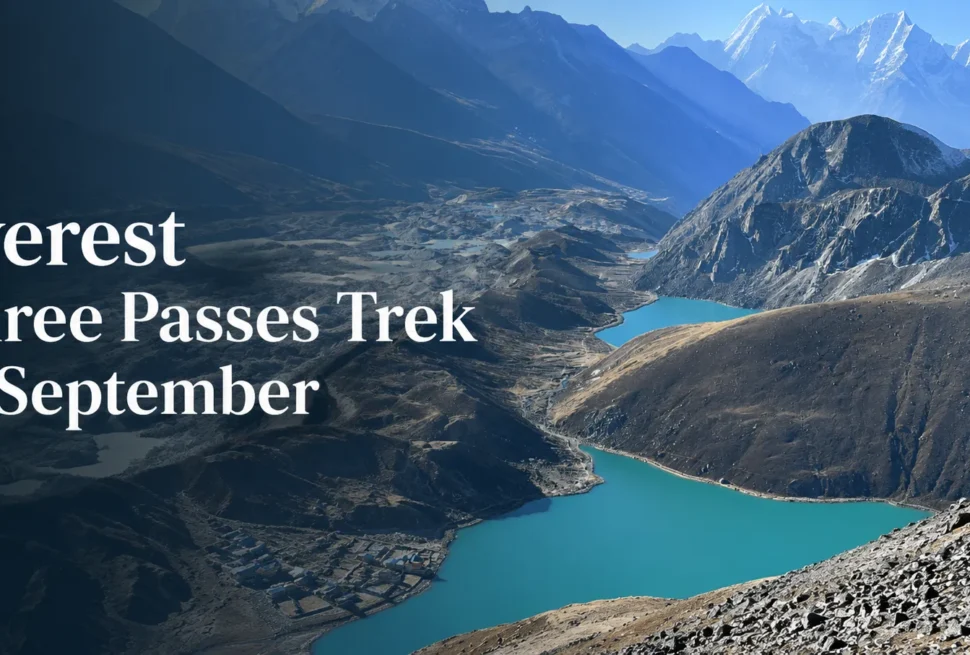
The summit of Renjo La gives one of the finest views on the entire Everest Three Passes circuit. The chain of Gokyo lakes stretches below you in shades of deep turquoise, framed by the moraine walls and snowfields. Cho Oyu (8188m) fills the sky to the west. On a clear May morning before 9am, this is one of the most rewarding viewpoints in the Himalaya. Plan to be at the summit between 7am and 9am for the best light and before cloud starts building over the valley below.
Acclimatisation in May: Why the Schedule Matters More Than the Month
No matter what month you trek, acclimatisation on the Everest Three Passes circuit follows the same physiological rules. The passes top out at 5535 metres. Gorak Shep sits at 5164 metres. Altitude sickness does not care whether it is May or October. What changes in May is how the acclimatisation days fit with the weather pattern.
The standard itinerary for the Three Passes circuit is 18 to 21 days. The first acclimatisation day is typically an extra night at Namche Bazaar (3440m) with a day hike to the Everest view point at 3880 metres. The second major acclimatisation point is Dingboche (4410m) or Pheriche, where another rest day before Lobuche and Gorak Shep is essential.
In May, your acclimatisation rest days carry an additional benefit: the extra day at Namche gives you time to observe the afternoon weather pattern and understand how quickly cloud builds. This firsthand observation of the May weather rhythm helps you plan your pass days with realistic start times rather than guessing from a forecast. Guides who have worked the Khumbu circuit for years will watch the afternoon cloud build on your acclimatisation day and give you their read on whether tomorrow’s pass day needs a 5am start or if a 6am departure is safe.
Do not rush the acclimatisation schedule in May because you are worried about the monsoon arriving. The monsoon does not arrive at these altitudes on a precise date. Racing ahead of your body’s acclimatisation readiness to beat a weather forecast is how altitude sickness and evacuation happen. Follow the standard schedule. The passes will still be crossable when you arrive on your planned day.
Trail and Lower-Elevation Conditions in May
Below 4000 metres, May transforms the Khumbu into a greener version of itself. The section from Phakding to Namche runs through forests that are fully leafed out. The trail through the Sagarmatha National Park entrance area passes through stands of pine and juniper that are completely different from the bare grey-and-white landscape you get in November. Wildflowers are still present at 3500 to 4000 metres in early May, particularly yellow primula and blue iris species on sheltered slopes.
The rivers run high in May. The Dudh Kosi river that the main trail follows from Phakding to Namche is swollen with snowmelt from the high peaks. The suspension bridges are all intact and regularly maintained by the national park authority, but the sound and volume of the river is significantly more powerful than in October. Where the trail drops close to river level, you may encounter spray on the bridges. This is normal and the bridges are safe.
Yak and horse traffic on the lower trail is active in May as teahouses receive their last pre-monsoon supply runs before the summer slowdown. Give yaks and horses the right of way always. Step to the uphill side of the trail and stand still when a loaded yak train passes. This matters more in May when the animals are moving with urgency on the warmer green trails, and the trail narrows between forest and river in several sections below Namche.
Above Namche and through Tengboche, the landscape shifts. Rhododendron forests that were full of pink and red flowers in March have mostly gone to green in May, with the blooms finished at lower elevations. You will still find rhododendrons in flower between 3800 and 4200 metres in the first week of May, particularly on north-facing slopes where blooms come later. Above Tengboche, the terrain opens into the high alpine landscape that defines this route. The rocks, moraines and glaciers look similar in May and October. What is different is the light — softer and more atmospheric in May, sharper and more defined in October.
How Crowded Is the Everest Three Passes Trek in May?
May sits in a comfortable middle position on the annual crowd curve. October is the peak. April is the second peak. November is quieter than October but still substantial. May is quieter than April across almost every section of the route, except for the approach to Everest Base Camp from Gorak Shep, where expedition-related traffic adds people you would not see in other months.
The Everest climbing season summit window typically falls in the second and third weeks of May, when jet stream winds over the summit die down enough for climbing teams to attempt the summit. This means the route between Lobuche and Gorak Shep has a mixture of trekkers, Sherpa support teams, and expedition logistics movement during this specific window. The teahouses at Gorak Shep can be busy with expedition base camp visitors. This adds a specific character to May that no other month has: you may share your dining room with climbers who have just descended from 8000 metres and are eating their first proper meal in days.
On the Gokyo side and the Renjo La crossing, May is noticeably quieter. Gokyo itself, which attracts crowds in October for the Gokyo Ri sunrise views, is much more peaceful in May. You will often find yourself among just a handful of other trekkers at the lakeside in the evening. The teahouses at Thagnak, Machhermo and Lungden are also significantly quieter than peak season, which means better food service, more personal attention from teahouse owners, and no morning queue for the bathroom.
The bottom line on crowds in May: expect a relaxed atmosphere on almost the entire route except around Gorak Shep and the Everest Base Camp approach, where expedition season creates a temporary surge. If you want the Three Passes circuit without October’s logistics stress and planning pressure, May delivers that with the trade-off of less stable afternoon weather.
Teahouses and Accommodation in May
All teahouses on the Everest Three Passes circuit operate throughout May. Unlike some treks in Nepal where accommodation choices narrow at the ends of the season, the Khumbu’s teahouse network is so well-established that you find multiple options at every major stop through the entire month.
At Namche Bazaar, the largest village on the route and the commercial hub of the Khumbu, you have a wide range of teahouses from basic rooms with shared bathrooms to small hotels with en-suite facilities and hot showers. In May, availability is not an issue. You can arrive without a reservation at most places except in the rare case of a large group coinciding with a limited supply night. Namche also has a good bakery, a well-stocked medical facility, an ATM, and several equipment rental and purchase shops if you discover you are missing something important before heading higher.
The small villages, though, deserve advance thought. Thagnak, between Cho La and Gokyo, has a very limited number of teahouses and they are small. Machhermo, the standard acclimatisation night before Gokyo, has more options but is still a small settlement. Lungden, on the descent from Renjo La toward Thame, is one of the smaller stops on the circuit and has fewer teahouses than the main route stops. In May, you are unlikely to need a reservation at these places, but if you are in a group of more than six, it is worth asking your guide to call ahead a day in advance.
Food quality is generally good throughout May. Teahouses have had time to receive their last big supply run before the monsoon. Dal bhat, fried rice, noodles, pancakes, porridge, soup and eggs are universally available. Some of the better teahouses in Namche and Tengboche offer pizza, apple pie and hot chocolate that you would be surprised to find at altitude. The menu narrows as you go higher and the settlements get smaller, but the basics are always there. Expect to pay more for the same meal as you go higher: what costs NPR 500 in Namche costs NPR 900 in Gorak Shep, reflecting the logistics cost of getting it there.
Heating is something to understand in May. At lower elevations like Namche and Phakding, teahouses are warm enough in the evenings without a dining room heater. Above 4000 metres, evenings remain cold, and the communal dining room yak-dung stoves or electric heaters are still in use throughout May. Your room will be cold at night above 4000 metres regardless of the month. A sleeping bag rated to −10°C is appropriate for May, and the teahouse provides blankets but their quality varies. Your own sleeping bag liner adds meaningful warmth in the smallest teahouses at altitude.
What to Pack for the Everest Three Passes Trek in May
Packing for May on this route requires a layered approach that covers warm mornings at altitude, warm afternoons at lower elevations, possible afternoon rain below 4000 metres, and sub-zero pass crossings. The range from Lukla at 2840 metres to Kongma La at 5535 metres within the same two-week window means you carry a wider range of gear than a single-elevation trek demands.
| Category | Item | Notes for May Specifically |
|---|---|---|
| Base Layer | Merino wool top and bottom (2 sets) | Worn every night at altitude; essential for pass mornings |
| Mid Layer | Fleece jacket (mid-weight) | Main warmth layer from Namche upward in the evenings |
| Outer Insulation | Down jacket, 700-fill minimum | Needed at the passes and above 4500m at night; keep dry |
| Shell | Waterproof jacket and trousers | More critical in May than October; afternoon showers possible from mid-May |
| Trousers | One warm pair + one lightweight pair | Lightweight for lower elevations in the first days; warm for above Namche |
| Gloves | Liner gloves + warm outer mitts | Outer mitts essential on all three pass mornings |
| Head | Warm beanie + sun hat or cap | Both needed — cold mornings, intense UV at midday at altitude |
| Footwear | Ankle or calf-high waterproof trekking boots | Must be broken in before departure; waterproofing matters in May |
| Traction | Microspikes or lightweight crampons | Recommended for Kongma La summit area in early May |
| Poles | Adjustable trekking poles (pair) | Essential on the steep descents from all three passes |
| Pack Rain Cover | Waterproof cover for main bag | Keep in accessible outer pocket, not buried — May showers come fast |
| Sun Protection | SPF 50+ sunscreen, UV lip balm, UV sunglasses | UV at altitude in May is intense; reapply every 2 hours on pass days |
| Medical | Diamox (if prescribed), blister kit, pain relief, rehydration salts | Discuss Diamox with a doctor before departure — it is not a substitute for acclimatisation |
| Water | 2x reusable bottles (1 litre each) + purification tablets or filter | Safe drinking water available at all teahouses; treat trail water |
| Power | Portable charger (20,000mAh) + extra batteries for headlamp | Cold temperature drains batteries fast; keep electronics in sleeping bag at night above 4000m |
| Headlamp | Headlamp with fresh batteries | Essential — all pass crossings begin in darkness; carry spare batteries |
| Gaiters | Low gaiters | Useful for keeping mud and debris out of boots on lower trails in late May |
One item that May-specific trekkers often underestimate is a quality rain cover for their daypack and main duffel. In October, you can almost ignore rain on the high route. In May, a surprise afternoon shower at Namche level that soaks your sleeping bag and electronics creates a serious problem for the days that follow. Keep rain protection accessible in your outer pockets. Do not rely on the rain cover that comes sewn into your backpack — these are typically too loose and let water in at the sides during sustained rain. A separate silnylon rain cover that wraps tightly is worth the 150 grams.
Planning your Everest Three Passes Trek?
Photography on the Everest Three Passes Trek in May
May offers a different kind of photography than October. October gives you sharp, cold, blue-sky mountain clarity with defined edges and snow. May gives you lush lower valleys, the dramatic contrast of green hillsides against white peaks, and the theatrical build of pre-monsoon clouds that create some of the most dynamic lighting conditions of the year.
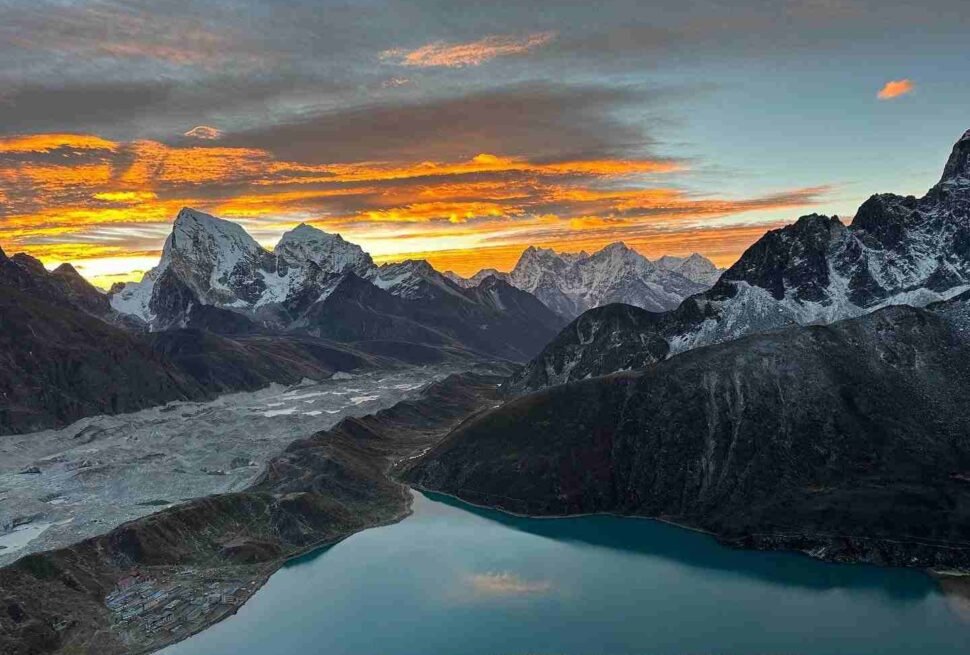
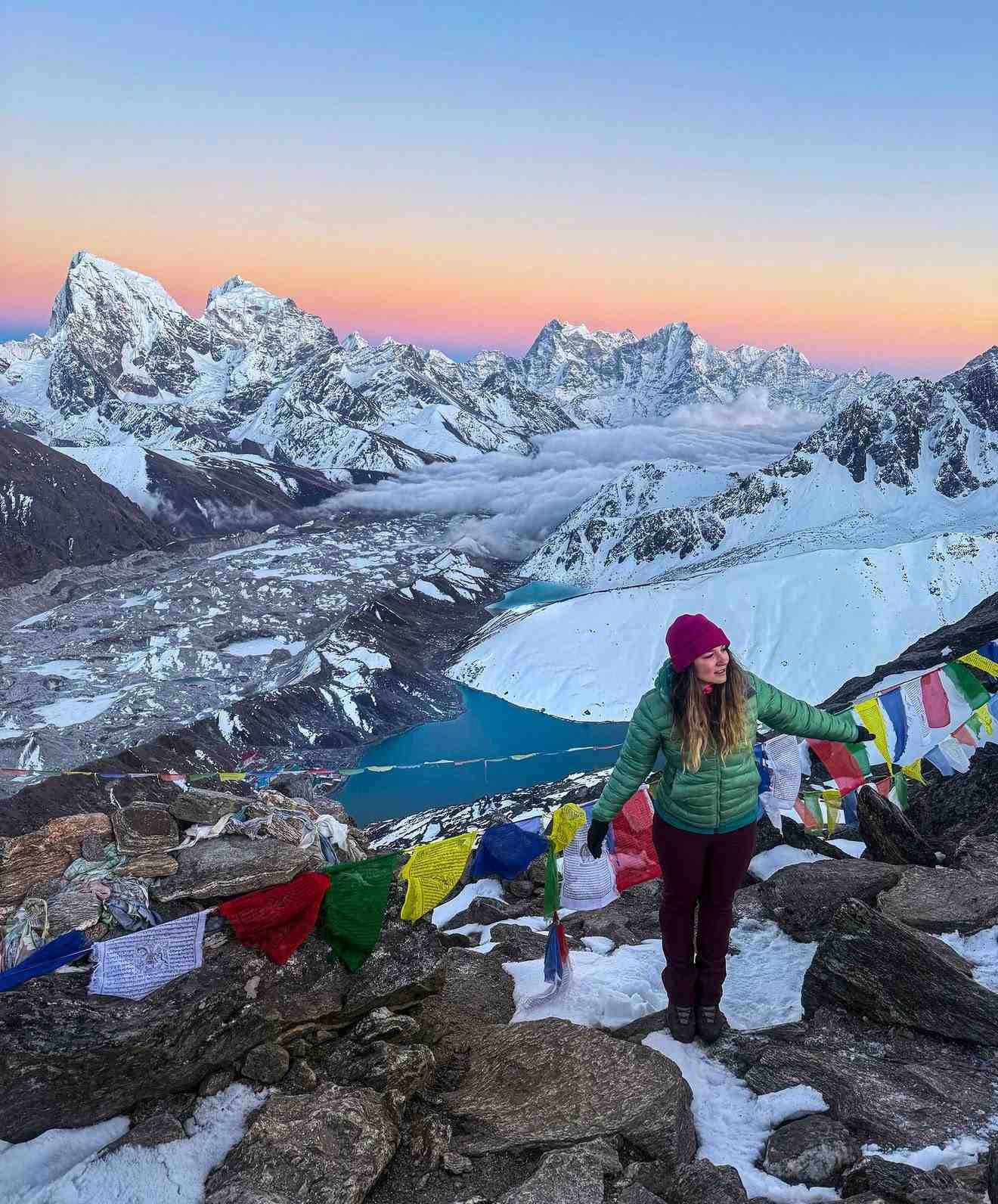
The morning hours between 5:30am and 9am are consistently the best in May. On a clear morning at Gokyo Ri (5357m), the second, third, fourth and fifth Gokyo lakes stretch below you in shades of deep turquoise against the surrounding moraine. The mountains behind them — Cho Oyu, Gyachung Kang and the Everest massif — catch the early light in a way that is different from the harsh midday sun you get in October. Early May mornings at Tengboche give you a view of Ama Dablam that photographers often rate as their favourite shot from the entire circuit.
The afternoon cloud build in May creates photographic opportunities that clear-sky months simply do not have. The dramatic cumulonimbus clouds that form over the high peaks in the early afternoon backlight the summits in ways that experienced mountain photographers specifically time their May trips around. If you are serious about capturing Everest in dramatic atmospheric conditions rather than the clean blue-sky postcard version, early May is genuinely better than October for certain kinds of landscape photography. The light is more dramatic, the clouds more interesting, and the foreground valleys more colourful.
For gear, cold temperatures above 4000 metres drain camera batteries faster than the spec suggests. Carry two batteries minimum and keep the spare in an inner pocket against your body. Condensation can be a problem when you move between cold outdoor temperatures and the warm, humid dining rooms of teahouses above 4500 metres. Allow your camera to acclimatise to room temperature before removing it from its bag inside.
Everest Expedition Season: What May Adds to the Experience
May is the only month when the Everest Base Camp section of this trek includes the spectacle of an active climbing season. Between roughly May 10 and May 25, the summit push window opens over Everest, and the Khumbu Icefall is active with roped teams moving between Base Camp and higher camps.
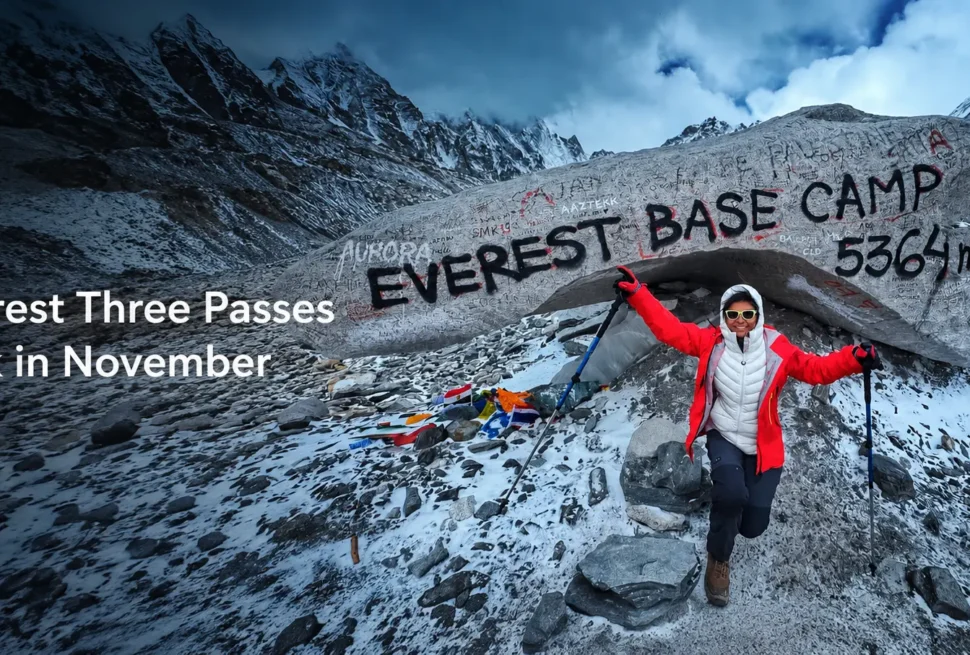
The walk from Gorak Shep to Everest Base Camp in May is a different experience from the same walk in October. In October, Base Camp is an empty lateral moraine with scattered debris from the previous season. In May, it is a functioning high-altitude city: dozens of expedition tents, satellite communication setups, oxygen cylinder storage areas, medical tents, cooking kitchens, and the continuous movement of Sherpa logistics teams. You can see the ropes on the icefall from the Base Camp viewing area. On a still morning when the icefall is active, you can hear the creak and groan of the glacier.
If you have any interest in mountaineering as well as trekking, May adds a layer of context and atmosphere to this part of the route that no other month provides. You will meet Sherpa team members who have just descended from Camp 3 or Camp 4. You will see helicopter evacuation logistics operating. You will understand, in a way that the October empty camp does not show you, what it actually takes to attempt the highest mountain in the world. This is not a disadvantage of May — it is one of its unique draws.
Permits and Costs for the Everest Three Passes Trek in May
Permit requirements in May are identical to any other month. You need two main permits:
| Permit | Cost (Foreigners) | Where to Obtain |
|---|---|---|
| TIMS Card (Trekkers’ Information Management System) | NPR 2000 (individual), NPR 1000 (with agency) | Tourism Board office in Kathmandu or Pokhara |
| Sagarmatha National Park Entry Permit | NPR 3000 per person | Park entrance check post in Monjo, or in advance in Kathmandu |
Lukla flight costs in May are slightly lower than in October peak season but higher than in monsoon months. Seat prices fluctuate based on demand from expedition logistics flights competing with trekker seats. Book your Lukla flights at least 3 to 4 weeks in advance. If flights are fully booked from Kathmandu, check availability from Ramechhap airport (about 4 hours drive from Kathmandu), which has additional capacity during the pre-monsoon season.
Teahouse costs in May are standard in-season pricing. Room rates range from NPR 300 to 1500 depending on location and facility level. Meals range from NPR 500 to 1200 per sitting at higher elevations. Budget approximately USD 25 to 40 per day for accommodation and food combined at standard teahouses. Higher-end options in Namche charge more. Guide and porter fees in May are the same as peak season — do not expect May-specific discounts on experienced guides because the work and risk are identical.
Is May Right for You? Pros and Cons
| Pros of Trekking in May | Cons of Trekking in May |
|---|---|
| Passes are in better snow condition than March or April | Afternoon weather less reliable than October or November |
| Less crowded than October, November and April | Risk of early monsoon onset increases from May 20 onward |
| Lush green lower valleys and forest sections | Lukla flights competitive with expedition logistics traffic |
| Warmer temperatures at lower elevations | Lower trail sections can be muddy from mid-May |
| All teahouses open and well-stocked | Afternoon cloud can reduce summit views from mid-May |
| Excellent morning views on all three high passes | Kongma La summit area may have ice in early May |
| Chance to see Everest expedition activity at Base Camp | Rain gear is more critical to carry than other dry-season months |
| Wildflowers and spring colour at 3500 to 4200m in early May | Rivers at lower elevations are high-volume and loud |
| Better teahouse availability than April without advance booking | Weather forecasting less reliable than in post-monsoon months |
Planning your Everest Three Passes Trek?
How May Compares to the Other Months on the Everest Three Passes Circuit
| Month | Weather | Crowds | Pass Conditions | Best For |
|---|---|---|---|---|
| September | Monsoon tail end, unpredictable at times | Low | Fresh snow possible on all passes | Solitude seekers willing to accept weather risk |
| October | Best of the year — clear, stable, dry | Very high | Excellent on all three passes | Optimal all-round experience |
| November | Clear, stable, cold | High | Excellent, increasingly cold | Those who prefer cold and quiet over warm and busy |
| March | Cold mornings, good afternoon weather | Moderate | Most snow on passes of the good-weather months | Early spring trekkers, rhododendron season |
| April | Good, afternoon clouds begin to form | Very high | Snow reducing through month | Peak spring experience, warmest teahouses |
| May | Good mornings, afternoon cloud from mid-May | Moderate | Good to excellent, least snow of spring months | Post-April trekkers, green valleys, expedition atmosphere |
Frequently Asked Questions: Everest Three Passes Trek in May
Are all three passes safe to cross in May?
Yes, all three passes are safe to cross in May, particularly in the first two weeks. Kongma La (5535m) retains some ice and light snow in early May and benefits from a very early start — no later than 5:30am from Dingboche. Cho La (5420m) involves a glacier section that is often firmer and safer in May than in March when snow conceals the rocky terrain beneath. Renjo La (5360m) is generally the least technical and in good condition throughout May. None of the three passes requires technical climbing equipment in May, but microspikes are useful on Kongma La in the first half of the month. The most important safety consideration in May is timing — do all pass crossings in the morning hours and aim to be descending before noon.
Do I need to book teahouses in advance for May?
For most of the route in May, advance booking is not necessary. Namche Bazaar and Gorak Shep benefit from a night or two of advance confirmation, especially if you are in a group larger than six. Small villages like Thagnak, Machhermo and Lungden have limited teahouses, and if you are in a group of eight or more, a day-ahead confirmation through your guide is worthwhile. Solo trekkers and small groups of two to four can generally walk the circuit without reservations throughout May without problems. This is one of May’s real advantages over the peak October season.
Will I encounter the monsoon during a May trek?
If you start your trek in the first week of May and take the standard 18 to 20 day itinerary, you will almost certainly finish before the monsoon properly establishes in the Khumbu. The monsoon onset in Nepal varies by year but typically reaches the Khumbu region in late May or early June. If your trek ends before May 25, the probability of encountering actual sustained monsoon conditions is very low. If your itinerary runs into the final days of May, you may experience pre-monsoon showers on the lower trail sections between Phakding and Namche, without it significantly impacting the high-altitude days, which remain drier longer into the season.
Is May a good time to see Everest Base Camp?
Yes, and in a way that no other month offers. During May’s expedition summit window, the walk from Gorak Shep to Everest Base Camp gives you a view of the Khumbu Icefall with active climbing teams visible on the route above. Base Camp in October is an empty lateral moraine. Base Camp in mid-May is a functioning high-altitude expedition city. If you have any interest in mountaineering alongside your trekking, this is one of May’s strongest selling points over every other month on the calendar.
How much fitness do I need for the Three Passes Trek in May?
The fitness requirement does not change by season. The Everest Three Passes Trek is one of the most demanding trekking routes in Nepal regardless of when you go. The three passes at 5360m, 5420m and 5535m represent serious altitude and physical demands. Prior high-altitude trekking experience above 4500m is strongly recommended. If this is your first time above 4000 metres, consider completing the standard Everest Base Camp Trek first. Our guide on whether the Everest Three Passes Trek is right for you covers the experience and fitness question in detail.
Can I do this trek without a guide in May?
Nepal does not currently require a compulsory guide for this route. However, the Everest Three Passes circuit involves three high-altitude pass crossings, a glacier section on Cho La that requires confident navigation, and sections where route-finding errors have serious consequences. In May, when pass conditions are transitional and afternoon weather can deteriorate quickly, having an experienced local guide adds meaningful safety margin. If you have prior experience on high-altitude Himalayan routes and are confident in your navigation, solo trekking is possible. For those new to this specific circuit, a guide is a genuine investment in both safety and quality of the experience. The best guide companies for this route are covered in our post on choosing the best Everest Three Passes trekking company.
What is the best route direction for May?
The standard anticlockwise direction — Lukla, Namche, Tengboche, Dingboche, Kongma La, Lobuche, Gorak Shep, Cho La, Gokyo, Renjo La, back to Namche — works well in May. This direction means you cross Kongma La (the highest pass) early in your high-altitude acclimatisation, which some guides prefer because you are doing the hardest crossing while you are still in the freshest part of your trip. The clockwise direction is also possible and preferred by some because Cho La, the most technical crossing, is tackled after you have had more days at altitude. In May specifically, going anticlockwise means your Cho La and Renjo La crossings happen during weeks two and three of your trek, when the weather windows are slightly less reliable. If you are trekking in the second half of May, discuss the direction with your guide based on the weather pattern you observe in the first days of acclimatisation.
What is the itinerary for the Everest Three Passes Trek?
A standard itinerary runs 18 to 20 days including two acclimatisation days. The day-by-day breakdown is covered in detail in our Everest Three Passes Trek day-by-day guide, including elevation profiles, walking times, and specific teahouse recommendations at each stop. The full costs, what’s included in agency packages, and permit breakdown are all in our complete Everest Three Passes Trek guide for 2026.
Final Thoughts on May
May is an underused month on the Everest Three Passes circuit, and that is genuinely to your advantage if the timing works for you. The passes are in good condition — arguably better than March and broadly similar to April without April’s crowd pressure. The lower valleys are at their greenest. The mornings are clear enough on most days to justify the effort of an early pass start. And the Everest expedition season adds a layer of atmosphere to the Base Camp section that exists nowhere else in the trekking calendar.
The caveats are real and worth respecting. Plan your itinerary to start in the first week of May if your schedule allows. Do every pass crossing before 10am. Carry proper rain gear from day one rather than adding it at Namche after your first surprise afternoon shower. And if your dates push into the final week of May, build in a contingency day or two for weather-related delays on the lower sections, and accept that some afternoon views from lower camps will be obscured by cloud.
Read the essential background before you book: our before you book guide for the Everest Three Passes Trek covers what most agencies do not tell you upfront, and our facts page has the hard numbers on altitude, distance and difficulty that let you make an honest self-assessment of readiness.
The Everest Three Passes Trek is one of the most complete trekking experiences in the Himalaya in any month. In May, it is quieter, greener, and more logistically relaxed than its peak-season version. If the month works for you, it is worth taking seriously — not as a fallback option, but as a genuine first choice.
Compare all month-by-month guides for this route: September | October | November | March | April | February