Everest Base Camp Trek at a Glance
Everest Base Camp is one of the world’s great trekking destinations, and for Singaporeans, getting there is more straightforward than most people realize. Singapore Airlines operates a direct flight from Changi Airport to Kathmandu, the only Southeast Asian capital with this non-stop connection. That single fact changes the entire logistical equation for trekkers from Singapore: no long layovers, no multi-leg connections, just a five-hour flight, and you are in Nepal.
If a shorter time commitment matters for your trip from Singapore, our Everest Base Camp Trek with Helicopter Return cuts several days off the standard itinerary by replacing the walk out with a single flight.
We have tried to cover everything written specifically for trekkers from Singapore. It covers everything you need to plan and complete the Everest Base Camp (EBC) trek: the right flight options, the Nepal visa process for Singaporean passport holders, a day-by-day itinerary designed around proper acclimatization, costs broken down in SGD, what permits you need, how to train in Singapore’s flat terrain, what gear to pack, and the most common mistakes Singaporean trekkers make. By the end of this guide, you will have everything you need to make a confident booking.
Why Singapore Trekkers Have an Advantage
Singaporeans enjoy a meaningful logistical advantage over most other nationalities attempting EBC. Singapore Airlines (SQ) operates a direct flight from Changi Airport Terminal 3 to Tribhuvan International Airport in Kathmandu, departing daily at approximately 18:50. The flight takes about 4 hours and 55 minutes, arriving in Kathmandu at roughly 21:00 local time. For comparison, trekkers from most other Asian cities need to connect through Bangkok, Hong Kong, Kuala Lumpur, or Kolkata, adding 3 to 6 hours to the journey each way.
The Singapore passport is also one of the world’s strongest travel documents. Singaporean nationals receive a visa on arrival at Kathmandu’s Tribhuvan International Airport, allowing stays of up to 90 days. There is no pre-application, no embassy appointment, no waiting period. You fill out an arrival card, pay the fee at the counter, and you are in.
Singapore’s multicultural population means that many Singaporean trekkers have family or cultural ties to countries with altitude experience, but the Khumbu region sits at altitudes well above anything available in Singapore or the immediate region. The highest point on Singapore’s terrain is Bukit Timah Hill at 163 metres. For altitude preparation, Singaporean trekkers need to think strategically, and this guide covers that in detail.
Flights from Singapore to Kathmandu: Routes, Airlines, and Booking Tips
The flagship option is the Singapore Airlines direct service from Changi Airport (SIN) to Tribhuvan International Airport (KTM). Daily departures at 18:50 arrive in Kathmandu at approximately 21:00 local time. Return flights depart Kathmandu in the early evening and arrive back in Singapore around midnight. The route is operated by Boeing 787 or Boeing 737 MAX 8 aircraft in Economy and Business Class.
Round-trip economy fares on the SQ direct route typically range from SGD 550 to SGD 950 depending on how far in advance you book and the time of year. October and November departures, which coincide with peak trekking season, tend to be more expensive. If you are flexible on dates, booking four to six months ahead usually secures the best fares. Business class seats on this route offer a meaningful comfort upgrade for a long-haul traveler trekking for two weeks, and prices are roughly SGD 1,800 to SGD 2,800 return.
Alternative connecting options include IndiGo via Kolkata (adding around 3 to 4 hours), Biman Bangladesh Airlines via Dhaka (7 to 8 hours total), Thai Airways via Bangkok (7 to 9 hours total), and Malaysia Airlines via Kuala Lumpur (7 to 8 hours total). These connecting options are generally cheaper by SGD 100 to SGD 300 but add significant travel fatigue before a demanding trek. Given the direct option’s cost advantage and convenience, most Singaporean trekkers reasonably choose the Singapore Airlines service.
A practical note: the SQ direct flight arrives in Kathmandu late in the evening. Pre-arrange your airport pickup, as Kathmandu taxi drivers outside the terminal can be aggressive in pricing. Our team at Next Trip Nepal provides airport transfers for all clients as standard.
| Route | Airline | Duration | Est. Return Fare |
|---|---|---|---|
| SIN – KTM (direct) | Singapore Airlines | ~5 hrs | SGD 550–950 |
| SIN – CCU – KTM | IndiGo | 8–9 hrs | SGD 400–650 |
| SIN – BKK – KTM | Thai Airways | 7–9 hrs | SGD 450–700 |
| SIN – KUL – KTM | Malaysia Airlines | 7–9 hrs | SGD 420–680 |
| SIN – DAC – KTM | Biman Bangladesh | 7–8 hrs | SGD 380–600 |
Nepal Visa for Singapore Passport Holders
Singaporean passport holders obtain their Nepal visa on arrival at Tribhuvan International Airport in Kathmandu. The process is simple and requires no advance application or embassy visit. Upon landing, proceed to the Visa on Arrival counters before immigration. Fill in the arrival card (forms available at the airport), pay the visa fee, and receive your visa sticker within 15 to 30 minutes, depending on queues.
Visa options and fees (payable in USD or equivalent):
- 15-day visa: USD 30 (approximately SGD 40)
- 30-day visa: USD 50 (approximately SGD 67)
- 90-day visa: USD 125 (approximately SGD 167)
For a standard EBC trek, a 30-day visa is almost always sufficient. Your passport must have at least six months’ validity remaining beyond your intended departure date from Nepal. Bring two passport-sized photographs, though the machines at the airport can print photos if you forget. Credit card payment is not always reliable at the visa counter, so bring USD cash for the fee. The Singaporean passport grants visa on arrival access to Nepal for stays of up to 90 days in a single entry, and tourists may not exceed 150 days in Nepal in any calendar year.
The Singapore Ministry of Foreign Affairs (MFA) maintains updated travel advisories for Nepal at mfa.gov.sg. Check this before departure for any current advisories, particularly regarding political events, weather alerts, or health advisories relevant to mountain trekking.
Day-by-Day EBC Trek Itinerary from Singapore (14 Days on Trail)
The itinerary below is designed specifically for the acclimatization needs of trekkers from Singapore, where the highest terrain is 163 metres above sea level. Proper acclimatization is non-negotiable at EBC altitudes; the itinerary builds in two dedicated acclimatization days that significantly reduce the risk of altitude sickness.
| Day | Route | Altitude | Walking Time |
|---|---|---|---|
| Day 1 | Kathmandu (arrive, permits, rest) | 1,400 m | N/A |
| Day 2 | Kathmandu – Lukla flight, trek to Phakding | 2,610 m | 3–4 hrs |
| Day 3 | Phakding – Namche Bazaar | 3,440 m | 5–6 hrs |
| Day 4 | Namche Bazaar (acclimatization day – hike above 3,900 m) | 3,440 m | 3–4 hrs hike |
| Day 5 | Namche Bazaar – Tengboche | 3,860 m | 5–6 hrs |
| Day 6 | Tengboche – Dingboche | 4,360 m | 5–6 hrs |
| Day 7 | Dingboche (acclimatization day – hike to Naghur Gompa) | 4,360 m | 3–4 hrs hike |
| Day 8 | Dingboche – Lobuche | 4,940 m | 4–5 hrs |
| Day 9 | Lobuche – Gorak Shep – Everest Base Camp | 5,364 m | 6–8 hrs |
| Day 10 | Kala Patthar sunrise, descend to Pheriche | 5,645 m / 4,240 m | 7–8 hrs |
| Day 11 | Pheriche – Namche Bazaar | 3,440 m | 6–7 hrs |
| Day 12 | Namche Bazaar – Lukla | 2,860 m | 6–7 hrs |
| Day 13 | Lukla – Kathmandu flight, rest or sightseeing | 1,400 m | N/A |
| Day 14 | Kathmandu – Singapore (SQ evening departure) | N/A | N/A |
For Singaporean trekkers who want more breathing room, adding two extra days (one in Kathmandu on arrival and one buffer day for Lukla weather delays) produces an 18-day trip total. This is the schedule we recommend for first-time high-altitude trekkers from Singapore, particularly those who have not trekked above 3,000 metres before.
Everest Base Camp Trek Cost from Singapore in 2026
The Everest Base Camp Trek cost for travellers from Singapore depends on the number of people booking together. A solo traveller pays more because private guide services, transfers and trekking arrangements are not shared. The price per person becomes lower when more travellers book together.
All prices below are shown in Singapore Dollars. The 2026 Everest Base Camp Trek package starts from approximately SGD 1,263 per person for groups of 13 or more travellers.
Everest Base Camp Trek Price in Singapore Dollars
Price per person based on the number of travellers
| Number of Travellers | Price per Person |
|---|---|
| 1 Traveller | SGD 1,869 |
| 2 Travellers | SGD 1,779 |
| 3 to 5 Travellers | SGD 1,650 |
| 6 to 8 Travellers | SGD 1,521 |
| 9 to 12 Travellers | SGD 1,392 |
| 13 or More Travellers | SGD 1,263 |
Currency note: All amounts are displayed in Singapore Dollars. The final price may change slightly depending on the exchange rate at the time of booking.
Contact Next Trip Nepal to check available group departures, private trek options, porter service and the exact package price for your travel dates.
What Is Included and Excluded in the 14-Day Everest Base Camp Trek from Singapore?
Our 14-day Everest Base Camp Trek package covers the main arrangements from your arrival in Kathmandu until the end of the trip. Travellers from Singapore can use the following list to understand what is included in the package and which expenses need to be paid separately.
- Airport pickup and drop-off by private vehicle.
- Two nights at a comfortable 3-star hotel in Kathmandu on a twin-sharing basis, including breakfast.
- Three meals each trekking day, including breakfast, lunch and dinner.
- Tea or coffee with breakfast and during the included trekking meals.
- Seasonal fruit served after dinner during the trek.
- Tea house and trekking lodge accommodation throughout the itinerary.
-
All required trekking permits, including:
- Sagarmatha National Park Entry Permit.
- Khumbu Pasang Lhamu Rural Municipality permit.
- TIMS card arrangements where required.
- Return flights between Kathmandu or Ramechhap and Lukla, including the necessary airport transfers.
- Experienced English-speaking trekking guide.
- Porter service according to the agreed luggage-sharing arrangement.
- Guide and porter salaries, meals, accommodation, transportation, equipment and insurance.
- First-aid kit and basic emergency medical supplies carried by the trekking team.
- Pulse oximeter for monitoring oxygen saturation, pulse and heart rate during the trek.
- Sleeping bag, down jacket and trekking poles when needed.
- Next Trip Nepal T-shirt, cap and porter duffel bag.
- Everest Base Camp trekking map.
- Farewell dinner and trip celebration in Kathmandu.
- Government taxes, company service charges and official expenses.
- Assistance with emergency helicopter arrangements when required. Evacuation costs must be covered by the traveller or approved travel insurance.
- Lunch and dinner while staying in Kathmandu.
-
Nepal tourist visa fee:
- 15-day visa: approximately SGD 39.
- 30-day visa: approximately SGD 65.
- 90-day visa: approximately SGD 161.
- Travel and medical insurance covering high-altitude trekking and emergency helicopter evacuation.
- International airfare between Singapore and Nepal.
- Personal expenses such as laundry, telephone calls, souvenirs and additional snacks.
- Alcoholic drinks, soft drinks, bottled drinks and extra tea, coffee or hot chocolate not included with meals.
- Desserts and sweet items such as chocolate, cake, pie and pudding.
- Hot showers, Wi-Fi and battery-charging fees at trekking lodges.
- Tips for the trekking guide, porter and driver.
- Excess baggage above the airline’s standard 15 kg allowance for the Lukla flight.
- Additional hotel nights, meals or transportation caused by weather delays, flight cancellations or personal itinerary changes.
- Emergency evacuation and medical treatment costs not approved or paid by travel insurance.
Altitude Sickness and Acclimatization for Singaporean Trekkers
Altitude sickness, formally known as Acute Mountain Sickness (AMS), does not care about your fitness level. Marathon runners and professional athletes get altitude sickness just as readily as sedentary office workers. What matters is how quickly your body ascends and how much time you allow it to adapt. For Singaporeans, who live and train at essentially sea level (the highest point in Singapore is 163 metres), the jump to 3,440 metres at Namche Bazaar and then to 5,364 metres at EBC is physiologically significant.
The golden rule is simple: ascend slowly. On the itinerary above, the two rest and acclimatization days (Day 4 at Namche and Day 7 at Dingboche) follow the medically established guideline of sleeping no more than 300 to 500 metres higher than the previous night above 3,000 metres. The “climb high, sleep low” principle is built into the Day 4 and Day 7 hikes: you go up to a higher altitude during the day and return to sleep at a lower one.
Common AMS symptoms include persistent headache not relieved by paracetamol, nausea or vomiting, loss of appetite, dizziness, and fatigue disproportionate to the effort. If you develop these symptoms, do not ascend further. Rest. Hydrate. If symptoms worsen or do not improve within 24 hours, descend immediately. The cardinal rule: never ascend with AMS symptoms. Our guides are trained in Wilderness First Aid and altitude sickness protocols and carry supplemental oxygen and Gamow bags for emergencies.
Diamox (acetazolamide) is commonly prescribed as an altitude sickness preventive. Consult a Singapore GP or travel medicine clinic (e.g., the Travellers Health & Vaccination Clinic at Tan Tock Seng, or Raffles Travel Clinic) at least 4 to 6 weeks before your trip. They can prescribe Diamox and advise on dosing. Diamox has side effects (tingling in extremities, increased urination, occasional nausea) and is not suitable for people with sulfa drug allergies.
EBC Trek Cost from Singapore: Full Breakdown in SGD
The table below shows a realistic all-in cost estimate for a Singaporean trekker joining a Next Trip Nepal guided package. Costs are in SGD and assume mid-range accommodation in Kathmandu (3-star) and standard tea house accommodation on the trail.
| Expense Category | Estimated Cost (SGD) | Notes |
|---|---|---|
| Return flight SIN–KTM–SIN | SGD 550–950 | SQ direct, economy class |
| Trek package (guide, porter, accommodation, meals on trail) | SGD 1,750–2,400 | 14-day package, varies by group size |
| Kathmandu hotel (2–3 nights) | SGD 100–250 | 3-star in Thamel |
| Lukla round-trip flights | SGD 200–270 | Usually included in package |
| Nepal visa on arrival | SGD 40–67 | 30-day or 90-day option |
| Trekking permits (TIMS + SNPP) | SGD 45–55 | Usually included in package |
| Travel insurance (helicopter evac coverage) | SGD 150–350 | Essential; must cover 5,500 m+ altitude |
| Gear (if buying new) | SGD 400–1,200 | Boots, jacket, sleeping bag, poles |
| Trail extras (Wi-Fi, showers, snacks, tips) | SGD 200–400 | In Nepalese Rupees (NPR) |
| Total Estimate | SGD 3,400–5,900 | Excluding new gear purchases |
Currency context for Singaporean trekkers: as of 2026, SGD 1 buys approximately 85 to 95 Nepalese Rupees (NPR). A good meal at a Kathmandu restaurant costs NPR 500 to 1,500 (SGD 5 to 16). On the trail, tea house meals range from NPR 400 to 1,200 (SGD 4 to 13) per dish. Hot showers at higher altitude tea houses cost NPR 300 to 600 (SGD 3 to 6) per session. There are no reliable ATMs above Namche Bazaar, so withdraw enough NPR in Kathmandu or Namche before ascending.
Trekking Permits for the EBC Route
Two permits are required to legally trek the Everest Base Camp route:
TIMS Card (Trekkers’ Information Management System): The TIMS card is issued by the Nepal Tourism Board (NTB) and costs USD 20 per person (approximately SGD 27). It registers your presence on the trail and enables search and rescue coordination. It is mandatory for all trekkers in the Khumbu region.
Sagarmatha National Park Permit (SNPP): Sagarmatha National Park is a UNESCO World Heritage Site, and entry requires a permit costing NPR 3,000 (approximately SGD 34) per person. This permit is checked at the park entrance near Monjo, a few hours north of Lukla.
Both permits must be carried at all times on the trail. At Next Trip Nepal, we handle all permit applications on behalf of our clients. If you are self-organizing, permits can be obtained at the Nepal Tourism Board office in Kathmandu (Bhrikuti Mandap area, near the central tourist zone) or, in the case of the SNPP, at the park checkpoint itself. Bring passport-sized photographs for both permits.
Weather and Best Seasons for EBC from Singapore
The Khumbu region has four distinct seasons, two of which are ideal for trekking:
Autumn (September to November): The post-monsoon period brings stable, clear weather with excellent visibility. October is widely regarded as the single best trekking month of the year. Skies are typically clear, temperatures are moderate (warm during the day, cold at night), and mountain views are spectacular. November offers similar conditions with fewer crowds but noticeably colder temperatures at altitude, with night-time temperatures at EBC dropping to –15°C or below. For Singaporeans planning their first EBC trek, October is the recommended target month.
Spring (March to May): The spring trekking season also offers good weather and blooming rhododendrons on the lower trail. However, spring is summit season for Everest and other high peaks, which means significantly more traffic on the trail in late April and May. Early April offers a good balance of acceptable weather without peak crowds. By late May, pre-monsoon cloud build-up increases and afternoon views become less reliable.
Avoid: Monsoon (June to August) brings heavy rainfall, leeches, and obscured views. Winter (December to February) is very cold with snowfall at altitude, limited tea house openings, and significantly increased risk of frostbite above 4,500 metres.
| Month | Conditions | Crowds | Verdict |
|---|---|---|---|
| October | Clear, stable, warm days | High | Best month overall |
| November | Clear but cold | Moderate | Excellent |
| April | Warm, some cloud | Moderate–High | Good |
| March | Cool, clear, rhododendrons | Low–Moderate | Good |
| May | Warm, increasing cloud | High (summit season) | Acceptable |
| Dec–Feb, Jun–Aug | Snow/cold or monsoon rain | Low | Not recommended |
How to Train for EBC in Singapore
Singapore’s flat terrain is the EBC trekker’s primary training challenge. The island’s highest point is Bukit Timah Hill at 163 metres, and most trails are in the 50 to 100 metre elevation range. That said, Singapore has excellent trail running and hiking infrastructure, and with the right approach, you can build meaningful cardiovascular fitness here.
Build aerobic base (3 to 4 months out): Start with 3 to 4 cardio sessions per week. Running, cycling, and swimming are all effective. Aim for 30 to 45 minutes per session, focusing on sustained moderate effort rather than high-intensity intervals. On the EBC trail, you walk 5 to 8 hours daily at moderate pace; training your aerobic system for sustained output matters more than peak fitness.
Stair training: Stairs are the single best simulation of the EBC trail’s uphill sections available in Singapore. Use the HDB car park stairs, Marina Bay Sands stairs, or office building stairwells. Aim for 45 to 60 minutes of continuous stair climbing (up and down) with your loaded daypack. Escalate the difficulty progressively over 8 weeks.
MacRitchie and Bukit Timah: MacRitchie Reservoir Park offers 10 to 12 km of trail running with modest elevation changes. The Treetop Walk circuit (approximately 7 km) with multiple undulations is one of the better EBC preparation routes in Singapore. Bukit Timah Nature Reserve trails (particularly the Dairy Farm extension) add meaningful uphills. Complete these carrying your loaded daypack (6 to 8 kg) to simulate trail conditions.
Altitude simulation: No altitude simulation training is available in Singapore, but you can gain meaningful high-altitude experience in the region. Mount Kinabalu in Sabah (4,095 m) is a popular pre-EBC acclimatization option for Singaporeans. Completing the Kinabalu summit climb two to four months before EBC gives your body its first experience of genuine altitude and identifies how susceptible you are to AMS before you are on the EBC trail. Cameron Highlands in Malaysia (1,800 m) is useful for extended multi-day hiking at moderate altitude.
Strength training: Knee strength is critical for the long descents on the return journey. Squats, lunges, step-ups, and Romanian deadlifts build the quad and glute strength needed to descend trails for 6 to 7 hours without knee damage. Two dedicated leg sessions per week for 12 weeks before the trek provide significant protection.
Travel Insurance for Singaporean EBC Trekkers
Travel insurance is not optional for the EBC trek. It is essential, and the specific requirements matter. Standard travel insurance sold in Singapore typically does not cover helicopter medical evacuation above a certain altitude, and the evacuation can cost USD 4,000 to USD 10,000 or more from the upper Khumbu. This is not a risk you want to self-insure.
When purchasing travel insurance in Singapore for EBC, verify these specific conditions:
Helicopter evacuation coverage: The policy must explicitly cover emergency helicopter evacuation for altitude sickness (HACE, HAPE) at altitudes above 5,000 metres. Some policies exclude helicopter evacuation unless the trip is a recognised mountaineering expedition; confirm that trekking to 5,364 metres is covered.
Medical evacuation to Kathmandu: In addition to helicopter evacuation to a local airstrip, coverage should extend to medical transport to a capable hospital in Kathmandu if required.
Trek cancellation coverage: Lukla flights are weather-dependent and frequently delayed or cancelled for one to three days during peak season. Coverage for additional hotel and meal expenses due to flight delays is valuable.
Popular Singaporean travel insurers offering adventure sports or trekking coverage include AXA SmartTraveller, FWD Travel Insurance, Income Travel Insurance, and Singlife Travel Insurance. Policies from World Nomads or AIG are also widely used by EBC trekkers from Singapore and explicitly cover high-altitude trekking. Always read the specific exclusions for altitude, and call the insurer to confirm coverage verbally before purchasing if there is any ambiguity in the policy wording.
Packing List for Singaporean EBC Trekkers
Singaporeans packing for the EBC trek, face a specific challenge: almost no gear in your wardrobe is appropriate for sub-zero temperatures. At EBC altitude, night temperatures can drop to –15°C or below, and even daytime temperatures at 5,000 metres can be near 0°C. Everything from your base layers to your sleeping bag needs to be suitable for conditions that are radically different from Singapore’s year-round heat and humidity.
Footwear: The single most important gear item. You need waterproof, ankle-support trekking boots rated for cold conditions. Brands like Salomon, Merrell, Scarpa, and Lowa all have suitable options. Critically, break your boots in by walking at least 25 to 30 hours in them before the trek. Blisters from new boots on Day 2 can make the remaining 10 days significantly harder. Bring two to three pairs of merino wool trekking socks.
Sleeping bag: Do not underestimate this item. Tea house blankets at altitude are often thin and sometimes damp. A sleeping bag rated to –10°C comfort rating (or –15°C lower limit) ensures genuinely warm nights above 4,500 metres. Good sleep directly affects your acclimatization and energy levels the following day.
Down jacket: A high-quality down jacket (700-fill power or higher) is essential for cold evenings and early morning starts. Most tea houses are not heated; the dining room may have a yak-dung stove, but your room will not.
Layering system: Base layer (merino wool or synthetic, not cotton), mid-layer (fleece or light down), outer shell (waterproof and windproof). This three-layer system lets you add and remove insulation as conditions change throughout the day.
Electrical notes for Singaporean trekkers: Singapore uses Type G (British square three-pin) plugs. Nepal uses Type C, D, and M plugs. Bring a universal travel adapter. Nepal operates on 230V, which is compatible with Singapore’s 230V devices, so no voltage converter is needed. Tea houses at altitude charge USD 1 to 3 per charge and may only have power in the dining room.
| Category | Essential Items |
|---|---|
| Footwear | Waterproof trekking boots (broken in), camp sandals or Crocs, 2–3 pairs wool socks, gaiters |
| Insulation | –10°C sleeping bag, down jacket, fleece mid-layer, thermal base layers (top and bottom) |
| Outer Layers | Waterproof/windproof jacket, waterproof trousers, convertible hiking trousers |
| Head and Hands | Warm hat (wool or fleece), balaclava, sun hat, liner gloves, waterproof outer gloves |
| Trekking Poles | Collapsible poles; rent in Kathmandu (NPR 150–300/day) or bring your own |
| Bags | Duffel bag (60–70L for porter), daypack (20–25L), waterproof bag liners |
| Health and Hygiene | Diamox (prescribed), ibuprofen, paracetamol, blister kit, lip balm (SPF), sunscreen (SPF 50+) |
| Electronics | 20,000 mAh power bank, universal adapter (Type C/D/M), headlamp + spare batteries, camera |
| Documents | Passport (6+ months validity), USD cash (SGD 200 equivalent for visa + emergency), travel insurance card with emergency number |
Time Zone and Jet Lag Considerations
Nepal Standard Time (NPT) is UTC+5:45, which is 2 hours and 15 minutes behind Singapore Standard Time (UTC+8). This is one of the smallest time-zone differences in any international trek. The adjustment from Singapore to Nepal is minimal: you will feel slightly sleepy earlier in the evening and wake slightly earlier than usual for the first day or two. Unlike trekkers flying from Europe or the Americas, Singaporean trekkers essentially have no meaningful jet lag to manage.
The bigger issue is sleep disruption from altitude itself. Above 4,000 metres, many trekkers experience periodic breathing during sleep (Cheyne-Stokes respiration), where breathing temporarily stops during the night, causing you to wake suddenly with a gasp. This is a normal altitude response and not in itself dangerous, though it can be disturbing and lead to poor sleep quality. Iron supplements (for those who are deficient), staying well-hydrated, and sleeping at lower altitudes during acclimatization days all help.
Food and Nutrition on the EBC Trail
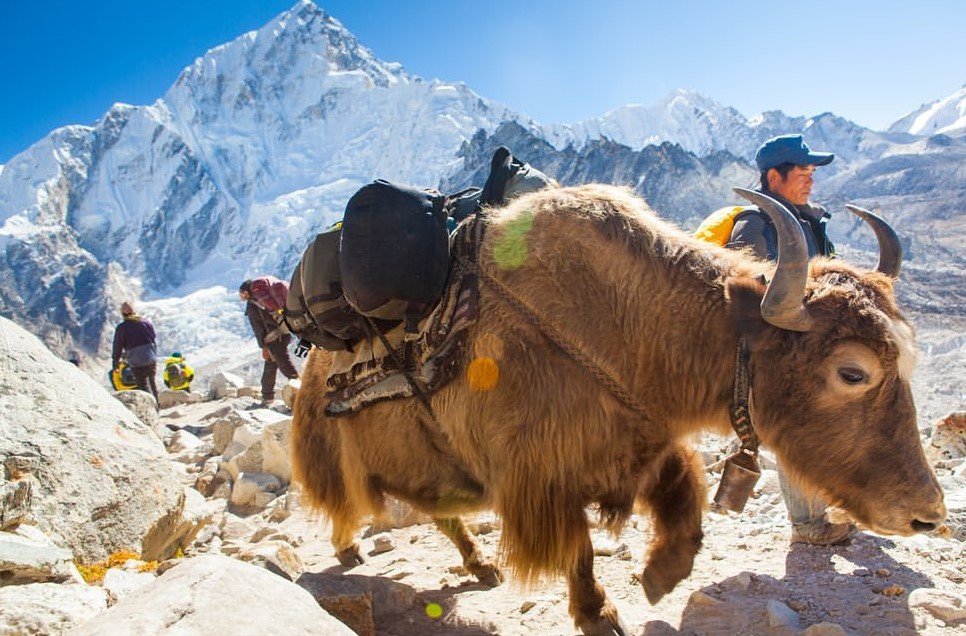
Tea house menus along the EBC trail are surprisingly varied given the remoteness of the locations. All food is carried in by yak, dzopkyo (yak-cattle hybrid), or porter, which explains the higher prices at altitude compared to Kathmandu. Dal bhat, the national dish of Nepal (lentil soup with rice, vegetable curry, and pickles), is available everywhere, is reliably cooked to steaming hot temperatures (important for food safety at altitude), and comes with free refills at many tea houses.
For Singaporeans accustomed to a cuisine-rich environment, the trail food will feel limited but adequate. Fried rice, fried noodles, pasta with various sauces, vegetable momos (steamed dumplings), potato dishes, soups, porridge, pancakes, and eggs cover most of the menu. Meat dishes become less reliable and less safe above Namche, as the cold chain is limited; stick to vegetarian options above 3,440 metres to reduce the risk of food poisoning.
Singapore’s Halal food culture means some Muslim trekkers will want to plan carefully. Vegetarian tea house food is inherently pork-free, and dal bhat with vegetable sides is a practical Halal-adjacent option in the absence of certified Halal meals. Bring a supply of certified Halal trail snacks from Singapore (energy bars, dried fruit, nuts, crackers) to supplement tea house meals.
Stay aggressively hydrated: aim for 3 to 4 litres of water daily at altitude. Bottled water is available but expensive and environmentally problematic. A water bottle with a filter (Sawyer Squeeze or similar) combined with water purification tablets allows you to drink from taps and streams safely, reducing both cost and plastic waste.
Connectivity: Mobile, Wi-Fi, and Charging on the Trail
Singaporean SIM cards (SingTel, StarHub, M1) do not have roaming partnerships that reliably cover Nepal’s mountain regions. The most practical option is to purchase a Ncell or Nepal Telecom SIM card at Kathmandu airport or in Thamel. Ncell generally has better coverage in the Khumbu region. 4G coverage extends to Namche Bazaar reasonably well but becomes patchy above that and is essentially non-existent above Dingboche.
Wi-Fi is available at most tea houses via satellite internet, charged per hour or per day (NPR 300 to 700, or roughly SGD 3 to 7). Speeds are slow by Singapore standards but sufficient for messaging apps, email, and occasional social media posts. At Namche Bazaar, speeds are better; at Gorak Shep (the last stop before EBC), connectivity is minimal to non-existent.
Bring a 20,000 mAh power bank to reduce dependency on tea house charging. At altitude, cold temperatures drain batteries faster; keep your power bank inside your sleeping bag at night and in an inner jacket pocket during the day. Tea house charging usually costs NPR 200 to 500 (SGD 2 to 5) per device and may only be available in the dining room during evening hours.
Guides and Porters: Why They Matter
Hiring a licensed Sherpa guide and a porter through a reputable Nepal-based agency is the single most impactful decision for a safe and enjoyable EBC trek. This is especially important for Singaporean trekkers who are making their first foray into genuine high-altitude trekking.
A licensed guide does far more than show you the path. They monitor your health, recognize early signs of altitude sickness, know when to push and when to rest, handle all tea house logistics, navigate the sometimes-complex permit checkpoints, and can coordinate emergency evacuation if needed. Our Sherpa guides at Next Trip Nepal have years of personal experience on the EBC route across all seasons. Several of our guides also have some Mandarin language ability, which some Singaporean clients find helpful for communicating nuance in stressful moments.
A porter carries your main duffel bag (up to 10 to 12 kg) so you carry only your daypack during each day’s walking. This distinction matters enormously: trekkers carrying 8 to 12 kg packs for 6 to 7 hours daily tire significantly faster, increase their injury risk on descents, and are less able to stop and appreciate the landscape. The cost difference is small; the experience difference is large. Porter wages at Next Trip Nepal follow IPPG (International Porter Protection Group) standards, ensuring fair pay and proper equipment for all support staff.
Standard tip guidelines at the end of the trek: guides receive USD 10 to 15 per day, porters receive USD 7 to 10 per day. Tips are distributed at the end of the trek in a group ceremony that is a tradition in Khumbu trekking culture.
Safety Tips for Singaporean Trekkers
Solo trekkers: The Nepal government has progressively moved toward requiring guides for solo trekkers in restricted areas. Regardless of current regulations, solo trekking EBC without a guide carries significant risk specifically around altitude sickness management. If you develop serious AMS alone and in a remote section, the situation can deteriorate very rapidly. We strongly recommend hiring a guide even for experienced hikers.
Women trekkers from Singapore: The EBC trail is among the safer trekking routes globally for female travellers. The Sherpa community is accustomed to international trekkers of all genders and is generally respectful. Booking through a reputable agency, informing people of your itinerary, and trusting your instincts applies universally. Next Trip Nepal can arrange female guides or guide teams on request.
Singapore MFA advisory: Register your overseas travel with MFA’s Odyssey mobile app before departing. This enables Singapore’s consular services to contact you in the event of a national emergency or disaster. The Singapore High Commission in New Delhi covers Nepal (there is no Singapore embassy in Nepal), but the Nepal Tourism Board’s rescue coordination is well-developed.
Emergency contacts in Nepal: The Tourist Police helpline is 1144. The HRA (Himalayan Rescue Association) operates clinics in Pheriche (near Dingboche) and Manang that provide altitude sickness diagnosis and treatment free of charge. Our guides carry satellite communication devices and can coordinate emergency helicopter evacuation regardless of mobile coverage.
Kathmandu Arrival and Pre-Trek Days
With the SQ direct flight arriving at roughly 21:00 Kathmandu time, you will check into your hotel late in the evening. Use Day 1 as a genuine rest day. Kathmandu’s altitude of 1,400 metres is low enough that it presents no acclimatization concerns for most people, but the travel fatigue from an international flight combined with the sensory intensity of Kathmandu (traffic, pollution, noise, unfamiliar food) can be draining.
Day 1 priorities: rest, sort gear, permit applications (if not pre-arranged), Kathmandu sightseeing if energy allows. The main attractions near Thamel include Boudhanath Stupa (a UNESCO World Heritage Site and one of the world’s largest Buddhist stupas), Pashupatinath Temple (the most sacred Hindu temple in Nepal, on the banks of the Bagmati River), and Swayambhunath (the Monkey Temple, with panoramic views of the Kathmandu Valley).
Currency: exchange SGD to NPR in Kathmandu’s Thamel area for competitive rates. Avoid the airport exchange counters, which offer significantly worse rates. For larger amounts, licensed forex dealers on Thamel’s main street and side alleys offer better rates. Note that while NPR is pegged to INR, the Nepalese government does not accept Indian Rupees in most commercial transactions (some border areas excepted).
Medical: if you did not get vaccines in Singapore, Kathmandu has several travel health clinics. Recommended vaccinations for Nepal include Hepatitis A, Typhoid, Tetanus, and possibly Rabies. Check with a Singapore travel medicine clinic (Tan Tock Seng Travel Clinic, Raffles Travel Clinic, or Healthway Travel Clinic) before departure for personalised recommendations.
Altitude Profile and Daily Distance
| Location | Altitude (m) | Altitude (ft) | Km from Previous Point |
|---|---|---|---|
| Kathmandu | 1,400 | 4,593 | N/A |
| Lukla | 2,860 | 9,383 | By flight |
| Phakding | 2,610 | 8,563 | 8 km |
| Namche Bazaar | 3,440 | 11,286 | 11 km |
| Tengboche | 3,860 | 12,664 | 12 km |
| Dingboche | 4,360 | 14,304 | 12 km |
| Lobuche | 4,940 | 16,207 | 8 km |
| Gorak Shep | 5,140 | 16,863 | 5 km |
| Everest Base Camp | 5,364 | 17,598 | 4 km |
| Kala Patthar | 5,645 | 18,519 | 2 km from Gorak Shep |
Sherpa Culture and Local Etiquette
The Khumbu region is Sherpa territory. The Sherpa people are a Tibetan-origin ethnic group who migrated to Nepal’s high valleys around 500 years ago. Their Buddhist faith permeates every aspect of life in the Khumbu, from the mani stones (stones carved with the mantra “Om Mani Padme Hum”) that line the trail, to the prayer flags strung at every high point, to the monasteries that anchor each major settlement.
Tengboche Monastery, reached on Day 5 of the itinerary, is the most important religious site in the region. An evening visit during the prayer ceremony is one of the most atmospheric experiences on the entire trek. Remove your shoes before entering the monastery, dress respectfully (shoulders and knees covered), and ask permission before photographing monks or religious ceremonies.
General etiquette on the trail: always pass mani stones and chortens (religious shrines) on the left side; remove your hat inside monasteries; ask before photographing people; don’t point the soles of your feet toward people or religious images; accept offerings of tea or food graciously. These small acts of respect build goodwill and enrich your experience in the Khumbu in ways that no guided tour can replicate.
For Singaporean trekkers of Buddhist faith: the Buddhist practice in the Khumbu is Tibetan Vajrayana Buddhism, distinct from the Theravada Buddhism more familiar in Singapore. Tengboche Monastery and the Khunde monastery above Namche are particularly significant. Many Singaporean Buddhist trekkers find the Khumbu’s religious landscape deeply meaningful, and a visit during peak season may coincide with the Mani Rimdu festival at Tengboche (typically November), one of the most celebrated Buddhist festivals in the Himalayan calendar.
Helicopter Return Option
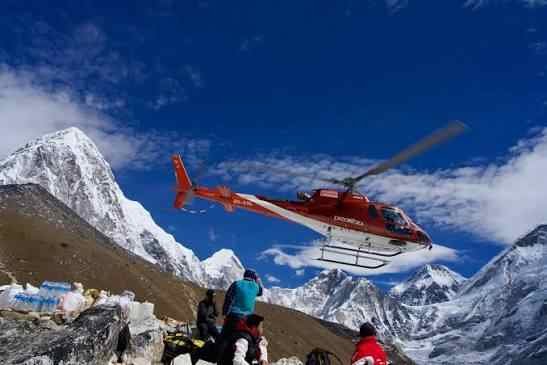
An increasingly popular option, particularly for trekkers with tight return schedules tied to Singapore work commitments, is to fly back from Gorak Shep or Pheriche directly to Kathmandu by helicopter rather than completing the four-day walk down to Lukla.
Helicopter flights from the upper Khumbu cost between USD 400 and USD 700 per person on a shared flight (typically 4 to 5 passengers). Private charter is significantly more expensive. These flights are weather-dependent and can be delayed or cancelled at short notice. For trekkers flying home on a specific SQ date, helicopter return introduces its own schedule risk unless you build a buffer day in Kathmandu. Our team can arrange helicopter charters from the trail on request.
Standard travel insurance does not cover helicopter flights chosen for convenience rather than medical necessity. Budget for this separately if you know you want this option.
Lukla Flight Information
Tenzing-Hillary Airport in Lukla is one of the world’s most famous and most weather-dependent airports. The runway is a short strip on a steep hillside at 2,860 metres. Flights operate only in specific weather windows in the early morning, and delays of one to three days are common during periods of cloud, rain, or high wind, particularly at the end of trekking season (November) when visibility can close quickly.
Always plan at least one buffer day in Kathmandu between your scheduled Lukla return flight and your SQ international departure. Two buffer days during peak season (October and November) is even better. Booking an early morning Lukla flight gives you the best chance of departure, as weather typically deteriorates through the day.
During peak October and November seasons, the Nepal government has increasingly routed some Lukla flights through Manthali/Ramechhap Airport (about 5 hours by road from Kathmandu) to reduce Tribhuvan congestion. If your Lukla flight is scheduled from Manthali, you will need to leave Kathmandu very early in the morning to reach the airport in time. Our team handles all of these logistics for clients and always provides advance notice.
Why Choose Next Trip Nepal for Your EBC Trek
Next Trip Nepal was founded in 2017 specifically to provide small-group, personalized trekking experiences for international travelers in Nepal. We are not a booking platform or an aggregator: we are a Nepal-based team of licensed guides, logistics coordinators, and mountain professionals who run this route every season and know the Khumbu as well as anyone.
Every one of our licensed Sherpa guides has personal experience on the EBC route in all seasons. They know which tea houses serve the best dal bhat, which stretches of trail require extra care in early morning frost, and exactly when to push and when to slow down for a client who is struggling with altitude. This local knowledge, the kind that only comes from years of being on the mountain, is what makes the difference between a good trek and a great one.
We keep our group sizes small (maximum 12 people, often far fewer), which means our guides give you genuine attention rather than managing a crowd. Our all-inclusive EBC packages are transparently priced, covering guide, porter, all accommodation and meals on the trail, airport transfers in Kathmandu, permits, and the Lukla flight. No hidden fees, no mid-trip surprises.
Ready to book your Everest Base Camp trek from Singapore?
Contact our Nepal-based team for a personalized itinerary and quote based on your preferred dates and group size.
Common Mistakes Singaporean Trekkers Make
The most common mistake is underestimating how different high-altitude trekking is from any experience available in Singapore or even Southeast Asia. Mount Kinabalu (4,095 m) is a useful reference point, but EBC goes 1,270 metres higher, and altitude effects are non-linear: the physiological jump from 4,000 to 5,000 metres is much harder than from 3,000 to 4,000 metres. Trekkers who have summited Kinabalu with ease sometimes assume EBC will be straightforward and skip proper acclimatization. This is a dangerous mistake.
The second common mistake is not getting travel insurance with helicopter evacuation coverage before arriving in Singapore. Last-minute or airport insurance purchases in Nepal are available but expensive, poorly documented, and sometimes not accepted by helicopter rescue operators. Sort your insurance in Singapore before departure, and confirm helicopter evacuation is covered above 5,000 metres.
Third, many Singaporean trekkers overpack their daypack and underpack their duffel. The duffel is carried by your porter and its weight matters less to you; your daypack you carry every day for 5 to 8 hours. Pack only what you genuinely need for the day’s walk in the daypack (water, snacks, rain layer, camera, first aid). Everything else goes in the porter’s duffel.
Fourth, buying gear in Singapore’s REI, Decathlon, or outdoor stores without breaking in boots before departure. Singapore has a small but growing outdoor gear retail scene. Merrell, Salomon, and other brands available in Orchard Road and VivoCity malls sell suitable trekking boots, but they need to be worn for at least 25 to 30 hours before the EBC trail to prevent blisters.
Fifth, not having USD cash available at Kathmandu airport. The Nepal visa on arrival fee must be paid in USD (or equivalent convertible currency), and the airport ATMs and exchange counters can have queues or connectivity issues. Bring at least USD 60 in cash specifically for the visa, plus some additional USD for tips and trail expenses.
Frequently Asked Questions
1. Is there a direct flight from Singapore to Nepal?
Yes. Singapore Airlines operates a daily non-stop flight from Singapore Changi Airport (SIN) to Kathmandu Tribhuvan International Airport (KTM). The flight takes approximately 4 hours and 55 minutes, departing Singapore at around 18:50. This makes Singapore one of the most conveniently connected cities in Southeast Asia for Nepal trekking, as no connection or layover is required.
2. Do Singapore passport holders need a visa for Nepal?
No pre-application is required. Singaporean passport holders obtain a visa on arrival at Kathmandu airport. Bring USD cash for the fee (USD 30 for 15 days, USD 50 for 30 days, USD 125 for 90 days), two passport photographs, and your passport with at least 6 months’ validity. The process takes 15 to 30 minutes at the airport counters.
3. How many days should I plan for the EBC trek from Singapore?
Plan for a minimum of 16 days total: 1 day in Kathmandu on arrival, 14 days on the trek, and 1 buffer day for Lukla weather delays before flying home. For more comfortable pacing and added safety, 18 days is better. The SQ direct evening return flight makes it practical to fly home on the final day of the itinerary without losing an extra night in Kathmandu.
4. What travel insurance do I need for EBC from Singapore?
You need a policy that explicitly covers emergency helicopter evacuation from altitudes above 5,000 metres for altitude sickness. Standard Singapore travel insurance often excludes this. AXA SmartTraveller, FWD Travel Insurance, World Nomads, and AIG all offer policies used by EBC trekkers; confirm helicopter evacuation coverage above 5,000 m before purchasing. Call the insurer to confirm verbally if the policy wording is ambiguous.
5. Can I get altitude sickness on EBC even if I’ve climbed Mount Kinabalu?
Yes. Altitude sickness at EBC is not predicted by your experience at lower altitudes. Kinabalu reaches 4,095 metres; EBC is at 5,364 metres, and Kala Patthar is 5,645 metres. The physiological stress at these higher altitudes is significantly greater. Kinabalu experience is useful for building confidence and identifying your general altitude sensitivity, but it does not guarantee you will not experience AMS at EBC. Proper acclimatization remains essential regardless.
6. What plug adapter do I need for Nepal?
Singapore uses Type G (British three-pin) plugs. Nepal primarily uses Type C, D, and M plugs. A universal travel adapter handles all of these. Nepal operates on 230V, which is the same as Singapore, so no voltage converter is needed for your phone, laptop, or camera charger.
7. Is EBC suitable for first-time high-altitude trekkers from Singapore?
Yes, with proper preparation. The EBC trail does not require technical climbing skills or mountaineering experience. The challenge is altitude, not technical difficulty. Trekkers from Singapore who are in reasonable cardiovascular fitness, follow the acclimatization schedule, hire a knowledgeable guide, and are honest with themselves about any symptoms they experience complete EBC successfully every season. We guide many first-time high-altitude trekkers to EBC each year.
8. How do I prepare for altitude in Singapore?
Focus on cardiovascular fitness (running, cycling, stair training), leg strength (squats, lunges, step-ups), and extended hikes with a loaded pack at MacRitchie or Bukit Timah. Consider a pre-acclimatization trip to Mount Kinabalu (4,095 m) two to four months before EBC. Consult a Singapore travel clinic about Diamox prescription and individual susceptibility factors. No altitude simulation chambers are available in Singapore.
9. What is the best month for EBC from Singapore?
October is widely regarded as the best single month. Weather is consistently clear, temperatures are moderate, and mountain visibility is excellent. November is a strong second choice with fewer crowds but colder nights. For spring departures, the first two weeks of April offer good conditions before the peak summit season crowds arrive in late April and May. The SQ direct flight operates year-round, so you have flexibility to target any season.
10. Can I trek EBC without a guide from Singapore?
The Nepal government has progressively moved toward mandatory guide requirements for trekking in restricted areas. Practically speaking, trekking EBC without a licensed guide from any country is inadvisable, particularly regarding altitude sickness management. If you develop serious AMS symptoms alone in a remote section, the situation can deteriorate very quickly. We strongly recommend a licensed guide through a reputable agency regardless of current regulations.
11. How much cash should I bring from Singapore?
If your package includes accommodation and meals, bring the equivalent of NPR 20,000 to 30,000 (approximately SGD 220 to 330) for trail extras: hot showers, Wi-Fi, additional snacks, beverages, and tips. Also bring at least USD 60 in cash for the Nepal visa on arrival. Exchange SGD to NPR in Kathmandu’s Thamel area for competitive rates; avoid the airport exchange. There are no reliable ATMs above Namche Bazaar.
12. What is Kala Patthar and why should I climb it?
Kala Patthar is a 5,645-metre summit immediately above Gorak Shep that offers the most famous panoramic view of Everest available on the trek. Paradoxically, Everest Base Camp itself has a partially obscured view of Everest due to the intervening ridge. Kala Patthar provides the unobstructed view that graces most EBC photographs. The pre-dawn climb for sunrise, watching Everest’s shadow extend across the Khumbu Valley as the sky lightens, is one of the defining experiences of the entire journey. Set your alarm for 4:30 am.
13. Is there Halal food on the EBC trail?
Certified Halal food is not available on the EBC trail. However, vegetarian tea house food (dal bhat with vegetable sides, fried rice, pasta, noodle soups, eggs) is naturally pork-free and is the practical option for Muslim trekkers. Bring certified Halal trail snacks (energy bars, nuts, dried fruit, crackers) from Singapore to supplement tea house meals. No alcohol is required on the trail, and the tea culture (milk tea, black tea, herbal teas) is universally accommodating.
14. What medical preparations should I make in Singapore before EBC?
Visit a Singapore travel medicine clinic at least 4 to 6 weeks before departure. Recommended vaccinations include Hepatitis A, Typhoid, and Tetanus. Discuss Rabies vaccination if you plan wilderness exposure. Ask about a Diamox (acetazolamide) prescription for altitude sickness prevention and confirm the dosing protocol. Confirm your dental health (dental emergencies at altitude are very unpleasant). Ensure you have an adequate supply of any regular prescription medications, as these are not reliably available in the Khumbu.
15. Can I extend my trip to see more of Nepal after EBC?
Absolutely. Nepal offers exceptional destinations beyond the Khumbu. Pokhara and the Annapurna region are 7 to 8 hours from Kathmandu by bus or a 25-minute flight. Chitwan National Park offers jungle safaris. Lumbini, the birthplace of Buddha, is accessible from Kathmandu. Bhutan is also reachable from Kathmandu. The Singapore Airlines direct flight operates on a fixed schedule from Kathmandu, so you can plan additional Nepal or regional days without disrupting your return to Singapore. We can arrange add-on itineraries for clients who want to combine EBC with other Nepal experiences.
16. How do I book an EBC trek with Next Trip Nepal from Singapore?
Contact us via email at info@nexttripnepal.com or WhatsApp at +977-9869225929 with your preferred dates, group size, and any specific requirements. We will send you a customized itinerary and quote within 24 hours. A deposit secures your booking, and we handle all the logistics from there, including permit applications, Lukla flight bookings, and airport transfers. You can also read more about our EBC packages on our EBC trek page.
17. What is the time difference between Singapore and Nepal?
Nepal Standard Time (NPT) is UTC+5:45, which is 2 hours and 15 minutes behind Singapore Standard Time (UTC+8). This is one of the smallest time-zone differences for any international trekking destination. Jet lag from Singapore to Nepal is minimal, typically resolving within one day of arrival. The larger sleep disruption during the trek itself comes from altitude rather than time zone adjustment.
Conclusion
Trekking to Everest Base Camp from Singapore is more accessible than most Singaporeans realize. The direct Singapore Airlines flight to Kathmandu eliminates the biggest logistical hurdle that trekkers from other Asian cities face. Visa on arrival requires no advance paperwork. And the trek itself, while demanding, is completed safely every season by thousands of trekkers from sea-level cities just like Singapore.
What you get in return is one of the most profound experiences available to any traveler: the Himalayas at walking pace, the warmth and culture of the Sherpa people, the particular satisfaction of arriving at 5,364 metres under your own power, prayer flags snapping in the thin, cold air around you, with the world’s highest mountain filling the sky above.
Next Trip Nepal has been organizing EBC treks for international trekkers since 2017. We know every stretch of the trail, every tea house worth staying in, and every sign that a trekker needs to slow down or rest. If you are thinking about this trek, we would love to help you make it happen.
Start planning your Everest Base Camp trek from Singapore today. Send us a message and our Nepal-based team will get back to you within 24 hours with a personalized itinerary and quote.