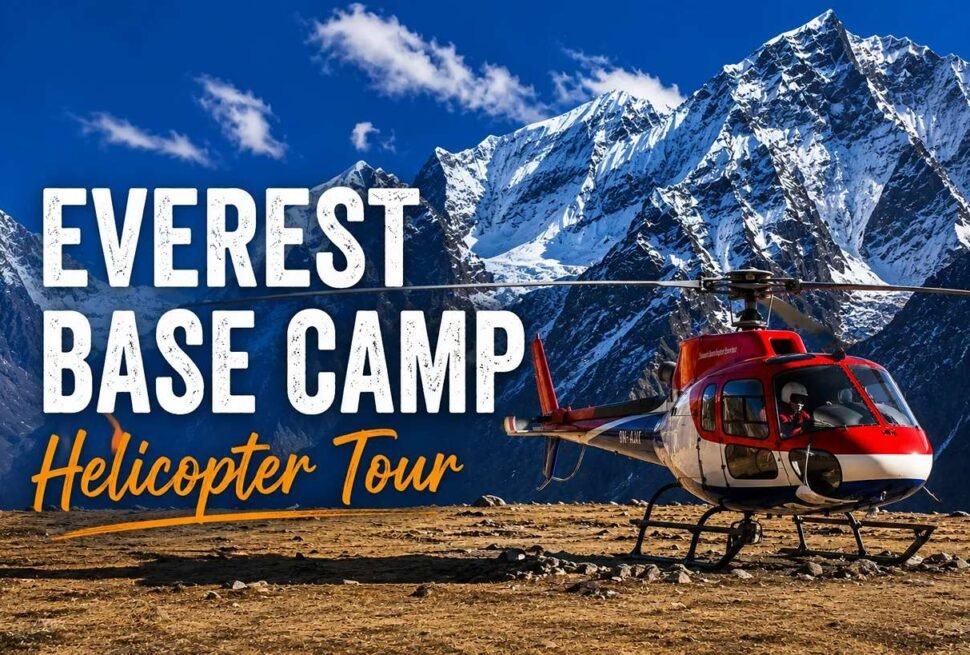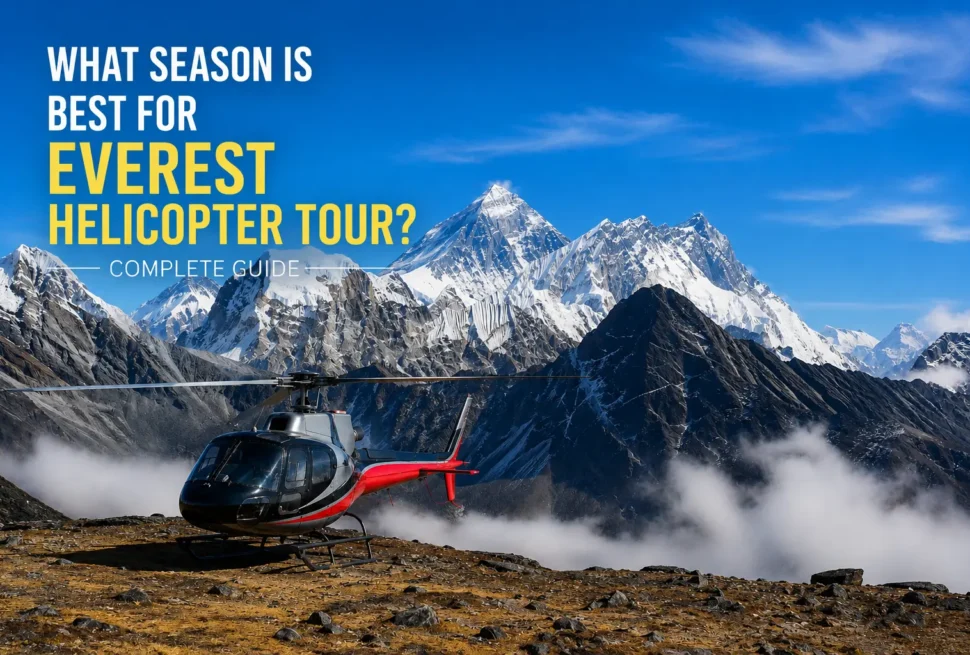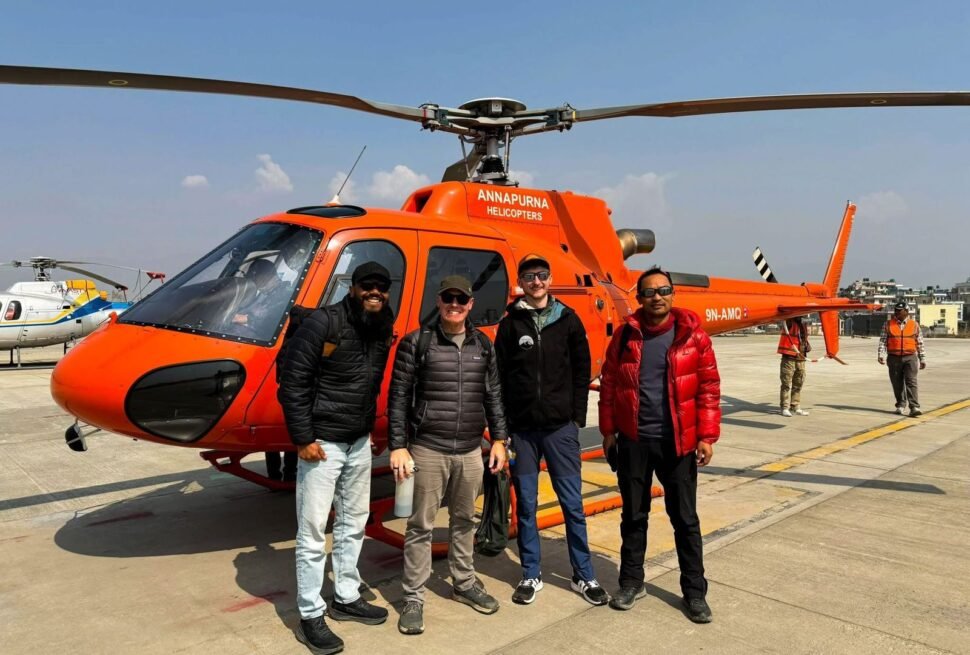
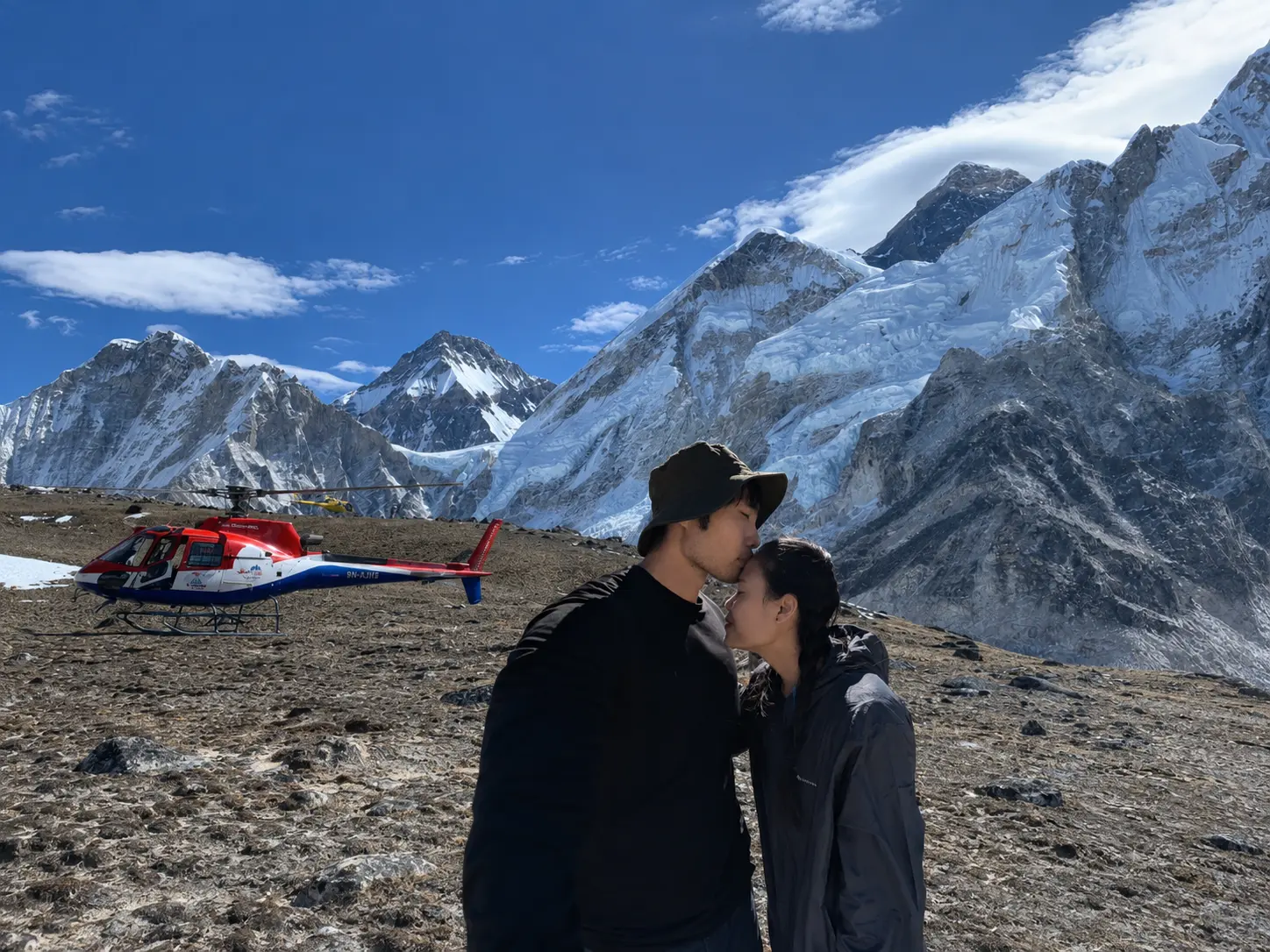
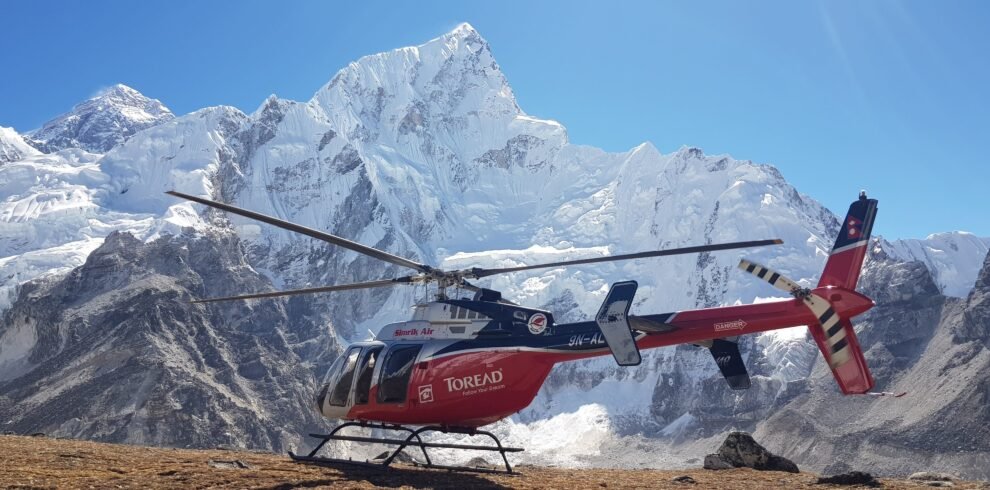
The Everest Base Camp helicopter tour vs trek decision comes down to time, budget, and what kind of experience you want from the Khumbu region. You have two options in front of you: a 12 to 14 day trek on foot through the Khumbu valley, or a 4 to 5 hour helicopter flight that covers the same ground from the air and lands at Kala Patthar before returning you to Kathmandu by mid morning. Both options deliver the view. Neither is universally better. The right one depends entirely on who you are, how much time you have, and what you want the experience to mean.
We cover this exact comparison in more depth elsewhere, including how the shared versus private helicopter decision plays out once you have chosen the trek, and what a combined trek with helicopter return itinerary actually looks like day by day.
Book the Everest Base Camp Helicopter Tour if you already know the helicopter is your answer. If you are still deciding, read every section below.
Quick Comparison: Helicopter Tour vs Everest Base Camp Trek 2026
| Factor | Helicopter Tour | EBC Trek |
|---|---|---|
| Duration | 4 to 5 hours total | 12 to 14 days |
| Cost per person | USD 1,150 to 1,500 (shared) | USD 1,200 to 2,500 (budget to mid range) |
| Fitness required | Minimal (no hiking) | High (daily 5 to 7 hour walks over 2 weeks) |
| Altitude experienced | 5,545m briefly (Kala Patthar) | 5,364m (Base Camp) or 5,545m (Kala Patthar) |
| Risk of altitude sickness | Low (brief exposure, 10 to 15 min) | Moderate to significant (gradual ascent required) |
| Time in the mountains | Hours | Days to weeks |
| Cultural immersion | Limited (aerial, brief ground stops) | Deep (Sherpa villages, monasteries, daily life) |
| Weather dependency | High (morning flights, cloud risk) | Moderate (bad days manageable with teahouse stops) |
| Physical accessibility | Any reasonably healthy adult | Requires fitness training and preparation |
| Best for | Limited time, families, physical limitations | Deep experience seekers, adventure lovers |
Planning your Everest Helicopter Tour?
Duration: The Most Practical Difference
The helicopter tour takes one morning. You leave your Kathmandu hotel around 5:00 to 5:30 AM and you are back in time for lunch. The Everest Base Camp trek takes two weeks minimum, plus additional days for Kathmandu arrival, acclimatization, and the return journey. For most international travelers, time is the binding constraint, not money or fitness.
What those two weeks on the trek look like in detail:
- Days 1 to 2: Kathmandu arrival, permit processing, gear sourcing, and pre trek briefing
- Day 3: Flight to Lukla (2,860m) and trek to Phakding (2,610m)
- Day 4: Trek to Namche Bazaar (3,440m)
- Day 5: Acclimatization day in Namche, short hike to Everest View Hotel
- Day 6: Trek to Tengboche (3,860m) with views of Ama Dablam
- Day 7: Trek to Dingboche (4,410m)
- Day 8: Acclimatization day in Dingboche
- Day 9: Trek to Lobuche (4,940m)
- Day 10: Trek to Gorakshep (5,164m) and Everest Base Camp (5,364m)
- Day 11: Kala Patthar sunrise (5,545m) and return to Pheriche
- Day 12 to 14: Return trek to Lukla and flight back to Kathmandu
The helicopter version compresses the high point moments, Kala Patthar and the aerial view of Everest, into a few hours. The trek version surrounds those moments with 12 days of walking, village culture, teahouse life, and acclimatization. Both reach the same altitude. The journey to get there is completely different.
Planning your Everest Helicopter Tour?
Cost: A Closer Look
| Cost Category | Helicopter Tour (Shared) | EBC Trek (Budget Group) | EBC Trek (Mid Range Private) |
|---|---|---|---|
| Main activity cost | USD 1,350 | USD 800 to 1,200 | USD 1,500 to 2,000 |
| Permits | Included | USD 60 to 80 separately | USD 60 to 80 |
| Accommodation | Minimal (Kathmandu hotel only) | USD 200 to 400 (teahouses) | USD 400 to 800 |
| Food on route | Breakfast included | USD 250 to 400 | USD 350 to 600 |
| Guide and porter | Included in package | USD 300 to 500 | USD 400 to 700 |
| Flights to/from Lukla | Not needed | USD 180 to 250 return | USD 180 to 250 |
| Gear purchase or rental | Minimal | USD 150 to 400 | USD 150 to 400 |
| Travel insurance | USD 50 to 150 | USD 100 to 200 | USD 100 to 200 |
| Total estimate | USD 1,450 to 1,700 | USD 1,850 to 3,000 | USD 3,000 to 5,000 |
At budget level, the helicopter tour is often cheaper than the full EBC trek when all costs are included. The trek at mid range or luxury level is significantly more expensive.
Fitness and Physical Requirements
This is where the two options diverge most dramatically for many travelers.
What the helicopter tour requires physically:
- Ability to board and exit a small helicopter with a low step height
- Ability to walk on uneven ground at Kala Patthar for 10 to 15 minutes at high altitude
- No history of severe cardiac conditions that would make brief high altitude exposure dangerous
- Basic comfort with small aircraft
What the EBC trek requires physically:
- Walking 5 to 7 hours per day for 12 to 14 consecutive days
- Managing elevation gain of 300 to 700 meters on multiple consecutive days
- Carrying a 5 to 8 kg daypack while your porter carries the main bag
- Managing acclimatization: headaches, nausea, fatigue, and appetite loss are normal at high altitude
- Fitness level equivalent to regular hiking or running 30 to 45 minutes daily for several months before the trek
The helicopter tour opens the Everest region to people who genuinely cannot complete a two week high altitude trek: older adults, people with joint problems, travelers with limited time, families with young children. For them, the helicopter is not a compromise. It is the only accessible option.
Altitude and Altitude Sickness Risk
Both the helicopter tour and the EBC trek reach Kala Patthar at 5,545 meters. The risk profiles are completely different.
On the EBC trek, you spend two weeks gradually acclimatizing. Your body has time to produce more red blood cells, adjust to lower oxygen pressure, and build the physiological adaptations that allow function at altitude. By the time you reach Kala Patthar, you have been living above 3,000 meters for 8 to 10 days.
On the helicopter tour, you fly from Kathmandu (1,400m) to Kala Patthar (5,545m) in approximately 90 minutes. Your body has essentially no time to acclimatize. The exposure is brief (10 to 15 minutes on the ground) and then you descend. During those minutes at 5,545m, people with no prior altitude exposure can feel breathlessness, mild headache, lightheadedness, and general weakness. These effects pass quickly once back in the helicopter and descending.
What You See: Aerial vs Ground Level
What the helicopter gives you that the trek cannot:
- Aerial views of the entire Khumbu icefall and glacier system that trekkers only see from ground level
- Perspective on the scale of the Himalayan range that ground level walking cannot provide
- Simultaneous view of Everest, Lhotse, Cho Oyu, Makalu, and Ama Dablam from altitude
- Bird’s eye view of the moraines and glacial lakes that trekkers navigate through
What the trek gives you that the helicopter cannot:
- Ground level views of Ama Dablam from Tengboche that are among the finest mountain photography compositions in Nepal
- Walking through the Sherpa villages of Namche Bazaar, Khumjung, Phortse, and Dingboche
- Time at the Tengboche Monastery, one of the most important Buddhist sites in the Himalayan world
- The full sensory experience of being in a high altitude environment: the smell of juniper incense, the sound of prayer flags in the wind
- Everest Base Camp itself on the Khumbu Glacier, surrounded by expedition tents and mountaineering history
- Sunrise from Kala Patthar after an overnight at Gorakshep, one of the classic Himalayan dawn experiences
Planning your Everest Helicopter Tour?
Cultural Depth: Villages, Monasteries, and Sherpa Life
The helicopter tour passes over or briefly near the Sherpa villages of the Khumbu valley. The EBC trek walks through them. This difference is significant for travelers whose primary interest is Nepal’s culture and people rather than pure mountain photography.
On the trek, you spend time in Namche Bazaar (the main trading town of the Khumbu), Tengboche and its monastery, Khumjung village, and smaller settlements where teahouse families provide genuine hospitality over multiple evenings.
On the helicopter tour, you see these communities from the air and spend approximately 30 to 45 minutes at Hotel Everest View. The cultural dimension of the helicopter tour is minimal compared to the trek.
Who Should Choose the Helicopter Tour
- Travelers with 3 to 7 days in Nepal who want the Everest experience without dedicating two weeks
- Older travelers or those with joint, cardiac, or respiratory conditions that make two weeks of high altitude trekking inadvisable
- Families with young children who want the experience accessible to all ages
- Business travelers or people on tight schedules who have one free day in Kathmandu
- Travelers who have already done the EBC trek and want to revisit Everest from the air on a return trip to Nepal
- People whose primary goal is aerial and photographic views of the Himalayan range from altitude
Who Should Choose the EBC Trek
- Travelers with 3 to 4 weeks available in Nepal who want the full Himalayan immersion
- Active, fit travelers who want a physical achievement alongside the mountain views
- People for whom cultural experience, village life, and Sherpa community are primary interests
- Travelers who want the experience of walking to Everest Base Camp on the Khumbu Glacier
- Photography enthusiasts whose goals include ground level Himalayan compositions at golden hour and monastery interiors
- Anyone for whom the process of the journey, not just the destination, is the point
Planning your Everest Helicopter Tour?
Can You Do Both?
Yes, and many Nepal visitors do. The EBC trek followed by a helicopter return from the Khumbu valley to Kathmandu is one of the most popular Nepal trekking combinations. It lets you walk in, experience the full ground level cultural and physical journey, and return quickly. The return saves 4 to 5 days of retracing the same trail and gives you the aerial perspective on the return leg.
The Honest Recommendation
If you have 12 to 14 days and are physically prepared, do the trek. The full EBC trek is one of the great travel experiences available anywhere and the helicopter tour cannot replicate two weeks in the Khumbu.
If you have less than a week in Nepal, if you cannot manage two weeks of high altitude walking for any reason, or if your primary goal is aerial views and the concentrated Himalayan experience in a single day, book the helicopter tour. It is not a lesser version of the trek. It is a different thing entirely.
Book your Everest Base Camp Helicopter Tour directly with Next Trip Nepal for confirmed 2026 pricing and departure availability. If you are comparing with the Everest Base Camp Trek, our team can advise on which option fits your specific dates, fitness level, and Nepal travel plan.