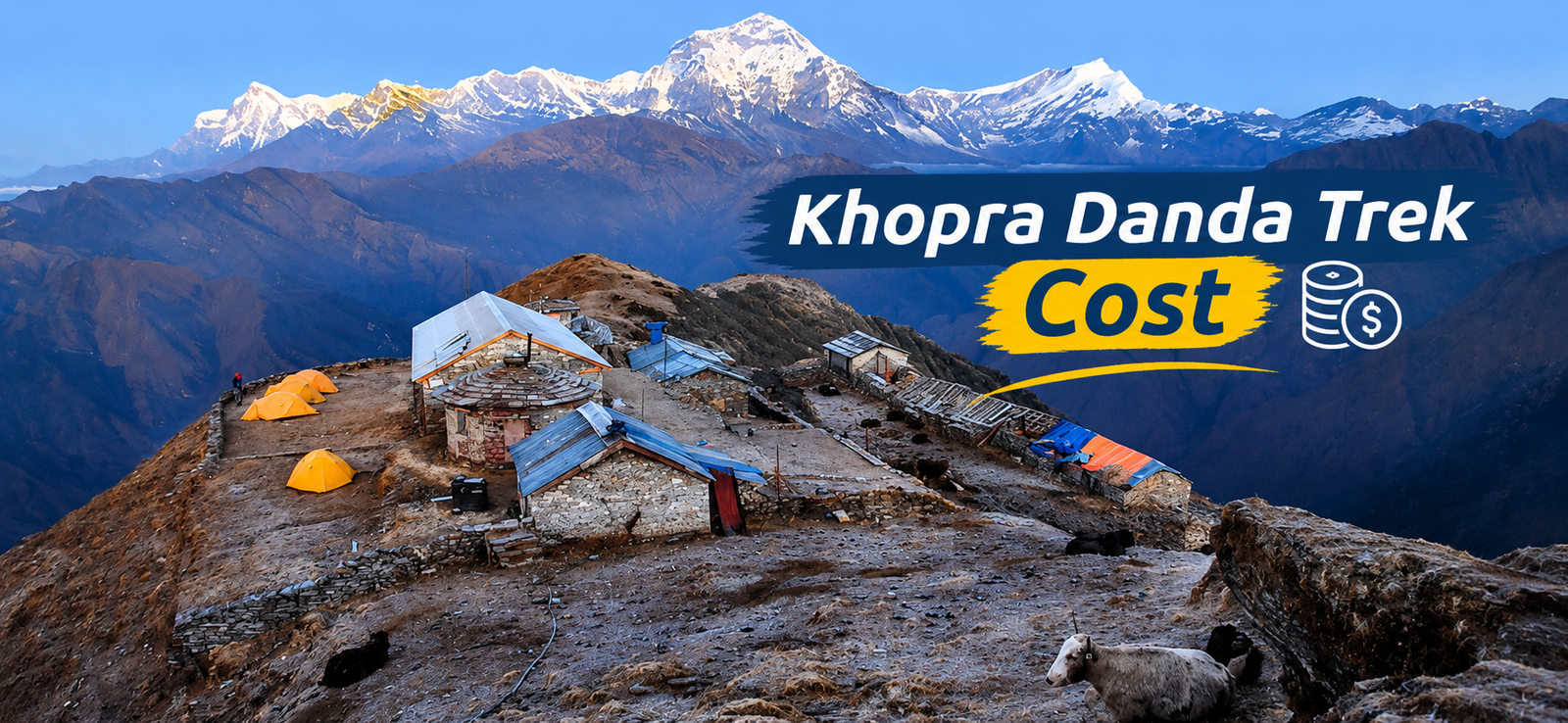
One of the most common questions we hear about the Khopra Danda Trek is simply what it costs. The honest answer is that it depends heavily on how you trek, which operator you choose, and what level of comfort and support you want along the way. This guide breaks down where the money actually goes, what is typically included in a package price, and what tends to catch trekkers by surprise.
Prices across the trekking industry in Nepal change over time with inflation, fuel costs, and local pricing adjustments, so treat every figure here as an approximate current range rather than a fixed promise. For a firm, current quote, see our main Khopra Danda Trek page or enquire with us directly.
Why Trek Costs Vary So Much Between Operators
Before getting into specific numbers, it helps to understand why you will see such a wide range of advertised prices for what looks like the same trek.
- Group size changes the per person price significantly: fixed costs like a guide’s daily rate get split across more people in a larger group, so joining or forming a bigger group generally lowers your individual cost.
- Service level varies widely between operators: some packages include more support, better communication, and more experienced guides, which naturally costs more than a bare bones arrangement.
- Accommodation and meal quality differ along the route: some operators book more comfortable teahouses or include better meals, which affects the overall package price.
- What counts as included varies enormously: one operator’s quoted price might include airport transfers and all permits, while another’s excludes these and adds them as extras later, so always compare what is actually included rather than just the headline number.
- Season affects pricing in both directions: peak season demand can push prices up at some teahouses, while off season deals are sometimes available from operators trying to fill group departures.
What a Typical Package Price Generally Includes
Most reputable trekking packages for this route bundle together a similar core set of services, though you should always confirm specifics with your chosen operator.
- A licensed trekking guide for the full itinerary: this is typically the single largest cost component in any guided package and covers their daily wage, insurance, and logistics expertise.
- Teahouse accommodation for the duration of the trek: most packages include a bed each night along the standard route, usually on a twin sharing basis unless you specifically request and pay for a single room.
- Meals during the trek itself: breakfast, lunch, and dinner on trekking days are commonly included, though this varies by operator and should be confirmed before booking.
- Required permits: the ACAP permit for the Annapurna Conservation Area is typically arranged and included by the operator, covered in more detail below.
- Ground transportation between Pokhara and the trailhead: transport to and from the starting and ending points of the trek is usually part of the package.
- A porter, in many standard packages: carrying your main bag so you only need to manage a light daypack is often included or available as an inexpensive add on.
What a Typical Package Price Generally Does Not Include
Just as important as knowing what is included is knowing what usually is not, since these are the costs that catch trekkers off guard.
- International and domestic flights: your flight to Nepal, and often your transport between Kathmandu and Pokhara if flying rather than driving, is typically a separate cost you arrange yourself.
- Nepal visa fees: most nationalities pay for a visa on arrival or in advance, and this is paid directly to Nepali immigration authorities rather than through your trekking operator.
- Travel and medical insurance: this is almost always the trekker’s own responsibility to arrange and is not bundled into a trekking package.
- Tips for your guide and porter: tipping is a standard part of trekking culture in Nepal and is virtually never included in the quoted package price, discussed in more detail below.
- Personal purchases on the trail: bottled water, snacks, hot showers, device charging, and wifi access at teahouses are typically paid for individually as you go.
- Alcoholic drinks and bakery items: extras like beer, soft drinks beyond what is included, and bakery treats at teahouses are an out of pocket cost.
- Emergency evacuation costs beyond what insurance covers: this is exactly why travel insurance with evacuation coverage, discussed further below, matters so much.
Permit Costs Breakdown
Permits are a required and generally modest part of the overall trek cost, though exact fees can change and should be confirmed at the time of booking.
- The ACAP permit is required for this route: since the trail passes through the Annapurna Conservation Area, every trekker needs this permit, and it is typically arranged and included by your operator.
- Fees differ by nationality in some cases: permit pricing structures can vary, so confirm the current fee applicable to your nationality when you book rather than assuming a single universal figure.
- Carrying passport copies speeds up permit processing: having the right documentation ready avoids delays at checkpoints along the route.
- For full detail on permits, guide requirements, and the rules around solo versus guided trekking on this route, see our dedicated guide: our solo trekking and permits guide covers this in depth, including current permit requirements and how they affect your overall cost and planning.
Guide and Porter Costs
Whether bundled into a package price or arranged separately, guide and porter costs are a significant piece of the overall budget.
- A guide’s daily rate reflects real expertise and responsibility: an experienced, licensed guide is managing your safety, navigation, cultural interactions, and real time decisions about pacing and altitude, which is reflected in their rate.
- Porters are typically paid a separate, lower daily rate: porters carry gear rather than provide guiding expertise, so their rate is structured differently from a guide’s.
- Hiring a dedicated guide for just your family or group costs more than joining a shared group departure: this is the tradeoff between the flexibility and personal attention of a private guide versus the lower per person cost of a shared group.
- Multi day treks mean guide and porter costs accumulate across the whole itinerary: a thirteen day trip naturally costs more in guide and porter fees than a shorter trek, simply due to the number of days involved.
- Booking through an established operator generally means fair, consistent wages for guides and porters: this is worth considering alongside price alone, since underpaying trekking staff is a genuine ethical concern in the industry.
Teahouse Accommodation Costs
Accommodation costs look different depending on whether you book a full package or try to arrange teahouses independently.
- Within a package, accommodation cost is already built into the total price: you generally do not pay separately for your room each night when trekking with an organized package.
- Independent trekkers pay teahouse room rates directly each night: these rates are generally modest on their own, though they add up over a multi day trek and vary by altitude and location.
- Room rates can be lower or even waived if you eat your meals at that teahouse: many teahouses price accommodation and food together in practice, expecting guests to dine where they sleep.
- Private rooms, where available, typically cost more than shared or twin rooms: if privacy matters to you, budget for this difference, particularly relevant for the couples discussed in our family and couples guide.
- Prices generally rise somewhat at higher, more remote teahouses: the further supplies have to be carried in, the higher the baseline cost tends to be, which applies to both rooms and food.
Food and Drink Costs on the Trail
Food is one of the more variable and easily underestimated costs of trekking, particularly for independent trekkers paying as they go.
- Prices increase with altitude and remoteness: everything consumed at a teahouse has to be carried in, often by porter or mule, so a plate of food or a bottle of water costs progressively more the higher you go.
- Dal bhat is usually the most economical main meal option: this traditional Nepali meal is a trekking staple and tends to offer the best value, with refills often included.
- Imported or specialty items cost noticeably more: items like chocolate bars, imported snacks, or specific international dishes carry a higher markup than local staples.
- Bottled water adds up over a multi day trek: bringing a reusable bottle and water purification tablets or a filter can meaningfully reduce this cost compared to buying bottled water at every stop.
- Hot drinks like tea and coffee are a small but frequent expense: many trekkers enjoy several hot drinks a day, which is a modest cost individually but adds up across a thirteen day trip.
- Within a package, meals during the trek are usually already covered: this is one of the clearer financial advantages of booking an inclusive package versus trekking fully independently.
Domestic Transport Costs
Getting to and from the trailhead itself involves transport costs worth budgeting for separately from the trek itself.
- Kathmandu to Pokhara travel is a separate cost most trekkers arrange themselves: options range from budget tourist buses to a quicker domestic flight, with a meaningful price difference between them.
- Pokhara to the trailhead is typically included in a package: local transport to the actual starting point of the trek is usually bundled into your package price rather than an extra cost.
- Flying saves time but costs more than overland travel: if your schedule is tight, the extra cost of flying between Kathmandu and Pokhara may be worth it, but budget travelers often choose the bus instead.
- Return transport at the end of the trek is usually included as well: getting back to Pokhara from wherever the standard itinerary ends is generally part of the package.
- Confirm exactly what transport is included when you book: this is a common area of confusion, so ask specifically rather than assuming.
Gear Costs: Buy or Rent
Gear is one of the more flexible costs in your overall budget, since you have real choices about what to buy versus rent.
- Renting gear in Kathmandu or Pokhara is significantly cheaper than buying new: items like a sleeping bag, down jacket, or trekking poles are widely available to rent for a fraction of retail purchase price.
- Buying makes more sense for items you will use again: if you plan to trek regularly or already own quality hiking gear, bringing your own avoids rental costs entirely.
- Quality gear bought locally in Nepal can be surprisingly affordable: Kathmandu and Pokhara both have extensive gear markets, including genuine and replica branded items at a range of price points.
- Footwear is one item worth investing in before you arrive rather than renting: well broken in boots matter enough for comfort and blister prevention that renting unfamiliar footwear is a real risk.
- Review our full packing list to plan your gear budget accurately: our detailed packing list for the Khopra Danda Trek breaks down exactly what you need, which helps you budget realistically for what to buy, rent, or bring from home.
Visa and International Flight Costs
These two costs are outside anything a trekking operator controls, but they are a real part of your total trip budget.
- Most nationalities can obtain a Nepal visa on arrival: fees and exact requirements vary by nationality and visa duration, so check the official Nepal immigration department’s current information before you travel rather than relying on older figures.
- International flight costs vary enormously by season, origin, and how far ahead you book: booking well in advance generally offers better pricing than last minute flights, particularly during peak trekking seasons.
- Factor in the cost of any connecting flights to Kathmandu: depending on where you are traveling from, this may be a separate significant cost beyond your main international flight.
- We do not arrange international flights or visas: these are your own responsibility to research and book directly, though we are happy to advise on timing around your trek dates.
Tipping Culture and Guidance
Tipping is a genuinely important and expected part of trekking culture in Nepal, not an optional extra, though exact amounts are a personal decision rather than a fixed rule.
- Tips form a meaningful part of guide and porter income: base daily wages are supplemented significantly by tips, so this is not simply a bonus but an expected component of fair compensation in practice.
- Tipping is usually done as a lump sum at the end of the trek: rather than tipping daily, most trekkers present a tip to their guide and porter together on the final day or evening.
- Group treks often pool tips among all trekkers: if you are part of a larger group, discuss with fellow trekkers whether to pool and split a combined tip rather than each tipping separately.
- Guides generally receive a higher tip than porters: this reflects the difference in role and responsibility discussed earlier, though both deserve genuine recognition for their work.
- Budget for tipping as a real line item, not an afterthought: set aside cash specifically for this purpose rather than discovering at the end of the trek that you are short on funds.
- When in doubt, ask your operator for current typical ranges: norms can shift over time, and your operator can give you an honest, current sense of what is typical for your specific trip length and group size.
Travel Insurance Costs
Insurance is a cost every trekker should budget for separately, and it is not something we can arrange or guarantee a price for on your behalf.
- Premiums vary by provider, coverage level, trip length, and your home country: there is no single figure that applies to everyone, so get a quote from a provider directly rather than relying on a general estimate.
- Coverage for high altitude trekking and emergency evacuation tends to cost more than basic travel insurance: this is a worthwhile additional cost given the remote nature of this trek, not an area to cut corners on to save money.
- Buying insurance early, before you travel, is almost always required for it to be valid: most policies will not cover a trip that has already begun, so this is not a cost you can defer until you arrive in Nepal.
- Compare a few providers rather than accepting the first quote: coverage details and pricing can differ meaningfully between insurers for what looks like a similar policy on the surface.
Budget, Mid Range, and Premium Trip Tiers
Trekkers generally fall into a few broad budget categories, each with real tradeoffs worth understanding.
- Budget focused trekkers typically prioritize group departures and shared rooms: joining a scheduled group trip and accepting twin sharing accommodation lowers the per person cost meaningfully compared to a fully private arrangement.
- Mid range trekkers often balance cost with some added comfort: this might mean a private room when available, a slightly more flexible itinerary, or a dedicated rather than shared guide.
- Premium trekkers prioritize full customization and maximum comfort: a private guide and porter, the most comfortable available teahouses, and a fully flexible itinerary built around personal preferences all come at a higher price point.
- Higher spending does not guarantee a better experience for everyone: some trekkers genuinely prefer the social atmosphere and lower cost of a group departure over the privacy of a premium arrangement, so choose based on your actual preferences, not just price.
- Discuss your priorities honestly with your operator: telling us what matters most to you, whether that is cost, comfort, flexibility, or social atmosphere, helps us recommend the right tier for your specific trip.
Hidden or Easily Forgotten Costs
A few smaller costs are easy to overlook when budgeting but add up meaningfully across a thirteen day trip.
- Device charging fees at teahouses: most teahouses charge a small per device fee to charge phones, cameras, or power banks, particularly at higher elevations.
- Wifi access fees: where available at all, wifi often costs extra on top of your room and meals.
- Hot shower fees: many teahouses charge separately for hot water, which is not always included even when you are paying for a room and meals there.
- Laundry costs if you choose not to hand wash your own clothing: some teahouses offer paid laundry service, which some trekkers use to lighten their packing load.
- Bakery items and treats: many teahouses along popular routes sell baked goods, chocolate, and other treats that are easy to spend more on than planned.
- Souvenir shopping in Kathmandu or Pokhara before or after your trek: this is entirely optional but worth budgeting for separately if you plan to shop.
- A buffer for unexpected changes: weather delays, an added rest day, or an unplanned need to arrange extra transport are worth budgeting a small contingency for rather than assuming everything will go exactly as planned.
How Group Size Affects Per Person Cost
Group size is one of the biggest levers affecting your individual price, and it is worth understanding how this works before you book.
- Fixed costs get divided across the group: a guide’s daily rate and some transport costs are essentially fixed regardless of group size, so a larger group spreads these costs across more people.
- Solo trekkers generally pay the most per person: without anyone to share fixed costs with, a solo private trip carries a higher individual price than joining or forming a group.
- Small families or couples sit in between: a group of two to four people shares some costs while still getting a smaller, more personal group than a large scheduled departure.
- Joining an existing scheduled group departure is usually the most economical option: if cost is your primary concern, ask your operator about upcoming scheduled group departures you could join rather than booking a fully private trip.
- Larger groups are not always cheaper beyond a certain point: very large groups sometimes require additional guides or porters, which can offset some of the per person savings, so ask specifically how pricing scales for your exact group size.
Money Matters: Cash, ATMs, and Currency
Practical money management is worth planning ahead for, since options become more limited the further you travel from Kathmandu and Pokhara.
- Cash is essential once you are on the trail: card payments and digital transfers are generally not available at teahouses, so bring enough Nepali rupees in cash to cover your entire trek.
- Withdraw cash in Kathmandu or Pokhara before heading to the trailhead: ATMs become unreliable or nonexistent the further into the mountains you go, so do not count on finding one along the route.
- Carry a mix of denominations: smaller notes are more useful for day to day purchases like tea, snacks, and small fees, while larger notes are harder for some teahouses to break.
- Currency exchange is easiest and often best value in Kathmandu: exchanging money before you travel to Pokhara or the trailhead is generally more convenient and sometimes offers better rates.
- Budget slightly more cash than your minimum estimate: running short on cash partway through a remote trek is a genuinely stressful situation worth avoiding with a reasonable buffer.
How Trip Length Affects Total Cost
The length of your itinerary has a direct, cumulative effect on your total budget that is worth understanding before you compare options.
- Each additional day adds accommodation, meals, and guide costs: a longer itinerary is not simply a better value version of a shorter one, it is a genuinely larger total expense, even though the daily rate itself may stay similar.
- A gentler, slower itinerary for families or first timers costs more in total: as discussed in our families and first timers guide, adding rest days or splitting longer days into two gentler ones extends the trip length and therefore the total cost, even though it may reduce physical strain.
- Shortening the standard itinerary is possible but has real tradeoffs: skipping the Khayer Lake excursion, for example, can reduce cost and physical demand, but it also means missing that specific scenery, so weigh this decision on more than price alone.
- Weather delays can extend your trip unexpectedly: budget some flexibility in both time and money for the possibility that poor weather adds an unplanned day to your itinerary.
- Compare quotes based on identical itinerary lengths: if you are comparing prices between operators, make sure you are comparing the same number of days and the same inclusions, since a shorter or less inclusive itinerary will naturally look cheaper without actually being better value.
Comparing Cost Against Other Popular Treks
Trekkers often ask how this trek’s cost compares to other well known routes in the region, and there are some general patterns worth knowing, though exact pricing always depends on the specific operator and itinerary.
- Shorter itineraries generally cost less in total than longer ones: since this trek is noticeably shorter than routes like the full Annapurna Circuit or Everest Base Camp, the total cost tends to be lower simply due to fewer days of guide, porter, and accommodation expenses.
- Lower altitude destinations sometimes have slightly lower permit and logistics costs: this varies by specific route and current permit structures, so it is a general pattern rather than a guaranteed rule.
- We cannot quote or guarantee another operator’s specific current pricing: if you are comparing us against another company’s quote, we are happy to explain honestly what is included in our price so you can make a fair, apples to apples comparison yourself.
- Cheaper is not always better value: a significantly lower quote from another operator may reflect fewer inclusions, less experienced guides, or lower wages for trekking staff, so always ask what is actually included before assuming a lower number is the better deal.
- This trek offers strong value for the scenery and experience it delivers: many trekkers who have also done longer, more expensive routes feel this trek offers a genuinely rewarding experience relative to its shorter length and lower total cost.
Sample Cost Breakdown by Category
The table below summarizes the major cost categories discussed in this guide and who typically covers each one within a standard package arrangement.
| Cost category | Typically included in package | Who usually pays separately |
|---|---|---|
| Guide and porter daily rates | Yes | Not applicable within a package |
| ACAP permit | Yes | Independent trekkers arranging their own permits |
| Teahouse accommodation during trek | Yes | Independent trekkers paying nightly room rates |
| Meals during trek | Usually yes | Independent trekkers or those on partial board packages |
| Tips for guide and porter | No | Every trekker, as a separate end of trek expense |
| International flights and visa | No | Every trekker |
| Travel insurance | No | Every trekker |
| Wifi, charging, hot showers, snacks | No | Every trekker, paid individually at each teahouse |
What We Offer
We believe in transparent, honest pricing and want you to understand exactly what you are paying for before you book with us.
- Clear, itemized quotes: we explain exactly what is and is not included in your specific package price, so there are no surprises once you arrive in Nepal.
- Flexible pricing across group sizes: whether you are trekking solo, as a couple, or as part of a larger family group, we can walk you through how group size affects your specific cost.
- Fair wages for our guides and porters: we price our trips to support genuinely fair compensation for our trekking staff, which we believe matters as much as the number on your invoice.
- Honest guidance on where to save and where not to cut corners: we will tell you honestly which costs are worth paying for, such as insurance and quality footwear, and where more budget conscious choices make sense.
- Help with budgeting for the full trip, not just our package: we can advise on realistic estimates for flights, visas, gear, and tipping so your overall trip budget is accurate from the start.
You can see our full standard itinerary and current, firm pricing on our main Khopra Danda Trek page, and mention your budget priorities and group size when you enquire so we can give you an accurate, itemized quote. Our starting point comparison guide covers the route options in detail, and our packing list guide is worth reviewing to help plan your gear budget accurately.
Frequently Asked Questions
What is the average total cost of the Khopra Danda Trek?
Total cost varies significantly based on group size, service level, and what you choose to include. Rather than quoting a single figure that may quickly become outdated, we recommend checking our main trip page for current, firm pricing or enquiring directly for a quote tailored to your specific plans.
What is typically included in a package price?
Most packages include your guide, accommodation, meals during the trek, required permits, and transport between Pokhara and the trailhead. Always confirm the specifics with your operator, since inclusions vary.
Do I need to carry a lot of cash on the trek?
Yes. Cards and digital payments are generally not accepted at teahouses, so bring enough Nepali rupees in cash to cover tips, personal purchases, and any costs not included in your package before you leave Kathmandu or Pokhara.
Is there a best time to book to get a better price?
Booking well in advance generally secures better availability and sometimes better pricing, particularly for group departures and flights. Off season bookings can occasionally offer discounts, though trail and weather conditions are less predictable outside peak seasons.
Do prices change by season?
Yes, to some degree. Peak season demand can affect teahouse pricing and availability, while flights and some services may offer better value in shoulder or off seasons. Confirm current seasonal pricing when you enquire.
Is tipping mandatory?
Tipping is not legally mandatory but is a strongly expected part of trekking culture in Nepal and a meaningful part of guide and porter income. Budget for it as a genuine cost of your trip rather than an optional extra.
Is trekking solo cheaper or more expensive than joining a group?
Solo trekking is generally more expensive per person, since fixed costs like a guide’s rate are not shared with anyone else. Joining a scheduled group departure typically lowers your individual cost.
How much do permits cost specifically?
The ACAP permit fee can vary by nationality and is subject to change, so confirm the current fee when you book. See our dedicated permits and solo trekking guide for more detail on requirements.
Device charging, wifi, hot showers, laundry, and bakery items at teahouses are common small costs that add up. None of these are typically included in a standard package, so budget a reasonable daily allowance for them.
Is it cheaper to rent or buy trekking gear in Nepal?
Renting is generally much cheaper than buying for items you will not use again, such as a sleeping bag or down jacket. Buying makes more sense for footwear and gear you plan to use on future trips.
What payment methods do you accept for booking?
Payment methods vary and are best confirmed directly with us when you book, since available options can change over time. We will walk you through current accepted methods during the booking process.
Do you require a deposit to book?
Deposit requirements and amounts are confirmed at the time of booking and can vary. Enquire with us directly for current deposit terms for your specific trip.
How much does travel insurance with evacuation coverage typically cost?
Premiums vary significantly by provider, coverage level, your home country, and trip length, so there is no single reliable figure. Request quotes directly from insurance providers rather than relying on a general estimate.
Does a slower, customized itinerary cost more than the standard trip?
Generally yes, since extra days add accommodation, meals, and guide costs. Discuss specific pricing for a customized, slower itinerary when you enquire, and see our families and first timers guide for more on why some groups choose this option.
Should I book a private guide or join a group departure to save money?
Joining a scheduled group departure is generally the more economical option, since fixed costs like the guide’s rate are shared across more people. A private guide offers more flexibility and personal attention but comes at a higher individual price. Tell us your priorities when you enquire so we can recommend the right fit.
Can I negotiate the price of a trekking package?
Established operators generally price their packages fairly based on real costs like guide wages, permits, and logistics, so significant negotiation is not typically the norm or necessarily a sign of a better deal. A heavily discounted price from another operator is worth questioning rather than simply accepting, since it may reflect cut corners elsewhere, such as lower wages for guides and porters.