Every trekker walking to Everest Base Camp passes through Namche Bazaar, and most spend more time there, across their entire trip, than in any other single village on the route, yet Namche gets treated in a lot of trip planning as little more than a rest stop between Lukla and the high mountains. That undersells it badly. Namche is the actual capital of the Khumbu region, the trading hub that has supplied every climbing expedition since the 1950s, and the one place on the entire trek with enough infrastructure, culture, and history packed into a single horseshoe shaped bowl of a town to deserve its own dedicated guide, written in the same depth we give to Base Camp itself. This article covers everything worth knowing about Namche Bazaar before you arrive, from why you spend two nights there to what you can actually do with that time, what you can buy, what the food and lodging actually look like, and what the town’s history says about the region you are about to walk deeper into.
Where Namche Sits and Why It Matters
Understanding Namche properly before you arrive changes how you use your time there, and it is worth reading this guide fully rather than skimming for a couple of quick facts, since the town rewards a bit of preparation more than almost anywhere else on the route.
Namche Bazaar sits at roughly 3,440 meters above sea level, built into a dramatic horseshoe shaped bowl on the side of a mountain at the junction of the Dudh Koshi and Bhote Koshi rivers, framed by Kongde Ri at 6,187 meters on one side and Thamserku at 6,608 meters on the other. It is the largest settlement in the Khumbu, widely referred to as the Sherpa capital, and it functions as the administrative and commercial center for the entire region. Government offices, a police checkpoint, and the headquarters of Sagarmatha National Park are all based here, and the great majority of Sherpa families working in Everest region tourism, from guides to lodge owners to porters, trace their roots back to Namche and the villages immediately around it.
Why Every Trekker Stays Two Nights Here
If you look at almost any standard Everest Base Camp itinerary, you will notice Namche is the first place with a scheduled rest day, and this is not a scheduling convenience. Namche sits at the altitude where acclimatization becomes a genuine physiological necessity rather than a nice to have, and spending two nights here, with a day hike higher and a return to sleep at the same elevation, is one of the most effective and widely recommended strategies for reducing your risk of altitude sickness further up the trail. Trekkers who skip this rest day and push straight through to Tengboche or beyond report a noticeably higher rate of altitude related symptoms in the days that follow, which is exactly why virtually every reputable itinerary, guided or independent, builds this stop into the schedule rather than treating it as optional. For a fuller picture of how altitude sickness works and how to prevent it across the whole trek, our guide on altitude sickness on Nepal treks goes into the symptoms and prevention strategy in more depth.
The Best Acclimatization Hikes From Namche
The golden rule of altitude acclimatization is to climb high and sleep low, and Namche offers several genuinely rewarding day hikes that put this into practice rather than leaving you bored in a lodge for an entire rest day.
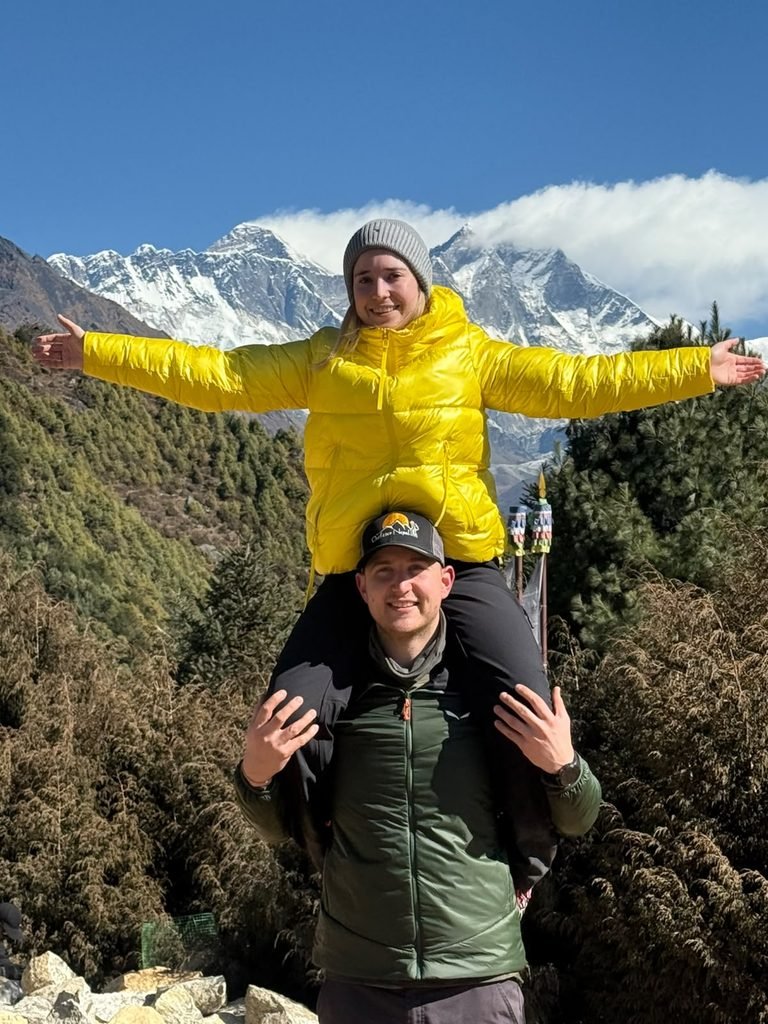
The hike up to the Everest View Hotel at Syangboche, sitting at roughly 3,880 meters, is the most popular choice, a round trip of about five and a half kilometers and three to four hours that gains close to 440 meters. The hotel itself was recognized by Guinness World Records in 2004 as the highest elevation hotel in the world, and even if you are not staying there, the terrace offers one of the first genuine views of Everest itself on the entire trek, along with Lhotse, Ama Dablam, and Thamserku, all visible on a clear morning over a coffee or tea.
From Syangboche, many trekkers continue on to Khumjung and Khunde, two neighboring Sherpa villages that see far fewer visitors than Namche itself despite being only a short walk away. Khumjung is home to a monastery that displays what is claimed locally to be a yeti scalp, a curiosity worth a look even if you treat the claim itself with the skepticism it probably deserves, and Khunde is home to the Kunde Hospital, a small but significant community hospital founded on December 18, 1966 by Sir Edmund Hillary through his Himalayan Trust, still serving roughly 8,000 people across the Khumbu district today.
Back in Namche itself, the Sherpa Culture Museum, situated on a ridge above the main town on the trail toward Tengboche, houses expedition artifacts, traditional Sherpa household items, and a hall of fame commemorating Everest summiteers going back to Hillary and Tenzing Norgay themselves. The Sagarmatha National Park visitor center, near the park headquarters in Namche, is a smaller but worthwhile stop with wildlife photography, mountaineering memorabilia, and displays on the region’s Sherpa culture, and it pairs naturally with a stop at the museum since both are a short walk from the main square.
The Saturday Market That Gave Namche Its Name
Namche’s name itself is tied to its function as a market town, and the weekly Saturday market, known locally as a haat bazaar, remains one of the more genuinely local experiences you can have in a town that otherwise caters heavily to trekking tourism. Traders come down from surrounding Khumbu villages and, historically, from across the border in Tibet, to sell yak cheese, butter, clothing, household goods, and a mix of local produce and imported Chinese consumer goods in stalls set up through the town center. If your itinerary allows any flexibility, timing your rest day in Namche to land on a Saturday is worth the small effort, since the atmosphere on market day is noticeably different from the rest of the week and gives you a glimpse of Namche functioning as a trading hub rather than purely a trekking waypoint.
A Brief Note on Local Government and the Municipality
Namche also sits within the Khumbu Pasang Lhamu Rural Municipality, the local government body responsible for the permit system that governs the entire Everest Base Camp trail, including the Trek Card issued to trekkers who choose to go without a guide. Understanding that Namche is not just a tourism hub but the actual seat of local administration for the Khumbu helps explain why so many of the region’s rules, fees, and decisions trace back to offices located in this one town, even though the trail itself continues for many days beyond it.
Namche’s Trading History and the Tibet Connection
Namche’s role as a trading center did not start with tourism. For generations before Everest was ever climbed, Sherpa traders from Namche and the surrounding villages carried salt, wool, and other goods across the Nangpa La, a high pass at roughly 5,806 meters located about 30 kilometers northwest of Everest, trading directly with Tibet on what was historically part of the broader Tibet Nepal salt trade route. This cross border trade was a central part of the Khumbu economy for centuries and shaped Namche’s development as a commercial hub long before any Western climber set foot in the region. China’s tightening control over the Tibetan border, particularly after 1959 and again following a widely reported 2006 incident involving Tibetan refugees attempting to cross the Nangpa La, sharply reduced this open trade over the following decades, and tourism has since become the dominant economic activity in a town whose original purpose was almost entirely about moving goods between two countries rather than hosting visitors.
Sherpa Culture and Tenzing Norgay’s Roots
The Sherpa people of the Khumbu practice Tibetan Buddhism, and that heritage is visible throughout Namche in its monastery, its prayer wheels, and the mani stones and chortens you pass on the trail both entering and leaving town. Tenzing Norgay, who reached the summit of Everest alongside Edmund Hillary in 1953, had his childhood home in the village of Thame, a short trek further up the valley from Namche within the same general area, though historians note his exact birthplace remains genuinely disputed between Tibet and the Khumbu side of the border. Thame itself, along with the neighboring settlement of Thameteng, was historically among the last year round villages on the old salt trading route connecting Tibet, India, and Nepal, tying the region’s mountaineering fame directly back to the same trading culture that built Namche in the first place.
What Amenities to Expect in Namche
Namche has a well earned reputation as the last place on the trek with what most travelers would recognize as real infrastructure, and it is worth taking advantage of that before heading higher into more basic villages. Bakeries selling genuinely good pastries and bread, cafes with wifi, and a scattering of bars including the well known Namche Irish pub, often described as one of the highest and most remote Irish pubs anywhere in the world, all operate in the town center. Two ATMs, run by Standard Chartered and Nabil Bank, are the last reliable cash machines you will see before Base Camp, though both are known to run out of cash or lose network connectivity during busy weeks, so do not rely on them as your only source of money and withdraw what you need in Kathmandu beforehand as a backup. Namche also has gear shops selling and renting trekking and climbing equipment, which is genuinely useful if you forgot something or want to rent bulky items like a heavy down jacket rather than carry one the whole way, though guides commonly warn that branded gear sold here and in Kathmandu is frequently counterfeit rather than genuine imported stock, so treat bargain prices on well known outdoor brands with some suspicion. A local health post in town, alongside the nearby Kunde Hospital, provides basic medical care, and hot showers, widely advertised at Namche lodges, are one of the last dependable comforts before the trail’s higher, more basic villages.
Food and Bakeries Worth Trying
Namche’s bakery scene genuinely surprises a lot of first time trekkers who expected basic teahouse fare and instead find fresh baked bread, cinnamon rolls, apple pie, and even passable espresso at cafes competing for your business along the main street. German and Austrian style bakeries have operated in Namche for years, a legacy of European trekking guides and long term residents who brought baking traditions with them, and the competition between a handful of well known bakeries has kept quality noticeably higher here than almost anywhere else on the trek. Beyond the bakeries, Namche’s restaurants serve a wider menu than you will see again until you return to Kathmandu, including pizza, momos, thukpa, yak steak on some menus, and a range of vegetarian options alongside the dal bhat that remains the most reliable and highest value meal anywhere in the Khumbu. Prices in Namche sit noticeably lower than what you will pay for the same dish in Dingboche or Lobuche, since everything has to be carried further the higher you go, so it is worth treating a good meal here as both a comfort and a practical value choice before food costs rise steadily on the days ahead.
Where to Stay and What Lodges Look Like
Namche has by far the widest range of accommodation on the entire route, from basic budget teahouses charging only a few dollars a night for a simple room, to comparatively comfortable lodges with private bathrooms, hot showers, and reliable heating in the common room in the evening. Because Namche receives every trekker heading to Base Camp, competition among lodge owners has pushed standards up over the years, and it is common to find rooms with real glass windows, proper mattresses, and even wifi included in the room rate at the better properties, a level of comfort that simply does not exist once you climb above Tengboche. During the busiest weeks of the main autumn and spring seasons, popular lodges can fill up by mid afternoon, so arriving with enough daylight left to find a room, or having a guide who can call ahead, is worth planning for if your trip falls in October, November, April, or May.
Extra Viewpoints Beyond the Everest View Hotel
If you have already done the Syangboche and Khumjung hike on a previous stop, or simply want a shorter option, Namche itself has a viewpoint near the army camp above the town that gives a genuinely impressive panorama over the entire horseshoe shaped settlement below, framed by Kongde Ri and Thamserku, without the longer walk up to Syangboche. Many photographers prefer shooting Namche from this closer viewpoint in the late afternoon light, when the terraced rooftops and colorful buildings catch the sun in a way that is hard to capture from any other angle on the route. Sunset and sunrise from anywhere on the upper edges of town regularly draw trekkers out of their lodges with cameras, since Namche’s bowl shaped setting creates dramatic light on the surrounding peaks that few other villages on the trail can match.
How Namche Has Grown With Tourism
Long term visitors and guides who have worked the route for decades often describe Namche today as almost unrecognizable compared to even twenty years ago. What was once a smaller trading settlement has grown into a town with multi story lodges, satellite internet, coffee shops, and a genuine bar scene, all built specifically around the steady flow of trekkers passing through every season. This growth has brought real economic benefit to the Sherpa families who own and run these businesses, but it has also changed the character of the town in ways that some long time residents view with mixed feelings, caught between the income tourism provides and the loss of a quieter trading town that existed before Everest became a global trekking destination. Understanding this tension is part of understanding the Khumbu honestly, rather than viewing Namche purely as a convenient stop with good bakeries.
Making the Most of Your Rest Day
A rest day does not mean doing nothing, and in fact lying in bed all day is generally worse for acclimatization than a moderate hike to a higher point followed by a return to sleep at Namche’s altitude. Beyond the hike itself, use the day to drink far more water than feels necessary, since dehydration compounds altitude symptoms and is easy to underestimate in the dry mountain air. Eat a full, carbohydrate heavy meal rather than skipping food because you feel slightly off, since appetite loss is itself an early and easy to miss symptom of altitude adjustment rather than a sign you need less fuel. Avoid alcohol on your acclimatization day specifically, even though Namche’s bars make it tempting, since alcohol worsens dehydration and can mask the early symptoms of altitude sickness you actually want to be able to notice clearly. And use any spare time to sort your pack, wash a layer of clothing while laundry service or hot water is still easily available, and rest your legs properly, since the days immediately following Namche introduce longer, higher altitude walking than anything you have done on the trek so far.
Sagarmatha National Park Headquarters
Namche also serves as the gateway into Sagarmatha National Park itself, with the park’s headquarters and main visitor center based in the town, and understanding this dual role, administrative center and trekking waypoint at once, is part of what makes Namche such a genuinely interesting stop rather than merely a convenient one. The park was established on July 19, 1976 under Nepal’s National Parks and Wildlife Conservation Act, and it became Nepal’s first natural UNESCO World Heritage Site in 1979, recognized for its combination of dramatic high altitude scenery and unique cultural heritage. The core protected area covers 1,148 square kilometers, with a further 275 square kilometer buffer zone added in 2002 to extend conservation protections around the park’s original boundary. Every trekker heading beyond Namche passes through this protected area, and the park entry permit, purchased at the checkpoint in the village of Monjo just below Namche, is one of the two mandatory permits required for the entire route, alongside the separate Khumbu Pasang Lhamu Rural Municipality permit.
Wildlife Around Namche and the Wider Park
Sagarmatha National Park supports genuine wildlife alongside its famous mountain scenery, and the area immediately around Namche and Khumjung is one of the better places on the trek to actually spot some of it. The Himalayan tahr, a wild goat like mammal at home on the steep cliffs between 3,000 and 5,000 meters, is the most commonly seen large animal, often visible on rocky slopes near Namche and Tengboche in the early morning. The park is also home to the elusive and rarely seen snow leopard, along with musk deer, red panda, Himalayan black bear, and smaller mammals like marmots and pikas, plus over 200 recorded bird species including the colorful Himalayan monal, Nepal’s national bird, and the lammergeier, a huge bearded vulture sometimes seen riding thermals above the valley.
Namche Monastery and Local Buddhist Life
Namche’s own monastery sits on the upper edge of town and, while smaller and less famous than Tengboche further up the valley, remains an active center of Buddhist practice for the local community rather than a museum piece for trekkers to photograph and move on. Prayer flags strung across rooftops and between poles throughout town flutter constantly in the wind that funnels through the horseshoe shaped bowl, each one carrying printed prayers that Buddhist tradition holds are carried outward and spread by the wind itself. A large chorten, a stepped stone monument common throughout Tibetan Buddhist regions, stands near the entrance to town on the main trail, and passing it on the correct side, generally keeping it to your right, is a small courtesy that local trekking guides often mention to first time visitors and that is easy and worthwhile to observe. If your visit coincides with a Buddhist festival or a ceremony at the monastery, it is generally acceptable to observe respectfully from the margins, though always ask a guide or lodge owner first rather than assuming, since specific customs can vary by occasion and by the particular ceremony taking place that day.
Staying Connected in Namche
Namche offers the most reliable connectivity you will find anywhere on the trek above Lukla. A local Nepali SIM card, either Ncell or Nepal Telecom, purchased in Kathmandu before you fly out, generally provides at least some signal in Namche even where it drops out completely in smaller villages further up the trail, and most lodges and cafes also sell wifi access cards for a fee that increases the higher you climb afterward. If staying in touch with family or handling any work remotely matters to your trip, plan around Namche as your last dependable connection point, since coverage becomes progressively less reliable above Tengboche and can disappear entirely for stretches near Base Camp itself, depending on weather and the specific network you are using.
Namche Compared to Lukla
Trekkers sometimes ask whether Lukla, the gateway town with the airstrip, or Namche is the better place to spend an extra day if their schedule allows some flexibility. Lukla sits much lower, at roughly 2,860 meters, and functions mainly as a transit point with a small cluster of hotels and shops catering to travelers waiting on flights, while Namche, at 3,440 meters, is a genuine destination in its own right with far more to see, do, and eat. For most trekkers, an extra buffer day is far better spent in Namche, whether used for a deeper look at the museum and viewpoints or simply as additional acclimatization time, than in Lukla, where there is comparatively little to occupy a full day beyond waiting for weather to clear.
How Namche Fits Into Your Overall Itinerary
On the standard route from Lukla, Namche typically falls on day two or three of the trek, reached after an overnight stop in Phakding, and most itineraries schedule the rest day here on day three or four before continuing up toward Tengboche and Dingboche. Because Namche sits at a genuine altitude threshold and offers so much to see and do, rushing through it to save a day is one of the more common mistakes independent trekkers make when trying to compress a two week itinerary into less time. If you are still finalizing your overall schedule, our full Everest Base Camp difficulty guide explains why acclimatization days like the one in Namche matter as much as physical fitness for a safe and successful trek, and our trek cost breakdown covers what a two night stay in Namche typically adds to your lodging and food budget compared to villages higher up the trail.
Namche on the Way Back Down
Do not assume Namche’s usefulness ends once you have passed through on your way up. Most itineraries route back through Namche on the descent as well, and by that point in the trip, after days of basic teahouse food and cold mornings at higher altitude, the same bakeries, hot showers, and bars that felt like a novelty on the way up often feel like a genuine reward on the way back down. Many trekkers describe their return night in Namche as one of the most enjoyable of the entire trip, precisely because of the contrast with how basic the villages above Dingboche and Lobuche can feel after a week or more on the trail.
Best Time of Year to Experience Namche
Namche is busy nearly year round given its position on the main trekking artery, but the character of your stay shifts noticeably with the season. In the peak autumn window of October and November, the town is at its liveliest, with lodges full, bakeries doing brisk trade, and a genuine buzz among trekkers comparing notes on the days ahead over dinner. Spring, from March through May, brings a similar energy along with the added bonus of rhododendron blooms coloring the hillsides on the approach from Lukla. Winter months bring far fewer trekkers and noticeably colder mornings, but also a quieter, more contemplative version of the town where you can explore the museum, monastery, and viewpoints without competing with crowds, provided you are prepared for the cold and confirm your preferred lodge is open, since some smaller guesthouses reduce their hours or close entirely during the leanest winter weeks. The monsoon season from June through September brings the heaviest rain and the highest risk of Lukla flight delays, and while Namche itself remains accessible, most trekkers avoid this window for the trek as a whole due to poor visibility and slippery trail conditions rather than any specific problem with the town.
Photography Tips Specific to Namche
Namche rewards a bit of extra thought if photography matters to your trip. The classic wide shot of the entire horseshoe shaped town, with terraced buildings climbing the hillside and Kongde Ri or Thamserku in the background, is best captured from the viewpoint above town near the army post, ideally in the soft light of early morning or late afternoon rather than the flat light of midday. Inside town, the contrast between traditional stone buildings and the newer, more developed lodges and cafes tells its own visual story about how quickly the town has grown, and it is worth taking a few frames of ordinary street life, the porters carrying loads through the main square, the shopkeepers setting up for the day, alongside the obvious mountain shots, since these candid scenes often end up being the images trekkers value most once they are home. If you plan to photograph the Saturday market, ask before photographing individual traders directly, since a friendly request is far better received than an unannounced photo, and it often leads to a better shot anyway once someone is aware of the camera and can choose how they want to be pictured.
What Past Visitors Often Get Wrong About Namche
A common mistake among first time trekkers is treating Namche as simply a bigger, more comfortable version of the villages further up the trail, when it is genuinely a different kind of place with its own distinct character, history, and role in the region. Another frequent misstep is under using the rest day, either by staying in bed most of the day out of tiredness from the walk in from Lukla, or by treating the acclimatization hike as an afterthought rather than a genuinely important part of the day’s plan. A third common oversight is failing to stock up on gear, snacks, or cash here, only to find prices notably higher or availability far more limited in Dingboche, Lobuche, or Gorak Shep once the mistake becomes obvious. Treating Namche with the attention it deserves, rather than rushing through it as a stop on the way to somewhere more famous, tends to make the entire rest of the trek go more smoothly.
Shopping and Practical Tips for Your Stay
Beyond gear rental, Namche’s shops sell trekking snacks, toiletries, batteries, SIM cards, and basic first aid supplies at prices that climb steadily the higher you go afterward, so it makes sense to stock up here on anything you expect to need rather than hoping to find it in smaller villages further along. Wifi is widely available through paid cards at cafes and some lodges, though speed and reliability vary a great deal, and this is generally your last stop with dependable enough connectivity for a video call home if that matters to you. If you plan to buy or rent any gear here, take the time to inspect stitching, zippers, and insulation closely, since the counterfeit gear issue mentioned earlier is a real and commonly reported problem in both Namche and Kathmandu, and a jacket that looks right on the rack can fail badly at altitude if it is not genuinely what it claims to be.
Frequently Asked Questions
How high is Namche Bazaar
Namche Bazaar sits at roughly 3,440 meters above sea level, in the Khumbu region of Nepal’s Solukhumbu district.
Why do trekkers spend two nights in Namche
Two nights in Namche allow for a proper acclimatization day, typically a day hike higher followed by a return to sleep at the same altitude, which significantly reduces the risk of altitude sickness on the remainder of the trek to Everest Base Camp.
What day is the Namche market
The main weekly market, known locally as a haat bazaar, is held every Saturday morning in the town center, drawing traders from surrounding Khumbu villages and, historically, from across the Tibetan border.
Are there ATMs in Namche Bazaar
Yes, two ATMs operated by Standard Chartered and Nabil Bank are available in Namche, the last reliable cash machines before Everest Base Camp, though both can be unreliable during busy weeks, so carrying backup cash from Kathmandu is strongly recommended.
Is the gear sold in Namche genuine
Not always. Trekking guides commonly warn that branded outdoor gear sold in Namche and Kathmandu is frequently counterfeit rather than authentic imported stock, so inspect any purchase closely and be cautious of prices that seem unusually low for a well known brand.
Can I visit Namche without continuing to Everest Base Camp
Yes. Shorter itineraries that turn around at or shortly beyond Namche, sometimes combined with a visit to the Everest View Hotel or Khumjung, are a popular option for travelers who want a taste of the Khumbu and genuine Everest views without committing to the full two week trek to Base Camp itself.
Is Namche Bazaar safe for solo travelers
Namche is generally considered one of the safer stops on the entire trek, with a constant flow of trekkers, well established lodges, and a police checkpoint in town. As with any busy tourist town, ordinary common sense around belongings and late night behavior applies, but serious safety incidents are rare, and solo travelers pass through Namche every season without issue.
How many days should I budget for Namche on the way up and down
Most standard itineraries include two nights in Namche on the way up for acclimatization, and a single night on the way back down. Trekkers with extra time or a particular interest in the museum, viewpoints, or market day sometimes add an additional night on either leg, and Namche is one of the few stops on the route that genuinely rewards that extra flexibility.
What should I buy in Namche before heading higher
Stock up on trekking snacks, batteries, sunscreen, lip balm, any medication you might need, and cash, since prices rise and availability narrows the higher you climb after leaving Namche. This is also the best place to rent bulky gear like a heavier down jacket or sleeping bag if you did not bring your own, since selection and pricing are noticeably better here than in smaller villages further up the trail.
Namche Bazaar is far more than a stopover between Lukla and the high mountains, and treating your time there as a genuine part of the trip rather than a scheduling formality will make the rest of your trek both safer and more memorable. Whether you spend your rest day hiking to Syangboche, wandering the museum and monastery, or simply resting properly with good food and a hot shower before the harder days ahead, the two nights most itineraries schedule here are some of the most useful of the entire trip, and arriving with a plan for how to spend that time will leave you better prepared, both physically and mentally, for everything the trail above Namche has in store. For more on the region Namche sits at the heart of, our guide to the history of Mount Everest and our explanation of whether you actually need a guide for the trek ahead are both worth reading before you continue past this village. Trekkers who walked in on the classic Jiri route to Everest Base Camp rather than flying into Lukla rejoin the main trail only a short distance below Namche, so this village marks the point where both routes genuinely become one and the same. If you are planning your own route through Namche and beyond, take a look at our current Everest Base Camp trek packages or the wider set of Everest region routes on our Everest destination page.