The Tsum Valley Trek leads into one of the most culturally intact Tibetan Buddhist regions remaining in Nepal, a hidden valley only opened to trekkers in 2008 that still sees a genuine fraction of the visitors found on the neighboring Manaslu Circuit it shares a trailhead with. This guide covers the real itinerary, an honest difficulty assessment, the actual permit requirements, and exactly what makes this restricted region worth the additional planning it demands, whether you are drawn by the trek’s genuine cultural depth or simply looking for a quieter alternative to Nepal’s more heavily trekked circuits.
The short answer: Tsum Valley is a 12 day trek starting from the same Soti Khola trailhead used for the Manaslu Circuit, branching north into a separate valley to reach Mu Gompa at 3,700 meters, passing through villages where Tibetan Buddhist tradition, monastery culture, and daily life remain genuinely unchanged by the kind of tourism development seen in more accessible parts of Nepal.
Tsum Valley Trek at a Glance
| Factor | Detail |
|---|---|
| Duration | 12 days including Kathmandu travel |
| Maximum Altitude | 3,700 meters at Mu Gompa |
| Difficulty | Moderate |
| Starting Point | Soti Khola, an 8 to 9 hour drive from Kathmandu |
| Trek Style | Teahouse trek with some basic lodges in upper villages |
| Best Seasons | March to April and October to November |
| Typical Price Range | USD 999 to 1,200 per person, group rate |
Why Tsum Valley Remains Genuinely Untouched
Tsum Valley sits in a side valley branching off the main Manaslu Circuit route, geographically isolated enough that it remained closed to foreign trekkers until 2008, considerably later than most of Nepal’s other trekking regions opened to visitors. This late opening, combined with continued restricted area status, has preserved a level of cultural authenticity increasingly rare elsewhere in Nepal, with local Tibetan Buddhist traditions, monastery life, and daily village routines that have changed remarkably little despite the trek’s growing recognition among experienced Himalaya travelers. For trekkers specifically seeking genuine cultural immersion rather than simply mountain scenery, Tsum Valley offers something meaningfully different from more scenery focused routes, a trek where the villages, monasteries, and local Buddhist practice are every bit as central to the experience as the surrounding peaks, and where the pace of daily life still feels genuinely unhurried compared to Nepal’s busier trekking corridors.
Sample Tsum Valley Trek Itinerary
| Day | Route |
|---|---|
| Day 1 | Drive from Kathmandu to Soti Khola, 8 to 9 hours |
| Day 2 | Trek from Soti Khola to Machha Khola |
| Day 3 | Trek from Machha Khola to Jagat |
| Day 4 | Trek from Jagat to Lokpa, entering Tsum Valley |
| Day 5 | Trek from Lokpa to Chumling (2,386m) |
| Day 6 | Trek from Chumling to Chhokangparo (3,010m) |
| Day 7 | Trek from Chhokangparo to Nile or Chhule |
| Day 8 | Trek to Mu Gompa (3,700m), explore the monastery |
| Day 9 | Day hike to Dhephyudonma or Rachen Gompa, return toward Chhokangparo |
| Day 10 | Trek from Chhokangparo back to Lokpa |
| Day 11 | Trek from Lokpa back toward Jagat and Machha Khola area |
| Day 12 | Trek to Soti Khola and drive back to Kathmandu |
How Difficult Is the Tsum Valley Trek
Tsum Valley is genuinely rated moderate, involving five to seven hours of walking on most days across rocky, uneven terrain with some steep sections and a number of river crossings on suspension bridges. The trail is non technical throughout, requiring no climbing skills or specialized equipment, though the cumulative walking days and the sustained nature of the terrain make reasonable prior hiking experience genuinely valuable. The approach to Mu Gompa involves the trek’s most sustained climbing, and trekkers should expect a physically demanding but not extreme trekking experience overall, positioned meaningfully below the difficulty of routes crossing high mountain passes.
Altitude Profile and Acclimatization
Starting from Soti Khola at a relatively low elevation, the Tsum Valley trail climbs gradually over several days before reaching Chhokangparo above 3,000 meters, then continues more steadily to Mu Gompa at 3,700 meters, the trek’s highest point. This gradual profile, spread across eight days of actual ascent before reaching the highest villages, provides a genuinely reasonable acclimatization structure without requiring a dedicated rest day in the way higher altitude treks typically demand. Trekkers should still stay attentive to hydration and pacing in the final approach to Mu Gompa, since the cumulative altitude gain over the trek’s second half is meaningful even without reaching the more extreme elevations found on higher passes elsewhere in Nepal.
Permits Required for the Tsum Valley Trek
| Permit | Cost |
|---|---|
| Restricted Area Permit | USD 40 per week in peak season, USD 30 per week off peak, minimum two trekkers required |
| Manaslu Conservation Area Permit | Approximately USD 30 |
| Chumnubri Rural Municipality Permit | Approximately USD 7 to 10 |
Tsum Valley carries restricted area status, requiring a minimum group size of two trekkers and a licensed guide throughout, with all permits arranged in advance through a registered trekking agency rather than obtained independently. Next Trip Nepal arranges all three required permits on your behalf when you book, requiring passport copies well ahead of your departure date given the additional processing restricted area status involves. For a broader breakdown of how permits work across other Nepal trekking regions, including which carry restricted status, see our Nepal Trekking Permits guide.
Tsum Valley Compared to the Manaslu Circuit
| Factor | Tsum Valley Trek | Manaslu Circuit |
|---|---|---|
| Duration | 12 days | 14 to 16 days |
| Max Altitude | 3,700m | 5,160m at Larkya La |
| Difficulty | Moderate | Difficult |
| Focus | Cultural and monastery immersion | High mountain pass crossing |
| Price From | USD 999 to 1,200 | USD 1,200 approximate |
This comparison highlights exactly where Tsum Valley fits relative to the Manaslu Circuit it shares a trailhead with: a shorter, lower altitude, and more culturally focused alternative, genuinely well suited to trekkers prioritizing monastery culture and village life over the high pass crossing that defines the full Manaslu route.
Best Time to Trek Tsum Valley
Spring, from March to April, brings blooming rhododendron forest through the lower valley sections and increasingly stable weather, making it a genuinely rewarding season for both scenery and cultural visits to the valley’s monasteries. Autumn, from October to November, offers the clearest skies and most reliable mountain visibility, the preferred season for trekkers specifically prioritizing photography and unobstructed views throughout the valley. Winter trekking from December to February is possible at the lower elevations reached on this route, though Mu Gompa can see meaningful snowfall and cold temperatures that some trekkers prefer to avoid. Monsoon season from June to September is not recommended, since the lower trail sections become muddy and leech prone, and landslide risk increases along the river valley approach.
Frequently Asked Questions
Is Tsum Valley suitable for beginners?
Yes, with reasonable prior fitness. The trek’s moderate rating and lower maximum altitude make it genuinely more accessible than high pass routes, though the sustained walking days still reward some hiking preparation beforehand.
How does Tsum Valley compare to the full Manaslu Circuit?
Tsum Valley is shorter, reaches a considerably lower maximum altitude, and focuses more on cultural and monastery immersion rather than the high pass crossing that defines the complete Manaslu Circuit itinerary.
Do I need a minimum group size for this trek?
Yes, the restricted area permit requires a minimum of two trekkers, so solo travelers should plan to join a scheduled group departure or travel with at least one companion.
What is the religious significance of Tsum Valley?
Tsum Valley holds genuine significance in Tibetan Buddhist tradition, considered a sacred hidden valley, or beyul, with several active monasteries including Mu Gompa and Rachen Gompa still home to practicing monks and nuns who welcome respectful visitors.
Can Tsum Valley be combined with the Manaslu Circuit?
Yes, trekkers with additional time and appetite for a longer, more demanding combined itinerary can link Tsum Valley with the full Manaslu Circuit, since both routes share the same trailhead and lower valley approach.
Packing List for the Tsum Valley Trek
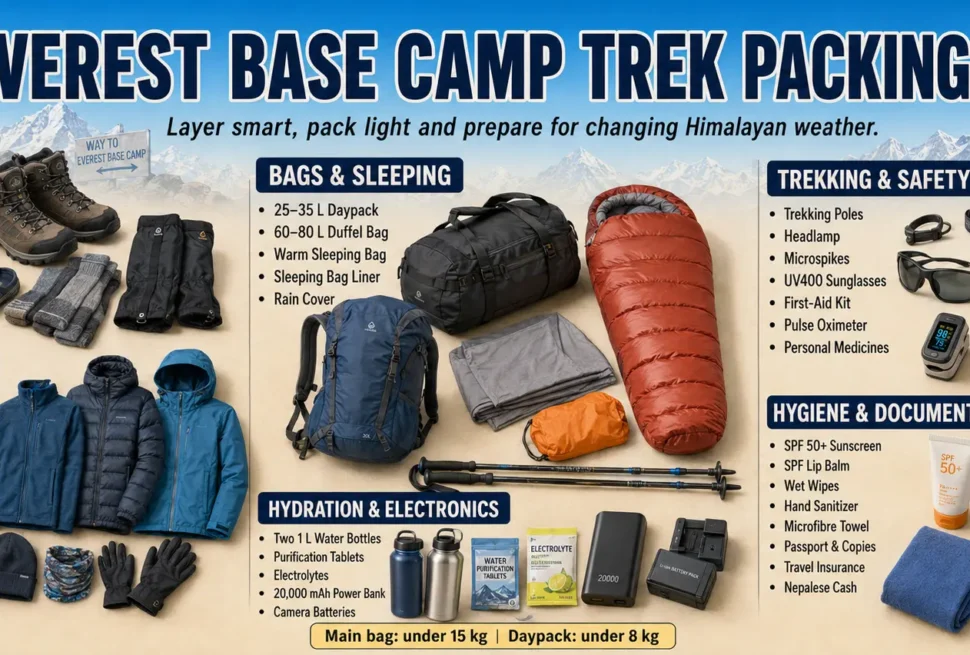
Clothing layers should account for the altitude reached at Mu Gompa: moisture wicking base layers, a thermal mid layer, fleece jacket, down or synthetic insulated jacket, waterproof and windproof outer shell, waterproof trousers, a warm hat, gloves, and three to four pairs of trekking socks, wool preferred. For footwear, waterproof mid ankle trekking boots with good grip are essential given the rocky, occasionally steep terrain and the numerous river crossings encountered throughout the route. Additional gear should include a 25 to 30 liter daypack, collapsible locking trekking poles, a headlamp with spare batteries, a sleeping bag rated to minus 10 Celsius, water purification tablets or a filter, and a reusable water bottle of at least two liters. A more complete general packing breakdown that applies well to this altitude range is available in our Everest Base Camp Packing List.
Accommodation Along the Route
Teahouse accommodation along the lower Tsum Valley trail is reasonably comfortable, with simple private or shared rooms and basic meal service at most stops. Guide and porter costs, typically USD 35 to 45 per day for a guide, are usually arranged separately from lodging in this region, and trekkers should budget accordingly when planning an independent itinerary through an agency. Accommodation in the upper villages near Mu Gompa is considerably more basic, reflecting the remoteness and limited supply access this far up the valley, and trekkers should approach the trek’s final days with realistic expectations about comfort levels. Typical lodging costs run USD 5 to 15 per night, with meals separately priced in the range of USD 15 to 35 per day depending on the specific teahouse and dish selection.
Altitude Sickness on the Tsum Valley Trek
Given the trek’s more moderate maximum altitude of 3,700 meters at Mu Gompa, altitude sickness risk is meaningfully lower here than on routes reaching above 4,500 or 5,000 meters, though trekkers should still watch for symptoms including headache, nausea, and disrupted sleep in the final two days of ascent. Staying well hydrated, ascending at a measured pace through the final approach to Mu Gompa, and communicating any symptoms promptly to your guide all remain important precautions even at this comparatively moderate altitude. For a complete breakdown of altitude sickness prevention and symptom management applicable to Nepal treks generally, see our Altitude Sickness Prevention and Safety Guide.
Monastery Culture in Tsum Valley
Tsum Valley is home to several genuinely significant Tibetan Buddhist monasteries, most notably Mu Gompa at the trek’s highest point and Rachen Gompa, a working nunnery lower in the valley, both offering trekkers a rare opportunity to observe monastic life largely unchanged by outside influence. Local Buddhist practice in Tsum Valley traces its roots to teachings brought by the revered lama Milarepa, who is said to have meditated in caves throughout the region centuries ago, adding genuine historical and spiritual depth to a visit here beyond the trek’s natural scenery, a depth of religious history that few other Nepal trekking regions can genuinely claim in such concentrated form along a single route. Trekkers visiting these monasteries should approach with appropriate respect, following guidance from their guide on proper conduct, and many find these cultural encounters among the most memorable parts of the entire Tsum Valley experience.
Training Recommendations Before Departure
Given the trek’s sustained walking days and rocky, uneven terrain, arriving with reasonable physical preparation meaningfully improves the overall experience even though Tsum Valley’s difficulty rating sits below more extreme high altitude routes. A training period of four to six weeks before departure, focused on cardiovascular endurance and leg strength, is a reasonable target for trekkers without significant recent hiking experience. Hill walking with a daypack and general cardiovascular exercise both build the specific stamina this trek rewards, particularly given the numerous consecutive walking days without a dedicated rest day built into the standard itinerary.
Solo Trekkers and Group Requirements
Tsum Valley’s restricted area status requires a minimum group size of two trekkers to obtain permits, in addition to the standard licensed guide requirement applying across all of Nepal. Solo travelers interested in this trek should plan to join one of Next Trip Nepal’s scheduled group departures or coordinate with a travel companion in advance, since this requirement is enforced consistently for restricted area permits. Trekkers traveling in a small group often find the shared cultural experience of visiting the valley’s monasteries genuinely enhanced by companions to discuss and reflect on the experience with, particularly given how different this trek’s focus is from more purely scenery driven routes elsewhere in Nepal.
Common Mistakes Trekkers Make on This Route
A few specific mistakes come up repeatedly among trekkers planning Tsum Valley, and understanding them in advance helps avoid unnecessary difficulty. Underestimating the cultural component of the trek, treating it as purely a scenic walk rather than budgeting time for genuine monastery visits, is a common oversight that causes some trekkers to miss what many consider the trip’s most rewarding element. Insufficient advance permit planning is a second common mistake, since the restricted area permit process and minimum group requirement demand more lead time than mainstream trekking regions require. Underpacking for the more basic accommodation found in the upper villages near Mu Gompa, expecting a similar comfort level to more developed Nepal trekking regions, is a third mistake worth avoiding through realistic expectation setting before departure.
Why Next Trip Nepal Recommends This Route
Next Trip Nepal genuinely considers Tsum Valley one of the most rewarding cultural treks available in Nepal, offering a depth of Buddhist monastery immersion that few other routes in the country can match. We offer Tsum Valley as a standalone 12 day itinerary, with the option to combine it with the full Manaslu Circuit for trekkers with additional time and appetite for a longer, more physically demanding combined route. Every itinerary includes a licensed guide experienced with this restricted region, all three required permits, and accommodation throughout.
What Previous Trekkers Say About This Route
Feedback from trekkers who have completed Tsum Valley consistently highlights the genuine cultural depth as the trek’s most memorable feature, distinguishing it clearly from more purely scenery focused Nepal routes in trekkers’ own comparisons. The relatively low crowd levels, even compared to other restricted area treks, receive frequent positive mention, along with genuine appreciation for the opportunity to observe largely unchanged monastery life throughout the valley. Many trekkers specifically describe Tsum Valley as an unexpectedly moving experience, a sentiment that comes up repeatedly among visitors who arrived expecting primarily mountain scenery and left with a considerably deeper impression of the valley’s living Buddhist culture.
Mobile Coverage and Connectivity
Mobile network coverage along the Tsum Valley route is limited and inconsistent, reflecting the region’s genuine remoteness and the restricted access that has kept telecommunications infrastructure investment considerably lower here than in Nepal’s more established trekking regions. Trekkers should expect largely unavailable mobile signal through most of the upper valley sections, with only intermittent connectivity at the larger settlements like Chhokangparo. Given this limited connectivity, guides on this route carry appropriate communication equipment for emergencies, and trekkers planning this trip should set realistic expectations with family and colleagues back home about being largely unreachable during the more remote middle and upper sections of the itinerary.
Food and Water on the Trail
Food options along the Tsum Valley route are simpler than on Nepal’s more established trekking circuits, particularly in the upper villages near Mu Gompa where supply logistics limit variety. Dal bhat, the traditional Nepali meal of rice, lentil soup, and vegetable curry, remains the most reliable and nutritionally sound choice throughout the trek, typically available at every teahouse along the route. Breakfast options generally include porridge, eggs, and simple bread, while dinner menus expand modestly to include noodle dishes and soups in the lower valley, narrowing to more basic offerings in the highest villages. Drinking water should always be treated, either through boiled water purchased from teahouses, purification tablets, or a filter, since untreated water anywhere along this remote route carries a genuine risk of gastrointestinal illness.
Environmental and Cultural Preservation Efforts
Tsum Valley’s local communities, together with conservation organizations working in the region, have made genuine efforts to preserve both the valley’s fragile alpine ecosystem and its distinctive cultural heritage as trekker numbers have gradually grown since the route opened in 2008. Local guidelines discourage killing of any animals within the valley, reflecting a longstanding Buddhist tradition of nonviolence that predates modern conservation frameworks by centuries and adds a genuinely distinctive dimension to how trekkers should approach their visit and think about the landscape around them. Trekkers are asked to carry out all non biodegradable waste, respect posted guidelines around monastery visits and photography, and generally travel through the valley with an awareness that they are guests in a living cultural landscape rather than simply passing through a scenic backdrop.
Comparing Tsum Valley to Other Restricted Area Treks
Among Nepal’s several restricted area trekking regions, Tsum Valley stands out for its comparatively moderate difficulty and shorter overall duration relative to routes like Upper Mustang, Nar Phu Valley, or the considerably longer Kanchenjunga Circuit. This makes it a genuinely more accessible entry point into restricted area trekking for visitors who want the distinctive permit process and lower crowd levels these regions offer without committing to the more extreme altitude or duration demands of Nepal’s most remote circuits. Trekkers specifically weighing Tsum Valley against Upper Mustang should understand the fundamentally different character each offers: Tsum Valley centers on living monastery culture within a forested Himalayan valley, while Upper Mustang delivers a starker, high desert landscape with its own distinct Tibetan Buddhist heritage.
Photography Opportunities Along the Route
Tsum Valley offers genuinely rewarding photography opportunities that differ meaningfully from Nepal’s more mountain scenery focused trekking routes, with monastery architecture, prayer wheels, chortens, and daily village life providing as much visual interest as the surrounding peaks. Mu Gompa itself, perched above the valley with Himalchuli and surrounding peaks visible beyond, offers a genuinely striking combination of cultural and natural subject matter within a single frame. Rachen Gompa, the working nunnery lower in the valley, provides a quieter, more intimate photography opportunity, and trekkers with a genuine interest in documentary style travel photography often find Tsum Valley among the most rewarding trekking regions in Nepal specifically for this kind of work, given how willingly local community members often engage with respectful visitors.
Extending Your Trip Beyond Tsum Valley
Trekkers with additional time after completing Tsum Valley have several worthwhile options for extending their Nepal itinerary from the same general region. Combining Tsum Valley with the full Manaslu Circuit, adding the high altitude Larkya La pass crossing to the standard cultural itinerary, is the most natural extension given the shared trailhead and lower valley approach between the two routes. Trekkers with less additional time can instead spend an extra day or two in Kathmandu exploring Boudhanath Stupa and other Tibetan Buddhist cultural sites, a natural complement to the monastery focused experience of Tsum Valley itself and a relaxed way to round out a Nepal trip built primarily around this cultural trek.
Who Should Choose the Tsum Valley Trek
Tsum Valley genuinely suits trekkers who want a meaningful cultural immersion experience alongside moderate physical activity, without the extreme altitude or duration demands of Nepal’s more strenuous restricted area circuits. It fits trekkers with a specific interest in Tibetan Buddhist culture, sacred landscapes, and genuine monastery life, those seeking a quieter alternative to the increasingly popular Manaslu Circuit, and anyone drawn to the idea of visiting one of Nepal’s most recently opened and still comparatively unspoiled trekking regions. The 12 day schedule makes it a genuinely manageable addition to a broader Nepal itinerary, substantial enough to feel like a complete trekking experience without requiring the multi week commitment longer restricted area routes elsewhere in the country typically demand.
Weather Patterns Specific to Tsum Valley
Weather in Tsum Valley follows a broadly similar seasonal pattern to the neighboring Manaslu region, with the clearest, most stable conditions during autumn and a genuinely beautiful rhododendron bloom defining the spring season in the lower valley sections. Morning conditions are typically clearest throughout the trekking seasons, with cloud building from the valleys below as the day progresses, a pattern worth keeping in mind when planning the timing of monastery visits and any photography around Mu Gompa. The valley’s relatively sheltered position, compared to more exposed high altitude routes elsewhere in Nepal, means weather disruptions are somewhat less severe here, though trekkers should still pack appropriately for genuine mountain conditions given the elevation reached at Mu Gompa.
Booking Considerations and Group Departures
Next Trip Nepal offers both fixed group departures and private trip options for the Tsum Valley Trek, giving trekkers flexibility depending on their preferred travel style and the minimum group size the restricted area permit requires. Group departures typically offer a modest cost saving and help solo travelers meet the two person permit minimum without needing to independently arrange a travel companion beforehand. Private trips allow complete flexibility around departure dates and daily pacing, a genuinely worthwhile option for trekkers with an existing companion and specific scheduling needs. Both options include the same core package inclusions: licensed guide, all three required permits, and accommodation throughout the standard 12 day itinerary.
Health and Safety Considerations Given the Trek’s Remoteness
Beyond the moderate altitude sickness considerations already discussed, Tsum Valley’s genuine remoteness introduces a few additional health and safety factors worth understanding honestly before departure. Emergency evacuation from the upper valley sections near Mu Gompa takes considerably longer than from Nepal’s more accessible trekking regions, since the valley’s restricted status and limited infrastructure mean fewer readily available helicopter access points than on routes like Everest Base Camp. Comprehensive travel insurance covering trekking at this altitude and helicopter evacuation is genuinely worthwhile for this trek, and trekkers should confirm their policy covers the maximum altitude reached at Mu Gompa before departure. A well stocked personal first aid kit, including basic wound care supplies and any personal medications, is also worth carrying given the distance from medical facilities throughout much of the route.
Guide and Porter Costs Beyond the Package Price
Tipping guides and porters is a well established and genuinely expected practice on Nepal treks, including Tsum Valley, and trekkers should budget for this separately from the package price itself. Customary tipping rates for a trek of this length are typically NPR 2,000 to 3,000 per day for a guide and NPR 1,000 to 1,500 per day for a porter, though these amounts can reasonably be adjusted based on group size and overall satisfaction with the service provided. For a 12 day trek, this represents a meaningful additional cost worth planning for in advance, typically totaling somewhere in the range of USD 100 to 180 per trekker across the full trip when both guide and porter tips are included.
The History Behind Tsum Valley’s Late Opening
Tsum Valley’s status as one of Nepal’s more recently opened trekking regions traces directly to its historical isolation and the local community’s own cautious approach to outside visitors, a genuinely different story from routes that developed tourism infrastructure decades earlier. Prior to 2008, the valley remained largely closed to foreign trekkers, preserving both its physical isolation and the largely unchanged character of daily monastery and village life that now draws visitors specifically seeking this kind of authentic cultural encounter. Local community leaders and monastery authorities were involved directly in the decision to gradually open the valley to controlled trekking tourism, a deliberate approach that has helped Tsum Valley avoid some of the more disruptive tourism development patterns seen in other newly opened Nepal trekking regions over the past two decades.
Understanding the Restricted Area Permit Process
The restricted area permit required for Tsum Valley involves a more involved application process than the standard permits used for Nepal’s more mainstream trekking regions, requiring advance submission of passport details and trip information through a registered trekking agency rather than same day processing at a local checkpoint. This process typically takes several business days to complete in full, meaning trekkers should finalize their booking and provide required documents at least two to three weeks before their intended departure date to allow adequate processing time. Next Trip Nepal handles this entire process on behalf of trekkers, though understanding the general timeline helps set realistic expectations for anyone planning a Tsum Valley trip on a tighter overall Nepal travel schedule.
Wildlife in the Tsum Valley Region
The forests and alpine meadows surrounding Tsum Valley support a range of wildlife typical of this altitude band in the central Nepal Himalaya, including blue sheep, Himalayan tahr, and occasionally snow leopard sign at the higher elevations near Mu Gompa, though direct sightings of the more elusive species remain genuinely rare. The valley’s status as a beyul, or sacred hidden valley in Tibetan Buddhist tradition, has historically discouraged hunting within its boundaries, a cultural practice that has likely contributed to healthier wildlife populations here than in some more heavily used trekking corridors elsewhere in Nepal. Birdwatchers trekking through the lower forest sections between Lokpa and Chumling often find the diversity of high altitude bird species a genuinely rewarding addition to the trek’s primary cultural and scenic highlights, with species diversity noticeably richer in these less disturbed forest corridors than along more heavily trekked routes elsewhere in central Nepal.
Common Cultural Etiquette for Visiting Monasteries
Visiting the monasteries of Tsum Valley respectfully requires a basic understanding of appropriate cultural etiquette that differs somewhat from general trekking conduct elsewhere in Nepal. Removing shoes before entering monastery prayer halls, moving in a clockwise direction around religious structures and prayer wheels, and asking permission before photographing monks, nuns, or religious artifacts are all genuinely important practices that local guides will typically explain in more detail before each monastery visit. Modest dress, covering shoulders and knees, is expected when visiting Mu Gompa, Rachen Gompa, and the valley’s smaller shrines, and trekkers who approach these visits with genuine respect and curiosity rather than treating them as simply photo opportunities generally find local community members considerably more open and welcoming throughout their time in the valley, with many reporting that small gestures of courtesy make a genuinely noticeable difference in the warmth of the reception they receive from monks, nuns, and villagers alike.
Final Word on the Tsum Valley Trek
The Tsum Valley Trek delivers a genuinely distinctive experience within Nepal’s trekking landscape: real cultural immersion in a still largely unchanged Tibetan Buddhist valley, a moderate difficulty level accessible to trekkers without extreme high altitude experience, and a meaningfully lower crowd profile than even the neighboring Manaslu Circuit it shares a trailhead with. For trekkers specifically seeking a trek defined as much by monastery culture and village life as by mountain scenery, Tsum Valley deserves serious consideration as one of Nepal’s most genuinely rewarding restricted area treks, delivering an experience that remains, for now, refreshingly untouched by the broader growth in trekker traffic seen across the country’s more accessible regions. Few other Nepal treks offer this particular combination of moderate physical demand, rich living culture, and genuine solitude within a schedule short enough to fit comfortably into most travelers’ available vacation time.