Ask any trekking guide in the Khumbu what worries first time visitors the most about the Everest Base Camp helicopter return, and weather comes up before altitude, before cost, before almost anything else. It is a fair worry. Mountain flying is genuinely weather dependent, and pretending otherwise would not do you any favors. This guide explains exactly why delays happen, how often they actually happen, what the science behind mountain weather in the Khumbu actually looks like, and what you should expect if your helicopter flight does not go exactly as scheduled.
Why Helicopter Flights In The Everest Region Are Weather Dependent
Helicopters flying between Gorakshep and Kathmandu operate under visual flight rules, meaning the pilot needs to be able to see the terrain and the route ahead rather than relying purely on instruments. At nearly 5,140 meters, Gorakshep sits in a narrow mountain corridor surrounded by some of the highest peaks on earth, and conditions there can shift from clear to socked in with cloud in a matter of minutes. Fog, fresh snow, low cloud ceilings and strong gusts around the high peaks are the main causes of delay, and these conditions are simply more common at extreme altitude than they are anywhere near sea level.
This is not unique to our flights or to any single operator. Every helicopter and every fixed wing flight in the Everest region, including the Lukla flights you take at the start of the trek, operates under the same restrictions, for the same safety reasons.
The Meteorology Behind Khumbu Weather
Understanding a little of the actual weather science helps explain why delays happen the way they do rather than feeling random. The Khumbu sits in genuinely complex mountain terrain, where valleys funnel air in ways that create localized wind patterns unique to specific stretches of the route. Mornings in the high Khumbu are typically calmer, since overnight cooling settles the air and reduces convective activity. As the sun heats exposed rock and glacier surfaces through the late morning and into the afternoon, that heat drives warm air upward, which in turn draws moisture up from lower valleys and builds cumulus cloud around the peaks, often within just a few hours. This is precisely why helicopter flights and Lukla flights alike are scheduled for early morning, typically between 6:00 and 9:00 AM, since this window consistently offers the calmest, clearest conditions before afternoon cloud buildup takes over.
Beyond this daily cycle, the Khumbu is also affected by the broader monsoon system that governs Nepal’s weather from June through September, and by winter storm systems that occasionally push in from the west between December and February, both of which are covered in more detail further down this guide. Katabatic winds, cold dense air flowing down off glaciers and high ridgelines, are another localized factor pilots watch closely, since these winds can develop suddenly around Gorakshep and the Khumbu Icefall even on an otherwise clear day.
Who Actually Makes The Decision To Delay A Flight
This decision is made by the pilot and Nepal’s civil aviation authorities, not by us as a trekking company, and it is not a decision made to save money or avoid inconvenience. Pilots assess real time conditions using weather stations, radio checks with other aircraft already in the air, and satellite imagery, and the call to fly or wait is made purely on safety grounds, usually within a couple of hours of the scheduled departure time. We would rather see your flight delayed by a day than see anyone take off into conditions a pilot is not comfortable with, and every reputable operator in the Khumbu works the same way.
The Civil Aviation Authority of Nepal, generally referred to as CAAN, sets the regulatory framework every operator flies under, including minimum visibility requirements and cloud ceiling standards specific to mountain routes. A pilot who chooses to fly despite marginal conditions is not just risking the flight, they are risking their license, which is one of the strongest possible incentives to make a conservative call rather than an optimistic one. This is worth remembering if a delay feels frustrating in the moment, since the same caution that occasionally costs you a day on the ground is the exact same caution that makes this route as safe as it is.
It also helps to understand that this decision making process is layered rather than a single person’s judgment call in isolation. The pilot assigned to your flight communicates with operations staff at the airline’s Kathmandu base, who track conditions across the entire route network that day, and with other pilots already flying nearby sectors who can report real time visibility and turbulence firsthand. This layered system means the final go or no go decision reflects multiple independent sources of current information rather than one person’s read of the sky from a single vantage point, which is part of why the safety record for licensed operators flying this route over the past decade has remained strong despite how challenging the terrain and weather genuinely are.
How Often Does Weather Actually Delay The Helicopter
During the main autumn season from September to November and the spring season from March to May, weather delays on the Gorakshep to Kathmandu route are relatively uncommon, since these months bring the most stable high pressure systems of the year. Delays become noticeably more likely during the winter months of December through February, when cold fronts and high winds move through more often, and are most likely during the June to August monsoon season, when cloud cover builds up daily and rarely clears until later in the day, if at all. This seasonal pattern is exactly why we recommend booking your trip in autumn or spring whenever your schedule allows it.
Based on years of running this specific itinerary, autumn and spring departures see same day flights the significant majority of the time, with most weather related delays resolving within a single extra night at Gorakshep rather than stretching into a multi day disruption. Winter departures see a somewhat higher rate of delay, though these are also usually resolved within a day, since winter weather in the Khumbu tends to bring clear, cold, stable high pressure between storm systems rather than continuous cloud cover. Monsoon season is the clear outlier, with delays of two or more days becoming meaningfully more common, which is the core reason our separate guide to the best time to trek generally steers guests away from a June through August departure for this specific itinerary.
What Happens If Your Flight Is Delayed
If conditions are not safe for your scheduled flight, it is rescheduled to the next available window, which is often the following morning once temperatures and visibility improve. Your guide stays in direct contact with the helicopter operator and keeps you updated on timing throughout. In the meantime, you simply spend another night in Gorakshep or, depending on the situation, you may be walked partway down toward Pheriche or Lobuche where the air is thicker and more comfortable while you wait for the flight window to open.
Any additional teahouse night caused by a weather delay is at your own expense, since it falls outside the fixed package itinerary, but this is a realistic and manageable extra cost rather than a trip ending problem. Most weather systems in this region clear within a day or two, and rescheduling to the next available slot is the normal outcome, not the exception.
A Realistic Walkthrough Of A Delayed Morning
It helps to know what a delay actually looks like in practice rather than imagining the worst case. Your guide typically receives an update from the helicopter operator by radio or phone in the early morning, before your scheduled departure window. If cloud has built up overnight or fresh snow is falling, the operator communicates this directly, and your guide relays the update to your group along with a revised plan for the day. Breakfast continues as normal, and most groups spend a delayed morning resting at the teahouse, playing cards, journaling or simply enjoying a slower pace after the exertion of reaching Base Camp and Kala Patthar the day before. Your guide checks in again through the late morning as conditions are reassessed, and if flying is not possible that day, the operator reschedules you into the queue for the following morning, prioritizing groups who have already been waiting.
In the rare case where a delay stretches to a second or third day, your guide will proactively start discussing a walking descent option with you, so you always know your realistic alternatives rather than simply waiting indefinitely with no information. This kind of proactive communication is one of the more overlooked reasons an experienced guide and a properly organized agency matter so much for a trip that includes this kind of flight dependent finish.
What Happens In A Longer Delay
In the rare case that poor weather stretches beyond a day or two, your guide will talk you through the realistic options, which usually come down to continuing to wait for a flight window, or walking out through the standard trekking route back toward Lukla if your schedule genuinely cannot absorb more delay. We would always rather you have accurate information early than be left guessing, and this is exactly why we recommend building at least one buffer day into your travel plans around this trip, particularly for your international flight home.
Walking out is always a genuine fallback option on this route, which is an important difference between the Everest region and more remote helicopter dependent trips elsewhere in the world. From Gorakshep, reaching Lukla on foot takes roughly 3 days retracing the standard trekking route through Pheriche, Tengboche and Namche Bazaar, and while this is obviously not the plan you booked, it means a helicopter delay, even an extended one, is an inconvenience to manage rather than a situation with no way out.
How This Compares To Lukla Flight Delays
Trekkers researching this trip often already know that Lukla flights are notoriously prone to delay, and it is worth understanding how the Gorakshep helicopter leg compares. Lukla’s airport, sitting at 2,840 meters with a short, sloped runway hemmed in by terrain on both ends, is affected primarily by cloud and wind at the airport itself and at Kathmandu’s Tribhuvan International Airport on the other end of the route, and fixed wing aircraft have stricter visibility minimums than helicopters in several respects. Delays on the Lukla route are most common in the immediate post monsoon period in early September and during unstable spells in the pre monsoon month of May.
The Gorakshep helicopter leg, by contrast, is a single point to point flight rather than a scheduled service juggling dozens of daily rotations, which gives it somewhat more flexibility in timing, though it remains just as dependent on clear conditions specifically over the high Khumbu. In practice, both legs of your journey carry weather risk, which is exactly why we build buffer time into recommended travel planning on both ends of the trip, not just around your final helicopter flight.
Why Travel Insurance Matters More For This Trip Than Most
A genuine travel insurance policy that specifically covers high altitude trekking, helicopter evacuation and weather related trip delays is one of the smartest things you can buy before this trip, and we say this to every guest regardless of the season they are traveling in. A basic travel policy bought as an afterthought often excludes helicopter flights entirely or caps coverage at an altitude well below where you will actually be trekking, so it is worth reading the policy wording carefully rather than assuming any travel insurance will do. If a weather delay causes you to miss an onward flight, the right policy can cover the cost of rebooking, which turns a stressful situation into a manageable one.
Beyond trip delay coverage, look specifically at how your policy defines a covered delay. Some policies only pay out after a delay exceeds a minimum number of hours, commonly 12 or 24 hours, and some require documentation directly from the operator confirming the reason for the delay, which your guide can help arrange since we work with the same helicopter operators regularly. Reading this fine print before you travel, rather than during a stressful moment on the trail, makes the claims process considerably smoother if you ever need to use it.
How We Reduce The Risk Of Delay Affecting Your Trip
We schedule helicopter flights for the early morning window between 7:00 and 9:00 AM specifically because mountain weather in the Khumbu is generally calmest at that time, before daytime heating builds cloud cover later in the afternoon. We also encourage guests to book trips with at least one spare day at the end of the itinerary before any onward international flight, which absorbs a one day weather delay without any knock on effect to your travel plans. None of this eliminates weather risk entirely, since nothing can, but it meaningfully reduces how often it becomes a real problem.
We also maintain a working relationship with more than one licensed helicopter operator in the region, which occasionally allows more flexibility in rescheduling than relying on a single operator’s availability. Your guide is in direct daily contact with the operations team throughout your trek, not just on the morning of your scheduled flight, which means we typically have early visibility into developing weather patterns rather than being caught by surprise on the day itself.
What To Do If You Are Worried About Delays Before You Book
If flight reliability is a major concern for you, booking during autumn or spring gives you the best odds of a smooth, on schedule departure. Building in a buffer day is the single most effective thing you can personally control. And talking to us honestly about your schedule before you book means we can plan your specific itinerary around it, rather than you discovering a tight connection is a problem once you are already on the trail.
How Weather Delays Are Communicated To You
Communication is one of the most underrated parts of handling a weather delay well, and it is worth knowing what to expect. Teahouses at Gorakshep and throughout the upper Khumbu generally have radio contact with lower villages and, in many cases, functioning mobile signal or wifi, so your guide is rarely operating with zero outside information even at extreme altitude. Helicopter operators maintain radio contact with their base in Kathmandu and share updated weather assessments with guides on the ground multiple times through a delayed morning, rather than leaving trekkers with a single yes or no answer at the scheduled departure time. Your guide’s job during this period is to translate operational updates into a clear, honest picture for you, including a realistic sense of how likely the next window is to open, rather than false reassurance either way.
If you want to follow along yourself, asking your guide directly for the specific reason behind a delay, whether it is cloud ceiling, wind, snowfall or visibility, tends to be more useful than a general update, since it gives you a concrete sense of what needs to change for the flight to proceed, and most guides are happy to explain this in as much detail as you want.
What You Can Do While Waiting Out A Delay
A weather delay at Gorakshep does not have to be dead time. Many guests use an unplanned extra morning for a second visit to Kala Patthar under different light, since sunrise and midday views of Everest look genuinely different from each other. Others use the time to properly rest after the demanding push to Base Camp the day before, which your body will likely appreciate regardless of the weather. Bring a paperback book, a journal, a deck of cards or a downloaded podcast or audiobook for exactly this scenario, since teahouse wifi at this altitude is not reliable enough to depend on for entertainment. Chatting with other delayed trekkers in the dining room is also, more often than people expect, one of the more memorable social parts of the entire trip, since a shared delay tends to bring a teahouse full of strangers together quickly.
What Pilots Technically Look For Before Departure
Beyond the general idea of clear skies, pilots flying this route are assessing a specific set of technical conditions before every departure. Cloud ceiling, meaning how low cloud sits above the terrain, needs to stay high enough for the pilot to maintain visual contact with the ground and surrounding ridgelines throughout the flight. Horizontal visibility needs to be sufficient to see terrain features well ahead of the aircraft, since the route threads between peaks rather than flying over open ground. Wind speed and direction matter enormously at this altitude, since a helicopter’s performance margin shrinks as air density drops, meaning a wind gust that would be a non issue at sea level can meaningfully affect handling above 5,000 meters. Precipitation, whether rain lower in the valley or snow at altitude, reduces visibility and can affect rotor performance, and is treated as an automatic reason to delay.
Pilots also factor in density altitude, a measure of how thin the air effectively is once temperature and pressure are accounted for, since a hot, high altitude morning can reduce a helicopter’s lift capacity even under otherwise clear skies. This is one of several reasons early morning departures are preferred, since cooler morning air is denser and gives the aircraft more performance margin than the same route flown in the warmer air of early afternoon.
The Helicopters Used On This Route And Their Limitations
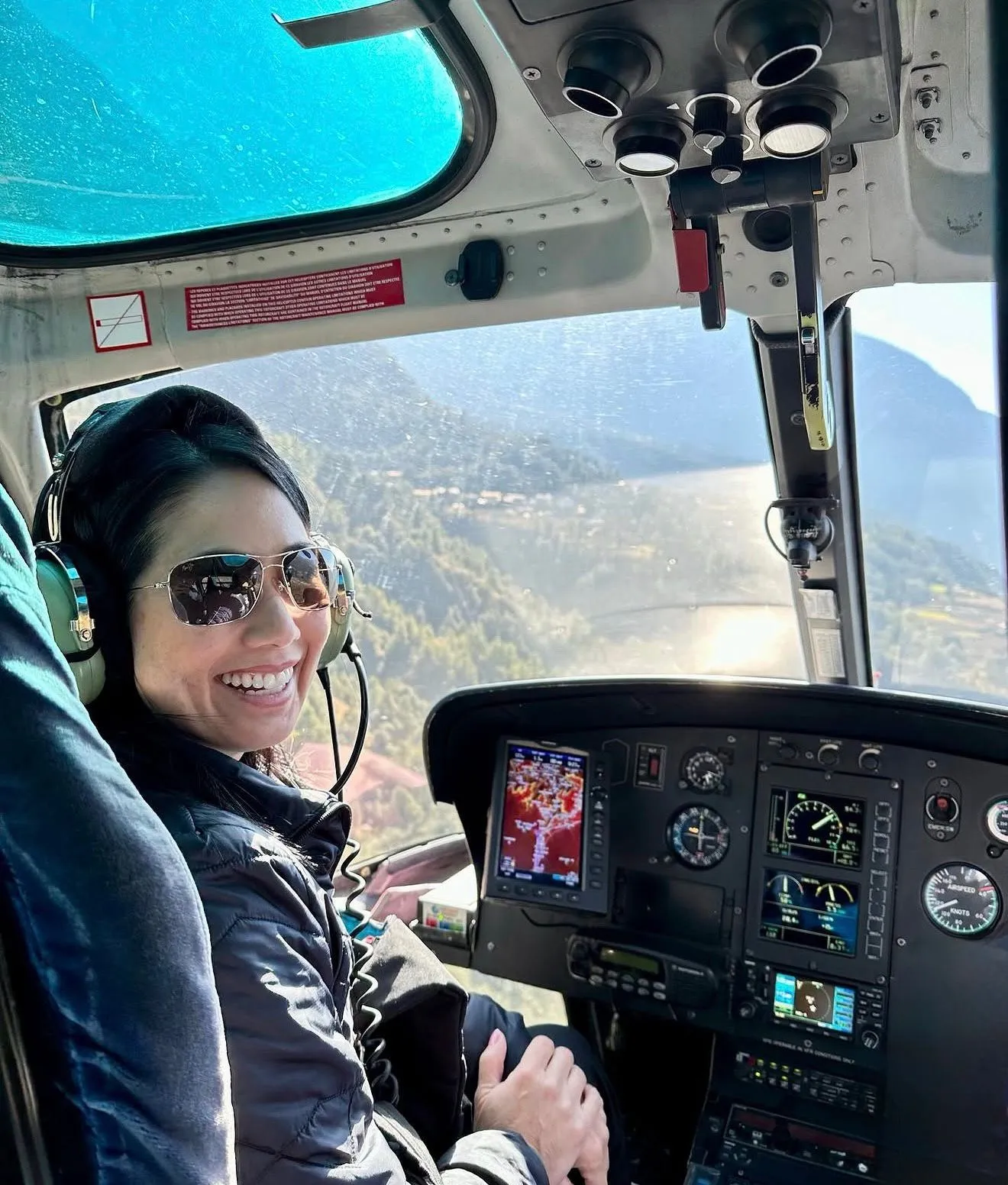
The aircraft commonly used for the Gorakshep to Kathmandu route are high altitude capable helicopters such as the Airbus AS350 B3, a model specifically known for its strong performance at extreme elevation and widely used across Himalayan operations, including on Everest itself for support flights. These aircraft are certified and equipped for the specific demands of Khumbu flying, but they still operate within real physical limits. Every helicopter has a maximum operating altitude and a performance envelope that narrows as elevation, temperature and payload increase, and Gorakshep’s altitude of 5,140 meters sits close enough to those limits that pilots have very little margin for marginal conditions, which is precisely why the safety culture around this specific route is so conservative compared to lower altitude helicopter operations elsewhere in the world.
It is worth understanding that a weather delay is different from a mechanical or maintenance delay, though both are grouped together by trekkers as simply the flight not happening on time. A mechanical delay, where an aircraft needs inspection or a part replaced, is comparatively rare given how rigorously these aircraft are maintained, and when it happens, operators generally substitute another aircraft quickly rather than leaving passengers waiting on a mechanical issue. The overwhelming majority of delays on this route are genuinely weather related rather than mechanical, and travel insurance policies typically treat both categories similarly for the purposes of a delay claim.
Health Considerations While Waiting At High Altitude
An unplanned extra night or two at Gorakshep, sitting at 5,140 meters, is not medically dangerous for a healthy trekker who has acclimatized properly through the itinerary, but it is worth understanding what your guide is watching for during this time. Extended time at extreme altitude, even without gaining further elevation, continues to place stress on your body, and your guide will keep encouraging the same habits that mattered throughout the trek, meaning regular hydration, continued eating even with a reduced appetite, and honest communication about how you are feeling. If genuine acute mountain sickness symptoms develop or worsen during a delay, a controlled descent to a lower elevation such as Pheriche remains available regardless of whether the helicopter is flying, and your guide is trained to make that call independently of flight scheduling if your health genuinely requires it.
This is one of the more important reasons we recommend a policy that separately covers medical evacuation alongside weather delay, since a scenario where you need to descend for health reasons during a weather delay is a distinct situation from simply waiting comfortably for a flight window, and the right policy accounts for both.
How A Delay Affects Your Flight Home And What To Do About It
The scenario most trekkers actually worry about is not the delay itself, but whether it will cause them to miss an international flight home. This is exactly why the single buffer day recommendation matters so much in practice. A one day buffer between your scheduled helicopter flight and your onward international departure absorbs the overwhelming majority of weather delays on this route without any further action needed on your part. If a delay genuinely does threaten a tight connection despite a buffer day, your guide and our Kathmandu office work directly with you on next steps, which can include arranging an updated flight booking once you are back in cell signal range in Kathmandu, or in rare extended delay scenarios, discussing options with your airline directly. Airlines are generally familiar with weather related delays originating from the Everest region and are often more accommodating with rebooking than trekkers expect, particularly with documentation of the delay from the helicopter operator, which we can help arrange.
Frequently Asked Questions About Weather And Helicopter Delays
How common are weather delays on this trek. Relatively uncommon in autumn and spring, more common in winter, and most likely during the June to August monsoon season, which is why we generally do not recommend booking this trip during monsoon.
Who decides whether the helicopter flies. The pilot, based on real time safety conditions, in coordination with Nepal’s civil aviation authorities. It is never a decision made to save time or money.
Do I pay extra if my flight is delayed. Any additional teahouse night caused by a weather delay is at your own expense, though this is usually a modest cost rather than a major one, and good travel insurance can offset it.
What if the delay lasts several days. Your guide will walk you through realistic options, including continuing to wait or walking out via the standard trekking route if your schedule requires it.
Should I book a buffer day before my flight home. Yes. We strongly recommend at least one spare day between your scheduled helicopter flight and any onward international flight.
Does travel insurance actually help in this situation. Yes, as long as the policy specifically covers high altitude trekking, helicopter evacuation and weather related delays. A generic travel policy may not cover a helicopter flight at all.
Is the Lukla flight or the Gorakshep helicopter more likely to be delayed. Both are weather dependent, though delays are governed by somewhat different local factors at each end of the route. Building buffer time around both legs of the trip is the safest approach.
Can a delay be predicted in advance. To some extent. Meteorological forecasting a day or two out gives a general sense of likely conditions, but the final decision is always made on the morning of the flight itself based on real time observation, since mountain weather can change faster than any forecast.
Will I be stuck at Gorakshep with no food or shelter during a delay. No. Gorakshep has functioning teahouses that serve meals and provide accommodation throughout any delay, and your guide manages this arrangement directly so you are never left without a place to stay or eat.
Does the type of helicopter used affect how likely a delay is. High altitude capable aircraft such as the Airbus AS350 B3 are specifically chosen for their performance margin at extreme elevation, but even these aircraft operate within real physical limits, so the type of aircraft reduces certain risks without eliminating weather dependency entirely.
Is a weather delay dangerous for my health. No, provided you continue following the same hydration and eating habits that matter throughout the trek. Your guide continues monitoring you through any delay exactly as they would during a normal trekking day.
What is the difference between a weather delay and a mechanical delay. A weather delay means conditions are not safe to fly and is by far the more common scenario. A mechanical delay means the aircraft itself needs attention, which is comparatively rare given how rigorously these helicopters are maintained, and operators typically substitute another aircraft quickly when it happens.
Can I get a refund if I choose to walk out instead of waiting for the helicopter. This is handled case by case depending on how much of the return flight cost has already been committed to the operator, and we discuss the realistic options and any cost implications directly with you if this situation arises.
How specific is the information my guide gives me during a delay. Guides relay concrete details from the helicopter operator, including the specific reason for a delay such as cloud ceiling, wind or snowfall, rather than a vague yes or no, so you always have a realistic sense of the situation rather than being left guessing.
Does monsoon weather behave differently from a normal afternoon cloud buildup. Yes. Monsoon cloud cover tends to build early and persist through the day rather than clearing, which is why monsoon delays are more likely to stretch beyond a single day compared to the localized afternoon buildup typical of autumn and spring.
How Monsoon And Winter Weather Systems Actually Work
Nepal’s monsoon, which brings the June through August rains, arrives as a large scale weather system driven by seasonal shifts in wind direction that pull moist air up from the Bay of Bengal across the subcontinent and into the Himalaya. Once this system is active, cloud cover tends to build early in the day and persist rather than clearing, and rainfall lower in the valleys often coincides with snowfall at the elevations where this trek operates. This is a fundamentally different pattern from the localized afternoon cloud buildup that affects even a clear autumn or spring day, since monsoon cloud cover frequently does not clear at all during a 24 hour period, which is why delays during this season are more likely to stretch beyond a single day.
Winter weather in the Khumbu operates differently again. Rather than the persistent moisture of monsoon, winter delays are usually driven by occasional storm systems that push in from the west, bringing a period of snow and strong wind that can last one to three days, interspersed with long stretches of clear, cold, remarkably stable high pressure. This is why winter trekkers sometimes experience either a completely smooth trip with zero delay, or an occasional multi day delay if a storm system happens to coincide with their scheduled flight date, a more binary pattern than the gradual afternoon cloud buildup typical of autumn and spring.
Plan Your Trip With Realistic Expectations
Weather delays are a real part of mountain flying, but they are a manageable part, not a reason to avoid this trip. Choosing the right season, building in a buffer day, and getting proper travel insurance covers almost every scenario you are likely to run into. To see current departure dates and everything included, visit the Everest Base Camp Trek With Helicopter Return package page, or read our full guide to the best Everest Base Camp trek with helicopter return company for more on how we handle this trip from start to finish.