
November is one of our favorite months to send trekkers onto the Manaslu Circuit, and it rarely gets the credit it deserves. Late autumn weather is still largely settled, the mountain views remain sharp and clear, and the trail has noticeably thinned out compared to the peak crowds of October. At Next Trip Nepal we guide a steady stream of departures through November every year, and this guide draws directly on what our team observes on the ground each season, so you can plan a November trip with realistic, honest expectations.
We cover weather and temperature through the month, how conditions shift from early to late November, Larkya La pass conditions, how busy the trail really gets, permit costs for 2026, packing advice, and honest answers to the questions clients most often ask about trekking Manaslu in November.
Why November Is An Excellent Alternative To October
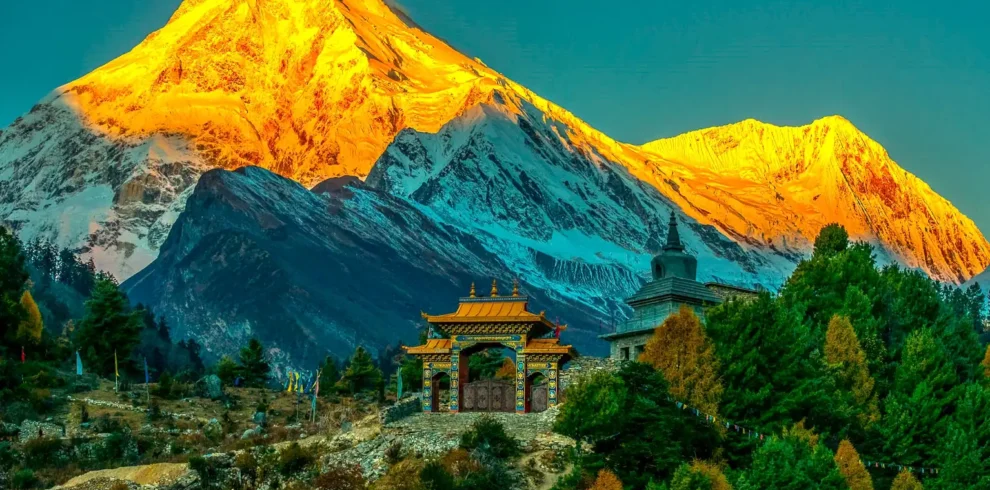
October gets most of the attention as the busiest and most popular month on the Manaslu calendar, but November quietly offers nearly the same weather reliability with a meaningfully thinner crowd. The monsoon is a distant memory by this point, skies remain mostly clear, and the classic Himalayan views that draw people to this trek are still very much on display through most of the month.
What changes is the atmosphere on the trail. Teahouses that were packed in October have noticeably more breathing room in November, dining rooms are calmer in the evenings, and trekkers who value a bit of solitude alongside good weather consistently tell us November hit that balance better than any other month.
We tell clients weighing October against November the same thing every season, that November delivers close to the same visual reward with a noticeably more relaxed pace, and the tradeoff is simply colder nights as the month goes on, which proper gear handles without much difficulty.
November also marks the point where the Himalayan trekking season in Nepal begins its gradual wind down toward winter, so trekkers who want the classic autumn experience without the classic autumn crowds increasingly choose this month on purpose rather than by accident.
Our office receives a noticeable jump in November inquiries every year from past clients who trekked in October once, loved the experience, but wanted a calmer version the second time around. Repeat clients in particular tend to gravitate toward November once they understand how similar the weather really is to October, simply with a fraction of the trail traffic. This word of mouth pattern is one of the clearest signals we have that November deserves far more attention than it typically gets from first time trekkers browsing options online.
November Weather And Temperature On The Manaslu Circuit
At lower elevations from Soti Khola through Jagat and Deng, daytime temperatures in November typically range from 11 to 20 degrees Celsius, with generally dry, stable conditions throughout the lower forest sections of the trail.
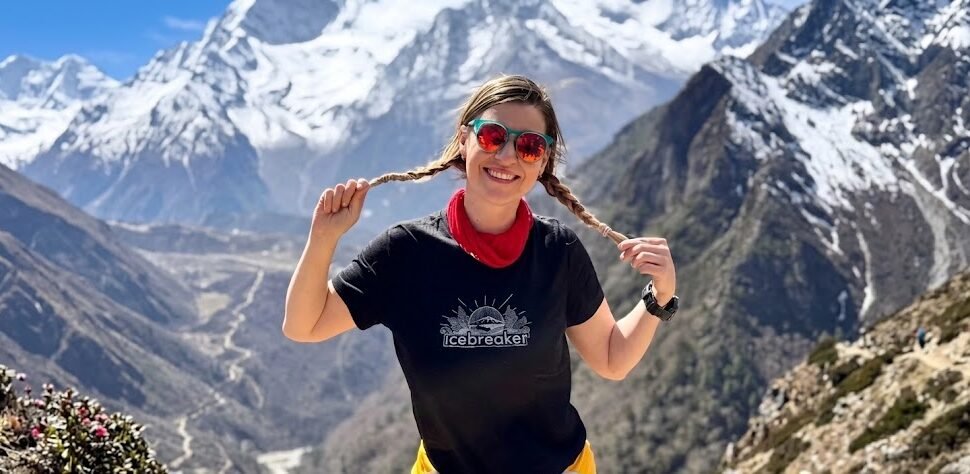
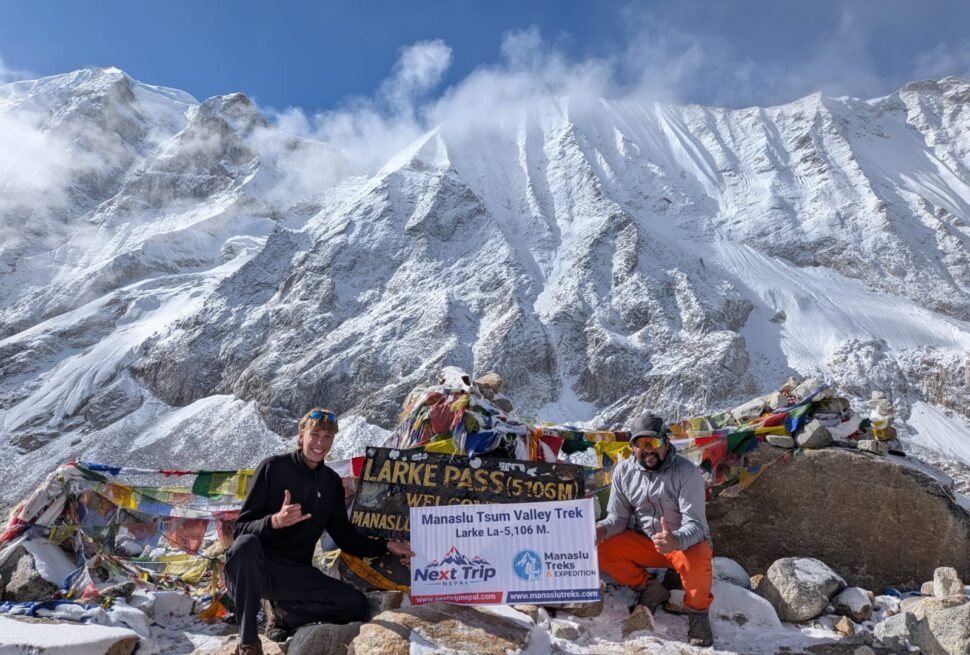
Higher up the valley through Namrung, Lho and Samagaon, daytime temperatures settle into a cooler band. At high altitude camps like Samdo and Dharamsala, and on Larkya La itself at 5106 meters, daytime temperatures generally range from minus 8 to 0 degrees Celsius, with nighttime temperatures dropping well below freezing at these elevations, particularly as the month progresses.
Rainfall is minimal through November, and skies are typically clear for long stretches, especially through the first half of the month. Visibility of the surrounding peaks tends to remain consistently good, though the very end of November can occasionally bring the season’s first proper cold snap at higher elevations.
Early November still carries some of the milder character of late autumn, while late November feels noticeably colder, particularly at night. Trekkers departing in the final week of the month should pack with the assumption that overnight temperatures at Samdo and Dharamsala will be meaningfully colder than a trip earlier in the month.
Wind tends to pick up somewhat compared to October, particularly during the afternoons at higher elevations, though mornings generally remain calm. Our guides plan the more exposed sections of the route, including the approach to the pass, for these calmer morning hours whenever possible.
Humidity stays low throughout the month, and the dry air combined with strong high altitude sun during the day can make conditions feel more comfortable than the thermometer alone suggests, though this comfort disappears quickly once the sun drops behind the ridgelines each evening.
One detail our guides mention often is how quickly temperatures fall once the sun clears a ridgeline in the afternoon at the higher camps. A trekker walking comfortably in a light jacket at midday can find themselves reaching for a down layer within twenty minutes as shadow moves across the valley. This swing is more pronounced in November than in October simply because the baseline temperatures are already lower, so the drop off feels sharper and arrives sooner in the afternoon.
Larkya La Pass Conditions In November
November generally offers reliable pass crossing conditions, particularly through the first half of the month. Snow accumulation on the pass typically remains limited early on, though later November departures have a somewhat higher chance of encountering fresh snow at the higher camps and on the approach to Larkya La itself.
Our guides assess conditions carefully at Dharamsala before every single crossing regardless of the time of year, and this becomes especially important on later November departures, when a cold snap or an early season snowfall can change conditions on short notice.
Pre dawn starts remain standard practice for the crossing throughout November, giving the group the best chance of calm, clear conditions before any afternoon wind or cloud has a chance to build.
Trekkers who cross Larkya La in November on a clear morning consistently describe the summit views as every bit as rewarding as an October crossing, with Himlung Himal, Cheo Himal and Kang Guru visible across a sweep of the horizon, but with far fewer other groups sharing the moment at the top.
The descent from Larkya La toward Bimtang also tends to feel calmer in November. Fewer groups on the trail means less waiting at the narrower sections of the descent, and trekkers often have long stretches of the path entirely to themselves as they drop down through the increasingly dramatic scenery on the western side of the pass. Bimtang itself, framed by Manaslu and a ring of surrounding peaks, is a particularly rewarding place to arrive at in the late afternoon light this time of year.
Trail Conditions From Machha Khola To Samagaon
The lower trail remains in excellent condition through November. Dry ground, manageable stream crossings and clear forest paths make for comfortable walking throughout the lower sections of the route, similar to what October delivers.
Leeches are entirely absent by this point in the season, and trekkers can focus fully on the scenery and the steady climb up the valley without any of the precautions that monsoon season demands.
Suspension bridge crossings remain calm through November, with low water levels beneath most bridges along the lower trail. The overall walking experience through this stretch feels every bit as pleasant as an October trek, simply with noticeably fewer people sharing the path.
How Busy Is The Trail In November
November sees a moderate to high volume of trekkers, though meaningfully less than the peak crowds of October. Teahouses remain busy at popular stops like Samagaon, Samdo and Dharamsala, particularly through the first half of the month, but the sense of crowding that defines October largely eases.
We still recommend booking a November trek a month or so ahead where possible, since the most popular teahouses and guide availability can fill up during the first two weeks of the month, though the pressure is noticeably lower than what October demands.
Clients who specifically want a quieter version of the classic autumn Manaslu experience consistently rate November as an ideal choice, since the trail offers enough company for a social atmosphere without ever feeling packed the way October sometimes does.
By late November, the trail thins out further still, and trekkers on the final departures of the month often describe a genuinely peaceful experience, closer in feel to the shoulder months than to peak season, while still enjoying largely settled weather.
Guides and porters are also somewhat easier to secure on shorter notice in November compared to October, since the overall demand across the trekking industry in this region eases once the peak month passes. This does not mean November should be left entirely to the last minute, but clients who need to firm up dates a little later than they would like generally have an easier time in November than they would trying to do the same thing for an October departure.
Permits Required For The Manaslu Circuit In 2026
Every foreign trekker needs three permits to complete the Manaslu Circuit, and all three must be arranged through a registered trekking agency rather than independently.
The Restricted Area Permit, or RAP, falls under the autumn peak season pricing window for a November trek, costing 100 US dollars for the first week and 15 US dollars per day after that.
The Manaslu Conservation Area Permit, or MCAP, costs around 3000 Nepali rupees for foreign nationals, roughly 30 US dollars. The Annapurna Conservation Area Permit, or ACAP, carries the same fee structure and is required because the standard route exits through Dharapani and Besisahar into Annapurna Conservation Area territory.
Following the March 2026 update from the Department of Immigration, solo trekkers can now obtain the Restricted Area Permit without needing a second person in their group. A licensed guide remains mandatory regardless of group size, and permits must still be processed through a registered agency well ahead of your planned departure date.
What To Pack For A November Manaslu Trek
- A warm down jacket rated for well below freezing temperatures at the pass
- Insulated gloves plus a spare pair for the crossing
- A sleeping bag rated to at least minus 15 to minus 20 degrees Celsius for nights at Samdo and Dharamsala
- Sturdy, broken in trekking boots suited to firm, dry trail conditions
- Layered clothing to handle the wide swing between sunny days and cold nights
- Strong sun protection, since clear skies bring intense UV exposure at altitude
- A headlamp with spare batteries, water purification tablets or a filter
- A comprehensive first aid kit including altitude sickness medication
- Trekking poles for stability on the steady climbs and descents throughout the route
- Extra warm layers for late November departures, given the colder nights toward the end of the month
Most of this gear can be rented in Thamel in Kathmandu before your trip begins, and given the somewhat lighter demand compared to October, rental shops generally have a good selection available even a day before departure.
Physical Preparation For The Trek
The physical demands of the Manaslu Circuit remain the same regardless of the month, and a solid base of cardiovascular fitness combined with regular hiking in the months before departure remains the best preparation for a November trek. Building up to hikes of five to seven hours with a loaded pack gives a realistic sense of the demands of a full trekking day on this route.
Because November includes long stretches of steady climbing at altitude, incorporating hill training or stair climbing into your preparation in the months beforehand makes a genuine difference to how the climbs between Namrung and Samagaon, and the final approach to the pass, feel underfoot.
A consistent training schedule of three to four sessions per week for two to three months before departure, gradually increasing both distance and pack weight, prepares most trekkers well for a November trip. Trekkers who arrive with a solid fitness base tend to handle the colder temperatures more comfortably as well, since a body working efficiently generates more warmth than one that is already fatigued.
We also recommend a self assessment a few weeks before departure, simply walking for two to three hours on hilly terrain with a loaded pack and paying attention to how your body responds afterward. Trekkers who recover quickly and feel ready to repeat the effort the next day are generally well prepared for a November itinerary, while those who feel unusually depleted may benefit from another few weeks of steady training before their trip.
Cost Breakdown For A November Manaslu Circuit Trek
| Item | Approximate Cost (USD) |
|---|---|
| Restricted Area Permit, first week | 100 |
| Restricted Area Permit, additional days | 15 per day |
| Manaslu Conservation Area Permit | 30 |
| Annapurna Conservation Area Permit | 30 |
| Licensed guide, per day | 25 to 35 |
| Porter, per day, optional | 20 to 25 |
| Teahouse accommodation, per night | 5 to 15 |
| Meals, per day | 20 to 30 |
| Gear rental in Thamel, full set | 60 to 100 |
| Travel insurance covering high altitude trekking | Varies by provider |
These figures are approximate and will vary depending on your itinerary length and the specific dates of your trek. Our team is happy to walk through a realistic budget for your November dates during a booking consultation.
Acclimatization And Altitude Safety
Altitude sickness risk depends on ascent rate and individual physiology rather than the season, so the standard acclimatization protocol applies in November exactly as it does throughout the year. The itinerary builds in a rest day at Samagaon around 3530 meters, and the optional Manaslu Base Camp side trip remains genuinely worthwhile in November, since visibility is typically excellent through most of the month.
Many trekkers choose to carry Diamox as a preventive measure against altitude sickness, a decision that should be discussed with a doctor before travel. Our guides watch closely for early symptoms of acute mountain sickness throughout the trek and encourage open communication about how you are feeling at each stage of the ascent.
Staying properly hydrated matters just as much in November as in any other month, and the cold, dry air at altitude increases fluid loss through breathing alone, well beyond what most trekkers expect. We encourage clients to drink consistently throughout the day even when the cool weather does not create an obvious sense of thirst.
Sleep quality can also take a hit at the higher camps as temperatures drop toward the end of November, and a poor night’s sleep sometimes gets mistaken for altitude related symptoms when it is simply the cold making rest difficult. A properly rated sleeping bag, a warm hat worn overnight, and a hot water bottle tucked into the sleeping bag before bed are small additions that make a noticeable difference to how well trekkers actually rest at Samdo and Dharamsala.
Food And Accommodation Along The Route
Teahouses along the route remain fully operational and well stocked through November, and the somewhat lighter trail traffic compared to October generally means a bit more choice when it comes to rooms and seating in the dining areas.
Dining rooms with a central stove remain the social heart of each teahouse in the evenings, and the smaller crowds of November often make for warmer, more personal conversations among trekkers compared to the busier atmosphere of peak season.
Sample November Itinerary
A November itinerary follows the standard Manaslu Circuit structure. Day one, drive from Kathmandu to Machha Khola. Day two, trek to Jagat. Day three, trek to Deng. Day four, trek to Namrung. Day five, trek to Lho. Day six, trek to Samagaon. Day seven, acclimatization day with an optional Manaslu Base Camp side trip. Day eight, trek to Samdo. Day nine, trek to Dharamsala. Day ten, cross Larkya La and descend to Bimtang. Following days, continue to Tal or Dharapani and make your way back toward Kathmandu.
Weather remains reliable enough through most of November that extensive buffer days are less critical than during the monsoon months, though our guides still recommend some flexibility in your overall travel plans, particularly for late November departures when an early winter storm becomes slightly more possible.
We also recommend giving your return flight home a day or two of breathing room beyond the trek itself. Domestic flights and mountain roads in Nepal can occasionally see delays unrelated to your specific trek, and a buffer on the back end removes unnecessary stress from an otherwise smooth journey.
Shorter daylight hours in November compared to earlier autumn months also shape the daily rhythm of the itinerary somewhat. Our guides tend to start walking a little earlier each morning to make full use of the available light, and evenings settle in noticeably sooner than they would on an October trek, giving trekkers a longer, cozier stretch of time in the dining room before heading to bed.
Manaslu Base Camp Side Trip
The optional side trip to Manaslu Base Camp from Samagaon remains highly rewarding in November. Clear skies through most of the month mean a strong chance of unobstructed views of the mountain, and most clients with an extra day available choose to make the trip during their acclimatization day at Samagaon.
The walk toward base camp passes through increasingly dramatic terrain, with the forest thinning out and the scale of Manaslu becoming visible well before the closest viewpoint. With fewer trekkers on the trail in November compared to October, the side trip often has a noticeably quieter, more contemplative feel.
Travel Insurance For High Altitude Trekking
Proper travel insurance covering high altitude trekking up to at least 5500 meters, including helicopter evacuation, is essential for any Manaslu Circuit trek regardless of the month. Confirm your policy covers your specific travel dates and keep a copy of your policy number and emergency contacts with you throughout the trek.
Getting To The Trailhead
Most itineraries begin with a drive from Kathmandu to Machha Khola or Soti Khola. Road conditions remain generally good through November following the end of monsoon, making this drive predictable compared to the wetter months of the year.
With somewhat lighter trekking traffic than October, the road to the trailhead is usually a bit calmer as well, though our drivers still plan departure times carefully to make the most of daylight and road conditions.
November Compared To Other Months
| Month | High Altitude Daytime | Crowd Level | Notable Feature |
|---|---|---|---|
| October | Minus 5 to 5 C | High | Clearest views of the year, busiest month, book ahead |
| November | Minus 8 to 0 C | Moderate to high | Excellent alternative to October, thinner crowds, colder nights |
| December | Minus 12 to minus 6 C | Low | Cold and dry, short daylight, quiet trails, snow returns to the pass late in the month |
Should You Trek Manaslu In November
If you want reliable weather and strong mountain views without the crowds of October, November is genuinely one of the best choices on the entire Manaslu calendar. The tradeoff is simply colder nights, particularly toward the end of the month, but this is easily managed with proper gear.
Trekkers who specifically want the busiest, most social version of the trek may still prefer October, but for anyone who values a calmer trail alongside excellent conditions, November remains a genuinely excellent choice year after year.
We often hear from clients trying to decide between November and December. Our honest advice is that November keeps most of the reliability and comfort of the main autumn season, while December moves into meaningfully colder, quieter territory. If you want autumn conditions with fewer people, November is very hard to beat.
Photography In November
November delivers excellent photography conditions throughout most of the month, with clear skies and strong visibility rivaling October in many respects. The thinner crowds also make it considerably easier to find quiet, uncluttered vantage points for photos at popular stops like Samagaon and along the approach to the pass.
Cold temperatures at higher elevations drain camera batteries faster than usual, so keeping spares in an inner pocket close to your body overnight helps preserve their charge for the following day. This matters even more in November than in October, given the colder overnight temperatures at Samdo and Dharamsala.
Wildlife And Nature Along The Trail
The forest holds onto much of its late autumn character through November, with golds and browns still visible in the lower sections of the trail, particularly early in the month. Wildlife sightings, including Himalayan tahr on higher slopes, remain fairly consistent given the clear conditions.
As the month progresses, the higher sections of the trail take on an increasingly wintry character, with frost becoming a regular morning feature at Samdo and Dharamsala. This gradual shift toward winter is one of the more distinctive aspects of trekking in November, since the trail visibly changes character from the first week to the last.
Health And Hygiene On The Trail
Basic hygiene practices remain important throughout November. Wash your hands regularly, carry hand sanitizer, and treat all drinking water either with a filter, purification tablets, or boiled water.
Cold, dry air at higher elevations can irritate the throat and airways, sometimes producing a persistent cough that lingers for the last few days of the trek. Sipping warm water or tea throughout the day and breathing through a buff or light scarf on the coldest stretches helps reduce this irritation considerably, and this becomes an even more useful habit as November temperatures drop toward the colder end of the month.
Village Life And Culture Along The Route
The Nubri and Tsum valleys carry strong Tibetan Buddhist traditions, visible in the mani walls, prayer wheels and chortens that line the trail throughout the year. November sees local communities settling into the quieter rhythm of late autumn, with harvest activity largely complete in the lower villages.
Walk clockwise around mani walls and stupas as is customary, and ask before photographing people or ceremonies, a small courtesy that goes a long way in these close knit mountain communities.
With fewer trekkers passing through in November compared to October, local hosts often have a bit more time to chat, and many clients find these conversations, over tea in a warm dining room, become some of the most memorable parts of their trek.
Many households along the route are also preparing for the colder months ahead by this point in the year, stacking firewood, drying crops on rooftops, and making final repairs to homes before the deepest part of winter arrives. Watching this quiet, practical rhythm of mountain life unfold around you as you walk through the villages adds a layer of authenticity to a November trek that is easy to miss if you are only focused on the peaks above.
Tips From Our Guides
Book a few weeks ahead where possible, particularly for the first half of November. Start each trekking day promptly, since the shorter daylight hours later in the month mean less flexibility at the end of the day. Pack for genuinely cold nights, especially if trekking in the final week of November. Bring extra batteries for your camera or phone, and take advantage of the quieter trail to slow down and enjoy the scenery a little more than a busier month would allow.
Group Departures Versus Private Treks
Fixed group departures run regularly throughout November, particularly in the first half of the month, making it an easy month to join an existing group. Private treks remain available as well for clients who want more control over their pace and schedule, and November’s slightly lighter demand often makes it easier to arrange a private departure on shorter notice than October allows.
Families and older trekkers in particular sometimes prefer a private November departure, since it allows the itinerary to be adjusted slightly around individual pace without affecting a larger fixed group. Our guides are happy to discuss a slightly slower or more flexible schedule for private clients who want a bit more breathing room built into their days on the trail.
Frequently Asked Questions About Trekking In November
Is November a good month for the Manaslu Circuit Trek? Yes, November offers reliable weather and strong mountain views similar to October, with meaningfully thinner crowds, making it an excellent choice for trekkers who want good conditions without the busiest atmosphere of the year.
How cold does it get in November? High altitude daytime temperatures generally range from minus 8 to 0 degrees Celsius, with nights well below freezing at Samdo and Dharamsala, particularly toward the end of the month.
Is the trail crowded in November? Moderate to high, but noticeably less than October. Most clients describe the balance of good weather and manageable crowds as one of November’s biggest advantages.
Is the Larkya La crossing reliable in November? Generally yes, particularly through the first half of the month. Later November departures have a somewhat higher chance of encountering early season snow, so our guides monitor conditions closely.
Can solo trekkers get a permit in November 2026? Yes, following the March 2026 immigration update, the two person minimum for the Restricted Area Permit has been removed, so solo trekkers can obtain the permit provided they trek with a licensed guide through a registered agency.
How many days should I budget for the trek? We recommend a fourteen day core itinerary for a November departure, with a little extra flexibility built in for later month trips given the slightly higher chance of an early cold snap.
Do I need previous trekking experience for a November departure? No, though a reasonable level of cardiovascular fitness and some prior multi day hiking experience make the trek considerably more enjoyable, particularly given the colder temperatures at altitude.
Booking A November Manaslu Circuit Trek With Next Trip Nepal
November consistently surprises clients who were originally set on an October departure. The weather holds up remarkably well, the views remain every bit as spectacular, and the calmer trail adds a dimension of quiet enjoyment that October simply cannot offer given how busy it gets. Our guides know exactly how to make the most of this transitional stretch of the season.
Reach out to our team early if you are considering a November departure, particularly for the first half of the month when demand is still fairly strong. We will help you plan a realistic itinerary, arrange all necessary permits, and prepare you thoroughly for one of the most underrated versions of this trek available on the calendar.
Whether you are drawn to November by its balance of good weather and quieter trails, or simply because it fits your travel schedule better than October, we are ready to help you make the most of it. Get in touch, and let us handle the details so you can focus on enjoying one of the finest treks in the Himalayas during one of its most rewarding, underappreciated months.
Our guides genuinely look forward to November departures each year. There is something special about watching the mountains hold their late autumn clarity while the trail grows quieter with each passing week, and sharing that experience with a smaller group of trekkers tends to create a different kind of memory than the busier months allow. We would be glad to help make that experience part of your own trip, and we are always happy to answer any additional questions you may have as you plan your dates.
Explore Other Months
Curious how the Manaslu Circuit Trek compares at a different time of year? Read our guide to trekking Manaslu in October or trekking Manaslu in December, or see our full Manaslu Circuit Trek overview for general route details, difficulty and highlights.