Is the Everest Base Camp Trek Actually Dangerous
People ask me this on WhatsApp almost every week before they book. The honest answer is that Everest Base Camp is a serious high altitude trek, not a casual walk, but it is not a dangerous expedition in the way climbing Everest itself is dangerous. You are not roped to a mountain, you are not crossing crevasses, and you do not need any technical climbing skill. The real risk on this trek is altitude, and altitude risk is manageable if you ascend at the right pace and if someone experienced is watching how your body responds every single day.
Safety planning matters just as much on the version of this trek that includes a helicopter return. Our complete insurance guide for the Everest Base Camp Trek with Helicopter Return covers the specific coverage that itinerary requires.
Over the last three years our guided groups have completed the full 14 day Everest Base Camp trek at a rate above 85 percent. The wider industry average sits closer to 65 to 70 percent. That gap of 15 to 20 percentage points is not luck. It comes down to two acclimatization days built into the itinerary at Namche Bazaar (3,440m) and Dingboche (4,360m), and pulse oximeter checks every morning from Day 5 onward so we catch a dropping blood oxygen trend before it becomes a medical problem.
This guide walks through every real risk on the EBC trail: altitude sickness, the Lukla flight, trail terrain, weather, physical injury, food and water, communication in the mountains, and what our guides actually do about each one. I have written it the way I would explain it to a friend who is nervous about booking, with the numbers included rather than vague reassurance.
The Altitude Profile You Are Actually Walking Into
| Day | Location | Sleeping Altitude | Typical SpO2 Range |
|---|---|---|---|
| 1 | Kathmandu | 1,400m | 97 to 99 percent |
| 2 | Phakding | 2,610m | 93 to 97 percent |
| 3 | Namche Bazaar | 3,440m | 87 to 93 percent |
| 4 | Namche Bazaar (acclimatization) | 3,440m | 88 to 94 percent |
| 5 | Tengboche | 3,860m | 83 to 91 percent |
| 6 | Dingboche | 4,360m | 79 to 87 percent |
| 7 | Dingboche (acclimatization) | 4,360m | 80 to 88 percent |
| 8 | Lobuche | 4,930m | 75 to 83 percent |
| 9 | Gorakshep / Everest Base Camp | 5,160m / 5,364m | 70 to 80 percent |
| 10 | Kala Patthar then Pheriche | 5,555m then 4,280m | 80 to 87 percent |
| 11 | Namche Bazaar | 3,440m | 88 to 94 percent |
| 12 | Lukla | 2,840m | 92 to 97 percent |
A blood oxygen saturation of 70 to 80 percent at Gorakshep looks alarming if you have never seen it before. At sea level that number would mean a hospital admission. At 5,160m it is a normal, expected reading for a well acclimatized trekker. What matters is not the absolute number, it is whether your number is dropping faster than the group trend, and whether it recovers with rest. This is exactly why we check every morning rather than relying on how someone says they feel, because early altitude sickness does not always feel dramatic.
Altitude Sickness: The Real Risk on This Trek
Acute mountain sickness, or AMS, is the condition almost everyone means when they ask if EBC is dangerous. It happens when you climb faster than your body can adjust to thinner air, and it has nothing to do with how fit you are. I have guided marathon runners who struggled at 4,000m and 58 year old first time trekkers who sailed through without a single symptom. Fitness helps you walk the distance. It does not protect you from altitude.
Early AMS symptoms, common above 3,000m and not automatically dangerous:
- Headache
- Loss of appetite or mild nausea
- Fatigue beyond what the day’s walking explains
- Disturbed sleep
If you notice these, the response is simple: stop ascending for the day, drink more water, eat something even without appetite, and rest. Almost every trekker feels one or more of these symptoms somewhere between Namche and Dingboche. It is common and it usually resolves within a day when you respect it.
Two conditions are genuine medical emergencies and both require immediate descent, not medication, not rest at the same altitude, immediate descent.
High Altitude Pulmonary Oedema (HAPE), fluid building up in the lungs:
- Breathlessness even at rest, not just during exertion
- A persistent cough
- A crackling or gurgling sensation in the chest
- Inability to keep a normal walking pace on flat ground
High Altitude Cerebral Oedema (HACE), swelling in the brain:
- Loss of coordination or a staggering, drunken walk
- Confusion
- Inability to walk a straight line when tested heel to toe
- A severe headache that does not respond to ibuprofen
- Altered consciousness
Both conditions can escalate within hours. The treatment is descent, and even 300 to 500 metres of lost altitude produces dramatic improvement in most cases. This is the single most important fact on this entire page: if a guide tells you to turn back and go down, that instruction has almost certainly saved a trip that would otherwise have ended far worse. In 14 days on this route, the difference between reaching Base Camp and turning back at Dingboche or Lobuche usually comes down to whether a trekker listened to their guide at the first warning sign.
Diamox, the brand name for acetazolamide, is a prescription medication that helps your body adjust to altitude faster by stimulating breathing. It is not a substitute for a sensible ascent rate and it will not protect you from ignoring symptoms. Common side effects include tingling in the fingers and toes, more frequent urination, and a strange metallic taste in carbonated drinks. Anyone with a sulfa allergy should not take it. Talk to your own doctor before the trek, not your guide, because this decision needs a proper medical history.
One small thing that genuinely helps: garlic soup. It is on every teahouse menu from Namche upward and our guides recommend it from Day 5 onward. The traditional claim in the Khumbu is that it improves circulation at altitude. What is certain is that a bowl of hot liquid supports hydration, and hydration is one of the most reliable things you can do to reduce AMS risk. Order it every evening from Namche onward. It works, and it tastes good after a long day.
How We Actually Monitor Safety on the Trail
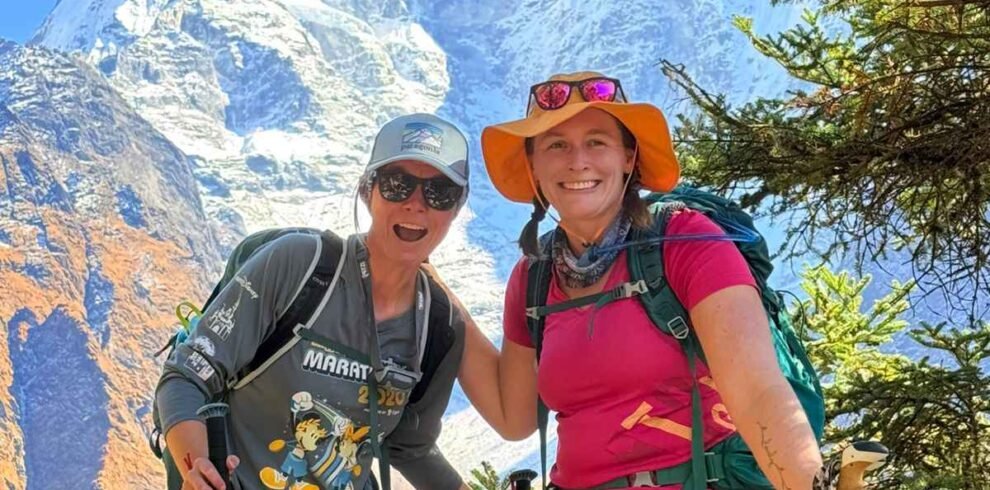
A lot of trekking companies talk about safety in general terms. I want to be specific about what we do every single day, because this is what actually changes outcomes.
- Pulse oximeter readings taken and logged for every trekker every morning from Day 5 onward, so we can see a trend, not just a single number
- A licensed government trekking guide with you for the full 14 days, required by Nepali law since April 2023 when independent trekking was banned in national parks for foreign nationals
- A group first aid kit carried by your guide, separate from your personal kit
- Satellite communicators carried above Namche, where mobile signal becomes unreliable
- Standing relationships with helicopter evacuation operators in the Khumbu, so coordination begins within minutes if a medical evacuation is needed
- Groups capped at 10 trekkers, so your guide can maintain direct contact with every person on the trail rather than losing track of someone who is struggling at the back
None of this removes altitude risk. What it does is catch the early signs before they become a crisis, and get you down fast if descent is needed.
Lukla Flights: The Part People Worry About Most
The trek starts and ends with a flight into Tenzing Hillary Airport at Lukla (2,840m), which has a 527 metre runway that slopes uphill and ends at a mountainside. It has a reputation as one of the more dramatic airports in the world, and the flight itself, about 35 minutes from Kathmandu through mountain passes, looks intimidating the first time you see photos of it.
Here is the practical reality. Pilots flying this route are specifically certified for STOL, short takeoff and landing, mountain operations, and fly this exact approach hundreds of times per season. The actual safety issue is not the runway, it is weather. Lukla flights are entirely weather dependent, and low cloud or high wind can ground flights for hours, occasionally for a full day, particularly in the shoulder seasons.
In peak months, October, November, April, and May, flights are often rerouted through Manthali Airport in Ramechhap, about 130km southeast of Kathmandu, because of air traffic congestion at Kathmandu’s single runway. This means a predawn departure around 3 to 4am, a four hour drive, then a 20 minute flight to Lukla. We arrange the vehicle and driver and build it into the Day 2 schedule. It sounds worse than it is. Most trekkers are asleep for half the drive and the sunrise over the eastern hills on the way is a genuinely nice start to the trip.
The one real planning risk is a flight delay stacking up against your international departure. Build at least one buffer day between the end of your trek and your flight home. Trekkers with a buffer spend a delay day in a Thamel coffee shop. Trekkers without one spend it anxious about a missed international connection. This is entirely within your control at the booking stage and costs you nothing except one extra hotel night.
Trail Terrain and Physical Hazards
The EBC trail is well marked and does not require ropes, crampons, or climbing experience. That does not mean the terrain has no hazards.
Suspension bridges: You cross several long suspension bridges over the Dudh Koshi river, most notably the high bridges near Namche. They are structurally sound and used daily by hundreds of trekkers, porters, and yak trains. The only real technique is to walk at a steady pace, hold the cable rail, and stop for photos on solid ground, not mid bridge, especially when a yak train is crossing.
Yak and mule trains: Pack animals have the right of way on the trail, always. The rule is simple and non negotiable: step to the uphill side of the trail when animals pass, never the downhill side, because a loaded yak can push you off balance and the downhill side is where a fall goes.
Icy and snow covered sections: Above Dingboche, especially in winter and after fresh snow, sections of trail can be icy underfoot. This is where trekking poles and proper ankle support boots matter most. Micro spikes are worth carrying in the December to February window.
Steep descents: The steepest sustained climb is the Dudh Koshi to Namche section on Day 3, an 800 metre gain over roughly 3km. The steepest sustained descents come on Days 10 to 12, and this is where most minor injuries happen, not from falling but from cumulative knee and ankle strain. Trekking poles reduce this significantly.
The Kala Patthar predawn climb: This is a 395 metre gain above 5,000m, done in the dark before sunrise, on Day 10. It is the most physically demanding morning of the trek, not because the terrain is technical but because you are climbing at altitude in low light and cold. A reliable headlamp with spare batteries is essential here, not optional.
Weather Risk by Season
| Season | Main Weather Risk | Notes |
|---|---|---|
| October to November | Flight delays from congestion, cold nights | Late November drops to minus 15C at Gorakshep |
| March to May | Afternoon haze and cloud building | Build a buffer day, especially in May |
| December to February | Extreme cold, some teahouses closed | Minus 20 to minus 25C at Gorakshep at night |
| June to August | Heavy rain, leeches on lower trail, flight cancellations | Not recommended for first time trekkers |
We do not run first time trekker recommendations for the monsoon window of June to August. The upper Khumbu above Namche sits in a partial rain shadow and stays drier than the lower trail, but flight reliability drops and the lower trail below Namche gets genuinely unpleasant with mud and leeches. If you want solitude and don’t mind the trade offs, it is possible. For a first EBC trek, autumn or spring is the safer and more enjoyable choice.
Food and Water Safety
Every teahouse on the route prepares food fresh, and the food safety risk on this trek is less about contamination and more about basic hygiene habits. Wash your hands before meals, use hand sanitizer when a sink is not available, and be cautious with any food that has been sitting out rather than cooked to order.
Water is the more important safety point. Do not drink untreated tap or stream water anywhere on the route. Boiled water is available at every teahouse for a small charge, and it is safe. Bring a bottle with at least 2 litres of capacity and either purification tablets or a filter as a backup for refilling from streams if you run short between teahouses. Above 4,000m you need 3 to 4 litres of fluid per day, and under drinking is one of the most common and most avoidable contributors to altitude sickness.
Communication and Emergency Response
Mobile signal on the EBC trail is inconsistent above Namche and unreliable above Dingboche. An NTC SIM card gives you the best coverage of the local providers, but do not plan around having reliable data or calls above Dingboche. This is exactly why our guides carry satellite communicators once you pass Namche, independent of the local mobile network.
If a medical evacuation is needed, the process is: your guide identifies the emergency, contacts our office and the helicopter operator directly using the satellite device, and coordination begins within minutes rather than hours. Helicopter evacuation itself is expensive, often several thousand dollars depending on distance and conditions, which is exactly why travel insurance with high altitude medical evacuation cover is not optional on this trek. I go through what that insurance actually needs to cover in a separate guide, because the details matter and a policy that covers hiking generally does not always cover trekking above 4,000m specifically.
What Is Actually in Our Emergency Kit
Trekkers ask me this a lot, so here is the honest inventory rather than a vague reassurance that we carry supplies.
| Item | Purpose | Carried By |
|---|---|---|
| Pulse oximeter | Daily SpO2 and heart rate monitoring from Day 5 | Guide |
| Satellite communicator | Emergency contact above Namche where mobile signal fails | Guide |
| Portable altitude chamber access via evacuation partners | Emergency treatment for severe AMS pending evacuation | Coordinated through our Kathmandu office |
| Group first aid kit | Bandages, antiseptic, burn dressing, splint materials | Guide |
| Oxygen cylinder access at partner lodges | Emergency oxygen at Pheriche and Dingboche health posts | Coordinated on the trail |
| Basic medications | Paracetamol, ibuprofen, oral rehydration salts, antihistamine | Guide |
| Personal first aid kit | Blister care, your own prescription medication, antidiarrheal | You |
The Himalayan Rescue Association runs a seasonal health post at Pheriche with a doctor on site during the main trekking seasons, and it is one of the most useful resources on the entire route if altitude symptoms need proper medical assessment rather than guesswork. Our guides know exactly when a case needs to go there rather than being managed on the trail.
Group Trek or Private Trek: Which Is Safer
This question comes up often enough that it deserves a direct answer. A group trek with a capped size of 10 trekkers is not meaningfully less safe than a private trek, because the pulse oximeter checks, the acclimatization schedule, and the guide to trekker ratio stay consistent either way. What changes is pacing flexibility.
On a private trek, if you personally need an extra rest day or a slower pace on a specific section, your guide can adjust the plan around you alone. On a group trek, the itinerary is fixed and the guide manages the pace of the whole group, though a guide watching 10 people will still pull an individual aside and slow them down or, if necessary, arrange a separate descent companion if their oxygen readings are trending the wrong way. Neither format changes the fundamental safety practices. Choose based on your budget and whether you want the flexibility of a private schedule, not because you think one option is inherently riskier than the other.
The Real Cost of Getting Altitude Sickness Wrong
Numbers make this concrete in a way that general warnings do not.
| Scenario | Approximate Cost | Who Pays |
|---|---|---|
| Extra rest day at a teahouse | USD 30 to 50 (room and meals) | You, out of pocket, usually minor |
| Helicopter evacuation from Gorakshep or Pheriche to Kathmandu | USD 3,000 to 6,000 depending on distance and conditions | Your travel insurance, if the policy covers high altitude evacuation |
| Emergency medical treatment in Kathmandu | Varies, often USD 500 to 2,000 for a hospital stay | Your travel insurance |
| Evacuation without adequate insurance | Full cost billed directly to you | You, and this is the scenario to avoid entirely |
This table is the entire argument for buying the right insurance policy before you fly to Nepal, not a generic travel policy purchased at the last minute. A policy that does not explicitly list high altitude trekking and helicopter evacuation above 5,000m is not adequate for this route, regardless of what the general terms say about adventure activities.
Sun, UV Exposure, and Snow Glare
This risk gets overlooked because it does not sound dramatic, but I see it on almost every group I guide. Ultraviolet radiation increases roughly 10 percent for every 1,000 metres of altitude gained, which means the sun at Dingboche and Gorakshep is meaningfully stronger than the sun at sea level even on a cold day. Combine that with reflected light off snow and ice above Lobuche and you have a genuine risk of severe sunburn and, in rare cases, temporary snow blindness from unprotected eyes.
SPF 50 sunscreen applied to your face, neck, ears, and the back of your hands every morning, reapplied at lunch, is not optional above Namche. UV protection sunglasses are essential from Day 1, and glacier glasses with side shields become important from Lobuche upward where you are walking across open snow and ice fields with intense reflected glare. Trekkers who skip this on a clear day at Kala Patthar sometimes come away with painful, blistered skin that turns what should be the best morning of the trek into a genuinely uncomfortable one.
How to Choose a Safety Focused Trekking Company
Not every company operating EBC treks runs the same safety standard, and the difference is not always visible from a website. Here are the specific questions worth asking before you book with anyone, us included.
| Question to Ask | Why It Matters |
|---|---|
| Do guides carry pulse oximeters and check daily? | Catches altitude trends before symptoms become severe |
| How many acclimatization days are built in, and where? | Two properly placed days at Namche and Dingboche matter more than extra days elsewhere |
| What is your guide’s licence status? | Required by law since April 2023, and licensing reflects proper training |
| What is your trek completion rate? | A company that tracks and shares this number is tracking safety outcomes, not just bookings |
| Do guides carry satellite communication above Namche? | Mobile signal is unreliable above this point, and this is your emergency lifeline |
| What is your maximum group size? | Smaller groups mean a guide can actually track every trekker’s condition daily |
| Do you have standing helicopter evacuation relationships? | Determines how fast coordination happens in an emergency, not just whether it is theoretically possible |
I wrote a full guide comparing what to look for in an Everest Base Camp trekking company if you want to go deeper on this, because the safety gap between operators is real and it is usually invisible until something goes wrong on the trail.
Who Should Be Extra Careful
Older trekkers: We have guided trekkers in their 60s and 70s to Base Camp successfully, including one 71 year old who called it the best day of his life. Age alone is not a barrier. We do ask trekkers over 60 for a GP fitness note and recommend a cardiovascular check if there is any history of heart or lung issues.
Anyone with asthma, heart conditions, or prior altitude illness: Talk to your doctor before booking, not after you arrive in Kathmandu. This is a conversation worth having months in advance so you have time to prepare properly or adjust your itinerary.
Solo female trekkers: The trail itself is safe and heavily used by international trekkers of every background. Teahouses are family run and used to hosting solo travelers. The practical safety consideration is the same one that applies to any trekker: always trek with your licensed guide, since solo trekking without a guide is no longer legally permitted in Nepal’s national parks as of April 2023, and going it alone removes exactly the safety layer that catches problems early.
What a Real Emergency Response Actually Looks Like
It helps to walk through the actual sequence rather than just a promise that we handle emergencies, because the specific steps are what determine how fast help arrives.
- Your guide notices a concerning pulse oximeter reading or a symptom that does not match normal AMS, such as breathlessness at rest or confusion.
- The guide stops the ascent immediately and begins assessment: checking the reading again, asking orientation questions, checking whether symptoms improve with rest and hydration.
- If symptoms indicate HAPE or HACE, or do not improve, the guide begins descent immediately rather than waiting for confirmation, because descent itself is the treatment.
- The guide contacts our Kathmandu office using a satellite communicator if above Namche, or a phone connection if signal allows, and relays the situation.
- Our office contacts the helicopter evacuation partner directly, confirms weather conditions for flight, and coordinates a pickup point, often a village with a helipad such as Pheriche, Lobuche, or Gorakshep depending on location.
- We contact your travel insurance provider in parallel to begin the claims process, since most evacuation partners want either upfront payment guarantee or direct insurer coordination before flying.
- On arrival in Kathmandu, we coordinate hospital transfer if needed and stay in contact with your travel insurance and, where relevant, your embassy or consulate.
This entire sequence, from the guide noticing a problem to a helicopter being airborne, typically takes under an hour in daylight hours with flyable weather. Weather is the one variable nobody can control, and it is the reason ground based descent is always the first response, not waiting for a helicopter that may be delayed by cloud cover.
Common Safety Mistakes First Time Trekkers Make
- Ascending too fast in the first few days because the early trail feels easy compared to what they expected
- Skipping the acclimatization hikes at Namche and Dingboche because they feel unnecessary when you are not tired yet
- Under drinking water because cold mountain air suppresses thirst even though your fluid needs go up
- Ignoring a mild headache instead of mentioning it to the guide, and letting it develop for a day before saying anything
- Buying travel insurance that covers general trekking but excludes altitudes above 4,000m, then discovering the gap only if something goes wrong
- Skipping a buffer day before international flights, then panicking over a weather delayed Lukla flight
- Breaking in new boots on the trail instead of before the trip, turning a preventable blister into a genuine mobility problem by Day 8
Every one of these is preventable with planning, not luck.
Before You Fly: A Quick Safety Checklist
I go through this exact list with every trekker during our pre trek consultation, and I think it is worth putting in writing so you can check it yourself before you book flights.
Confirm your travel insurance explicitly covers high altitude trekking and helicopter evacuation above 5,000m, not just general adventure sports, and get this in writing from your provider before you fly.
Speak with your own doctor about Diamox if you plan to use it, and mention any heart, lung, or blood pressure conditions so they can advise properly rather than relying on general trekking forums.
Break in your trekking boots on at least three or four real hikes before you travel, ideally on hills with some elevation gain, not on flat pavement near your home.
Build one buffer day into your schedule between the end of the trek and your international departure flight, so a weather delayed Lukla flight does not turn into a missed connection.
Pack a headlamp with spare lithium batteries, SPF 50 sunscreen, and UV protection sunglasses as non negotiable items, regardless of what else you decide to leave at home.
Choose a company that can show you a real completion rate, a real guide licence, and a real answer about how they monitor altitude daily, not a marketing page that only talks about mountain views.
None of this is complicated, and none of it costs much beyond a bit of planning time. It is the difference between a trek that goes according to plan and one where a preventable problem becomes a real crisis at 5,000m.
Frequently Asked Questions
Is Everest Base Camp trek safe for beginners?
Yes, with the right preparation and a licensed guide. You need reasonable fitness and a sensible ascent pace, not previous high altitude experience. Most of the trekkers we guide to Base Camp are doing their first high altitude trek.
What is the number one danger on the EBC trek?
Altitude sickness, specifically ascending faster than your body can adjust. It is the cause of nearly every serious problem on this route, far more than any trail hazard or flight risk.
How often do people get altitude sickness on EBC?
Mild AMS symptoms like headache or reduced appetite are common, affecting a large share of trekkers at some point above 3,000m. Severe cases requiring descent are much less common when acclimatization days are followed properly, which is reflected in our 85 percent completion rate against an industry average of 65 to 70 percent.
Do I need travel insurance for the Everest Base Camp trek?
Yes, and it must specifically cover high altitude trekking and helicopter evacuation above 5,000m. Standard travel insurance policies frequently exclude altitudes above 4,000m, which is exactly the range where you need coverage most on this route.
Is the Lukla flight dangerous?
The flight itself is operated by pilots certified for this specific mountain approach and flown routinely. The real risk is weather related delays, not the flight safety itself. Build a buffer day into your schedule to absorb possible delays.
Can I do the EBC trek without a guide?
No. Since April 2023, licensed guides are mandatory for all foreign trekkers in Nepal’s national parks, including the entire Sagarmatha National Park area that covers this route. Checkpoints at Monjo, Namche, and Gorakshep verify this.
What happens if I get altitude sickness and need to turn back?
Your guide assesses symptoms daily and will recommend descent if they worsen. In most cases, descending a few hundred metres and resting is enough to recover. In more serious cases, we coordinate helicopter evacuation directly from the trail using satellite communication.
Is the water safe to drink on the EBC trek?
Not untreated. Boiled water is available at every teahouse for a small fee and is safe. Carry purification tablets or a filter as backup and never drink directly from streams or taps.
What age is too old for Everest Base Camp?
There is no strict upper limit. We have guided trekkers into their 70s successfully. What matters more than age is general cardiovascular health and a willingness to move at a sensible, acclimatization friendly pace.
How do emergency evacuations work on this trek?
Guides carry satellite communicators above Namche where mobile signal is unreliable. If evacuation is needed, coordination with helicopter operators begins immediately, and cost is covered by your travel insurance, which is why the right policy is essential before you fly to Nepal.
How much does a helicopter evacuation from Everest Base Camp cost?
Typically USD 3,000 to 6,000 depending on the pickup location and weather conditions, billed to your travel insurance if your policy covers high altitude evacuation above 5,000m. Without that specific coverage, the cost falls on you directly, which is why checking your policy wording before departure matters as much as any piece of gear on your packing list.
Is a group trek or a private trek safer for Everest Base Camp?
Both use the same safety practices, including daily pulse oximeter checks and a licensed guide throughout. A private trek gives you more flexibility to slow down or add a rest day for your own pace specifically, while a group trek, capped at 10 trekkers with us, still allows your guide to manage individual trekkers who need extra attention.
I have walked this trail more times than I can count and I have watched the pattern repeat itself again and again: the trekkers who listen to their guide, drink enough water, and respect the acclimatization days almost always make it to Base Camp safely. The ones who push through symptoms because they do not want to slow the group down are the ones who run into trouble. Come prepared, trust the process, and the mountain will still be there for you to enjoy rather than fight.
I am Kiran Basnet, founder of Next Trip Nepal, based in Kathmandu. Our lead Everest guide Sunil has completed this exact route more than twenty two times, and every safety practice in this guide, from the pulse oximeter checks to the acclimatization day placement, comes from what we have actually seen work on this trail, not from a generic safety checklist.
Related reading: Everest Base Camp Trek Cost 2026 2027, Travel Insurance for Everest Base Camp Trek, Altitude Sickness on the Everest Base Camp Trek, How Difficult is the Everest Base Camp Trek, Everest Base Camp Trek with a Trekking Guide, Everest Base Camp Trek 14 Days trip page
What I Tell Every Trekker Before They Fly
After guiding this route for years, the conversation I have with every trekker before departure always covers the same ground. Respect the acclimatization days even when you feel strong, because the days you feel best are often the days your body is working hardest to adjust underneath the surface. Report symptoms early rather than waiting to see if they pass on their own, because a guide who hears about a headache on day one of it appearing can act faster than a guide who hears about it after two days of you pushing through quietly. Trust the pace we set, because it is built from more than twenty years of combined guiding experience on this exact trail, not a generic template applied to every route in Nepal.
The trekkers who have the best experience on this route are rarely the fittest ones. They are the ones who communicate openly with their guide, drink water even when they do not feel thirsty, and treat the acclimatization days as part of the adventure rather than a delay before the real trek begins. Safety on Everest Base Camp is not about eliminating risk, since altitude itself cannot be removed from the equation. It is about managing that risk with information, monitoring, and a guide who has seen enough patterns on this exact trail to know when something needs attention before it becomes serious.