
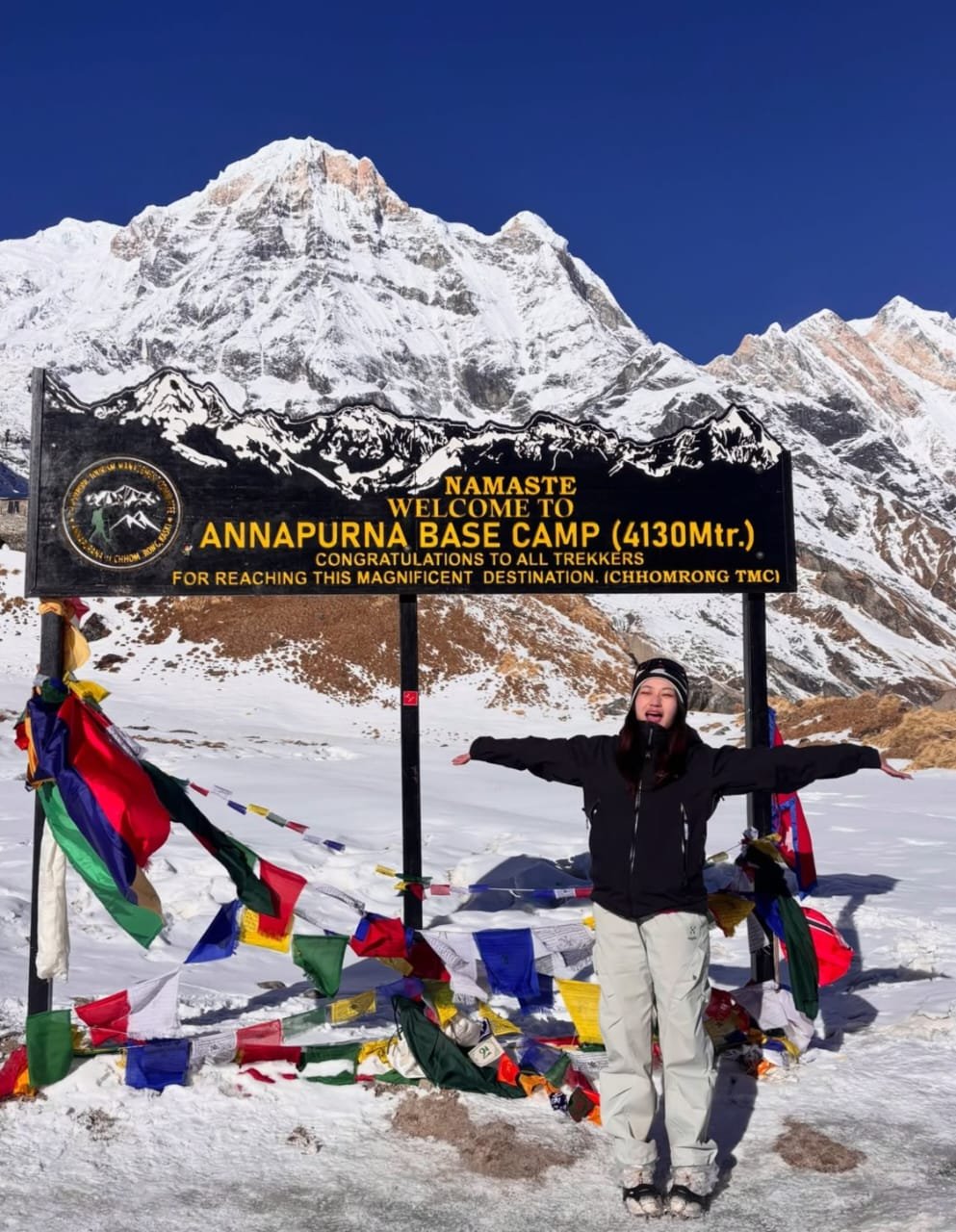
Annapurna Base Camp is one of Nepal’s most trekked destinations, and also one of the most inconsistently priced online. Search for its cost and you will see numbers ranging from $500 to $2,000, often for trips that differ only in duration and group size rather than in any meaningful difference in quality. Part of the confusion comes from the trek’s genuine flexibility: it can be done in as few as 6 days on a direct route from Pokhara, or extended to 10 or more days with a gentler pace and side trips through Ghandruk and Poon Hill. This guide breaks down every real cost using current 2026 figures, covering both the standard and shortened itinerary options, so you can budget accurately for whichever version fits your trip.
The short answer: a 10 to 13 day Annapurna Base Camp Trek costs between $750 and $1,050 per person with a trekking company, depending on group size, or roughly $650 to $850 if built independently once permits, guide, food, and transport are included honestly, since solo trekking without a licensed guide is not legally permitted anywhere in Nepal as of 2023. Next Trip Nepal offers both a standard 13 day package, priced from $750 per person for a group of 6 to 8 up to $1,050 for a solo trekker, and a shorter, more direct 6 day version from Pokhara starting at $450 per person for a larger group.
Quick Cost Summary Table
| Expense Category | Independent Trekker | With a Trekking Company |
|---|---|---|
| Annapurna Conservation Area Permit (ACAP) | $20 to $25 | Included |
| TIMS card | Not currently enforced on this route | Not applicable |
| Kathmandu to Pokhara transport | $7 to $120 one way | Included or arranged |
| Pokhara to trailhead transport (Nayapul or Ghandruk) | $5 to $60 | Included |
| Guide (10 to 13 days, mandatory) | $300 to $520 | Included |
| Porter (10 to 13 days, optional) | $200 to $325 | Often included |
| Teahouse accommodation (9 to 12 nights) | $45 to $110 | Included |
| Meals on the trail (10 to 13 days) | $300 to $520 | Included |
| Travel insurance with high altitude cover | $80 to $180 | Your responsibility either way |
| Trekking gear (if buying new) | $300 to $2,000 | Your responsibility either way |
| Wi Fi, charging, hot showers, snacks | $100 to $200 | Your responsibility either way |
| Tips for guide and porter | $70 to $150 | Your responsibility either way |
Annapurna Base Camp shares the Annapurna Conservation Area with the full Annapurna Circuit, which means it benefits from the same discontinued TIMS enforcement and the same well developed teahouse infrastructure, while being considerably shorter and reaching a lower, more contained endpoint rather than crossing a high mountain pass.
1. Annapurna Conservation Area Permit (ACAP)
Every foreign trekker on this route needs the same Annapurna Conservation Area Permit required for the full Annapurna Circuit. The current 2026 fee is NPR 3,000 for non SAARC foreign nationals, roughly $20 to $25. SAARC nationals pay a reduced rate, generally under $10. This is a flat, one time fee regardless of how many days you spend inside the conservation area, purchasable in Kathmandu, in Pokhara, or arranged by a trekking company in advance.
2. Do You Need a TIMS Card for Annapurna Base Camp?
No. As with the full Annapurna Circuit, TIMS card enforcement has been discontinued across the Annapurna Conservation Area, including the Annapurna Base Camp route. Only the ACAP permit is currently checked at trailhead checkpoints. If you see an older article or agency quoting a separate TIMS fee for this trek, that information has not been updated to reflect the current rule.
3. Is a Guide Legally Required?
Yes. The same nationwide rule introduced in April 2023 requiring a licensed guide for every foreign trekker on major routes applies fully to Annapurna Base Camp. This holds true regardless of the shorter, more accessible nature of this specific trek compared to longer routes like the full Annapurna Circuit or Everest Base Camp.
4. Transport Costs: Kathmandu, Pokhara, and the Trailhead
Annapurna Base Camp is reached from Pokhara rather than Kathmandu directly, and the trailhead itself has two common starting points depending on your chosen itinerary.
| Route | Budget Option | Faster or More Comfortable Option |
|---|---|---|
| Kathmandu to Pokhara | $7 to $15 by tourist bus | $90 to $120 by domestic flight (25 minutes) |
| Pokhara to Nayapul or Ghandruk (trailhead) | $5 to $10 by local bus | $40 to $60 by private jeep |
Because Annapurna Base Camp does not require the longer overland journey that Manaslu or the full Annapurna Circuit demand, transport costs here are consistently the lowest of any major Nepal trek covered in this guide series, another reason the trek’s total price stays comparatively modest even with a company package.
5. Guide and Porter Costs
| Role | Daily Rate | 13 Day Total |
|---|---|---|
| Licensed English speaking guide | $30 to $40 per day | $390 to $520 |
| Porter (carries up to 15 to 20kg) | $20 to $25 per day | $260 to $325 |
| Porter guide combined role | $25 to $35 per day | $325 to $455 |
For the shortened 6 day direct route, these figures scale down proportionally, typically landing around $180 to $240 for a guide and $120 to $150 for a porter across the shorter itinerary, which is part of why the compressed version reaches such a low total price point.
6. Teahouse and Food Costs
The Annapurna Sanctuary route has some of the most consistently developed teahouse infrastructure in Nepal, a direct result of decades as one of the country’s single most popular treks.
| Item | Lower Villages (Ghandruk, Chhomrong) | Higher Villages (Deurali, Machhapuchhre Base Camp, ABC) |
|---|---|---|
| Room rate | $3 to $5 | $5 to $9 |
| Breakfast | $3 to $5 | $5 to $8 |
| Lunch or dinner (dal bhat, noodles) | $4 to $7 | $7 to $11 |
| Hot drinks | $1 to $2 | $2 to $4 |
Prices at Annapurna Base Camp itself, the trek’s endpoint at roughly 4,130m, run noticeably higher than the lower villages, reflecting both the altitude and the fact that this final stretch has no permanent settlement, only lodges built specifically to serve trekkers, unlike Ghandruk or Chhomrong which are genuine mixed farming and tourism villages.
7. Standard Route vs the Shorter 6 Day Direct Route
This is the single most important cost decision on this specific trek, more so than on any other route in this guide series, since the two itinerary options genuinely differ in both price and experience rather than simply in pace.
| Itinerary | Typical Duration | What It Includes | Starting Price |
|---|---|---|---|
| Standard route via Ghandruk and Chhomrong | 10 to 13 days | A gentler pace, more villages, optional Poon Hill sunrise add on, more acclimatization buffer | $750 per person (group of 6 to 8) |
| Short direct route from Pokhara | 6 days | A faster, more direct ascent with fewer rest stops, suited to trekkers with limited vacation time or higher existing fitness | $450 per person (larger group) |
The shorter route is not simply a discounted version of the same trip. It genuinely compresses the itinerary, which means less time for acclimatization and considerably less village and cultural exposure along the way. Trekkers choosing between the two should weigh the real time savings against a real reduction in both safety buffer and overall experience, not treat it purely as a budget decision.
8. Travel Insurance and Gear
| Item | Approximate Cost |
|---|---|
| Travel insurance with high altitude cover | $80 to $180 |
| Full gear purchased new | $300 to $2,000 |
| Gear rented in Kathmandu or Pokhara | $100 to $250 |
Annapurna Base Camp’s maximum altitude, roughly 4,130m, is considerably lower than Everest Base Camp, the Annapurna Circuit’s Thorong La Pass, or Upper Mustang’s Lo Manthang, which means gear and insurance needs here are the most modest of any major trek in this guide series, another factor keeping the overall cost lower.
9. Group Size and How It Changes the Price
As with most company operated treks in Nepal, group size changes your per person price meaningfully, since fixed costs like the guide are shared across the group.
| Group Size | Typical Per Person Price (13 day standard package) |
|---|---|
| Solo (1 person) | $1,050 |
| Small group (2 people) | $950 |
| Mid group (3 to 5 people) | $850 |
| Larger group (6 to 8 people) | $750 |
These are Next Trip Nepal’s own current group pricing tiers for the standard 13 day Annapurna Base Camp package. For groups larger than 8, contact the company directly for a custom quote. The spread between solo and the largest published group tier is roughly $300 per person, similar in scale to the group discounts seen on Manaslu and the Annapurna Circuit.
Independent Trekking vs Booking With a Company: A Real Cost Comparison
| Cost Category | Independent, Solo, Built Piece by Piece | Next Trip Nepal 13 Day Package (Solo) |
|---|---|---|
| ACAP permit | $20 to $25 | Included |
| Transport (Kathmandu, Pokhara, trailhead both ways) | $60 to $180 | Included |
| Guide (13 days, mandatory) | $455 average | Included |
| Teahouse rooms (12 nights) | $70 average | Included |
| All meals (13 days) | $455 average | Included |
| Subtotal | Roughly $1,060 to $1,185 | $1,050 |
As with the Annapurna Circuit, the genuine cost gap between independent and company arranged trekking is small on this specific route, since there is no restricted area permit and no mandatory flight forcing extra fixed costs. The company package’s main advantage here is convenience and reliability rather than a dramatic price saving.
Why Some Annapurna Base Camp Packages Are Suspiciously Cheap
- Guide daily rate cut well below the $30 to $40 market range, often meaning a guide without formal training or without their own insurance
- The shortened 6 day route sold without clearly explaining the reduced acclimatization buffer compared to the standard itinerary
- Porter loads pushed above the ethical 20kg limit to reduce headcount and cost
- Teahouses selected purely by lowest negotiated rate, sometimes adding unnecessary walking distance between stages
- Group departures advertised at the largest discount price even when the confirmed group is much smaller, with the real price revealed only at booking
Seasonal Cost Variations
| Season | Months | Cost Impact |
|---|---|---|
| Autumn (peak) | September to November | Best weather, most group departures to join, highest teahouse demand near the sanctuary itself |
| Spring | March to May | Good weather, rhododendron blooms on the lower forested sections, slightly fewer trekkers than autumn |
| Winter | December to February | Cold at Annapurna Base Camp itself, occasional snow closure of the final stretch, fewer group departures |
| Monsoon | June to August | Wet and leech heavy on the lower forested sections, though the route remains passable and considerably quieter |
A Sample 13 Day Cost Breakdown, Day by Day
| Day | Location | Approximate Daily Spend (independent trekker) |
|---|---|---|
| 1 | Kathmandu to Pokhara (bus) | $10 transport plus $20 hotel and food |
| 2 | Pokhara to Nayapul, trek to Ghandruk | $15 transport plus $22 food and room |
| 3 | Ghandruk to Chhomrong | $25 |
| 4 | Chhomrong to Dovan | $28 |
| 5 | Dovan to Deurali | $28 |
| 6 | Deurali to Annapurna Base Camp | $32 |
| 7 | Annapurna Base Camp to Bamboo | $28 |
| 8 | Bamboo to Jhinu Danda (natural hot springs) | $25 |
| 9 | Jhinu Danda to Pokhara via Nayapul | $15 transport plus $20 hotel and food |
| 10 to 13 | Buffer days, optional Poon Hill add on or rest in Pokhara, return to Kathmandu | $20 to $40 per day |
Frequently Asked Questions
Is Annapurna Base Camp cheaper than the full Annapurna Circuit?
Yes, generally, mainly because it is a shorter trek with no high pass crossing and no Jomsom flight leg. Next Trip Nepal’s standard ABC package starts at $750 for a group compared to $975 for the Annapurna Circuit’s largest group tier.
Can I do this trek without a guide?
No. The nationwide rule requiring a licensed guide for every foreign trekker, in effect since April 2023, applies fully to Annapurna Base Camp regardless of the trek’s shorter length or well developed trail.
Do I need a TIMS card for this trek?
No. Like the full Annapurna Circuit, TIMS enforcement has been discontinued across the Annapurna Conservation Area. Only the ACAP permit is currently required.
Should I do the 6 day direct route or the standard 10 to 13 day version?
The standard route offers a gentler pace, more acclimatization buffer, and more village and cultural exposure along the way, and is the better choice for most first time trekkers. The 6 day direct route suits trekkers with limited vacation time or existing high fitness who understand they are trading acclimatization buffer for speed.
What is the single biggest cost most people underestimate?
The price difference between the standard and shortened itineraries is often misunderstood as a simple discount rather than a genuinely different trip, leading some trekkers to book the cheaper 6 day option without fully weighing the reduced acclimatization time.
Does group size meaningfully change the price on this trek?
Yes. The gap between Next Trip Nepal’s solo price of $1,050 and its published group price of $750 is roughly $300 per person on the standard itinerary, a meaningful saving worth checking group availability for before booking a private solo trek.
How Much Cash to Carry on the Annapurna Base Camp Trek
Pokhara has plentiful ATMs, and Nayapul and Ghandruk have at least basic access before the trail proper begins, though nothing reliable exists once you are walking.
| Trip Length | Recommended Cash to Carry |
|---|---|
| 10 to 13 day standard Annapurna Base Camp Trek | $150 to $250 |
| 6 day short direct route | $80 to $140 |
This should comfortably cover meals not included in your package, the natural hot springs entry fee at Jhinu Danda, hot showers, Wi Fi, snacks, and tips, with a modest buffer for any unplanned extra night.
Common Budgeting Mistakes on the Annapurna Base Camp Trek
- Choosing the 6 day route purely for price without understanding the reduced acclimatization buffer. Altitude sickness risk is real at 4,130m regardless of how quickly you reach it.
- Assuming a TIMS card is still required. Budgeting an extra fee for a permit that is no longer enforced on this route is a common and easily avoidable overestimate.
- Skipping the Jhinu Danda hot springs stop to save a small amount. The modest entry fee is one of the most popular and affordable highlights of the standard route, and skipping it saves little while missing a genuine trip highlight.
- Booking solo when a group departure would have worked. Given the roughly $300 per person gap between solo and group pricing, checking availability before committing to a private booking is worth the flexibility.
- Overpacking extreme cold weather gear for a trek that tops out well below Everest Base Camp or the Annapurna Circuit’s pass. Annapurna Base Camp’s lower maximum altitude means a lighter kit is genuinely sufficient here.
How Next Trip Nepal’s Package Compares
| Included Item | Typically in Next Trip Nepal’s Package | Commonly Excluded byBudget Operators |
|---|---|---|
| ACAP permit | Yes, arranged in advance | Usually yes, but confirm this directly |
| Choice of standard or short direct itinerary, clearly explained | Yes, both options offered transparently | Sometimes only the cheaper shortened route is advertised without explaining the tradeoff |
| Licensed guide | Yes | Sometimes a guide with limited experience on this specific route |
| All meals during the trek | Yes | Often only breakfast and dinner included |
| Transparent group size pricing published upfront | Yes, from $750 to $1,050 depending on group size | Often only the lowest group rate is advertised, with the real price revealed at booking |
| Advance payment required to book | No advance payment required | Often a deposit required upfront |
Comparing Annapurna Base Camp Cost to Other Popular Treks
| Trek | Typical Package Price Range | Why It Differs |
|---|---|---|
| Annapurna Base Camp (6 to 13 days) | $450 to $1,050 | Flexible duration, no restricted area permit, lowest maximum altitude of the major sanctuary style treks |
| Langtang Valley (7 to 9 days) | $490 to $790 | Similarly short and accessible, road based trailhead instead of a mountain sanctuary |
| Manaslu Circuit (13 to 14 days) | $850 to $1,500 | Restricted area permit and a high pass crossing |
| Everest Base Camp (14 days) | $1,200 to $2,500 | Mandatory Lukla flight and considerably higher altitude |
| Annapurna Circuit (14 to 16 days) | $975 to $1,560 | Longer duration and a high pass crossing at Thorong La |
Annapurna Base Camp’s flexible duration, from a compressed 6 day version to a fuller 13 day itinerary, gives it the widest genuine price range of any trek in this comparison, making it uniquely adaptable to different budgets and time constraints without sacrificing the core experience of reaching a genuine high mountain sanctuary.
What the ACAP Fee Actually Funds
As with the Annapurna Circuit, the Annapurna Conservation Area Permit fee funds the Annapurna Conservation Area Project, covering trail maintenance, reforestation, and community development across the villages this route passes through, including Ghandruk and Chhomrong, both substantial Gurung communities that have built much of their modern economy around trekking tourism. The well maintained stone stairways and bridges throughout the lower sections of this route are a direct, visible result of decades of this fee being reinvested locally.
What Happens if You Get Sick or Need to Evacuate
Annapurna Base Camp’s lower maximum altitude, roughly 4,130m, makes it one of the lower risk major treks in this guide series for altitude sickness, though it remains a genuine risk, particularly for trekkers who choose the compressed 6 day itinerary and climb faster than their body can comfortably acclimatize. A helicopter evacuation from the sanctuary itself or from Machhapuchhre Base Camp can cost $2,000 to $3,500 depending on distance and weather, among the lower figures in this guide series, reflecting both the shorter distance from Pokhara and the lower altitude involved.
Travel insurance with high altitude cover is still worth carrying, even though the numbers involved are typically smaller than on Everest Base Camp, the Annapurna Circuit, or Upper Mustang. Given the trek’s already modest total cost, the additional expense of proper insurance remains a small percentage of your overall trip budget and should not be skipped simply because this route is statistically lower risk than Nepal’s higher altitude treks.
Combining Annapurna Base Camp with Poon Hill
Many standard itineraries route through or near Ghorepani, making it straightforward to add the famous Poon Hill sunrise viewpoint to an Annapurna Base Camp trip rather than treating it as a fully separate trek.
| Addition | Extra Days Needed | Extra Cost |
|---|---|---|
| Poon Hill sunrise viewpoint via Ghorepani | 1 to 2 additional days | $60 to $100 |
Because Poon Hill sits at a comparatively gentle 3,210m and involves only a short pre dawn climb from Ghorepani itself, this is one of the lowest cost, lowest risk additions available on any trek in this guide series, and a large share of trekkers doing the standard Annapurna Base Camp route choose to include it.
Currency and Payment Practicalities on the Trail
Pokhara has plentiful ATMs and banking access, and this trek’s trailhead towns, whether you begin at Nayapul or Ghandruk, sit close enough to Pokhara that reaching them does not involve the kind of multi day approach that leaves other Nepal treks fully cash dependent from the very first day. Once you actually start walking, though, cash becomes the only practical way to pay for anything, and neither Chhomrong, Bamboo, Dovan, Himalaya, Deurali, Machhapuchhre Base Camp, nor Annapurna Base Camp itself has any banking access whatsoever. Bring Nepali Rupees in a mix of smaller denominations, since teahouses this high on the route frequently cannot break a large note, and carry a genuine buffer beyond your estimated total, since even a short trek like this one can run a day or two longer than planned if weather closes in around the sanctuary itself.
Booking with a company that lets you prepay the bulk of your trip cost before departure, as Next Trip Nepal does, simplifies this considerably on a trek where the total cost is already relatively modest compared to Nepal’s longer routes. Prepaying the guide, permits, and the bulk of your accommodation and food through the package leaves you managing only genuinely incidental expenses, tips, snacks, hot showers, and Wi Fi, once you are actually on the trail, which is a meaningfully smaller cash management burden than on a longer, more remote route.
Packing List Costs Specific to Annapurna Base Camp
Because this trek reaches a comparatively modest maximum altitude and passes through genuinely lush, forested terrain for much of its length before opening into the high sanctuary itself, the packing list skews lighter and less specialized than for Everest Base Camp, the Annapurna Circuit, or Upper Mustang, and trekkers who already own a general teahouse trekking kit from a previous trip often need to buy comparatively little new gear for this specific route.
| Item | Why It Matters Here | Approximate Cost |
|---|---|---|
| Rain jacket or poncho | The lower, forested sections of this route see considerably more rainfall than Nepal’s drier high altitude treks, even outside the core monsoon months | $25 to $60 |
| Mid weight insulated jacket | Annapurna Base Camp itself and Machhapuchhre Base Camp get genuinely cold overnight, but the trek’s shorter duration and lower overall altitude mean an expedition grade down jacket is not necessary the way it is on Everest Base Camp | $60 to $150 |
| Trekking poles | The stone stairways through Chhomrong and the steep final push into the sanctuary are hard on the knees in both directions | $20 to $50 |
| Basic water purification | Refilling from taps and streams along this well trodden route is standard practice, and a filter or tablets are far cheaper than buying bottled water at every teahouse | $15 to $40 |
A trekker moving directly from a previous Nepal trek often finds they already own everything on this list, which is one more small way this route tends to cost less overall than the longer, higher altitude treks covered elsewhere in this guide series.
Booking Timing and Its Effect on Price
Annapurna Base Camp’s shorter duration and its proximity to Pokhara make it considerably more forgiving of late booking than routes like Upper Mustang or Manaslu, where lead time is dictated by restricted area permit processing. There is no equivalent bureaucratic bottleneck here, since the ACAP permit can typically be arranged within a day or two through a registered agency in Pokhara or Kathmandu.
- Booking 4 to 6 weeks ahead gives your agency the best chance of placing you into a forming group departure at a favorable price tier, particularly during the busy autumn season.
- Booking 1 to 2 weeks out is genuinely viable on this route in a way it often is not on longer or more restricted treks, though you are more likely to pay a solo or small group rate if a larger departure has not already formed.
- Booking during peak autumn weekends still benefits from earlier planning, since teahouse space at Annapurna Base Camp and Machhapuchhre Base Camp itself, both small settlements with limited rooms, can fill up on the busiest days of the season.
How Annapurna Base Camp Compares for First Time High Altitude Trekkers
Among Nepal’s major teahouse treks, Annapurna Base Camp is frequently recommended as a genuinely accessible entry point to high altitude trekking, and its cost structure reflects that role. Its maximum altitude of roughly 4,130m sits well below the altitude sickness risk threshold that dominates planning for Everest Base Camp or the Annapurna Circuit’s Thorong La Pass, its shorter overall duration means a smaller total financial commitment even before comparing daily rates, and its proximity to Pokhara removes the added transport cost and complexity of a mountain flight or a long jeep transfer to a remote trailhead. For a trekker weighing a first Himalayan trek against a longer or more demanding route, Annapurna Base Camp offers a genuine taste of high altitude teahouse trekking, including a proper sanctuary setting surrounded by peaks well above 7,000m, at meaningfully lower cost and risk than the routes typically recommended as a trekker’s very first major Nepal trip.
Why the Standard Route Costs More Than the Direct Route, and Whether the Difference Is Worth It
The roughly $300 gap between Next Trip Nepal’s standard 13 day solo price and its 6 day direct route solo price is not simply a function of fewer trekking days. The standard route through Ghandruk and Chhomrong passes through several distinct ecological zones, terraced farmland, dense rhododendron and bamboo forest, and finally the open glacial sanctuary itself, and includes genuine acclimatization buffer that the compressed direct route largely removes. Trekkers choosing the 6 day option should understand they are trading a meaningfully lower price for a faster, more physically demanding pace with less built in adjustment time, a trade that suits fit, time constrained trekkers reasonably well but is a poorer fit for anyone newer to high altitude trekking or hoping for a more gradual, immersive village to village experience.
How This Guide Was Put Together
Every price in this guide comes from a combination of sources rather than a single assumption about what things cost. Permit fees, the ACAP charge and the status of the discontinued TIMS card, come directly from the Nepal Tourism Board and the Annapurna Conservation Area Project’s published rates for 2026. Transport costs reflect current bus, jeep, and taxi fares between Kathmandu, Pokhara, and the Nayapul or Ghandruk trailheads as of this year, cross checked against multiple operators rather than a single quoted fare. Guide and porter daily rates reflect the range currently paid across established Pokhara and Kathmandu based trekking agencies, not the minimum legal wage floor alone. Teahouse and food costs are drawn from current per night and per meal pricing along the actual route, which varies meaningfully between the lower, more competitive villages like Ghandruk and the more remote, monopoly priced settlements like Machhapuchhre Base Camp and Annapurna Base Camp itself. Group size pricing throughout this guide comes directly from Next Trip Nepal’s own published trip data for both the standard 13 day itinerary and the 6 day direct route, reflecting real, bookable tiers rather than a marketing anchor price. Where a data point could not be independently verified with confidence, it has been presented as a range rather than a single figure, and the more anomalous top end group pricing tiers that sometimes appear in raw booking data have been deliberately omitted in favor of directing larger groups to request a custom quote.
Comparing a Guided Package to Hiring a Guide Independently in Pokhara
Beyond the broader independent versus company comparison already covered, it is worth understanding the specific middle path many budget conscious trekkers consider on this route: hiring a guide independently in Pokhara rather than either going fully solo or booking a complete package through an established agency. This approach can work reasonably well on Annapurna Base Camp specifically, since the route is short, well marked, and close enough to Pokhara that logistics are simpler than on longer or more remote treks, but it comes with real tradeoffs worth weighing against the modest savings involved.
| Factor | Independently Hired Guide | Full Company Package |
|---|---|---|
| Guide vetting | Relies on your own judgment or word of mouth recommendations, with no institutional accountability if something goes wrong | Agency has an ongoing reputation and repeat business at stake, and typically vets and trains its guides directly |
| Permit arrangement | You must personally handle ACAP paperwork, sometimes requiring an extra day in Pokhara before departure | Arranged in advance as part of the package, ready before you arrive |
| Teahouse booking during peak season | Left to arrival, which can mean scrambling for rooms during the busiest autumn weekends | Often pre arranged or handled through the guide’s established relationships along the route |
| Emergency support | Depends entirely on your individually hired guide’s own resources and contacts | Backed by the agency’s office, insurance coordination, and evacuation arrangements |
| Typical total savings | Roughly $100 to $200 versus a full package, before accounting for your own time spent on arrangements | Baseline package price |
For a short, well established route like Annapurna Base Camp, the independently hired guide path is more viable than it would be on a longer or more restricted trek, but the actual savings are modest once your own time and the loss of institutional backing are factored in, which is why most first time trekkers on this route still find a complete package the more straightforward choice.
Domestic Flight Combinations Worth Considering
Because Annapurna Base Camp begins and ends in Pokhara rather than requiring its own dedicated mountain flight, trekkers already in Nepal for a longer itinerary often combine it with a short domestic flight to or from Kathmandu rather than the longer bus or private vehicle transfer. A one way Kathmandu to Pokhara flight typically runs $100 to $140 and cuts the transfer time from six to seven hours by road down to roughly 25 minutes in the air, a meaningful convenience for trekkers on a tighter overall Nepal itinerary who would rather spend that saved time in the mountains or in Pokhara itself. This flight is not included in Next Trip Nepal’s standard package price, which assumes ground transport, but can be added or substituted at booking for trekkers who prefer to fly at least one direction. For a trekker also planning to visit Chitwan National Park or another destination beyond the Kathmandu and Pokhara loop, factoring this flight cost in early makes for a more accurate total trip budget than assuming ground transport throughout.
Final Word on Budgeting for Annapurna Base Camp
The honest range for an Annapurna Base Camp Trek in 2026 is $450 to $1,050 with a company depending on which itinerary and group size you choose, with the ACAP permit and a mandatory guide applying to every trekker regardless of route length. Next Trip Nepal’s tiered pricing, from $1,050 solo down to $750 in a group of 6 to 8 on the standard route, or as low as $450 on the shorter direct itinerary, gives a realistic and transparent way to estimate your own cost before booking, and offers more genuine flexibility in matching your trip to your budget and schedule than almost any other major trek in Nepal. Whether you choose the fuller 13 day standard route through Ghandruk and Chhomrong or the faster 6 day direct alternative, the underlying cost structure, permit fees, a mandatory guide, and straightforward teahouse pricing along a well established route, stays essentially the same, and understanding each individual piece is what makes it genuinely possible to compare a quoted package price against what the trek should actually and reasonably cost rather than simply trusting an operator’s headline advertised number.