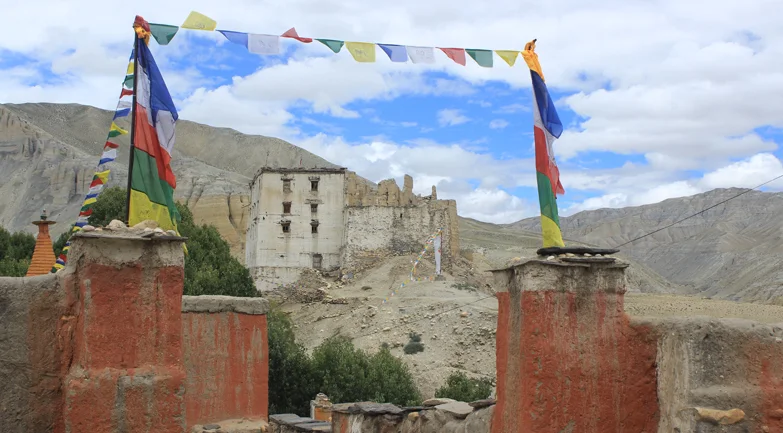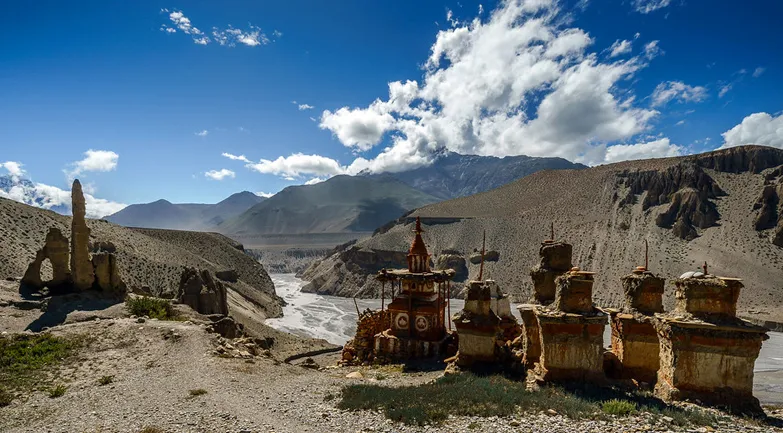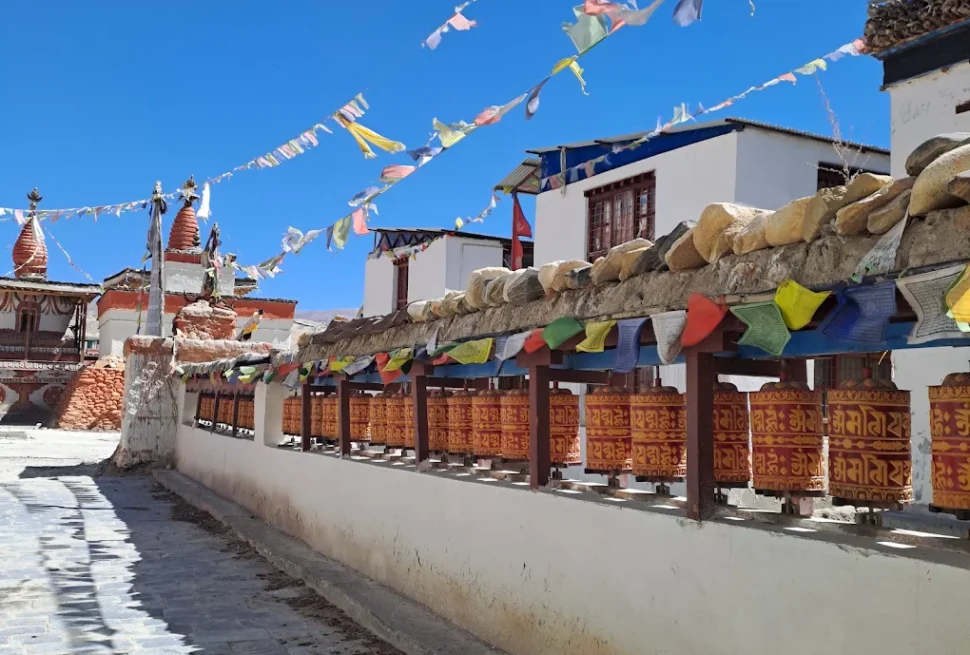
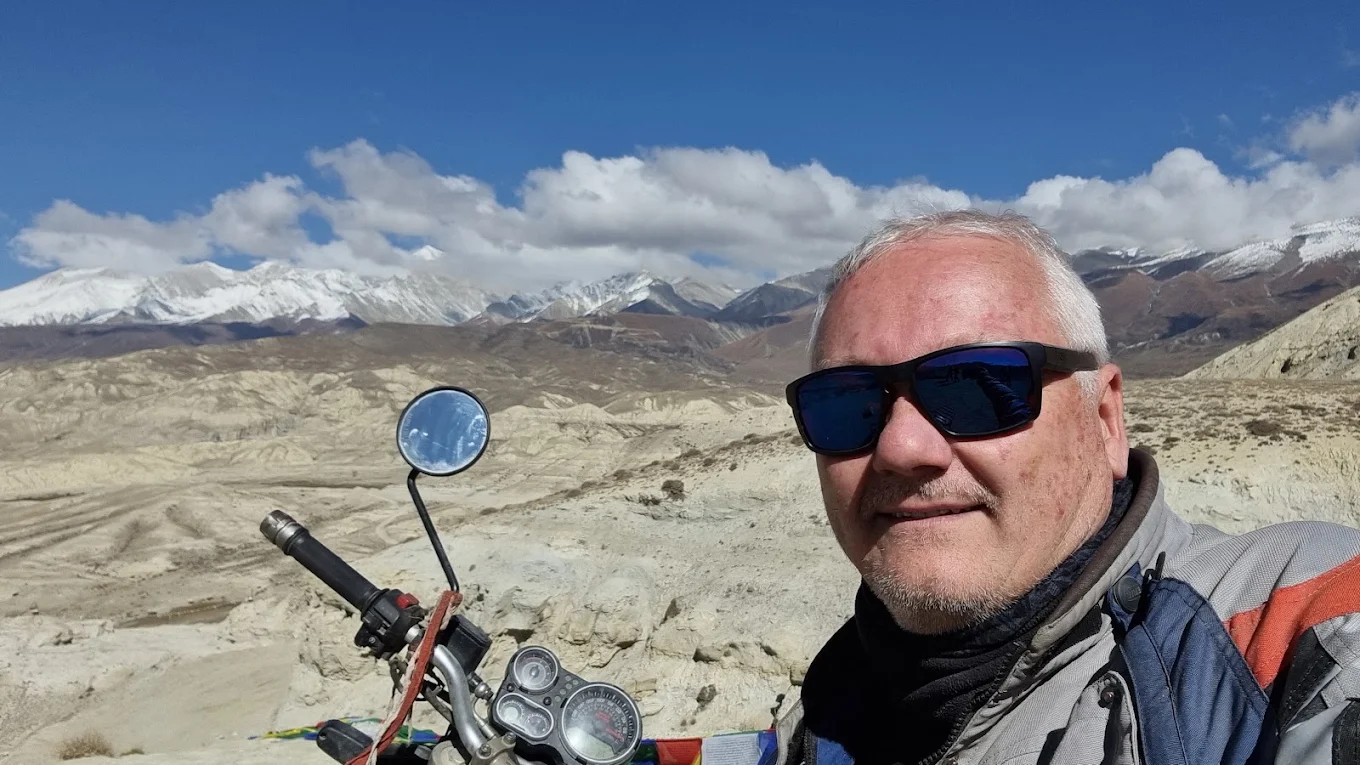
December Upper Mustang is for the trekker who has already decided that discomfort is part of the deal and the question is only what the discomfort is worth.
This guide covers what to expect on an Upper Mustang Trek in December, including the latest 2026 permit rules, weather, and a day by day route.
In December it is worth a great deal. The cold is real and serious, approaching the January depths by month’s end. The daylight is at its annual minimum, with sunset before 5:30 PM and mornings still dark at 7. A handful of teahouses in smaller villages close for the winter. And the trail, though clear of monsoon mud, has patches of ice in the mornings and occasional light snow at the higher sections.
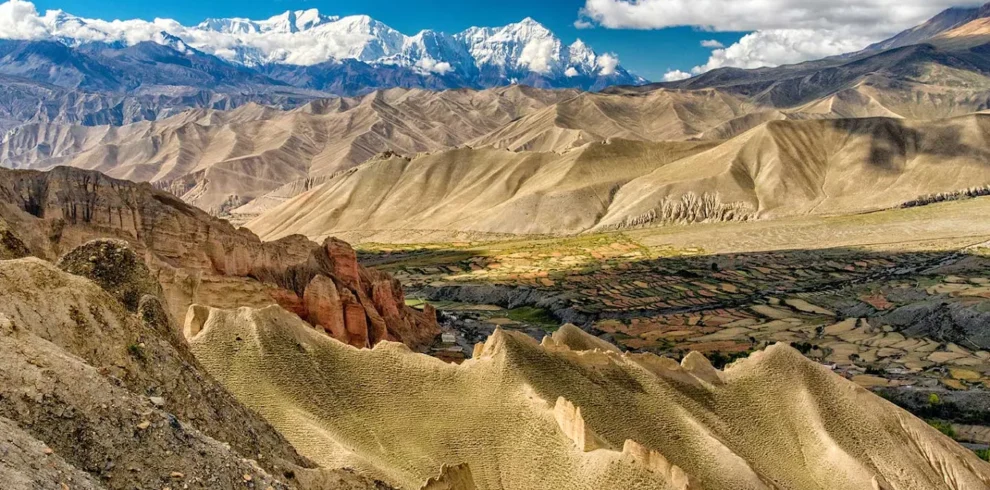
In exchange for accepting all of this, you receive Upper Mustang in its most austere and perhaps its most honest form. The plateau stripped of every seasonal softening. The ancient walled city of Lo Manthang maintained only by the people who actually live there. The monasteries following their winter prayer schedule without visitor management. The Kali Gandaki gorge in its most geologically naked state, the cliff colors vivid against winter light, the canyon silent except for wind and water. No other trekkers for days at a time.
Planning your Upper Mustang Trek?
Upper Mustang Trek — Complete Guide 2026 Few places on earth stop you in your tracks the way Upper Mustang…
At a Glance: December Upper Mustang Trek
| Best for | Experienced winter trekkers, extreme solitude seekers, winter landscape photographers |
| Temperature at Jomsom (2,720m) | Night: -8°C to -14°C | Day: 0°C to 8°C |
| Temperature at Lo Manthang (3,840m) | Night: -14°C to -20°C | Day: -5°C to 3°C |
| Precipitation | Very low (rain shadow continues in winter), occasional light snow possible |
| Wind | Moderate, less fierce than spring |
| Crowd level | Minimal to none |
| UMAP Permit | USD 50 per day per person (no minimum) |
| Duration | 12 to 15 days typical |
| Overall rating | Excellent for the right, well prepared trekker |
December Weather: Entering Winter
December is the month when Upper Mustang commits to winter. The gradual cooling of October and November accelerates in December. By December 21, the winter solstice, the plateau is in its deepest cold of the year.
At Jomsom (2,720 meters), December nights drop to -8°C to -14°C. Early December nights are closer to -8°C. By late December nights consistently hit -12°C to -14°C. Daytime highs at Jomsom reach only 0°C to 8°C, and on overcast days may not rise above freezing at all.
At Lo Manthang (3,840 meters), December nights fall to -14°C to -20°C. These temperatures are serious and require sleeping gear rated to at least -20°C comfort. Daytime highs at Lo Manthang in December reach -5°C to 3°C. On the coldest December days Lo Manthang does not rise above freezing even at midday. The teahouse common room with its dung burning stove becomes the social center of existence in a way that warmer season trekking does not make you appreciate until you are in it.
The rain shadow continues fully through December. Upper Mustang receives essentially no precipitation in December, though occasional western disturbances can bring light snow to the higher sections. A December snowfall event at Lo Manthang is possible but typically deposits only a few centimeters that the cold air evaporates rather than melts. The trails stay walkable.
December wind is moderate rather than the April extreme. The morning hours are often calm. Afternoons can have a cutting wind that at these temperatures feels much colder than the actual thermometer reading suggests. Wind chill at -10°C in a 20 km/h wind feels closer to -20°C. This is the cold that bites if you are underprepared and completely manageable if you are not.
Trail Conditions in December
December trails require more attention than any month outside the depths of January. Ice patches form overnight on any section of trail that receives shade in the afternoon and loses sun heat by evening. The north facing sections of trail, particularly on the approaches to the Taklam La and Nyi La passes, can be icy from morning through midday in December.
Microspikes or similar traction devices are not optional in December. They are safety equipment that prevents falls on hard frozen ground at altitude. They weigh almost nothing. Every December Upper Mustang trekker should carry them.
The trail below 3,000 meters, the sections from Jomsom through Kagbeni and the first hour above Kagbeni, is less problematic. These altitudes thaw during the December midday hours and refreezing happens overnight. Start each day after the first hour of sun has hit the trail surface. Mornings on these lower sections can be icy but improve quickly.
The high passes in December (Nyi La at 4,010 meters, Taklam La at 3,624 meters) can have fresh snow in December. This rarely accumulates to blocking levels because of Upper Mustang’s extreme dryness, but light dustings of snow on frozen ground make the ascent and descent approaches more technical than in other seasons. A guide who knows the conditions is essential in December at the high sections.
Planning your Upper Mustang Trek?
Crowds: Deep Winter Quiet
December is one of the two or three quietest months in Upper Mustang. Monthly permit entries are among the lowest of the year. You are extremely unlikely to encounter more than one or two other trekking groups in the entire restricted area during any given December day.
Lo Manthang in December has the quality of a village in winter rather than a trekking destination managing visitors. The 200 or so residents of the walled city are going about their December lives: maintaining the dung cake fuel supplies, performing morning and evening prayer rituals, conducting monastery ceremonies according to the winter religious calendar, trading and socializing in the compact social world of a high altitude plateau community in deep cold.
Your presence as a December trekker is unusual enough to attract genuine curiosity. You are not one of a thousand October visitors. You are one of perhaps twenty December visitors to the entire restricted area. The community’s reaction to your arrival reflects this rarity: with openness and genuine interest rather than the efficient tourist management of peak season.
Upper Mustang Trek — Complete Guide 2026 Few places on earth stop you in your tracks the way Upper Mustang…
Permits and Logistics
December permits are unchanged: UMAP USD 50 per day per person with no minimum purchase, ACAP NPR 3,000, TIMS NPR 2,000. A licensed guide is mandatory, but solo travelers are welcome and simply hire one individually rather than travel as part of a larger group.
Guide availability in December is the most flexible of any month. Good guides are available with minimal advance notice. Teahouse accommodation needs confirmation of which specific guesthouses are open (some smaller ones close in December) but there is no availability pressure at the open ones.
The mandatory guide requirement is particularly important in December from a practical safety perspective beyond the legal requirement. A December guide who knows which teahouses are open, which trail sections are icy, and how to read the weather signals that indicate the occasional winter storm approaching is providing genuine safety value rather than just regulatory compliance. Choose an experienced December Upper Mustang guide through an established agency like Next Trip Nepal’s Upper Mustang Trek.
Accommodation and Food
The main teahouses at Kagbeni, Chele, Syangboche, Ghami, Charang, and Lo Manthang operate through December. A subset of smaller or newer guesthouses in some villages close for winter. Your guide and agency confirm which specific guesthouses are operational before you depart Jomsom.
December teahouse rooms are cold. The common dining room has the dung burning stove and is genuinely warm in the evenings. The sleeping rooms are unheated. You live in your sleeping bag. A bag rated to -20°C comfort is not overcautious for Lo Manthang December nights.
Food in December teahouses is simpler than peak season. Dal bhat is always available and is the best option for caloric density and local ingredients. The menu variety shrinks in deep winter as supply runs and fresh vegetables become less frequent. Hot soup, egg dishes, and Tibetan bread with butter and honey round out the typical December menu. The food is honest and filling.
Hot water for tea and meals is always available. Hot showers are less reliable in December. Solar heating is marginal in the short winter daylight and some teahouses rely on wood heated boilers that operate once daily. Time your shower for the warmest post solar period (early to mid afternoon) if your teahouse has solar, or ask specifically when hot water is available for boiler heated systems.
The December Experience
December Upper Mustang is the version of this place that exists without any mediation or infrastructure optimization. The cold strips away comfort. The darkness comes early. The limited teahouse menus remind you that the supply chain is real and the plateau is genuinely remote. And in all of this stripping away, what remains is the actual place.
The Thubchen Gompa in December, with the morning light entering through its ancient windows at a low winter angle and illuminating the 700 year old murals, is a genuinely moving experience in a way that is hard to articulate. The art did not come into being for trekkers to appreciate. It came into being for exactly the kind of cold, dark, high altitude worship environment that December in Lo Manthang represents. Seeing it in the season it was made for gives it a context that August warmth or October crowd day cannot.
The prayer ceremonies at the monasteries in December follow the winter ritual calendar. Some ceremonies are performed in December that do not occur in the peak trekking months. Your guide knows the monastery schedules and can time your Lo Manthang rest days to observe specific winter ceremonies if your interest runs that way.
The geological landscape in December is at its most spare and most beautiful. No vegetation. No dust. No atmospheric moisture beyond the minimum. Every rock formation, every canyon wall color, every ancient cave opening stands in hard clean December light against a sky that is either deep blue or high cloud white. The photographs you take in December Upper Mustang look like paintings.
Day by Day December Route
The standard 12 to 14 day route requires adjusted timing for December’s short days. Sunrise is around 7 AM and sunset before 5:30 PM through most of December. You have approximately 10 hours of usable daylight rather than the 14 hours of June.
Start each day by 7:30 AM at the latest. The first walking hour in the pre full-sun period can be cold but the alternative, rushing the afternoon sections in fading light, is worse. Arrive at your teahouse by 4 PM to have time to settle in before dark and before temperatures drop most sharply.
Allow slightly more days than the standard minimum. Building a 14 to 15 day December permit gives you flexibility for the occasional ice delay on the high pass sections and removes any temptation to push the pace dangerously in cold conditions.
The Lo Manthang rest days in December are when the experience deepens. Use the shorter daylight productively: monastery visits in the morning light, the Chhoser caves on a full day excursion, and the community life observation in the late morning to early afternoon warm hours.
Packing for December
December requires the most complete cold weather kit of any Upper Mustang month outside January. Do not underpack.
Sleeping bag: rated to -20°C comfort for Lo Manthang nights. This is not conservative. The nights at 3,840 meters in December consistently approach -18°C to -20°C. A bag rated to -15°C will be cold in the worst nights. Bring a liner for additional insurance.
Down jacket: the highest fill power you can afford. This is the item you live in during December Upper Mustang from the moment you stop actively walking. Do not economize on the down jacket.
Hands and head: liner gloves inside heavier outer mittens or gloves. A balaclava that covers your face for the coldest mornings and wind exposed sections. A warm beanie under your hood. Frostbite is a genuine risk on exposed extremities in December wind chill conditions.
Boots: insulated and waterproof for December. Three season trekking boots are not adequate for Lo Manthang December nights. Winter mountaineering or insulated hiking boots with a temperature rating of at least -20°C.
Microspikes: essential. Carry them. Use them on any icy section you encounter.
Electronics: cold destroys batteries faster than any other factor. Carry batteries for everything (headlamp, camera, phone, GPS) in warm inside pockets close to your body. Keep electronics in your sleeping bag at night to preserve charge for the next day.
Planning your Upper Mustang Trek?
Upper Mustang Trek — Complete Guide 2026 Few places on earth stop you in your tracks the way Upper Mustang…
Getting to Jomsom
December Pokhara to Jomsom flights operate but with lower reliability than October and November. The mountain flying window is narrower in winter. Morning flights have the best success rates. Build 1 to 2 buffer days into your schedule for potential flight delays.
The Beni to Jomsom jeep road is operational in early December. By mid to late December road conditions above Ghasa can become challenging due to ice and occasional light snow. The road remains a viable backup option in early December but becomes less reliable as the month progresses. Plan your jeep road use for early December departure dates if using this option.
Budget
| Item | December Cost (per person) |
|---|---|
| UMAP Permit (USD 50/day, no minimum) | USD 600 to 700 (12 to 14 days) |
| ACAP + TIMS | NPR 5,000 (approx USD 37) |
| Guide (12 to 14 days) | USD 280 to 480 |
| Teahouse accommodation per night | USD 5 to 12 |
| Meals per day | USD 10 to 18 |
| Pokhara to Jomsom flights return | USD 110 to 170 |
Total organized December Upper Mustang Trek through Next Trip Nepal’s Upper Mustang Trek: approximately USD 1,600 to 2,200 per person for 12 to 14 days. Winter off season pricing at its lowest point. The permit is the fixed cost regardless of season; everything else in December is at minimum pricing.
December FAQ
Is December Upper Mustang safe?
Yes for experienced cold weather trekkers who are properly equipped and traveling with a knowledgeable guide. The safety risks are cold related: hypothermia, frostbite of extremities, and falls on icy trail sections. All are manageable with proper gear, guide knowledge, and sensible pacing. The altitude risks are the same as any other month at Lo Manthang’s 3,840 meters. December is not recommended for inexperienced trekkers or those without cold weather outdoor experience.
What if it snows during my December trek?
Upper Mustang’s rain shadow effect means heavy snowfall is rare. Light snow dustings are possible. If a storm brings more snow to the high passes than is safe to walk through, your guide will hold at the nearest teahouse until conditions improve. This is the standard practice in mountain travel everywhere and another reason why the mandatory guide requirement in Upper Mustang is practically important in December.
Can I see any winter festivals in December?
The Tibetan Buddhist ceremonial calendar has some winter practices that occur in December at Lo Manthang’s monasteries. These are not the public spectacle of Tiji but they are genuine winter rituals. Your guide knows the specific monastery schedule for your visit dates and can advise on what will be observable.
Is December better or worse than January for Upper Mustang?
Early December is slightly warmer than January. Late December approaches January cold. The cultural calendar difference is that Losar (Tibetan New Year) sometimes falls in late January or February, giving January an occasional festival draw that December lacks. Overall the two months are very similar in character. December is the entry into winter, January is winter in full expression.
What other Nepal treks are possible in December?
The lower altitude options like Ghorepani Poon Hill Trek are accessible and pleasant in December at lower elevations. The Langtang Valley Trek lower sections are possible in December. Upper Mustang is unique among higher altitude options in being accessible because of the rain shadow. Most high altitude passes in other Nepal regions close in December.
December Vs January: The Winter Comparison
December and January are Upper Mustang’s two winter months and the comparison between them is closer than between any other adjacent months in the calendar.
December wins on: slightly warmer temperatures through most of the month (the solstice’s shortest day is December 21, after which days begin lengthening), slightly better flight reliability in early December, and the transition quality of a month that is entering winter rather than being in it. Early December feels like late November with more cold. Late December feels like January.
January wins on: the deepest winter experience for those who specifically seek it, the possibility of Losar festival timing in some years, and the slightly longer days by late January as the year turns back toward spring. January also has a slight psychological appeal as the most extreme month available, which for certain winter travel personalities is the point.
Neither month is objectively better. They are two expressions of the same winter phenomenon. The choice between them is a matter of preference and logistics rather than quality. Both deliver Upper Mustang in its most austere and most authentic form.
Final Verdict
December Upper Mustang is a choice that rewards the trekker who has thought carefully about what they want from a Himalayan experience and concluded that the standard answer is not their answer. The standard answer is October: optimal conditions, full infrastructure, peak experience. December is a different question and a different answer.
The question December Upper Mustang answers: what is this place actually like, beneath the optimal season surface? What does the ancient kingdom feel like when only the people who live there are present? What do the monastery murals look like in winter light? What does the Kali Gandaki canyon sound like at night in December cold with no other human sound for miles?
These are questions with answers that require being there in December to understand. Every trekker who has done Upper Mustang in deep winter reports that the experience stays with them differently from peak season trekking: more internal, more permanent, more difficult to explain to people who have not been there.
If you are ready for that experience, book the Upper Mustang Trek and let us put together your December Upper Mustang expedition. Come prepared. Come curious. Come willing to be cold in exchange for something that most trekkers in Nepal will never see.
Planning your Upper Mustang Trek?
December Upper Mustang: What the Guides Say
Upper Mustang guides who have worked the route across all twelve months of the year consistently report that December brings out qualities in clients that no other season does. The cold and the quiet strip away the tourist orientation and replace it with something more fundamental: the orientation of a person who is in a place that demands their full attention and rewards that attention with experiences that the comfortable seasons cannot provide.
Guides describe December clients as the most engaged with the cultural material. In October a guide manages a group through the monastery visit with a practiced explanation while keeping track of the group’s position and the time pressure of the next teahouse stop. In December the guide sits with the client in front of the 700 year old murals and has the entire morning if that is what the exploration requires.
The conversations that happen at December teahouse dinner tables between guides and clients, in the warm common room while the cold presses in outside, cover material that peak season’s social energy distributes and dissipates. The entire history of the Lo Kingdom, the political transition from kingdom to district in the 20th century, the religious calendar that gives Upper Mustang its temporal structure, the agricultural knowledge that makes survival at 3,800 meters possible across centuries: these conversations happen in December. They happen rarely in October.
The quality of the guide client relationship in December is the closest the modern trekking experience gets to the historical tradition of the Himalayan mountain journey: two people moving through a difficult landscape together, dependent on each other’s skills and attention, connected by the shared experience of the particular cold and beauty of the place in that specific season.
December Upper Mustang for Photographers: The Technical Case
Photographers who have worked in Upper Mustang across multiple seasons make a technical case for December that does not depend on emotional or experiential arguments. December has specific visual qualities that other months cannot replicate and that have particular value for specific types of photographic work.
The light angle in December is the lowest of the year. On the winter solstice, December 21, the sun at Upper Mustang’s latitude never rises more than about 28 degrees above the horizon even at local noon. This means that virtually all December daylight, from sunrise to sunset, is golden hour light or close to it. Shadows are long across the entire day. The rock formations, cliff faces, ancient walls, and carved stone surfaces of Upper Mustang receive this extended low angle light and reveal structural detail and dimensional texture that mid altitude summer sun washes out entirely.
The color temperature of December light is in the cold blue range during the early morning hours and warm golden range through the rest of the day. This transition happens in the first 20 to 30 minutes after sunrise and produces a brief window where the landscape receives mixed light, warm from the east and cool from the shadows, that creates color contrast within single frame compositions. December mornings in Upper Mustang have this light window reliably.
The dust free December atmosphere means color saturation in December photographs that rivals October despite the different light quality. The red cliff faces, white monastery walls, blue sky, and ochre plateau surface all appear at maximum saturation in December’s dry crystal air. The physical difference between the December shot and the October shot is in the shadow depth and the light angle, not in the color quality.
The monastery interiors in December receive lower angle window light that illuminates the butter lamps and the mural details in a way that the higher sun angles of October produce less of. Interior monastery photography in December, with the cold air crystallizing the butter lamp smoke into small visible particles and the winter light entering at a precisely acute angle through the ancient windows, represents some of the most technically interesting Buddhist art photography available in the Himalayan world.
Building Your December Upper Mustang Plan
December Upper Mustang planning is the most flexible of any Upper Mustang month in terms of lead time but the most demanding in terms of gear preparation and fitness.
Lead time for booking: 4 to 8 weeks is generally sufficient for December. Guide availability is high, teahouse bookings require only confirmation of which are open, and domestic flight seats have no demand pressure. The permit processing takes its standard 1 to 2 working days in Kathmandu and can be done the week before your trek start if necessary.
Gear preparation is the December planning element that demands the most attention. The cold is the difference between a December Upper Mustang trek that is extraordinary and one that is miserable. Invest in quality sleeping gear, down insulation, and boot warmth before the trip. Do not economize on these items for December. The permit alone costs USD 500 per person. The difference between a properly specified sleeping bag and an under rated one is a relatively small cost against the total trip investment but represents an enormous difference in nightly quality of life at Lo Manthang.
Fitness preparation: December’s shorter days require efficient walking. You cannot afford to be slow on the trail when the walking window is only 10 hours. Physical fitness for sustained 5 to 7 hour walking days, with altitude gain and descent, on cold firm surfaces, is the December minimum. Train specifically for sustained moderate intensity walking rather than interval intensity. The December Upper Mustang body requirement is endurance, not power.
Mental preparation: December is genuinely isolated. You may not see other trekkers for multiple days. Communication with the outside world is limited (Nepali SIM cards with limited data coverage at some higher points, no reliable wifi in most December teahouses). December requires the kind of internal self sufficiency that urban life rarely demands and that some people find they have naturally and some people discover they need to cultivate. Know which type you are before you go.
Ready to plan your December Upper Mustang Trek? Book your Upper Mustang Trek with your target December dates. Our guides have worked the route in deep winter and know exactly what the experience requires and delivers. We will make sure you arrive prepared and leave carrying something that stays with you long after the cold has faded from memory.
December Upper Mustang: Acclimatization and Health in Winter Cold
The combination of altitude and cold in December requires particular attention to health management. At Lo Manthang’s 3,840 meters in winter, your body is simultaneously managing acclimatization demands and thermodynamic demands. These two processes compete for physiological resources in ways that warmer season trekking does not produce.
Hydration is more important in December than most trekkers expect. The cold dry air at altitude pulls moisture from your respiratory system with every breath. You exhale visible vapor in December not because of humidity in the air but because of how much moisture your body is losing to the dry atmosphere. Drink 3 to 4 liters of water daily even when you do not feel particularly thirsty. The thirst mechanism is suppressed by cold and by altitude. Dehydration at Lo Manthang in December makes every cold management problem worse.
Altitude sickness protocol is unchanged from other months: ascend gradually over 5 to 6 days from Jomsom to Lo Manthang, rest at any point if you feel headachy rather than pushing through, and carry altitude medication (Diamox if prescribed by your doctor before the trip) as a precautionary backup. AMS does not become more common in cold weather but the consequences of AMS when you are also cold are more serious than in warm season. Do not dismiss headache or fatigue as “just the cold.”
Cold injury prevention: keep extremities covered and dry. Wet gloves and wet socks in December cold become frostbite risks. Carry an extra set of gloves and socks in a dry bag at the top of your pack for immediate access if your primary set gets wet. Check your fingers and toes regularly for numbness or white patches that indicate blood flow restriction. If you notice these signs, warm the area immediately against body heat rather than exposing it to further cold.
December Upper Mustang rewards the prepared trekker with an experience that earns a permanent place in the memory. Come ready for the cold. Let the ancient kingdom do the rest. Book your December expedition at Upper Mustang Trek and discover Upper Mustang in its most elemental form.
December brings Upper Mustang to its most fundamental expression: a high desert Tibetan kingdom in winter, operating on its own terms, waiting for the traveler serious enough to come in the cold and patient enough to receive what the place offers when it is not performing for the crowd. This is the Upper Mustang that stays with you for years after the trip ends. Book your December Upper Mustang expedition for the Upper Mustang Trek and come prepared to be changed by it.
Upper Mustang Trek — Complete Guide 2026 Few places on earth stop you in your tracks the way Upper Mustang…