The most direct answer is this: October and November are the most reliable months for an Everest helicopter tour, and late March through early May comes in as a strong second option. Both periods offer stable weather, clear mornings, and good conditions for helicopter operations at high altitude.
This same seasonal logic applies to the longer combined itinerary. See our month by month season guide for the Everest Base Camp Trek with Helicopter Return for the same weather analysis applied to trekkers walking in before flying out.
But that is only part of the picture. Each of Nepal’s four seasons brings different trade-offs, and depending on what you prioritize — clear mountain views, lower costs, fewer crowds, or the simplest booking logistics — the right season for you might differ from what works best for someone else. This guide walks through every season and month in practical detail, drawing on real flight operations in the Khumbu region, so you can make a well-informed decision before you book.
The Everest Base Camp Helicopter Tour typically departs from Kathmandu in the early morning, reaches Kala Patthar at 5,545 m for a landing, and returns to Kathmandu within four to five hours. The whole flight schedule is built around one fundamental requirement: clear skies and low wind in the early morning window, usually between 6 am and 10 am. Understanding what produces or disrupts that window across different months is the core of choosing the right time to go.
What Season Is Best for Everest Helicopter Tour?
In terms of flight success rates and overall traveler experience, here is how the four seasons rank for an Everest helicopter tour:
- Autumn (October to November): Most reliable. Post-monsoon clarity, stable weather, high success rate.
- Spring (March to mid-May): Excellent, with some afternoon cloud build-up. Very popular due to climbing season energy.
- Winter (December to February): Possible, often very clear, but extreme cold and strong jet stream winds at altitude create operational constraints.
- Monsoon (June to September): Generally not recommended. Heavy cloud cover and rain make flights difficult, though some tours do operate in the brief clear windows of June and September.
The choice between autumn and spring comes down to personal preference more than any objective quality difference. Both seasons produce high proportions of successful flights. Autumn feels cleaner and crisper after the monsoon has cleared the atmosphere. Spring carries a different energy, with Everest expedition teams camped at Base Camp and rhododendron forests in full bloom in the lower valleys below.
| Season | Months | Visibility Rating | Flight Success Rate | Crowd Level | Price Level |
|---|---|---|---|---|---|
| Autumn | Oct to Nov | Excellent | Very High | High | Standard |
| Spring | Mar to mid-May | Very Good | High | High | Standard |
| Winter | Dec to Feb | Good to Excellent | Moderate | Low | Lower |
| Monsoon | Jun to Sep | Poor to Fair | Low | Very Low | Lower |
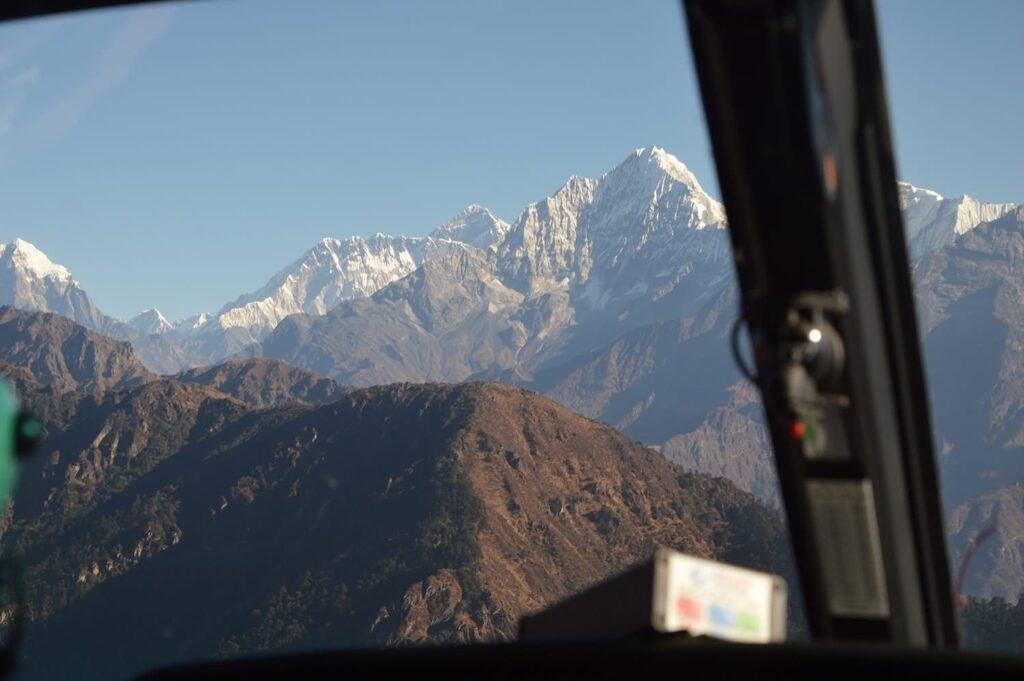
Planning your Everest Helicopter Tour?
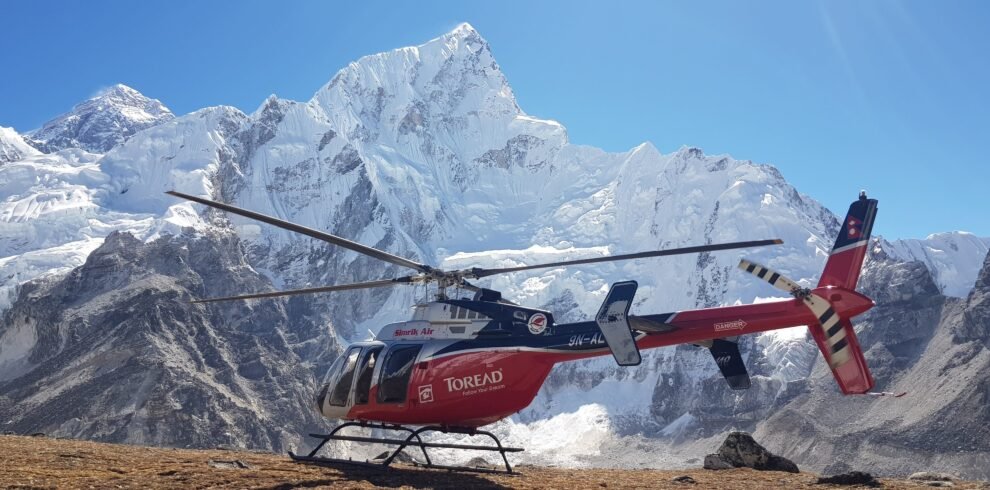
Why Weather Matters for Everest Helicopter Flights
A helicopter flying to Kala Patthar at 5,545 m is operating in high-altitude conditions that are genuinely demanding on aircraft, engines, and pilots. Unlike commercial airline flights that fly above weather systems, a helicopter tour in the Khumbu region flies through mountain valleys, past ridgelines, and at altitudes where air density is roughly half of what it is at sea level. All of this makes weather a direct factor in whether the flight goes, where it can go, and how long it can stay on the ground at the landing points.
The specific weather factors that affect Everest helicopter tours are:
- Cloud cover: Low cloud at valley level blocks the route through the Khumbu. Cloud at the level of Kala Patthar blocks the landing site and the Everest view itself.
- Wind speed: Winds above 30 knots at altitude make landing at high points unsafe. In winter and during storm events, the jet stream dips low enough over the Everest massif to ground flights for days at a time.
- Precipitation: Rain or snow reduces visibility, increases icing risk on rotor blades, and closes landing sites. In the monsoon, afternoon thunderstorms can form within hours.
- Atmospheric pressure: Lower pressure at high altitude reduces lift. On hot afternoons or during low-pressure weather systems, a helicopter’s effective ceiling drops. This is why all Khumbu helicopter tours operate in the morning hours only.
- Visibility range: For useful mountain views, you need horizontal visibility of at least 10 km. Dust haze in late spring or smoke from valley burning can reduce this even on otherwise clear days.
Pilots operating in the Khumbu have years of experience reading morning weather windows. They know which cloud formations will burn off by 8 am and which will sit until noon. They know when a high-pressure system will hold for three days and when an afternoon storm will push in earlier than forecast. That local knowledge is why booking with an experienced Nepal-based operator matters more than the price difference between companies.
Overview of Everest Helicopter Tour Seasons
Nepal has four climatically distinct seasons, each shaped by the monsoon and the positioning of the jet stream over the Himalayas. Understanding the basic pattern helps you see why some months are structurally better than others for high-altitude helicopter operations.
Pre-monsoon Spring (March to May): The jet stream begins pulling north away from Everest in March and April, reducing high-altitude wind. Lower valleys start warming, which creates some afternoon cloud build-up. The window before afternoon clouds form is reliable in early morning. Everest climbing expeditions are active during this period.
Monsoon Summer (June to September): Moisture-laden air from the Bay of Bengal pushes into Nepal from the south, bringing heavy rain, dense cloud cover, and afternoon thunderstorms. The high Himalayas receive most of their annual snowfall during this period. Helicopter operations are severely limited, and flights are frequently cancelled.
Post-monsoon Autumn (October to November): The monsoon retreats, and a high-pressure system establishes itself over the Tibetan Plateau. The atmosphere dries out quickly. Visibility becomes exceptional. Winds stabilize. This is the period when the highest proportion of Everest helicopter tours complete without delays or rescheduling.
Winter (December to February): The jet stream drops back down toward Everest and the Himalayas. Weather at altitude becomes unpredictable, with extended periods of very clear, dry conditions alternating with strong wind events that ground aircraft. Temperatures at Kala Patthar drop well below zero. The valleys are clear of monsoon haze but cold.
Everest Helicopter Tour in Spring (March to May)
Spring is the second-most popular season for Everest helicopter tours from Kathmandu, and for many travelers it is actually the preferred choice. The combination of warming temperatures, relatively stable morning weather, and the unique atmosphere of the Everest climbing season makes spring an excellent time to fly.
March is the most reliable spring month for helicopter flights. The winter jet stream has started to recede, winds at high altitude are moderating, and the lower valleys have not yet reached the temperatures that trigger strong afternoon convection. Early morning flights in March frequently depart and return in ideal conditions.
April is equally popular, coinciding with the peak of the Everest spring climbing season. From late March through late May, dozens of Everest expedition teams are camped at Base Camp, and the sight of the tent city from the air adds an extra layer of context to the flight. If you fly over EBC in April, you will see the glacier below dotted with colored tents and the Khumbu Icefall being worked by climbing teams. This is something you simply cannot see during any other season.
The second half of May becomes more complicated. As temperatures rise, convective cloud build-up begins earlier in the day. Afternoon thunderstorms can develop quickly, and the pre-monsoon weather pattern becomes less predictable. Most operators prefer to schedule Everest helicopter tours before 9 am in late May to complete the route before cloud development begins. Flights in late May are still possible and frequently succeed, but the margin for error is narrower than in October or March.
One thing that does not get enough attention about spring is the rhododendron forests in the lower Khumbu. When you fly out of Kathmandu toward the mountains in March and April, the slopes below are covered in flowering rhododendrons in red, pink, and white. This adds a visual dimension to the flight that is entirely absent in autumn.
Mountain Visibility During Spring
Visibility during spring helicopter tours is generally good in the early morning and deteriorates progressively through the day. In March, morning visibility is typically excellent, with the high peaks appearing sharp and clear from 6 am onward. By noon, a layer of dust haze and convective cloud often reduces the midday view significantly, which is why all Khumbu helicopter operations happen in the morning regardless of season.
In April and May, the morning windows remain good, but the haze layer at lower altitudes becomes more pronounced as the air warms. This does not affect the view of the high peaks much, since the helicopter reaches elevations above the haze layer at the Kala Patthar landing. The impact is more noticeable in the early portion of the flight, when you are flying through the Khumbu valleys at lower altitudes. Above 4,500 m, the air remains clear.
One spring-specific issue worth knowing about is the plume from Everest. In the pre-monsoon period, strong winds at summit level create a visible plume of snow blowing off Everest’s summit. This plume is a sign of high wind at altitude and, while it looks dramatic from the helicopter, it also indicates that conditions at the summit are severe. The plume does not necessarily affect helicopter operations at the Kala Patthar landing level, but it is a useful visual indicator of what is happening higher up.
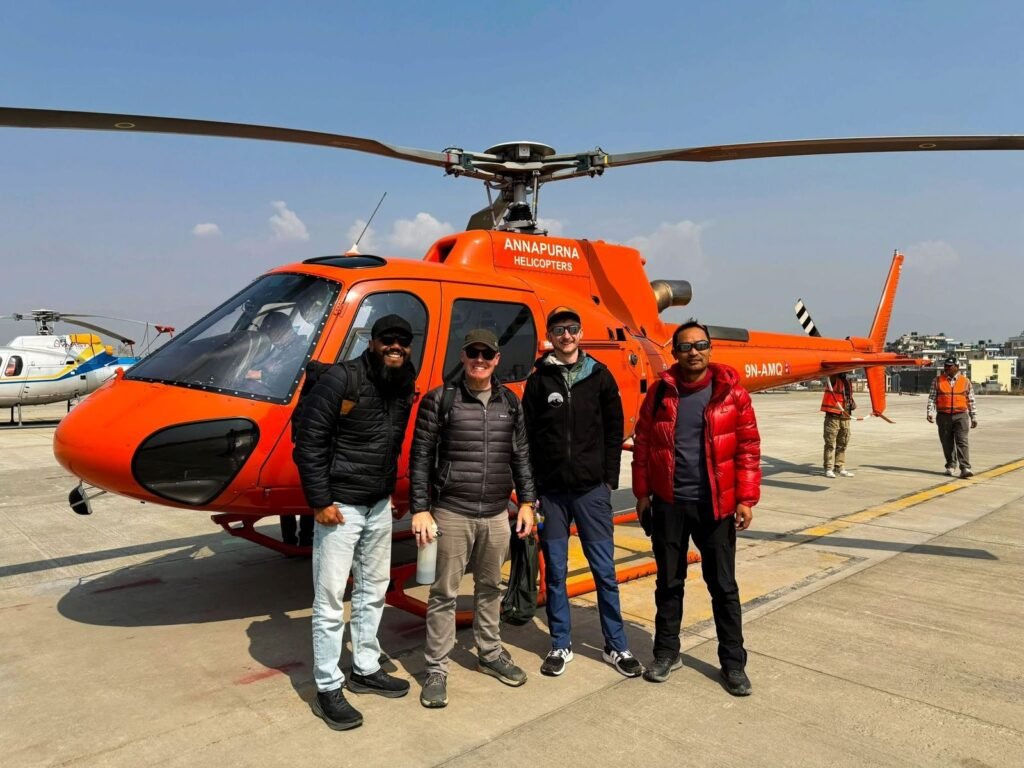
Planning your Everest Helicopter Tour?
Everest Helicopter Tour in Summer (June to August)
The monsoon season runs from June through September, with June to August being the most intense months. During this period, Everest helicopter tours face significant operational challenges, and most experienced operators and travelers avoid scheduling flights in July and August specifically.
The monsoon brings persistent low cloud at valley level, daily rain ranging from light drizzle to heavy downpours, and rapidly developing afternoon thunderstorms. The cloud typically forms at 1,500 m to 3,000 m altitude, sitting directly in the flight path between Kathmandu and the Khumbu. Even when conditions at Kala Patthar level are theoretically clear, the helicopter cannot safely navigate through the valley cloud layer to reach that altitude.
That said, some operators do continue running tours in June, particularly in the first two weeks of the month before the monsoon reaches its full intensity. Early June can produce a few clear days per week, typically in the very early morning before cloud development begins. Flights on these clear June days do go and are sometimes successful. But the risk of cancellation is substantially higher than in any other season, and travelers who book for June need to factor in the realistic possibility of a delayed or cancelled flight.
August is the most difficult month of all. The monsoon is at maximum intensity, and clear days at Khumbu level are rare. Most professional helicopter tour operators either reduce their Everest tour schedule significantly or suspend it entirely in August. If you are in Nepal in August for other reasons, the Everest helicopter tour is not a realistic day-trip option.
There is one partial exception worth mentioning. Some years produce brief clear spells of several days even in July and August, typically associated with breaks in the monsoon circulation. Local operators can identify these windows as they develop and sometimes schedule flights during them. But planning a trip specifically around a monsoon break is highly speculative and not recommended unless you are already in Kathmandu for other reasons and can be flexible on a day-to-day basis.
How Monsoon Conditions Affect Helicopter Flights
The mechanism by which the monsoon disrupts helicopter operations is worth understanding in detail, because it explains not just why flights are harder in summer but also why the transition months of June and September are so variable.
During the monsoon, warm, moist air from the Bay of Bengal flows northward into Nepal. As this air rises over the Mahabharat Range and the Himalayan foothills, it cools, condenses, and forms dense cloud. In the Khumbu region, this process produces cloud at various altitude levels, sometimes as low as 1,500 m. Helicopter pilots need visual navigation in this terrain, and flying in cloud or in conditions where cloud is developing rapidly is not possible.
The second issue is icing. When a helicopter flies through cloud in below-freezing temperatures at high altitude, ice can accumulate on rotor blades. Ice changes the aerodynamic profile of the blades, reduces lift, and in serious cases can cause blade imbalance. Most Khumbu helicopter tours use standard turbine helicopters without de-icing systems, which means flying in icing conditions is not something operators do.
The third issue is thunderstorm development. In the monsoon, afternoon thunderstorms are almost guaranteed. They can develop within 30 to 60 minutes and produce severe turbulence, lightning, and heavy precipitation. A helicopter caught in a thunderstorm at high altitude is in a genuinely dangerous situation. Operators manage this risk by flying exclusively in the early morning during transitional seasons, but in peak monsoon, the storms sometimes begin developing well before 10 am.
Everest Helicopter Tour in Autumn (September to November)
Autumn is the peak season for Everest helicopter tours and for Himalayan trekking in Nepal generally. The post-monsoon conditions that define October and November produce some of the finest mountain weather in the world, and the Khumbu benefits as much as anywhere.
The monsoon typically retreats from Nepal in the first or second week of October. As it pulls back, the atmosphere dries out with remarkable speed. Within days of the monsoon’s retreat, the persistent valley clouds clear, the air loses its moisture haze, and the mountains appear in exceptional definition. Peaks that were invisible through clouds for four months suddenly emerge in complete clarity.
October and November also benefit from the jet stream’s position. In autumn, the jet stream sits north of Everest over the Tibetan Plateau, keeping high-altitude winds moderate. This is critical for Kala Patthar landings: a calm to moderate wind at 5,545 m allows the pilot to set down and hold the helicopter steady while passengers disembark for 10 to 15 minutes on the ground. In seasons when the jet stream is closer, winds at that altitude can make landing impossible or reduce ground time to a few minutes.
Practically speaking, October is the best single month of the year for Everest helicopter tours. The air is dry, the visibility is excellent, the winds are manageable, and the temperature at Kala Patthar, while cold (typically minus 5 to minus 15 degrees Celsius at the landing), is within the tolerance range for most visitors with appropriate clothing.
November is slightly colder and the days grow shorter, but the visibility in November is often even better than October. The atmosphere has had more time to dry out fully after the monsoon, and some photographers specifically prefer November for the depth of contrast it produces in mountain imagery. The crowd levels also drop somewhat in November compared to October, though the overall volume of helicopter tours remains high through the end of the month.
Why Autumn Is Often Considered the Most Reliable Season
The term “reliable” in the context of Everest helicopter tours means one specific thing: the probability that your flight departs on the scheduled day, reaches Kala Patthar, completes the landing, and returns to Kathmandu without significant deviation from the planned itinerary. By that measure, October and November are consistently the most reliable months.
Several factors combine to produce this reliability:
- Stable high pressure: A semi-permanent high-pressure system over Tibet in autumn keeps the upper atmosphere stable and wind speeds manageable across the Himalayan range.
- No convective development: Without the intense heating of spring and the moisture of the monsoon, afternoon cloud formation is minimal. The morning window is clear and will remain so.
- Dry air: Post-monsoon air has low humidity, reducing the risk of icing at altitude and providing exceptional horizontal visibility.
- Predictable patterns: Autumn weather in the Khumbu is more consistently good for longer stretches. A good weather block in October often holds for 7 to 10 days without significant interruption.
This reliability has a practical implication. If your schedule in Nepal is fixed, you have a specific departure date and cannot extend your stay due to the weather, autumn offers the highest probability of completing your tour without needing to reschedule. If you have some flexibility in your schedule, spring is almost equally reliable in March and April.
Travelers who combine the helicopter tour with the full Everest Base Camp Trek or the Everest Base Camp Trek with Helicopter Return also find that October is the most consistent month for the combined experience.
Everest Helicopter Tour in Winter (December to February)
Winter is the least-discussed season for Everest helicopter tours, but it is not the closed season that some travelers assume. Helicopter tours do operate in December, January, and February. The question is not whether they operate, but under what conditions and with what trade-offs.
Winter in the Khumbu brings cold, dry air and long stretches of clear blue sky. On days when the jet stream sits well north of Everest, the weather at Kala Patthar can be perfectly calm and brilliantly clear. Winter flights on these good-weather days often produce the most visually striking conditions, with minimal atmospheric haze and sharp contrast between the snow-covered peaks and dark blue sky.
However, the jet stream in winter does not stay north. It migrates, dips toward the Himalayas, and can generate summit winds at Everest of 200 km/h or more. When the jet stream is positioned close to the mountain, conditions at the Kala Patthar level can be severe even if the lower valleys look clear from Kathmandu. Operators monitor these conditions carefully, but winter brings more unexpected groundings than any other season.
There is also the temperature factor. At Kala Patthar in January, air temperature at the landing site is typically between minus 10 and minus 25 degrees Celsius. Wind chill lowers the effective temperature. The standard 10 to 15-minute ground stop becomes genuinely uncomfortable for travelers who are not properly dressed. Many operators shorten the ground stop in extreme cold, which affects the overall experience.
Crowd levels in winter are the lowest of the year. If you want to do the Everest helicopter tour without the busy atmosphere of peak season, and you have some flexibility in your schedule to wait for a good weather day, winter can be a reasonable option. The cost is sometimes slightly lower in December and January than in October, though the price difference is not typically large.
Winter Views and Flight Conditions
The visual quality of Everest from the helicopter in winter deserves specific mention. When conditions are good in December or January, the scene from Kala Patthar is remarkable. The snow cover on the peaks is typically deeper than in autumn due to accumulation through the monsoon and early winter. The atmosphere is very dry. On a calm winter morning with the sun just rising over the eastern ridges, the quality of light on the Everest massif is quite different from what you see in October.
The practical flight conditions are more variable. January tends to be colder and windier at altitude than December. February shows signs of improvement as the season shifts toward pre-monsoon conditions, and it is sometimes described as a transitional month with characteristics of both winter and early spring. Experienced operators in Nepal who have run flights throughout the year consistently note that the success rate in February is meaningfully higher than in January.
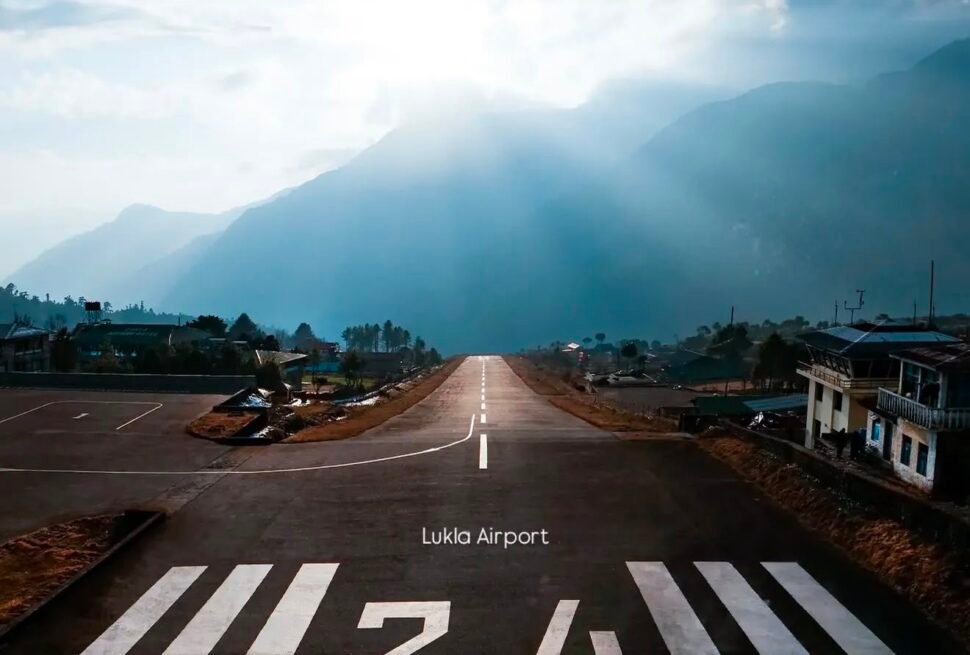
Lukla, where helicopters refuel en route to the Khumbu, can also experience fog on early winter mornings, particularly in December. If Lukla is fogged in, the helicopter cannot refuel, and the route to Kala Patthar is blocked. This is a winter-specific risk that does not occur in autumn or spring.
Monthly Breakdown of Everest Helicopter Tours
Here is a month-by-month assessment based on actual operating conditions in the Khumbu region:
| Month | Weather Pattern | Morning Visibility | Wind at Altitude | Overall Rating | Notes |
|---|---|---|---|---|---|
| January | Winter / jet stream active | Good when clear | High and variable | Fair | Cold, windier, Lukla fog risk |
| February | Late winter / transitional | Good | Moderating | Fair to Good | Better than January, improving |
| March | Pre-monsoon / stable | Very Good | Moderate and decreasing | Excellent | One of the best months overall |
| April | Spring / climbing season | Very Good (AM) | Low to moderate | Excellent | EBC expedition tents visible |
| May (early) | Late spring | Good (early AM) | Low | Good | Cloud builds faster; fly early |
| May (late) | Pre-monsoon / unsettled | Fair to Good | Low | Fair | Increased delay risk |
| June | Early monsoon | Poor to Fair | Low but cloudy | Poor to Fair | Some early-AM windows possible |
| July | Peak monsoon | Poor | Low | Very Poor | Not recommended |
| August | Peak monsoon | Poor | Low | Very Poor | Most difficult month of year |
| September | Late monsoon / clearing | Fair to Good | Low | Fair to Good | Improves rapidly through month |
| October | Post-monsoon / high pressure | Excellent | Low to moderate | Excellent | Best overall month for tours |
| November | Autumn / dry and clear | Excellent | Moderate, increasing late | Excellent | Best light and lowest haze |
| December | Early winter | Good | Variable | Good | Colder, some wind risk |
Best Season for Clear Mountain Views
If seeing the maximum number of peaks with the greatest clarity is your primary goal, October and November are the months to choose. The post-monsoon atmosphere in these months is the driest of the year. There is no dust haze from the pre-monsoon heating, no moisture haze from the monsoon, and no aerosol loading from valley burning. The result is exceptional horizontal visibility that makes peaks 100 km away visible with sharp definition.
On a clear October morning at Kala Patthar, you can see from Makalu in the east to Cho Oyu in the west — a span of more than 50 km of the world’s highest mountains. The transition from glacier to rock to sky is completely sharp. If mountain photography or simply absorbing the full panorama is what matters to you, plan for October or the first half of November.
Early March comes surprisingly close to matching the autumn clarity. Winter air is exceptionally dry, and the March sky at altitude often approaches the quality of October. Some very experienced mountain photographers actually prefer early March for the clarity combined with lower sun angles that produce warmer light tones on the peaks.
You may also be interested in: 10 Reasons to Do the Everest Base Camp Trek with Helicopter Return
Best Season for Photography
Photographers have different priorities than general tourists, and the best season for Everest helicopter photography is not identical to the best season for overall tour experience.
For high-quality mountain photography, the key factors are light quality, atmospheric clarity, and cloud behavior. Here is how the seasons compare:
- October: Clear atmosphere, neutral to warm morning light, blue sky. Excellent for wide panoramas and peak photography. The light is slightly high and direct by the time most flights reach Kala Patthar.
- November: The best month for photography by most accounts. Lower sun angle produces warmer, more directional light on the peaks. Exceptional clarity. Less crowded helicopters than October means more time and flexibility at the landing site.
- March: Very good clarity with interesting light characteristics. The winter-to-spring transition produces a different quality of light than autumn. Everest’s summit plume, visible in strong pre-monsoon winds, adds a dramatic element to images.
- April: Good clarity in the morning. Slightly warmer light. The EBC expedition tents visible from altitude add unique context to aerial shots.
For aerial photography specifically, the advice is simple: fly as early as possible, regardless of season. The softest light and the lowest likelihood of haze or cloud formation occur in the first hour of morning light. If your operator gives you a choice between a 6 am departure and a 7:30 am departure, take the 6 am.
Planning your Everest Helicopter Tour?
Best Season for Families and Older Travelers
The Everest Base Camp Helicopter Tour is popular with families precisely because it does not require physical fitness beyond the ability to walk a short distance on uneven ground at high altitude. But different seasons present different comfort considerations for families with children or older adults.
October is the best season for families and older travelers. Temperatures at Kala Patthar in October range from minus 5 to minus 15 degrees Celsius, cold enough to require proper winter clothing but manageable for most people with the right preparation. The air is stable, the flight is smooth, and the landing site is accessible without extreme cold wind chill.
March and April are the second choice for families. Temperatures at Kala Patthar in spring are slightly warmer than October at the same altitude, typically minus 3 to minus 12 degrees Celsius depending on wind. For families with young children who may struggle in severe cold, the spring months are worth considering.
Winter months are harder for older travelers and families with children. The cold at Kala Patthar in January can be genuinely difficult for anyone not accustomed to extreme cold, and the wind chill factor can push the effective temperature to minus 30 or lower. If you are planning a family trip that includes the helicopter tour, October or April are the most practical choices.
Altitude is worth addressing here too. Kala Patthar sits at 5,545 m, and the landing stop is 10 to 15 minutes. Most people tolerate this brief time at altitude without significant altitude sickness, but some experience mild symptoms: light headache, mild dizziness, or slight breathlessness. These symptoms pass quickly on descent. Children and older adults are not at meaningfully higher risk than younger adults for this brief high-altitude exposure, but anyone with known cardiac or respiratory conditions should consult a doctor before booking.
Best Season for Sunrise Flights
Some operators offer early departure times that are designed to position the helicopter at Kala Patthar at or near local sunrise, which falls at around 5:45 am to 6:15 am depending on the time of year. Sunrise flights are a specific option worth understanding, particularly for photographers and travelers who want the most dramatic light on the peaks.
The best months for a sunrise-timed Everest helicopter flight are October, November, and March. In these months, the weather is most stable in the early morning, and the risk of cloud forming before the helicopter reaches altitude is lowest.
In practical terms, a sunrise flight means departing Kathmandu before 5 am, flying to Lukla in the dark or early dawn, refueling, and then making the final approach to Kala Patthar as the sun crests the eastern ridgeline. The light that falls on Everest and Lhotse at this moment is low, directional, and warm-toned in a way that the higher sun position of late morning simply does not replicate. For photographers specifically, a good sunrise from Kala Patthar is worth the early departure time.
Not all operators offer this option, and it requires clear conditions from very early in the morning. Ask about sunrise departure options when planning your booking.
Chances of Flight Delays by Season
Understanding delay probability is important for travelers with fixed onward flights from Nepal or tight itineraries. Here is a realistic picture of how often delays and rescheduling occur by season:
| Season / Month | Typical Delay Frequency | Common Delay Cause | Rescheduling Feasibility |
|---|---|---|---|
| October | Rare (less than 10% of days) | Unexpected morning cloud | Usually same day or next day |
| November | Low (10 to 15%) | Moderate wind at altitude | Usually within 1 to 2 days |
| March | Low (10 to 15%) | Afternoon cloud development | Usually next day |
| April | Moderate (15 to 20%) | Early cloud build-up | Usually within 1 to 2 days |
| December | Moderate (20 to 25%) | Wind at altitude, Lukla fog | Within 2 to 3 days if flexible |
| January | High (30 to 40%) | Jet stream, Lukla fog, cold | May require 3+ day window |
| February | Moderate to High (20 to 35%) | Variable jet stream | Within 2 to 4 days |
| June | Very High (50 to 70%) | Monsoon cloud and rain | Uncertain, weather-dependent |
| July to August | Extremely High (80%+) | Full monsoon conditions | Often not possible |
| September | High early, improving late (30 to 60%) | Late monsoon cloud | Better in second half of month |
The practical takeaway is clear: if you cannot afford to reschedule and have a fixed Nepal departure date, book your helicopter tour for October or early November and schedule it at least two to three days before your international flight departs. This gives you a buffer day or two if the weather requires a one-day postponement.
Helicopter Landing Conditions Throughout the Year
The landing at Kala Patthar is what makes the Everest helicopter landing tour different from a standard flightseeing circuit. Actually setting down at 5,545 m and stepping out of the helicopter requires specific surface conditions at the landing pad. Not all months provide these conditions equally.
The Kala Patthar helipad is a cleared area on a ridge above the village of Gorak Shep. It is accessible throughout the year, but the surface condition varies:
- October and November: The ground is dry and clear of fresh snow in most years. The landing pad surface is firm and stable. Ground stops of 10 to 15 minutes are standard.
- March and April: Similar to autumn in terms of surface conditions. The helipad may have residual compacted snow from winter, but this does not typically prevent landing.
- Winter: Fresh snow accumulation can affect the landing pad surface. After heavy snowfall, the pilot may need to assess whether landing is safe. Some winter days produce a firm snow surface that allows normal landings; others require shorter ground stops or prevent landing at the pad altogether.
- Monsoon: When the helipad is accessible at all during the monsoon, the surface may be wet and the visibility at ground level may be poor. The quality of the ground experience in monsoon conditions is significantly reduced compared to clear seasons.
Hotel Everest View, the second landing point on most tours, is at 3,880 m. It is accessible year-round and the conditions there are less extreme than at Kala Patthar. Even in winter or early monsoon conditions, the Hotel Everest View landing is usually feasible when the Kala Patthar landing is not.
Temperature and Weather Comparison by Season
Here is a practical temperature reference for the key points of the Everest helicopter tour route:
| Location | Altitude | Oct to Nov (Autumn) | Mar to Apr (Spring) | Dec to Feb (Winter) | Jun to Aug (Monsoon) |
|---|---|---|---|---|---|
| Kathmandu (Departure) | 1,400 m | 15 to 25°C | 18 to 28°C | 5 to 18°C | 20 to 30°C |
| Lukla (Refuel Stop) | 2,860 m | 5 to 15°C | 5 to 15°C | -5 to 8°C | 10 to 18°C |
| Hotel Everest View (Breakfast) | 3,880 m | 0 to 10°C | 2 to 12°C | -8 to 5°C | 5 to 15°C |
| Kala Patthar (Landing) | 5,545 m | -5 to -15°C | -3 to -12°C | -10 to -25°C | -5 to 5°C |
Note: These are approximate temperature ranges at the time of the tour (early morning). Actual conditions vary by year and day. Wind chill at Kala Patthar can significantly reduce the effective temperature from the figures shown, particularly in winter and when winds are present.
Spring vs Autumn Everest Helicopter Tour Comparison
Spring and autumn are close enough in quality that the choice between them often comes down to personal preference or itinerary logistics. But they are not identical, and understanding the specific differences helps you decide.
| Factor | Spring (March to May) | Autumn (October to November) |
|---|---|---|
| Visibility | Very Good (possible haze late May) | Excellent (best atmospheric clarity) |
| Wind at Kala Patthar | Low to Moderate | Low to Moderate (slightly more consistent) |
| Temperature at Landing | Slightly warmer (minus 3 to minus 12) | Colder (minus 5 to minus 15) |
| Afternoon Cloud Risk | Moderate (builds from 9 to 10 am) | Low (rarely develops before noon) |
| Everest Summit Plume | Often visible (high winds at summit) | Rarely visible |
| EBC Expedition Activity | Active (March to May) | Inactive (no climbing season) |
| Rhododendron Forests | Blooming (March to April) | Not blooming |
| Trekker Crowd Level | High (March to April) | Very High (October) |
| Light Quality at Sunrise | Warm and directional | Neutral to warm, excellent contrast |
| Flight Success Rate | High (slightly lower in late May) | Very High (most consistent) |
| Price | Standard | Standard (highest demand in Oct) |
If you want absolute reliability and the sharpest mountain views, choose autumn. If you want slightly warmer temperatures, the visual interest of active Everest expeditions visible from the air, and flowering forests in the lower valleys, spring is a compelling choice. Either decision is well-supported by the actual operating conditions.
Common Mistakes When Choosing a Season
A number of recurring errors appear in how travelers approach season selection for the Everest helicopter tour. Knowing these in advance saves frustration.
Booking during monsoon because of lower prices. The cost difference between peak and off-peak season for Everest helicopter tours is not large enough to justify the much higher risk of a cancelled or degraded flight. The price you save is not worth the probability of not seeing the mountains at all, or of getting a ground stop in fog and cloud rather than clear views.
Assuming September is equivalent to October. September is technically the last month of the monsoon season. The late monsoon persists into the second half of September most years. While conditions do improve through September, the reliability of September flights is substantially lower than October. Many travelers book in late September expecting post-monsoon conditions and find that the weather is still transitional.
Not building in a buffer day. Even in October, flights occasionally need to be postponed by one day due to morning cloud or wind. If you schedule the helicopter tour for your final day in Nepal before a 6 am international departure, there is no room for any delay. Always build at least one buffer day between your helicopter tour date and your departure from Nepal.
Booking late for October flights. October is the most popular month for every form of Himalayan tourism in Nepal. Helicopter slots, particularly group-sharing seats, fill up well in advance. Booking at least 4 to 6 weeks ahead for October is prudent. For the most popular dates around public holidays, book even earlier.
Underestimating the cold at Kala Patthar. Travelers who arrive in Kathmandu in warm weather and pack only light layers are sometimes caught unprepared by the temperature at 5,545 m. Even in October when the weather is considered ideal, the cold at the landing site requires proper thermal layering. This mistake is made most often by travelers arriving in summer-weight clothing who did not account for the high altitude stop.
Planning your Everest Helicopter Tour?
What to Pack for an Everest Helicopter Tour
The packing list for a one-day Everest helicopter tour is shorter than for a trek, but the high-altitude component means a few items are non-negotiable regardless of season.
Essential for all seasons:
- Thermal base layer (top and bottom)
- Mid-layer fleece or down jacket
- Wind and waterproof outer layer
- Warm hat that covers the ears
- Gloves or mittens (two pairs for winter)
- Neck gaiter or balaclava for the Kala Patthar stop
- Sunglasses with UV protection (the glare at altitude is severe)
- Sunscreen for face and any exposed skin
- Camera or phone with charged battery (cold drains batteries fast)
- Small daypack for layers and camera gear
Additional items for winter (December to February):
- Heavyweight down jacket (rated to minus 20 or lower)
- Insulated pants or fleece-lined trousers
- Insulated waterproof boots
- Heavy gloves with liner gloves inside
- Full balaclava
- Hand warmer packets
For photography:
- Extra batteries (carry them inside your jacket to keep them warm)
- Polarizing filter for the helicopter window glass
- High-capacity memory cards
- Lens cleaning cloth
Note that you can rent much of this cold weather gear in Kathmandu’s Thamel district if you did not bring it from home. Rental quality varies, so check items carefully before heading out.
Safety Considerations in Different Seasons
Safety in Everest helicopter operations is determined by the operator’s standards, the pilot’s experience, the aircraft’s maintenance status, and the weather conditions. Nepal’s Civil Aviation Authority has regulations governing helicopter flight in mountain areas, and reputable operators follow these guidelines regardless of commercial pressure to fly in marginal conditions.
From a weather-safety perspective, the seasons break down as follows:
Autumn: Lowest weather-related safety risk of any season. Stable conditions, predictable windows, and experienced pilots who have flown the route hundreds of times in these conditions. The primary safety consideration is the brief exposure to cold and altitude at Kala Patthar.
Spring: Good safety profile in March and April. Slightly elevated risk in late May due to faster development of afternoon convective weather. Operators manage this by flying earlier in the day, which is the correct approach.
Winter: Elevated risk from variable jet stream positioning and sudden wind increases at altitude. Reputable operators will not fly if winds at altitude exceed safe operating thresholds, even if conditions at valley level look acceptable. The risk is not of the weather itself but of conditions changing faster than forecast.
Monsoon: The highest weather-related risk period. Icing, rapidly developing thunderstorms, and poor visibility create genuine hazards. Reputable operators maintain a conservative approach during monsoon and will cancel flights rather than fly in marginal monsoon conditions. If an operator is willing to fly in heavy monsoon conditions with no questions asked, that is itself a warning sign about their safety standards.
One consistent safety recommendation applies in all seasons: choose an operator with a clear cancellation and refund policy. If your flight is cancelled for weather, you should get a full refund or a reschedule, not a partial refund or a credit voucher. Next Trip Nepal’s policy on this is straightforward, and you can confirm the specifics when you get in touch with us.
Everest Helicopter Tour Cost by Season
The Everest helicopter tour cost is primarily determined by whether you book a group-sharing seat or a private charter, not by the season. The seasonal price variation is relatively modest compared to what many travelers expect.
Group-sharing tours (where 4 to 5 passengers share a helicopter) are substantially less expensive than private charters. A group-sharing Everest helicopter tour typically costs in the range of USD 1,200 to 1,500 per person in peak season, with government levies (National Park permit, local area fees, airport taxes) paid separately in cash on the tour day. Private charters for exclusive use of the helicopter are priced by the aircraft, not per person, and the per-person cost depends on how many seats you fill.
In winter and early monsoon, prices are sometimes lower due to reduced demand, but the difference is typically 10 to 15 percent rather than a dramatic discount. For most travelers, this small price saving is not the right reason to choose a difficult season. A successful tour in October at standard price delivers more value than a weather-cancelled tour in January at a lower price.
Additional costs to budget for beyond the base tour price:
- Government permits: approximately NPR 7,000 per person (Sagarmatha National Park entry + Khumbu municipality fee + airport tax). Paid in cash on tour day.
- Breakfast at Hotel Everest View: approximately NPR 3,500 to 4,500 per person. Optional but recommended.
- Tips for the pilot: not required, but appreciated for excellent service.
- Travel insurance: essential. Ensure your policy covers high-altitude helicopter flights and emergency evacuation.
To review current pricing and availability, see the Everest Base Camp Helicopter Tour page or explore other Nepal tour packages that can be combined with a helicopter day tour.
Frequently Asked Questions
Can I do the Everest helicopter tour year-round?
Operators do run tours throughout the year, but the quality and success rate vary significantly by month. October, November, March, and April offer the highest success rates. July and August are the most difficult months, and most experienced operators do not recommend scheduling during these months.
How much advance notice should I give?
For October flights, book at least 4 to 6 weeks in advance to secure your preferred date. For other seasons, 1 to 2 weeks is usually sufficient, though more notice is always better. Group-sharing tours fill up faster than private charters because seat availability is limited per flight.
What happens if the weather cancels my flight?
Reputable operators will reschedule your flight to the next available clear day. If rescheduling is not possible before your Nepal departure, a full refund should be provided. Confirm this policy before booking.
Is the helicopter tour safe for children?
Yes, for children old enough to sit with a seatbelt and follow basic safety instructions. The brief altitude exposure at Kala Patthar is generally well-tolerated by children. October and April are the most comfortable months for children due to the temperature balance. Dress children in multiple warm layers for the Kala Patthar stop.
Do I need special permits for the helicopter tour?
Yes. You need a Sagarmatha National Park entry permit and a Khumbu Pasang Lhamu Rural Municipality permit. Your operator arranges these; you pay the levies in cash (approximately NPR 7,000 total per person) on the tour day. No action is required from you in advance for permits.
Can I combine the helicopter tour with the Everest Base Camp Trek?
Yes, and this is a popular combination. The Everest Base Camp Trek with Helicopter Return allows you to trek in on foot and fly back, which saves two or three days of return trekking and adds a different perspective on the same route. This combination works particularly well in October when both trekking and helicopter conditions are at their best.
What is the difference between the helicopter tour and the full EBC trek?
The Everest Base Camp Trek takes 12 to 14 days, involves gradual acclimatization, and puts you on the ground in the Khumbu villages, monasteries, and valleys at a walking pace. The helicopter tour completes the same visual journey in four to five hours. The trek gives you depth of experience and physical acclimatization. The helicopter tour gives you access that is simply not possible in a short Nepal visit. They serve different purposes and suit different travelers.
Are there Nepal trekking packages that include a helicopter tour component?
Yes. Several trek packages combine ground trekking with a helicopter segment. The helicopter return option mentioned above is one example. You can also customize a Nepal itinerary that includes both a helicopter tour day and a shorter trek such as the Everest View Trek for a varied experience of the region.
Final Thoughts
The question of the best season for an Everest helicopter tour comes down to a few clear principles.
Choose October or November if you want the highest success rate, the clearest atmosphere, and the most predictable morning windows. These months have the longest track record of successful tours and the lowest incidence of weather-related delays.
Choose March or April if the autumn period does not fit your schedule, or if the added interest of the climbing season, blooming rhododendrons, and slightly warmer temperatures at altitude matter to you. Spring is a close second to autumn in terms of actual flight quality.
Consider December or early February if you want low crowds and can tolerate more uncertainty in the schedule. Good days in winter are genuinely exceptional, but they come with more variability than the two peak seasons.
Avoid July and August. The risk of a cancelled or severely degraded experience is too high to justify the modest cost savings.
Whatever month you choose, a few consistent practices will improve your experience: book as early as possible for your preferred dates, build a buffer day into your schedule before any fixed departures from Nepal, pack properly for the cold at altitude, and choose an operator with a transparent weather cancellation and refund policy.
If you are ready to plan your trip, the Everest Base Camp Helicopter Tour page has current pricing, availability, and the full itinerary. You can also explore Nepal tour packages that combine the helicopter tour with cultural sightseeing in Kathmandu, or review trekking options in Nepal if you want a longer stay in the Khumbu. For specific questions about your travel dates, group size, or itinerary, contact the Next Trip Nepal team directly. No advance payment is required to make a booking.