By Max Taylor, Australia
Introduction
I have been back in Australia for three weeks now and I still find myself looking at the photographs on my phone and thinking that cannot be real. That mountain. That sky. That morning. I did the Everest Helicopter Tour with Next Trip Nepal earlier this year and I want to write about it properly while the details are still sharp because I think it deserves more than a few lines in a travel app review.
If a five hour flight leaves you wanting the full trekking experience as well, our Everest Base Camp Trek with Helicopter Return combines both, walking in on foot and skipping only the multi day descent.
This is what the trip was actually like from the beginning to the end. Not a brochure version. Just what happened and what it felt like.
Planning your Everest Helicopter Tour?
Why I Chose Nepal and Why I Booked the Everest Helicopter Tour
I had been thinking about Nepal for a long time. Probably five or six years of thinking about it before I actually went. Every time I looked at a photograph of the Himalayan range or read something about the Everest region I felt that pull that travel sometimes creates where a place moves from being somewhere you might visit one day to somewhere you genuinely need to see.
The problem was time. I work in construction management in Brisbane and taking three or four weeks for the full Everest Base Camp trek was not something my schedule could accommodate. I had a window of eight days and I wanted to use them well. A colleague who had been to Nepal the previous year told me about the Everest Helicopter Tour and sent me a link. The idea was straightforward enough. A helicopter flight from Kathmandu into the Everest region, a landing at a high altitude viewpoint, breakfast at Hotel Everest View, and a return to the city. The entire experience in a single remarkable day.
I did some research and came across Next Trip Nepal. What stood out immediately was that the person who replied to my enquiry was not a generic customer service response. It was Kiran, the owner of the company, who wrote back with specific answers to the specific questions I had asked. He explained the flight timing, what the weather window in the morning means for mountain visibility, what to wear for the high altitude section, and what to expect at Hotel Everest View. The communication was personal and direct and I booked within two days of that first message.
I was slightly nervous about whether a one day experience could feel meaningful compared to a full trekking journey. I want to address that question directly later in this blog because the answer surprised me.
Early Morning in Kathmandu
The tour started with a very early wakeup. My hotel pickup was scheduled for 5am and the alarm went off at 4:15am in my room in Thamel. I had been in Kathmandu for two days before the helicopter day and I had done the usual things. Boudhanath Stupa, Pashupatinath Temple, wandering the markets in Thamel and eating momos at a small restaurant near my hotel that I went back to twice. I liked the city more than I expected to.
But the 4:15am alarm on the day of the helicopter tour had a different quality from the normal morning wakeup. I was awake before it went off. I had slept lightly and my mind was already running through the day ahead when the phone buzzed.
I got dressed and went downstairs. Kathmandu at 5am is a different city from the afternoon version. The streets that had been full of traffic and noise the evening before were almost empty and quiet. A few dogs were moving along the road outside the hotel. A temple at the end of the street had lights on inside and the smell of incense was drifting out onto the pavement. The air was cool and clean in a way the daytime city air in Kathmandu is not always.
The hotel staff member who had been sitting at the front desk through the night pointed me to a chair in the lobby and said the vehicle would be there shortly. I sat with a cup of tea he produced without being asked and looked out the glass door at the quiet street.
The pickup arrived exactly on schedule. Kiran had arranged everything precisely and it showed from that very first moment.
Planning your Everest Helicopter Tour?
Meeting Kiran and the Transfer to the Airport
The vehicle was a clean car and there was already one other passenger in the back seat when it pulled up. A woman named Sarah from New Zealand who was also on the tour. We introduced ourselves quietly in the way people do at 5am when they are excited but also still half asleep.
What I had not expected was that Kiran was in the front seat. He had come himself for the pickup rather than leaving it entirely to a driver. He turned around and greeted me with a handshake and asked if I had slept well. I told him not very much. He said that was normal and that the mountain would be worth it.
The drive to the domestic terminal at Tribhuvan Airport took about twenty five minutes through streets that were gradually waking up. Kiran talked through the morning plan as we drove. He explained the timing of the flight, why the early departure was important for mountain visibility, and what the landing at the high point would involve. He was clear and calm about all of it and answered the few questions Sarah and I had without any sense of hurry.
By the time we arrived at the terminal I felt properly prepared for the day ahead. That kind of calm preparation from the person responsible for the trip is worth more than people realise before they experience it.
At the terminal there were other small vehicles pulling in around us and it became clear that the Everest helicopter tours run multiple groups in the early morning hours to make the most of the stable pre noon conditions in the mountains. Kiran walked us inside, introduced us to the helicopter staff, went through the paperwork, and made sure everything was in order before stepping back and letting the morning begin.
The Helicopter Terminal and Waiting to Board
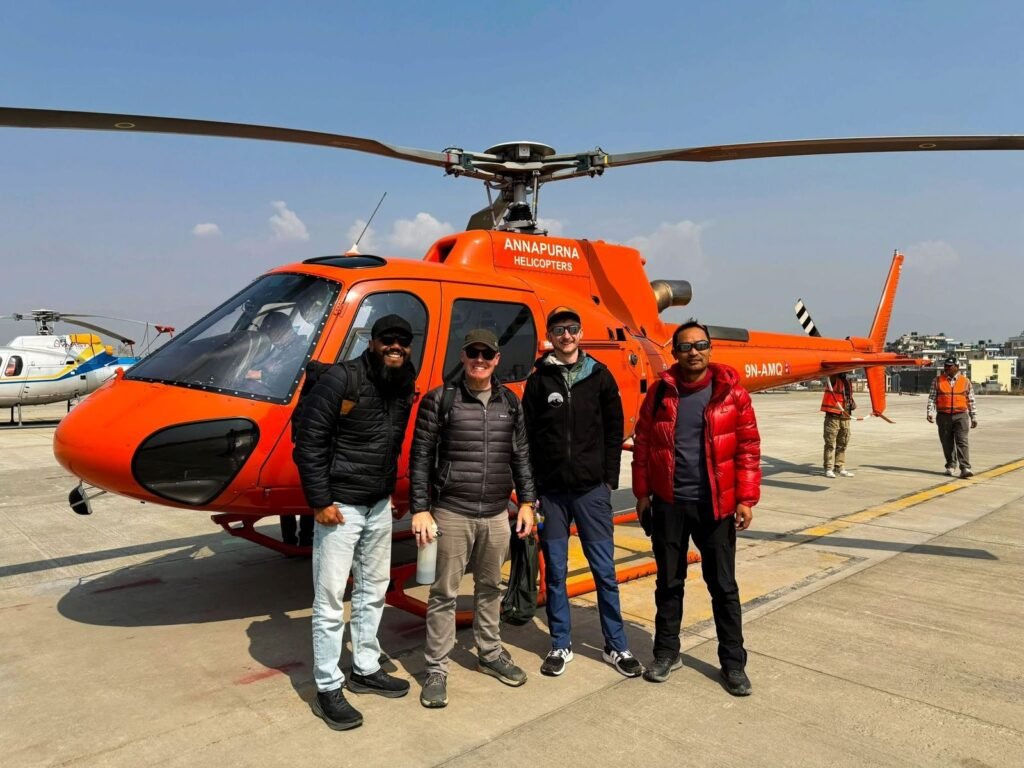
The domestic helicopter terminal at Kathmandu has a particular energy on a clear morning. Multiple tour groups are gathering, there are actual helicopters visible on the tarmac through the windows, and the collective anticipation in the waiting area is something you can feel. People are excited and a little nervous and speaking in quieter voices than they normally would.
I counted about twelve people from various countries in the waiting area around me. Sarah and I ended up next to a couple from Germany and a solo traveller from Japan who had brought what looked like a professional camera with a lens that made everyone else’s phone cameras look inadequate. We compared notes on how much sleep we had managed and agreed it was not much.
One of the helicopter staff members gave a brief group briefing about the flight. What to expect during takeoff and landing, how to behave at the landing site, and the importance of staying together and following instructions at altitude. The briefing was practical and clear. I appreciated that it was honest about the fact that the landing site was at significant elevation and that we would feel the altitude when we stepped out.
The Helicopter Flight Begins
The sound of the helicopter rotors starting up outside was the thing that made it real. I still remember standing near the window watching the rotor blades begin to turn on the aircraft we were about to board and feeling a genuine combination of excitement and nerves that I had not expected to feel as an adult who has flown many times on commercial flights.
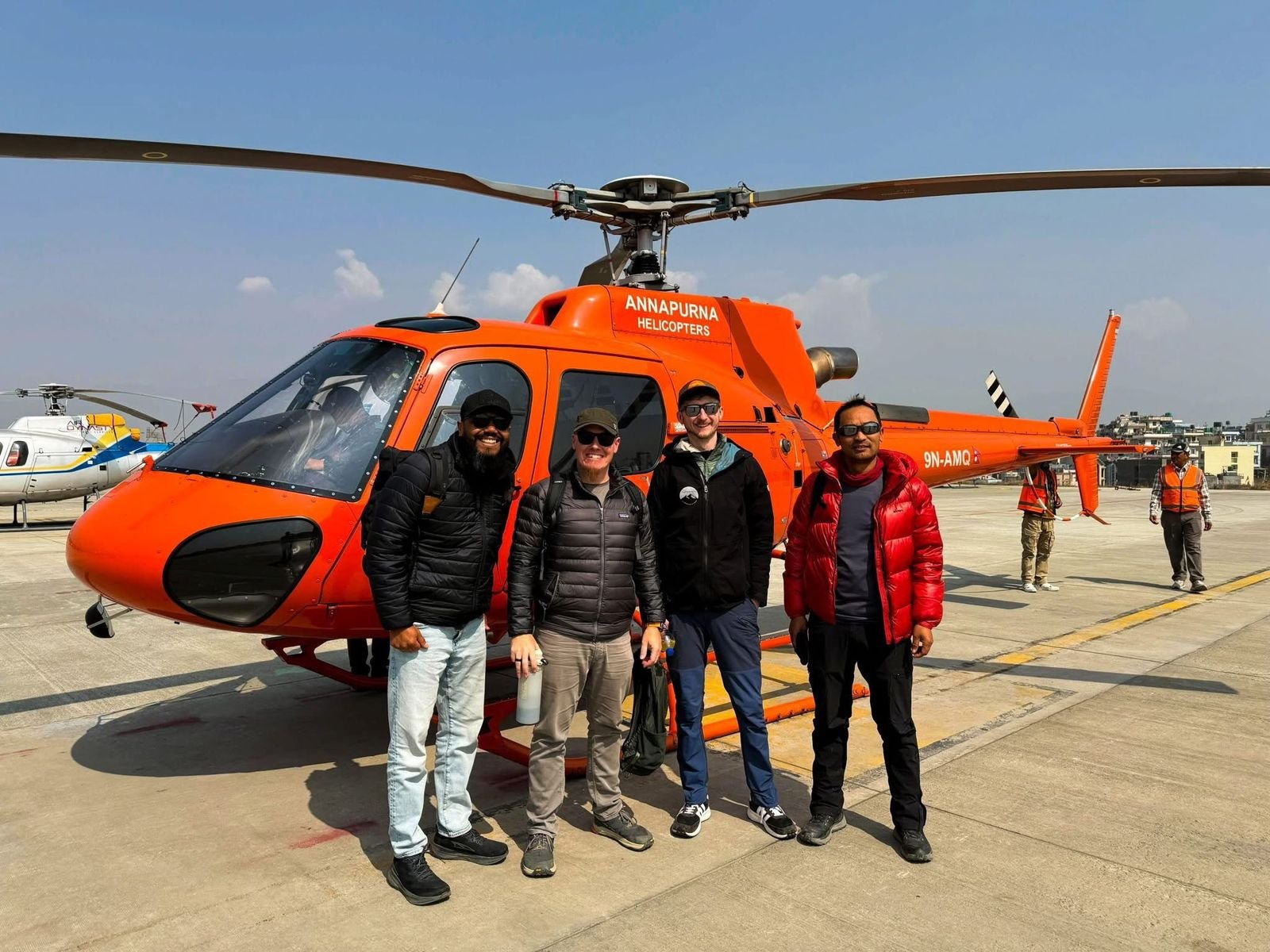
Helicopters are different. The rotors are loud and close and the aircraft is small and the relationship between you and the air outside is much more immediate than sitting in a pressurised cabin at altitude. When we walked across the tarmac to board I was already paying attention to everything in a sharper way than normal.
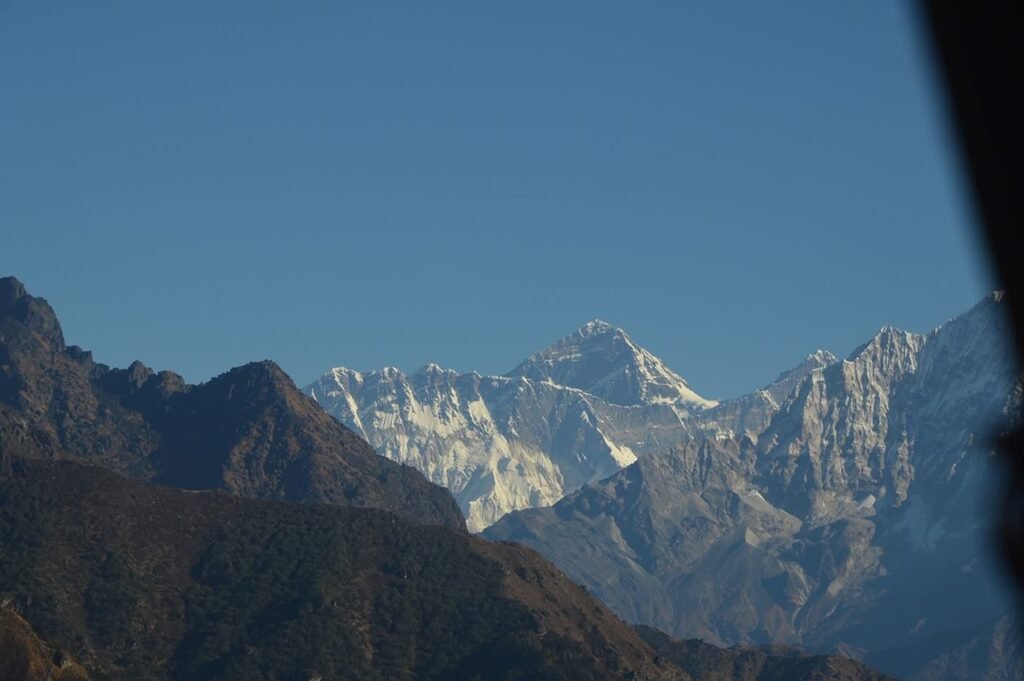
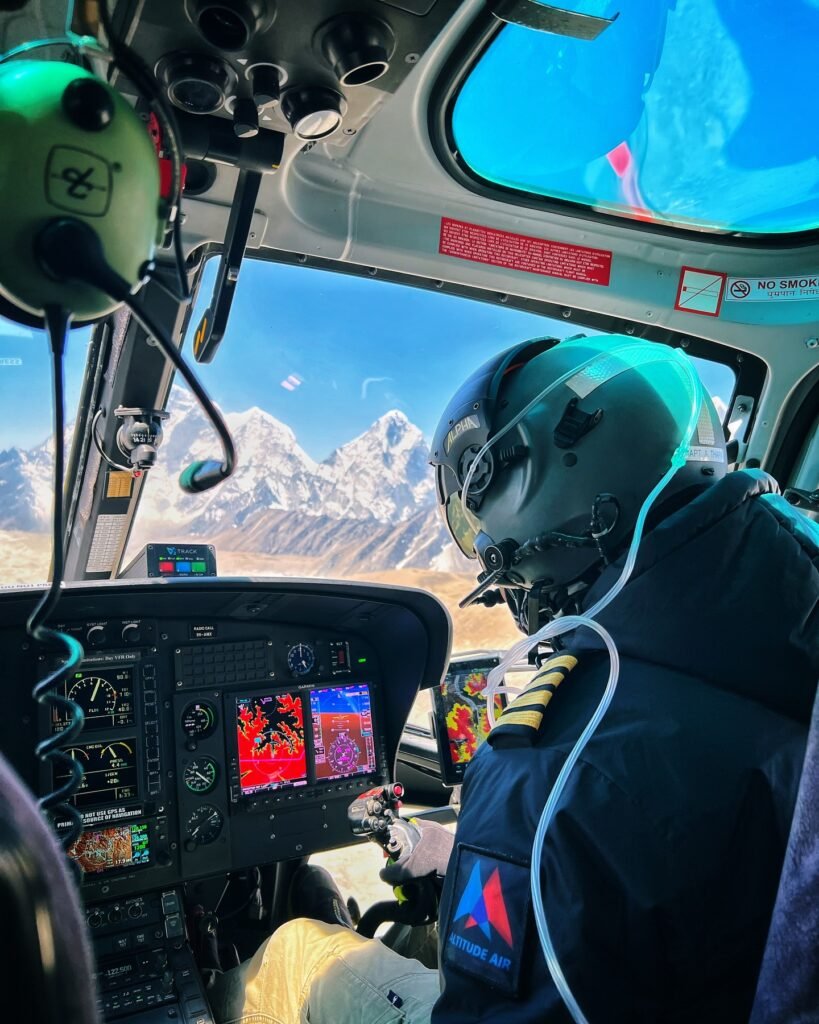
The helicopter seated six passengers and the pilot. I was in the second row on the left side with a window that gave a clear forward and side view. The pilot did a brief safety briefing in clear English and was completely matter of fact in the way that experienced pilots are. He had clearly done this route many times and his manner communicated competence without him needing to say so.
We lifted off just after 6am.
The immediate sensation of a helicopter takeoff is nothing like a fixed wing aircraft. There is no runway run and no gradual rotation. The aircraft simply rises. One moment the tarmac is under the skids and the next moment Kathmandu is below you and getting smaller and you are climbing toward the hills to the north.
The city spread out below in the early morning light was something I had not seen before. Kathmandu from the air is a wide bowl of buildings and temples and green spaces with the valley walls rising around it. The sun was just reaching the higher ground and the lower sections of the city were still in shadow. I pressed my face against the window and watched it until we were past it.
The Views on the Way to the Everest Region
The flight from Kathmandu toward the Everest region takes roughly an hour and the terrain below changes completely across that hour. Watching the transformation is one of the things I had not fully anticipated and it was one of the finest parts of the entire experience.
The city gives way to the middle hills of Nepal almost immediately. Green terraced rice paddies on steep hillsides, small villages with orange and red rooftops clustered along ridgelines, rivers visible as silver threads in the valley bottoms far below. The scale of the terracing is extraordinary from the air. Generations of people have cut into these steep hillsides and made them into farmland and looking at it from a helicopter you understand that in a way you cannot from the ground.
Then the hills grow taller and the settlements become smaller and more scattered. The rivers below become faster and whiter. The vegetation changes from the green of the farming land to the darker green of forest and then to something more open and rocky as the altitude increases.
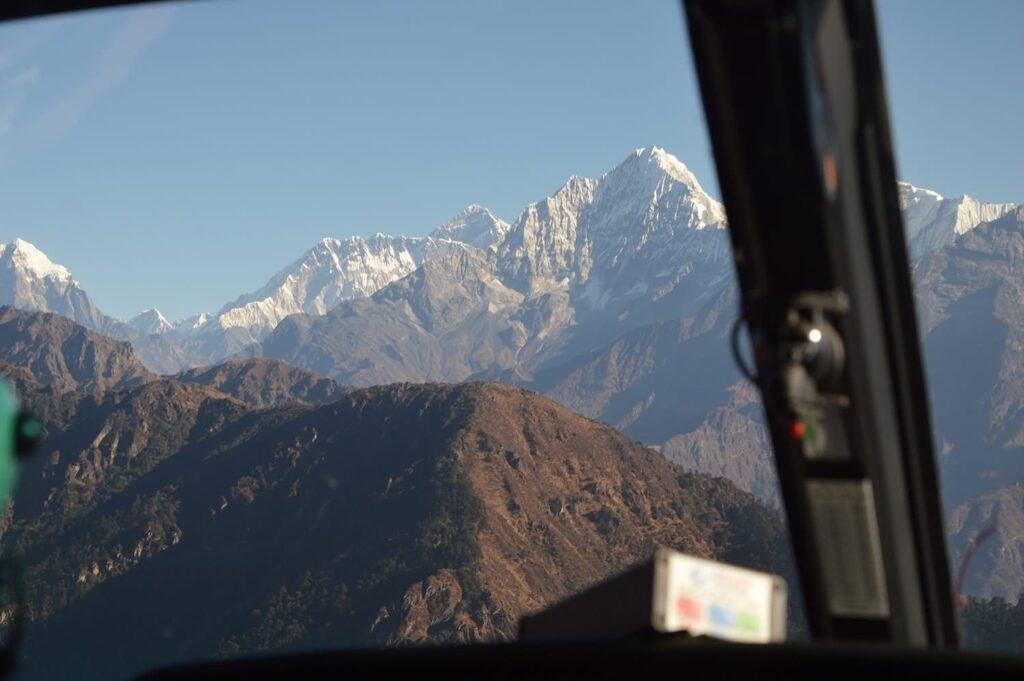
And then ahead of the aircraft, above everything else, the snow covered peaks begin to appear.
I honestly could not believe the size of them the first time they came into view. Even knowing intellectually what the Himalayan range is and even having seen photographs for years, the actual experience of watching those white mountains rise above the horizon of the aircraft window was something for which I had no adequate preparation. They were so much larger than the hills below them that they looked like they belonged to a different scale of geography entirely.
The person from Japan with the professional camera started shooting from the window beside me. I had my phone out and was doing the same. None of the photographs from this section of the flight do justice to what the eyes were seeing.
Flying Over Lukla
The pilot pointed out Lukla below us at some point during the flight and several of us leaned across to look. Tenzing Hillary Airport is famous among trekkers as the gateway to the Everest region and visible from above it is exactly as dramatic as described. The short runway on the edge of a ridge above a steep valley drop is clearly visible from the air. The scale of the surrounding terrain makes it obvious why the pilots who operate there need a particular kind of skill and experience.
We did not land at Lukla on this flight. We passed above it and continued northeast into the Khumbu and the mountains grew larger and more defined with every minute. The valleys below became deeper and narrower. The glaciers appeared as white tongues of ice descending from the high peaks into the valleys below.
I sat quietly for a few seconds at that point and just looked. The Sherpa villages scattered along the ridges and valley floors below the aircraft were tiny against the mountains above them. The trails connecting them, trails that trekkers walk for days, were invisible from this height. The scale of the Khumbu region from the air is genuinely humbling.
First View of Everest
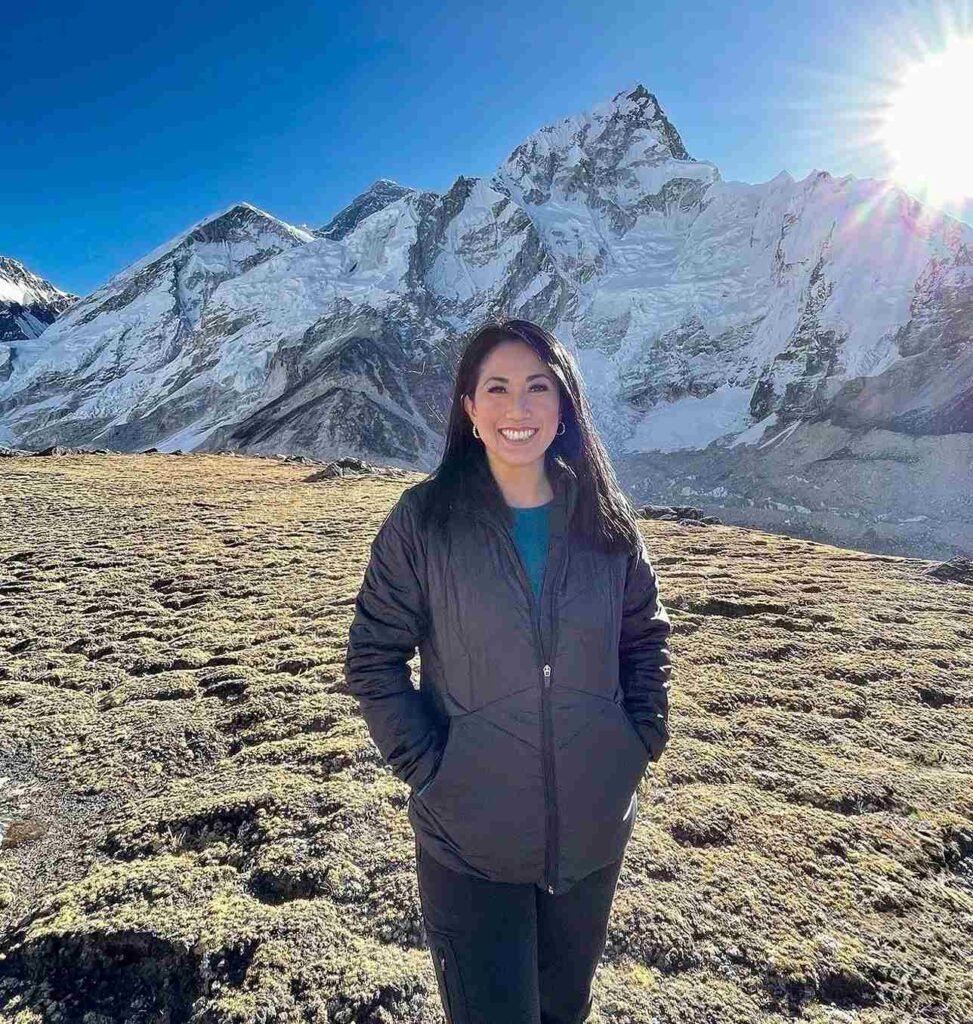
That moment felt unreal.
The pilot said something over the intercom and pointed ahead and slightly to the left. And there it was. Mount Everest. The highest point on the surface of the earth, the summit visible above everything around it with the characteristic plume of snow blowing off the top in the high altitude jet stream wind.
I have tried to describe this moment to people back in Brisbane and I have not found the right words for it. Photographs show you the shape of the mountain. Being in a helicopter window watching it come into full view for the first time is a different experience from any photograph. It is the context that does it. Seeing Everest surrounded by other enormous mountains, with Lhotse immediately beside it and Nuptse to the left and Ama Dablam appearing below and to the south, and understanding that Everest is still clearly the highest and most dominant of all of these extraordinary peaks gives you a sense of its scale that no image can fully carry.
Sarah said something quietly from beside me. I did not catch the words but the tone was the same as what I was feeling.
The pilot held the approach steady and the mountain stayed in our forward view as we got closer. The detail became sharper. The ridgelines, the glaciers on the upper flanks, the South Col visible as a saddle between Everest and Lhotse, the enormous southeast face catching the morning light. I was looking at the mountain that has occupied the imagination of climbers and travellers and dreamers for over a century and it was right there in the window.
Planning your Everest Helicopter Tour?
Flying Above Namche and the Khumbu
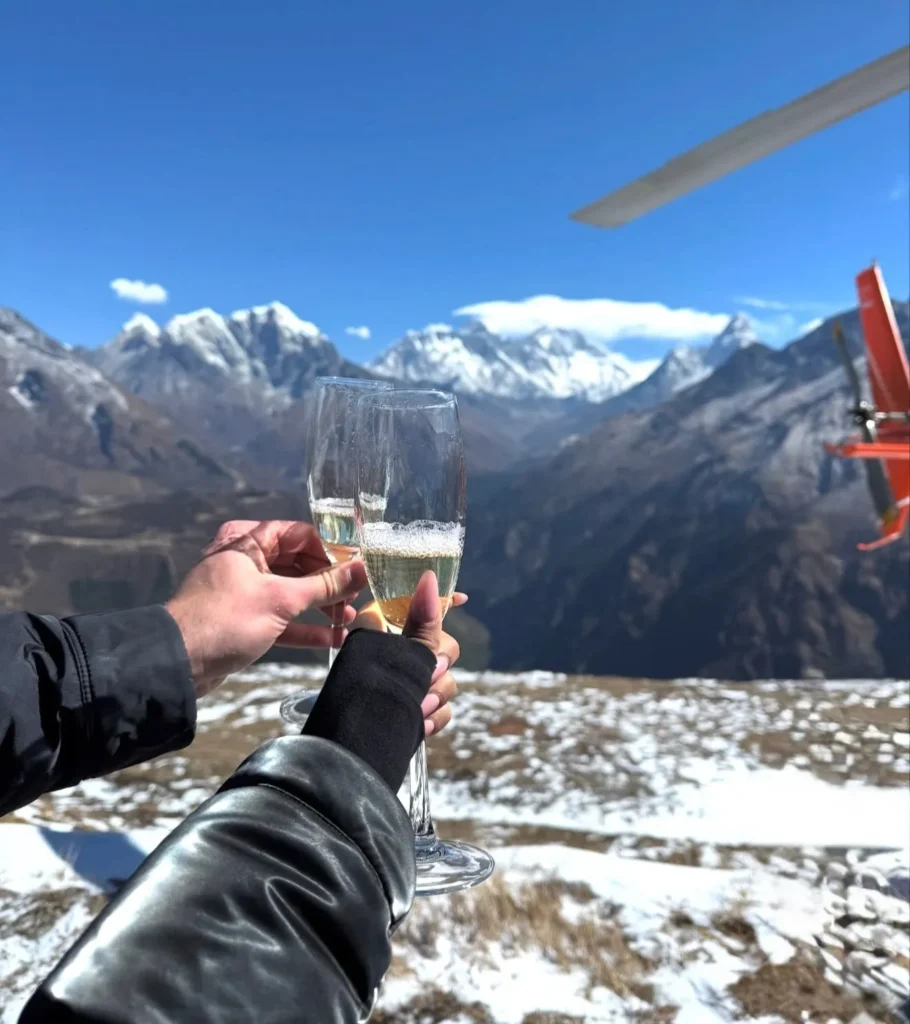
Below us the Khumbu Valley was laid out in a way that no map and no photograph had prepared me for. Namche Bazaar was visible below, the distinctive curved amphitheatre shape of the town built into the hillside exactly as described in every account of the Everest Base Camp trek. The Saturday market area was visible as an open space in the lower part of the town.
The trails connecting Namche to the higher villages were just visible as thin lines on the terrain. Tengboche Monastery appeared on its ridge below us, the white buildings and the surrounding forest clear from the air. Ama Dablam rose to the right of the aircraft and from this angle and at this distance the shape of it is extraordinary. The distinctive peak with its hanging glacier is one of those mountains that looks like a piece of deliberate design rather than the result of geological process.
The pilot gave brief commentary throughout the flight, naming the peaks and the landmarks below, and it added considerably to the experience. Knowing what you were looking at rather than just knowing it was all very large and very white made the whole thing more specific and more personal.
The Landing Experience
The landing at the high point of the Everest Helicopter Tour was the most intense few minutes of the entire trip.
The aircraft descended toward a landing area at significant elevation and the terrain around the landing spot was exposed mountain in every direction. As we came down the downdraft from the rotors kicked up snow and the landing was precise and confident. The moment the skids touched down and the pilot signalled it was safe to exit I opened the door and stepped out onto the mountain.
The cold was immediate and total. Even well dressed and prepared for the temperature the air at that altitude in the morning has a quality that is completely different from cold at lower elevations. It is thin and sharp and very clean. The first breath of it was something I will not forget. It tasted like nothing I have ever breathed before.
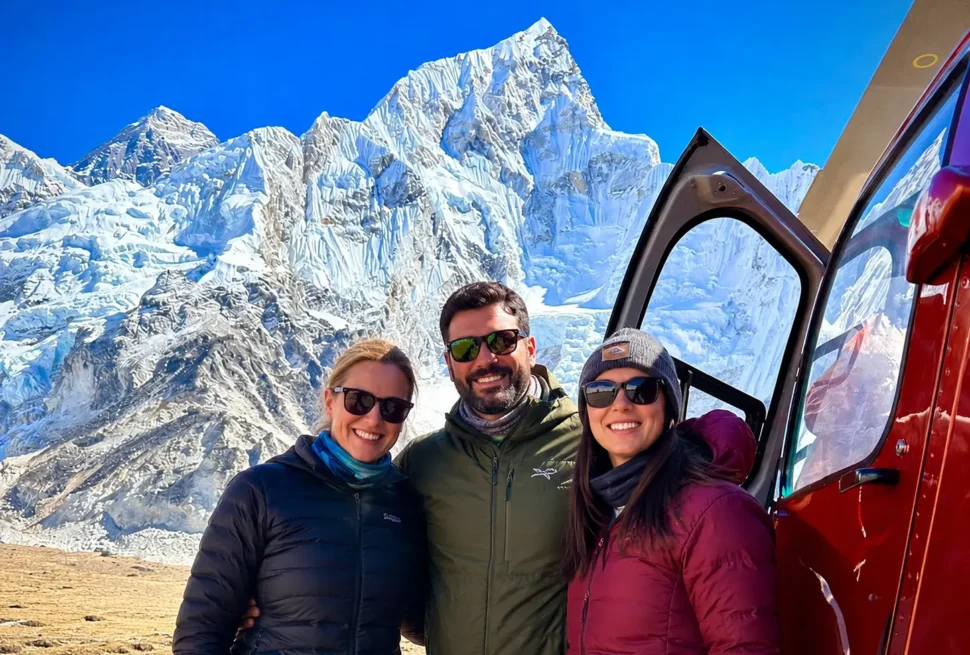
I stood on the ground at that elevation and looked around and the mountains were everywhere. Everest directly ahead. Lhotse immediately beside it. Nuptse to the left. The Khumbu Glacier visible below. The horizon in every direction was defined by snow covered peaks under a sky that was the deepest blue I have ever seen at any point in my life.
I stood quietly for a few seconds and did not take any photographs. I just looked. I wanted the first moments of that view to be a real experience rather than something seen through a phone screen.
Then I took a lot of photographs.
The time at the high point was limited which is appropriate. The altitude is serious and the helicopter needs to land and depart within a short window for safety reasons. But those minutes at that elevation looking at those mountains were some of the finest minutes I have spent anywhere.
Breakfast at Hotel Everest View
After the landing at the high point the helicopter flew to Hotel Everest View above Namche Bazaar for breakfast. The hotel sits at 3,880 metres with a terrace that faces directly toward Everest, Lhotse, Ama Dablam and the full sweep of the Khumbu peaks.
The breakfast was simple and good. Eggs, toast, porridge, hot tea and coffee. After the cold of the landing site the warmth of the dining room and the hot food felt extraordinary. But the main thing about breakfast at Hotel Everest View is not the food. It is the view from the terrace where we sat.
The mountains were fully lit by this point in the morning and the clarity of the air meant every peak was sharp and defined against the blue sky. Ama Dablam in particular from this angle and at this distance is one of the most beautiful things I have seen anywhere in the world. The shape of it, the way the hanging glacier catches the morning light, the clean lines of the ridges against the sky. Sarah and I sat together at the terrace table and drank coffee and looked at it for a long time without saying very much.
A Sherpa staff member at the hotel came over at one point and named all the peaks visible from the terrace for us. He pointed to each one in sequence, gave the altitude, and explained a little about each mountain. He had grown up in the Khumbu and the mountains he was describing were the mountains of his home. That particular conversation, sitting at nearly 4,000 metres above sea level drinking coffee and having a local man explain the geography of his own landscape, was one of the small moments of the trip that stayed with me most clearly.
I asked him whether he ever got used to that view. He smiled and said you do not get used to it. You just see it differently each time.
Photography and the Best Moments
I took somewhere around 400 photographs across the morning. A number that seemed reasonable at the time and slightly excessive when I was going through them on the flight back to Brisbane.
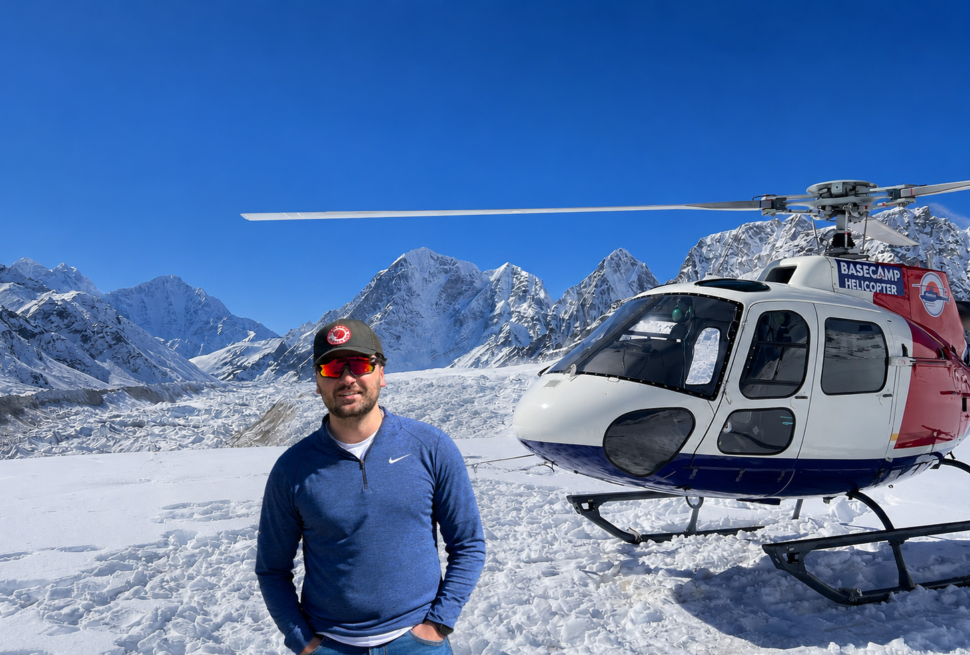
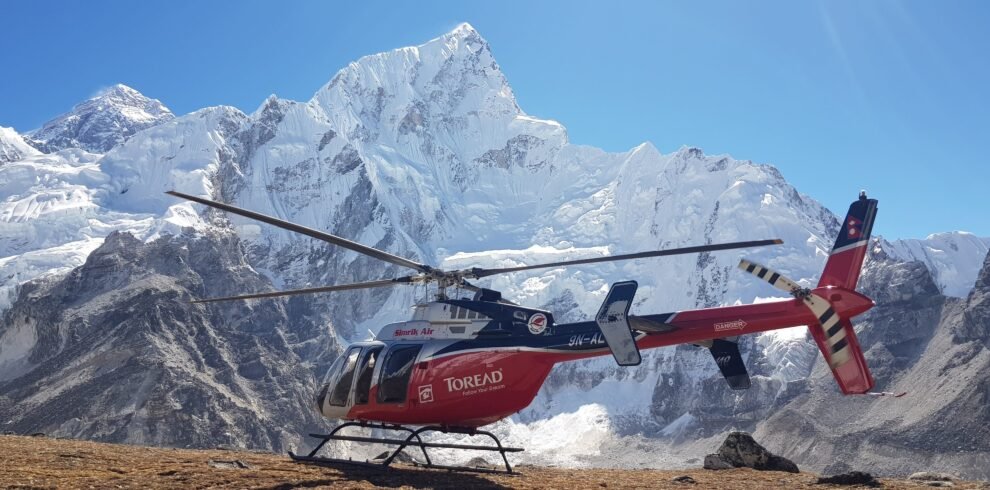
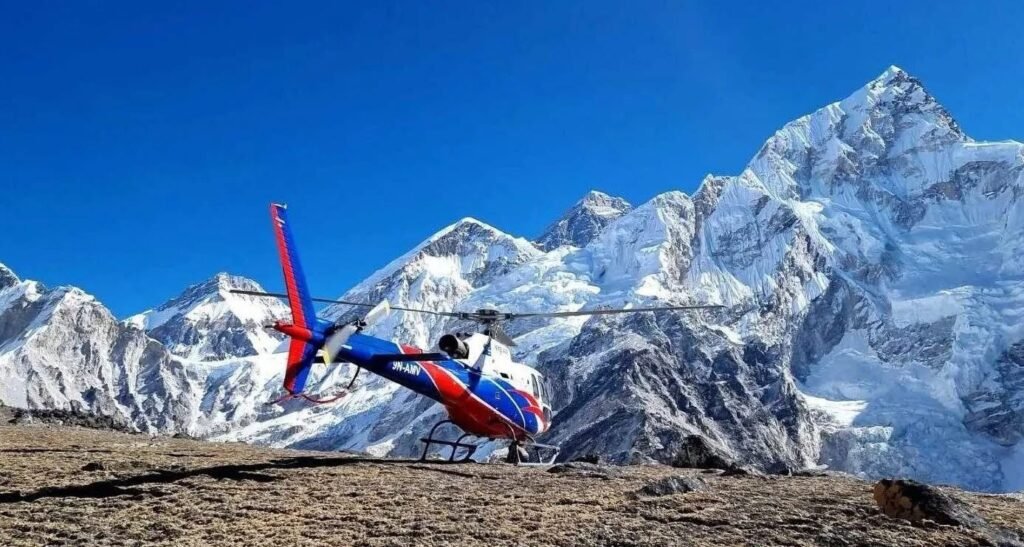
The best photographs were not the ones I planned. The most interesting image I have from the whole day is one I took almost accidentally of the helicopter parked at the high landing site with Everest directly behind it and the blue sky above. The scale comparison between the aircraft and the mountain in the background tells the story of the morning more clearly than any of the landscape shots I composed carefully.
At Hotel Everest View the terrace offered the best photography conditions of the day. The morning light on the peaks, the clear air, and the relatively stable position all made for good images. The Japanese traveller with the professional camera was working methodically along the terrace and the results on his screen when he showed us were extraordinary.
Kiran had told me before the tour that the morning hours were critical for photography because the afternoon clouds that build over the Himalayas most days in certain seasons can obscure the peaks by midday. The early departure made complete sense once I understood that. Every clear view we had of Everest and the surrounding peaks was a direct result of being up there in the right hours.
Planning your Everest Helicopter Tour?
Things That Surprised Me
Several things about the Everest Helicopter Tour surprised me and I want to mention them honestly for anyone reading this who is considering booking.
The first was the emotional response. I had not expected to feel as moved as I was at the high landing site. I am not someone who cries at experiences generally. But standing on that mountain looking at Everest in the morning light produced something in me that was not quite emotion and not quite awe but somewhere between the two and genuinely unexpected.
The second was how much the flight itself contributed to the experience. I had thought of the helicopter as the transport to the mountain. The flight turned out to be as significant as the landing. Watching Nepal transform below the aircraft from city to farmland to forest to glacier over the course of an hour was a complete journey in itself.
The third was how well everything was organised by Next Trip Nepal. From the moment Kiran picked us up at the hotel to the moment the helicopter landed back in Kathmandu, every detail had been managed. The timing, the permits, the coordination with the hotel, the communication throughout. I had not had to think about a single logistical thing all morning. That freedom to simply be present in the experience rather than managing it was something I only fully appreciated in retrospect.
And the fourth was Kiran himself. He did not need to come to the hotel pickup at 5am. He is the owner of the company. He could have sent a driver and met us at the terminal. He came himself because that is how he runs the operation. The personal involvement of the person responsible for the trip from the very first moment sets a tone for the entire experience and I noticed it and it mattered.
My Advice for Future Travellers
Book early. The Everest Base Camp Helicopter Tour is weather dependent and the best conditions are in the spring and autumn windows. Popular dates fill quickly and the weather window for good mountain visibility is a specific part of the morning that everyone doing the tour is trying to use at the same time.
Dress properly for the high altitude landing. The cold at elevation is real even in warm seasons and you will not enjoy those minutes on the mountain if you are not dressed for them. Kiran was very clear about this in his pre tour communication and I followed his advice and was comfortable. People in the group who had underestimated the temperature were noticeably uncomfortable during the landing section.
Charge your camera and phone the night before and bring a spare battery if you have one. The cold at altitude drains phone batteries faster than normal and the last thing you want at the high landing site is a dead phone.
Leave the professional photography goals in the background for the first few minutes at the landing site. Look first. Take photographs second. The views are extraordinary and they deserve to be seen with your eyes before you see them through a screen.
And book with a company where the owner is personally invested in the experience. Next Trip Nepal and Kiran specifically gave me a level of personal attention and care for the detail of the trip that made everything else better.
Final Thoughts
I went to Nepal for eight days as a first time visitor from Australia. I visited Kathmandu, walked through the markets of Thamel, sat at Boudhanath Stupa, ate dal bhat, and on one extraordinary morning I flew in a helicopter over the Himalayan range and stood on a mountain above 5,000 metres and looked at Everest in the morning light.
The Everest Helicopter Tour with Next Trip Nepal gave me an experience that I had thought would require weeks of trekking to access. It did not replace the idea of trekking. If anything it made me more determined to come back and walk the route properly one day. But as a way to see the Everest region genuinely and meaningfully within the constraints of a limited schedule it was extraordinary.
Kiran and the Next Trip Nepal team managed every detail of the morning with care and professionalism and the genuine personal investment of people who love what they do and where they do it. That showed from the first message to the last landing.
If you are thinking about seeing Everest but have limited time, I can honestly say this experience was worth every second.
Max Taylor, Brisbane, Australia
Further Reading
- How to Book the Everest Helicopter Tour
- Everest Helicopter Tour Landing Points
- Best Season for the Everest Helicopter Tour