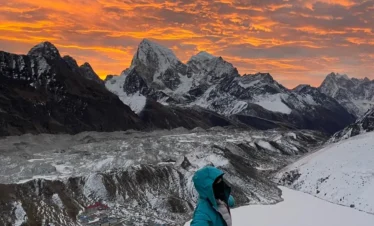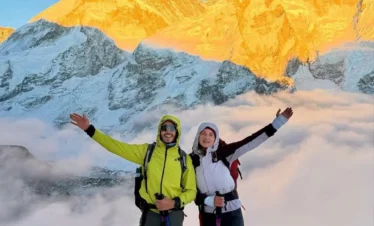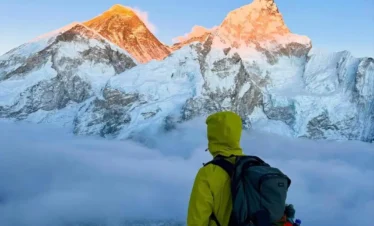
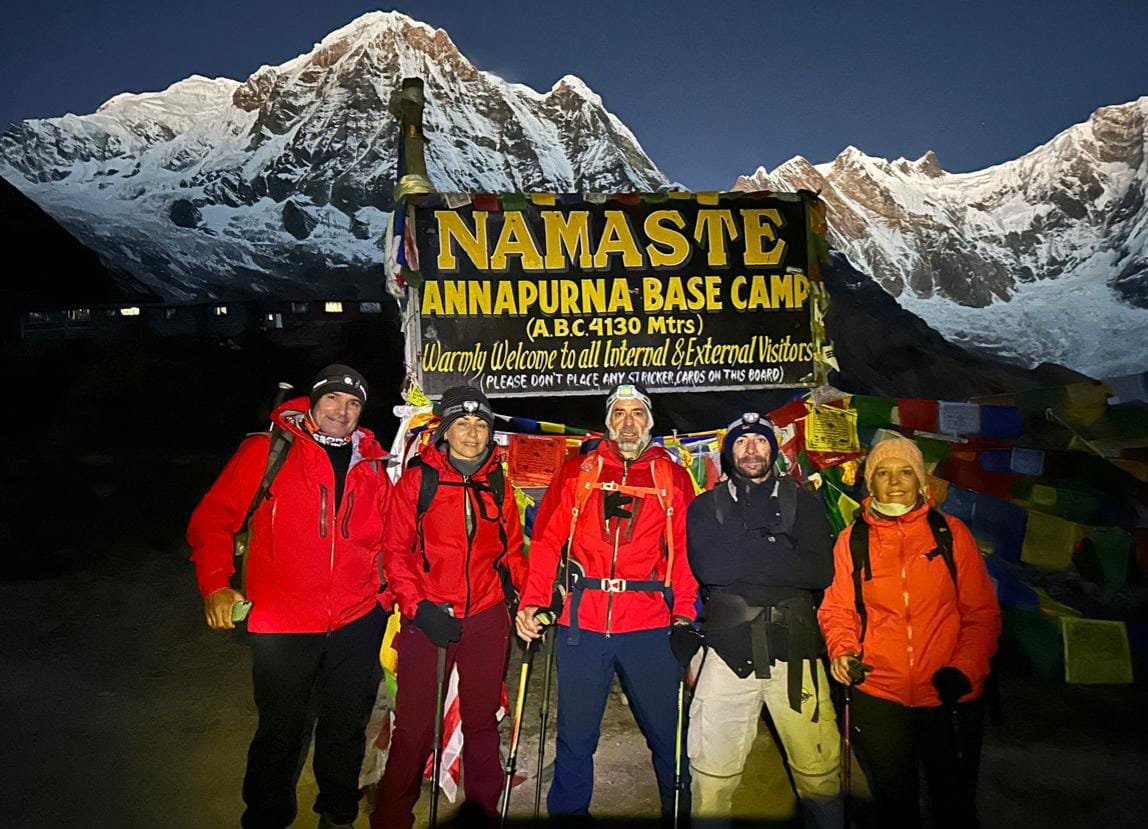
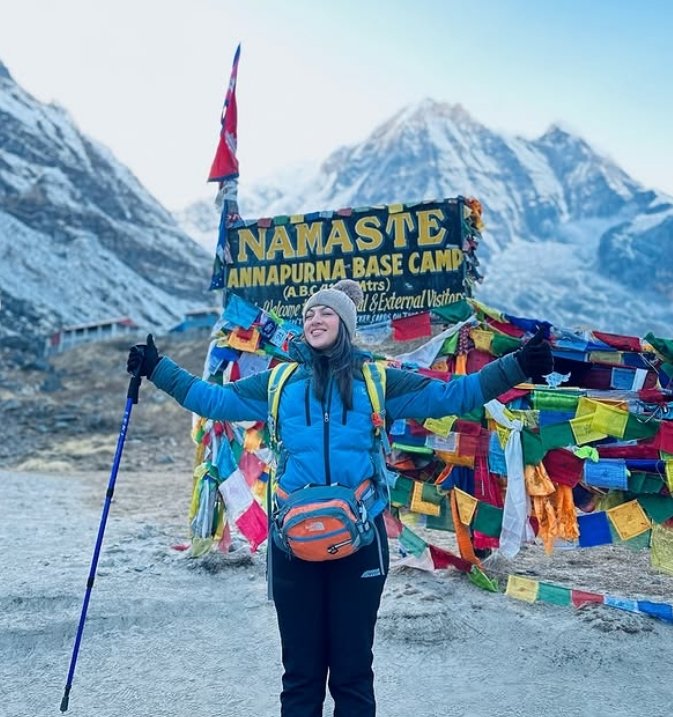
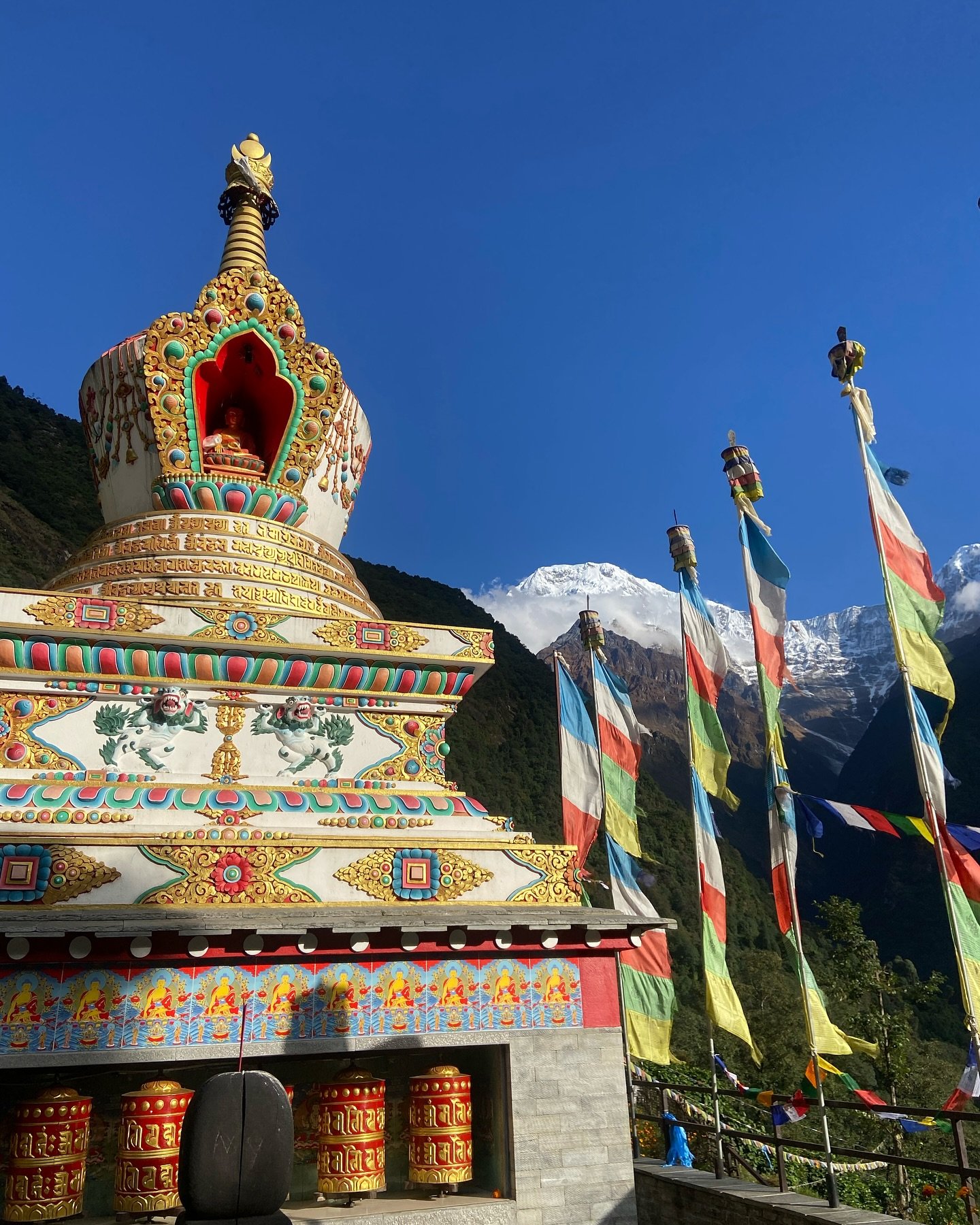
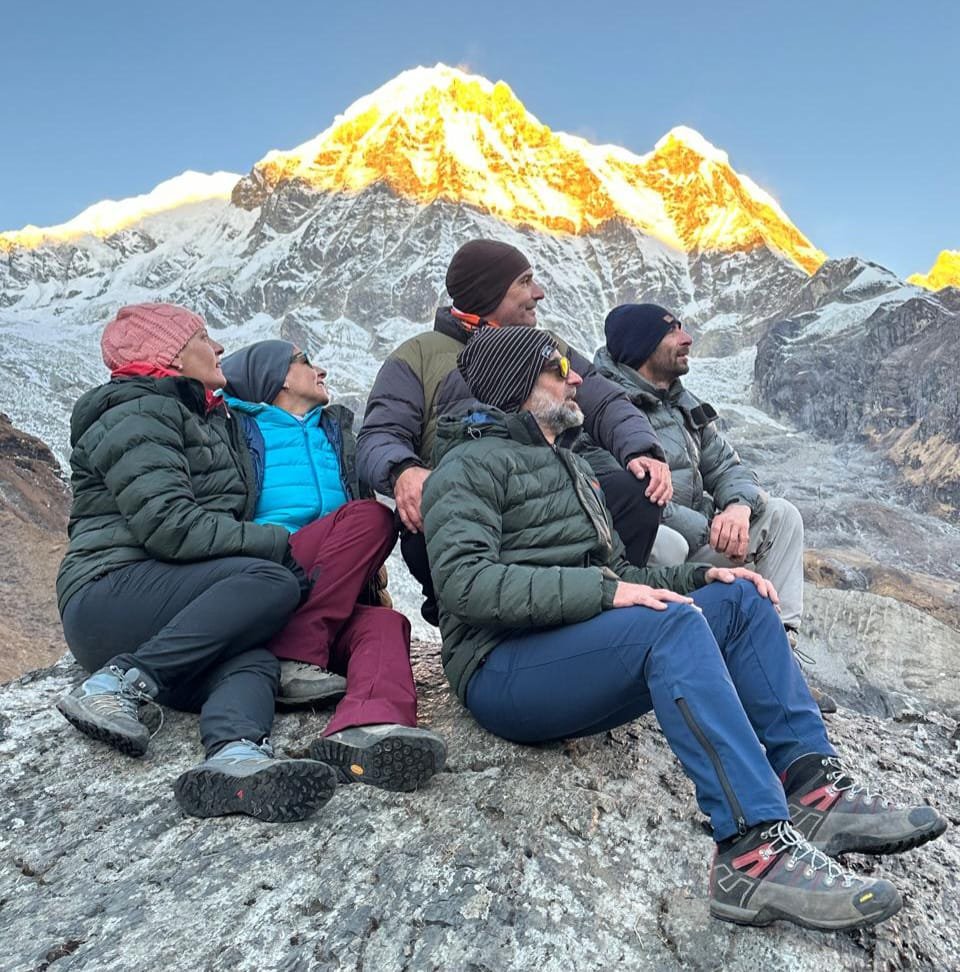
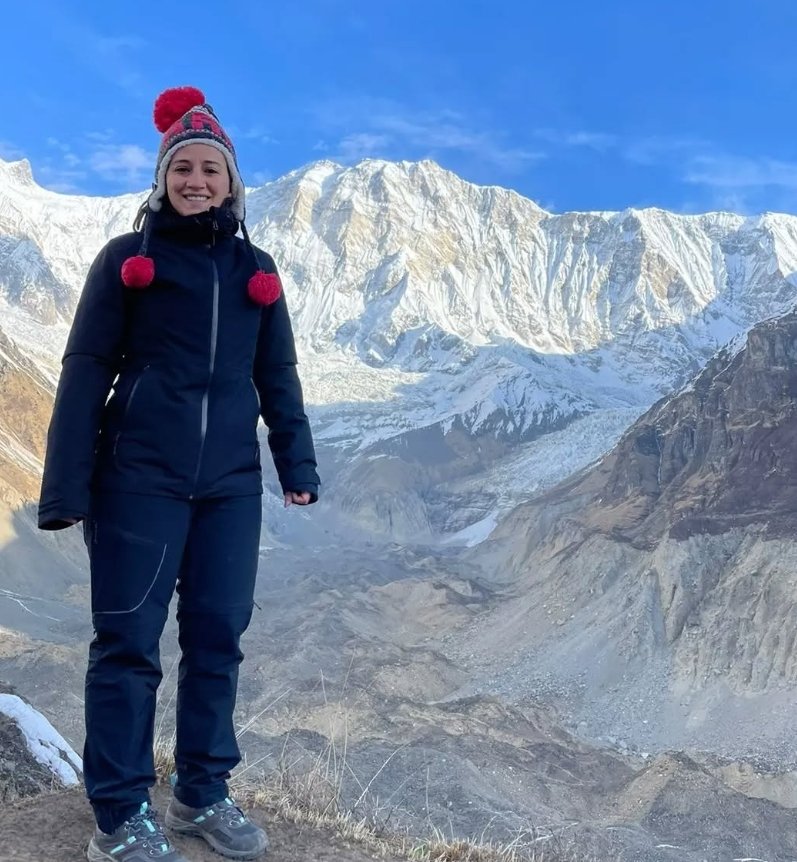
The Annapurna Base Camp (ABC) Trek is one of Nepal’s most scenic and authentic walking routes, taking trekkers to 4,130 meters within the Annapurna Sanctuary. From the base camp, trekkers are surrounded by towering peaks including Annapurna I (8,091 m), Annapurna South, Machhapuchhre (Fishtail), Hiunchuli, Gangapurna, Annapurna III and Annapurna IV.
The trail has a long history as a route used by local communities, pilgrims, and traders before becoming an international trekking destination. The first ascent of Annapurna I in 1950 by Maurice Herzog and Louis Lachenal brought worldwide attention to the region. Organized trekking developed in the 1960s, particularly through the work of Jimmy Roberts, and the region opened more widely to foreign trekkers in 1977. The trek lies within the Annapurna Conservation Area, Nepal’s largest protected area. The conservation project focuses on community-based protection, with trekking fees supporting schools, health services, trail maintenance, drinking water projects and reforestation. The route passes through traditional Gurung and Magar villages, terraced farmland, rhododendron and bamboo forests, deep river valleys and high alpine landscapes. The classic itinerary usually takes 7–13 days, depending on the starting point and whether Poon Hill is included. Teahouses are available throughout the route, so trekkers do not normally need camping equipment.
Although ABC does not require technical climbing skills, it is still a physically demanding high-altitude trek. The main challenges are long walking days, steep stone staircases, repeated ascents and descents, and altitude above 4,000 meters. Basic fitness and proper acclimatization are important.
The best trekking seasons are generally October–November and March–April, offering good mountain visibility and pleasant trekking conditions. Winter can be very cold at base camp, while the summer monsoon brings heavy rain and poorer trail conditions.

Annapurna Base Camp Trek Overview
Who Is Annapurna Base Camp Trek For
Annapurna Base Camp is for regular people who want to stand in front of a real 8,000 meter peak without learning to use an ice axe. You do not need to be an athlete. You do not need to have climbed anything before. You need to be able to walk for several hours with a backpack and not quit when your legs hurt.
You will probably be fine if:
- You can walk around your city for 2 to 3 hours without sitting down every 10 minutes
- You are between 14 and 65 years old and your doctor has not told you to avoid strenuous activity
- You have about 2 weeks free and $950 or more to spend
- You are okay sleeping in a basic room with thin walls and sharing a dining hall with strangers
- You have never been above 4,000 meters before and you are curious what it feels like
- You understand that the food will be simple, the toilets will be cold, and the showers will cost extra
- You accept that some days you will walk slowly and that is normal at altitude
You should talk to a doctor first if:
- You have ever had a heart attack, heart surgery, or your blood pressure reads above 160/100
- You got altitude sickness before, especially above 3,000 meters where you vomited or had to turn back
- You use an inhaler regularly for asthma or you have COPD, sleep apnea, or any lung condition
- You are pregnant or trying to become pregnant
- You take insulin for diabetes
- You have had a blood clot or deep vein thrombosis
What fit actually means here:
Being able to run 5 kilometers on flat ground does not help much on these trails. The stairs from Tikhedhunga to Ulleri are over 3,700 steps. Nothing in a gym prepares you for that. The best training is walking up hills with weight on your back. Start 6 to 8 weeks before you fly to Nepal. Find stairs or a steep path near your home. Walk for an hour with 5 kilograms in a backpack. Do this twice a week. If you can finish without your knees swelling or your feet blistering, you are ready.
Age is just a number on these trails:
I have seen a 14 year old girl outwalk her father every single day. I have seen a 67 year old man from Germany reach base camp smiling while a 28 year old from his group turned back at Deurali because he thought he was too fit to need training. The 14 to 65 range is a suggestion. What matters is whether you prepared and whether your body handles altitude. Some people never adjust to thin air no matter how strong they are. Others barely notice it.
If you are traveling alone:
You will not be alone for long. Group departures fill up with people from different countries who are all nervous on day one. By day three you are sharing chocolate and complaining about the same sore muscles together. Many people who book solo end up traveling with someone they met on the trail for the rest of their time in Nepal. If you want your own guide, your own pace, and no small talk at dinner, book a private trip.
If you want to bring your family:
It works for families with teenagers aged 14 and up. Younger kids usually do not have the patience for 6 hour walking days and they struggle with altitude more than adults. A family trip can be amazing if everyone trained together. It can be miserable if one person is unprepared and everyone has to wait or turn back. Be honest about your weakest member, not your strongest.
If you have done Everest Base Camp or Kilimanjaro:
Annapurna Base Camp will feel easier in some ways. The highest point is 4,130 meters, not 5,364. The teahouses are warmer and the food is better. But the trail itself has more ups and downs. The descent from base camp to Bamboo is 19 kilometers of downhill that destroys knees. Do not skip training just because you summited something higher. Different mountains punish different muscles.
If you are worried about the cost:
$950 is the starting price for a group departure. It covers your guide, permits, transport, teahouse rooms, and three meals a day on the trail. You will spend extra on bottled water, hot showers, WiFi, and tips. Budget another $150 to $200 for those. Travel insurance is not included and you cannot skip it. It must cover helicopter evacuation to 6,000 meters. If you think that sounds expensive, compare it to a week at a beach resort. The beach resort does not change your life.
Why Annapurna Base Camp Trek
- Lower altitude than Everest Base Camp. Annapurna Base Camp is 4,130 meters. Everest Base Camp is 5,364 meters. That 1,200 meter difference means less headache, better sleep, deeper breathing at night, and a lower chance of serious altitude sickness. More people finish this walk without medical problems than finish the Everest route.
- Better teahouses and food. The Annapurna region is accessible by road from Pokhara. Supplies arrive fresh by truck, not helicopter. The dal bhat tastes better. The rooms are warmer because firewood is cheaper and easier to transport. You eat apples grown in nearby villages, not apples that cost $5 because a yak carried them for a week.
- The trail changes every day. One morning you walk through a village where rice dries on bamboo mats. That afternoon you are in a bamboo forest where monkeys throw sticks. The next day you are above the tree line in a landscape that looks like the moon. Then you sleep in a stone lodge surrounded by peaks that glow orange at sunset. The Everest trail is rocks and prayer flags after Namche. Here the scenery keeps changing.
- The people are not burned out yet. Gurung and Magar villages have welcomed walkers since the 1970s. The grandmother who cooks your dinner asks about your mother. The child who serves tea wants to practice English. The conservation area puts your permit money directly into their schools and health posts. You see where it goes.
- Poon Hill is included, not extra. From 3,210 meters, you see Dhaulagiri, Annapurna I, Annapurna South, and Machhapuchhre in a single sunrise. On the Everest trail you pay extra and walk an extra day for Kala Patthar. Here it is part of the normal schedule.
- The cost is lower. $950 for 13 days, including meals, rooms, permits, and a guide. The Everest route starts around $1,400 for a shorter trip with worse food. You save money and see mountains that are just as impressive. The only thing missing is the bragging rights. Bragging rights do not keep you warm or fill your stomach.
- The trail is safer. Lower altitude means more oxygen, better judgment, and fewer helicopter evacuations. The path is wider and better maintained. You are not squeezing past a yak train on a narrow cliff edge carrying cement to a hotel.
- It fits a normal vacation. 13 days total, including travel from Kathmandu. The direct route without Poon Hill is 7 to 10 days. Everest Base Camp requires at least 16 days, plus buffer days for weather or altitude acclimatization. If your annual leave is limited, Annapurna is a good fit.
- The hot spring at Jhinu Danda is real. After 8 days of walking you sit in a natural pool by the Modi Khola while hot water bubbles from the ground. Your muscles relax. Your blisters stop hurting. You can drink a cold beer. The Everest trail has nothing like this. The closest thing is a lukewarm shower that costs $6 and runs out in 3 minutes.
- You see the 10th-highest mountain from its base. Annapurna I is 8,091 meters. It was the first 8,000-meter peak ever climbed, back in 1950, before Everest was summited. The south face rises directly above base camp in a wall of ice and rock. The scale hits you in the chest. Standing there is not a lesser experience than Everest. It is a different one.
- The right level of hard. Not so easy that you feel like you paid for a park tour. Not so hard that you spend the trip afraid of dying. The stone stairs hurt. The altitude slows you down. The cold nights make you appreciate your sleeping bag. But you finish healthy, your photos are clear, and your memory of the mountains is not blurred by pain and fear.
When to Do Annapurna Base Camp Trek
- March to May is spring. The rhododendron forest between Tikhedhunga and Ghorepani turns red and pink. The lower hills are green. Temperatures at base camp are 0 to 8 degrees Celsius during the day, dropping to minus 5 to minus 10 at night. Mornings are usually clear. Clouds build by noon and sometimes bring light rain below 3,000 meters. The trail is busy but not crowded. Book teahouses 2 to 3 weeks ahead.
- September to November is autumn. This is the most stable season. The monsoon is finished. The air is clean from months of rain. The skies are the clearest you will see all year. You can count on mountain views every morning. Temperatures are similar to spring, maybe slightly colder at night. This is the busiest time. Teahouses fill up. Book a month ahead if you want a private room.
- December to February is winter. Fewer people on the trail. The views are sharp because the air is cold and dry. But the cold is real. Night temperatures at base camp drop to minus 10 to minus 15 degrees Celsius. Water bottles freeze inside your sleeping bag. Toilets are miserable. Ice can form on the trail above Deurali. Some teahouses close for the season. Only go if you have proper winter gear and experience with cold weather camping. Not recommended for first timers.
- June to August is monsoon. Do not go. Leeches attach to your boots and legs in the forest below 2,000 meters. Trails turn to mud and slip. Rivers swell and crossing them becomes dangerous. Clouds sit on the mountains every day. You will walk for 10 days and see nothing. Some lodges close. The risk of landslide is real on the road from Kathmandu to Pokhara. This is not a matter of toughness. It is a matter of wasting your money and putting your guide in danger.
- October is the peak month. If you want the best weather and you do not mind sharing the trail with hundreds of other people, book October. If you want good weather with fewer people, late September or early November are better. The first two weeks of November still have clear skies but the crowds thin out after the major holidays.
- April is the best spring month. Early March can still have snow on the trail above 3,000 meters. Late May brings pre-monsoon haze and afternoon thunderstorms. April hits the sweet spot. The rhododendron are fully open. The weather is stable. The trail has people but not the October crush.
- Full moon matters for the night sky. If you can align your dates, reach base camp or Machhapuchhre Base Camp during a full moon. The moonlight reflects off the snow peaks and you can see the mountains without a headlamp. It is cold but worth stepping outside for 10 minutes at 2 AM.
- Avoid major Nepali holidays if you want a quiet trail. Dashain in September or October and Tihar in October or November bring domestic tourists to the region. Teahouses fill with local families. The atmosphere is festive but the rooms are full and the kitchens are slow. Check the lunar calendar before booking.
Super Best Time
☀️ FEB
-8°C / 8°C
P: 20 mm
W: 10 km/h
☀️ MAR
-5°C / 10°C
P: 35 mm
W: 12 km/h
☀️ APR
0°C / 15°C
P: 60 mm
W: 12 km/h
☀️ SEP
10°C / 20°C
P: 150 mm
W: 8 km/h
☀️ OCT
5°C / 15°C
P: 50 mm
W: 10 km/h
☀️ NOV
-2°C / 10°C
P: 20 mm
W: 10 km/h
Other Months
JAN
-10°C / 5°C
P: 15 mm
W: 8 km/h
MAY
5°C / 18°C
P: 100 mm
W: 12 km/h
🌦️ AUG
12°C / 22°C
P: 250 mm
W: 8 km/h
🌧️ JUN
10°C / 20°C
P: 200 mm
W: 10 km/h
🌧️ JUL
12°C / 22°C
P: 300 mm
W: 8 km/h
❄️ DEC
-5°C / 7°C
P: 10 mm
W: 8 km/h
Annapurna Base Camp Trek by Month: When to Go
Every month on the ABC trail has different weather, trail conditions, and crowd levels. Use these guides to choose the right time for your trek.
- ABC Trek in January — cold, clear, near-solitude
- ABC Trek in February — winter warming, good views
- ABC Trek in March — rhododendron bloom begins
- ABC Trek in April — peak spring, full bloom
- ABC Trek in May — pre-monsoon, warm lower trail
- ABC Trek in June — monsoon arrives, lush green
- ABC Trek in July — peak monsoon, expert only
- ABC Trek in August — late monsoon, improving
- ABC Trek in September — monsoon retreat, best late month
- ABC Trek in October — peak season, best month overall
- ABC Trek in November — clear, cold, fewer crowds
- ABC Trek in December — early winter, experienced trekkers
13 Days Annapurna Base Camp Trek Highlights
- Stunning Views of Annapurna Range – Witness panoramic views of Annapurna I (8,091m), Machhapuchhre (6,993m), Hiunchuli, and Dhaulagiri.
- Diverse Landscapes & Flora – Trek through dense rhododendron forests, terraced fields, alpine meadows, and glacial moraines.
- Annapurna Base Camp (4,130m) – Stand at the foot of the world’s 10th highest peak and soak in the 360° Himalayan views.
- Ghorepani Poon Hill (Optional) – Experience a breathtaking sunrise over Annapurna and Dhaulagiri from Poon Hill (3,210m).
- Hot Springs at Jhinu Danda – Relax in natural hot springs after days of trekking.
- Gurung & Magar Culture – Explore traditional villages like Ghandruk and Chhomrong, experiencing local hospitality and culture.
- Moderate Difficulty & Short Duration – Ideal for trekkers with 7–12 days and moderate fitness.
- Authentic Village Experience – Walk through traditional Gurung and Magar villages