Why We Are Talking About This Trek Honestly
Next Trip Nepal runs the Everest Three Passes Trek every season. We know this route well. We have guided hundreds of trekkers across Kongma La, Cho La, and Renjo La over the years and we have seen what happens when trekkers come who are not ready for it.
If this honest assessment has you leaning toward Base Camp alone rather than all three passes, our Everest Base Camp Trek with Helicopter Return covers that shorter, more direct itinerary.
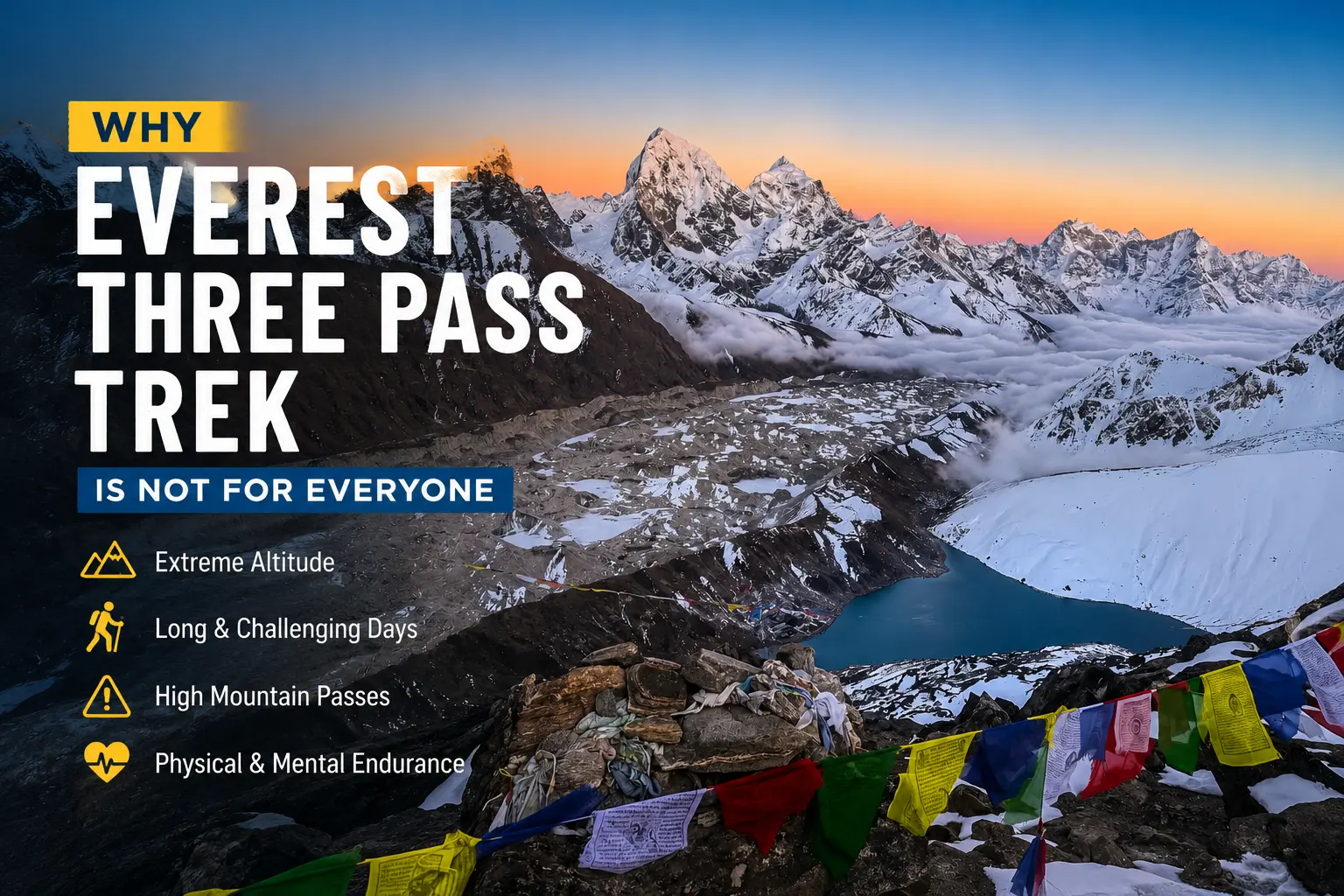
Most trekking companies write about how incredible the Everest Three Passes Trek is. The three passes above 5,300 metres. The views from Kala Patthar and Renjo La. The Gokyo Lakes. The Khumbu Glacier. All of that is true and worth writing about.
But there is another conversation that most companies do not have with their potential guests before booking. The honest one. The one that asks whether this specific trek is actually the right choice for this specific person right now.
That is what this blog is for. Every season we see trekkers who should not have booked the Everest Three Passes Trek. Not because they are not great people or not genuine adventurers. But because they came without the fitness, without the altitude experience, or without the realistic understanding of what 19 to 21 days above 4,000 metres in the Khumbu actually feels like on the body and the mind.
Some of them turn back at Dingboche. Some need helicopter evacuation from the upper valley. Some finish the trek but spend the hardest days in real distress rather than the rewarding challenge this route delivers when you arrive properly prepared.
Read this honestly. By the end you will know whether the Everest Three Passes Trek is your trek right now. And if it is not, you will find the right alternative from our Nepal trekking packages that suits exactly where you are today.
Planning the Everest Three Passes Trek and need help with permits, routes, or itineraries?
WhatsApp us Email usPlanning your Everest Three Passes Trek?
What the Everest Three Passes Trek Actually Involves
Before getting into who should think twice about this trek, here is what it actually involves so everything else in this blog makes sense.
The Everest Three Passes Trek crosses three mountain passes in the Khumbu region of northeastern Nepal. Kongma La sits at 5,535 metres. Cho La sits at 5,420 metres and involves a glacier descent on its eastern side. Renjo La sits at 5,360 metres. The full circuit also includes Everest Base Camp, Kala Patthar at 5,545 metres, the Gokyo Lakes, and the full sweep of the Khumbu valley. Total distance is approximately 160 to 170 kilometres across 19 to 21 trekking days.
The trek is rated Grade 5 out of 5 on the Nepal trekking difficulty scale. That puts it in the strenuous to extreme category. It is the most demanding standard trekking route in the Himalayan region that does not require technical climbing skills.
Over 80 percent of the entire route sits above 3,000 metres. From around Day 6 through Day 15 the trail stays above 4,000 metres almost continuously. On the three pass crossing days the trail goes above 5,000 metres before breakfast. The cumulative stress of that altitude across nearly three weeks is genuinely different from any other Nepal trekking experience.
The glacier section on the descent of Cho La requires microspikes or crampons and a willingness to walk on hard ice on a steep slope. The approach to Kongma La involves long boulder scrambling and icy rocky ground in the early morning before dawn. These are not technical mountaineering skills but they are beyond what any standard trekking route in the Annapurna or Langtang regions asks of you.
Planning your Everest Three Passes Trek?
Who the Everest Three Passes Trek Is Not Suitable For
First Time Nepal Trekkers With No Altitude Experience
If your previous outdoor experience is hiking in the Alps, walking trails in Europe, or weekend hikes at low elevation, the Everest Three Passes Trek is not your starting point in Nepal.
Understanding how your body responds to altitude takes real experience and that experience cannot be replaced by fitness alone. Altitude sickness does not discriminate by age or fitness level. Some of the fittest trekkers we have guided in the Khumbu have been hit hard by AMS above 4,500 metres while older, less athletic trekkers have cruised through without a headache. The difference is almost always experience and pace rather than fitness.
If you have never slept above 3,500 metres, the Everest Three Passes Trek asks you to spend ten consecutive days above 4,400 metres on your first ever experience of that altitude. That is a significant ask.
The right starting point for first time Nepal trekkers is the Everest Base Camp Trek or the Gokyo Lakes Trek. These routes take you through the same extraordinary Khumbu landscape, give you the altitude experience that informs future treks, and are genuinely challenging and rewarding without the added demands of three high passes and a glacier crossing.
Complete one of those routes first. Come back for the Everest Three Passes Trek on your second Nepal trip. That is the honest advice.
People Who Cannot Commit 19 to 21 Full Days
The Everest Three Passes Trek requires 19 to 21 days on the trail plus travel days. Most realistic planning puts the total Nepal trip at 23 to 24 days minimum.
The acclimatisation days built into the itinerary at Namche Bazaar and Dingboche are not optional padding that can be removed to fit a tighter schedule. They are the physiological foundation of the entire upper route. Trekkers who arrive at the Khumbu with a fixed return flight that leaves no room for acclimatisation or weather delays are putting themselves in a genuinely difficult position.
Cho La and Kongma La cannot be rushed. Bad weather can close the passes for one to three days at a time in any season. If your international departure is booked with no buffer days and the weather closes Cho La on the day you need to cross, you face an impossible choice between a dangerous crossing and a missed flight.
If 19 to 21 days is more than your schedule genuinely allows, the right choice is not to shorten the Everest Three Passes Trek by removing acclimatisation days. The right choice is to do the 14 day Everest Base Camp Trek with a realistic itinerary that fits your actual schedule properly. You will have an extraordinary time and you will come back ready for the Three Passes Trek when your schedule allows it.
Trekkers Who Do Not Handle Cold Well
The Everest Three Passes Trek asks you to sleep at Gorakshep at 5,164 metres on one of the coldest nights of the entire route, wake before 4am in temperatures of minus ten to minus fifteen degrees Celsius, and walk to Kala Patthar at 5,545 metres in the dark. That same trip structure repeats on each of the three pass crossing days.
The cold above 5,000 metres in the Khumbu is different from cold at lower elevation. It is thin and dry and wind-driven. The right gear manages it but the gear needs to be genuinely rated for those temperatures. Sleeping bags rated to minus fifteen degrees Celsius as a minimum. A down jacket rated for the same. Multiple base and mid layers. Proper expedition gloves and a balaclava for the pre-dawn pass crossings.
People who genuinely suffer in cold conditions and who find cold weather physically distressing rather than simply uncomfortable need to think carefully about what the pre-dawn Kongma La crossing or the 3am start from Dharamsala on the Cho La day will feel like on Day 14 of the trek when the accumulated fatigue is already high.
Trekkers Looking for a Comfortable or Moderate Challenge
Some trekkers book the Everest Three Passes Trek after reading about it and conclude that it will be a moderately challenging walk with beautiful mountain views. This is a misreading of what the route involves.
The Everest Three Passes Trek is the most demanding standard trekking route in Nepal. Not one of the most demanding. The most demanding. Days that involve 8 to 10 hours of walking above 4,500 metres on rough glacial terrain are not occasional features of the route. They are the standard structure of the pass crossing days which are the centrepiece of the experience.
By Day 14 the cumulative altitude fatigue is real and present in the body regardless of fitness level. The legs know they have been above 4,000 metres for nearly two weeks. The pass crossings near the end of the itinerary cost more energy than the same terrain would cost earlier in the route.
Trekkers who want a genuinely beautiful and challenging Nepal experience without Grade 5 difficulty should look seriously at the Annapurna Base Camp Trek, the Annapurna Circuit Trek, or the Langtang Valley Trek. These are not lesser experiences. They are genuinely outstanding Himalayan trekking routes that are right for a much wider range of trekkers than the Three Passes route.
Planning the Everest Three Passes Trek and need help with permits, routes, or itineraries?
WhatsApp us Email usTrekkers With Unresolved Medical Conditions
The Everest Three Passes Trek spends approximately ten consecutive days above 4,400 metres. Certain pre-existing medical conditions interact with sustained high altitude in ways that can become serious and rapidly escalating on a route where emergency access is limited and helicopter evacuation from above 5,000 metres costs between USD 6,000 and USD 15,000.
Any heart condition, respiratory condition, history of blood pressure issues, history of previous altitude sickness, or any chronic condition that affects cardiovascular or pulmonary function needs to be discussed with a doctor before booking this route and specifically in the context of sustained time above 4,000 metres.
This is not about excluding people with medical histories from Himalayan trekking. The Everest Panorama Trek, the Ghorepani Poon Hill Trek, and several other Nepal trekking routes reach beautiful altitude without spending ten consecutive nights above 4,400 metres. Those routes are available and achievable for many people with medical considerations that would make the Three Passes genuinely unsafe.
Children and Senior Trekkers Without High Altitude Experience
The Everest Three Passes Trek is not appropriate for children. The daily walking hours, the technical terrain on the pass approaches, the pre-dawn starts, and the sustained altitude are beyond what any child can safely manage on this specific route.
For families who want to bring children to the Everest region, the Everest Base Camp Trek with a carefully designed conservative pace is possible for teenagers who are fit and have some trekking background. The Next Trip Nepal family tour covering Kathmandu, Pokhara, and Chitwan is the right Nepal experience for families with younger children and gives everyone an extraordinary trip without the risks of extended high altitude exposure.
For senior trekkers, the question is not age but cardiovascular fitness, joint health particularly in the knees for the long downhill sections, and previous altitude experience. Senior trekkers who are regularly active, have prior Himalayan experience above 4,000 metres, and have discussed the route with their doctor can complete the Everest Three Passes Trek successfully. Senior trekkers without that combination of factors will find the route genuinely dangerous rather than challenging.
People Who Cannot Afford Proper Travel Insurance
Helicopter evacuation from above 5,000 metres in the Khumbu to Kathmandu costs USD 6,000 to USD 15,000. That is not an extreme scenario cost. That is the standard cost for a medical evacuation from Gorakshep or the upper Khumbu.
Travel insurance that explicitly covers helicopter evacuation at altitudes above 5,500 metres is mandatory for the Everest Three Passes Trek. Non-negotiable. Not optional. If you cannot afford or cannot obtain travel insurance that covers helicopter evacuation to this altitude then the Everest Three Passes Trek is not a financially safe choice regardless of your fitness level. Altitude sickness can affect any trekker regardless of preparation and experience.
Next Trip Nepal will ask for proof of insurance before the trek begins. This is not bureaucracy. It is the single most important document you carry into the Khumbu.
Trekkers Who Need Consistent Comfort and Reliable Amenities
The teahouses above Namche Bazaar on the Everest Three Passes route are basic. Above Dingboche they become significantly more basic. The teahouse at Dharamsala, where trekkers spend the night before the Cho La crossing, is the most basic structure many international trekkers will have slept in during their adult lives. Cold rooms, thin blankets, outdoor toilet facilities, no hot water, and the wind audible through the walls all night.
Wi-Fi above Namche is expensive, slow, and unreliable. Device charging costs USD 2 to 4 per device and is available at most teahouses but not guaranteed. Hot showers above Dingboche cost USD 5 to 8 and are sometimes not available at all on the same day they are advertised.
None of this is a problem for trekkers who understand it in advance and arrive with the right gear and the right expectations. But for trekkers who need a certain level of comfort to function and rest properly, the Everest Three Passes Trek above 4,500 metres provides conditions that can compound altitude fatigue significantly.
Who the Everest Three Passes Trek Is Genuinely Right For
After all of that honesty, here is the equally honest other side.
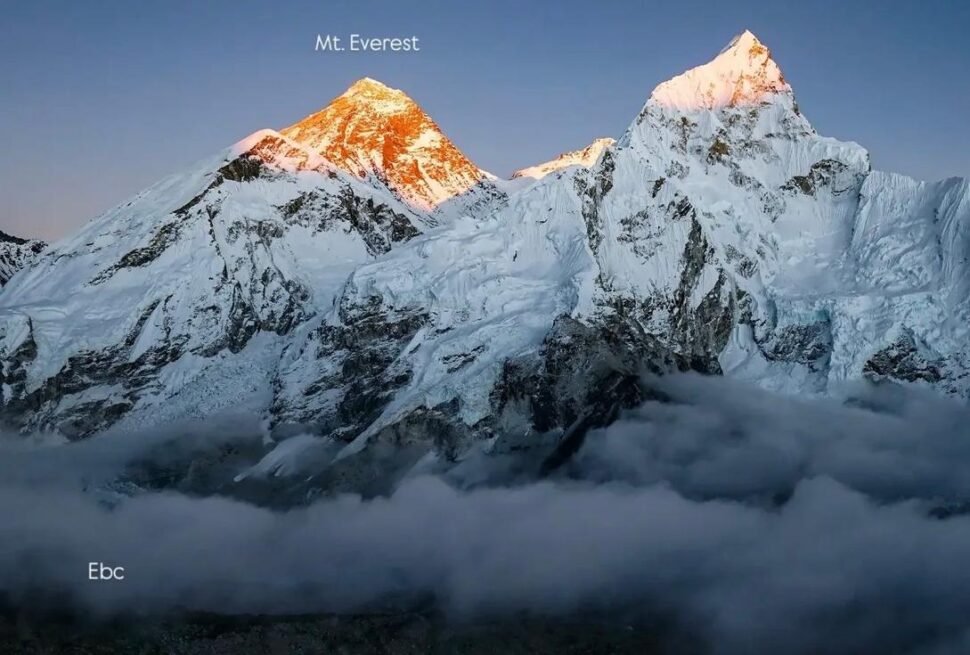
The Everest Three Passes Trek is one of the finest trekking experiences available anywhere on earth. Standing on Renjo La at dawn watching the Gokyo Lakes catch the morning light below while Everest and Lhotse and Makalu fill the skyline above is a view that very few people on earth have ever seen. Crossing Cho La on a clear morning with the Khumbu Glacier below and the prayer flags of the pass visible above is genuinely extraordinary. Reaching Everest Base Camp and then watching the sunrise from Kala Patthar is the centrepiece of one of the world’s great long distance trekking routes.
The Everest Three Passes Trek is right for you if you have previous multi-day trekking experience above 4,000 metres and know how your body responds to altitude. If you are consistently active with strong cardiovascular fitness and can hike 6 to 8 hours comfortably with elevation gain. If you have 21 to 24 days available with genuine buffer days built in. If you carry proper cold weather gear rated for minus 15 degrees Celsius. If you hold proper travel insurance covering helicopter evacuation above 5,500 metres. If you understand that this trek is Grade 5 difficulty and that is genuinely what you are looking for.
If that is you, talk to us today. The Everest Three Passes Trek is one of the routes Next Trip Nepal operates with the deepest expertise and we would love to build it for you.
Planning your Everest Three Passes Trek?
The Right Nepal Trek for Every Type of Trekker
If the honest assessment above led you to the conclusion that the Everest Three Passes Trek is not your right choice right now, here is exactly where to go instead.
For First-Time High Altitude Trekkers
The Everest Base Camp Trek is the right starting point. It covers the same extraordinary Khumbu landscape including Namche Bazaar, Tengboche Monastery, Dingboche, Lobuche, Gorakshep, and Kala Patthar. The maximum altitude is 5,545 metres at Kala Patthar. It takes 14 days and involves no glacier crossings or high technical passes. It is a genuinely challenging and deeply rewarding route that gives you the full Khumbu experience and the altitude knowledge that informs everything that comes after.
For Trekkers Who Want Mountain Views With Lower Difficulty
The Gokyo Lakes Trek takes you to the Gokyo Valley and Gokyo Ri with views of Cho Oyu, Everest, Lhotse, and Makalu simultaneously from 5,357 metres. It reaches the Gokyo Lakes at 4,700 to 5,000 metres without crossing any technical high passes. The route is significantly less demanding than the Three Passes circuit but delivers some of the same iconic Khumbu views.
For Trekkers With 10 to 14 Days
The Annapurna Base Camp Trek reaches 4,130 metres and delivers extraordinary views of Annapurna, Machhapuchhre, and the full Annapurna Sanctuary. It is one of Nepal’s most loved trekking routes and completely accessible for fit trekkers without prior Himalayan experience. For something with even more variety, the Annapurna Circuit Trek is Nepal’s finest multi-region circuit with diverse landscapes and strong cultural experiences.
For Trekkers Near Kathmandu With 7 to 10 Days
The Langtang Valley Trek is only about 7 hours from Kathmandu and delivers beautiful mountain landscapes, authentic Tamang culture, and the iconic Kyanjin Gompa with Tsergo Ri accessible as a high viewpoint above 4,984 metres. It is Nepal’s most underrated short trek and the right introduction to Himalayan culture and moderate altitude for trekkers with limited time.
For Trekkers Who Want True Remoteness
The Manaslu Circuit Trek is Nepal’s finest circuit trek for trekkers who have done Everest Base Camp or Annapurna and want the next level of remote Himalayan experience. The Manaslu restricted area keeps the trail genuinely quiet. The Larkya La Pass at 5,106 metres is a serious high pass crossing. The Tibetan Buddhist communities of the Nubri region are among the most culturally intact in Nepal. If you have done the standard Khumbu routes and want something that feels more genuinely remote, Manaslu is the answer.
For Families and Groups With Mixed Fitness Levels
The Nepal Family Tour covering Kathmandu, Pokhara, and Chitwan is the right Nepal experience for families who want genuine adventure, incredible wildlife, cultural depth, and mountain views without the demands of high altitude trekking. The Sarangkot ridge walk above Pokhara gives mountain views that rival anything available on the main trekking routes. The Chitwan jungle safari delivers wildlife experiences that children and adults remember for the rest of their lives. This is Nepal at its most complete and accessible for every age group.
Planning the Everest Three Passes Trek and need help with permits, routes, or itineraries?
WhatsApp us Email usFor Trekkers Who Want the Everest Region Without the Long Commitment
The Everest Helicopter Tour takes you from Kathmandu to Kala Patthar and back with breakfast at Hotel Everest View in a single extraordinary day. You see the mountains up close, land at altitude, and return to Kathmandu the same evening. For trekkers who cannot commit 19 to 21 days or who want to see the Khumbu but are not ready for the full trek commitment, this is the right experience. Max Taylor from Australia, whose blog post you can read on our website, describes this as one of the finest single days he has ever spent anywhere.
The Everest Three Passes Trek Difficulty in Plain Numbers
Here are the facts about what makes this route so demanding, because numbers sometimes communicate what descriptions cannot.
The maximum altitude is 5,545 metres at Kala Patthar. The three passes all sit above 5,300 metres. The trek spends approximately ten consecutive nights above 4,400 metres. The longest single day covers 15 kilometres above 5,000 metres in 7 to 9 hours of walking. Three separate days begin before 4am for pre-dawn high pass starts. The Cho La glacier section requires crampons or microspikes. Total distance is 160 to 170 kilometres across 19 to 21 trekking days. The difficulty rating is Grade 5, which is the highest category on the Nepal trekking scale.
These are the numbers. They are not there to discourage anyone. They are there to give the honest picture that every trekker deserves before they book.
Planning your Everest Three Passes Trek?
Frequently Asked Questions About the Everest Three Passes Trek
Can a beginner do the Everest Three Passes Trek?
Technically yes if the beginner has extraordinary fitness, takes the maximum acclimatisation time, moves very slowly, and is accompanied by an excellent guide throughout. In practice we do not recommend the Everest Three Passes Trek as a first Himalayan trekking experience. The combination of Grade 5 difficulty and the lack of altitude experience creates a risk profile that is not worth taking when the Everest Base Camp Trek gives a first-time trekker a complete, extraordinary, and properly safe Khumbu experience.
How fit do you need to be for the Everest Three Passes Trek?
You should be able to hike 7 to 9 hours per day with a loaded pack at sea level before attempting this route. Consistent cardiovascular training for at least 3 to 4 months before departure is recommended. This includes long hikes with significant elevation gain, running or cycling for cardiovascular base, and strength training with a focus on legs and core for the sustained downhill sections.
What is the best time of year for the Everest Three Passes Trek?
Spring from March through May and Autumn from September through November are the two main seasons. October is the finest single month for visibility and overall conditions. March and April offer rhododendron bloom on the lower sections and quieter trails. May is warmer with occasional afternoon cloud. Avoid the monsoon from June through August and the coldest sections of December and January.
Is a guide mandatory for the Everest Three Passes Trek in 2026?
Yes. Solo trekking in the Khumbu region was officially prohibited in Nepal in 2025. All foreign trekkers must be accompanied by a licensed Nepali guide. This applies to every foreign national regardless of experience level and is enforced at checkpoints. Next Trip Nepal provides licensed English-speaking guides for the full duration of every Three Passes Trek we operate.
What permits are required for the Everest Three Passes Trek?
Two permits are required. The Sagarmatha National Park Permit costs USD 30 per person. The Khumbu Pasang Lhamu Rural Municipality Entrance Fee costs USD 20 per person. The TIMS card is no longer required as of 2025 and has been replaced by the municipality fee. Next Trip Nepal handles all permit applications before the trek begins.
A Final Word from Next Trip Nepal
The Everest Three Passes Trek is genuinely one of the world’s great trekking routes. When you book it with the right preparation, the right guide, and realistic expectations about what the route demands, it delivers exactly what the photographs and stories promise.
When you book it without the right preparation it can become genuinely dangerous and deeply unpleasant at a distance from any help that makes both of those things worse.
Next Trip Nepal’s job is to make sure every person who treks with us has the right experience for where they actually are right now. If the Everest Three Passes Trek is that experience, we will build it for you properly and run it exceptionally well.
If it is not that experience right now, we will tell you that honestly and show you the trek that is. That is what being a good Nepal trekking company actually means.
Planning the Everest Three Passes Trek and need help with permits, routes, or itineraries?
WhatsApp us Email us