

Overview of Nepal Highlight Tour
Local Guide Note — Sunil Tiwari, Trekking Guide, Next Trip Nepal: I have led the Nepal highlights circuit — Kathmandu, Pokhara, Chitwan — 23 times and the single most impactful timing decision is the Kathmandu departure: leave by 07:00 am and you arrive in Pokhara (7 hours) for sunset on the lake. We depart Kathmandu before 07:00 am on every Nepal Highlights tour we operate to protect that arrival.
Live Trail and Permit Status
Permits required: Chitwan National Park entry permit (NPR 2,000) applies for jungle safari component. No trekking permits required.
Current rule: Chitwan permit purchased on arrival at park gate. All jungle activities conducted with government-licensed naturalist guide inside the park boundary.
Trail status: Not applicable (multi-destination tour). Road circuit covering Kathmandu, Pokhara, and Chitwan.
Entry point: Kathmandu arrival point. All internal transport by private vehicle throughout.
Verified by Next Trip Nepal operations team, June 2026
Critical Safety and Logistics
- No trekking permits required for Kathmandu, Pokhara, and Chitwan itineraries. Chitwan National Park entry permit (NPR 2,000 per person) applies for the jungle safari component.
- Kathmandu to Pokhara by road: 180 km, 7 hours by private vehicle. Internal flight available: 30 minutes, USD 90 to 150 depending on season.
- Chitwan National Park jungle activities conducted with government-licensed naturalist guides. All wildlife Jeep safaris and canoe trips depart from the designated park zone.
The 12 Days Nepal Highlights Tour is the most comprehensive introduction to Nepal that we offer as a standard itinerary. It covers the three destinations that define Nepal for most visitors: the ancient temple cities of the Kathmandu Valley, the lakeside mountain city of Pokhara, and the subtropical wildlife habitat of Chitwan National Park. For 12 days, you travel entirely by private vehicle with a single English-speaking licensed guide who accompanies you from your first morning in Kathmandu to your airport transfer on the final day. No group buses, no rushing, and no skipping the details that make each destination worth visiting.
This tour is appropriate for first-time visitors to Nepal, families traveling with children, senior travelers, couples combining culture and nature, and solo travelers who want a structured and supported experience. It requires no trekking fitness, no altitude tolerance, and no prior South Asia travel experience. The highest point on the itinerary is Sarangkot viewpoint above Pokhara at 1,592 metres — less than the altitude of many European ski stations. There is no acclimatisation requirement and no technical difficulty on any part of the program.
The 12-day format is the length that allows you to go deep rather than wide. A 7-day Nepal tour forces compromises at every stop — one jeep safari at Chitwan instead of two, no Bhaktapur, a rushed Pokhara morning. The 12-day structure gives you three full days in the Kathmandu Valley with separate days for Pashupatinath and Boudhanath, for Bhaktapur and Swayambhunath, and for the less-visited Changu Narayan Temple. It gives you three nights in Pokhara with a full free day for optional paragliding, a World Peace Pagoda walk, or simply a morning on the lake by boat. And it gives you two full safari days in Chitwan, which is the minimum needed to have a realistic chance of seeing both a one-horned rhino and a Bengal tiger in the wild.
The Kathmandu Valley contains seven UNESCO World Heritage Sites within a single urban valley — a concentration found nowhere else in the world. These are not all-day museum visits. They are living religious sites, active temples and royal squares where local life continues alongside the heritage. Pashupatinath Temple on the banks of the Bagmati River hosts open-air cremation ghats beside the water, where families perform last rites according to Hindu tradition. Boudhanath Stupa is the center of Tibetan Buddhism in Nepal, with over 50 monasteries within walking distance and a circumambulation path circled by thousands of devotees daily. Patan’s Krishna Mandir has stone carvings that art historians still study. Bhaktapur has working pottery squares, living courtyard temples and medieval streetscapes that have changed little since the 17th century. These are not reconstructions. They are original.
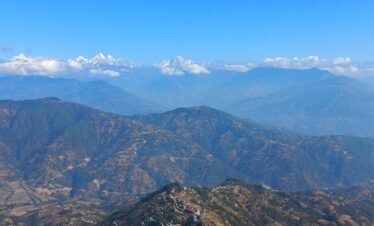
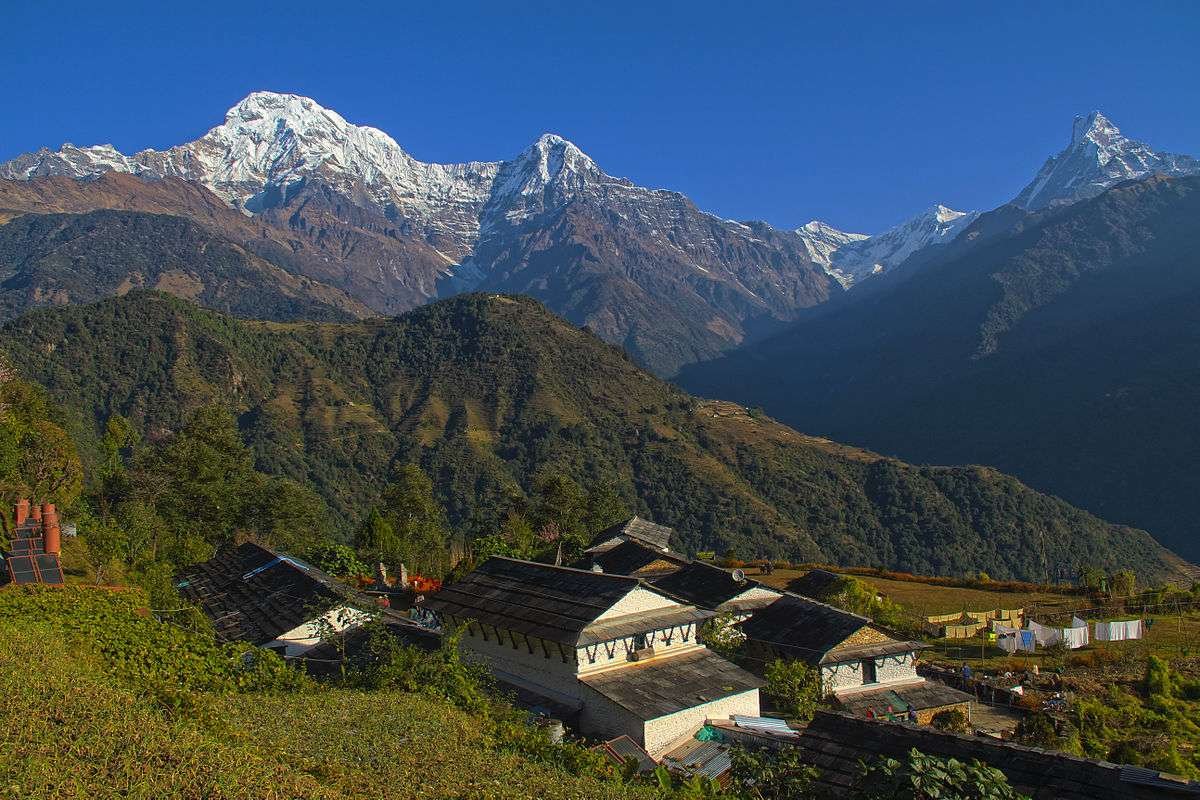
Pokhara is the natural decompression between the intensity of Kathmandu and the early mornings of Chitwan. The city sits at 884 metres beside Phewa Lake, with Machhapuchhre (6,993m) and the Annapurna range rising directly to the north. The Sarangkot sunrise panorama — taken from a ridge at 1,592 metres above the city at 5:30 AM — shows Dhaulagiri, Annapurna I, Annapurna II, Manaslu and Machhapuchhre in a single sweep. This is the view that appears on Nepal tourism materials globally, and it is earned by getting up early and driving up the hill in the dark. Worth it every time. Pokhara also has the International Mountain Museum, which tells the full history of all 14 eight-thousanders and the expeditions that first climbed them. For those who want more activity, we can arrange optional paragliding from Sarangkot landing zone.
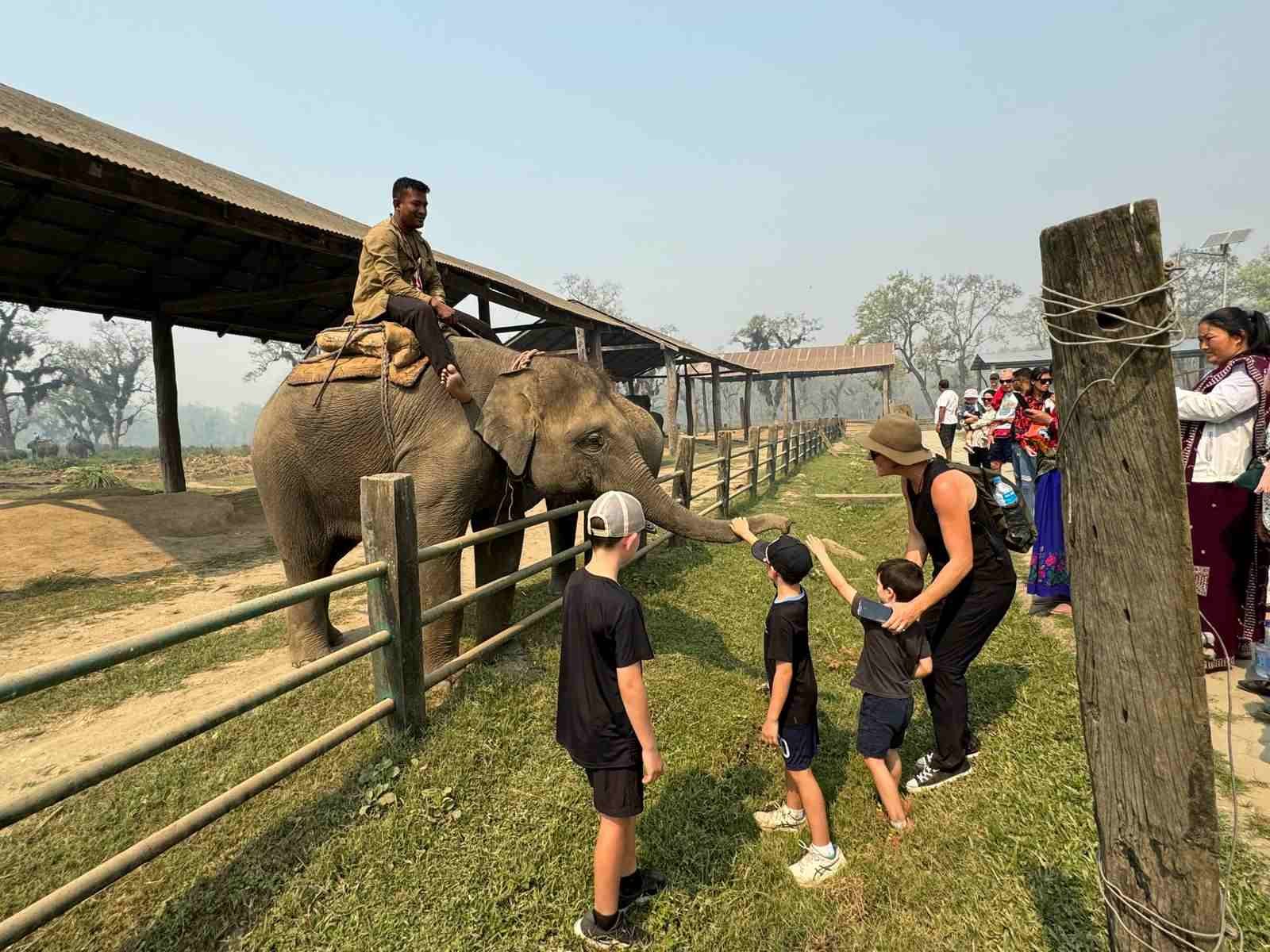
Chitwan National Park is UNESCO-listed (1984) and covers 952 square kilometres of subtropical lowland forest. It holds approximately 752 one-horned rhinoceros and 128 Bengal tigers, along with 500-plus bird species, wild Asian elephant, sloth bear, gharial and mugger crocodile, and Gangetic river dolphin in the Rapti River. The two-day safari program on this tour includes a morning jeep safari, an afternoon jeep safari, a dugout canoe ride on the Rapti River, a guided jungle walk with a trained naturalist, an elephant bathing observation session at the Khorsor Elephant Breeding Center, and a Tharu cultural dance performance in the evening at the lodge. For families visiting with younger children, Chitwan is consistently the highlight of the 12 days.
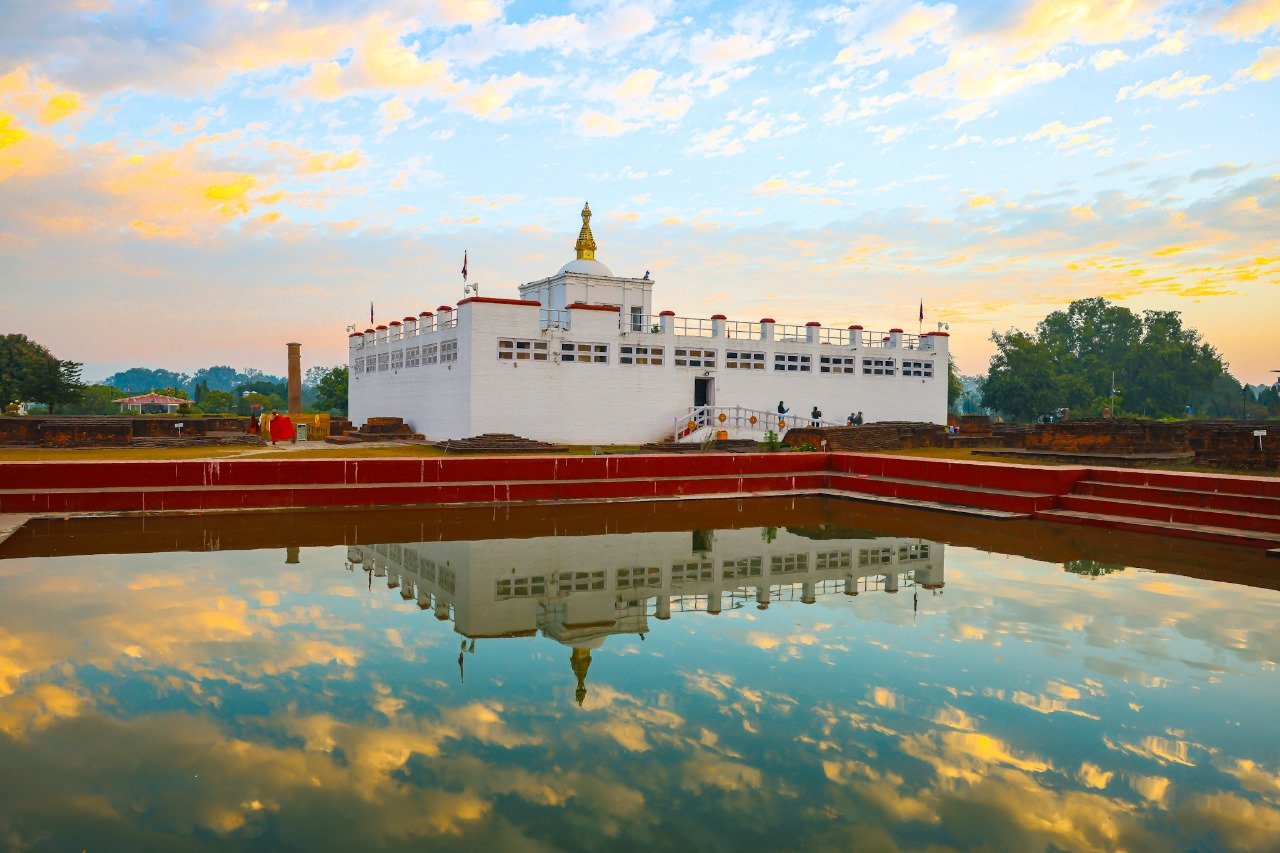
An optional Lumbini extension can be added to the itinerary between Chitwan and the return to Kathmandu. Lumbini is the birthplace of Siddhartha Gautama (the historical Buddha), a UNESCO World Heritage Site since 1997, and home to the Maya Devi Temple built on the exact birth spot, the Ashokan Pillar from 249 BC, the Sacred Garden, and an international zone of monasteries built by Buddhist nations from Myanmar to Germany. A one or two night extension adds approximately USD 150 to 200 per person. Contact us through our trip customization page to add Lumbini or any other modification to this itinerary.
The tour price starts at USD 1,300 per person for two or more travelers and includes all accommodation with daily breakfast, your licensed guide for all 12 days, your private driver and vehicle for all transfers and city touring, all entrance fees to UNESCO heritage sites and Chitwan National Park, the full Chitwan safari activity package, Sarangkot transfer for sunrise, and government taxes. International flights, Nepal visa fees, travel insurance, personal meals outside the included breakfasts, tips for guide and driver, and optional activities are not included in the package price. We arrange everything else — you arrive in Kathmandu and your guide takes care of the rest.
Further Reading from Our Kathmandu Guides
Highlight of Tour
- Seven UNESCO World Heritage Sites in a single valley: Pashupatinath, Boudhanath, Swayambhunath, Patan, Bhaktapur, Changu Narayan and Kathmandu Durbar Square
- Sarangkot sunrise panorama above Pokhara: Dhaulagiri (8,167m), Annapurna I (8,091m), Manaslu (8,163m) and Machhapuchhre (6,993m) in a single sweep
- Pashupatinath morning aarti ritual on the Bagmati River ghats — the most important Hindu temple complex in South Asia, dating to 879 AD
- Two-day Chitwan safari: jeep safari, dugout canoe on Rapti River, guided jungle walk, elephant bathing and Tharu cultural evening in the park
- One-horned rhinoceros and Bengal tiger habitat at Chitwan: 752 rhino and 128 tigers in a 952 sq km UNESCO National Park
- Bhaktapur Durbar Square: Nepal best-preserved medieval royal city with the 55-Window Palace and active pottery square
- Optional Lumbini extension: birthplace of the Buddha, the 249 BC Ashokan Pillar and an international monastery zone
- Optional paragliding from Sarangkot over Phewa Lake with Annapurna range backdrop (USD 80 to 120 per person)
- Private licensed English-speaking guide and private vehicle for the full 12 days — no group bus, flexible daily pace
- Flexible itinerary: extendable to include Lumbini, Bandipur or a Ghorepani Poon Hill trek add-on
Itinerary of Nepal Highlights Tour
Your licensed guide from Next Trip Nepal will meet you at the arrivals exit of Tribhuvan International Airport (KTM) holding a name sign. The drive to your hotel in the Thamel district of Kathmandu takes 20 to 40 minutes, depending on traffic. Thamel is Kathmandu’s main tourist neighborhood, conveniently central to most heritage sites and filled with restaurants, bookshops, gear stores, and currency exchange counters. Check in, leave your main luggage and take the afternoon at your own pace.
In the late afternoon, your guide will walk you through the Thamel bazaar for orientation—a 45-minute circuit that covers the main commercial lanes, introduces you to the local exchange rate, and identifies the restaurants we recommend nearby. If you have the energy, the Garden of Dreams (Swapna Bagaicha) is a 10-minute walk from the heart of Thamel a neo-classical walled garden built in 1920 by Field Marshal Kaiser Shumsher Rana, restored in 2006, a calm contrast to the busy streets outside. Entry NPR 400.
In the evening, meet your guide for a full program briefing at your hotel. He will review all 12 days in detail, answer your questions, confirm your activity preferences, and make any adjustments to the daily schedule that suit your group. A welcome dinner at a local Nepali restaurant follows your first dal bhat (lentil soup with rice, vegetable curry, and pickle), which is both the national dish and the most nutritious meal for the days ahead. Overnight in Kathmandu (3-star hotel, breakfast included from Day 2).
Start before 8:00 AM. The Pashupatinath Temple complex on the banks of the Bagmati River is the most important Hindu site in Nepal and the largest Shiva temple complex in South Asia. The main pagoda-style temple dates in its current form to 879 AD, though the site has been active for at least 2,000 years. Non-Hindu visitors cannot enter the inner sanctum but walk freely through the outer courtyard and along both banks of the Bagmati River, where the open-air cremation ghats are visible at close range. The morning aarti (fire ritual) takes place on the western bank between 6:00 AM and 8:00 AM — the most atmospheric time to visit, with incense smoke drifting over the ghats, priests performing rituals and mourning families gathered by the river. Sadhus (wandering Hindu holy men) meditate along the riverbank steps. Photography is permitted in the outer areas with respect; a small donation is customary if you photograph a sadhu directly.
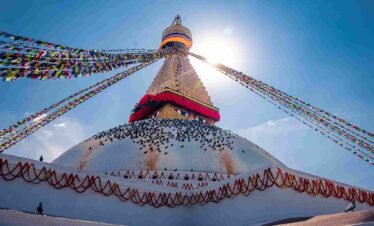
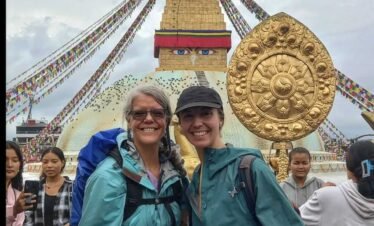
From Pashupatinath, drive 5 minutes to Boudhanath Stupa. The stupa has a base diameter of 120 metres and is one of the largest Buddhist structures in the world. It is the center of Tibetan Buddhist culture in Nepal, surrounded by more than 50 monasteries within a 500-metre radius. The circumambulation path rings the stupa with prayer wheels (spin clockwise), butter lamp shrines, and shops. Resident Tibetan Buddhist monks in maroon robes circle continuously throughout the day. The stupa was damaged in the 2015 earthquake and restored fully by 2016. Climb to the stupa terrace level for a close view of the gilded spire and the all-seeing eyes on the harmika.
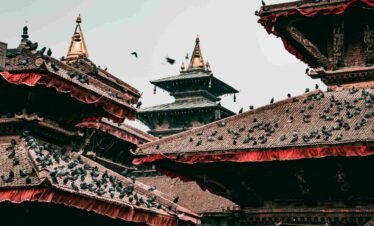
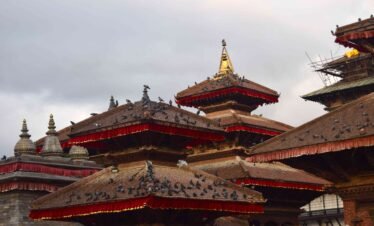
After lunch in Boudhanath, drive 20 minutes to Patan (also called Lalitpur), a separate city within the Kathmandu Valley that has its own distinct Newari identity. Patan Durbar Square holds some of the finest examples of Malla dynasty architecture in the valley. The Krishna Mandir (built 1637) is the focal point — a shikhara-style stone temple with 21 pinnacles and exterior walls carved with scenes from the Mahabharata and Ramayana, the figures cut from a single slab of stone. The Patan Museum inside the square is considered the best museum in Nepal for understanding Newari metalwork, woodcarving and religious iconography. End the afternoon at Hiranya Varna Mahavihar (Golden Temple), a 12th-century Buddhist monastery where monks still chant evening prayers daily. Overnight in Kathmandu.
Begin with Swayambhunath Stupa, the hilltop temple overlooking the Kathmandu Valley from the west. The complex is reached by climbing 365 stone steps from the eastern base of the hill — a 15-minute climb that passes through a monkey forest (the resident rhesus macaque population is protected as sacred and approaches visitors freely, so secure your sunglasses and food). The main stupa at the top has the iconic all-seeing Buddha eyes painted on all four sides of the central spire — the image reproduced on virtually every piece of Nepal tourism material. The surrounding complex includes Hindu shrines, Tibetan Buddhist monasteries, and a Harati Devi temple. Sunrise from the hilltop terrace gives a panoramic view of the Kathmandu Valley with Himalayan peaks on the northern horizon on clear mornings. Arrive by 7:00 AM for the best light and fewest crowds.
Drive 13 kilometres east to Bhaktapur, the best-preserved medieval city in Nepal, set apart from the urban sprawl of Kathmandu proper. Bhaktapur was the capital of the Malla Kingdom and its historic core has changed little since the 15th and 16th centuries. Bhaktapur Durbar Square is the main attraction: the 55-Window Palace was built by King Bhupatindra Malla in the early 18th century and features an elaborately carved peacock window. The Nyatapola Temple (built in 1702) stands five stories tall at 30 metres — the tallest religious structure in Nepal — on a base of five terraced platforms, each with guardian figures twice the size of the ones below. The Pottery Square to the north of the main square is a working neighborhood where potters still use traditional foot-wheel methods to produce the same terracotta water pots that Bhaktapur has produced for centuries. Bhaktapur entry fee for foreign visitors is USD 15, included in your tour package.
If time and energy allow, continue to Changu Narayan Temple, 6 kilometres north of Bhaktapur on a ridge above the valley. This is the oldest Vishnu temple in Nepal, built in 325 AD, a UNESCO World Heritage Site, and one of the least visited of the seven valley monuments. The reward for getting here is a quieter, more contemplative site with exceptional Licchavi-period stone carvings and 5th-century Sanskrit inscriptions. Overnight in Kathmandu.
Depart from your Kathmandu hotel after breakfast, typically around 7:00 AM to 7:30 AM. The drive to Pokhara follows the Prithvi Highway westward, initially through the outskirts of Kathmandu and then descending into the Trishuli River valley. The first two hours of the drive follow the Trishuli River gorge — a popular white-water rafting section of the river that you will pass alongside on the highway. The Prithvi Highway was Nepal’s first road connecting the capital to western Nepal, built in the 1970s, and passes through a series of mid-hill towns including Naubise, Malekhu, Mugling and Abu Khaireni before the final stretch toward Pokhara.
We recommend a stop at Bandipur, a detour of approximately 30 minutes off the main highway. Bandipur is a hilltop Newari town that was once a major stop on the historic India-Tibet trade route. When the Prithvi Highway bypassed the town in the 1970s, Bandipur was left largely unchanged — preserving its original stone-paved main street, traditional Newari merchant houses, and a quiet hilltop atmosphere that is completely different from the valley cities. It is now a popular day trip from Pokhara and a pleasant place for a tea stop and a short walk. The main street takes about 30 minutes to explore, with views across the hills toward Manaslu and Himalchuli on clear days.
Arrive in Pokhara by midday to 1:00 PM. Check in to your lakeside hotel, which should have views toward Phewa Lake and, on clear days, Machhapuchhre directly across the valley. After lunch, take a rowing boat on Phewa Lake (NPR 500 per hour, boats available at the ghats near your hotel) to the Barahi Temple — a small two-story temple on a tiny island 200 metres from the main shore, dedicated to the goddess Barahi. The lake reflects the surrounding hills and the afternoon light on Machhapuchhre. Evening walk along the Lakeside road for dinner at one of the restaurants lining the lake. Overnight in Pokhara.
4:30 AM wake-up call. This is non-negotiable — the Sarangkot sunrise is the defining image of Pokhara, and it only works in the morning before clouds build from the south. The drive from Lakeside to the Sarangkot base takes 45 minutes on a steep, winding road. From the car park, a 10 to 15 minute walk brings you to the main viewing platform at 1,592 metres above sea level. In October and November, sunrise occurs between 6:00 AM and 6:30 AM. In December and January, around 6:45 AM to 7:00 AM. In March to May, around 5:45 AM to 6:15 AM.
The panorama from the Sarangkot ridge on a clear morning shows the full Annapurna Himalayan range from west to east: Dhaulagiri (8,167m), Annapurna I (8,091m), Annapurna South (7,219m), Annapurna II (7,937m), Lamjung Himal (6,983m), Manaslu (8,163m from the far east), and Machhapuchhre (Fishtail, 6,993m) directly in front — the closest eight major peaks to a viewpoint of this accessibility anywhere in Nepal. The alpenglow on Machhapuchhre’s twin summits as the first light hits it from the east is the moment that makes the early departure worthwhile. After sunrise and photos, breakfast at a hilltop café before driving back to Pokhara.
Morning sightseeing: Davis Falls (Patale Chhango), a waterfall that drops 20 metres into a natural underground sinkhole on the Pardi Khola river, 2 kilometres south of Lakeside. The falls are most powerful in the monsoon but present year-round. Directly opposite the falls entrance is Gupteshwor Cave (Sacred Cave), a 3-kilometre-long limestone cave with a sacred Shiva lingam at its deepest point; you can look up through a skylight shaft at the base of Davis Falls from inside. After caves, the International Mountain Museum in Prithvi Narayan Campus covers the full history of all 14 eight-thousanders — original expedition equipment, summit photographs, maps of first ascent routes, and the stories of the climbers who first stood on each peak. Afternoon is free for the lakeside. Overnight in Pokhara.
This is the flexible day built into the 12-day itinerary — the day that makes 12 days better than 10. The morning has no fixed schedule. Options include optional paragliding from Sarangkot, a visit to the World Peace Pagoda, a walk through the Old Bazaar, or simply a morning on the lake.
Paragliding from Sarangkot is one of the most popular optional activities in Pokhara, and for good reason. Tandem flights launch from the Sarangkot ridge (the same viewpoint you visited for sunrise) and use the thermal air currents rising from Phewa Lake to stay airborne for 15 to 30 minutes before landing on a grass strip near the Lakeside. The view during the flight looks back at the Annapurna range with Machhapuchhre directly ahead and the lake below. The cost is approximately USD 80 to 120 per person for a tandem flight with a licensed paragliding instructor. We can arrange bookings with a reliable operator — let your guide know the evening before if you want to add this activity. Departure for paragliding is typically 9:00 AM to 11:00 AM.
The World Peace Pagoda sits on a ridge on the south side of Phewa Lake, 1,100 metres above the lake surface. It is accessible either by a 45-minute walk from the Lakeside along a forest path, or by a 10-minute boat ride across the lake followed by a 30-minute uphill walk through forest. Built by Japanese Nipponzan-Myohoji Buddhist monks and completed in 2000, it is one of 80 peace pagodas worldwide built as a post-World War II project. The views from the pagoda terrace look north over Phewa Lake and Pokhara city toward the Annapurna range. The Old Bazaar in Pokhara is the oldest commercial district of the city, predating the tourist development of the Lakeside area. The Bindhyabasini Temple at the north end of the Old Bazaar is an active goddess temple with a weekly animal sacrifice tradition on Tuesdays and Saturdays. Evening is free for a lakeside dinner. Overnight in Pokhara before the early morning departure to Chitwan.
Depart from Pokhara after breakfast, typically around 7:30 AM. The drive to Chitwan takes 4 to 5 hours on the Prithvi Highway and then the East-West Highway through Tanahu and Chitwan districts. The road descends from the Pokhara valley at 884 metres down to the flat Terai lowlands at around 100 metres above sea level. The landscape changes dramatically over the drive: from the mid-hill terraced fields and river gorges of the middle mountains to the broad flat alluvial plain of the Terai, Nepal’s subtropical southern strip. The temperature also rises noticeably — Chitwan is typically 5 to 10°C warmer than Pokhara year-round.
Arrive in Sauraha village, the main tourist gateway settlement on the northern bank of the Rapti River opposite the park boundary, by midday to 1:00 PM. Check in to your jungle lodge. Sauraha has a range of accommodation from basic guesthouses to comfortable eco-lodges with private verandas, outdoor dining and garden areas. Our package uses a well-established lodge with a garden setting, en-suite rooms, hot water and a restaurant serving both Nepali and continental food.
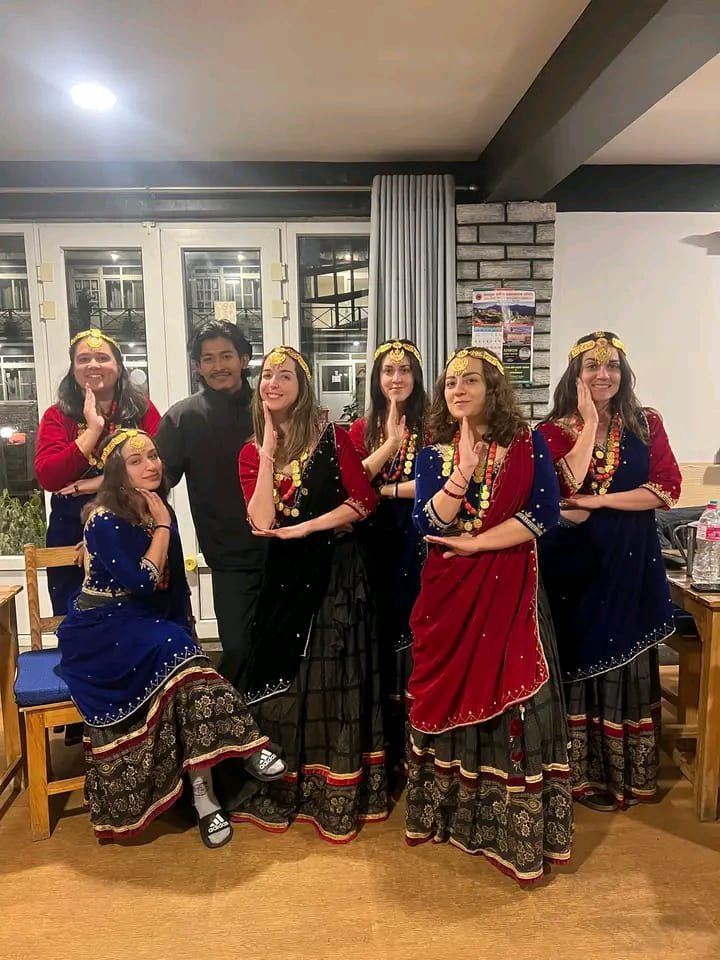
Afternoon program: transfer by jeep to the Khorsor Elephant Breeding and Conservation Center, 1.5 kilometres east of Sauraha village. The center was established in 1986 to breed domesticated Asian elephants used in park operations. Visitors can watch the elephants bathing in the Budhi Rapti River between 3:00 PM and 5:00 PM — a daily routine during which the mahouts and the elephants interact in a relaxed, routine context. The center holds approximately 50 to 60 elephants of various ages including young calves born at the facility. Evening at the lodge. After dinner, the lodge typically arranges a Tharu cultural dance performance — a 45-minute program of traditional dances from the Tharu people, the indigenous community of the Chitwan lowlands who have lived in this region for centuries. Overnight at Chitwan jungle lodge.
5:30 AM wake-up for the morning guided jungle walk. This is the best activity in Chitwan for direct wildlife encounter on foot. A trained park naturalist leads a group of maximum 8 people into the buffer zone and forest edge on the park boundary, walking for 2 to 3 hours through elephant grass corridors, sal forest sections and river margins. One-horned rhinos are commonly encountered on foot — when you come face to face with a 2,200 kg animal at 30 metres, your naturalist will position the group against a tree or direct a slow retreat depending on the animal’s behavior. This is wildlife observation at genuine close range, not a distant safari experience. The morning also yields a high bird count — the forest is most active at dawn and the first 2 hours after sunrise.
Return to the lodge for breakfast at 8:30 AM. Rest and free time until the 10:00 AM canoe activity. Dugout canoe ride on the Rapti River: traditional wooden canoes paddled by local boatmen, moving slowly downstream for 45 to 60 minutes along the southern bank of the Rapti. The river here is the park boundary. Crocodiles are the main sighting — mugger crocodiles bask on the sandbanks year-round, and gharial crocodiles (critically endangered globally, healthy population in the Narayani-Rapti system) are seen regularly in the deeper channels. The Rapti River also supports a population of Gangetic river dolphins, seen occasionally in the bends. Over 100 bird species are visible from the canoe, including storks, eagles, kingfishers and cormorants working the shallows.
Lunch at the lodge. 3:00 PM to 6:00 PM: afternoon jeep safari into Chitwan National Park. The open-top 4×4 vehicles enter the park through the Sauraha gate and cover the northern grassland and forest sections where rhino, deer, wild boar and elephant are most active in the afternoon. Tiger sightings are not guaranteed — Chitwan has 128 tigers in 952 square kilometres, which gives roughly one tiger per 7.5 square kilometres. However, the northern grassland zone is one of the highest-density tiger areas in the park, and afternoon safaris from October through March give a realistic (30 to 40%) chance of a sighting. Your naturalist guide will brief you on reading tracks and signs before entering the park. Return to the lodge at sunset. Overnight at Chitwan.
5:00 AM departure for the dawn jeep safari — the single best time for tiger, sloth bear and leopard activity. These three species are most active in the low-light period between 5:00 AM and 8:00 AM, before heat drives them to shade. The dawn safari runs for 3 hours, typically covering different sections of the park from the previous afternoon to maximize your wildlife coverage. Dawn safaris in October and November can be cold (12 to 18°C at this hour) — bring a light jacket and a scarf for the open vehicle.
Return for breakfast at 8:30 AM. Morning birdwatching tour with the lodge naturalist: Chitwan has over 500 recorded bird species, making it one of the most important birdwatching destinations in South Asia. The grassland and forest edge habitats around Sauraha are particularly productive. Target species include the Bengal florican (critically endangered, globally significant population in Chitwan), lesser adjutant stork, giant hornbill, grey-headed fish eagle, sarus crane, bay-backed shrike, and multiple species of kingfisher, owl and raptor. Your naturalist uses standard optics and a field guide for identification — binoculars are recommended (ask us about borrowing a pair from the lodge).
Afternoon: visit to the Crocodile Breeding Center in Sauraha village. The center was established to breed gharial crocodiles for release into the Narayani-Rapti river system, where their population was critically low due to poaching and habitat loss. The facility holds gharials of various ages from hatchlings to adults waiting for river release. Crocodile breeding centers are one of the most accessible ways to observe these prehistoric reptiles at close range. Remainder of the afternoon at leisure in Sauraha — the village has a number of small shops selling Tharu handicrafts, spice and herb gardens, and simple restaurants for a final Chitwan dinner. Overnight at Chitwan before tomorrow’s departure.
After breakfast, departure from your Chitwan jungle lodge. The route back toward Kathmandu offers a meaningful optional detour for travelers with an interest in Buddhist history: Lumbini, the birthplace of Siddhartha Gautama (the historical Buddha), is 4 hours west of Chitwan on the East-West Highway. It is not possible to visit Lumbini and return to Kathmandu in the same day without completely rushing both — so this day works best as a decision point.
Option A (Lumbini Extension, recommended if you have 2 extra nights available): Drive west 4 hours from Chitwan to Lumbini. Check in to a hotel in the Lumbini development zone, a purpose-built area of gardens and monasteries around the Maya Devi Temple. Afternoon: initial visit to the Sacred Garden — the walled inner sanctuary containing the Maya Devi Temple, the Ashokan Pillar and the Puskarini Pond. Entry to the Sacred Garden requires removing footwear. The birth spot of the Buddha is marked by a stone inside the Maya Devi Temple, visible through protective glass. The area around the temple has been excavated and earlier temple foundations are visible, dating the site’s religious use to at least the 3rd century BC. The Eternal Flame burns in a pavilion at the garden entrance and has been continuously lit since 1986.
Option B (Direct Return): Drive from Chitwan via the East-West Highway to Mugling junction, then north on the Prithvi Highway toward Kathmandu. The drive takes 5 to 6 hours total. Arrival in Kathmandu by late afternoon, check in to your hotel. Evening free for Thamel shopping, spa or dinner. For guests who prefer the direct return, this evening in Kathmandu is a good opportunity for the shopping that Day 12 morning may not allow if your departure flight is early. Overnight in Kathmandu or Lumbini depending on chosen option.
Full day in Lumbini. Morning: continue through the international monastery zone — the ring of international Buddhist temples and monasteries that surrounds the Sacred Garden. Each Buddhist nation has built its own monastery in the traditional architectural style of its home country. The Myanmar Monastery, Thai Monastery, Korean Monastery, Chinese Monastery, Japanese Monastery, German Monastery, Vietnamese Monastery and Sri Lankan Monastery are among the most architecturally distinct. Walking through this zone from temple to temple takes 2 to 3 hours and is a study in how a single religious tradition manifests differently across cultures and centuries. Most monasteries are open to respectful visitors during daylight hours.
The Ashokan Pillar, erected by the Mauryan Emperor Ashoka during his pilgrimage to Lumbini in 249 BC, is one of the oldest inscribed monuments in South Asia. The Brahmi script inscription on the pillar translates to confirm that Ashoka came here to worship because this is the birthplace of the Buddha Shakyamuni, and that he granted a tax reduction to the village of Lumbini in honor of the event. The pillar is the primary historical evidence confirming Lumbini’s identity as the birth site, and it predates any other surviving record by several centuries.
Afternoon departure from Lumbini. The most efficient return to Kathmandu is a domestic flight from Bhairahawa Airport (also called Gautam Buddha International Airport), 20 minutes from Lumbini, to Tribhuvan International Airport in Kathmandu. The flight takes 30 minutes. Multiple airlines operate this route including Buddha Air, Yeti Airlines and Shree Airlines — cost approximately USD 90 to 120 per person depending on the date. We book these flights as part of the Lumbini extension package. Alternatively, the road return from Lumbini to Kathmandu takes approximately 6 to 7 hours on the East-West Highway and Prithvi Highway. Arrive Kathmandu by evening. Overnight in Kathmandu.
Final morning free, depending on your departure flight time. If your international flight departs in the evening (as most Kathmandu flights do — the majority leave between 3:00 AM and 9:00 AM or in the late afternoon), you will have most of the morning and early afternoon in Kathmandu.
Thamel shopping: this is the primary activity for a final Kathmandu morning. The main shopping categories are pashmina scarves (genuine 100% cashmere runs USD 40 to 120 — be cautious of anything under USD 20 which is almost certainly a synthetic blend), thanka paintings (traditional Tibetan Buddhist scroll paintings on cotton or silk, USD 30 to 500 depending on size and quality of the artist), singing bowls (handmade bowls used in meditation and healing, USD 20 to 200 for a quality piece), dried spices and Himalayan products (Nepali tea from Ilam, timur pepper, Himalayan salt, dried herbs), and handmade paper products. The best shops are typically on the quieter side streets off the main Thamel circuit — your guide knows where to direct you.
If you prefer a final cultural stop over shopping, Kopan Monastery is a Tibetan Buddhist monastery on a hilltop north of Boudhanath, about 20 minutes by taxi from Thamel. Morning prayer sessions are accessible to respectful visitors and the hilltop grounds have views over the Kathmandu Valley. An alternative final morning option is a traditional Ayurvedic or Thai massage — several reputable spas operate in Thamel and Lazimpat, and a 90-minute session runs USD 25 to 45.
Airport transfer: your guide and driver will transfer you to Tribhuvan International Airport in time for your departure check-in, typically 3 hours before international departure. The drive from Thamel takes 20 to 45 minutes depending on traffic — allow extra time in the morning rush hours (8:00 AM to 10:00 AM) and the afternoon (3:00 PM to 6:00 PM). Your 12 Days Nepal Highlights Tour concludes on arrival at the airport departure terminal. Thank you for traveling with Next Trip Nepal.
Includes/Excludes
Cost Includes
- Airport pickup and drop-off in Kathmandu (Tribhuvan International Airport)
- 3-star hotel accommodation in Kathmandu (4 nights) and Pokhara (3 nights), and jungle lodge accommodation in Chitwan (2 nights)
- Daily breakfast at all hotels and the Chitwan jungle lodge
- All UNESCO heritage site entrance fees: Kathmandu Valley monuments, Bhaktapur Durbar Square (USD 15 foreigners), Changu Narayan, Patan Durbar Square
- Chitwan National Park entry fee and full safari package: morning and afternoon jeep safari, dugout canoe ride on Rapti River, guided jungle walk, elephant bathing visit, Tharu cultural dance evening
- Licensed English-speaking guide for the full 12 days, accompanying you from Kathmandu arrival through all destinations
- Private vehicle and experienced driver for all transfers: airport, city sightseeing, Kathmandu to Pokhara, Pokhara to Chitwan, Chitwan to Kathmandu
- Sarangkot viewpoint transfer for sunrise (Day 5)
- International Mountain Museum entry fee in Pokhara
- Bottled water in the vehicle during all road transfers
- All applicable government taxes and VAT
- 24/7 WhatsApp support from our Kathmandu office throughout the tour
Cost Excludes
- International airfare to and from Kathmandu
- Nepal visa fee (USD 30 for 15-day, USD 50 for 30-day, payable on arrival in cash USD or by card at Tribhuvan International Airport)
- Travel insurance (strongly recommended, especially for any optional trek extensions)
- Personal meals outside the included daily breakfasts (budget USD 15 to 30 per day for lunch and dinner)
- Tips for guide and driver (guideline: USD 10 to 20 per day for guide, USD 8 to 12 per day for driver)
- Optional activities not listed as included: paragliding (USD 80 to 120), Lumbini extension (USD 150 to 200 extra), white-water rafting (USD 30 to 60)
- Domestic flights if chosen over road transfers (Kathmandu to Pokhara approx. USD 120, Bhairahawa to Kathmandu approx. USD 120 per person)
- Alcoholic beverages and personal drinks outside meals
- Shopping, souvenirs, and personal spending
- Any personal medical expenses or costs arising from travel disruption, weather delays or flight cancellations
365 Days Fixed Departure
Planning a private trip? Fill out the form and our travel experts will be in touch shortly.
-
Guaranteed Group Discount Available Available PackagesWednesdayJune 24, 2026SundayJuly 5, 2026$1,300Available
-
Guaranteed Group Discount Available Available PackagesThursdayJune 25, 2026MondayJuly 6, 2026$1,300Available
-
Guaranteed Group Discount Available Available PackagesFridayJune 26, 2026TuesdayJuly 7, 2026$1,300Available
Tour Details and Comparison
12 Days Nepal Highlights Tour
Complete Nepal in one well-paced journey
12-Day vs. 10-Day Nepal Tour: Side-by-Side Comparison
| What You Get | 10-Day Nepal Family Tour | 12-Day Nepal Highlights Tour |
|---|---|---|
| Kathmandu full days | 2 | 3 |
| Changu Narayan Temple | Optional / rushed | Full day included |
| Pokhara nights | 2 | 3 |
| Pokhara free flex day | No | Yes (paragliding optional) |
| Chitwan nights | 2 | 2 |
| Lumbini extension option | No | Yes |
| Bandipur stop (Pokhara drive) | Brief | Included |
| Price from | $1,050 | $1,300 |
Day-by-Day Destination Summary
| Day | Location | Key Activity | Overnight |
|---|---|---|---|
| 1 | Kathmandu | Arrival, Thamel orientation, tour briefing | Kathmandu |
| 2 | Kathmandu | Pashupatinath aarti, Boudhanath, Patan Durbar Square | Kathmandu |
| 3 | Kathmandu | Swayambhunath, Bhaktapur Durbar Square, Changu Narayan | Kathmandu |
| 4 | Kathmandu to Pokhara | Prithvi Highway drive, Bandipur stop, Phewa Lake afternoon | Pokhara |
| 5 | Pokhara | Sarangkot sunrise, Davis Falls, Mountain Museum | Pokhara |
| 6 | Pokhara | Free day — optional paragliding, World Peace Pagoda, Old Bazaar | Pokhara |
| 7 | Pokhara to Chitwan | 4 to 5 hour drive, elephant bathing, Tharu cultural evening | Chitwan |
| 8 | Chitwan | Jungle walk, Rapti canoe ride, afternoon jeep safari | Chitwan |
| 9 | Chitwan | Dawn jeep safari, birdwatching, crocodile center | Chitwan |
| 10 | Chitwan to Lumbini / Kathmandu | Decision point: Lumbini extension or direct return | Lumbini or Kathmandu |
| 11 | Lumbini / Kathmandu | Maya Devi Temple, Ashokan Pillar, monastery zone, fly to Kathmandu | Kathmandu |
| 12 | Kathmandu | Thamel shopping, optional spa or Kopan Monastery, airport departure | Departure |
We customize every tour at no extra charge. Add Lumbini, a short trek from Pokhara, Bardia National Park, or a Bhutan extension. See our 10-Day Nepal Family Tour for a shorter option, or our Ghorepani Trek with Chitwan Safari for a combined trekking and wildlife package. Contact us with your travel dates to start planning.
The USD 1,300 per person package price (for two or more travelers) includes: airport pickup and drop-off in Kathmandu; 3-star hotel accommodation in Kathmandu (4 nights) and Pokhara (3 nights); jungle lodge accommodation in Chitwan (2 nights); daily breakfast at all properties; all entrance fees to UNESCO heritage sites in the Kathmandu Valley including Bhaktapur (USD 15), Changu Narayan, Patan Durbar Square, Boudhanath and Swayambhunath; Chitwan National Park entry fee and the full safari activity package (two jeep safaris, dugout canoe ride, guided jungle walk, elephant bathing visit and Tharu cultural evening); a licensed English-speaking guide for all 12 days; private vehicle and driver for all road transfers and city sightseeing; Sarangkot viewpoint transfer for sunrise; International Mountain Museum entry in Pokhara; bottled water in the vehicle during drives; and all government taxes and VAT.
Not included in the USD 1,300 package: international airfare to and from Kathmandu; Nepal visa fee (USD 30 for 15-day, USD 50 for 30-day visa on arrival at the airport); travel insurance (strongly recommended, especially for any trek add-ons); personal meals beyond the included daily breakfasts (budget USD 15 to 30 per day for lunch and dinner); tips for the guide and driver (standard guideline: USD 10 to 20 per day for the guide, USD 8 to 12 per day for the driver — a meaningful part of local incomes and widely expected); optional activities not listed as included, such as paragliding (USD 80 to 120), a Lumbini extension (USD 150 to 200 extra), white-water rafting (USD 30 to 60), or any optional short trek; domestic flights if you choose to fly instead of drive between cities (Kathmandu to Pokhara approximately USD 120, Bhairahawa to Kathmandu approximately USD 120 per person); alcoholic beverages; personal shopping and souvenirs; and any medical costs or expenses arising from travel disruption.
The best time is October to November (autumn, post-monsoon). Skies are clear, temperatures are comfortable (20 to 28°C in Kathmandu, slightly warmer in Chitwan), and mountain views from Sarangkot are at their best. This is peak season — book accommodation well in advance, especially Chitwan jungle lodges which fill quickly in October. March to April is the second-best season: rhododendrons bloom across the mid-hills, temperatures are rising and views are generally clear, though slightly hazier than autumn. December to February is excellent value: fewer tourists, discounted hotel rates, clear mountain views, but cold nights in Kathmandu (down to 5°C) and chilly mornings at Chitwan dawn safaris. We do not recommend the tour during the monsoon (June to September) for first-time visitors — rain is frequent in Kathmandu and Pokhara, Sarangkot sunrise is often clouded, and conditions at heritage sites are wet. The exception: dedicated birdwatchers sometimes prefer Chitwan in July and August when the tall grasses are cut and bird activity is highest.
Yes — this is one of our most popular family itineraries. Children respond particularly well to Chitwan: seeing a one-horned rhinoceros at close range from a jeep, watching elephants bathe in a river, and spotting gharial crocodiles from a dugout canoe are experiences that stay with children for years. Swayambhunath (the Monkey Temple) is also reliably engaging for children because of the free-ranging macaque monkeys. The heritage sites in Kathmandu require more patience from younger children, but we adjust the pace and sequencing based on the group. There is no physical demand beyond normal walking — no trekking, no altitude, no long hikes. The youngest child we have taken on this tour was 4 years old; the experience was fully positive. For families with children under 10, we recommend ensuring the Chitwan lodge accommodation has an outdoor space where children can move freely in the evenings.
No. This tour has no altitude concerns. The highest point on the entire itinerary is Sarangkot viewpoint above Pokhara at 1,592 metres above sea level — lower than many European mountain roads and well below the threshold where altitude sickness becomes a significant risk (which begins for most people above 2,500 to 3,000 metres). Kathmandu sits at 1,400 metres, Pokhara at 884 metres, and Chitwan at approximately 100 to 415 metres in the lowland Terai. No acclimatisation schedule, altitude medication or special preparation is required. If you want to add a short trek to the itinerary (for example the Ghorepani Poon Hill Trek at 3,210 metres maximum), we can advise on any additional preparation needed for that extension.
All road transfers are by private vehicle with a dedicated driver — not public bus, tourist bus or shared transport. The Kathmandu to Pokhara drive is 200 kilometres on the Prithvi Highway and takes 6 to 7 hours including a stop for breakfast and a brief pause at Bandipur if desired. The Pokhara to Chitwan drive is approximately 150 kilometres on the Prithvi and East-West Highways and takes 4 to 5 hours. There is also a domestic flight option between Kathmandu and Pokhara (25 minutes, approximately USD 90 to 120 per person each way on Buddha Air or Yeti Airlines) for those who prefer not to do the road journey. We can build domestic flights into the itinerary at an additional cost. All city sightseeing in Kathmandu and Pokhara is also by private vehicle with your driver.
Yes. We customize every tour at no extra charge for the modification itself (additional days or services have their standard costs). Shorter options: if you have 10 days, we recommend our 10-Day Nepal Family Tour which maintains the Kathmandu and Chitwan program but reduces the Pokhara stay by one day and removes the Lumbini option. A 7-day version is possible but involves a rushed Chitwan (one safari day only). Longer options: we can add Lumbini (1 to 2 extra days) between Chitwan and Kathmandu, a short Ghorepani Poon Hill Trek in the Annapurna region (2 to 3 days added from Pokhara), a Bardia National Park extension (remote wildlife park in far-western Nepal, 3 to 4 days), or a Bhutan add-on tour. Contact us through our customization page with your travel dates and we will put together a specific proposal.
In Kathmandu, we use comfortable 3-star hotels in the Thamel area — typically properties with en-suite rooms, hot water, air conditioning or room heating, a restaurant and Wi-Fi. Popular properties we use include Hotel Kathmandu, Hotel Encounter Nepal and similar mid-range heritage-area hotels. In Pokhara, lakeside 3-star hotels with views toward Phewa Lake or the Annapurna range. In Chitwan, a well-established jungle lodge in Sauraha with garden settings, outdoor dining, and rooms designed for the jungle environment — comfortable but not luxurious. All properties are clean, well-maintained and regularly used by our tour groups. Exact hotels are confirmed at booking and can be upgraded to 4-star properties at a cost supplement for guests who prefer premium accommodation. Single room supplements apply for solo travelers.
No significant fitness is required. The tour involves normal tourist walking — walking through temple courtyards, strolling around Phewa Lake, walking in the jungle with a naturalist. The most physically demanding moments are the 365-step climb at Swayambhunath (15 minutes, manageable at any pace) and the early morning jungle walk at Chitwan (2 to 3 hours on flat paths). Jeep safaris, canoe rides, museum visits and heritage site walks are all accessible to most mobility levels. Travelers with walking difficulties should mention this when booking — some heritage sites (Swayambhunath steps, Bhaktapur cobbled streets) can be partially adapted. This tour is not a trekking tour. If you have a knee or hip issue that limits walking, the standard 12-day itinerary is manageable with minor adjustments. For those who want a physical challenge in Nepal, we recommend looking at our trekking programs including the Annapurna Base Camp Trek.
The packing list varies across this tour because you move between three climate zones: Kathmandu (temperate, 1,400m), Pokhara (warm subtropical, 884m), and Chitwan (hot subtropical lowland, 100 to 415m). Core items: lightweight, breathable clothing for Chitwan (neutral or khaki colors recommended for safari — avoid bright colors which can startle wildlife); a warm layer (fleece or down jacket) for Kathmandu evenings and the 4:30 AM Sarangkot departure; comfortable walking shoes for sightseeing; sandals or flip-flops for evenings; a wide-brim hat and sunscreen (strong UV at all sites, particularly Sarangkot); mosquito repellent with DEET (important for Chitwan, less so in Kathmandu and Pokhara); a small daypack; a power adapter (Nepal uses the round 3-pin Indian plug, Type C/D/M); and a small amount of USD cash for the visa on arrival and the first currency exchange. A lightweight rain jacket or packable umbrella is worth carrying in spring and any monsoon shoulder month travel.
Nepal offers a visa on arrival at Tribhuvan International Airport for citizens of most countries. The process: on arrival, proceed to the visa counter (before immigration), fill out the form (also available online at the Nepal immigration pre-arrival form portal), pay the fee, receive your visa stamp in your passport, then proceed through immigration. Fee: USD 30 for a 15-day single-entry visa, USD 50 for a 30-day single-entry visa, USD 125 for a 90-day multiple-entry visa. Fees are payable in USD cash at the counter or by card at most counters. Bring two passport-sized photos. Your passport must be valid for at least 6 months from the date of entry. Citizens of India do not require a visa. Citizens of China require a visa arranged through a Nepal embassy before travel. Citizens of SAARC nations (Pakistan, Bangladesh, Sri Lanka, Maldives, Bhutan) have reduced or free visa arrangements depending on nationality — check the Nepal Department of Immigration website for current rates. Visa extension is available in Kathmandu at the Department of Immigration in Maitighar for USD 3 per day.
Yes. Nepal has a long-standing record as a safe destination for international tourists. Violent crime against tourists is rare. The main practical safety concerns are: road conditions (the mountain highways involve winding roads with limited guardrails — we use experienced drivers who know the routes well); petty theft in crowded tourist areas (Thamel, Boudhanath — standard precautions apply: keep bags zipped, do not display valuables); water safety (do not drink tap water, use bottled or purified water — we provide water in the vehicle during all transfers); and food hygiene (stick to recommended restaurants for the first few days until your digestive system adjusts). Political protests occasionally occur in Kathmandu and can temporarily disrupt traffic in the city center — we monitor these and route around them. Nepal has not had significant political unrest since the end of the civil conflict in 2006. We recommend checking current travel advisories from your home country government before departure.
Yes. The most natural trekking addition to the 12-day Nepal Highlights Tour is the Ghorepani Poon Hill Trek from Pokhara. We offer a combined itinerary — see our Ghorepani Poon Hill Trek with Chitwan Safari package — which adds 4 to 5 trekking days from Pokhara up to the Poon Hill viewpoint at 3,210 metres. This is a moderate trek through rhododendron forest and Gurung villages, suitable for travelers with basic hiking fitness and no prior altitude experience. The Poon Hill sunrise panorama shows the same Annapurna-Dhaulagiri sweep as Sarangkot but from 3,210 metres instead of 1,592 metres, and from inside the mountains rather than looking at them from a distance. For a more serious high-altitude trek, we can replace or extend the Pokhara section with the Annapurna Base Camp Trek (11 days, reaching 4,130m) or keep the 12-day tour and attach a separate trek afterward.
The 10-day tour (see our 10-Day Nepal Family Tour) covers the same three destinations but with a tighter schedule: two days in Kathmandu, two nights in Pokhara, two nights in Chitwan, and a direct return to Kathmandu. What you lose compared to the 12-day format: one Kathmandu day (typically you either skip Changu Narayan or rush Bhaktapur), one Pokhara night (the flexible free day is removed, so there is no option for paragliding or a relaxed lake morning), and the Lumbini option is not available. The 12-day format adds one Kathmandu day for Changu Narayan, one Pokhara night with a flexible day, and the routing option through Lumbini on the way back from Chitwan. Price difference: approximately USD 200 to 250 per person more for the 12-day format. For travelers who want the complete experience and have the time, 12 days is the better value. For those with exactly 10 days available, the 10-day tour covers the essentials well.
You can book directly through our contact page or by emailing us with your preferred travel dates, group size, and any specific requirements. We will confirm availability, send a detailed itinerary proposal, and answer any questions before you commit. We do not require a large advance deposit. Our booking process is flexible — we understand that international travel plans change, and we do not penalize travelers for reasonable date changes. A small confirmation deposit is required to hold your hotel bookings during peak season (October and November), but we discuss the amount based on your specific travel dates and accommodation. We do not take payment through the website — all payments are arranged directly with our Kathmandu office via bank transfer, PayPal or Western Union. Read our client experiences on our reviews page to understand how past travelers have found the booking and tour experience.


Write a Review
You must be logged in to post a comment.