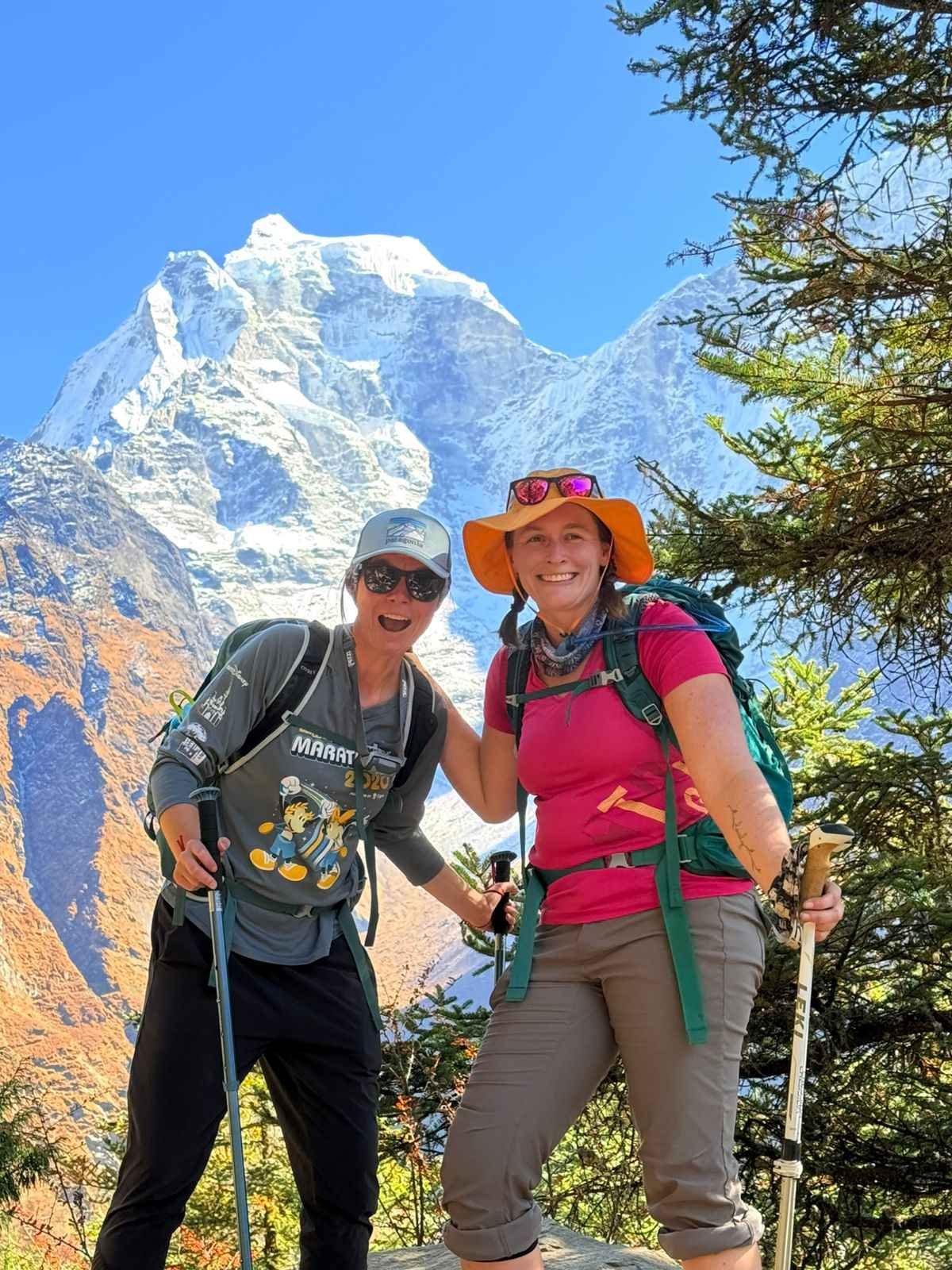
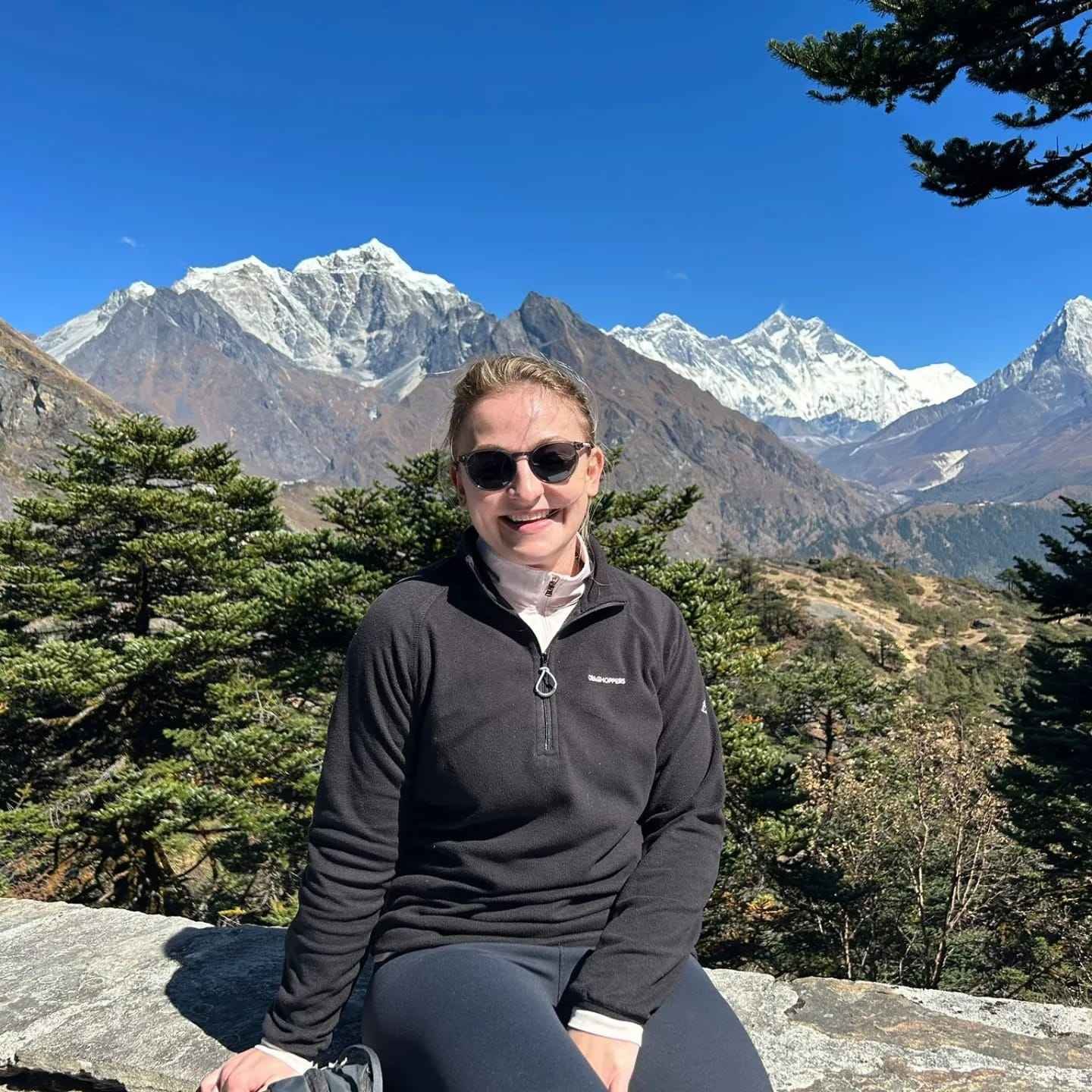
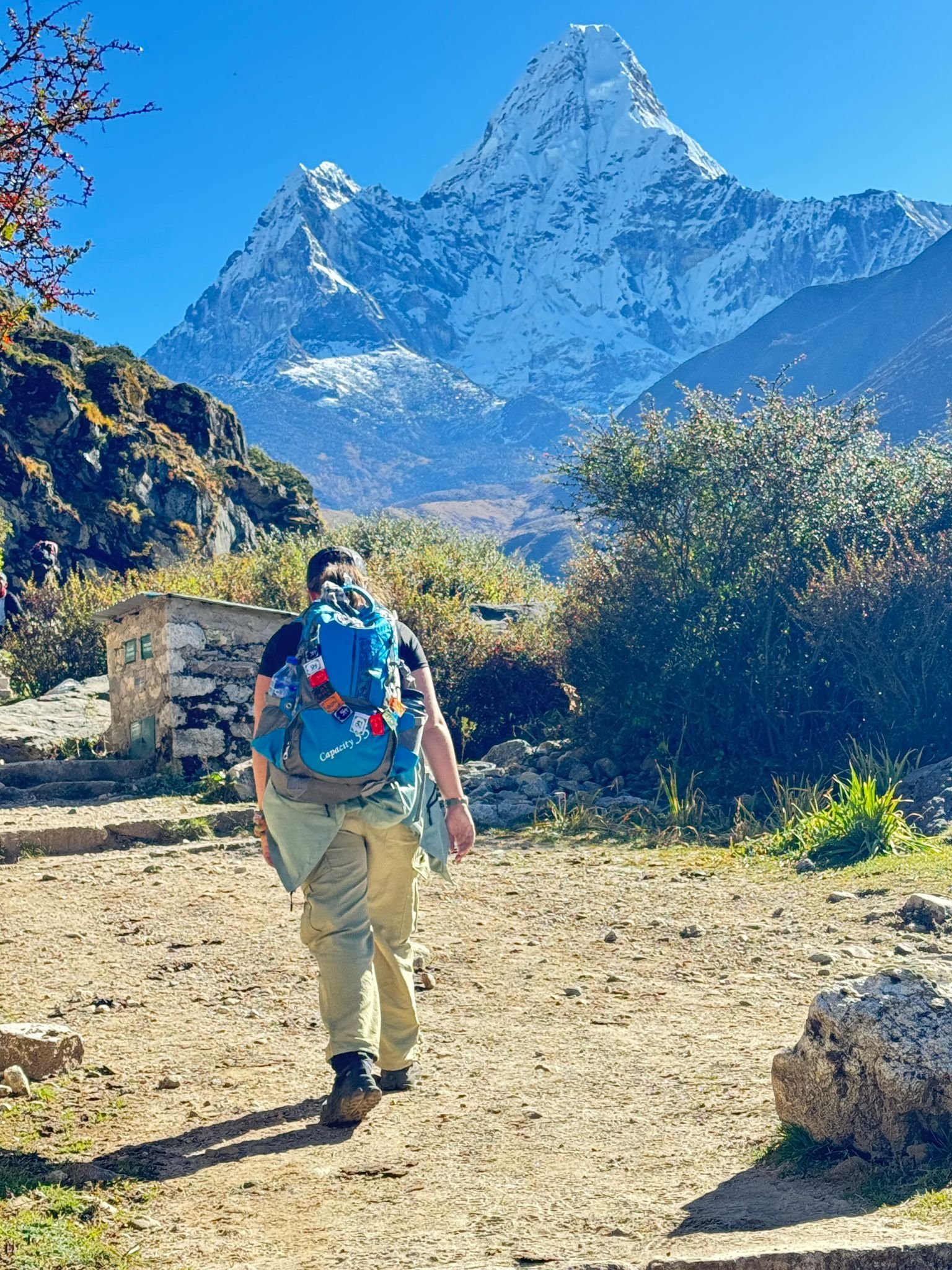


Everest Base Camp Trek Overview
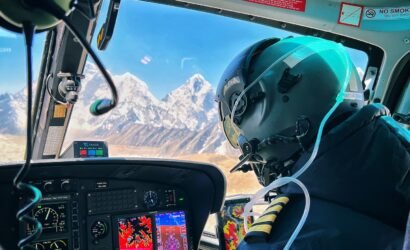
The Everest Base Camp Trek with Helicopter Return is a 10-day adventure designed for trekkers who want to experience the complete journey to EBC and Kala Patthar while saving time and flying back to Kathmandu in style. Instead of spending additional days descending the same trail, you take a thrilling helicopter ride from Gorakshep directly over the Himalayas back to Kathmandu — passing the Gokyo Lakes, Khumbu Glacier, and the full Everest panorama from above. It is the ultimate combination of trekking achievement and aerial spectacle.
The trek begins with a scenic 35-minute flight from Kathmandu to Lukla. From there, the classic Everest trail takes you through Sherpa villages, past roaring glacial rivers, and deep into Sagarmatha National Park — a UNESCO World Heritage Site home to rare wildlife and some of the world’s highest peaks. The route passes through Namche Bazaar, the cultural heart of the Khumbu, includes a strategic acclimatization day hike to the Everest View Hotel, and continues on to Tengboche Monastery, Dingboche, Lobuche, and finally Gorakshep — the last stop before Everest Base Camp.
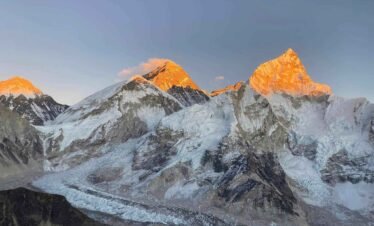
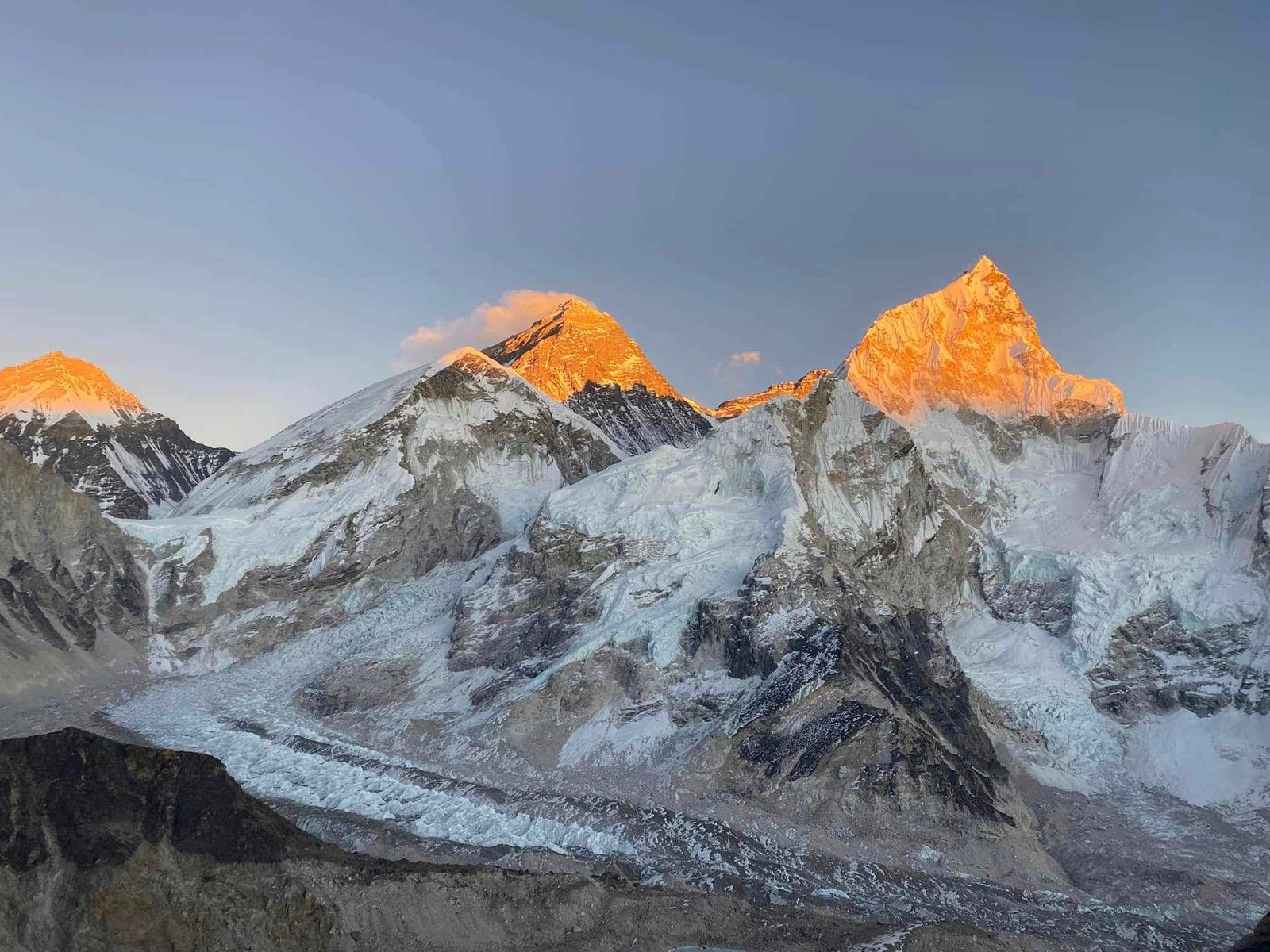
On the final day, you rise before dawn to make the challenging but deeply rewarding climb to Kala Patthar (5,555m), where the summit pyramid of Mount Everest rises directly above you in the golden early light. After soaking in one of the most iconic views on earth, you descend to Gorakshep where a helicopter is waiting to carry you above the entire Himalayan range back to Kathmandu. The Everest Base Camp Trek with Helicopter Return is offered by Next Trip Nepal with fully guided, all-inclusive packages for individuals, couples, and small groups.
14 Days Everest Base Camp Trek Highlights
- Scenic 35-minute mountain flight to Lukla via the world-famous Tenzing-Hillary Airport
- Trek through Sagarmatha National Park, a UNESCO World Heritage Site in the Khumbu Himalayas
- Explore Namche Bazaar, the Sherpa capital and main trading hub of the Khumbu, with wide views of Everest and Ama Dablam
- Visit Tengboche Monastery at 3,860m, the largest gompa in the Khumbu, with Ama Dablam rising directly behind it
- Reach Everest Base Camp (5,364m) and stand at the foot of the world's highest mountain
- Climb Kala Patthar (5,555m) for a close-up sunrise view of Mount Everest, the best viewpoint accessible without a climbing permit
- Witness the Khumbu Glacier and Khumbu Icefall from the edge of the glacier moraine
- Views of Everest (8,849m), Lhotse, Nuptse, Ama Dablam, Pumori and Cho Oyu from the trail and during the helicopter return
- Return by helicopter from Gorakshep to Kathmandu with aerial views of the entire Himalayan range
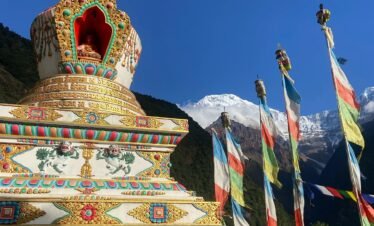
- Experience Sherpa culture — mani walls, prayer flags, chortens and ancient monasteries along the Khumbu trail
- Two built-in acclimatisation days at Namche Bazaar and Dingboche for safer high-altitude adaptation
- Save 4 days compared to the standard 14-day EBC trek without missing any of the key highlights
Everest Base Camp Trek with Helicopter Return tinerary
Upon landing at Tribhuvan International Airport, a Next Trip Nepal representative will receive you and transfer you to your hotel in Thamel by private vehicle. After check-in and rest, our team will hold a pre-trek briefing where your guide goes through the full itinerary, permits, gear checklist, and safety guidelines. This is a great time to ask questions and prepare for the journey ahead. Overnight in Kathmandu at a 3-star hotel.
Early in the morning you transfer to the domestic terminal for your 35-minute scenic mountain flight to Lukla — one of the most thrilling airstrip landings in the world. After meeting the full crew at Tenzing-Hillary Airport, you begin trekking through pine and rhododendron forest, descending to the Dudh Koshi River and following its east bank to the Sherpa village of Phakding. Walk gently today as your body begins adjusting to the altitude. Overnight in a teahouse in Phakding.
Today’s walk is the most demanding of the early days, climbing steadily through the Sherpa villages of Bengkar, Monjo, and Jorsale and past the Sagarmatha National Park entrance checkpoint. After crossing the famous Hillary Suspension Bridge high above the Dudh Koshi River gorge, you tackle the steep 600-meter climb to Namche Bazaar. The reward is spectacular: your first clear view of Everest above the ridge, and arrival into the vibrant Sherpa capital of the Khumbu. Overnight in a teahouse in Namche Bazaar.
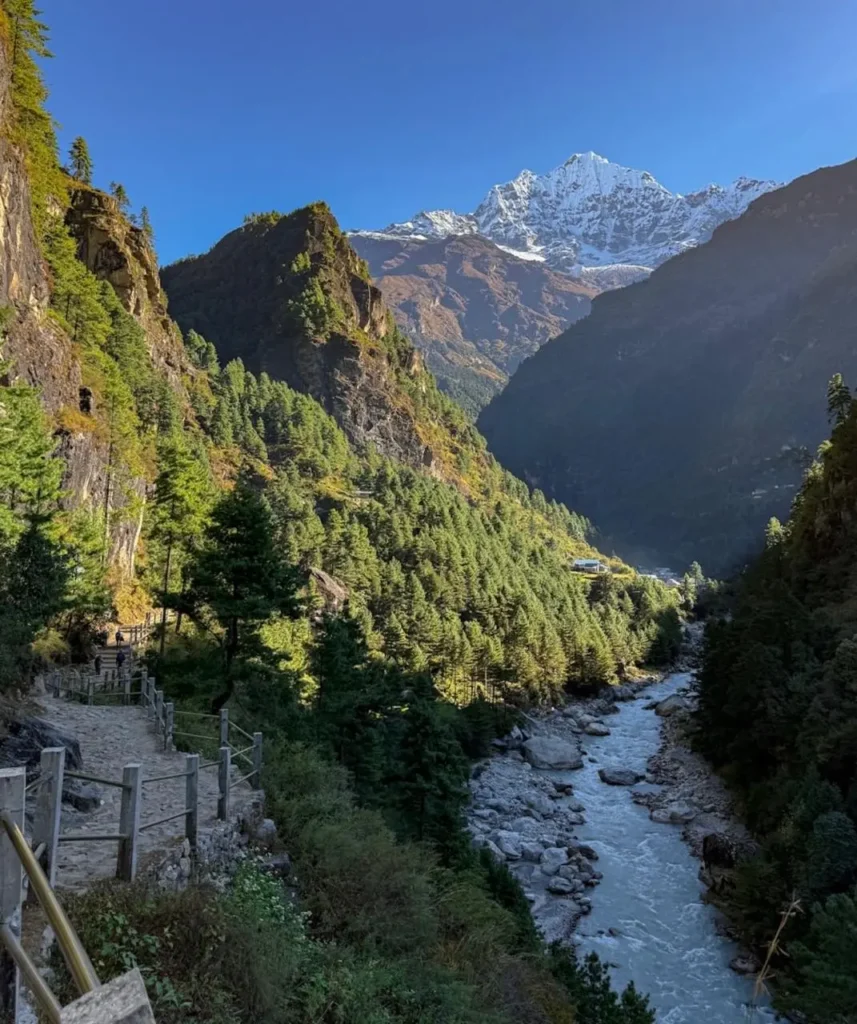
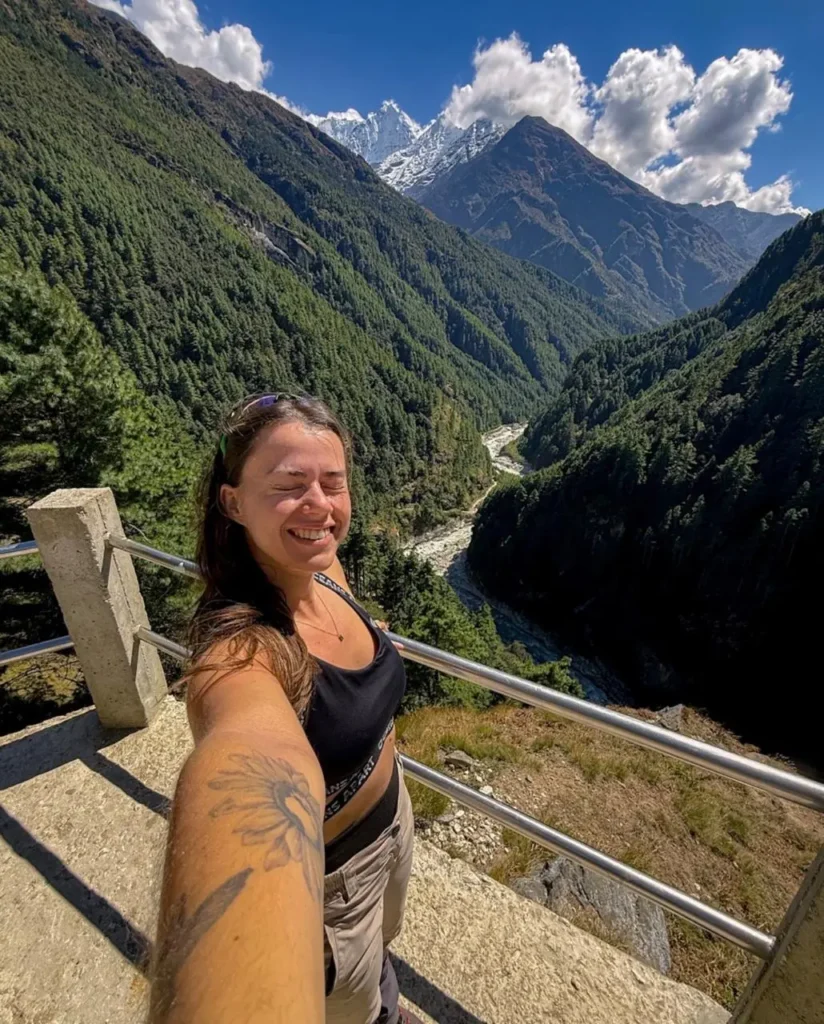
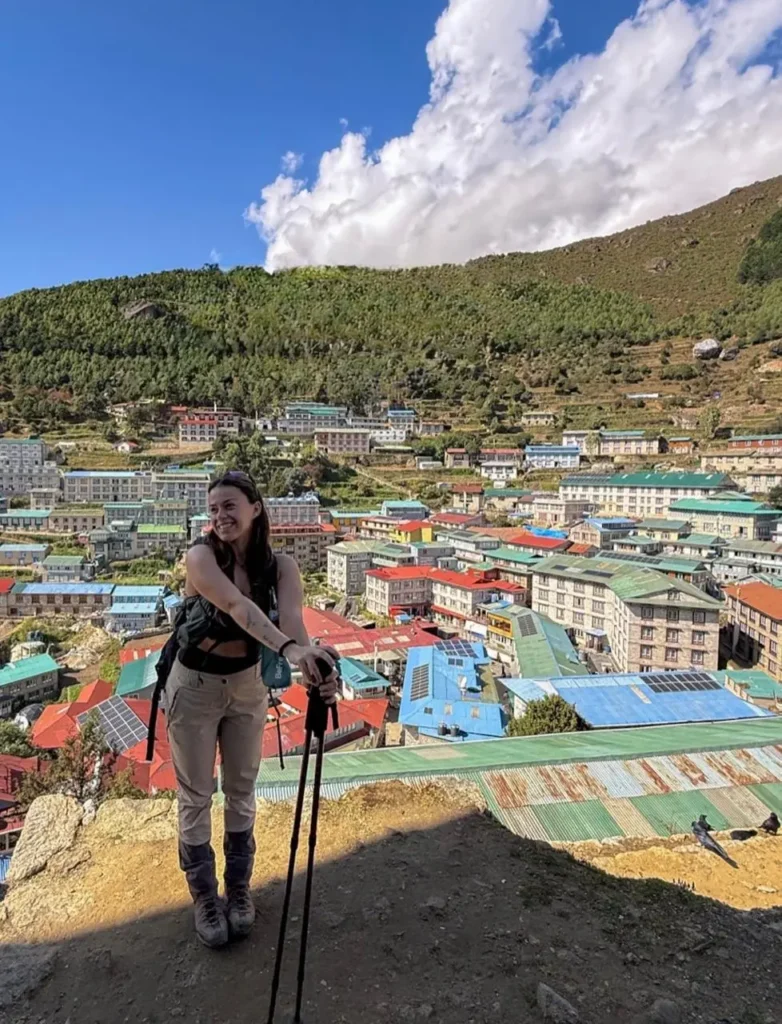
You spend a rest and acclimatization day in Namche Bazaar, hiking high and sleeping low. The highlight is a 3–4 hour hike up to the world-famous Everest View Hotel at 3,880m — recognized by the Guinness World Records as the highest-placed hotel on earth — for an extraordinary panoramic view of Everest, Lhotse, Nuptse, Ama Dablam, and Thamserku. You can also visit the Sherpa Culture Museum and the local market. Return to Namche for overnight. The acclimatization day significantly reduces altitude sickness risk.
The trail descends from Namche to Punki Thanka and then climbs gradually through rhododendron and juniper forest to Tengboche, passing wonderful views of Everest, Lhotse, Nuptse, and Ama Dablam throughout the walk. Tengboche Monastery — the largest and most sacred monastery in the Khumbu — sits on a dramatic ridge with Ama Dablam rising like a natural spire directly above it. If your timing aligns with the Mani Rimdu festival, you may witness traditional mask dances performed by resident monks. Overnight in a teahouse in Tengboche.
Descend through a mixed birch and rhododendron forest to Deboche, where a small Buddhist nunnery sits beside the trail. Continue along the Imja Khola valley, passing chortens and prayer walls through Pangboche — a village with one of the oldest monasteries in the Khumbu — before climbing through increasingly alpine terrain to the windy, high-altitude village of Dingboche. The views of Ama Dablam, Makalu, Island Peak, and Lobuche are outstanding from here. Overnight in a teahouse in Dingboche.
Your second acclimatization day is at Dingboche. A recommended hike climbs to Nagarjun Hill (approx. 5,100m) above the village for panoramic views of Makalu (8,481m), Lobuche, Thamserku, and Ama Dablam. Alternatively, you can hike toward Chhukung village and Chhukung Ri for views of Island Peak. Both options follow the classic acclimatization principle of climbing high and sleeping low at 4,360m. Resting today is critical before the demanding high-altitude days ahead. Overnight in a teahouse in Dingboche.
The trail climbs steeply from Dingboche to the ridge above Dughla (Thukla), where a collection of stone cairns and prayer flags serves as memorials to climbers lost on Everest, including Scott Fischer and Babu Chiri Sherpa. The landscape becomes increasingly stark and dramatic as you walk along the edge of the Khumbu Glacier moraine toward Lobuche. The high peaks of Khumbutse, Lingtren, Pumori, and Nuptse come into full view. Overnight in a teahouse in Lobuche at the foot of the glacier.
The most significant day of the trek. You walk alongside the Khumbu Glacier on a rocky moraine trail to Gorakshep, then continue to Everest Base Camp at 5,364m — the launching point for all Everest expeditions. Standing at the base of the Khumbu Icefall, surrounded by the world’s highest mountains, is a profound and unforgettable moment. During the climbing season (April–May) you may see expedition tents and climbers preparing for summit attempts. After celebrating your achievement, you return to Gorakshep for the night. Overnight in a teahouse in Gorakshep.
Rise before dawn for the final climb to Kala Patthar at 5,555m — the highest point of the trek and the best viewpoint for a close-up panorama of Mount Everest, Lhotse, Nuptse, Pumori, and the Khumbu Glacier spread below you. Watch the golden sunrise light up the summit of Everest above the horizon — a view that justifies every step of the journey. After descending to Gorakshep, a helicopter is waiting to fly you directly back to Kathmandu. The flight passes over Gokyo Lakes, the Khumbu Glacier, and the entire Himalayan range — an extraordinary aerial finale to the trek. Transfer to your hotel in Kathmandu on arrival.
Cost Details
Cost Included
- Airport pickup and drop-off in Kathmandu by private vehicle.
- Two nights' accommodation in Kathmandu at a comfortable 3-star hotel on a twin-sharing basis, including breakfast.
- Domestic flights from Kathmandu to Lukla and a shared helicopter flight from Gorakshep back to Kathmandu, including airport transfers.
- Accommodation in local teahouses throughout the trek.
- Three meals a day (breakfast, lunch, and dinner) during the trek, with tea or coffee at breakfast and seasonal fruits after dinner.
- Experienced and government-licensed English-speaking trekking guide.
- One porter for every two trekkers, including salary, meals, accommodation, transportation, equipment, and insurance.
- All required permits and entrance fees:
- Sagarmatha National Park Entry Permit
- Khumbu Pasang Lhamu Rural Municipality Permit
- First aid kit and basic emergency medical supplies carried by the guide.
- Pulse oximeter for monitoring oxygen saturation and heart rate during the trek.
- Sleeping bag, down jacket, and trekking poles (if required).
- Next Trip Nepal duffel bag, T-shirt, and cap.
- Everest Base Camp trekking map.
- Farewell dinner and celebration in Kathmandu after the trek.
- Government taxes and all official service charges.
- Emergency helicopter evacuation arrangements (rescue costs to be covered by the travel insurance company).
Cost Excludes
- Nepal entry visa fee: $30 USD for 15 days, $50 USD for 30 days, and $125 USD for 90 days. (Visa can be obtained on arrival at Tribhuvan International Airport, Kathmandu).
- Travel and medical insurance.
- International airfare to and from Nepal.
- Personal expenses (such as laundry, telephone, souvenirs, and extra snacks).
- Alcoholic and non-alcoholic drinks (including tea, coffee, hot chocolate, and soft drinks) on the trek.
- Desserts and sweet items (chocolate, cake, pie, pudding).
- Hot shower and battery charging fees at tea houses (if applicable).
- Tips for your guide, porter, and driver (Tipping is expected).
- Excess baggage (more than 15kg for Lukla flight)
Availability & Departure Dates
Planning a private trip? Fill out the form and our travel experts will be in touch shortly.
-
Available Group Discount Available Available PackagesWednesdayJune 24, 2026FridayJuly 3, 2026$2,100$1,83513% Off8Available
-
Available Group Discount Available Available PackagesThursdayJune 25, 2026SaturdayJuly 4, 2026$2,100$1,83513% Off8Available
-
Available Group Discount Available Available PackagesFridayJune 26, 2026SundayJuly 5, 2026$2,100$1,83513% Off8Available
Essential Information
Essential Information: EBC Trek with Helicopter Return
This page covers everything you need before booking: the day-by-day altitude profile, helicopter details, seasonal conditions, packing list, physical preparation, teahouse life, daily spending budget and permit requirements.
Day-by-Day Altitude Profile
| Day | Route | Altitude | Walking Time |
| 1 | Arrive Kathmandu | 1,400m | — |
| 2 | Lukla to Phakding | 2,840m to 2,610m | 3–4 hrs |
| 3 | Phakding to Namche Bazaar | 2,610m to 3,440m | 5–6 hrs |
| 4 | Namche Bazaar rest day — Everest View Hotel hike | 3,440m to 3,880m | 3 hr hike |
| 5 | Namche to Tengboche | 3,440m to 3,860m | 5–6 hrs |
| 6 | Tengboche to Dingboche | 3,860m to 4,360m | 4–5 hrs |
| 7 | Dingboche rest day — Nagarjun Hill hike | 4,360m to 4,900m | 4 hr hike |
| 8 | Dingboche to Lobuche | 4,360m to 4,910m | 4–5 hrs |
| 9 | Lobuche to Gorakshep to EBC to Gorakshep | 4,910m to 5,364m to 5,140m | 7–8 hrs |
| 10 | Kala Patthar then helicopter to Kathmandu | 5,140m to 5,555m to 1,400m | 2 hrs + flight |
Helicopter Return: Everything You Need to Know
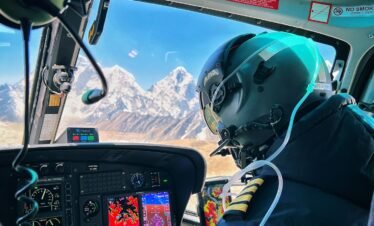
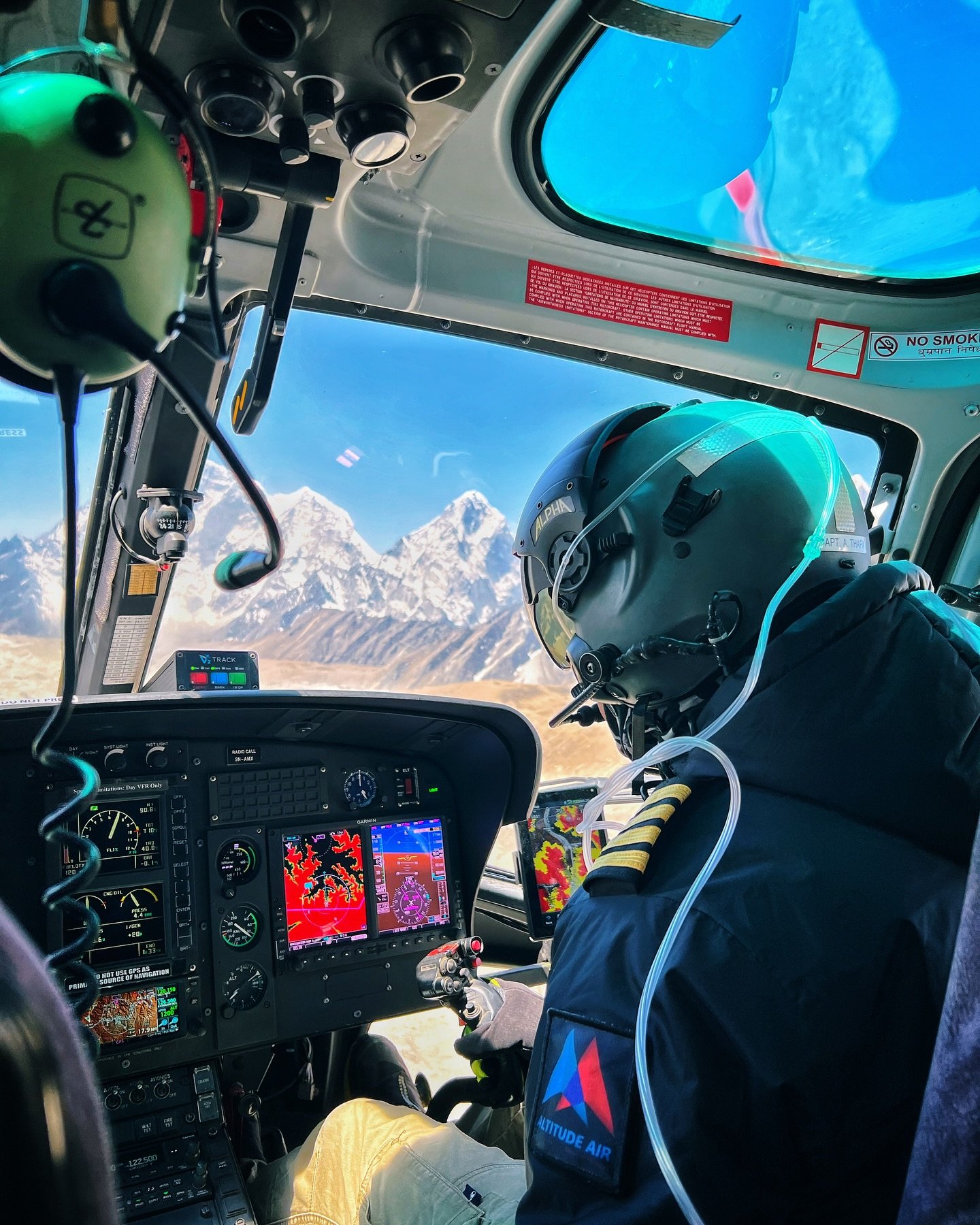
The helicopter departs from Gorakshep (5,140m) in the early morning after your Kala Patthar sunrise hike, typically between 7:00 AM and 9:00 AM when visibility is best. The 90-minute flight to Kathmandu passes over the Khumbu Glacier, Namche Bazaar and the Solukhumbu valleys. You will see Everest (8,849m), Lhotse, Nuptse, Ama Dablam and Pumori from the air in a way no road or trail can offer.
Aircraft used are B3 Eurocopter (Airbus H125) or AS350 machines certified by the Civil Aviation Authority of Nepal (CAAN) for Himalayan operations. All operators hold valid CAAN licences and have extensive Khumbu flying experience.
| Feature | Shared Helicopter | Private Helicopter |
| Passengers | 4 to 5 passengers | 4 to 5 seats exclusive |
| Cost | Included in package | Extra charge — contact us |
| Departure | Once group is assembled | On your schedule |
| Best for | Solo travelers, couples, small groups | Groups wanting exclusivity |
Baggage limit on helicopter: 10 kg per person. Leave excess luggage at the Next Trip Nepal office in Kathmandu before the trek — it will be ready for collection when you return.
Weather delays: Helicopter flights are weather-dependent. If conditions at Gorakshep or along the route are poor, the flight is delayed until visibility improves. Additional nights at Gorakshep due to weather are at the trekker’s own expense, which is why valid travel insurance covering helicopter evacuation to 6,000m is mandatory for this package.
EBC with Helicopter Return vs. Standard EBC Trek
| Feature | This Package (10 days) | Standard EBC Trek (14 days) |
| Total duration | 10 days | 14 days |
| Return journey | Helicopter from Gorakshep | Trek back to Lukla (4–5 days) |
| Reach EBC and Kala Patthar | Yes | Yes |
| Aerial Himalayan views | Yes — from the helicopter | No |
| Physical wear on body | Lower — no long descent | Higher — full 14-day hike |
| Cost | Higher (helicopter included) | Lower |
| Best for | Time-limited travelers, returning trekkers | First-timers, budget-conscious trekkers |
Best Season for the EBC Trek with Helicopter Return
| Season | Months | Conditions | Helicopter Reliability | Verdict |
| Spring | March to May | Warm trails, rhododendrons in bloom, climbing season traffic at EBC | Good — afternoon cloud possible | Excellent |
| Autumn | September to November | Clear skies, best visibility, well-supplied teahouses | Best of the year | Best overall |
| Winter | December to February | Cold, quieter trail, snow above 4,000m, shorter daylight | Good on clear days | For experienced trekkers |
| Monsoon | June to August | Heavy rain, leeches, poor visibility, trail erosion | Frequent cancellations | Not recommended |
Packing List
Clothing: moisture-wicking base layers (2 sets), insulating fleece mid-layer, down jacket (700-fill or higher — essential above 4,000m), waterproof shell jacket and trousers, 2 pairs trekking trousers, thermal underwear, merino wool socks (4–5 pairs), warm hat, balaclava, sun hat, liner gloves, outer waterproof mittens, neck gaiter.
Footwear: waterproof ankle-supporting trekking boots broken in before the trek, camp sandals for teahouses, gaiters for snow above 4,500m.
Gear: trekking poles (collapsible, strongly recommended), 25–30L daypack, main duffel bag carried by your porter (max 15kg), sleeping bag rated to -15°C (available to borrow from Next Trip Nepal), headlamp with spare batteries, UV-400 or polarised sunglasses, 2L water capacity (bottles or hydration bladder), water purification tablets or filter.
Health: personal first aid kit, Diamox (acetazolamide — consult your doctor before departure), blister pads and moleskin, high-SPF sunscreen and lip balm, electrolyte sachets, hand sanitiser, personal medications.
Documents: passport with valid Nepal visa, travel insurance document showing helicopter rescue cover to 6,000m, cash in Nepalese Rupees (USD exchangeable in Kathmandu and Namche Bazaar), copies of all documents stored separately from originals.
Physical Preparation
This trek involves 5 to 8 hours of walking per day on rocky terrain between 2,600m and 5,555m. No technical climbing skills are required, but solid aerobic fitness makes altitude adjustment easier and lowers acute mountain sickness risk significantly.
Begin training 6 to 8 weeks before departure. Recommended: long hikes with a weighted pack of 8 to 10 kg, 2 to 3 times weekly; 30 to 45 minutes of cardio (running, cycling, swimming or stair training) 4 to 5 times weekly; leg and core strength work including squats, lunges, step-ups and planks. Break in your trekking boots on several hikes before the trip — blisters from new footwear are one of the most common problems on the Khumbu trail.
Teahouse Accommodation on the Route
Teahouses are family-run lodges built along the trekking trail. Rooms are basic twin-sharing with beds and blankets — bring your own sleeping bag for warmth above 4,000m. Bathrooms are usually shared; hot showers are available for an extra fee of $2 to $4 per shower. Device charging costs $1 to $2 per device. Wi-Fi is available at most teahouses below 4,500m for $1 to $3 per day. The dining room is typically heated by a yak-dung stove in the evening, but bedrooms are cold — your down jacket and sleeping bag are not optional above 4,000m.
Permits Required
| Permit | Cost (foreign nationals) | Arranged by |
| Sagarmatha National Park Entry | NPR 3,000 (~USD 22) | Next Trip Nepal — included |
| Khumbu Pasang Lhamu Rural Municipality | NPR 2,000 (~USD 15) | Next Trip Nepal — included |
| TIMS Card (if applicable) | USD 20 | Next Trip Nepal — included |
All permits are arranged by Next Trip Nepal as part of your package. You do not need to visit any permit office in person.
Extra Daily Budget on the Trail
| Item | Estimated Cost (USD) |
| Hot shower | $2–4 |
| Device charging | $1–2 per device |
| Wi-Fi | $1–3 per day |
| Bottled water (1.5L) | $1.50–3 (rises with altitude) |
| Tea or coffee | $1–2 |
| Beer or soft drink | $3–6 |
| Snacks and chocolate | $2–4 |
| Typical daily total | $10–25 |
Bring a minimum of USD 150 to USD 200 in Nepalese Rupees as trail spending money. The last ATM on the route is in Namche Bazaar — there are no ATMs above Namche.
The highest point is Kala Patthar at 5,555 meters. Everest Base Camp itself is at 5,364 meters. The helicopter return departs from Gorakshep at 5,140 meters.
The helicopter departs from Gorakshep (5,140m) after your morning hike to Kala Patthar. The flight takes approximately 1.5 to 2 hours and offers aerial views of the Himalayan range, Gokyo Lakes, and Khumbu Glacier before landing in Kathmandu.
The standard package includes a shared helicopter flight from Gorakshep to Kathmandu. If you prefer a private helicopter, this can be arranged at an additional cost. Please contact our team to confirm availability and pricing for the private option.
Helicopter operations in the Khumbu are weather-dependent. If weather prevents the flight on the scheduled day, the team will wait for the next available weather window. This may result in an extra night at Gorakshep. Extra accommodation costs due to weather delays are at the trekker’s own expense, which is why travel insurance covering helicopter rescue and evacuation is mandatory for this trip.
The Everest Base Camp Trek with Helicopter Return is rated moderate to challenging. You will walk 5 to 8 hours per day on rocky, uneven terrain at high altitude. The main challenge is altitude, not technical difficulty. No prior climbing experience is required, but a good level of physical fitness and cardiovascular endurance is essential.
Yes. Altitude sickness (AMS) is a genuine risk above 2,500m, and this trek reaches 5,555m at Kala Patthar. To reduce risk, the itinerary includes two dedicated acclimatisation days — one at Namche Bazaar (3,440m) and one at Dingboche (4,360m). Our guides carry pulse oximeters and supplemental oxygen for emergencies. Consult your doctor about Diamox (acetazolamide) before departure.
The package includes airport transfers, domestic flights (Kathmandu to Lukla and helicopter return), all accommodation during the trek (teahouse twin-sharing), all meals during trekking days (breakfast, lunch and dinner), an experienced English-speaking trekking guide, a porter for your main luggage, all required trekking permits (Sagarmatha National Park entry, Khumbu Rural Municipality permit and TIMS card), and a Next Trip Nepal trip kit.
Yes. Valid travel insurance is mandatory for the Everest Base Camp Trek with Helicopter Return. Your policy must cover high-altitude trekking and helicopter rescue and evacuation to at least 6,000m. Without adequate insurance coverage, the cost of helicopter rescue in the Khumbu can exceed USD 5,000. We recommend purchasing your policy before departure and carrying a printed copy on the trek.
Two main permits are required: the Sagarmatha National Park Entry Permit (NPR 3,000, approximately USD 22) and the Khumbu Pasang Lhamu Rural Municipality Permit (NPR 2,000, approximately USD 15). A TIMS card may also be required depending on your nationality. All permits are arranged and paid for by Next Trip Nepal as part of your package — you do not need to visit any permit office yourself.
The best seasons are autumn (September to November) and spring (March to May). Autumn offers the clearest skies and best conditions for helicopter flights. Spring is also excellent and brings rhododendrons in bloom at lower elevations, though the trail is busier due to Everest climbing season. Winter (December to February) is possible for experienced trekkers but very cold. The monsoon season (June to August) is not recommended due to rain, cloud and flight disruptions.
The helicopter return from Gorakshep uses a B3 Eurocopter (Airbus H125) or AS350 aircraft. These single-engine turbine helicopters are purpose-built for high-altitude operations and are the most commonly used aircraft in the Himalayan region. All helicopter operators are licensed by the Civil Aviation Authority of Nepal (CAAN) and have extensive experience flying in Khumbu conditions.
Each passenger is allowed a maximum of 10 kg of personal luggage on the helicopter return from Gorakshep. We recommend leaving excess luggage at the Next Trip Nepal office in Kathmandu before the trek begins. Your stored bags will be waiting for you at the office on your return from the helicopter.
The helicopter typically departs from Gorakshep between 7:00 AM and 9:00 AM, after your pre-dawn hike to Kala Patthar for the Everest sunrise view. Morning departures are standard practice in the Khumbu because wind speeds are lowest and visibility is clearest in the early hours. Conditions can deteriorate through the afternoon, so flights are scheduled as early as possible.
Yes. The standard package includes a shared helicopter with 4 to 5 passengers. If you want the helicopter exclusively for your group, a private charter can be arranged at an additional cost. Contact the Next Trip Nepal team before booking to confirm availability and receive a quote for your specific travel dates.
Yes. All meals during the 8 trekking days — breakfast, lunch and dinner — are included in the package price. Meals are served at teahouses along the route and include Nepali dal bhat, pasta, fried rice, noodle soup, Tibetan bread, porridge and omelettes. Meals on Day 1 in Kathmandu and on the helicopter return day are handled separately — breakfast is included at your hotel, but lunch and dinner in Kathmandu are at your own expense.
Mobile coverage exists on most of the route. Ncell and Nepal Telecom SIM cards both provide service in the lower Khumbu, with Ncell generally working better at higher altitudes. Wi-Fi is available at most teahouses below 4,500m for $1 to $3 per day, though speeds slow considerably above Namche Bazaar. We recommend purchasing an Ncell SIM card in Kathmandu before departure for the best coverage on the trail.
There is an ATM in Namche Bazaar, but it is the last one on the entire route and is not always reliable. There are no ATMs above Namche Bazaar. Withdraw sufficient Nepalese Rupees in Kathmandu before the trek begins. A budget of NPR 15,000 to NPR 20,000 (approximately USD 150 to USD 200) in cash covers typical personal expenses on the trail — hot showers, device charging, Wi-Fi, bottled water and extra snacks.
The Everest Base Camp Trek with Helicopter Return is a genuine 10-day trekking journey where you walk the complete Khumbu trail to EBC and Kala Patthar and fly back by helicopter, saving 4 days compared to the standard 14-day trek. A full EBC helicopter tour, by contrast, flies you directly from Kathmandu to a landing site near Base Camp and returns on the same day — you see Everest from above and at a brief stop but do not trek, stay in teahouses, experience village life, or go through proper acclimatisation. This package gives you the full trekking experience with a time-saving helicopter return.
Your safety is the priority. If you show signs of acute mountain sickness (AMS) — persistent headache, nausea, vomiting, loss of coordination or confusion — our guide will arrange an immediate descent. Descent is the most effective treatment for AMS. If a rapid evacuation is needed, your travel insurance (mandatory for this package) will cover the cost of a rescue helicopter. Our guides carry pulse oximeters to monitor blood oxygen levels and supplemental oxygen for emergency use.
Yes, and it is one of our most popular packages among solo trekkers. You will have a dedicated English-speaking guide and, if preferred, a personal porter. The group helicopter return means you may fly back with other trekkers, but the trekking itself is one-on-one with your guide. Solo travelers also find the teahouses a great way to meet other trekkers from around the world. No prior trekking group is needed to book this package.
Overall Trip Rating:
-
Verified Purchase
By James Thornton(United Kingdom)June 8, 2024 The Helicopter Return Changes the Whole Experience for the BetterI had done the regular EBC trek years before and this time I chose the helicopter return version. What a difference it makes. The extra energy you have on the high altitude days knowing you are not walking all the way back to Lukla means you can fully enjoy every moment at Gorak Shep and Kala Patthar. And the helicopter flight itself from Gorak Shep back over the mountains is worth every bit of the extra cost. Brilliant trip organized very well by Next Trip Nepal from start to finish.Date of Experience: May 12, 2024
-
Verified Purchase
By Daniel Morrison(United States)May 16, 2024 The Helicopter Return Made This the Most Memorable Trip of My LifeThe helicopter return made this the most special trip I have ever done. After trekking all the way to Everest Base Camp on Day 9 and doing the Kala Patthar sunrise on Day 10 we lifted off from Gorak Shep and within minutes we were flying past Nuptse and Lhotse and looking directly down at the Khumbu glacier from the air. Seeing the route we had just walked from above was completely surreal. Standing at EBC was incredible but the flight back was honestly just as powerful. Thank you Next Trip Nepal for organizing everything so smoothly.Date of Experience: April 21, 2024
-
Verified Purchase
By Stefan Brandt(Germany)March 21, 2024 Kala Patthar Sunrise Then Helicopter Back Over It AllWe woke up before 4am on Day 10 to hike up to Kala Patthar for sunrise. Standing there at 5550 meters watching the first light touch the summit of Everest was one of the most emotional moments of my life. Then a few hours later we were inside a helicopter watching those same mountains pass by below us. The contrast between slow walking step by step and suddenly flying over it all was very powerful. A truly extraordinary experience that I would choose again without hesitation.Date of Experience: February 24, 2024
-
Verified Purchase
By Mikael Lindqvist(Sweden)January 24, 2024 The Helicopter Gives You a Perspective Trekking CannotWhat makes this package special is not just the convenience of flying back. It is the perspective you get. When trekking you see the mountains from below looking up at them. In the helicopter you see everything from a completely different angle. The Khumbu glacier, the icefall, the peaks all around you. It changes the way you understand the scale of everything. The trek itself was challenging and very rewarding. The day from Dingboche to Lobuche was the hardest for me personally but every step was worth it.Date of Experience: December 29, 2023
-
Verified Purchase
By Isabella Romano(Italy)November 17, 2023 Breathtaking Every Single Day from Lukla to the HelicopterFrom the moment we landed in Lukla I knew this would be a special trip. The trek through the Khumbu region is breathtaking every day. Tengboche monastery in the early morning with mist in the valley below was truly magical. Reaching Base Camp and seeing the Khumbu icefall up close was the goal we had all been working toward for two weeks of walking. And then the helicopter ride back gave us views of all those peaks from the sky. An experience I will never stop talking about.Date of Experience: October 20, 2023
-
Verified Purchase
By Charlotte Dupont(France)October 29, 2023 The Aerial View of Ama Dablam Is Something I Will Carry ForeverI chose the helicopter return version because I had limited time and I am so glad I did. The trek up was everything I imagined. Namche Bazaar felt like a real mountain town full of energy and the monastery at Tengboche was beautiful in the morning mist. But reaching Everest Base Camp and then flying back over the entire Khumbu region was something no photo can do justice to. The aerial view of Ama Dablam from the helicopter window is burned into my memory permanently.Date of Experience: September 28, 2023
-
Verified Purchase
By Laura Sinclair(Canada)August 13, 2023 The Perfect Ending to an Already Perfect TrekThe helicopter flight back was the perfect ending to an already perfect trip. I had been building toward EBC for years and the day we walked in and touched the prayer flags at Base Camp I actually cried. The Khumbu icefall right in front of us was more massive than I ever imagined. After that the helicopter lifting off from Gorak Shep and giving us one last look at the whole valley from above felt like the right farewell to the mountains. Next Trip Nepal made the whole process feel very easy from booking to the last day.Date of Experience: July 16, 2023


Write a Review Cancel reply
Thank you. Your review will appear after admin approves it.
Please fill all the fields.
You must be logged in to post a comment.