
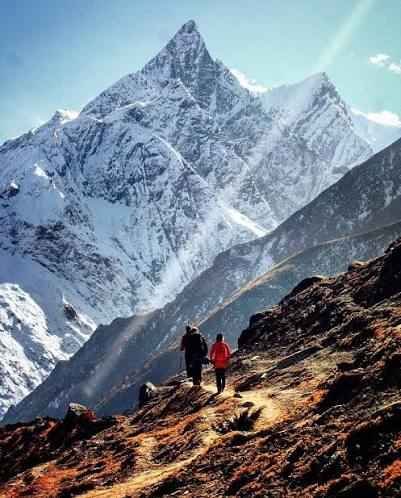
The Manaslu Circuit Trek is priced differently from almost every other trek in Nepal, because it passes through a restricted area that requires a special government permit on top of the usual conservation fees, and because the road transport to and from the trailhead is a real cost in its own right rather than a rounding error. Most articles either quote a single headline number that hides how much group size changes the price, or they skip the restricted area permit’s seasonal pricing entirely. This guide breaks down every cost with the current 2026 figures, including exactly how much a solo trekker pays versus a group of eight.
The short answer: a 13 to 14 day Manaslu Circuit Trek costs between $800 and $1,500 per person with a trekking company, depending heavily on group size, or roughly $1,700 to $2,200 if you tried to build it independently once permits, transport, guide, and insurance are all included honestly, since solo trekking without a guide is not permitted on this restricted route regardless of budget. Next Trip Nepal’s own 13 day package is priced from $850 per person for a group of 8 or more, rising to $1,050 for groups of 5 to 7, $1,130 for groups of 2 to 4, and $1,350 for a solo trekker, which is a rare level of pricing transparency by group size that most competing operators do not publish upfront.
Quick Cost Summary Table
| Expense Category | Independent Trekker | With a Trekking Company |
|---|---|---|
| Restricted Area Permit (autumn, 7 days) | $100 | Included |
| Manaslu Conservation Area Permit (MCAP) | $23 to $25 | Included |
| Annapurna Conservation Area Permit (ACAP) | $23 to $25 | Included |
| Ground transport, Kathmandu to Machha Khola and Dharapani back to Kathmandu | $60 to $450 depending on bus or jeep | Included |
| Guide (13 days, mandatory) | $390 to $520 | Included |
| Porter (13 days, optional) | $260 to $325 | Often included |
| Teahouse accommodation (12 nights) | $85 to $145 | Included |
| Meals on the trail (13 days) | $390 to $520 | Included |
| Travel insurance with high altitude cover | $100 to $250 | Your responsibility either way |
| Trekking gear (if buying new) | $300 to $2,000 | Your responsibility either way |
| Wi Fi, charging, hot showers, snacks | $100 to $200 | Your responsibility either way |
| Tips for guide and porter | $90 to $180 | Your responsibility either way |
Notice how wide the independent range is on transport and permits alone. That variance is exactly why headline prices for this trek differ so much between operators and blog articles, and why the group size breakdown below matters more here than on almost any other route in Nepal.
1. Restricted Area Permit: The Cost That Makes Manaslu Different
Unlike the Everest or Annapurna regions, the Manaslu Circuit passes through a Restricted Area, which the Nepal government prices by season and by number of days, not as a flat fee.
| Season | First 7 Days | Each Additional Day |
|---|---|---|
| September to November (autumn, peak season) | $100 | $15 |
| December to August (all other months) | $75 | $10 |
A standard 13 to 14 day itinerary spends roughly 8 to 10 days inside the restricted zone itself, so most trekkers pay the 7 day base rate plus 2 to 3 additional days. In autumn that works out to roughly $130 to $145, and in the cheaper months roughly $95 to $105. This permit can only be issued through a registered Nepali trekking agency, which is also why fully independent booking without any agency involvement is not possible on this route, regardless of whether you hire your own guide privately.
2. Conservation Area Permits: MCAP and ACAP
The trek also crosses two separate conservation areas, each requiring its own permit.
| Permit | Non SAARC Foreigners | SAARC and Indian Nationals |
|---|---|---|
| Manaslu Conservation Area Permit (MCAP) | NPR 3,000 (roughly $23 to $25) | NPR 1,000 (roughly $7 to $8) |
| Annapurna Conservation Area Permit (ACAP) | NPR 3,000 (roughly $23 to $25) | NPR 1,000 (roughly $7 to $8) |
Both permits are fixed price regardless of season or trek length, unlike the restricted area permit. Combined, MCAP and ACAP add roughly $46 to $50 for most foreign trekkers. Some older articles still quote NPR 2,000, which was correct before a fee adjustment, so if you see that figure elsewhere it is out of date.
3. Total Permit Cost for a Standard Itinerary
| Season | Restricted Area Permit | MCAP | ACAP | Total |
|---|---|---|---|---|
| Autumn (Sept to Nov) | $130 to $145 | $25 | $25 | $180 to $195 |
| Rest of year (Dec to Aug) | $95 to $105 | $25 | $25 | $145 to $155 |
This is meaningfully more than the roughly $45 total permit cost on the Everest Base Camp Trek, and it is the single biggest reason Manaslu can end up costing about the same as Everest Base Camp despite having no expensive Lukla flight, since the flight cost is effectively replaced by permit and ground transport costs instead.
4. Ground Transport: Kathmandu to the Trailhead and Back
There is no flight for this trek. Every trekker travels overland from Kathmandu to Machha Khola or Soti Khola at the start, and returns from Dharapani or Besisahar at the end, and the choice of transport here changes the budget significantly.
| Route | Public Bus | Shared Jeep | Private Jeep |
|---|---|---|---|
| Kathmandu to Machha Khola or Soti Khola (start) | $10 to $15 | $25 to $35 | $150 to $220 per vehicle |
| Dharapani or Besisahar to Kathmandu (return) | $10 to $20 | $25 to $35 | $150 to $200 per vehicle |
The road on the Kathmandu side is rough and the journey takes 7 to 9 hours by bus, which is a genuinely long and tiring travel day either right before or right after two weeks of trekking. Most established trekking companies, including Next Trip Nepal, include private or shared jeep transport in both directions as part of the package specifically because the public bus option, while cheapest, adds real physical strain on top of an already demanding trek.
5. Guide and Porter Costs
A licensed guide is mandatory on this restricted route for every trekker, with no exceptions, and this has been the rule for longer than the more recently introduced guide requirement on Everest Base Camp.
| Role | Daily Rate | 13 Day Total |
|---|---|---|
| Licensed guide | $30 to $40 per day | $390 to $520 |
| Porter (carries up to 20kg, often shared between 2 trekkers) | $20 to $25 per day | $260 to $325 |
| Guide porter combined role | $25 to $30 per day | $325 to $390 |
Because a porter typically carries a shared load between two trekkers on this route, traveling with at least one companion rather than fully solo can meaningfully reduce your personal share of the porter cost, on top of the group discount most operators already apply to the package price itself.
6. Teahouse and Food Costs
Manaslu has fewer teahouses per village than Everest Base Camp or Annapurna Base Camp, since it receives a fraction of the trekker traffic, and prices reflect both the remoteness and the lighter competition between lodges.
| Item | Lower Villages | Higher Villages (Samagaon, Samdo, Dharamsala) |
|---|---|---|
| Room rate | $4 to $8 | $8 to $12 |
| Breakfast | $4 to $6 | $6 to $9 |
| Lunch or dinner (dal bhat, noodles) | $5 to $8 | $8 to $12 |
| Hot drinks | $1 to $3 | $2 to $4 |
As with every teahouse trek in Nepal, dal bhat with free refills remains the best value meal on the route, and room rates stay low specifically because lodges expect you to eat where you sleep.
7. Extending to Tsum Valley
Tsum Valley branches off the main Manaslu Circuit route and is often added by trekkers who have already committed to the restricted area permit process and want to see one of the more culturally distinct, Tibetan Buddhist influenced valleys in Nepal.
| Item | Autumn (Sept to Nov) | Rest of Year |
|---|---|---|
| Tsum Valley Restricted Area Permit, first 7 days | $40 | $30 |
| Each additional day | $7 | $7 |
| Extra trekking days required | 6 to 7 additional days | |
| Extra guide, porter, food, and accommodation cost | $400 to $600 | |
A combined Manaslu Circuit and Tsum Valley trip typically runs 18 to 20 days total and adds roughly $450 to $650 to the base Manaslu cost once the extra permit, guide days, and teahouse nights are included, which is a smaller jump than it might sound given how much additional remote, low tourist terrain it opens up.
8. Travel Insurance and Gear
The insurance and gear requirements for Manaslu are essentially identical to Everest Base Camp, since both routes reach similar altitudes at their high points. The Larkya La Pass, the highest point of the Manaslu Circuit at 5,106m, requires the same minus 15C rated sleeping bag, proper down jacket, and altitude appropriate insurance cover as the Everest side of the Himalaya.
| Item | Approximate Cost |
|---|---|
| Travel insurance with cover up to 6,000m and helicopter evacuation | $100 to $250 |
| Full gear purchased new | $800 to $2,000 |
| Gear rented in Kathmandu | $150 to $400 |
One Manaslu specific gear note: the Larkya La Pass crossing day is long, often 8 to 10 hours, and can involve snow and ice underfoot even outside the depths of winter, so microspikes or light crampons are worth renting even if the rest of your kit list matches a standard teahouse trek.
9. Group Size Is the Single Biggest Price Lever on This Trek
More than on almost any other trek in Nepal, your group size changes the final price you pay, because the fixed costs of a guide, porter coordination, and ground transport get divided across however many people are sharing them.
| Group Size | Typical Per Person Price (13 day package) |
|---|---|
| Solo (1 person) | $1,350 |
| Small group (2 to 4 people) | $1,130 |
| Mid group (5 to 7 people) | $1,050 |
| Larger group (8 to 10 people) | $850 |
| Large group (11 or more people) | $850 |
These are Next Trip Nepal’s own current group pricing tiers, and the pattern holds across most reputable operators on this specific route: the price gap between solo and full group can be $400 to $500 per person, which is a far bigger swing than the $50 to $100 group discount typical on Everest Base Camp or Annapurna Base Camp. If your dates are flexible, joining an existing small group departure rather than booking a private solo trek is the single most effective way to reduce your Manaslu Circuit budget.
Independent Trekking vs Booking With a Company: A Real Cost Comparison
| Cost Category | Independent, Solo, Built Piece by Piece | Next Trip Nepal 13 Day Package (Solo) |
|---|---|---|
| All permits (autumn) | $180 to $195 | Included |
| Ground transport both ways | $150 to $300 (shared jeep both ways) | Included |
| Guide (13 days, mandatory) | $450 average | Included |
| Teahouse rooms (12 nights) | $100 average | Included |
| All meals (13 days) | $420 average | Included |
| Subtotal | Roughly $1,300 to $1,465 | $1,350 |
Because a registered agency has to arrange the restricted area permit regardless of how independently you otherwise plan to trek, there is very little true “independent” saving available on Manaslu the way there sometimes is on unrestricted routes. The main lever remaining in your control is group size, not whether you book through an agency at all.
Why Some Manaslu Packages Are Suspiciously Cheap
- Guide daily rate cut below the $30 to $40 market range, often meaning a guide without genuine restricted area experience or without their own insurance
- Porter loads pushed above the ethical 20kg limit to reduce the number of porters hired
- Ground transport downgraded to the cheapest public bus option without telling you in advance, adding hours of extra travel time and physical strain before or after the trek itself
- Permit costs not verified in advance, occasionally resulting in delays or complications at checkpoints because the wrong season’s rate was budgeted
- Group departures advertised at the largest group discount price even when the actual confirmed group is much smaller, with the difference quietly added back before departure
Seasonal Cost Variations
| Season | Months | Cost Impact |
|---|---|---|
| Autumn (peak) | September to November | Highest restricted area permit fee, best weather, most group departures available to join |
| Spring | March to May | Lower permit fee than autumn, good weather, second most popular season |
| Winter | December to February | Lowest permit fee, Larkya La Pass may require crampons or become temporarily impassable in heavy snow |
| Monsoon | June to August | Lowest permit fee, leeches and poor visibility on lower sections, landslide risk on the access road |
A Sample 13 Day Cost Breakdown, Day by Day
| Day | Location | Approximate Daily Spend (independent trekker) |
|---|---|---|
| 1 | Kathmandu to Machha Khola (jeep) | $30 transport plus $20 food and room |
| 2 | Machha Khola to Jagat | $25 |
| 3 | Jagat to Deng | $25 |
| 4 | Deng to Namrung | $28 |
| 5 | Namrung to Samagaon | $30 |
| 6 | Acclimatization day in Samagaon | $30 |
| 7 | Samagaon to Samdo | $32 |
| 8 | Samdo to Dharamsala (Larkya Phedi) | $32 |
| 9 | Dharamsala over Larkya La Pass to Bhimtang | $35 |
| 10 | Bhimtang to Dharapani | $28 |
| 11 | Buffer day for pass weather delay | $20 |
| 12 to 13 | Dharapani to Kathmandu (jeep), rest day | $30 transport plus $35 hotel and food |
Frequently Asked Questions
Is Manaslu Circuit Trek cheaper than Everest Base Camp?
It depends on group size. Solo, Manaslu is often similarly priced or slightly cheaper once you account for the restricted area permit replacing the Lukla flight cost. In a group of 8 or more, Manaslu is usually noticeably cheaper, since Next Trip Nepal’s own group rate of $850 sits well below its $1,449 Everest Base Camp price.
Can I trek Manaslu solo without a guide to save money?
No. A licensed guide is legally mandatory for every foreign trekker on this restricted route, regardless of budget or experience level. This has been the rule for years, unlike Everest Base Camp where the guide requirement is newer.
Do I need a minimum group size to get a permit?
The old rule requiring a minimum of two trekkers per restricted area permit has been removed, so solo trekkers can now obtain the permit through a registered agency, though a guide is still required either way.
What is the single biggest cost most people underestimate on Manaslu?
The restricted area permit and conservation permits combined, which add up to roughly $145 to $195 depending on season, a cost category that simply does not exist on unrestricted routes like Annapurna Base Camp or Poon Hill.
Is the Tsum Valley extension worth the extra cost?
For travelers who value fewer crowds and a distinct Tibetan Buddhist cultural experience, most trekkers who add it consider the extra $450 to $650 worthwhile, especially since the restricted area permit process is already arranged either way.
Does traveling in a group actually save real money on this trek?
Yes, more than on most other Nepal treks. The gap between Next Trip Nepal’s solo price of $1,350 and its 8 plus group price of $850 is roughly $500 per person, which is a far larger swing than the typical group discount on Everest Base Camp or Annapurna Base Camp.
Why Village Prices Rise So Sharply Toward Samagaon
On the Everest Base Camp Trek, goods travel up the trail by porter or yak from a single fixed point, Lukla, once you are past the airport. On Manaslu, the entire supply chain runs overland from Kathmandu by jeep or bus first, then by mule or porter for the final stretch, which is a longer and more expensive logistics chain than the Everest side. That extra step is the real reason a plate of dal bhat in Samagaon or Samdo can cost noticeably more than the same dish in a comparable altitude village on the Everest route. It is not overcharging, it is the accumulated cost of moving rice, gas canisters, and vegetables an extra day or two further from the nearest road head. Understanding this helps explain menu prices that otherwise look inconsistent between treks that reach similar altitudes.
How Much Cash to Carry on Manaslu
There are no ATMs anywhere on the Manaslu Circuit itself once you leave the Kathmandu Valley, and the nearest reliable ATM before the trailhead is generally in a larger town along the drive in, not guaranteed to be working. This makes cash planning more important here than on routes like Everest Base Camp, where at least Namche Bazaar offers a partial safety net.
| Trip Length | Recommended Cash to Carry |
|---|---|
| 13 day standard Manaslu Circuit | $250 to $350 |
| 18 to 20 day Manaslu plus Tsum Valley | $350 to $500 |
This should cover meals not included in your package, hot showers, Wi Fi, snacks, and tips, with a reasonable buffer for a delayed return or an unplanned extra night if the Larkya La Pass crossing is postponed by weather, which happens occasionally in shoulder season.
Comparing Manaslu Cost to Other Popular Treks
| Trek | Typical Package Price Range | Why It Differs |
|---|---|---|
| Manaslu Circuit (13 to 14 days) | $850 to $1,500 | Restricted area permit and overland transport instead of a flight |
| Everest Base Camp (14 days) | $1,200 to $2,500 | Mandatory Lukla flight adds a fixed cost every trekker pays |
| Annapurna Circuit (14 days) | $975 to $1,560 | No restricted area permit, cheaper road access, well developed teahouse network |
| Annapurna Base Camp (7 to 10 days) | $700 to $1,100 | Shorter duration, no restricted area permit, closest major trek to Pokhara |
| Langtang Valley (7 to 10 days) | $600 to $950 | Closest major trek to Kathmandu, shortest drive to the trailhead |
Manaslu sits in an unusual middle position: more expensive than routes with no restricted permit, but often cheaper than Everest Base Camp once group size is factored in, because it avoids the one genuinely large fixed cost that every Everest trekker has to pay regardless of group size, the Lukla flight.
How Next Trip Nepal’s Package Compares
| Included Item | Typically in Next Trip Nepal’s Package | Commonly Excluded by Budget Operators |
|---|---|---|
| Restricted Area Permit, MCAP, and ACAP | Yes, arranged in advance | Usually yes, but confirm the season used to calculate your fee |
| Ground transport both directions | Private or shared jeep, not the cheapest public bus | Sometimes downgraded to public bus without notice |
| Licensed guide with restricted area experience | Yes | Sometimes a guide new to this specific route |
| Porter, loads kept to ethical limits | Yes, available on request | Sometimes overloaded to reduce porter headcount |
| All meals during the trek | Yes | Often only breakfast and dinner included |
| Transparent group size pricing published upfront | Yes, from $850 to $1,350 depending on group size | Often only the lowest group rate is advertised, with the real price revealed at booking |
| Advance payment required to book | No advance payment required | Often a deposit required upfront |
The most useful habit when comparing Manaslu packages across different companies is to ask which season’s restricted area permit rate the quoted price assumes, since a quote built on the cheaper December to August rate will look artificially lower than an otherwise identical autumn departure.
Common Budgeting Mistakes on the Manaslu Circuit
- Assuming the permit costs the same as Everest Base Camp. At $145 to $195 combined depending on season, Manaslu’s permit costs are three to four times higher than the roughly $45 total on Everest Base Camp, and this alone explains a meaningful chunk of any price difference between the two treks.
- Not asking which transport mode is included. The gap between a public bus and a private jeep both directions can be $250 or more, and it also changes how physically demanding the two travel days on either end of your trek will be.
- Booking solo when a group departure would have worked. Given the roughly $500 per person gap between solo and full group pricing on this specific trek, checking whether an existing group departure matches your dates before committing to a private solo booking is worth the extra few days of flexibility if your schedule allows it.
- Underestimating cash needs due to the lack of ATMs. Unlike Everest Base Camp, where Namche Bazaar offers a partial ATM safety net, Manaslu has none along the route itself.
- Skipping proper insurance because Manaslu feels less famous than Everest. The Larkya La Pass at 5,106m carries the same altitude related risk as Kala Patthar on the Everest side, and requires the same standard of insurance cover.
How This Guide Was Put Together
Every permit figure in this guide was checked against the current 2026 restricted area, MCAP, and ACAP rates rather than older NPR 2,000 figures that still circulate on some travel blogs. Group pricing reflects Next Trip Nepal’s own current published tiers rather than an estimate, so the group size comparison table above is real pricing data, not a hypothetical range.
Why the Mandatory Guide Rule Exists on Manaslu
Some trekkers researching this route ask why a guide is required here when nearby Annapurna Base Camp has no such rule. The restricted area classification exists because the corridor sits close to the Nepal Tibet border, and the government has historically required foreign visitors in border adjacent restricted zones to travel with a registered guide for both security monitoring and visitor safety reasons, since rescue coordination in this remote a corridor is genuinely harder without a local guide who knows the route, the villages, and who to contact if something goes wrong. Framed as a cost line item this can feel like a simple fee, but it is worth understanding that the requirement predates the recent similar rule change on Everest Base Camp by many years, and reflects a different underlying reason.
Packing List Costs Specific to Manaslu
Most of the standard teahouse trekking gear list applies equally to Manaslu and Everest Base Camp, but a few items are worth budgeting for specifically because of this route’s terrain and lower trekker volume.
| Item | Why It Matters Here | Approximate Cost |
|---|---|---|
| Microspikes or light crampons | The Larkya La Pass crossing regularly has snow and ice underfoot even in main season | $20 to $40 to buy, $2 to $4 per day to rent |
| Trekking poles | The long descent from Larkya La to Bhimtang is steep and knee intensive | $10 to $25 to buy, $1 to $2 per day to rent |
| Extra headlamp batteries | Fewer villages have reliable evening electricity than on the Everest side | $5 to $10 |
| Water purification tablets or a filter | Fewer shops selling bottled water the further you get from Samagaon | $15 to $30 |
None of these are large costs individually, but a trekker who assumes the Manaslu packing list is identical to Everest Base Camp in every respect can end up scrambling to rent a single missing item in Samagaon at a worse price than in Kathmandu, simply because they did not know to look for it before leaving the city.
What the Conservation Fees Actually Fund
It is worth knowing what the MCAP and ACAP fees are for, since it changes how the cost feels rather than simply what it is. Both conservation area permits fund the National Trust for Nature Conservation’s work in the region, covering trail maintenance, reforestation, wildlife protection for species like the snow leopard and Himalayan tahr that share this corridor, and community development projects in the villages the trek passes through. Unlike the restricted area permit, which is closer to a border zone access fee, the conservation permits are the closest thing this trek has to a direct environmental contribution, and the trail conditions you actually walk on, particularly the maintained sections near Samagaon, are a visible result of that funding.
Booking Timing and Its Effect on Price
Because Manaslu group departures fill from a smaller overall pool of trekkers than Everest Base Camp or Annapurna Base Camp, the timing of your booking interacts with group size pricing in a way that is worth planning around.
- Booking 2 to 3 months ahead of autumn or spring dates gives you the best chance of joining an already forming group and reaching the cheaper per person rate, since larger groups take longer to fill than on more popular routes.
- Booking less than a month out often means either accepting whatever group size has already formed, which could be small and therefore priced higher, or paying the solo private trek rate if no group matches your exact dates.
- Off season bookings (December to August) tend to have smaller groups overall, so the lowest group pricing tier is reached less often outside the two main seasons, even though the permit fee itself is cheaper in these months.
The practical takeaway is that flexible dates matter more for controlling Manaslu’s price than flexible dates matter on Everest Base Camp, precisely because the group size effect is so much larger here.
Best Time to Trek Manaslu Circuit and How It Changes Your Costs
Season affects far more than comfort on this route, it also shifts several line items in your budget at once. Autumn, running from September through November, is the busiest window, which means restricted area permit fees are at their highest rate of $100 for the first seven days, but it is also when group departures fill fastest, so the group size discount is easiest to reach. Spring, from March through May, carries the same permit pricing as autumn and offers similarly reliable weather for the Larkya La crossing, with slightly fewer trekkers on the trail than autumn, which can mean a smaller but still workable group.
The off season months, December through February and June through August, drop the restricted area permit to $75 for the first seven days, a genuine saving of $25 per person before even counting the extra day rate. Winter brings serious cold at altitude and the Larkya La pass can close entirely after heavy snowfall, which is a real safety consideration rather than just a comfort one. The monsoon months of June through August bring leech heavy lower trails, frequent afternoon rain, and a meaningfully higher chance of the kind of landslide related road closures that can strand a jeep transfer for a day or more, which is a hidden cost in lost time rather than cash. For most budget conscious trekkers, the honest recommendation is still autumn or spring despite the higher permit fee, because the lower risk of weather related delays, extra unplanned teahouse nights, or a failed pass crossing usually outweighs the $25 permit saving from traveling off season.
What Happens if You Get Sick or Need to Evacuate
No honest cost guide skips this, because it is where an underbudgeted trek can turn into a financial emergency rather than just an inconvenience. Altitude sickness is a real risk on the Manaslu Circuit, with the Larkya La pass sitting at 5,106 meters and several nights spent above 4,000 meters in the days leading up to it. A helicopter evacuation from anywhere past Samagaon can cost $3,000 to $6,000 depending on distance and weather conditions, and this is not a cost any trekker should plan to pay out of pocket.
This is precisely why travel insurance with genuine high altitude and helicopter evacuation coverage, not just a generic travel policy with a low altitude ceiling, belongs in the fixed cost column of your budget rather than the optional one. Read the policy wording specifically for the altitude ceiling it covers, since many standard travel insurance products cap coverage at 3,000 or 4,000 meters, which is well below the Larkya La pass and even below Samagaon itself. A policy costing $100 to $150 more that actually covers a 5,106 meter pass is not an upsell, it is the difference between a manageable claim and a five figure bill.
Currency and Payment Practicalities on the Trail
Nepal’s currency is the Nepali Rupee, and while Kathmandu has ATMs and card machines everywhere, the Manaslu Circuit has none once you leave the lowland towns near the start of the trek. Every teahouse, every extra pot of tea, every battery charge, and every acclimatization day’s food needs to be paid for in cash, and there is no reliable point on the trail to withdraw more once you run out. Bring Nepali Rupees in a mix of smaller denominations, since teahouses in remote villages frequently cannot make change for a large note, and carry more than your estimated total, since a delayed return due to weather is common enough that a buffer of at least two extra days of cash is a sensible habit rather than excess caution.
Some trekking companies, including Next Trip Nepal, allow you to prepay the bulk of your trip cost before departure and only carry cash for tips, personal purchases, and genuine extras like device charging or hot showers, which meaningfully reduces how much physical cash you need to carry through a region with no banking infrastructure at all.
How Manaslu Compares to Everest Base Camp for First Time High Altitude Trekkers
Trekkers researching Manaslu often have Everest Base Camp open in another browser tab, so a direct comparison beyond just price is worth including. Manaslu’s Larkya La pass at 5,106 meters is higher than the Everest Base Camp viewpoint at Kala Patthar, and the trail infrastructure is noticeably thinner, with fewer teahouses per stage and less variety in food once you pass Samagaon. This is precisely why the mandatory guide rule matters more in practice on Manaslu than the same rule does on the busier Everest trails, since help and alternative accommodation are genuinely scarcer if something goes wrong.
On the other hand, Manaslu sees a fraction of the foot traffic Everest Base Camp does, so teahouses rarely reach the fully booked state that can happen at Everest Base Camp lodges in peak season, and the trail itself feels considerably less commercial, with fewer souvenir shops and bakeries competing for your rupees at every stop. For a trekker who has already done one major teahouse trek and wants a quieter, less developed, and comparably priced alternative with a genuinely wild high pass crossing, Manaslu is usually the better second trek rather than a first one.
Final Word on Budgeting for Manaslu Circuit
The honest range for a 13 to 14 day Manaslu Circuit Trek in 2026 is $850 to $1,500 with a company depending on group size, with permits and mandatory guide costs applying to every trekker regardless of how independently they otherwise plan the trip. Next Trip Nepal’s tiered pricing, from $1,350 solo down to $850 in a group of 8 or more, gives a realistic and transparent way to estimate your own cost before booking, rather than relying on a single headline number that may only apply to the largest group size.


