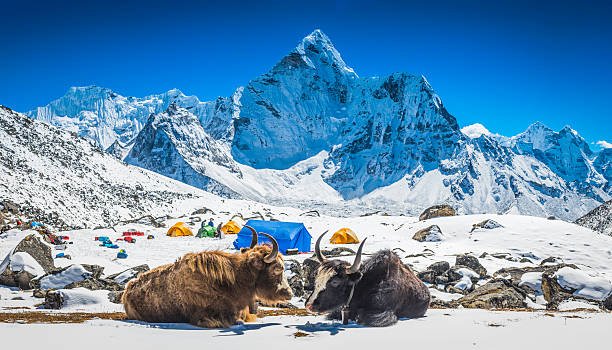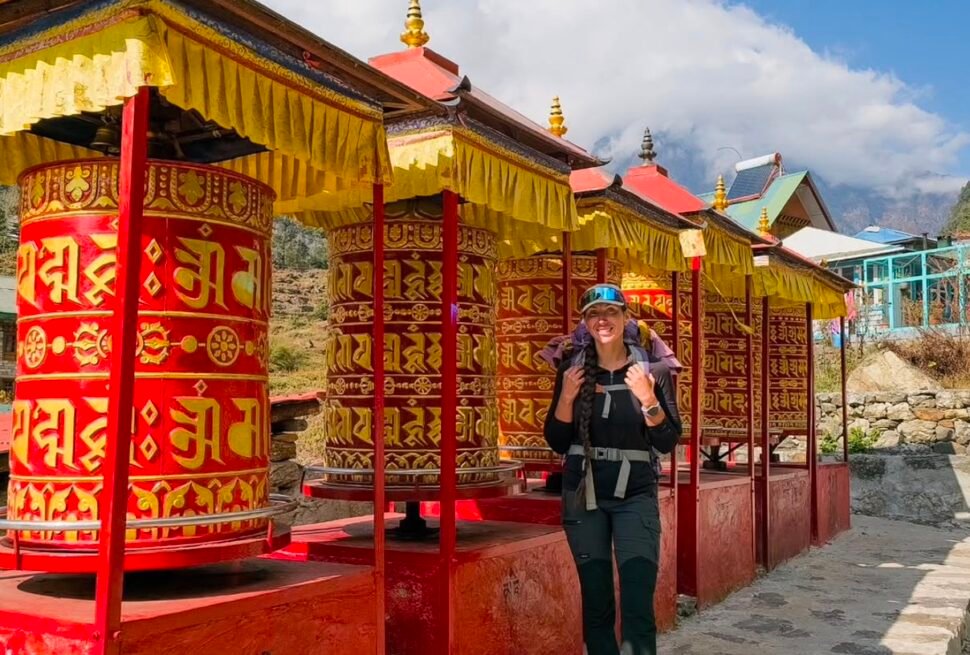
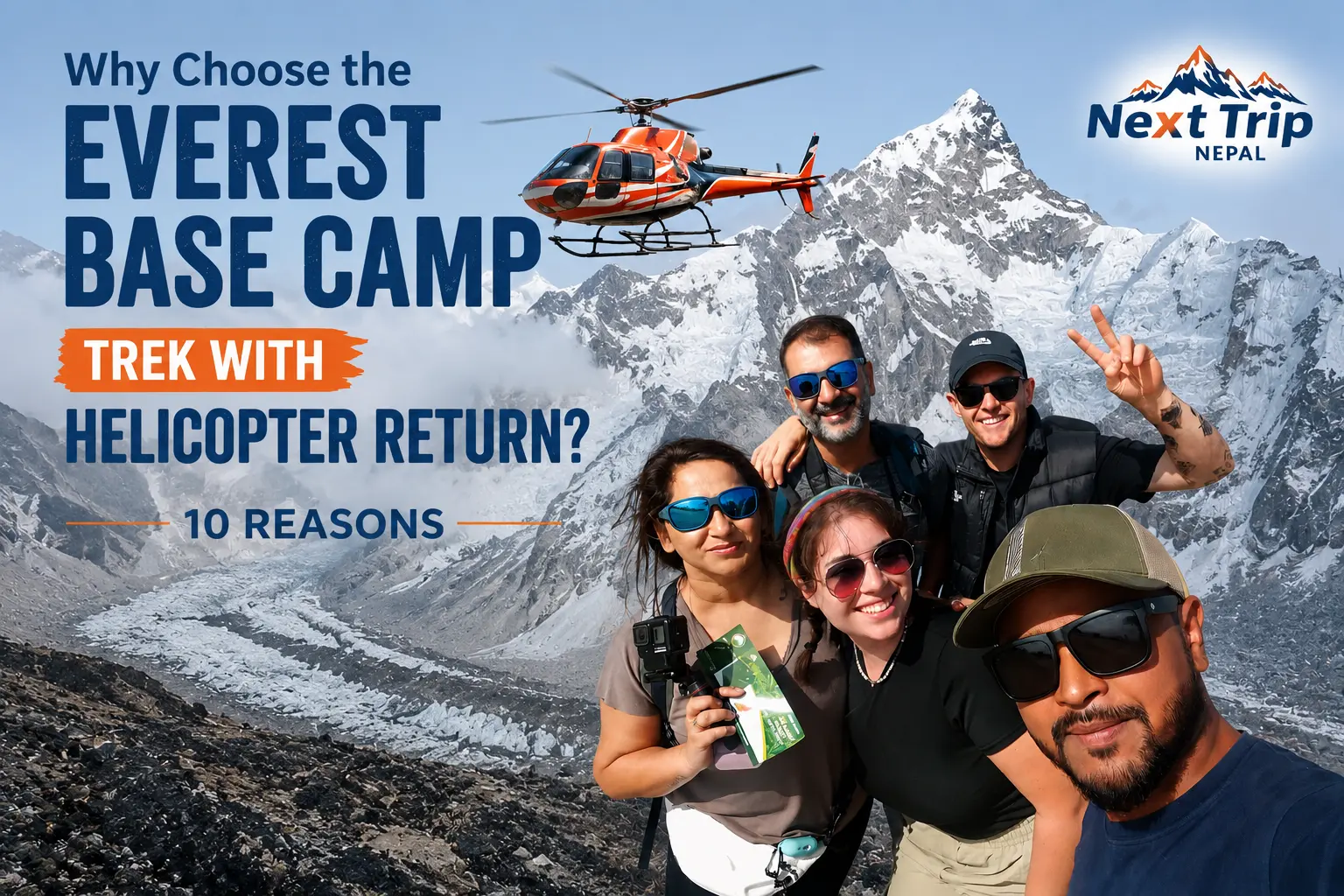
Most people who reach Everest Base Camp arrive after 7 to 8 days of trekking through the Khumbu Valley. What many do not realize until they are standing at 5,364 meters, looking at the Khumbu Icefall, is that they now have to walk all of that back down. Six to seven more days of trail, most of it on the same route, on legs that are already tired from the climb up. For many trekkers, the return journey is the least rewarding part of the experience.
If these reasons have you leaning toward booking, two guides are worth reading next: our full walkthrough of what actually happens on return day, and our look at what to do with the extra days this itinerary leaves you once you are back in Kathmandu.
The Everest Base Camp Trek with Helicopter Return elegantly solves this problem. You trek the full route to EBC on foot, experiencing every village, suspension bridge, monastery, and high-altitude teahouse on the way up. Then, instead of retracing your steps on the descent, you board a helicopter at or near Gorak Shep and fly back to Kathmandu in under an hour. You gain 4 to 5 days of time, protect your knees from the hardest section of the trail, and end the experience with a flight over the Khumbu Icefall and the Himalayan peaks that no photograph from the ground can replicate.
We regularly organize this combination route and have guided trekkers on the EBC trail for years. In that time, we have seen who benefits most from the helicopter return option, what the regulations require, and how the costs compare to a full walking trek. This guide covers everything: 10 concrete reasons this route makes sense, the government rules governing Khumbu helicopter flights, a full 2026 cost breakdown, and answers to the questions we hear most often.
1. What Is the Everest Base Camp Trek with Helicopter Return?
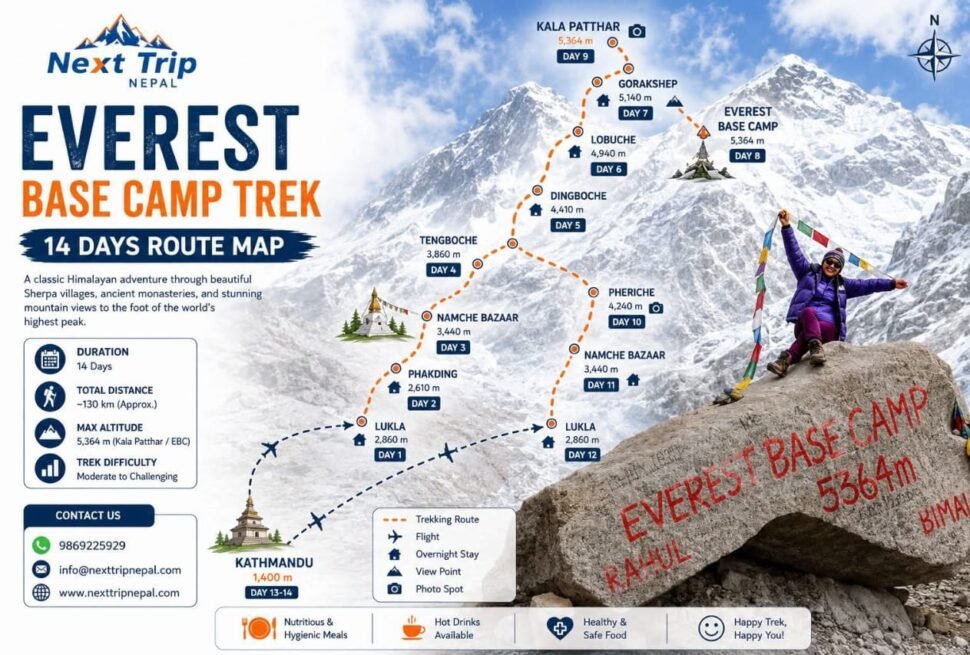
The Everest Base Camp Trek with Helicopter Return is a hybrid itinerary that combines the standard overland EBC trek with a helicopter flight back to Kathmandu. The trekking portion follows the classic route: fly from Kathmandu to Lukla, trek through Phakding, Namche Bazaar, Tengboche, Dingboche, Lobuche, and Gorak Shep to reach Everest Base Camp (5,364m) and usually Kala Patthar (5,545m) for the high-point mountain views. This upward journey takes approximately 8 to 10 days, depending on the itinerary and the acclimatization days included.
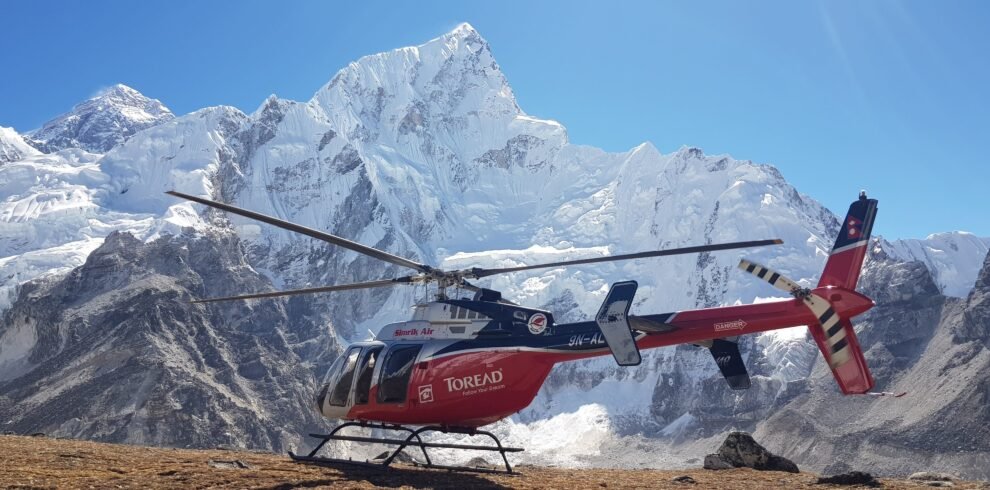
At the end of the trek, instead of descending the same route back to Lukla for a return flight, you board a helicopter at Gorak Shep (5,140m) or Lobuche (4,940m) and fly directly to Kathmandu. The flight takes approximately 45 to 60 minutes and passes over the upper Khumbu Valley, the Khumbu Glacier, and the mountain ranges that were your backdrop for the past 10 days. You arrive in Kathmandu the same day you leave the mountains.
The standard full Everest Base Camp Trek runs 14 days. The helicopter return version typically runs 10 to 12 days, saving 4 to 5 days on the total trip duration. The cost difference depends on the helicopter charter pricing, but for many trekkers the time saved and physical relief justify the additional expense.
This route is distinct from the Everest Base Camp Helicopter Tour, which involves no trekking at all and is a single-day round flight from Kathmandu. The helicopter return trek is for people who want the full trekking experience but prefer to return differently.
Planning your Everest Helicopter Tour?
2. Reason 1: You Save 4 to 5 Days Without Skipping Anything Worth Seeing
The Everest Base Camp descent route largely retraces the ascent. From Gorak Shep back to Lukla, the path passes through the same villages of Lobuche, Dingboche, Tengboche, Namche Bazaar, and Phakding in reverse order. Most trekkers enjoy the journey upward through these places because there is always something new ahead. On the way down, the same views and the same teahouses offer less fresh experience and the physical demand of the long descents wears on the body differently than climbing.
By flying back from Gorak Shep, you eliminate approximately 5 to 6 days of largely repetitive downhill trail. You have already seen everything worth seeing on the route. You have already walked through every village, crossed every suspension bridge, and spent nights in every key elevation zone. The return descent does not add new landmarks or experiences for most trekkers. What it adds is mileage, time, and strain on the knees and ankles.
Those 4 to 5 days translate to real value. You can spend them exploring Kathmandu’s heritage sites, relaxing in Pokhara, or simply flying home sooner if your annual leave is limited. For many international travelers, the ability to do a full EBC trek within a 12-day window rather than a 16-day window makes this route accessible where a full trekking itinerary would not fit the calendar at all.
3. Reason 2: You Protect Your Knees from the Hardest Section of the Trek
Any experienced Everest guide will tell you that the descent from the Everest Base Camp region is harder on the body than the ascent. Going up is aerobically demanding. Going down, especially on the rocky, uneven trails between Namche Bazaar and Lukla, repeatedly impacts the knee joints over many hours of walking. Many trekkers who had no knee discomfort on the way up develop significant pain during the 5 to 6 day descent, and some require additional rest days that extend the trip further.
The descent section from Namche to Lukla includes a long, steep, stone-stepped drop that local porters call “the killer” for good reason. This section alone accounts for a large portion of knee injury reports in the Khumbu. Trekkers over 50, trekkers with prior knee conditions, and those who are not experienced downhill hikers feel this most acutely.
The helicopter removes this problem entirely. You do the challenging aerobic work of climbing to altitude, experience everything the high Khumbu has to offer, and then fly back before the descent takes its toll. Your body arrives in Kathmandu in considerably better condition than if you had walked both ways. For many trekkers who return for a second or third Nepal expedition, this physical conservation is genuinely important.
It also reduces the risk of trekking-related injury that requires medical attention or, in serious cases, a helicopter evacuation anyway. A knee that gives out on the descent to Namche can result in an unplanned evacuation that costs far more than the planned helicopter return you could have arranged from the start.
Planning your Everest Helicopter Tour?
4. Reason 3: You See the Khumbu Icefall and Everest Base Camp from the Air
From the ground at EBC, your view of the Khumbu Icefall is dominated by the lower section of the chaotic ice maze, a mass of shifting ice towers and crevasses that climbers must cross repeatedly during expedition season. It is a powerful sight from below. But the full scale of the Khumbu Icefall, the Khumbu Glacier feeding it, and the relationship between EBC and the summit of Everest (8,849m) above is something you simply cannot perceive from ground level.
From the helicopter at 5,000 to 6,000 meters, the entire upper Khumbu unfolds beneath you. You can trace the full length of the Khumbu Glacier from its origin at the Western Cwm down through the icefall to the lower moraine. You see Everest, Lhotse (8,516m), Nuptse (7,864m), and Pumori (7,161m) simultaneously in a single panoramic frame. The scale of these peaks becomes clear in a way that ground-level photography cannot capture.
The flight also passes over the Tengboche Monastery, the Namche Bazaar bowl, and the deep Dudh Koshi River gorge before descending toward the Kathmandu Valley. For photography enthusiasts, this 45 to 60 minute flight produces images that are genuinely different from anything achievable on foot. If you are interested in aerial Himalayan photography, consider our Everest Base Camp Photography Trek for dedicated photo-focused trip options.
5. Reason 4: It Works for Trekkers with Limited Annual Leave
One of the most common reasons people who want to do the Everest Base Camp Trek have not done it yet is time. A standard 14-day EBC trek, with 2 days of international travel on either end, requires approximately 18 days away from work or home. For many travelers in their 30s and 40s with professional or family commitments, 18 days is simply not available in one block.
The helicopter return version of the EBC Trek compresses the Nepal portion to 10 to 12 days, which with 2 travel days on either side fits into a 14-day leave block. That is a very different planning conversation. Instead of “I need to save this for a special year when I can take three weeks off,” the trek becomes something you can plan into a normal annual leave allocation.
We have guided many trekkers on this combined route who explicitly said they would not have been able to do EBC at all without the helicopter return option. Teachers, doctors, executives, and parents with school-age children are among the people who benefit most from this time efficiency. The mountain does not move. What changes is whether the schedule to get there and back fits into your life as it currently is.
6. Reason 5: You Complete the Full Trekking Experience on the Way Up
Some travelers worry that taking a helicopter back means they are “cheating” or not doing the real trek. In practice, the opposite is true. The full character of the Everest Base Camp Trail is experienced on the ascent: the early morning starts from Phakding, the steep climb to Namche Bazaar with your first close view of Everest above the ridge, the acclimatization rest day in Namche, the high route above Tengboche, the cold mornings at Dingboche, the final long walk to Gorak Shep, and the pre-dawn departure to reach Kala Patthar for sunrise.
Every significant moment of the trek happens on the way up. The descent retraces the same ground in reverse, faster and with less attention because you have already seen it all. By the time most trekkers reach Namche on the return, they are counting days to Lukla rather than absorbing the trail. The helicopter return does not skip any part of the authentic experience. It simply exits the route at the logical high point rather than requiring a full reversal.
Our standard EBC trek itinerary with helicopter return includes all the same acclimatization days, the same side hike to Kala Patthar for peak views, and the same number of nights in the high Khumbu as our full walking version. The only thing removed is the descent, and on this route, what you lose in the descent is mileage and repetition, not experience.
7. Reason 6: It Works Well for Groups with Mixed Fitness Levels
When two or more people trek together, and one is significantly more affected by altitude or physical fatigue than the other, the descent creates a specific tension. The stronger trekker wants to move at a normal pace. The one who is struggling needs more time or more rest. Managing this over 5 to 6 days of descent is genuinely stressful for both.
The helicopter’s return equalizes this. Once both trekkers reach the high point, the return is a shared 45-minute flight regardless of individual fitness differences. There is no more decision to make about pace, rest days, or whether to push through discomfort on the downhill trail. The flight is the same for everyone in the group.
This makes the helicopter return particularly well-suited to couples and family groups with differing fitness levels. We run the Everest Base Camp Trek Package for Couples frequently, and the helicopter return option is one of the most commonly selected add-ons for couples in which one person is more experienced on long mountain treks than the other. Both complete the full upward journey and reach EBC together. The return flight is simply the most comfortable and fair way to conclude the trip.
8. Reason 7: You Can Combine It with Gokyo Lakes, Island Peak, or Lobuche East
The helicopter return is not just for the standard EBC point-and-return route. It actually enables more ambitious combinations that would otherwise require too many days in total. By eliminating the descent, you free up 4 to 5 days that can be redirected to additional experiences in the Khumbu region.
For example, a combined Gokyo Lakes and EBC itinerary (crossing the Cho La Pass between the two valleys) normally takes 18 to 20 days with a full walking return. With a helicopter return from Gorak Shep at the end, the same combined route fits into 14 to 15 days. You can see both the Gokyo Ri viewpoint over the Ngozumpa Glacier and Everest Base Camp on the same trip, within a timeframe feasible for most international travelers.
Similarly, adding a summit attempt on Island Peak (6,189m) or Lobuche East Peak (6,119m) to an EBC itinerary pushes the total number of days beyond what most travelers can allocate, unless they use a helicopter for the return leg. Both Island Peak Climbing and Lobuche East Peak Climbing are routes we regularly combine with the EBC circuit, and the helicopter return from the upper Khumbu at the end is what makes the timing work.
If you are considering a more ambitious Khumbu itinerary, our team can build a custom combination around your available days. Visit our Customize Your Trip page for details.
Planning your Everest Helicopter Tour?
9. Reason 8: The Aerial Perspective on the Himalayan Range Is Genuinely Rare
Most views of the Himalayas are from ground level, looking up. The scale of the peaks is clear, but your frame of reference is always that of someone standing at the base of something vastly larger. The helicopter flight back from the Khumbu changes that reference point in a way that ground-based trekking never can.
At cruise altitude between Gorak Shep and Kathmandu, the helicopter passes at or slightly above the level of many of the mid-sized peaks in the Khumbu. Peaks that towered above you on the trail are now at eye level or below. You see the full ridge lines, the connecting col between peaks, and the glacial systems that feed the valleys from the angle that only climbers and pilots normally experience.
For 45 to 60 minutes, the mountain range that you spent 10 days walking through becomes a comprehensible map below you. Many trekkers describe this flight as the moment when the full scale of the Himalayan range becomes genuinely real to them, in a way the trail alone did not. The flight ends with the descent into the Kathmandu Valley, the sharp line between the Himalayan range and the subtropical lowlands coming into view as you approach the city.
This perspective is not available any other way without a dedicated Everest Helicopter Tour or a mountain flight. As part of a full EBC trek, it adds a final chapter to the experience that is entirely distinct from anything the trail itself offers.
10. Reason 9: It Is a Safer Option for Trekkers Who Should Minimize Days at High Altitude
High altitude carries real physiological risks. Above 3,500 meters, the body is working harder to oxygenate itself, and every additional day at high altitude adds cumulative stress on the cardiovascular and neurological systems. For most healthy trekkers on a properly acclimatized schedule, these risks are well managed, and the trek is safe. But for certain groups, minimizing unnecessary time at high altitude is genuinely important.
Trekkers over 60, those with any history of cardiovascular conditions, and those who have had any altitude sickness symptoms during the ascent should avoid spending additional days above 4,000 meters beyond what is required to reach EBC and descend safely. The helicopter return achieves this: once you have reached EBC and descended to Gorak Shep for the night, the helicopter moves you out of the high-altitude zone the next morning rather than requiring 5 to 6 more days at elevations between 3,500 and 5,000 meters during the walking descent.
Even for physically fit trekkers, cumulative exposure to altitude increases fatigue. After 10 days at elevations between 3,000 and 5,364 meters, the body is significantly more susceptible to judgment errors, respiratory illness, and dehydration than it was at the start of the trek. Removing 5 to 6 days of continued high-altitude exposure through a quick helicopter exit is a responsible choice for personal health management on a long mountain trek.
Our guides monitor all trekkers throughout the ascent and will advise you honestly if they notice signs of altitude sickness or excessive fatigue. If a trekker needs to descend quickly for medical reasons during the trek, we organize a helicopter evacuation immediately. The planned helicopter return at the end of the trek is not a medical evacuation; it is a pre-arranged, logical exit from the high zone, but the same infrastructure supports both uses.
11. Reason 10: The Cost Difference Is Smaller Than Most Trekkers Expect
Many trekkers assume that adding a helicopter to an EBC trek will double the cost of the trip. The actual numbers are considerably more manageable than that assumption suggests.
A full 14-day EBC trek with Next Trip Nepal starts at $1,449. This includes flights to and from Lukla, all accommodation, meals, the licensed guide, permits, and airport transfers. A 10 to 12 day EBC Trek with Helicopter Return is priced higher due to the helicopter cost, but you are also removing 4 to 5 days of teahouse costs, meals, and guide logistics from the itinerary.
The helicopter charter from Gorak Shep or Lobuche to Kathmandu is typically shared between multiple passengers (the helicopter seats 4 to 6 people plus the pilot). When shared, the per-person cost of the helicopter leg is approximately $400 to $600. When you subtract the 4 to 5 days of saved accommodation and meal costs from a standard trek (approximately $50 to $100 per day at high altitude), the net additional cost of the helicopter return is often $200 to $400 per person over the full-walking version of the same trip.
For 4 to 5 saved days and the physical and experiential benefits described in the previous sections, most trekkers find this premium entirely reasonable. The total trip budget for the helicopter return version of the EBC trek typically falls between $1,600 and $1,900 per person, all-inclusive, depending on group size and season.
For context, the standard 14-day Everest Base Camp Trek starts at $1,449. Adding the helicopter return brings the total to approximately $1,800 to $1,950 for a solo trekker or around $1,650 to $1,800 per person for couples. Contact our team for an exact quote based on your specific dates and group size.
12. Rules and Regulations for Helicopter Flights in the Everest Region 2026
Helicopter operations in the Sagarmatha National Park and the broader Khumbu region are governed by a combination of Nepal Civil Aviation Authority (NCAA) regulations and Nepal Tourism Board guidelines. Understanding these rules helps you plan accurately and avoid common misunderstandings about what is and is not permitted.
Permit Requirements for Passenger Helicopter Flights
All helicopter flights operating in the Sagarmatha National Park zone require authorization from the NCAA. Commercial tour and trek operator helicopters must hold a valid operating license from the NCAA and comply with altitude and route restrictions within the park. Your trekking operator handles this authorization as part of the helicopter charter arrangement. Individual trekkers do not need to apply for a separate flight permit for a passenger return flight organized through a licensed operator.
Approved Landing Zones in the Upper Khumbu
Helicopters cannot land at Everest Base Camp itself during the climbing season (roughly March through May) because the route through the Western Cwm and Khumbu Icefall is active with expedition teams. During the trekking-only months (primarily October through November and December through February), access is less restricted, but landing at EBC at 5,364m is still not standard practice for charter flights due to the altitude limitations on many helicopter types.
The most common approved pick-up points for helicopter return treks are:
- Gorak Shep (5,140m): The highest standard pick-up point for most helicopter return treks. The helipad here is small and weather-dependent.
- Lobuche (4,940m): Slightly lower than Gorak Shep, with a more reliable landing area. Many operators use Lobuche as the default pick-up when conditions at Gorak Shep are questionable.
- Pheriche (4,371m): The medical station village, used as a backup landing point in poor weather or for medical evacuations.
- Namche Bazaar (3,440m): A larger and more reliable landing area used when high-altitude conditions prevent flights to Gorak Shep or Lobuche.
Your guide will confirm the actual pick-up point based on weather conditions on the day of your departure. Flexibility on the pick-up altitude is normal and expected. The helicopter will always pick you up from the highest point that weather and equipment allow on that day.
Weight and Baggage Restrictions
Helicopters operating in the high Khumbu are subject to strict weight limitations. At 5,000 meters, the thin air reduces helicopter lift capacity significantly compared to sea-level operations. Most operators allow passengers a maximum of 10-15 kilograms of combined baggage per seat. Heavier loads may require waiting for a second flight or leaving some items behind at a lower-altitude teahouse for separate transport.
On our EBC treks, we advise trekkers to keep their personal daypack under 10 kilograms by the time they reach Gorak Shep. Heavy main duffel bags carried by porters are typically sent down by the porter in advance of the helicopter pick-up day, so the porter walks the route while the trekker flies. This is standard practice, and your guide will coordinate the logistics.
Weather-Dependent Operations
Helicopter flights in the Khumbu are weather-dependent and can be delayed or canceled due to cloud, wind, or visibility issues. This is not within the control of the trekking operator and is a condition of all Himalayan helicopter operations. We always build a buffer day into the itinerary before the helicopter pick-up to account for a potential one-day delay. If a delay extends beyond the buffer, the trekker descends by foot from the holding point until flying conditions allow the helicopter to proceed.
This contingency planning is part of the reason we recommend not scheduling international flights out of Kathmandu the same day you plan to arrive by helicopter from the Khumbu. Allow at least one clear day in Kathmandu after the helicopter arrives before departing Nepal.
Environmental and Noise Regulations
The Nepal government periodically reviews helicopter traffic in the Sagarmatha National Park due to concerns about noise impact on wildlife and trekker experience. As of 2026, commercial helicopter operations in the park must file flight plans with the NCAA and are restricted to approved corridors. “Scenic joy flights” over the park interior without passengers boarding or disembarking are regulated and require specific authorization separate from standard charter permits.
Licensed operators like Next Trip Nepal comply with all current NCAA and park authority regulations. If regulations change before your trek date, we will inform you of any adjustments to the planned helicopter route or pick-up arrangements.
Mandatory Insurance for Helicopter Evacuation
All trekkers in the Sagarmatha National Park are strongly advised to carry travel insurance that covers helicopter evacuation. The cost of an unplanned helicopter evacuation from the upper Khumbu to Kathmandu is approximately NPR 400,000 to 1,000,000 ($3,000 to $7,500) depending on the pick-up altitude and the aircraft used. Without insurance, this expense falls entirely on the trekker. Most reputable travel insurance providers cover helicopter evacuation for trekking up to 6,000m when specifically included in the policy. Verify your policy wording before departure.
The planned helicopter return organized as part of your trek package is a chartered commercial flight, not an emergency evacuation, and is covered by the package price rather than personal insurance. Your insurance covers unexpected emergency evacuations during the trek, separate from the planned return flight.
Planning your Everest Helicopter Tour?
13. Cost Breakdown: Everest Base Camp Trek with Helicopter Return 2026
Here is a transparent cost breakdown for the EBC Trek with Helicopter Return as organized by Next Trip Nepal in 2026. Costs are given per person.
| Cost Item | Standard EBC Trek (14 days) | EBC Trek with Helicopter Return (~11 days) |
|---|---|---|
| Package price (guide, permits, meals, accommodation, Lukla flight) | From $1,449 | From $1,300 (shorter trip, fewer teahouse nights) |
| Helicopter charter (Gorak Shep to Kathmandu, shared) | Not included | $400 to $600 per person (depends on group size) |
| Return Lukla flight (not needed with helicopter return) | Included | Not required (helicopter replaces this) |
| Sagarmatha National Park permit | NPR 3,000 + 13% VAT (~$28) | Same |
| Khumbu Rural Municipality fee | NPR 3,000 (~$22) | Same |
| Kathmandu accommodation (2 nights) | $30 to $90 | Same |
| Travel insurance (high altitude trekking + evacuation) | $80 to $150 | Same |
| Nepal visa (30 days) | $50 | Same |
| Personal spending on trail (showers, snacks, charging) | $100 to $200 | $80 to $150 (fewer trail days) |
| Guide tip (recommended) | $140 to $210 (14 days at $10 to $15/day) | $110 to $165 (11 days at $10 to $15/day) |
| Estimated total per person | $1,877 to $2,179 | $2,070 to $2,333 |
The net additional cost of the helicopter return option over the standard walking trek is approximately $150 to $300 per person when all savings and additions are factored together. For couples, this gap narrows further because the helicopter charter cost is split between two passengers. A couple sharing a helicopter from Gorak Shep pays approximately $200 to $300 per person for the flight rather than $400 to $600.
For an exact quote tailored to your dates, group size, and preferred itinerary, contact our team through our Get In Touch page or WhatsApp us directly at +977 9869225929.
14. Frequently Asked Questions About the EBC Trek with Helicopter Return
Is the helicopter return safe?
Yes. Commercial helicopter operations in the Khumbu are carried out by licensed Nepali aviation companies with aircraft certified for high-altitude operations. The pilots flying these routes are among the most experienced mountain aviators in the world, with thousands of hours in Himalayan terrain. Weather is the primary safety variable. Flights are delayed or canceled in poor conditions and only proceed when the pilot and operator confirm it is safe to do so.
Can I book the helicopter return after I start the trek?
Technically yes, but we strongly recommend booking it before the trek begins. Pre-booking confirms your charter on your preferred date and secures your seat in a competitive market during peak trekking season. Last-minute bookings from the trail are possible via satellite communication, but availability is not guaranteed, and prices are higher. We handle the pre-booking as part of your package organization in Kathmandu.
What if the helicopter is delayed by weather on my scheduled pickup day?
You wait at Gorak Shep or Lobuche for the weather window to open. Most delays are one-half to one full day. If the delay extends to two days, you begin walking down to the next teahouse stop while maintaining communication with the pilot team about conditions. We always build a one-day buffer into the itinerary for this purpose. Do not book international departures from Kathmandu the same evening as your scheduled helicopter arrival.
Do I still get to visit Kala Patthar with the helicopter return option?
Yes. The Kala Patthar (5,545m) sunrise hike is a standard part of the EBC itinerary regardless of whether you return by foot or helicopter. You stay the night at Gorak Shep, hike to Kala Patthar at pre-dawn for the mountain views, return to Gorak Shep for breakfast, and the helicopter picks you up that morning or later that day depending on the scheduled flight window. Kala Patthar is the highest point of the trek and provides the clearest close-range views of Everest’s summit pyramid.
How many people share the helicopter on the return flight?
Most helicopters used on this route seat 4 to 6 passengers plus the pilot. If your package includes a shared departure, you will be grouped with other trekkers from the same pickup point. If you prefer a private helicopter charter, this is available at a higher price and can be arranged through our team. Private charters are popular with couples who want the flight experience to themselves.
Is altitude sickness more likely on the helicopter return trek?
No. The risk of altitude sickness is determined by the ascent rate and acclimatization schedule, not by whether you return by helicopter. Our EBC trek itinerary includes the standard acclimatization days in Namche Bazaar and Dingboche regardless of the return method. The upward journey is identical to the standard full-walking trek. The helicopter descent removes you from altitude quickly, which is actually beneficial if you have been showing mild altitude symptoms in the upper Khumbu.
Can I do this trek as a solo traveler?
Yes. Solo trekkers join our group departure dates for the trek portion. For the helicopter, solo travelers either share the flight with other trekkers from the same departure who are also flying back, or pay a slightly higher solo supplement for the flight. Contact us and we will confirm the upcoming group departures that include a helicopter return option. You can also read what other trekkers say about their experience on our Reviews page.
What documents do I need to board the helicopter?
Your passport and the helicopter boarding pass provided by the operator. Our guide will handle all documentation on the day. You do not need to present any separate flight permits or park entry documents at the helipad beyond what is already covered by your trek permits.
Can I take the helicopter from Namche instead of Gorak Shep?
Yes, though this significantly shortens the trekking portion. Some trekkers with serious time constraints choose to trek up to EBC, spend the night at Gorak Shep, and then descend to Namche by foot over 2 days before taking the helicopter. This avoids the full 5-day descent but also saves on the cost of the high-altitude helicopter charter. Most trekkers who want the helicopter return prefer to take it from Gorak Shep to maximize the high-altitude aerial experience.
15. Book Your Everest Base Camp Trek with Helicopter Return
We organize the Everest Base Camp Trek with Helicopter Return as both a fixed group departure and a private custom itinerary. Our guides know the EBC route thoroughly, have personal relationships with the teahouse owners at each stopping point, and understand the weather patterns that govern helicopter scheduling in the upper Khumbu. When you book with Next Trip Nepal, the helicopter logistics are handled by our Kathmandu office directly with our licensed aviation partners, not outsourced through middlemen.
Our most relevant Everest region trips:
- Everest Base Camp Trek (14 days, full walking both ways) from $1,449 — the full classic route for those who want the complete trail experience
- Everest Base Camp Trek with Helicopter Return (10 to 12 days) — contact us for current pricing based on your dates and group size
- Everest Base Camp Helicopter Tour (1 day) from $1,350 — a single-day roundtrip flight from Kathmandu for those who cannot trek
- Everest Base Camp Helicopter Tour for Couples — a private helicopter experience designed for two
- Everest Base Camp Trek Package for Couples — the full trek with specific arrangements for two trekkers
- Everest Base Camp Photography Trek (14 days) — additional viewpoint stops and flexible pace for photography-focused travelers
- Island Peak Climbing (17 days) from $2,150 — combines EBC with a summit attempt on a 6,189m peak
For trekkers who want an Everest region experience but at lower cost, we also recommend looking at the Everest region destination page which covers all our Khumbu options including shorter teahouse treks and the Everest View Trek from Namche Bazaar.
If you are still deciding whether the Everest Base Camp or Annapurna region is the right choice for your first Nepal trek, our Annapurna Base Camp Trek at $1,449 is the natural comparison route and covers similar high-altitude terrain in a region that requires no helicopter for a comfortable return.
To book or to ask any question about the EBC Trek with Helicopter Return, reach our team at nexttripnepal.com/contact-us, WhatsApp +977 9869225929, or email nexttripnepal@gmail.com. We answer all inquiries within a few hours during business days, Nepal time. Our team is on WhatsApp throughout the day for quick questions as you plan.
No advance payment is required to hold a booking. We confirm your place with a small deposit and provide a detailed pre-departure briefing covering gear, health preparation, acclimatization schedule, and everything you need to know before arriving in Kathmandu. The Everest region is one of the most remarkable places you will walk in your lifetime. The helicopter return simply makes the way out as good as the way in.