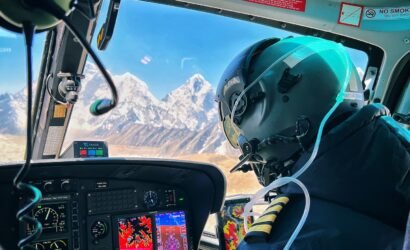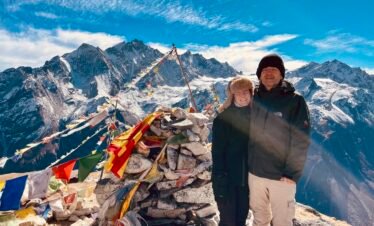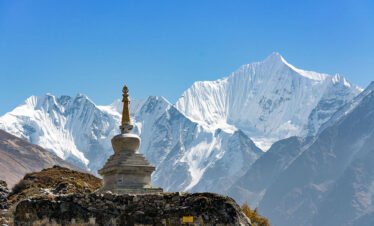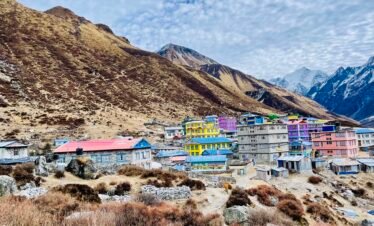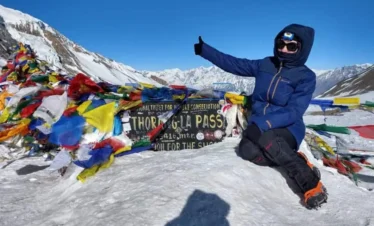
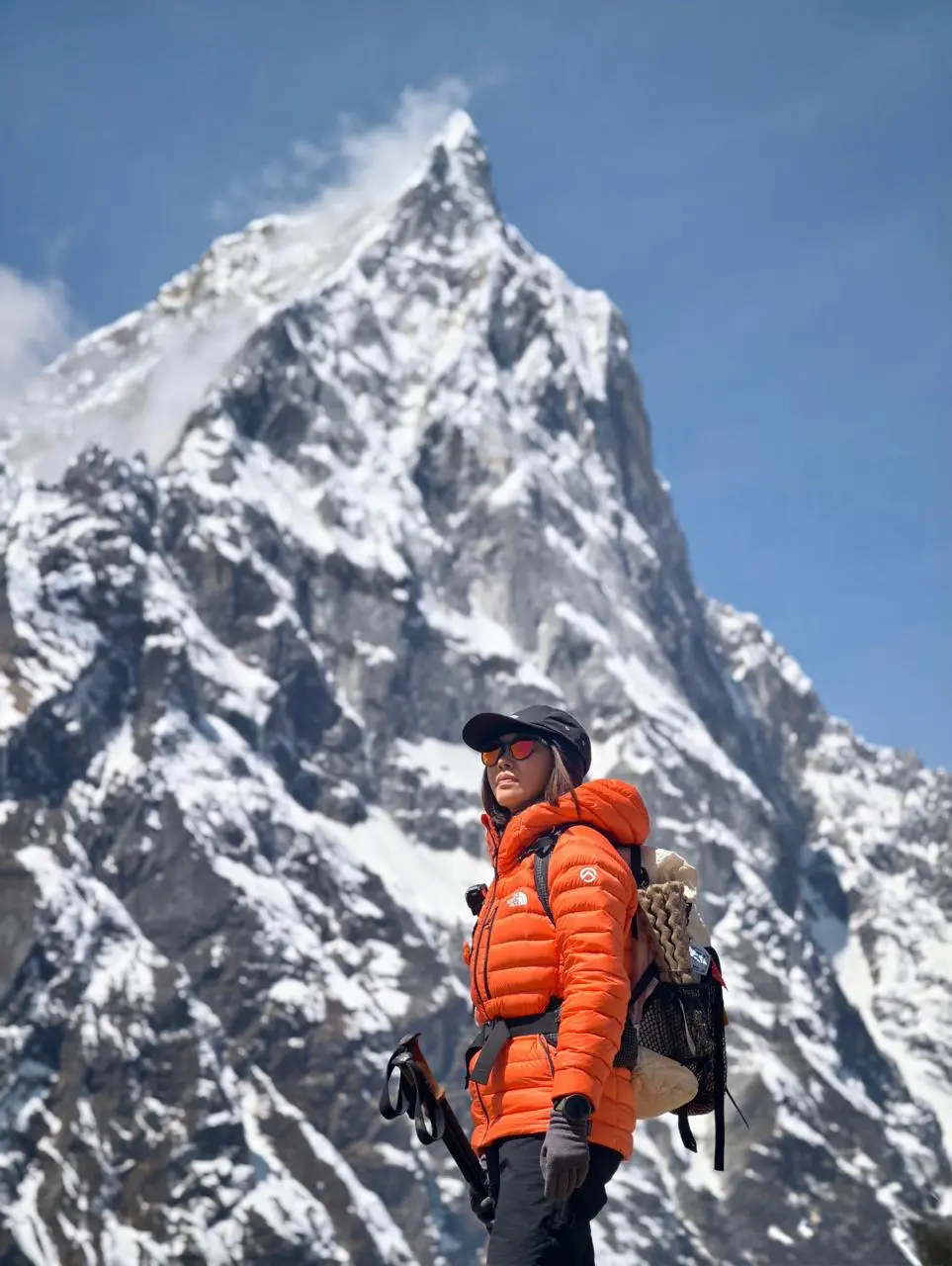
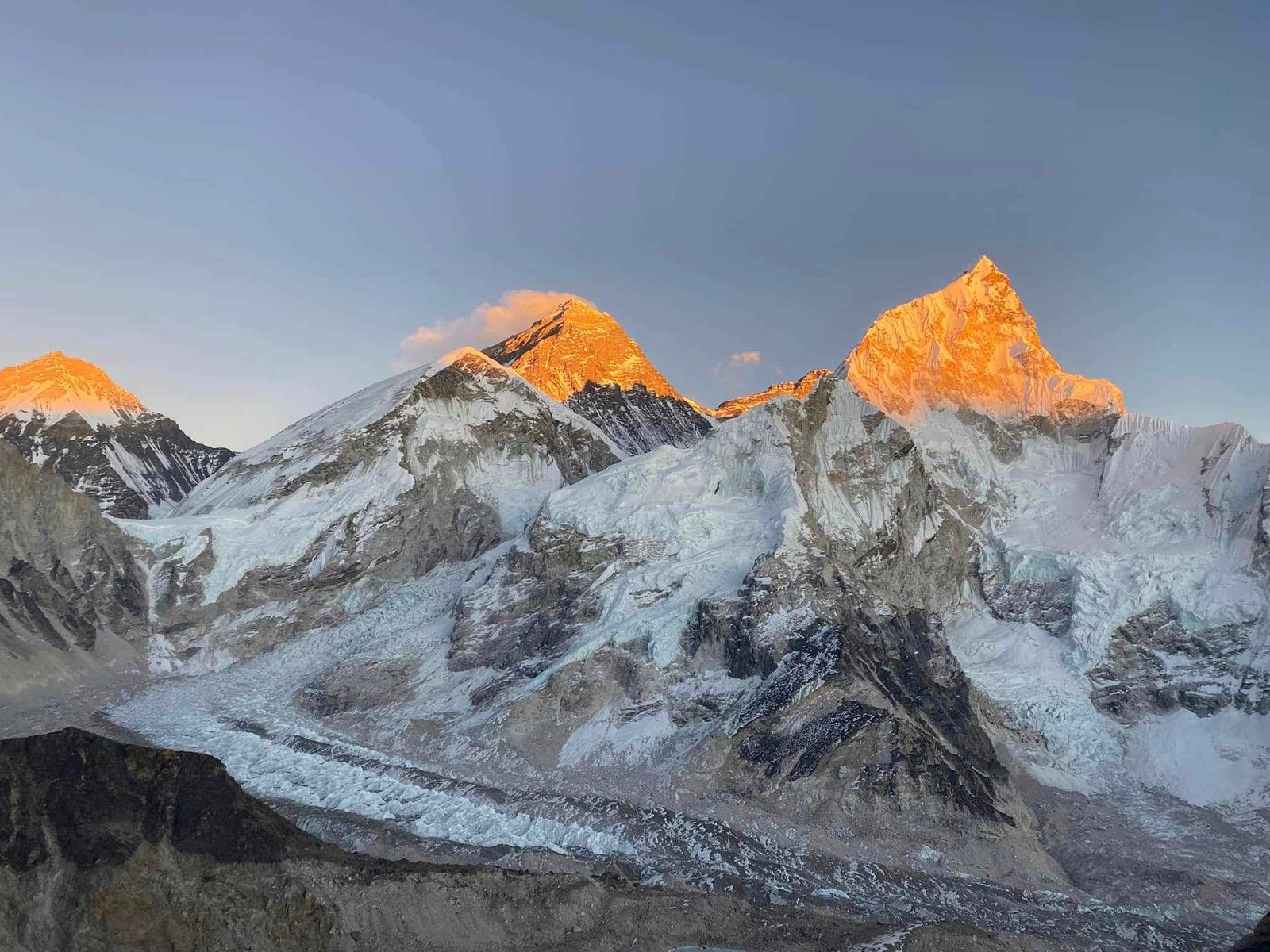
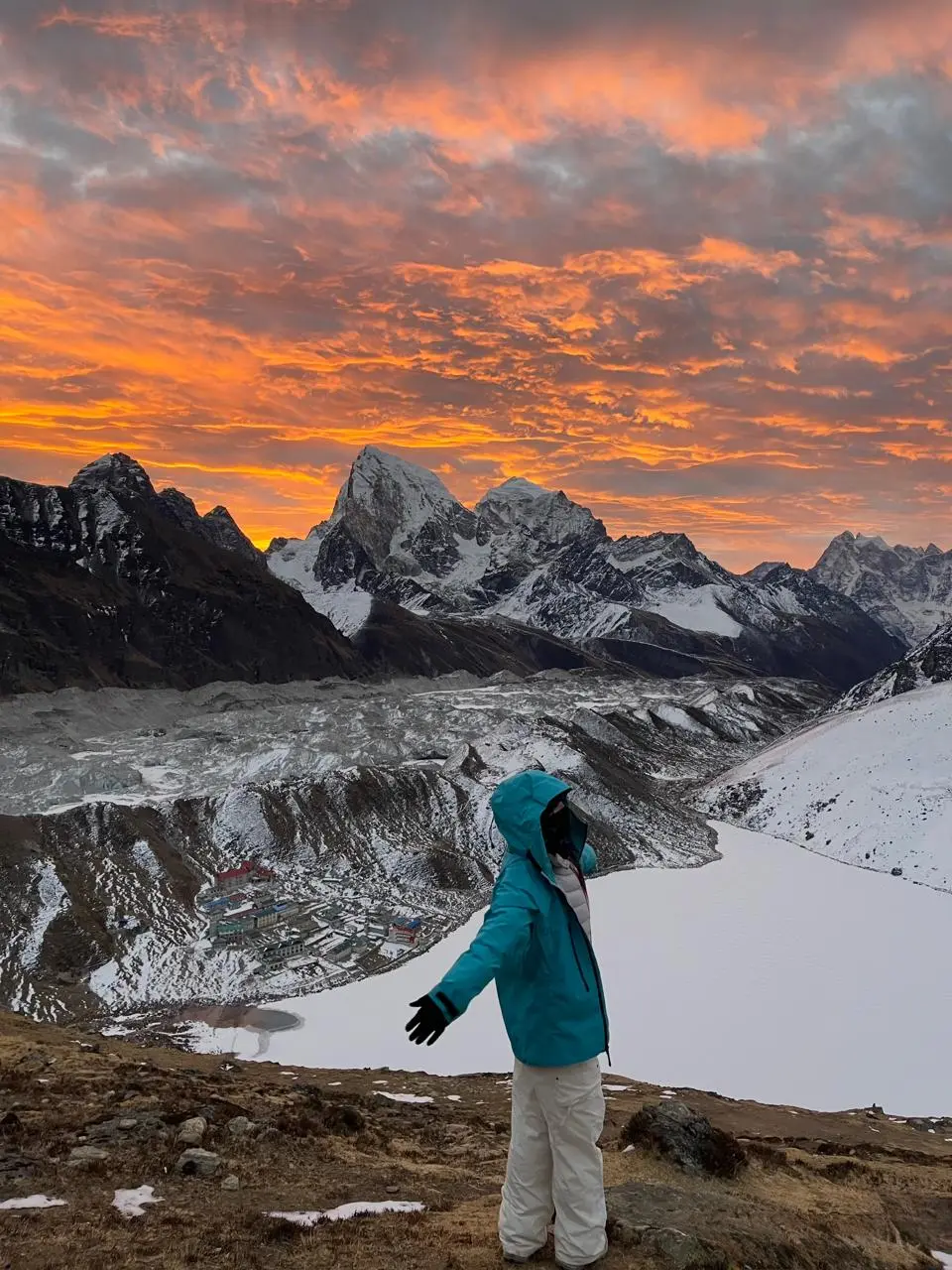
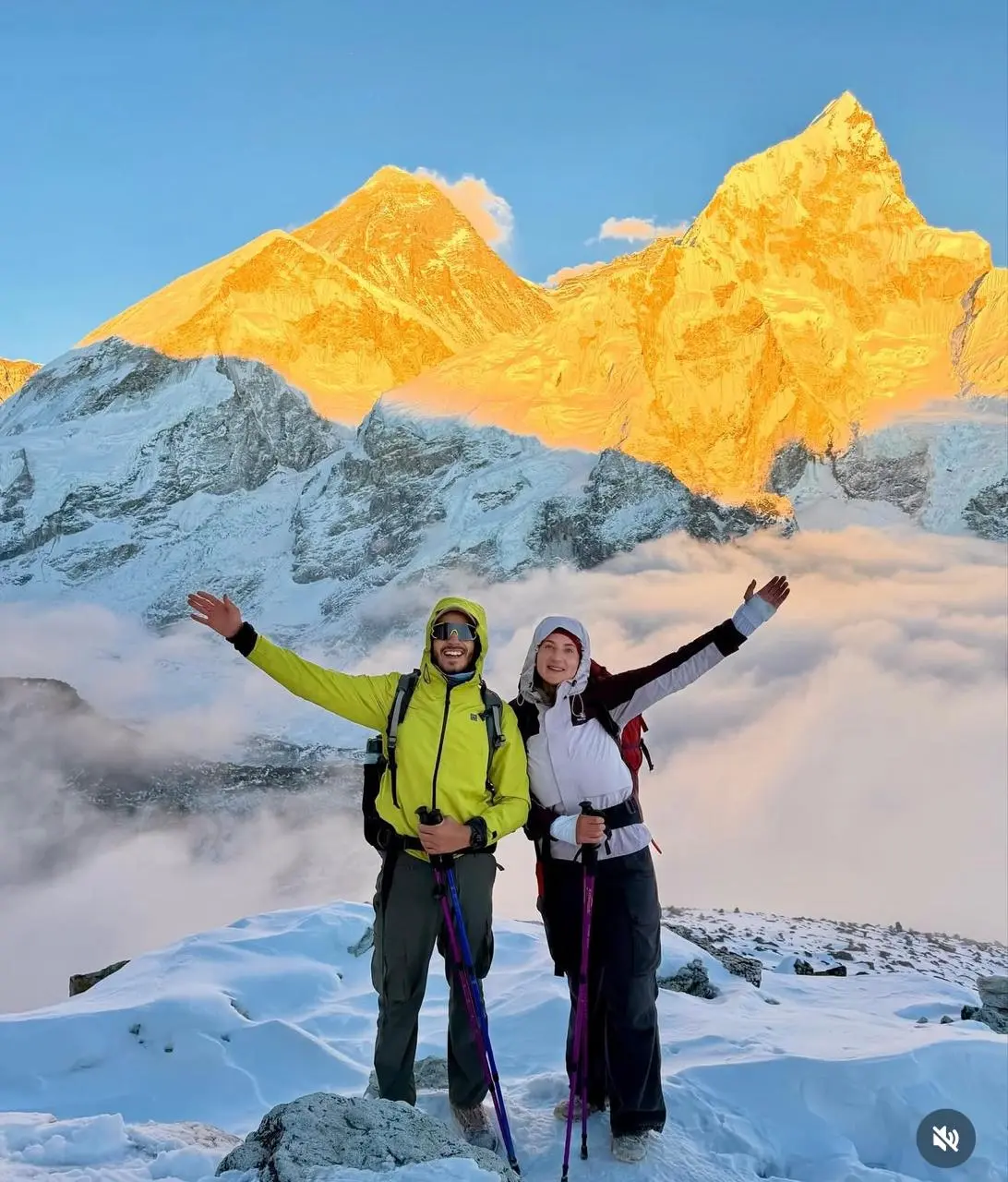
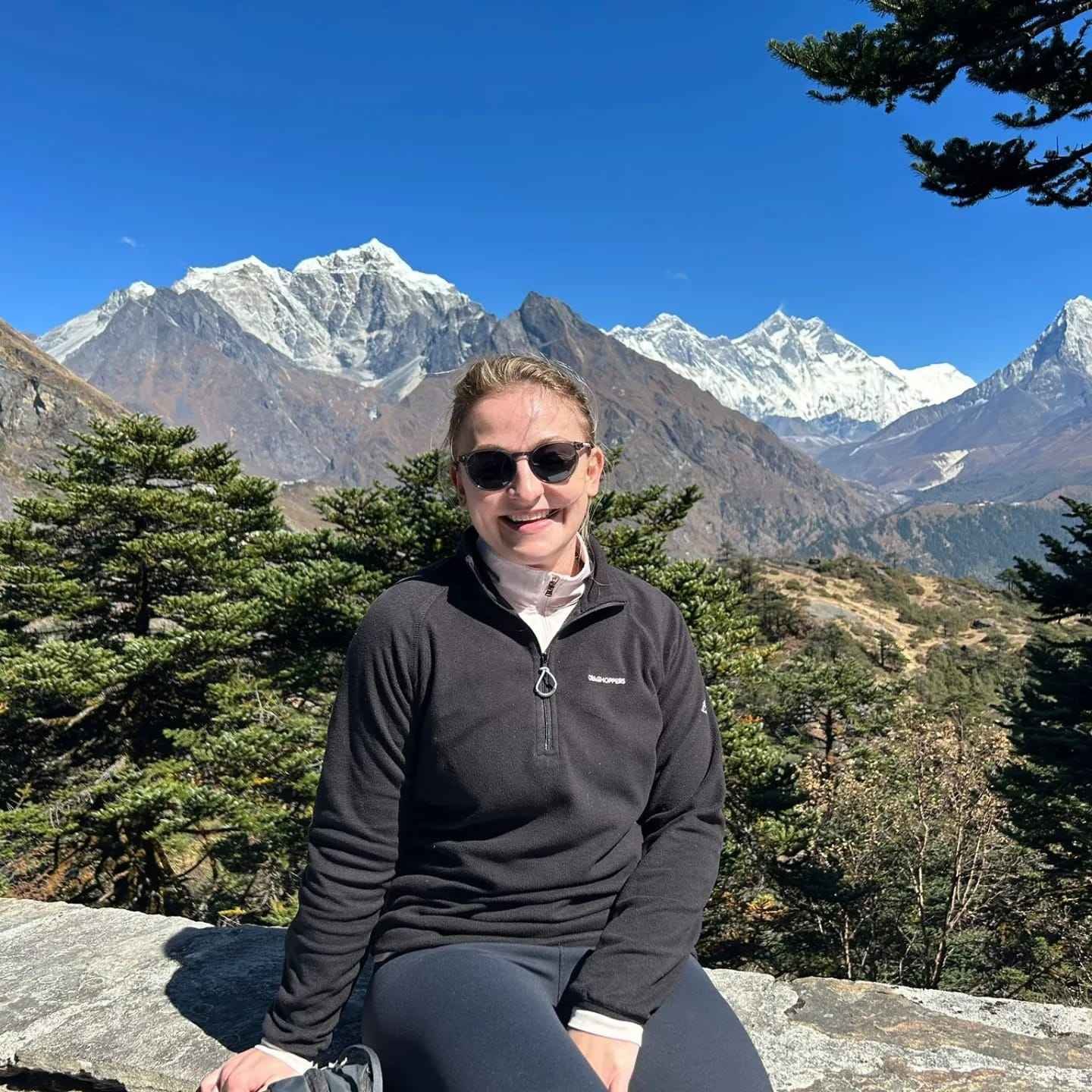
The Everest Three Passes Trek is the most complete high altitude route in the Khumbu, designed for trekkers who want to experience the full geography of the Everest region in one journey. Instead of following a single trail to Everest Base Camp, the route forms a circuit across three major mountain passes above 5,300 meters. These include Renjo La 5,360 meters, Cho La 5,420 meters, and Kongma La 5,535 meters.
From ground experience in the region, this route suits trekkers who already have time at altitude and understand how their body responds above 4,000 meters. Overnight stops reach serious elevation, including Gokyo 4,790 meters, Lobuche 4,910 meters, and Gorak Shep 5,164 meters. At these heights, oxygen levels are significantly reduced, so proper acclimatization and pacing are essential.
The journey starts with a mountain flight to Lukla 2,860 meters, followed by a gradual approach through Phakding 2,610 meters and Namche Bazaar 3,440 meters. Namche remains the key acclimatization point, where most itineraries include at least two nights before moving higher.
As altitude increases, the terrain shifts quickly from forest and river valley to open alpine landscape and glacial terrain. Along the route, three major viewpoints can be reached without climbing permits. Gokyo Ri 5,357 meters, Kala Patthar 5,545 meters, and Chhukung Ri 5,550 meters all offer wide Himalayan views and help understand the scale of the Everest region.
Long days and high elevation define this journey. On pass crossing days, altitude gain can be significant and weather conditions can change quickly. Careful planning, realistic pacing, and experienced guidance make a clear difference in overall safety and experience.


Everest Three Pass Trek Overview
Everest Three Passes Trek connects the entire upper Khumbu region through a high altitude circuit that links the Everest Base Camp Trek route, Gokyo Valley, and the eastern Chhukung valley. The route is defined by three major passes. Renjo La 5,360 meters connects Thame to Gokyo. Cho La 5,420 meters links Gokyo with the main Khumbu valley. Kongma La 5,535 meters connects Lobuche to Chhukung and stands as the highest point of the route.
The journey usually begins with a flight from Kathmandu or Manthali to Lukla 2,860 meters. From Lukla, the trail follows the Dudh Koshi valley to Namche Bazaar 3,440 meters. After acclimatization, the route moves toward Thame 3,800 meters and Lungden around 4,380 meters before crossing Renjo La into the Gokyo Valley.
Gokyo is one of the most scenic sections of the Everest region. The lakes sit between 4,700 and 5,000 meters and lie beside the Ngozumpa Glacier, the longest glacier in Nepal. A climb to Gokyo Ri 5,357 meters provides a wide panoramic view that includes Everest 8,848.86 meters, Lhotse 8,516 meters, Makalu 8,485 meters, and Cho Oyu 8,188 meters.
From Gokyo, the route crosses Cho La Pass 5,420 meters. This section can involve glacier travel and icy conditions depending on the season, especially in early spring and late autumn. After crossing, the trail joins the Everest Base Camp route at Dzongla and continues to Lobuche 4,910 meters and Gorak Shep 5,164 meters.
Everest Base Camp sits at 5,364 meters, followed by a climb to Kala Patthar 5,545 meters, which offers one of the best close views of Everest. This section is physically demanding mainly due to altitude rather than technical difficulty.
Kongma La 5,535 meters is the final and most remote pass. The crossing is long and requires stable weather. From the top, the route opens toward views of Makalu and the eastern Himalaya before descending to Chhukung 4,730 meters and continuing through Dingboche and Tengboche 3,860 meters.
The full route covers roughly 140 to 160 kilometers depending on itinerary variation. Daily walking ranges from 5 to 8 hours, with longer days during pass crossings. From an operational point of view, flexibility is essential. Weather conditions at high altitude can shift quickly, and timing of pass crossings is critical for safety.
Everest Three Passes Trek stands as one of the most demanding and rewarding high altitude journeys in Nepal, combining remote valleys, glacial terrain, and direct views of the highest mountains on earth in a single continuous route.
Who Should Do Everest Three Passes Trek
- Experienced trekkers with prior altitude exposure: Best suited for those who have already trekked above 4,000 meters and understand acclimatization and pacing.
- Physically fit and well prepared hikers: Requires the ability to walk 6 to 8 hours daily, including long and demanding days above 5,000 meters.
- Complete Everest region experience: Ideal for those who want to explore Gokyo Valley, Everest Base Camp, and Chhukung in one journey.
- Adventure focused trekkers: Suitable for steep ascents, rocky terrain, glacier sections, and changing mountain weather.
- Ready for high altitude: Multiple nights above 4,500 meters with pass crossings up to 5,535 meters.
- Travelers with enough time: Best for those who can commit 17 to 20 days with proper acclimatization.
- Mountain view seekers: Views of Everest 8,848.86 m, Lhotse 8,516 m, Makalu 8,485 m, and Cho Oyu 8,188 m.
- Prefer quieter trails: Includes less crowded areas like Thame, Lungden, Gokyo, and Chhukung.
- Not suitable for beginners: No prior trekking experience at altitude can increase difficulty and risk.
- Not ideal for low fitness or short trips: Due to long distance, high elevation, and overall physical demand.
Outline Itinerary of Everest Three Passes Trek
- Day 01: Arrival in Kathmandu (1,400 m) at Tribhuvan International Airport and transfer to hotel.
- Day 02: Flight to Lukla (2,840 m) or drive to Manthali (474 m) and short flight, then trek to Phakding (2,610 m) – 3 to 4 hours.
- Day 03: Trek from Phakding to Namche Bazaar (3,440 m) – 5 to 6 hours.
- Day 04: Acclimatization in Namche with a hike to Hotel Everest View (3,880 m).
- Day 05: Trek to Tengboche (3,860 m) – 5 to 6 hours.
- Day 06: Trek to Dingboche (4,410 m) – 5 to 6 hours.
- Day 07: Acclimatization in Dingboche with hike to Nangkartsang Peak (5,083 m).
- Day 08: Trek to Chhukung (4,730 m) – 4 to 5 hours.
- Day 09: Cross Kongma La Pass (5,535 m) and trek to Lobuche (4,910 m).
- Day 10: Visit Everest Base Camp (5,364 m) and return to Gorak Shep (5,164 m).
- Day 11: Hike to Kala Patthar (5,545 m) and descend to Lobuche.
- Day 12: Trek to Dzongla (4,830 m).
- Day 13: Cross Cho La Pass (5,420 m) and trek to Gokyo (4,800 m).
- Day 14: Hike to Gokyo Ri (5,357 m) and return to Gokyo.
- Day 15: Cross Renjo La Pass (5,360 m) and trek to Lungden (4,300 m).
- Day 16: Trek to Thame (3,800 m).
- Day 17: Trek to Namche Bazaar (3,440 m).
- Day 18: Trek to Lukla (2,840 m).
- Day 19: Fly back to Kathmandu or Manthali and drive to Kathmandu.
- Day 20: Transfer to the international airport for departure.
Why Book Everest Three Passes Trek with Next Trip Nepal
- Local Everest expertise: Direct field experience across Renjo La, Cho La, and Kongma La with strong understanding of terrain, weather, and real route conditions.
- No advance payment required: Book now and pay after arrival in Nepal with full transparency and flexibility.
- Hassle free organization: Permits, flights, accommodation, and logistics fully managed for a smooth experience.
- Proper acclimatization planning: Rest days at Namche and Dingboche to reduce altitude risk above 5,000 meters.
- Flexible itinerary: Adjusted based on weather, pass conditions, and your pace for safer crossings.
- Experienced high altitude guides: Strong decision making and safety awareness in remote mountain conditions.
- Support on technical sections: Extra care during Cho La glacier crossing and Kongma La high altitude section.
- Better accommodation selection: Comfortable tea houses in key locations for proper rest and recovery.
- Reliable logistics with backup planning: Prepared for flight delays and weather changes common in Everest region.
- Direct local company: No middle agents, clear communication, and full control of your trip from start to finish.
Everest Three Passes Trek Highlights
- Three high passes above 5,300 meters: Renjo La 5,360 meters, Cho La 5,420 meters, and Kongma La 5,535 meters.
- Full Everest region circuit: connects Namche, Gokyo Valley, Everest Base Camp route, and Chhukung valley in one journey.
- Everest Base Camp at 5,364 meters: stand at the base of the world’s highest mountain beside the Khumbu Glacier.
- Kala Patthar at 5,545 meters: best close viewpoint for Mount Everest, especially for sunrise views.
- Gokyo Lakes between 4,700 and 5,000 meters: high altitude lakes located beside the Ngozumpa Glacier.
- Gokyo Ri at 5,357 meters: wide panoramic view of Everest, Lhotse, Makalu, and Cho Oyu.
- Kongma La Pass at 5,535 meters: highest and most remote pass with strong alpine terrain.
- Cho La Pass at 5,420 meters: glacier crossing section that can involve ice depending on season.
- Renjo La Pass at 5,360 meters: one of the best viewpoints over Gokyo Valley and Everest.
- Views of four 8,000 meter peaks: Everest 8,848.86 meters, Lhotse 8,516 meters, Makalu 8,485 meters, Cho Oyu 8,188 meters.
- Diverse terrain: forest, river valley, alpine plateau, glacier, and high mountain passes in one route.
- Physically demanding route: requires strong stamina, good pacing, and proper acclimatization.
20 Days Everest Three Passes Trek Itinerary
Upon arrival at Tribhuvan International Airport in Kathmandu, a representative from Next Trip Nepal will be there to receive you and transfer you to your hotel in a private vehicle. This makes the arrival process simple and comfortable, especially after a long international flight.
A pre trek briefing will be arranged on the same day. If you arrive before 4 pm, the meeting will be held at our office. For arrivals later in the evening, we will conduct the briefing at your hotel. During this session, you will meet your guide and go through the full trip plan, including route details, daily schedule, altitude considerations, and safety approach.
This is also the right time to ask any practical questions about the journey, especially regarding high altitude conditions, packing, and expectations on the trail.
Please bring two passport size photos and a copy of your travel insurance policy. These are required for trekking permits and official documentation.
The remaining balance payment can be settled after your arrival in Nepal. You will also complete the necessary paperwork, including the trip agreement and liability form, before the start of the journey.
Fly to Lukla 2,860 m and trek to Phakding 2,610 m | Distance 6 to 8 km | Duration 3 to 4 hours
During peak trekking seasons such as March, April, May, September, October, and November, flights to Lukla are usually operated from Manthali Airport in Ramechhap due to air traffic at Kathmandu airport. Manthali is about a 5 to 6 hour drive from Kathmandu. On this day, you will leave very early, usually between 1:00 AM and 3:00 AM, and travel by shared tourist vehicle to Manthali, followed by a 20 minute flight to Lukla.
In non peak months including January, February, June, July, August, and December, flights normally operate directly from Kathmandu. You will leave your hotel early in the morning around 5:00 AM to 6:00 AM and take a 35 minute flight to Lukla.
A helicopter flight from Kathmandu to Lukla is also available as an alternative during busy seasons. This helps avoid the long drive to Manthali. The cost is around USD 550 per person on a sharing basis.
Flights to Lukla usually operate early in the morning due to mountain weather conditions, so it is important to prepare your gear the day before.
After landing in Lukla, you will have breakfast while your guide arranges porters. Typically, one porter is assigned for two trekkers.
The walk to Phakding is a gradual and straightforward start. The trail follows the Dudh Koshi River, passing through local villages such as Chaurikharka and Ghat. You will walk through forested sections and cross suspension bridges while getting your first experience of the Everest region.
Overnight stay at a guesthouse in Phakding.
Today is one of the most important days of the journey as you enter Sagarmatha National Park and gain significant altitude.
The trail continues along the Dudh Koshi River, crossing several suspension bridges, including the well known Hillary Bridge. The route passes through villages such as Monjo, where permits are checked before entering the national park.
After crossing the final bridge, the trail climbs steadily through pine forest toward Namche Bazaar. This section is physically demanding due to continuous uphill walking and increasing altitude.
On a clear day, you may get your first distant view of Mount Everest along the climb, along with views of Lhotse and other surrounding peaks.
Namche Bazaar is the main hub of the Khumbu region, located at 3,440 meters. It offers better facilities including bakeries, cafes, gear shops, and communication services, making it an ideal place for acclimatization.
Today is an important acclimatization day in Namche Bazaar, helping your body adjust to the increasing altitude before heading higher into the Everest region.
Instead of resting completely, you will take a short hike above Namche following the principle of climb high and sleep low. The trail leads to the Everest View Hotel 3,880 meters, one of the best viewpoints in the lower Khumbu.
From here, you can enjoy clear views of Mount Everest, Lhotse, Ama Dablam, and Thamserku. This is often the first proper panoramic mountain view of the journey.
The route also passes through Khumjung village, known for its traditional Sherpa culture and monasteries. This section gives insight into local life in the Everest region.
After spending time at higher elevation, you return back to Namche Bazaar to continue proper acclimatization. Staying active today helps reduce the risk of altitude sickness in the coming days.
The trail from Namche Bazaar to Tengboche is one of the most scenic sections of the Everest region, with continuous views of major Himalayan peaks.
The route begins with a gradual walk along a ridge, offering clear views of Mount Everest, Lhotse, Nuptse, and the iconic Ama Dablam. This section is relatively easy and allows steady movement at altitude.
After reaching Kyangjuma, the trail descends to the Dudh Koshi River at Phunki Tenga. From here, a steady uphill climb through forest leads toward Tengboche. This ascent is one of the more physically demanding parts of the day.
As you gain elevation, the landscape becomes more alpine, and the views open further across the Khumbu valley. Tengboche is known for its famous monastery, the largest in the Everest region, set against the backdrop of Ama Dablam.
This section of the Everest Three Passes route provides a balance of gradual trail, steep climb, and wide mountain views, making it one of the most rewarding trekking days.
The trail descends through forest from Tengboche and crosses the Imja Khola before continuing toward Pangboche, one of the oldest Sherpa settlements in the Everest region.
As you move higher, the landscape gradually changes from forest to open alpine terrain. The route passes through Somare and follows a steady climb with wide views of Ama Dablam, Lhotse, and surrounding peaks.
After Pangboche, vegetation becomes limited and the terrain feels more exposed. This section clearly marks the transition into higher altitude trekking above 4,000 meters.
The final stretch leads into Dingboche, located at 4,410 meters, a key acclimatization stop in the Khumbu region. The village sits in a wide valley with stone walls used to protect crops from cold winds.
This day is important for gradual altitude gain and preparing the body for higher elevations in the coming days of the Everest Three Passes route.
Today is a second acclimatization day in Dingboche, which is important before moving above 4,500 meters on the Everest Three Passes route.
You will take a hike toward Nangkartsang Peak 5,083 meters, following the principle of gradual altitude gain. The trail climbs steadily above Dingboche and offers clear views of Ama Dablam, Makalu, and the surrounding alpine landscape.
The hike can be physically demanding due to the altitude, but it plays a key role in helping your body adjust to lower oxygen levels. You can ascend as high as comfortable before returning.
From the higher points, you get wide views of the Imja Valley and the route toward Chhukung, which you will follow in the coming days.
After spending time at higher elevation, you descend back to Dingboche. Staying active today improves acclimatization and reduces the risk of altitude related issues on higher sections of the journey.
Today is a shorter trekking day as you move deeper into the Imja Valley, heading toward Chhukung, an important stop before crossing high passes in the Everest Three Passes route.
The trail gradually ascends from Dingboche, following a wide valley with open alpine terrain. As you walk, you are surrounded by impressive peaks including Lhotse, Ama Dablam, and Island Peak.
The landscape becomes more rugged and less vegetated as you gain elevation. This section gives a clear feeling of high altitude trekking, with wide views and fewer settlements along the route.
Chhukung at 4,730 meters is a small settlement used as a base for climbing Island Peak and for trekkers preparing to cross Kongma La Pass.
The shorter distance today allows proper rest and preparation for the upcoming high altitude crossing.
Today is one of the most challenging days as you cross Kongma La Pass 5,535 meters, the highest pass of the Everest Three Passes route.
The trail starts early from Chhukung with a steady and demanding ascent over rocky terrain. There are no settlements along this section, so it is important to carry enough water and move at a consistent pace.
As you gain elevation, the route becomes more remote and rugged, with views of Lhotse, Nuptse, Makalu, and surrounding high peaks. Weather conditions can change quickly at this altitude.
From the top of Kongma La, you get wide views over the Khumbu Glacier and eastern Himalayan range. The descent toward Lobuche involves loose rocks and glacial terrain, requiring careful footing.
After a long and demanding crossing, the trail reaches Lobuche 4,910 meters, where it joins the main Everest Base Camp route.
This is a physically demanding day due to high altitude, long walking hours, and remote terrain, making proper pacing and hydration essential.
Today is one of the main highlights as you reach Everest Base Camp 5,364 meters, the base of the world’s highest mountain.
The trail from Lobuche follows the lateral moraine of the Khumbu Glacier, passing through rocky terrain and gradually ascending toward Gorak Shep. The landscape here is rugged and fully alpine.
After a short break at Gorak Shep, the route continues toward Everest Base Camp. The trail includes uneven rocky sections and glacier moraine, requiring steady pacing due to altitude.
At Everest Base Camp, you stand at the foot of Mount Everest surrounded by ice formations and the Khumbu Icefall. This is a major achievement and one of the most iconic locations in the Everest region.
After spending time at base camp, you return back to Gorak Shep 5,164 meters following the same trail.
This is a long and physically demanding day due to high altitude and distance, so maintaining a slow and consistent pace is important.
The day starts early with a hike to Kala Patthar 5,545 meters, one of the best viewpoints in the Everest region for close views of Mount Everest.
The climb is steep and physically demanding due to altitude, but reaching the top rewards you with clear panoramic views of Everest, Lhotse, Nuptse, and the surrounding Himalayan range.
Kala Patthar is widely considered the best location to see Everest clearly, especially during sunrise when the mountain is less affected by cloud cover.
After returning to Gorak Shep, the trail descends along the Khumbu Glacier route back toward Lobuche 4,910 meters.
This section is easier compared to previous days, but altitude still requires steady pacing. The day combines one of the best viewpoints of the Everest region with a gradual descent.
Today is a shorter and more relaxed day as you leave the main Everest Base Camp trail and head toward Dzongla, a quieter section of the Everest Three Passes route.
The trail gradually descends from Lobuche before traversing along the side of the valley. The route offers views of Cholatse, Taboche, and surrounding high peaks.
Compared to previous days, the walk is less demanding, allowing some recovery after the long days around Everest Base Camp and Kala Patthar.
As you move away from the main trail, the number of trekkers decreases, and the environment feels more remote and peaceful.
Dzongla at 4,830 meters sits below Cho La Pass and serves as an important stop before the next high pass crossing.
Today is another challenging and rewarding day as you cross Cho La Pass 5,420 meters, linking the Khumbu valley with the Gokyo Valley.
The trail begins early from Dzongla with a gradual climb that becomes steeper as you approach the pass. The terrain is rocky and can include icy sections depending on the season, especially in spring and autumn.
Near the top, the route involves crossing a glacier section where careful footing is required. This is one of the more technical parts of the Everest Three Passes route.
From the top of Cho La, you get wide views of surrounding peaks including Ama Dablam and the glacier landscapes of the region.
After crossing the pass, the trail descends toward the Gokyo Valley, passing along the edge of the Ngozumpa Glacier, the longest glacier in Nepal.
The route continues toward Gokyo 4,800 meters, known for its high altitude lakes and open mountain views. This section feels more spacious compared to the narrow Khumbu valley.
Today is one of the most scenic days in the Everest Three Passes route with a hike to Gokyo Ri 5,357 meters, one of the best viewpoints in the entire Everest region.
The climb to Gokyo Ri is steep but relatively short. From the top, you get a wide panoramic view of Mount Everest, Lhotse, Makalu, and Cho Oyu, along with a clear view of the Ngozumpa Glacier.
The Gokyo Lakes below create a unique landscape, with turquoise water surrounded by high peaks and glacial terrain. This area is less crowded compared to the Everest Base Camp trail and offers a more open and peaceful environment.
After spending time at the viewpoint, you descend back to Gokyo and can explore the surrounding lakes and glacier area.
This day allows proper recovery while still reaching one of the highest and most rewarding viewpoints of the journey.
Today involves crossing Renjo La Pass 5,360 meters, the final high pass of the Everest Three Passes route. This section is known for its wide panoramic views and relatively less technical terrain compared to Cho La.
The climb from Gokyo starts early and ascends steadily along a clear trail. As you gain elevation, the view opens toward the Everest range, including Everest, Lhotse, and Cho Oyu.
From the top of Renjo La, you get one of the best viewpoints of the entire journey, overlooking the Gokyo Lakes and surrounding Himalayan peaks.
The descent from the pass leads into a quieter and less visited part of the Khumbu region. The trail gradually drops toward Lungden through open alpine terrain.
This section feels more remote compared to the main Everest Base Camp route, offering a different perspective of the region with fewer trekkers.
Today’s route descends from Lungden into the quieter Thame Valley, offering a different perspective of the Everest region away from the main trekking routes.
The trail gradually descends through open alpine terrain before entering areas with more vegetation. The walk is easier compared to previous high pass days, allowing your body to recover as altitude decreases.
Along the way, you pass traditional Sherpa settlements and experience a more authentic local lifestyle compared to the busier Everest Base Camp trail.
Thame at 3,800 meters is a historic Sherpa village known as the home region of several famous Everest climbers. The area is also culturally important, with monasteries and traditional mountain life still well preserved.
This section of the Everest Three Passes route feels more peaceful and less crowded, making it a good transition toward the final days of the journey.
The trail today follows a gradual descent from Thame back toward Namche Bazaar, rejoining the main Everest region route.
The path passes through traditional Sherpa villages and follows the Bhote Koshi valley. Compared to earlier days, the walk is easier with decreasing altitude and more comfortable breathing conditions.
As you approach Namche, the trail becomes more familiar and slightly busier, marking your return to the central hub of the Khumbu region.
Namche Bazaar at 3,440 meters offers a good opportunity to rest, recharge, and enjoy better facilities after several days in more remote areas.
This day provides a steady and comfortable transition toward the final stage of the Everest Three Passes journey.
Today is the final trekking day as you descend from Namche Bazaar back to Lukla, following the same trail along the Dudh Koshi valley.
The route involves a long descent through forested sections, suspension bridges, and familiar villages such as Monjo, Phakding, and Ghat.
Compared to earlier days, the walk is easier due to decreasing altitude, but the distance makes it a full day of trekking.
Along the way, you get a final chance to enjoy views of the river valley and reflect on the journey across the Everest Three Passes route.
Reaching Lukla marks the completion of the trekking section, where the journey first began.
Today you leave the Everest region with a morning flight from Lukla back to Kathmandu or Manthali, depending on the season and flight schedule.
During peak trekking seasons, flights usually operate between Lukla and Manthali Airport, followed by a 5 to 6 hour drive back to Kathmandu. In non peak months, flights typically operate directly to Kathmandu.
The flight offers one last aerial view of the Himalayan range before returning to the city environment.
Due to weather conditions in the mountains, flight schedules can sometimes be delayed, so flexibility is important on this day.
After returning to Kathmandu, you have time to relax and recover after completing the Everest Three Passes journey.
Today marks the end of your Everest Three Passes journey. Depending on your flight schedule, you will be transferred to Tribhuvan International Airport for your onward departure.
Our team will arrange your airport transfer and ensure a smooth departure process.
After completing one of the most demanding high altitude routes in Nepal, you leave with a full experience of the Everest region, including its remote valleys, high mountain passes, and Himalayan landscapes.
We hope you had a safe and memorable journey with Next Trip Nepal and look forward to welcoming you again.
Cost Details
What’s Included & Excluded in Everest Three Pass Trek
- Airport pickup and drop by private tourist vehicle.
- Two nights hotel in Kathmandu at 3 star category on twin sharing basis with breakfast.
- Three meals a day during the trek breakfast, lunch, and dinner with tea or coffee at breakfast and during meals, plus seasonal fruits after dinner.
- Trekking lodge tea house accommodation throughout the trek.
- All required permits including:
- Sagarmatha National Park Entry Permit
- Khumbu Pasang Lhamu Rural Municipality permit
- Kathmandu to Lukla round trip flight or Manthali to Lukla during peak season, including all airport transfers.
- Experienced licensed trekking guide and porter one porter for two trekkers, including salary, accommodation, meals, transport, and insurance.
- First aid kit and basic medical support carried by the guide.
- Pulse oximeter for monitoring oxygen level and heart rate during the trek.
- Sleeping bag, down jacket, and trekking poles if required.
- Next Trip Nepal duffel bag, t shirt, and cap.
- Everest region trekking map.
- Farewell dinner in Kathmandu after completing the trek.
- All government taxes and official service charges.
- Helicopter rescue arrangement if required, covered by your travel insurance.
Cost Excludes
- Nepal entry visa fee: $30 USD for 15 days, $50 USD for 30 days, and $125 USD for 90 days. (Visa can be obtained on arrival at Tribhuvan International Airport, Kathmandu).
- Travel and medical insurance.
- International airfare to and from Nepal.
- Personal expenses (such as laundry, telephone, souvenirs, and extra snacks).
- Desserts and sweet items (chocolate, cake, pie, pudding).
- Hot shower and battery charging fees at tea houses (if applicable).
- Tips for your guide, porter, and driver (Tipping is expected).
- Excess baggage (more than 15kg for Lukla flight)
Availability & Departure Dates
Planning a private trip? Fill out the form and our travel experts will be in touch shortly.
-
Available Group Discount Available Available PackagesTuesdayMay 26, 2026SundayJune 14, 2026$2,350$2,2006% OffAvailable
-
Available Group Discount Available Available PackagesWednesdayMay 27, 2026MondayJune 15, 2026$2,350$2,2006% OffAvailable
-
Available Group Discount Available Available PackagesThursdayMay 28, 2026TuesdayJune 16, 2026$2,350$2,2006% OffAvailable
Overall Trip Rating:
-
Verified Purchase
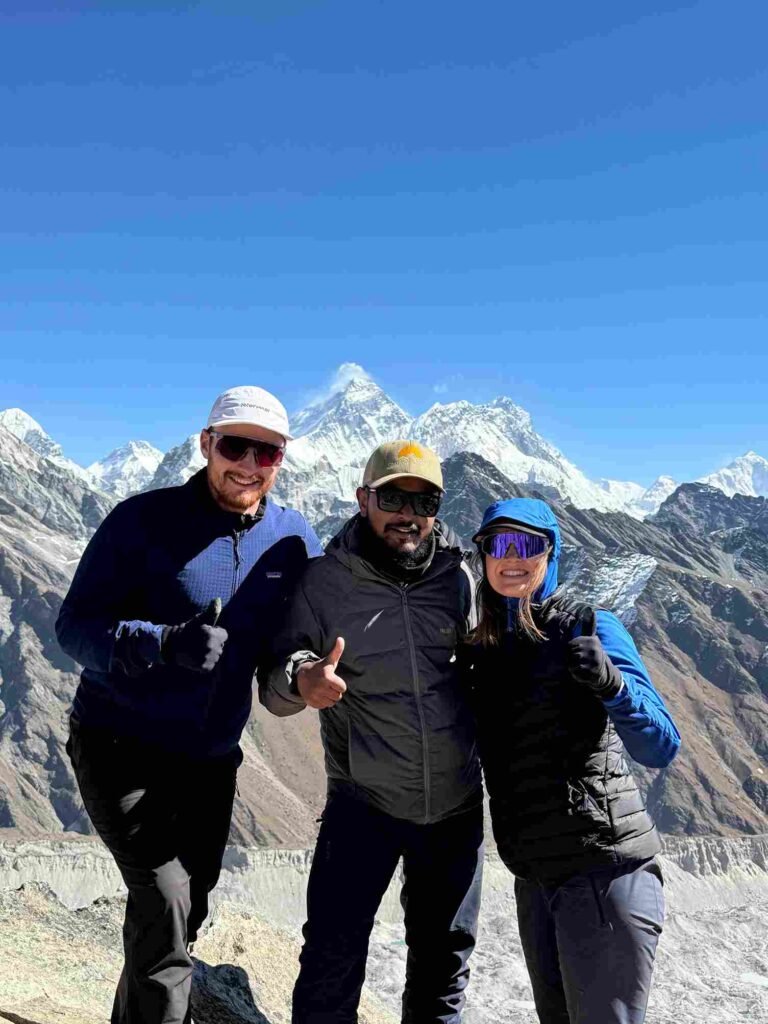
By James W(United Kingdom (UK))May 28, 2026 Best Service from Next Trip NepalWe were looking for the best trek company in Nepal for Everest Three Passes, and after speaking with a few operators, we decided to go with Next Trip Nepal. The communication before the trip was clear and helpful, especially regarding packing and altitude preparation. During the trek, weather conditions changed near Cho La Pass, and the guide adjusted our schedule slightly to make the crossing safer. This kind of decision making made a big difference to the overall experience. The pace was realistic, and we had enough time to acclimatize properly. The entire journey, from Namche to Gokyo and back via Renjo La, felt well managed. It was a challenging trek, but we always felt supported and safe.
![Everest Three pass trekking]()
![]()
![Everest Three pass trekking]() Date of Experience: April 15, 2026
Date of Experience: April 15, 2026 -
Verified Purchase
By Lukas W(Germany)April 30, 2026 Excellent Organization and Safe High Pass CrossingI have done multiple treks in Nepal, including Annapurna Circuit, but this was my first Everest Three Passes route. I chose Next Trip Nepal after comparing several companies, and they proved to be one of the best trek agencies in Nepal. The itinerary was well planned with proper acclimatization. Crossing Kongma La and Cho La was challenging, but the guide managed the pace very professionally. I appreciated their focus on safety and real mountain experience.Date of Experience: April 04, 2026
-
Verified Purchase
By Pierre D April 28, 2026 Local Expertise and Real Mountain ExperienceEverest Three Passes Trek is not an easy route, but it is one of the most rewarding experiences I have ever had. I am very happy I chose Next Trip Nepal because they are a local company with real knowledge of the Everest region. Our guide understood the terrain, weather, and altitude very well. He knew when to move early, when to slow down, and how to manage difficult sections like Cho La Pass. This kind of local experience is very important in high altitude trekking. Even in remote places like Gokyo, Dzongla, and Thame, everything was organized well. After the recent glacier lake event near Thame, conditions are more basic there, but the team managed it properly and kept everything comfortable. If you are looking for a trustworthy trekking company in Nepal with real experience, I would strongly recommend Next Trip Nepal.
![Everest three pass trek]()
![]()
![]()
![]() Date of Experience: April 03, 2026
Date of Experience: April 03, 2026 -
Verified Purchase
By Emily C(United States (US))February 28, 2026 Smooth Experience for Solo TrekkerI booked Everest Three Passes Trek as a solo traveler, and everything was handled very smoothly. From airport pickup to Lukla flights, the team organized everything without stress. The guide was experienced and regularly checked oxygen levels. Even in remote areas like Dzongla and Lungden, accommodation and food were managed well. One of the best trekking companies in Nepal for serious routes.Date of Experience: February 02, 2026
-
Verified Purchase
By Daniel B(Australia)September 23, 2025 Perfect Organization for Group Three Pass TrekWe were a group of four friends doing Everest Three Passes Trek, and Next Trip Nepal handled everything very efficiently. From permits and flights to guides and porters, everything was arranged properly. The most challenging part was crossing Kongma La, but the guide made sure we stayed together and maintained a steady pace. He also helped us understand how to manage energy and hydration at high altitude. What I liked most was that the team was flexible. If someone felt tired or needed a slower pace, they adjusted without pressure. For a demanding trek like this, having a professional and experienced team makes a big difference. I would definitely consider them one of the best trekking companies in Nepal.
![]() Date of Experience: September 03, 2025
Date of Experience: September 03, 2025 -
Verified Purchase
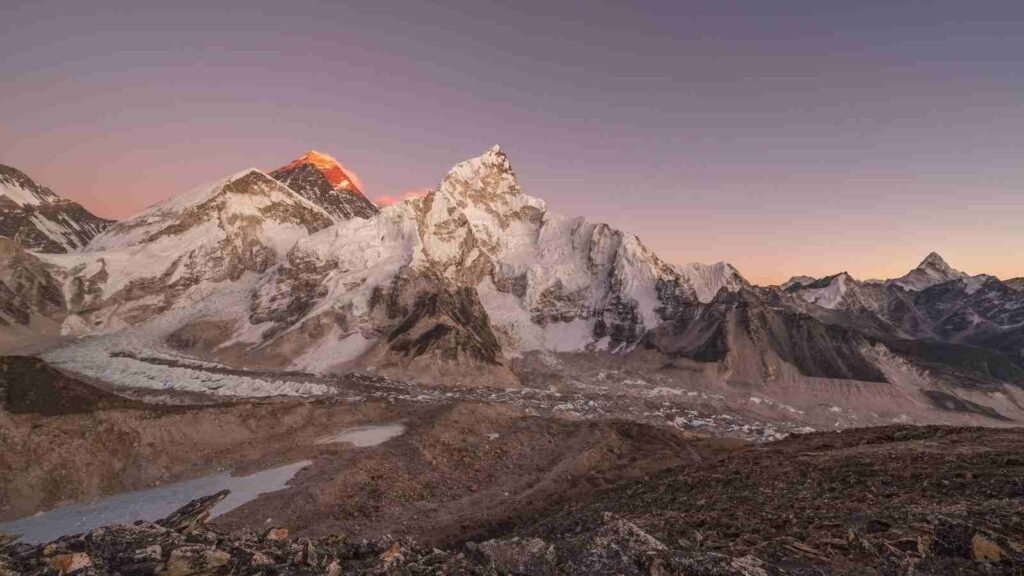
By Matthias H(Ireland)March 12, 2025 ncredible Everest Three Passes Experience with a Strong Local TeamI recently completed the Everest Three Passes Trek with Next Trip Nepal and it was one of the most memorable experiences I have ever had. The entire 20 day journey was well organized from the moment I arrived in Kathmandu. The trip was managed by Kiran, and everything was handled professionally from start to finish. Before the trek, all details were clearly explained, and I felt fully prepared for what to expect in terms of route, altitude, and daily routine. During the trek, my guide Sudip and porter Ravi took great care of me. Very quickly, it felt less like a guided trip and more like trekking with good friends. Sudip has strong experience in the Everest region, and it showed every day. He knew the best places for food and rest, even in remote areas like Dzongla and Lungden, and managed the pace well during difficult sections like Kongma La and Cho La Pass. What stood out was how smoothly everything was handled in such a remote and high altitude environment. Even in places where conditions are basic, the team made sure everything was comfortable and well planned. The route itself is challenging, but the views from Gokyo Ri, Kala Patthar, and the high passes are truly unforgettable. I also met many great people along the way, which made the journey even more enjoyable. If you are planning Everest Three Passes Trek, I strongly recommend Next Trip Nepal. They are a reliable local trekking company with real experience in the mountains.Date of Experience: April 04, 2025

Write a Review Cancel reply
Thank you. Your review will appear after admin approves it.
Please fill all the fields.
You must be logged in to post a comment.
Essential Information for Everest Three Passes Trek
Everest Three Passes Trek Packing List
This packing list is based on real conditions in the Everest region where temperatures drop below freezing above 4,000 meters. Proper layering, weight control, and essential gear are important for safety and comfort.
Clothing Layers
- Thermal base layer top and bottom
- Moisture wicking t shirts
- Fleece jacket or mid layer
- Lightweight insulated jacket
- Waterproof jacket with hood
- Waterproof or windproof trekking pants
Warm Gear for High Altitude
- Heavy down jacket with hood
- Warm hat or beanie
- Neck gaiter or buff
- Insulated gloves inner and outer
- Thermal socks and wool socks
Trekking Equipment
- Strong trekking boots already used before the trip
- Camp shoes or sandals
- Trekking poles for support
- Daypack 25 to 35 liters with rain cover
- Duffel bag for porter use
Sleeping Gear
- Four season sleeping bag rated for cold conditions
- Sleeping bag liner for extra warmth
Hydration and Essentials
- Water bottles or hydration bladder 2 to 3 liters
- Water purification tablets or filter
- Sunglasses with UV protection
- Sunscreen and lip balm
- Headlamp with extra batteries
- Power bank
Personal Items
- Passport and permits
- Travel insurance copy
- Cash for personal expenses
- Basic first aid kit
- Toiletries and quick dry towel
Optional but Useful
- Microspikes for icy sections like Cho La Pass
- Gaiters for snow and dust
- Camera or phone with extra storage
- Energy snacks or electrolytes
Practical Tips
- Keep duffel bag weight around 10 kg
- Avoid cotton clothing, it dries slowly at altitude
- Keep important items in your daypack
- Always carry an extra warm layer
Best Time for Everest Three Passes Trek with Altitude and Temperature
The best time for Everest Three Passes Trek is during spring from March to May and autumn from September to November. These seasons offer the most stable weather, clear mountain views, and safer conditions for crossing high passes above 5,300 meters.
Due to extreme altitude variation from 2,800 meters in Lukla to over 5,500 meters at Kongma La Pass, temperature and weather conditions change significantly throughout the trek.
Spring Season March to May
Spring is one of the most reliable seasons for Everest trekking. Weather is relatively stable, and visibility is generally good, especially in the mornings.
- Namche Bazaar 3,440 m: Day 8 to 15°C, Night 0 to minus 5°C
- Dingboche 4,410 m: Day 5 to 10°C, Night minus 5 to minus 10°C
- High Passes above 5,300 m: Day minus 5 to 5°C, Night below minus 15°C
Autumn Season September to November
Autumn is considered the best overall season due to clear skies, dry conditions, and excellent mountain visibility.
- Namche Bazaar 3,440 m: Day 10 to 18°C, Night 0 to minus 5°C
- Dingboche 4,410 m: Day 5 to 12°C, Night minus 5 to minus 10°C
- High Passes above 5,300 m: Day minus 5 to 5°C, Night below minus 15°C
Winter Season December to February
Winter trekking is possible but very challenging due to extreme cold and snow accumulation at high passes.
- Namche Bazaar: Day 5 to 10°C, Night minus 10°C
- Above 5,000 m: Day below freezing, Night minus 20°C or lower
Monsoon Season June to August
Monsoon brings rain, cloud cover, and poor visibility. Flights to Lukla are frequently delayed or cancelled during this period.
- Lower region 2,800 to 3,500 m: Warm and humid
- Higher altitude: Cloudy with limited views
Real Field Advice
- Start early morning for pass crossings to avoid afternoon wind and cloud build up
- Temperature drops rapidly above 5,000 meters even in good weather
- Wind chill can make it feel much colder than actual temperature
- Weather can change within hours in the Everest region
How to Plan Everest Three Passes Trek from USA, Europe, and International Travelers
Most trekkers doing the Everest Three Passes route travel from the USA, Europe, Australia, and other international destinations. The journey begins with an international flight to Kathmandu, Nepal.
Flights to Kathmandu
There are no direct flights from the USA or Europe to Nepal. Common transit hubs include Doha, Dubai, Istanbul, and Delhi. Total travel time usually ranges between 15 to 25 hours depending on the route.
- From USA: Typically 18 to 25 hours with one or two connections
- From Europe: Around 12 to 18 hours depending on departure city
Arrival and Trek Preparation
After arriving in Kathmandu at 1,400 meters, most trekkers stay one or two nights for preparation. This includes gear check, permit arrangement, and pre trek briefing.
Flight to Lukla
The trek starts with a flight to Lukla at 2,860 meters. During peak seasons, flights operate from Manthali Airport, which requires a 5 to 6 hour drive from Kathmandu.
Visa for Nepal
Nepal offers visa on arrival for most nationalities. The process is straightforward at Kathmandu airport. You will need a passport valid for at least 6 months and a passport photo.
Time Zone and Jet Lag
Nepal operates on Nepal Time (GMT plus 5 hours 45 minutes). Travelers from the USA and Europe may experience jet lag, so arriving at least one day before the trek is recommended.
Real Travel Advice
- Plan at least one buffer day after the trek for flight delays from Lukla
- Carry essential gear in your hand luggage in case of baggage delay
- Exchange some local currency in Kathmandu for personal expenses
- Inform your bank before travel to avoid card issues
Accommodation and Food on Everest Three Passes Route
Accommodation on the Everest Three Passes route is based on local tea houses. The standard is generally good in lower areas and becomes more basic as you move higher and into remote sections of the Khumbu region.
Accommodation on Remote Sections
In places like Dzongla, Lobuche, Gokyo, Lungden, and Thame, tea house facilities are more basic compared to Namche Bazaar or Dingboche. Rooms are simple with twin beds, and most services such as hot showers and charging are limited or available at extra cost.
In Dzongla and Lobuche, accommodation is limited due to location and altitude. Rooms are basic but sufficient for overnight stay before and after high pass crossings.
Gokyo offers slightly better options compared to other high altitude areas because of its popularity and location near the lakes. However, it is still a remote area, and facilities remain simple.
Lungden is one of the quieter stops on the route, with very limited tea houses. Availability can be tight during peak season, so planning ahead is important.
In Thame, accommodation is available but currently more basic due to recent natural events. In August 2024, two glacier lakes above Thame burst, causing a glacial lake outburst flood in the valley. Since then, some lodges have been affected, and while accommodation is still available, facilities are more limited than before.
Overall, even in remote areas, it is often surprising to find functional tea houses and rooms at such high altitude. Expectations should remain realistic, especially above 4,500 meters.
Food on the Route
Food on the Everest Three Passes route is simple, fresh, and designed to provide energy for long trekking days. Menus are similar across the region but become more limited at higher altitude.
- Dal Bhat rice, lentils, and vegetables is the most reliable and widely available meal
- Noodles, fried rice, pasta, potatoes, and soups are common
- Breakfast includes eggs, porridge, bread, pancakes, tea, and coffee
- Garlic soup and hot drinks are commonly used at higher altitude
Meat is available in lower areas but is generally avoided above Namche due to transport conditions and storage limitations.
Practical Advice
- Stick to freshly cooked meals for better hygiene
- Drink plenty of fluids to support acclimatization
- Expect limited menu options in high altitude areas
- Dal Bhat remains the most consistent and energy rich option throughout the trek
Everest Three Passes Trek Permits 2026
All trekkers on the Everest Three Passes Trek require the following permits. Next Trip Nepal arranges all permits before your departure from Kathmandu. Bring your passport and two passport size photos for permit processing.
Sagarmatha National Park Entry Permit
| Cost | NPR 3,000 per person (approximately USD 23) |
| SAARC Citizens | NPR 1,500 per person |
| Where to Get | Nepal Tourism Board Kathmandu or at Monjo checkpoint on the trail |
| About | Mandatory for all visitors entering Sagarmatha National Park, a UNESCO World Heritage Site covering 1,148 square kilometers in the Khumbu region of Solukhumbu District. Revenue funds the protection and maintenance of the park’s alpine ecosystem. |
Khumbu Pasang Lhamu Rural Municipality Permit
| Cost | NPR 2,000 per person (approximately USD 15 to 17) |
| Where to Get | Collected at entry points in Lukla or Monjo. Not available at Kathmandu Tourism Board office |
| About | Local municipality permit supporting community infrastructure and development in the Khumbu region. Required for all trekkers entering the municipality area which covers the full Everest Three Passes Trek route. |
TIMS Card
| Status 2026 | No longer required for the Everest region as of current regulations |
| Note | The TIMS card requirement for the Everest region was removed. The Sagarmatha National Park permit and Khumbu Pasang Lhamu permit are the only mandatory documents alongside your passport. |
Total Permit Cost per Person: Approximately NPR 5,000 to 7,000 (USD 40 to 60). All permits are included in your Next Trip Nepal package price. No additional permit cost falls to the trekker.
How Difficult Is the Everest Three Passes Trek
The Everest Three Passes Trek is classified as strenuous and is one of the most challenging non technical trekking routes in Nepal. It is significantly more demanding than the standard Everest Base Camp Trek. Understanding what makes it difficult is essential for realistic preparation.
Altitude
Multiple consecutive nights above 4,500 meters throughout the middle section of the trek. The highest sleeping altitude is Gorak Shep at 5,164 meters. Three pass crossings reach 5,360 meters, 5,420 meters, and 5,535 meters respectively. At these altitudes oxygen availability is approximately 50 percent of sea level. Altitude sickness is a genuine risk for any trekker regardless of fitness level.
Cho La Pass — Glacier and Technical Terrain
Cho La Pass at 5,420 meters involves glacier travel and icy sections depending on season, particularly in early spring and late autumn. This is the most technically demanding section of the Everest Three Passes Trek and requires careful footing, trekking poles, and in some conditions microspikes or basic crampons. Your guide assesses conditions and manages the crossing timing. This section sets the Everest Three Passes Trek apart from other Nepal treks that involve no glacier travel.
Distance and Daily Walking Time
Total route distance is 140 to 160 kilometers. Daily walking ranges from 5 to 8 hours. On pass crossing days walking time extends to 7 to 9 hours. This sustained daily physical output over 20 days at altitude is the primary challenge for most trekkers. Cardiovascular fitness and lower body strength built through specific preparation before departure are the most important factors in completing this route comfortably.
Remoteness and Limited Infrastructure on Some Sections
Sections including Kongma La crossing, Dzongla, Lungden, and the Thame Valley are significantly less trafficked than the main Everest Base Camp route. Teahouse facilities in these areas are more basic and evacuation in a medical emergency takes longer. This remoteness is part of what makes the route special, but it also requires a higher standard of preparation and the presence of an experienced guide who knows these sections in all weather conditions.
Everest Three Passes Trek vs Everest Base Camp Trek: Difficulty Comparison
| Everest Three Passes Trek | Everest Base Camp Trek | |
| Classification | Strenuous | Moderate to challenging |
| Max Altitude | 5,535m Kongma La | 5,545m Kala Patthar |
| Glacier Travel | Yes, on Cho La Pass | No |
| Total Distance | 140 to 160 km | 65 km one way |
| Duration | 18 to 20 days | 12 to 14 days |
| Pass Crossings | 3 passes above 5,300m | None |
| Route Type | Full loop circuit | Linear, same trail back |
| Suitable For | Experienced trekkers only | Fit beginners with preparation |
Best Season for Everest Three Passes Trek
Season selection on the Everest Three Passes Trek matters more than on most Nepal treks because the three pass crossings, particularly Cho La with its glacier section, are significantly affected by seasonal conditions. Here is the honest breakdown of each season.
Autumn — September, October, November (Best Season)
| Sky Clarity | Excellent. Post monsoon air is clearest of the year |
| Pass Conditions | Generally firm and clear. Cho La can have light snow from late November |
| Trail Crowds | Busiest season, especially October on the main EBC route |
| Temperature | Daytime comfortable at lower altitudes, cold above 4,500m at night |
| Recommendation | October is the single best month for mountain views and stable weather |
Spring — March, April, May (Second Best Season)
| Sky Clarity | Good in March and April, afternoon cloud builds from May |
| Pass Conditions | March and early April can have significant snow on Cho La. Late April and May generally clearer |
| Trail Crowds | Busy in April and May due to Everest climbing season |
| Rhododendron | In full bloom on lower trail sections in March and April |
| Recommendation | Late April is the best spring window for stable pass conditions |
Winter — December, January, February (Possible for Experienced Trekkers)
| Sky Clarity | Often very clear and cold |
| Pass Conditions | Heavy snow possible on all three passes. Cho La may be blocked. Requires experienced winter guide |
| Temperature | Severe. Can reach minus 20 degrees Celsius or below at pass altitude overnight |
| Recommendation | Not recommended for first time Khumbu trekkers. Experienced trekkers only with specialist gear |
Monsoon — June, July, August (Not Recommended)
Heavy rainfall, persistent cloud cover, leeches on lower trail sections, landslide risk on approach roads, and poor visibility on all pass crossings. The Cho La glacier section becomes genuinely dangerous in monsoon conditions. We do not operate Everest Three Passes Trek departures during the monsoon months.
Altitude Profile: Everest Three Passes Trek
Understanding the altitude progression of the Everest Three Passes Trek is essential for acclimatization planning. The route has two built in acclimatization days at Namche Bazaar and Dingboche which are both mandatory, not optional extras.
Key Altitude Points
| Lukla (Start) | 2,860m |
| Namche Bazaar (Acclimatization) | 3,440m |
| Dingboche (Acclimatization) | 4,410m |
| Chhukung | 4,730m |
| Kongma La Pass (Highest Pass) | 5,535m |
| Lobuche | 4,910m |
| Everest Base Camp | 5,364m |
| Gorak Shep (Highest overnight) | 5,164m |
| Kala Patthar (Highest viewpoint) | 5,545m |
| Cho La Pass | 5,420m |
| Gokyo | 4,790m |
| Gokyo Ri | 5,357m |
| Renjo La Pass | 5,360m |
| Lukla (End) | 2,840m |
Nights Spent Above 4,500 Meters
The Everest Three Passes Trek includes approximately 8 to 9 consecutive nights above 4,500 meters from Chhukung through Gokyo. This sustained high altitude exposure is the primary physical challenge of the route and the main reason proper acclimatization at Namche and Dingboche is non negotiable. Do not attempt to shorten or skip either acclimatization day.
Physical Preparation for the Everest Three Passes Trek
The Everest Three Passes Trek is classified as strenuous. The physical preparation required is significantly more than for standard Nepal treks. Trekkers who arrive without specific preparation consistently find the route harder than necessary. Start your preparation at minimum 8 weeks before departure and ideally 12 weeks.
Weeks 1 to 4: Build Aerobic Base
- Walk or hike 4 to 5 days per week for 45 to 90 minutes per session
- Add cycling or swimming 2 days per week for cardiovascular conditioning
- Begin wearing your trekking boots on all outdoor walks to break them in properly
- Core strengthening exercises 3 times per week including planks, dead bugs, and single leg squats
Weeks 5 to 8: Build Load and Elevation
- Weekend hikes of 5 to 7 hours with a loaded pack of 7 to 10 kilograms
- Stair climbing and hill repetitions specifically targeting uphill endurance
- Back to back hiking days on Saturday and Sunday simulating consecutive trek days
- Increase pack weight gradually toward your expected daypack weight on the trek
Weeks 9 to 12: Peak Preparation
- Full day hikes of 7 to 9 hours on weekends with loaded pack
- Sustained back to back long days across the weekend
- Downhill training specifically for knee conditioning on the long descents
- Final 2 weeks: reduce intensity but maintain frequency. Rest well before travel
Gear to Test Before Departure
- Trekking boots must be completely broken in. Never bring new boots on this trek
- Test your sleeping bag in cold conditions. For the Everest Three Passes Trek you need a bag rated to at least minus 15 degrees Celsius
- Test your down jacket and layering system together in the field before departure
- Walk with your trekking poles for at minimum 5 full hiking days before the trek
Clockwise vs Counterclockwise: Which Direction Is Better
The Everest Three Passes Trek can be completed in either direction. The choice of direction significantly affects the experience, the difficulty sequencing of the pass crossings, and the acclimatization profile. Most operators including Next Trip Nepal complete the route in the counterclockwise direction for the following reasons.
Counterclockwise (Our Recommended Direction)
Namche → Chhukung → Kongma La → Lobuche → EBC → Kala Patthar → Cho La → Gokyo → Renjo La → Thame → Namche
- Kongma La at 5,535 meters is crossed first when the body is freshest and most recently acclimatized from Dingboche rest days
- Cho La glacier crossing comes after Kongma La when the body is adapted to high altitude movement
- Renjo La at 5,360 meters is the final and least technical pass, crossed when the body has maximum adaptation
- The descent through the quieter Thame Valley makes a more satisfying and gradual return to Namche
- This direction keeps the most technically demanding sections earlier when energy levels are highest
Clockwise Direction
Namche → Thame → Renjo La → Gokyo → Cho La → Lobuche → EBC → Kala Patthar → Kongma La → Chhukung → Namche
- Renjo La is crossed first, which is the least technical of the three passes and a gentler introduction to high pass crossing
- Cho La is crossed in the middle of the route when the body is well acclimatized
- Kongma La at 5,535 meters is crossed last when the body has maximum altitude adaptation but energy reserves are more depleted
- Some operators prefer this direction for the gradual difficulty build
- The descent from Kongma La to Chhukung at the end of the route is steep and hard on the knees after 16 days of trekking
The Three Passes: What to Expect on Each Crossing
Kongma La Pass — 5,535m — The Highest and Most Remote
| Altitude | 5,535 meters — highest pass of the three |
| Start Point | Chhukung at 4,730m |
| End Point | Lobuche at 4,910m |
| Walking Time | 7 to 8 hours total crossing day |
| Terrain | Rocky, steep ascent, loose boulders on descent, no settlement along the crossing |
| Technical Difficulty | Non glaciated but high, remote, and demanding. The altitude combined with the distance makes this the physically hardest crossing |
| Views | Makalu, Baruntse, Ama Dablam, Lhotse, and the Khumbu Glacier visible from the pass. One of the most dramatic and least photographed viewpoints in the Everest region because so few trekkers cross here compared to the EBC main trail. |
Cho La Pass — 5,420m — The Glacier Crossing
| Altitude | 5,420 meters |
| Start Point | Dzongla at 4,830m |
| End Point | Gokyo at 4,790m |
| Walking Time | 7 to 8 hours total crossing day |
| Terrain | Rocky ascent becoming icy and glaciated near the pass. Descent involves edge of Ngozumpa Glacier |
| Technical Difficulty | This is the most technically demanding crossing. In early spring and late autumn the glacier section can be heavily iced requiring microspikes or crampons. Your guide assesses conditions at Dzongla before departure and carries traction devices. Early morning start is essential to cross before afternoon sun softens the ice. |
| Views | Ama Dablam, Cholatse, Taboche, and the full Ngozumpa Glacier visible from the pass. The Gokyo Valley opens dramatically on the descent with the five Gokyo Lakes visible below. |
Renjo La Pass — 5,360m — The Most Scenic
| Altitude | 5,360 meters |
| Start Point | Gokyo at 4,790m |
| End Point | Lungden at 4,300m |
| Walking Time | 7 to 8 hours total crossing day |
| Terrain | Rocky ascent, non glaciated, less technical than Cho La. Clear trail throughout. |
| Technical Difficulty | The least technically demanding of the three passes. High altitude demands respect but the terrain is non glaciated and well defined. |
| Views | Widely regarded as the best viewpoint of the entire Everest Three Passes Trek. From the Renjo La summit you see the full Gokyo Lake chain below, Everest directly ahead, Lhotse and Makalu to the right, and Cho Oyu to the left. Many experienced trekkers describe this as the single finest panoramic view in the Khumbu region. |
Sherpa Culture and Heritage on the Everest Three Passes Trek
The Everest Three Passes Trek passes through the heartland of Sherpa culture. The Sherpa people are a Tibetan origin ethnic group who migrated to the Khumbu region from Tibet approximately 500 to 600 years ago. Their name literally means people from the east in Tibetan. Today the Sherpa are the most celebrated mountain people on earth, renowned globally for their role in Himalayan mountaineering, their physical adaptation to high altitude, and their deep Tibetan Buddhist cultural traditions.
Key Cultural Sites on the Route
| Namche Bazaar | Main Sherpa trading hub, Sherpa Museum, Saturday market where Tibetan traders still descend from the border villages |
| Khumjung Village | Traditional Sherpa village above Namche, home of the Hillary School built in 1961, Khumjung Monastery |
| Tengboche Monastery | Largest monastery in the Khumbu, rebuilt after 1989 fire, Mani Rimdu festival celebrated here in October or November |
| Pangboche | Oldest monastery in the Khumbu, dates to the 17th century, contains a yeti scalp relic |
| Thame Village | Historic Sherpa village and birthplace region of Tenzing Norgay, first person to summit Everest in 1953. Thame Monastery above the village is one of the most important in the Khumbu |
| Sagarmatha National Park | UNESCO World Heritage Site established 1976. The park protects not just the alpine ecosystem but the cultural heritage of the Sherpa communities within its boundaries |
Mani Rimdu Festival
Mani Rimdu is the most important festival in the Khumbu Sherpa calendar, celebrated at Tengboche Monastery in October or November on the full moon of the Tibetan ninth month. The three day festival includes monastic masked dances called Cham, ritual offerings, and community celebration. The Everest Three Passes Trek in October coincides with Mani Rimdu and trekkers who pass through Tengboche during the festival witness one of the most vivid expressions of living Tibetan Buddhist culture accessible to outside visitors.
Gokyo Valley and the Gokyo Lakes
The Gokyo Valley is one of the most extraordinary natural landscapes in Nepal and one of the sections that most distinguishes the Everest Three Passes Trek from the standard Everest Base Camp route. Located west of the main Khumbu valley, Gokyo is accessed via Cho La Pass on the east and Renjo La on the west, making it the geographic centerpiece of the Three Passes circuit.
The Six Gokyo Lakes
| Dudh Pokhari (Lake 1) | 4,700m — the main Gokyo settlement sits beside this lake |
| Thonak Tsho (Lake 2) | 4,750m — north of Gokyo, turquoise color |
| Gyazumpa Tsho (Lake 3) | 4,830m — largest of the six lakes |
| Tanjung Tsho (Lake 4) | 4,980m |
| Ngozumpa Tsho (Lake 5) | 5,000m |
| Longponga Tsho (Lake 6) | 5,100m — the highest and most remote of the six lakes |
Ngozumpa Glacier
The Ngozumpa Glacier is the longest glacier in Nepal, stretching approximately 36 kilometers. The Gokyo Lakes are glacial lakes formed by the moraine of the Ngozumpa Glacier. The glacier is visible from the trail in the Gokyo Valley and from Gokyo Ri above. The Cho La Pass crossing descends along the edge of the Ngozumpa Glacier on the western approach to Gokyo.
Teahouse Accommodation on the Everest Three Passes Trek
The standard of teahouse accommodation on the Everest Three Passes Trek varies significantly by altitude and location. Setting realistic expectations before departure avoids disappointment on the trail.
Lukla, Phakding, Namche Bazaar
Best teahouse quality on the route. Namche in particular has proper lodges with private rooms, attached bathrooms, hot showers, WiFi, charging facilities, and varied menus including pizza, pasta, and baked goods. Rooms are comfortable by trail standards.
Tengboche, Dingboche, Chhukung
Good standard teahouses with private rooms available, shared bathrooms, hot showers available for extra fee, WiFi available at extra fee, standard trekking menu. Dingboche is the best equipped of the three at this elevation.
Lobuche, Dzongla, Gokyo, Thame, Lungden
Basic teahouses, simple twin rooms, shared bathrooms, limited hot water, limited WiFi. Sleeping bag essential. Menu narrows. This is what most of the Everest Three Passes Trek actually feels like above 4,500 meters and it is what makes the experience genuine mountain trekking rather than lodge tourism.
Gorak Shep — 5,164m
The highest overnight point of the trek. Facilities are the most basic of the entire route. Small dormitory style rooms, very limited menu, no hot shower. The altitude makes sleep genuinely difficult. Bring your sleeping bag, ear plugs, and realistic expectations. This is high camp living, not trekking lodge comfort. The experience of sleeping at 5,164 meters is something people remember for decades.
Everest Three Passes Trek vs Other Everest Region Treks
| Trek | Duration | Max Altitude | Difficulty | Best For |
| Everest Three Passes Trek | 20 days | 5,535m Kongma La | Strenuous | Complete Khumbu circuit, experienced trekkers |
| Everest Base Camp Trek | 12 to 14 days | 5,545m Kala Patthar | Moderate to hard | First Khumbu trek, accessible to fit beginners |
| Gokyo Lake Trek | 12 to 14 days | 5,357m Gokyo Ri | Moderate | Quieter Khumbu experience, scenic lakes |
| Everest High Route | 21 to 24 days | 5,600m plus | Very strenuous | Expert trekkers only, remote off trail sections |
| Island Peak Climbing | 18 to 20 days | 6,189m summit | Technical | Trekkers wanting peak climbing experience |
Next Trip Nepal also arranges Island Peak Climbing which can be combined with the Everest Three Passes Trek for trekkers who want to add a technical summit to the circuit. Contact us to discuss combined itinerary options.
Frequently Asked Questions
How difficult is the Everest Three Passes Trek?
The Everest Three Passes Trek is classified as strenuous, making it significantly more demanding than the standard Everest Base Camp Trek. Three high pass crossings above 5,300 meters, multiple consecutive nights above 4,500 meters, glacier travel on Cho La Pass, and 140 to 160 total kilometers of trekking over 20 days require strong cardiovascular fitness, prior high altitude experience, and specific physical preparation starting at least 8 to 12 weeks before departure. It is not suitable for beginners or trekkers without prior experience above 4,000 meters.
What are the three passes on the Everest Three Passes Trek?
The three passes are Kongma La at 5,535 meters, Cho La at 5,420 meters, and Renjo La at 5,360 meters. Kongma La is the highest and most remote, connecting Chhukung to Lobuche. Cho La is the most technically demanding due to glacier travel and connects the Khumbu valley to the Gokyo Valley. Renjo La is widely regarded as the most scenically spectacular, with views of the Gokyo Lakes and the full Everest range, and connects Gokyo to the Thame Valley.
How much does the Everest Three Passes Trek cost?
The Next Trip Nepal Everest Three Passes Trek package starts from USD 2,200 per person with a current 6 percent group discount available. This includes all permits, round trip flights to Lukla, 20 days of teahouse accommodation, three meals per day, a licensed guide, porter service, sleeping bag and down jacket, first aid kit, pulse oximeter, farewell dinner in Kathmandu, airport transfers, and all government taxes. Not included: Nepal visa, international airfare, travel insurance, personal expenses, and tips.
What permits are needed for the Everest Three Passes Trek?
Two permits are required. The Sagarmatha National Park Entry Permit costs NPR 3,000 (approximately USD 23) for foreign nationals. The Khumbu Pasang Lhamu Rural Municipality Permit costs NPR 2,000 (approximately USD 15 to 17). The TIMS card is no longer required for the Everest region as of current regulations. Total permit cost is approximately USD 40 to 60 per person. All permits are included in the Next Trip Nepal package and arranged before departure.
What is the best time of year for the Everest Three Passes Trek?
October is the single best month. Post monsoon skies are clear, mountain views are at their most reliable, and pass conditions are generally stable. November is also excellent but colder, with early snowfall possible on the passes from mid November. Spring from late March through May is the second best option, with April being the most stable spring window. March can have significant snow on Cho La. Monsoon from June through August is not suitable for this trek.
Is a guide mandatory for the Everest Three Passes Trek?
A guide is not legally mandatory for the Everest region. However we strongly recommend one for the Everest Three Passes Trek specifically because of the route complexity, the glacier section on Cho La Pass, the remoteness of certain sections including Kongma La and the Thame Valley, and the high altitude decision making required on pass crossing days. An experienced guide who knows these passes in different weather and seasonal conditions is the most valuable safety asset on this trek. All Next Trip Nepal packages include a licensed licensed guide.
Can I do the Everest Three Passes Trek without prior trekking experience?
No. The Everest Three Passes Trek is not suitable for trekkers without prior high altitude experience. We recommend completing the Everest Base Camp Trek or a similar route above 4,000 meters before attempting this circuit. Trekkers who arrive without prior altitude experience face a significantly higher risk of altitude sickness, reduced enjoyment due to physical demands, and potentially unsafe decision making at high passes. If you have not trekked above 4,000 meters before, we recommend starting with the standard Everest Base Camp Trek.
Does the Everest Three Passes Trek include Everest Base Camp?
Yes. The standard 20 day Next Trip Nepal itinerary includes both Everest Base Camp at 5,364 meters and Kala Patthar at 5,545 meters, in addition to all three passes and the Gokyo Valley with Gokyo Ri at 5,357 meters. The Everest Three Passes Trek is the most complete Everest region itinerary available, combining every major viewpoint and destination in the Khumbu in a single continuous route.
How do flights to Lukla work during peak season?
During peak trekking seasons in March, April, May, September, October, and November, flights to Lukla typically operate from Manthali Airport in Ramechhap rather than directly from Kathmandu, due to high air traffic at Tribhuvan International Airport. Manthali is approximately a 5 to 6 hour drive from Kathmandu requiring a very early morning departure, usually between 1am and 3am. The flight from Manthali to Lukla takes approximately 20 minutes. In non peak months flights operate directly from Kathmandu. Helicopter transfers from Kathmandu to Lukla are available as an alternative for approximately USD 550 per person on a sharing basis. Next Trip Nepal manages all flight arrangements and informs you of the current season protocol before departure.
What mountains can I see on the Everest Three Passes Trek?
The Everest Three Passes Trek offers views of four 8,000 meter peaks: Mount Everest at 8,848.86 meters (world’s highest), Lhotse at 8,516 meters (fourth highest), Makalu at 8,485 meters (fifth highest), and Cho Oyu at 8,188 meters (sixth highest). Additional prominent peaks visible from various points on the route include Ama Dablam at 6,812 meters, Nuptse at 7,861 meters, Baruntse at 7,162 meters, Cholatse at 6,440 meters, Island Peak at 6,189 meters, Pumori at 7,161 meters, and the full Khumbu Himalayan range. No other trekking route in Nepal gives you this breadth of 8,000 meter peak views in a single itinerary.
Book the Everest Three Passes Trek with Next Trip Nepal
We are available seven days a week for questions about the route, the difficulty, the permits, and what preparation you need before departure. No advance payment required. Pay after arriving in Nepal.
WhatsApp: +977 9869225929
Email: nexttripnepal@gmail.com
Website: nexttripnepal.com
Everest Three Passes Trek FAQ
This is one of the most challenging trekking routes in Nepal. The difficulty comes from a combination of high altitude, long walking days, and three passes above 5,300 meters. It is not technical climbing, but it requires strong fitness, prior trekking experience, and good acclimatization.
Most standard itineraries take 17 to 20 days, depending on acclimatization days, route variation, and weather conditions. Rushing this route increases altitude risk, so a well paced itinerary is important.
The best seasons are spring from March to May and autumn from September to November. These months offer stable weather, better visibility, and safer conditions on high passes. Winter is possible but very cold, and monsoon season brings poor visibility and flight delays.
The anti clockwise route is generally safer and more commonly used. It allows gradual altitude gain, starting with Renjo La, then Cho La, and finishing with Kongma La, which helps with acclimatization.
Yes, previous trekking experience above 3,500 to 4,000 meters is strongly recommended. First time trekkers often struggle with altitude and long days on this route.
Yes, altitude sickness is the main risk. The route goes above 5,500 meters, so proper acclimatization, hydration, and pacing are essential. A well planned itinerary reduces risk significantly.
Yes, hiring a licensed guide is highly recommended. The route includes remote sections, glacier crossings, and high passes where navigation and weather decisions are important.
You need a Sagarmatha National Park entry permit and a Khumbu Pasang Lhamu Rural Municipality permit. These are arranged in Kathmandu or at the entry point.
The cost depends on service level, guide, porter, and logistics. On average, a fully organized trek ranges from USD 1,500 to 2,500 per person. Independent trekking can be cheaper but involves more risk and planning.
No climbing skills are required, but Cho La Pass often includes glacier and icy sections where microspikes are useful. Kongma La can be long and physically demanding.
Teahouse accommodation is available throughout the route. Facilities are basic at higher altitude, especially in places like Dzongla, Lobuche, and Gorakhshep.
The Everest Three Passes Trek route is not recommended for beginners. It is better to first complete treks like Everest Base Camp or Annapurna Circuit before attempting the Everest Three Pass route.