Trek at a Glance
| Duration | 6 days (Pokhara to Pokhara) |
| Max Altitude | 4,130m / 13,549ft (Annapurna Base Camp) |
| Start and End Point | Pokhara |
| Difficulty | Moderate to challenging |
| Route | Direct: Jhinu Danda, Chhomrong, Dovan, Deurali, ABC |
| Best Season | March to May, September to November |
| Permits Required | ACAP (NPR 3,000) and TIMS Card (NPR 1,000) |
| Accommodation | Teahouses throughout |
| Meals | Three meals daily included on trek |
The 6 Day Annapurna Base Camp Trek is the most direct route to ABC, starting and finishing in Pokhara without any side detours. The trail goes straight into the Modi Khola valley from day one, following the river upstream through the Gurung and Magar villages of Jhinu Danda and Chhomrong before entering the Annapurna Sanctuary at Dovan and climbing to Annapurna Base Camp at 4,130 metres. The return follows the same trail down, with the natural hot springs at Jhinu Danda on the final day before the drive back to Pokhara. Six days, one route, one goal.
This is the route we recommend for trekkers with limited time who want the full ABC experience without any detour. The total walking distance is approximately 55 to 60 kilometers over five trekking days. The altitude profile is straightforward: you gain height steadily each day from Jhinu Danda at 1,780 meters to ABC at 4,130 meters, with one acclimatization stop at Deurali (3,230m) before the final climb. The return on day six is a long descent from ABC back to Jhinu Danda in one day, with a vehicle waiting to take you to Pokhara the same evening.
The Trail: Jhinu Danda to Annapurna Base Camp
Jhinu Danda (1,780m): The Entry Point
The drive from Pokhara to New Bridge (Syauli Bazaar, 1,340m) takes 1 hour 45 minutes. From New Bridge the trail follows the Modi Khola upstream for 2 to 3 hours to Jhinu Danda at 1,780 metres. Jhinu is a small Gurung settlement with several teahouses above the river. The natural hot springs sit below the village at river level: most trekkers skip these on day one and use them on day six on the return, when the legs need them most.
Chhomrong (2,170m): Last Village Before the Sanctuary
Chhomrong is a large Gurung village at 2,170 metres with the best teahouse facilities on the entire ABC route. It has a working ATM, strong mobile signal, attached bathroom rooms, reliable hot showers and a full range of food. This is the last place with these facilities before you enter the Annapurna Sanctuary. Above Chhomrong, rooms are smaller, bathrooms are shared and hot showers cost extra. Chhomrong is also the key permit checkpoint. The village sits on a ridge with direct views of Annapurna South (7,219m) and Hiunchuli (6,441m) across the valley. Day two from Jhinu to Chhomrong is intentionally short at 2 to 3 hours to allow an acclimatisation afternoon before the harder days ahead.
Chhomrong to Dovan (2,580m): Into the Gorge
From Chhomrong the trail drops steeply to the river and immediately climbs to Sinuwa (2,360m). This descent and re-ascent pattern repeats through the gorge. From Sinuwa the trail enters dense bamboo and rhododendron forest through Bamboo camp (2,310m) and rises to Dovan at 2,580 metres, where the valley narrows and the forest begins to thin above. Day three takes 5 to 6 hours with consistent but not extreme gradient changes.
Dovan to Deurali (3,230m): Entering Alpine Zone
Above Dovan the forest gives way to scrub vegetation and then open alpine terrain. The trail passes Himalaya Hotel (2,920m) at the treeline, then Hinku Cave (2,970m), a large rock overhang shelter, before reaching Deurali (3,230m). At Deurali the Sanctuary entrance becomes visible for the first time. This is the acclimatisation stop: a night at 3,230 metres before the 900-metre push to ABC on day five. Your guide checks oxygen saturation here with the pulse oximeter. This stop is important and should not be skipped.
Deurali to Annapurna Base Camp (4,130m) via MBC (3,700m)
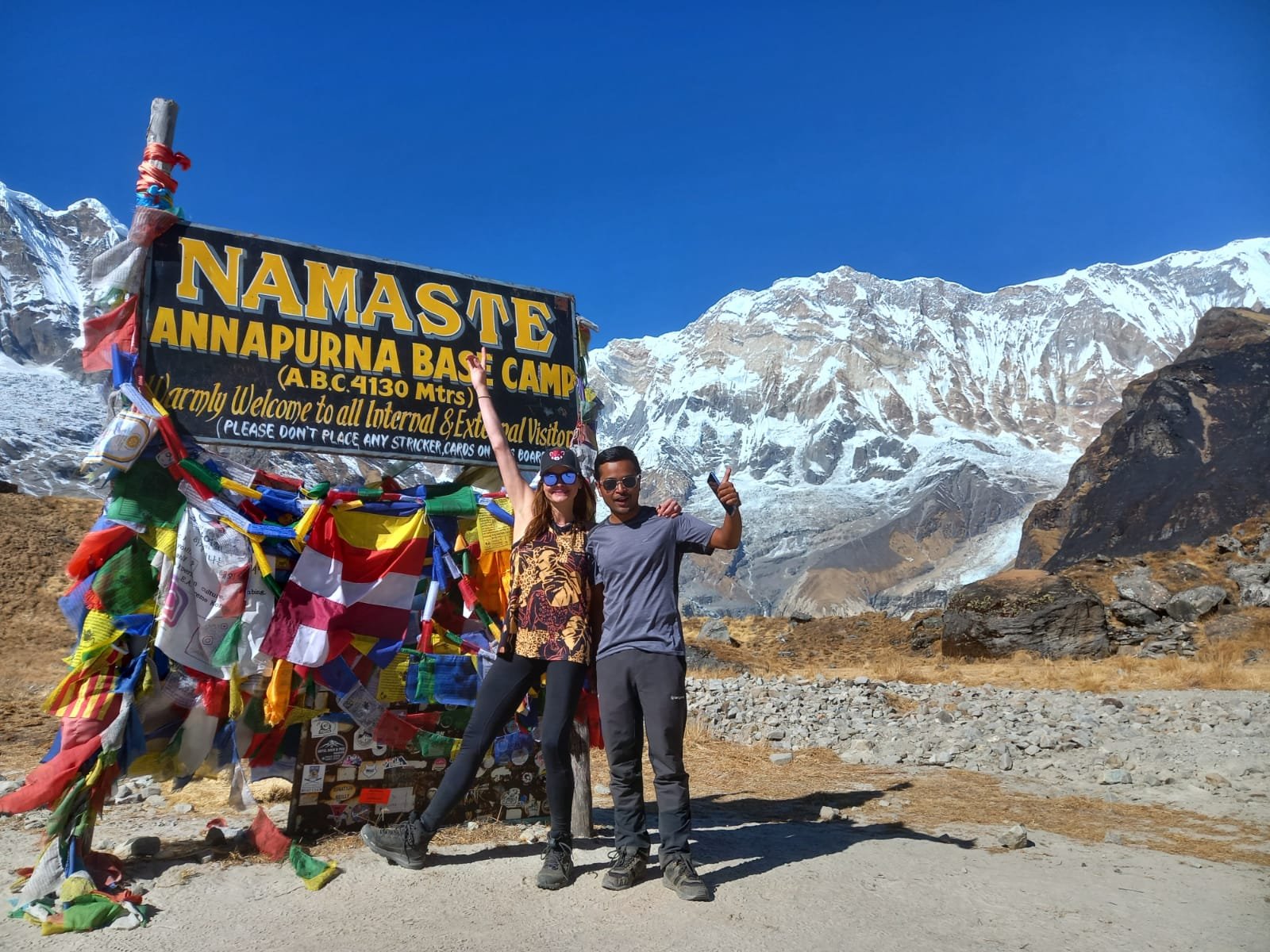
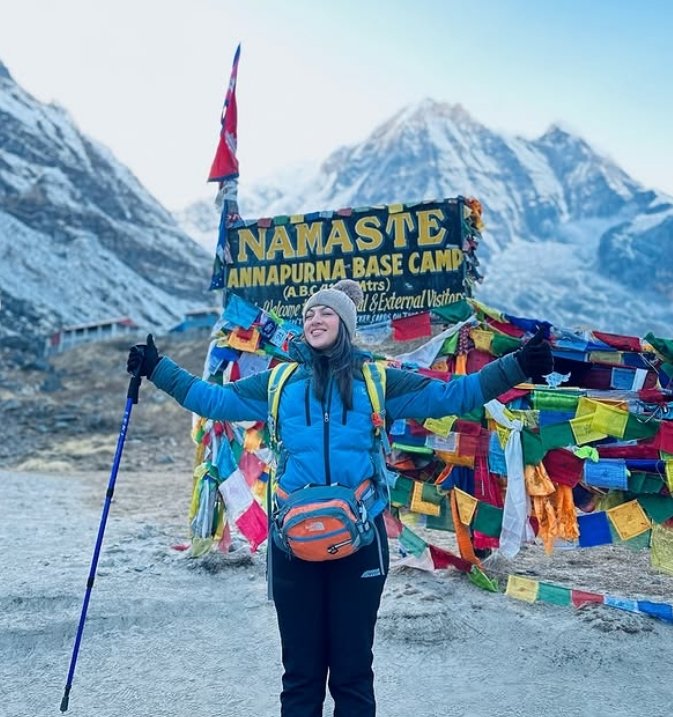
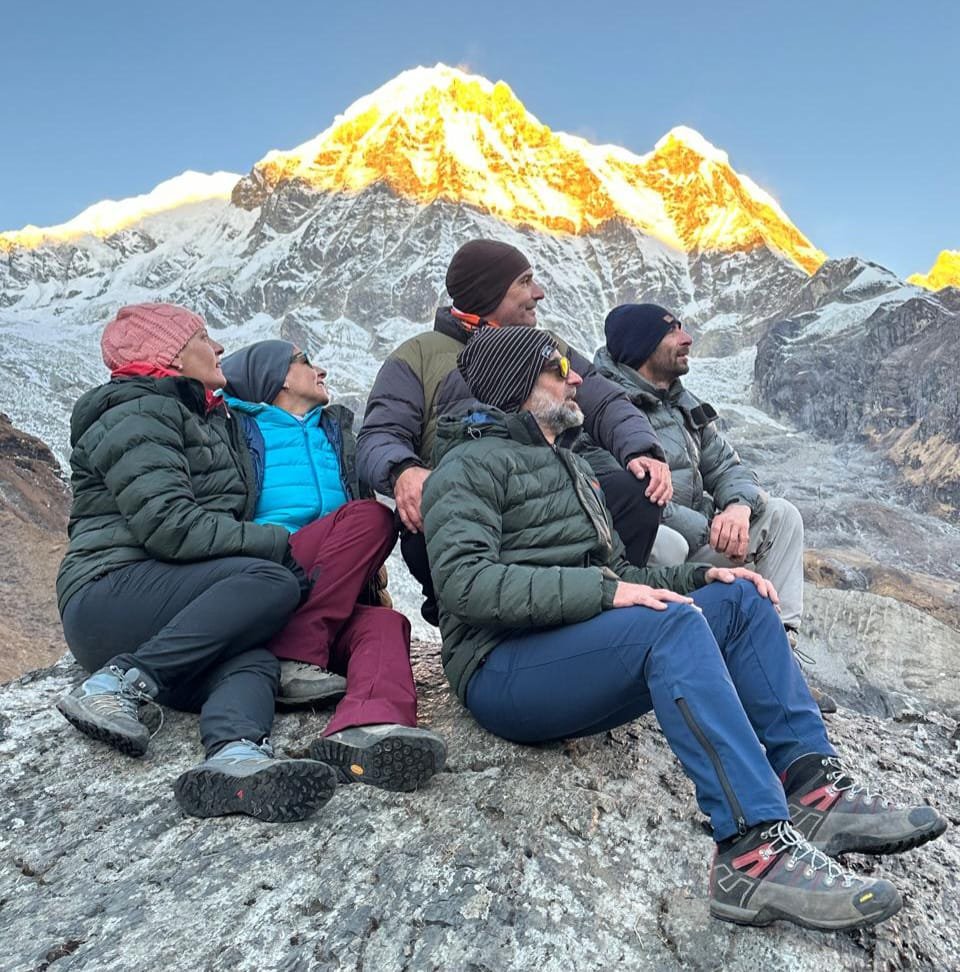
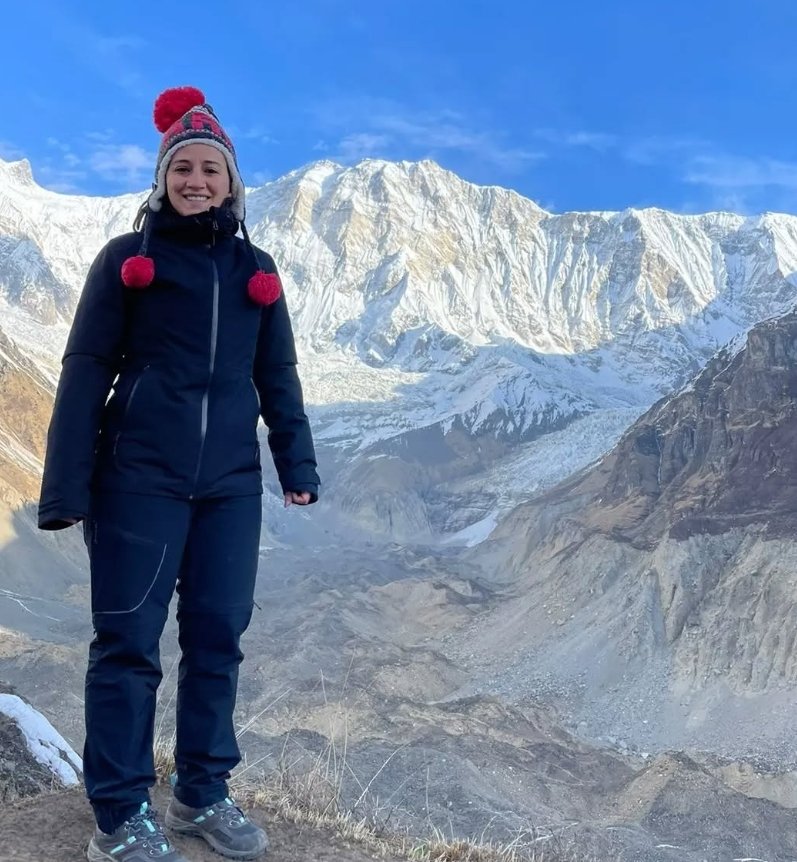
The goal of the trek. From Deurali the trail crosses into the Sanctuary fully on glacial moraine with Machapuchare (6,993m) directly ahead. Machapuchare Base Camp (MBC, 3,700m) is reached in 2.5 to 3 hours: a cluster of teahouses on a flat area under the Fishtail peak. Rest and check oxygen here before the final 1.5 to 2 hour push to ABC. At Annapurna Base Camp (4,130m) the full ring of peaks closes around you: Annapurna I (8,091m) to the north, Annapurna South (7,219m) and Hiunchuli (6,441m) to the south and southwest, Gangapurna (7,455m) and Glacier Dome (7,193m) to the northeast, Annapurna III (7,555m) to the east. You are not looking at the mountains from outside: you are standing inside the mountain ring.
Machapuchare has never been summited. The Nepal government closed it to climbing out of respect for its religious significance to the Gurung people. It is the most recognised peak in the Annapurna range and the one you walk toward for the entire upper section of the trail.
ABC to Dovan and Jhinu Danda: The Long Descent (Day 6)
Early start from ABC at 5:30 to 6:00 AM. The trail descends through MBC and Deurali back through the alpine zone to Dovan, then continues through Bamboo and Sinuwa past Chhomrong to Jhinu Danda (1,780m). Total descent: approximately 2,350 metres over 7 to 8 hours. Trekking poles reduce the knee load significantly on this day. At Jhinu Danda, the hot springs at river level cost NPR 200 to 300 per person. Spend 45 minutes to an hour in the pools before the short walk to New Bridge, where your vehicle drives you back to Pokhara in 1 hour 45 minutes.
Altitude and Acclimatisation
The direct route manages acclimatisation through pacing: a short day two (Jhinu to Chhomrong, 390m gain) and a dedicated acclimatisation night at Deurali (3,230m) before the ABC push. We carry a pulse oximeter and check saturation at Deurali and MBC. If readings indicate caution, the correct response is to rest at the current altitude rather than push on. Diamox available on request. Travel insurance covering helicopter evacuation above 4,000m is mandatory for this trek.
Best Time to Trek
Spring (March to May): Prime season. Rhododendron forest between Chhomrong and Dovan in bloom mid-March through April. Clear mornings, cold nights at ABC (-5 to -12 degrees Celsius).
Autumn (September to November): Best mountain visibility post-monsoon. October and November are the busiest months. Advance teahouse booking required. Light snow possible above Deurali from late November.
Winter (December to February): Possible with full cold-weather gear. Snow above Deurali from December. Upper Sanctuary can close in heavy snowfall years.
Monsoon (June to August): Heavy rain and leeches. The Sanctuary can remain cloud-covered for days. Possible but mountain views are not reliable.
Permits Required
ACAP permit: NPR 3,000 for international trekkers. TIMS Card: NPR 1,000 for agency-booked trekkers. Both arranged by our team in Pokhara before the trek starts. Checkpoints at Birethanti and Chhomrong.
Local Guide Note — Amar Khand, Trekking Guide, Next Trip Nepal: I lead the 6-day ABC route 3 to 4 times per month and the window that makes this schedule work safely is March to May and October to November — in January and February the trail above Deurali (3,230m) ices before dawn. We reschedule all fast-track ABC groups away from the coldest weeks as a company-wide policy with no exceptions.
Critical Safety and Logistics
- Thorong La Pass (5,416m) crossing window on the circuit: 04:30 to 10:00 from High Camp. Afternoon wind averages 50 to 60 km per hour on the western col after 10:00.
- Road construction impact: Besisahar to Chame motorable road active during peak months. Classic walking trail intact from Chame northward and throughout all sections above 3,000m.
- ACAP and TIMS permits must be carried at all times. Spot checks occur at Ghasa, Manang, and Jomsom checkpoints.
The 6 Day Annapurna Base Camp Trek is the most efficient route to ABC available from Pokhara. It uses the direct Modi Khola valley approach with no side trips: Pokhara to Jhinu Danda on day one, up through Chhomrong and Dovan to Deurali, then to Annapurna Base Camp at 4,130 metres on day five, and a full descent back to Jhinu Danda and Pokhara on day six. The trek starts and ends in Pokhara, with no Kathmandu travel required if you are already in Pokhara. Total trekking distance is approximately 55 to 60 kilometres.
The direct route follows the Modi Khola river from the valley floor at New Bridge (1,340m) all the way to the head of the Annapurna Sanctuary at 4,130 metres. The valley narrows progressively as you gain altitude, moving from subtropical forest at the lower elevations through rhododendron and bamboo forest in the middle section to open alpine terrain and glacial moraine above Deurali. The ecological change is one of the most varied of any trekking route in Nepal across a relatively short horizontal distance.
The villages on this route are predominantly Gurung communities. Chhomrong is the largest and most comfortable village on the route, with teahouses that have attached bathrooms, an ATM and reliable mobile connectivity. It is the last point of this quality before the Sanctuary. Above Chhomrong, teahouses provide basic but functional accommodation throughout: single or twin rooms, shared bathrooms, dining halls with wood stoves in the colder months, and menus covering dal bhat, noodle soups, pasta, momos and porridge. All meals on the trek are included in your package.
Acclimatisation on the direct 6-day route is managed through pacing. Day two is intentionally short: Jhinu Danda to Chhomrong is only 390 metres of net gain and 2 to 3 hours of walking, which gives time at 2,170 metres before the longer days that follow. Day four ends at Deurali (3,230m) rather than pushing to MBC (3,700m), which provides a dedicated acclimatisation night before the summit day. We carry a pulse oximeter on all treks and your guide monitors oxygen saturation at key altitude points. If readings at Deurali or MBC indicate caution, the correct decision is to rest at that altitude rather than continue.
The return on day six descends the full route in one day from ABC to Jhinu Danda: approximately 2,350 metres of descent over 7 to 8 hours of walking. It is the hardest day on the legs and an early start is required to reach the hot springs at Jhinu in good time and still make the drive to Pokhara the same evening. The hot springs at Jhinu Danda are operated by the local community and cost NPR 200 to 300 per person. Most trekkers spend 45 minutes to an hour at the springs before the vehicle picks them up at New Bridge trailhead for the 1 hour 45 minute drive back to Pokhara.
Further Reading from Our Kathmandu Guides
How to Book the 6 Day Annapurna Base Camp Trek 2026: Direct Route from Pokhara
1Choose Your Trip. First, choose the 6 Day Annapurna Base Camp Trek 2026: Direct Route from Pokhara package that matches your travel plan, budget, and travel style.
2Check Availability. Go to the Availability section on this trip page. There you can see our departure dates for different months.
3Group Departure or Private Trip. Join one of our group departures, or choose a private trip for more flexibility, personal care, and your own travel date.
4Customize If Needed. Want to change the itinerary, add extra days, upgrade transport or accommodation, or include a porter? Contact us directly.
6Book Your Trip. Choose your package and date, then book. No advance payment is required. Confirm first, pay after arrival in Nepal.
7Use the Booking Box. On a laptop or desktop, use the booking box on the right side of this page to book your trip or send us your question.
13 Days Annapurna Base Camp Trek Highlights
-
Annapurna Base Camp at 4,130m: stand at the centre of the Annapurna Sanctuary with Annapurna I (8,091m), Machapuchare (6,993m), Annapurna South (7,219m) and four more peaks above 6,000m surrounding you
-
Machapuchare (Fishtail, 6,993m): the unclimbed, government-protected sacred peak of the Gurung people, which you walk directly toward for the entire upper section of the trail
-
Machapuchare Base Camp (MBC) at 3,700m: the high camp under the Fishtail peak with open Sanctuary views, a key acclimatisation and photography point before the final climb to ABC
-
Jhinu Danda natural hot springs at 1,780m: community-run thermal pools beside the Modi Khola river, used at the end of the trek on day six after the long descent from ABC
-
Chhomrong village at 2,170m: the best-serviced Gurung village on the ABC trail, with ATM, attached bathrooms, strong mobile signal and direct views of Annapurna South and Hiunchuli
-
Direct and efficient route: Pokhara to Pokhara in 6 days, no Ghorepani detour, with the full Sanctuary approach from valley floor to ABC
-
Deurali acclimatisation stop at 3,230m: a dedicated night at the Sanctuary threshold before the push to 4,130m, which significantly reduces altitude illness risk on the summit day
-
Dense forest ecology: bamboo and rhododendron forest between Chhomrong and Dovan, one of the most varied forest sections on any Nepal trekking route
-
No shared groups: private guide and porter throughout, departure on your schedule from Pokhara
-
All permits arranged: ACAP and TIMS card handled by our team in Pokhara before the trek starts
Annapurna Base Camp Trek: Permits, Altitude Guide and Packing List
Permits Required and Current Costs
| Permit | Cost (International Trekkers) | Where Obtained | Notes |
|---|
| Annapurna Conservation Area Permit (ACAP) | NPR 3,000 (approx USD 22) | Pokhara or Kathmandu NTB office | Checked at multiple points on trail including Birethanti and Chhomrong |
| TIMS Card (Trekkers Information Management System) | NPR 1,000 for agency trekkers | Pokhara NTB office | Individual trekkers pay NPR 2,000; agency registration reduces this |
Next Trip Nepal arranges both permits before the trek starts. Your guide carries the permit documentation and presents it at the checkpoints. You do not need to queue at the permit office yourself.
Altitude Profile: Key Points on the Trail
| Location | Altitude | Day Reached | Notes |
|---|
| Pokhara | 822m / 2,697ft | Start | Trailhead drive origin |
| Nayapul / Birethanti | 1,025 to 1,070m | Day 1 | Permit checkpoint, trailhead |
| Tikhedhunga | 1,540m / 5,052ft | Day 1 | Overnight stop, day 1 |
| Ulleri | 1,960m / 6,430ft | Day 2 | Large Magar village, steep staircase ascent |
| Ghorepani | 2,874m / 9,429ft | Day 2 | Overnight stop, Dhaulagiri views |
| Poon Hill | 3,210m / 10,531ft | Day 3 (pre-dawn) | Viewpoint, highest point days 1-3 |
| Tadapani | 2,610m / 8,563ft | Day 3 | Mid-point on descent from Ghorepani to Chhomrong |
| Chhomrong | 2,170m / 7,119ft | Day 3 | Last ATM, last reliable mobile signal, overnight day 3 |
| Sinuwa | 2,360m / 7,743ft | Day 4 | First checkpoint inside Sanctuary zone |
| Bamboo | 2,310m / 7,579ft | Day 4 | Standard overnight day 4 |
| Dovan | 2,580m / 8,464ft | Day 4 or 5 | Alternative overnight if pace allows |
| Himalaya Hotel | 2,920m / 9,580ft | Day 5 | Treeline begins to open |
| Hinku Cave | 2,970m / 9,744ft | Day 5 | Rock shelter, emergency stop point |
| Deurali | 3,230m / 10,597ft | Day 5 | Sanctuary entrance, last teahouses before MBC |
| Machapuchare Base Camp (MBC) | 3,700m / 12,139ft | Day 5 | Acclimatisation check point, guide monitors oxygen here |
| Annapurna Base Camp (ABC) | 4,130m / 13,549ft | Day 5 | Trek high point, overnight in Sanctuary |
| Jhinu Danda | 1,780m / 5,840ft | Day 6 | Hot springs, overnight day 6 |
What You See from Annapurna Base Camp: Peak Identification Guide
| Peak | Altitude | Direction from ABC | Notes |
|---|
| Annapurna I | 8,091m / 26,545ft | North | 10th highest mountain in the world |
| Annapurna III | 7,555m / 24,787ft | East | Northeast face directly visible |
| Gangapurna | 7,455m / 24,458ft | Northeast | Glacier descends toward the Sanctuary floor |
| Glacier Dome (Tarke Kang) | 7,193m / 23,599ft | Northeast | Broad dome shape, right of Gangapurna |
| Machapuchare (Fishtail) | 6,993m / 22,943ft | South to Southeast | Unclimbed, sacred to Gurung people, closed by Nepal government |
| Hiunchuli | 6,441m / 21,132ft | Southwest | First peak to catch morning light at ABC |
| Annapurna South | 7,219m / 23,684ft | South | Dominant south-facing peak on the approach |
Complete Packing List for the 7 Day ABC Trek
Footwear and Legwear
Waterproof trekking boots with ankle support (broken in before the trek: non-negotiable). Lightweight camp shoes or sandals for teahouses. Wool or synthetic trekking socks (minimum 4 pairs). Liner socks to prevent blisters. Warm trekking trousers. Lightweight shorts or convertible trousers for lower trail days.
Upper Body Layers
Moisture-wicking base layer tops (2 to 3). Fleece mid-layer or light down jacket for evenings. Down jacket for above 3,000m (we provide if you do not have one). Waterproof and windproof outer shell jacket. Sun shirt with UV protection for lower trail sections.
Head, Hands and Sun Protection
Warm hat covering ears (not just a cap) for above 3,000m. Light sun hat for lower trail sections. Gloves: thin liner gloves and warmer outer gloves for above 3,500m. UV-blocking sunglasses (at altitude UV intensity increases significantly). High-SPF sunscreen (SPF 50 minimum) and lip balm with SPF.
Equipment (provided by Next Trip Nepal)
Down sleeping bag rated to at least -10 degrees Celsius. Trekking poles (improves stability on descents). Duffel bag for main load carried by porter.
Equipment (you bring)
Daypack 20 to 25 litres for trail items. Headlamp with spare batteries (essential for 4:30 AM Poon Hill departure). Water bottles or hydration bladder: 2 litres capacity minimum. Water purification: tablets or filter. First aid kit: blister treatment, pain relief, antihistamine, personal medications.
Documents and Money
Passport (original, checked at permit points). Travel insurance documents (digital and paper copy). Emergency contact information. Sufficient Nepali rupees for the trek: cash only above Nayapul. Approximate daily spending: NPR 500 to 1,500 for personal items (drinks, hot showers, charging). No ATMs above Chhomrong.
Accommodation Standards by Altitude Zone
| Altitude Zone | Example Locations | Room Standard | Bathroom | Hot Shower | Charging |
|---|
| Below 2,000m | Tikhedhunga, Birethanti | Basic to comfortable | Shared or attached | Usually available | Available |
| 2,000m to 2,500m | Ghorepani, Chhomrong | Good, some with attached bath | Mostly attached | Available, NPR 100-200 | Available |
| 2,500m to 3,500m | Bamboo, Deurali | Basic, adequate | Shared | Available at cost | Solar charging available |
| Above 3,500m | MBC, ABC | Basic wooden rooms | Shared outdoor | Limited, cold water | Solar, limited capacity |