The best Everest trekking agency in Nepal is a local operator that holds five mandatory government credentials: a valid Department of Tourism (DoT) license, an active Trekking Agencies’ Association of Nepal (TAAN) membership, a current Tax Clearance Certificate, Nepal Tourism Board (NTB) registration, and certified, insured guides. Booking directly with a licensed local agency reduces package costs by 30% to 60% compared to international resellers and ensures instant emergency coordination.
A good company should be transparent about optional upgrades too. Our separate guide to choosing the best Everest Base Camp Trek with Helicopter Return company covers the same vetting criteria applied specifically to operators offering the helicopter upgrade.
Every year, thousands of trekkers come to Nepal with the dream of standing at Everest Base Camp, but many quickly realize that the trekking company they choose directly affects the entire experience. A well organized trek means proper acclimatization, experienced local guides, reliable support, safe pacing, comfortable tea house planning, and honest advice before even beginning the walk into the Khumbu region.
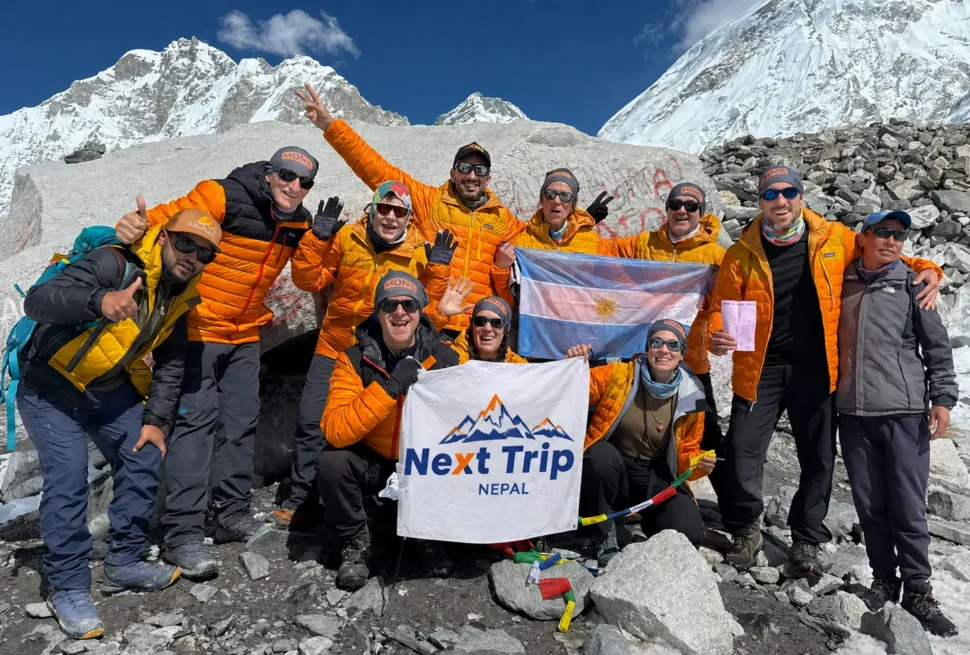
Next Trip Nepal has guided trekkers to Everest Base Camp Trek across different seasons and trail conditions with people of different ages, fitness levels, and trekking backgrounds. Some arrive after years of planning their Everest journey, while others are visiting the Himalayas for the first time. These experiences have helped build a clear understanding of what truly matters on the Everest trail and what makes a trekking company genuinely reliable in the mountains.
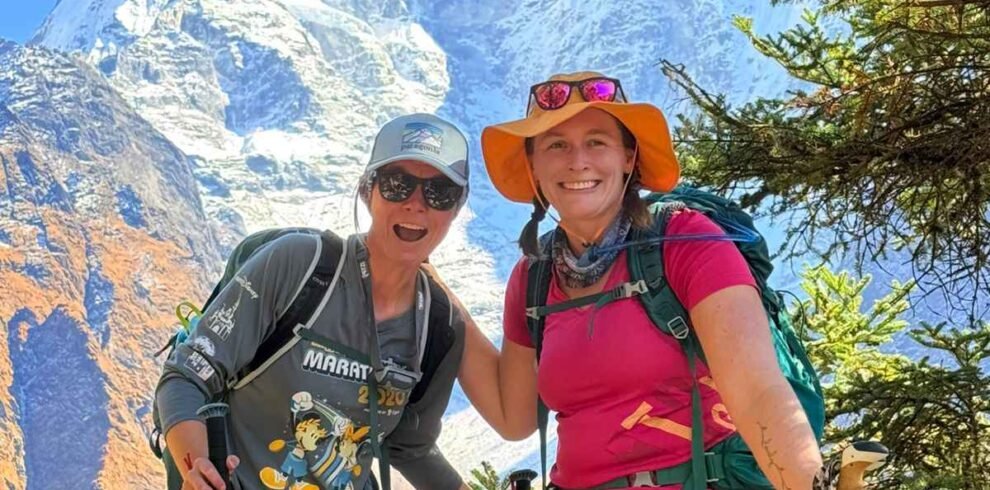
Everest Base Camp Journey with Content Creator Life Samour Style
Why Choosing a Local Everest Base Camp Trek Company Actually Matters
Nepal has hundreds of trekking companies offering the Everest Base Camp Trek, but the quality of experience can vary greatly depending on who organizes your journey. Choosing a reliable local trekking company in Nepal often makes a major difference in safety, flexibility, communication, and overall trekking experience in the Everest region.
Local Knowledge of Everest Region Conditions
The Everest region changes constantly depending on weather, flight conditions, snowfall, trail conditions, and altitude related situations. Local trekking companies based in Kathmandu and Nepal understand these conditions through direct field experience rather than only office based planning.
When Lukla flights are delayed because of mountain weather, local operators already understand alternative options and practical solutions. When trail conditions change after snowfall near Lobuche or Gorakshep, experienced local guides know how to adjust safely.
This type of local decision making becomes extremely valuable during high altitude trekking.
Better Support During Emergencies and Altitude Problems
Altitude sickness can affect trekkers differently regardless of age or fitness level. One important advantage of choosing a local Everest Base Camp trek company is access to experienced guides who understand how to recognize altitude symptoms early.
Local trekking teams know the locations of rescue posts, medical clinics, helicopter coordination contacts, and emergency communication systems in the Everest region.
Experienced guides can often identify problems before they become serious simply through years of observing trekkers at high altitude.
Direct Connection with Local Communities
Booking with a local trekking company in Nepal also supports the mountain communities directly connected to trekking tourism.
A larger portion of the trek cost goes directly to Nepali guides, porters, tea house owners, transportation workers, domestic airlines, and local families living along the Everest trail.
Responsible trekking is not only about reaching Everest Base Camp. It is also about supporting the people and communities that make trekking in the Himalayas possible.
Real Experience on the Everest Trail
The Everest Base Camp Trek is not only about following a map. The Khumbu region has its own weather patterns, trail conditions, altitude challenges, and seasonal changes.
Experienced local guides understand these mountain conditions through years of actual trekking experience. They know how strong afternoon winds affect Lobuche, how temperatures change near Gorakshep, and how difficult sections feel for trekkers after several days at altitude.
This practical field experience helps guides make safer and more realistic decisions throughout the trek.
Flexible and Personalized Trekking Support
Local companies usually offer more flexibility before and during the trek. It becomes easier to customize itineraries, adjust acclimatization days, arrange porter support, or respond quickly when weather changes affect flights and schedules.
Trekkers also benefit from direct communication with the actual team organizing the trek rather than communicating through multiple international booking layers.
This creates a smoother and more personal trekking experience from arrival in Kathmandu until the trek is completed.
Why Many Trekkers Prefer Next Trip Nepal
Next Trip Nepal focuses on practical Everest trekking experience, experienced local guides, small group support, honest communication, and realistic planning for high altitude trekking in Nepal. The goal is not simply to complete the itinerary, but to help trekkers experience the Everest region safely, comfortably, and with proper local support throughout the journey.
What Makes an Everest Base Camp Trekking Company Reliable
Not every company with a Kathmandu address and a well-designed website deserves your trust. The following questions help separate the serious operators from those who are effectively just booking agents for experiences they do not fully understand.
Are they registered and licensed? Every legitimate trekking company in Nepal should hold a current license from the Nepal Tourism Board and be a member of the Trekking Agencies’ Association of Nepal (TAAN). Ask to see proof of both. A company that hedges when you ask for registration details is worth treating with caution.
Who exactly is your guide? The guide is the most important person on the trip. Ask for their license number, their years of experience in the Khumbu specifically, and how many times they have completed the Everest Base Camp route. A guide with two years of experience is categorically different from one with twelve. Both can hold the same license.
What is their altitude sickness protocol? A reliable company will have a clear, written policy on how they respond to altitude sickness. They should carry a pulse oximeter, know how to administer oxygen if available, and have a pre-established emergency communication protocol. Ask them to walk you through it before you leave Kathmandu.
How do they treat their porters? Porter welfare is an ethical issue and a practical one. Porters who are poorly paid, inadequately equipped, and pushed to carry loads beyond the 25-kilogram limit are a liability on the mountain. They are also human beings whose dignity matters independent of what it means for your trek.
Is the pricing transparent? The cost of a well-run Everest Base Camp trek is not low. If a quote is dramatically below the market rate, something is missing: it is usually guide quality, porter welfare, insurance coverage, or basic inclusions like a proper sleeping bag.
Next Trip Nepal addresses all of these criteria honestly. We provide license documentation on request, we introduce you to your specific guide before the trip begins, we have written emergency protocols that we share at the pre-trek briefing, and we pay our porters above the TAAN minimum rate with full insurance coverage.
Everest Base Camp Trek Overview: What This Journey Actually Is
The Everest Base Camp Trek is a round-trip walk through the Sagarmatha National Park in Nepal’s Khumbu region, starting and ending at Lukla’s Tenzing-Hillary Airport and reaching the base of the world’s highest mountain at 5,364 meters above sea level. The trek covers roughly 130 kilometers of trail and typically takes 12 to 14 days to complete, though Next Trip Nepal recommends a 14-day itinerary for most trekkers to allow proper acclimatization.
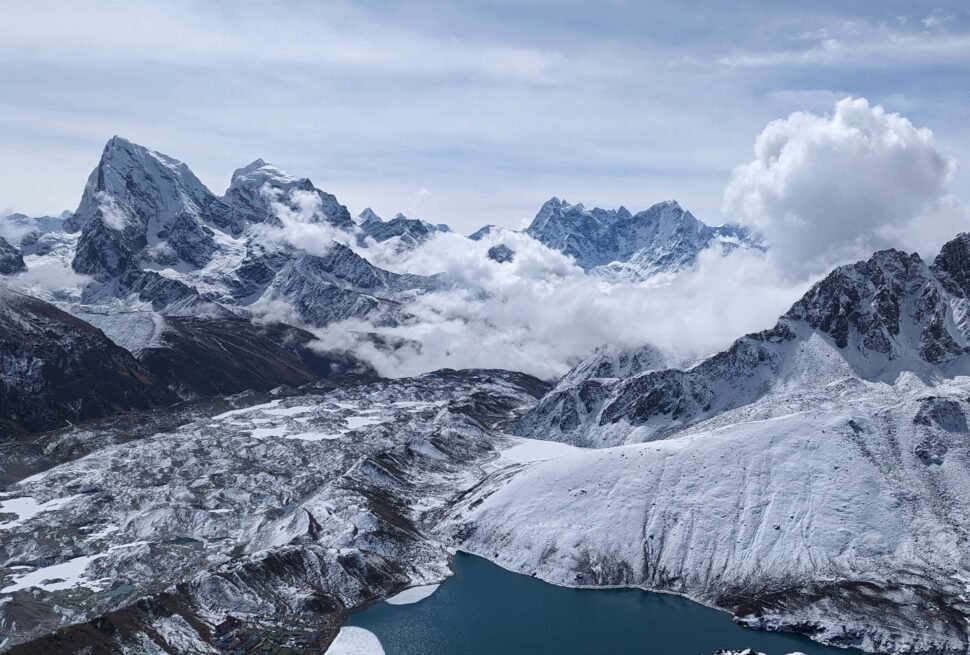
The route follows the Dudh Koshi River valley from Lukla through a sequence of increasingly dramatic landscapes. Below Namche Bazaar, the trail moves through pine and rhododendron forest, past waterfalls and suspension bridges strung with prayer flags. Above Namche, the forest gives way to juniper scrub and then to the open, rocky terrain of the high Khumbu. Above 4,500 meters, vegetation essentially disappears, replaced by the moraines and ice of the Khumbu Glacier system.
The cultural experience is as rich as the physical one. The Khumbu is the ancestral home of the Sherpa people, one of the most remarkable mountain communities in the world. The monasteries at Tengboche, Pangboche, and Thyangboche are active religious centers, not tourist attractions. The prayer wheels, mani walls, and chortens that line the trail are not decorative. They are the infrastructure of a living Buddhist tradition that has shaped this landscape for centuries.
Everest Base Camp itself at 5,364 meters is a rocky, glacier-edge plateau where, during spring climbing season, the brightly colored tents of Everest expeditions dot the icefall’s approach. During autumn, it is quieter but no less impressive, with the lower Khumbu Icefall visible just above and the surrounding walls of Nuptse and the West Ridge filling the view.
Most trekkers also climb Kala Patthar at 5,545 meters, a rocky summit above Gorak Shep that provides the closest ground-level view of Everest’s summit from any trail in Nepal. A sunrise climb to Kala Patthar in clear October weather is one of the single finest mountain experiences available anywhere in the world.
The Everest Base Camp Trek Route: Village by Village
Understanding the route before you walk it makes the experience considerably richer. The following is what you will actually encounter, not an idealized summary.
Lukla (2,840m) is where the trek begins. The flight from Kathmandu or Ramechap takes 30 to 40 minutes and deposits you on a short, upward-sloping runway cut into a hillside above the Dudh Koshi valley. Lukla itself is a compact, lively town entirely oriented around trekkers and mountaineers. First impressions include the smell of wood smoke, the sound of yaks being loaded, and the sight of dozens of trekkers making final kit checks before heading out.
Phakding (2,610m) sits a short walk below Lukla along the river. The descent is a useful first day: moderate terrain, not too long, giving your body a gentle introduction to Khumbu trail conditions. Phakding has solid tea houses and serves as a reality check on the Lukla airport’s elevation compared to the river valley floor.
Namche Bazaar (3,440m) is the cultural and commercial heart of the Khumbu, and the climb to reach it is the first serious test of the trek. The trail crosses the Dudh Koshi twice on suspension bridges before a relentless 600-meter climb through dense forest. At the final bend before town, the trail suddenly reveals the first unobstructed view of Mount Everest’s summit above the ridgeline between Nuptse and Lhotse. It stops people.
Namche is larger than most trekkers expect. There are bakeries with proper espresso machines, gear shops stocked with everything from down jackets to trekking poles, a Saturday market that draws Tibetan traders and Sherpa villagers from throughout the region, and a Sagarmatha National Park headquarters with a genuinely worthwhile museum on the ecology and mountaineering history of the Khumbu. Plan to spend at least two nights here, including one full acclimatization day.
Tengboche (3,860m) rewards the walk from Namche with one of the great mountain viewpoints in Nepal. The Tengboche Monastery, founded in its current form in 1919, sits on a ridge with Ama Dablam rising behind it to the south and Everest, Nuptse, and Lhotse forming the wall to the north. Prayer flags run from the monastery to surrounding trees. The monastery bells mark the hours in a way that feels entirely appropriate to the landscape.
Dingboche (4,410m) is where altitude begins to be felt in a tangible way for most trekkers. The village sits at the junction of the Imja Khola and Lobuche valleys, surrounded by stone-walled potato fields. Above the village, the terrain opens dramatically. Island Peak at 6,189 meters dominates the upper valley. A second acclimatization day here, with a hike to Nangkartshang Peak at 5,083 meters, is a well-proven way to prepare your body for the high sections ahead.
Lobuche (4,940m) is a collection of lodges sitting on the lateral moraine of the Khumbu Glacier. The setting is stark and austere. Vegetation is minimal. Afternoon wind from the upper glacier is bitter, even in October. On the approach, the trail passes through the memorial park at Thukla, where stone cairns and memorial tablets commemorate the Sherpa guides, mountaineers, and climbers who have died on Everest and the surrounding peaks. It is a sobering place that puts the mountain in proper perspective.
Gorak Shep (5,164m) is the highest permanent settlement on the Everest Base Camp route and the final overnight stop before the base camp. The lodges here are basic: cold rooms, thin walls, limited hot water. At this altitude, altitude symptoms that have been manageable below become more pronounced for many trekkers. Good sleep is difficult. The trail from Lobuche to Gorak Shep crosses the Khumbu Glacier moraine, a landscape of rocks, boulders, and occasional ice patches that requires focus.
Everest Base Camp (5,364m) is reached from Gorak Shep in two to three hours along the glacier’s lateral moraine. The route drops down onto the glacier itself for the final approach. The camp, marked by cairns and prayer flags, sits beneath the lower Khumbu Icefall with the West Ridge of Everest visible above. On clear days the view upward is staggering: seracs the size of apartment buildings, the sound of the glacier moving and settling, the scale of what climbers commit to when they set foot above this point. Standing here is a legitimately meaningful experience, not just a photo opportunity.
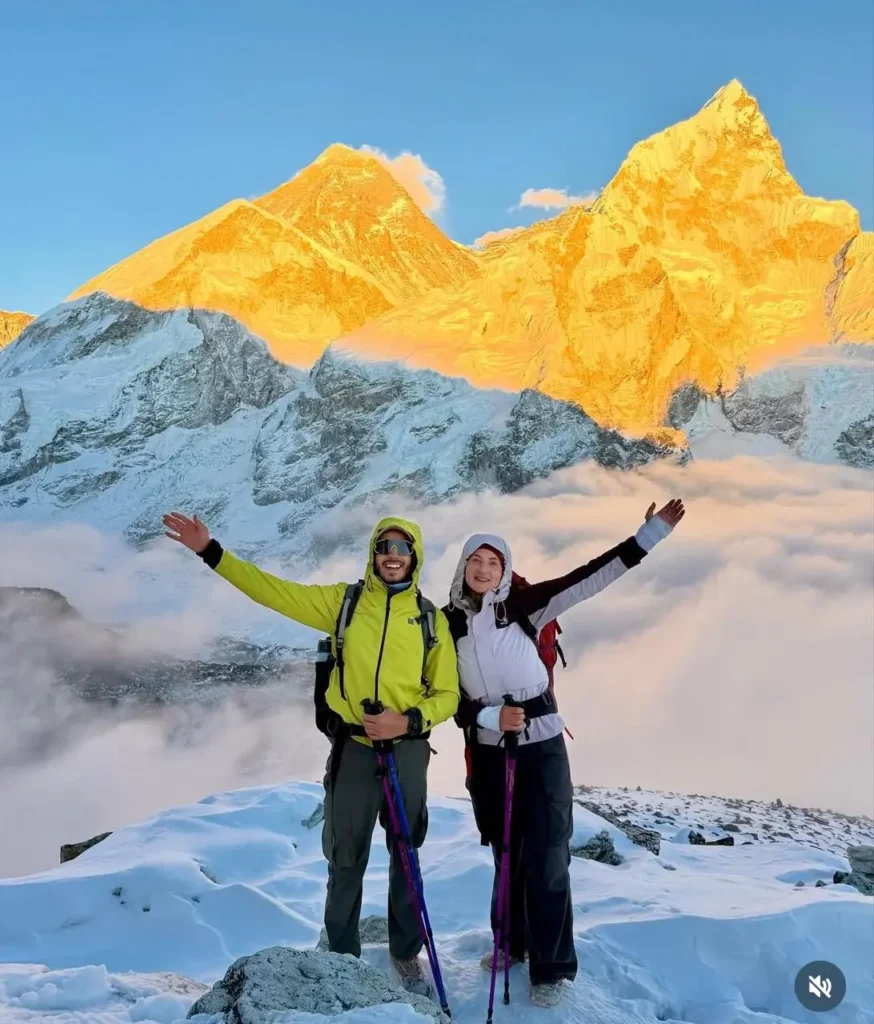
Everest Base Camp Trek Itinerary: 14 Days with Next Trip Nepal
The 14-day itinerary is our recommended standard for most trekkers. It provides proper acclimatization without feeling rushed and includes enough flexibility to adjust if weather or health requires it.
Day 1: Arrive Kathmandu (1,400m) Airport pickup, transfer to hotel in Thamel. Equipment check and trek briefing with your assigned guide. Permit preparation and pre-trek logistics overview. Overnight in Kathmandu.
Day 2: Fly to Lukla (2,840m), trek to Phakding (2,610m) Morning flight, typically 30 to 40 minutes from Kathmandu or Ramechap depending on the season. Note: from March through May and October through November, Lukla flights often operate from Ramechap Airport, requiring a 4 to 5 hour drive the night before. Trek from Lukla to Phakding through rhododendron and pine forest along the Dudh Koshi River. Trek time: 3 to 4 hours.
Day 3: Phakding to Namche Bazaar (3,440m) The trail crosses the Dudh Koshi at Monjo, where the Sagarmatha National Park entry gate stands and park permits are checked. A steep 600-meter climb through forest follows. The first Everest view appears near the top. Trek time: 5 to 6 hours.
Day 4: Acclimatization Day in Namche Bazaar Morning hike to the Hotel Everest View at 3,880 meters for acclimatization and mountain views. The Everest View Hotel holds a Guinness World Record as the highest-altitude hotel in the world. Optional visit to the nearby villages of Khumjung and Khunde. Afternoon free for the Namche market, Sagarmatha National Park museum, or rest.
Day 5: Namche Bazaar to Tengboche (3,860m) The trail descends to the Dudh Koshi at Phunki Tenga, crosses the river, and climbs through dense juniper forest to Tengboche. The monastery grounds are open to respectful visitors and the view from the ridge remains one of the finest on the trek. Trek time: 5 to 6 hours.
Day 6: Tengboche to Dingboche (4,410m) The trail descends briefly through Pangboche, where you can visit the monastery reputedly containing the skull of a yeti, before climbing steadily into the upper Imja Khola valley. The landscape opens and becomes more alpine. Dingboche’s tea houses are comfortable by high-altitude standards. Trek time: 5 to 6 hours.
Day 7: Acclimatization Day in Dingboche Morning hike to Nangkartshang Peak at approximately 5,083 meters. The climb takes two to three hours and delivers exceptional views of Makalu, Island Peak, Lhotse, and the surrounding Himalayan ranges. Afternoon rest. This day is critical for safe passage through the upper Khumbu.
Day 8: Dingboche to Lobuche (4,940m) The trail passes through Dughla and then climbs steeply to the Thukla memorial ridge, where stone cairns mark the deaths of dozens of climbers and Sherpa guides over Everest’s climbing history. The approach to Lobuche follows the glacier’s lateral moraine across open, exposed terrain. Trek time: 5 to 6 hours.
Day 9: Lobuche to Gorak Shep (5,164m) and Everest Base Camp (5,364m) One of the longest and most demanding days of the trek. The morning walk to Gorak Shep takes two to three hours across the moraine. After depositing packs at the lodge, the trail continues to Everest Base Camp in two to three further hours each way. Return to Gorak Shep for the night. Trek time: 7 to 9 hours total.
Day 10: Kala Patthar (5,545m), descend to Pheriche (4,240m) A pre-dawn start, typically 4:00 to 4:30 a.m., for the two-hour climb to Kala Patthar in time for sunrise. The summit view of Everest, Lhotse, Nuptse, Pumori, and the entire upper Khumbu in early morning light is the visual peak of the trek for most trekkers. Descent afterward to Pheriche, a significant drop in altitude that aids recovery. Trek time: 7 to 8 hours.
Day 11: Pheriche to Namche Bazaar (3,440m) A long descent day, mostly downhill, following the Dudh Koshi valley back through Tengboche and toward Namche. Descents at altitude are not trivial: tired legs, steep terrain, and loose stones demand continued attention. Trek time: 6 to 7 hours.
Day 12: Namche Bazaar to Lukla (2,840m) The final walking day covers ground that now feels familiar. The forest sections that seemed steep on the way up are friendlier on the descent. Lukla welcomes returning trekkers with the same smoke-and-yak atmosphere of day one. Trek time: 6 hours.
Day 13: Fly Lukla to Kathmandu, farewell dinner Morning flight back to Kathmandu. Transfer to hotel. Afternoon free. Evening farewell dinner arranged by Next Trip Nepal with your guide and crew.
Day 14: Departure or extend Airport transfer for departure, or optional extension for Kathmandu cultural sightseeing including Boudhanath Stupa, Swayambhunath, or Pashupatinath Temple.
Everest Base Camp Trek Difficulty: An Honest Assessment
The Everest Base Camp Trek is rated moderate to difficult, and that rating reflects reality without overstating it. The trek does not require technical mountaineering skills, ropes, or specialized climbing equipment. What it requires is sustained physical endurance over consecutive days at increasing altitude, combined with honest self-awareness about how your body is responding to reduced oxygen.
The walking itself involves between five and eight hours of hiking per day on trails that are well-established but often steep, rocky, and uneven. There are no flat stretches of any real length above Namche Bazaar. The Khumbu terrain alternates between river valleys, forest ridgelines, glacial moraine, and open high-altitude plateau, and each surface type presents its own footing challenges.
The altitude is the defining variable. At Everest Base Camp’s elevation of 5,364 meters, the air contains roughly half the oxygen available at sea level. Your body compensates through increased breathing rate and heart rate, both of which require more energy and produce more fatigue than the same effort at lower elevations. Experienced trekkers who are accustomed to this describe it well: you walk half as far per hour as you would at home, and it costs twice the effort.
What the trek demands beyond fitness is mental patience. Days when altitude symptoms create headaches and broken sleep are not unusual above 4,000 meters. The acclimatization days in Namche and Dingboche can feel frustrating when you are energetic and eager to push higher. Experienced trekkers comply with the acclimatization schedule anyway, because they understand that altitude operates on its own timeline regardless of how fit you feel.
Our guides at Next Trip Nepal are consistent about one thing: they will not be pressured by a trekker’s impatience into bypassing a rest day or pushing the ascent faster than the standard protocol allows. This has occasionally disappointed people in the moment. It has never resulted in a preventable evacuation.
Acclimatization on the Everest Base Camp Trek: Why the Schedule Is Non-Negotiable
Acute mountain sickness (AMS) affects a significant proportion of trekkers above 3,500 meters, and it does not discriminate based on age, fitness, or prior athletic achievement. People who have run marathons, climbed other mountains, and spent years in high-altitude environments can still experience serious altitude sickness on the Everest Base Camp route if they ascend too quickly.
The standard medical guidance for acclimatization above 3,000 meters is clear: do not increase your sleeping altitude by more than 500 meters per day, and include one rest day for every 1,000 meters of net altitude gain. The 14-day Next Trip Nepal itinerary is built around these principles.
The two structured acclimatization days are in Namche Bazaar at 3,440 meters and Dingboche at 4,410 meters. Both days follow the “climb high, sleep low” principle, where the guide leads a hike to a higher elevation in the morning before returning to sleep at the night’s accommodation. This practice stimulates red blood cell production and respiratory adaptation without adding stress to the sleeping body that requires a full day’s recovery.
Our guides carry a pulse oximeter on every trek and take oxygen saturation readings for every trekker, every morning and evening, above 4,000 meters. A reading below 80 percent, combined with symptoms such as persistent headache, loss of appetite, confusion, or breathlessness at rest, prompts a genuine conversation about whether to continue upward or rest in place. If a trekker shows early signs of HAPE (high-altitude pulmonary edema) or HACE (high-altitude cerebral edema), the decision to descend is immediate and not subject to debate.
Diamox (acetazolamide) is sometimes prescribed prophylactically by physicians for trekkers who have had previous altitude problems. It genuinely helps some people, particularly those who ascend relatively quickly. Side effects include increased urination, tingling in hands and feet, and occasional nausea. Anyone considering Diamox should discuss it with their doctor before travel, not purchase it off the shelf in Kathmandu. It is a prescription medication for a reason.
Best Season for the Everest Base Camp Trek
Timing matters more than most trekkers realize when planning the Everest Base Camp Trek. The Khumbu has a specific climate profile that makes some months nearly ideal and others genuinely unpleasant.
Autumn (late September through November) is the most popular and generally the most reliable season. After the monsoon rains end in late September, the air clears dramatically. October in particular brings stable high-pressure weather systems that can deliver consecutive days of crystalline sky, sharp mountain views, and temperatures that are cold but manageable. Daytime temperatures in the Namche area during October are typically 10 to 15 degrees Celsius. At Gorak Shep at night, expect minus 10 to minus 15 degrees Celsius. November is colder and sees fewer trekkers but retains the clear skies.
Spring (late March through May) is the second season and brings its own rewards. The rhododendron forests between Lukla and Tengboche bloom in pink, red, and white through April, creating a floral spectacle that autumn trekkers never see. Weather is generally stable in April, though afternoon clouds build more reliably than in autumn and late-season snowfall can occasionally affect trail conditions in May. Spring is also Everest climbing season, so the upper sections of the trail carry more traffic from expedition teams, and lodges at Lobuche and Gorak Shep fill quickly.
Monsoon (June through August) is not suitable for EBC. Rainfall is persistent and heavy below 4,000 meters. Trails near Phakding can be affected by landslides. Leeches are present in the forest sections. Cloud cover makes mountain views largely unavailable. The experience is fundamentally different from the clear-weather trek that most people intend when they book this trip.
Winter (December through February) is a minority-season option for experienced cold-weather trekkers. Lodge availability drops significantly above Namche. Temperatures at Gorak Shep regularly fall below minus 20 degrees Celsius at night. The trail is navigable but requires proper winter kit and a tolerance for cold that goes beyond anything the standard equipment list describes.
For most trekkers planning their first Everest Base Camp experience, October is the month we recommend without hesitation.
Permits Required for the Everest Base Camp Trek
As of 2025, two primary permits are required for all trekkers entering the Khumbu region and Sagarmatha National Park.
Sagarmatha National Park Entry Permit: This permit is mandatory for entry into the protected area that encompasses the Everest region. The cost is NPR 3,000 per person for foreign nationals. It can be obtained at the Nepal Tourism Board office in Kathmandu (near Bhrikutimandap, a short walk from Thamel) or at the park entry gate in Monjo on the trail. Obtaining it in Kathmandu before your Lukla flight is strongly recommended to avoid queuing at Monjo, which can take significant time during peak season.
Khumbu Pasang Lhamu Rural Municipality Entry Permit (Trek Card): Introduced in 2022 as part of Nepal’s administrative decentralization, this local government permit costs NPR 2,000 per person. It can only be obtained in Lukla at the Trek Card Registration Centre upon arrival. A digital card issued with this permit carries your personal information and emergency contacts in scannable format. This permit is not available in Kathmandu.
The TIMS card (Trekkers’ Information Management System) is no longer required for trekking in the Khumbu region. The local municipality permit replaced it in this area, though TIMS remains applicable in other trekking zones such as Annapurna and Langtang.
When you trek with Next Trip Nepal, permit processing is handled entirely by our team. We collect the required photographs and documents from you in Kathmandu, process the Sagarmatha permit before your Lukla flight, and guide you through the Trek Card registration in Lukla on arrival. You will not need to locate permit offices independently or worry about having the correct paperwork at checkpoints.
Why a Licensed Guide Is Essential on the EBC Trek
The Khumbu region does not legally require trekkers to hire a guide as of 2025. This fact is sometimes used to justify solo trekking without support on a route that presents real and specific risks.
A licensed guide on the Everest Base Camp Trek provides far more than a walking companion. They are your altitude safety monitor, your route navigator on sections where the glacial moraine trail can disorient unfamiliar trekkers, your liaison with tea house owners who speak limited English, your first responder for medical issues, and your coordinator for helicopter evacuation if one becomes necessary.
The navigation argument is sometimes underestimated. Between Lobuche and Gorak Shep, and particularly on the approach to Base Camp across the Khumbu Glacier, the trail markers can be unclear, especially if snow has fallen overnight. Trekkers who have not been on this specific terrain before have made navigation errors in poor visibility. With a guide who has walked the route many times, this risk is effectively eliminated.
Our guides at Next Trip Nepal hold government-issued licenses and have specific training in wilderness first aid and high-altitude medicine. They are briefed before every trek on the itinerary, the trekker’s medical history as disclosed in our pre-trek health questionnaire, and the current weather outlook from the Kathmandu weather services we monitor. These are not administrative gestures. They are practical preparations that directly affect your safety.
Porters are equally important and equally undervalued by trekkers who have not carried a full pack at 5,000 meters. A porter carrying your 12-kilogram main bag allows you to walk with a 6 to 8 kilogram daypack, reducing physical fatigue by a measurable amount on every single day of the trek. At altitude, that reduction in load translates directly into better acclimatization, fewer headaches, and a meaningfully better chance of reaching Base Camp.
Next Trip Nepal provides one porter per two trekkers as a standard arrangement. All porters carry a maximum of 25 kilograms, are insured under the Government Workers’ Compensation Fund, and receive proper cold-weather equipment including insulated jackets and suitable footwear for high-altitude sections. These are not optional provisions. They are baseline requirements that we built into our operating costs.
Tea Houses, Food, and What Daily Life Looks Like on the Trail
The Everest Base Camp route is one of the best-serviced trekking routes in the Himalayas. Tea houses (locally called lodges or guest houses) are available at every overnight stop on the trail, and most experienced trekkers are pleasantly surprised by the quality of accommodation and food in the lower sections of the route.
Below Namche Bazaar, many lodges now have attached bathrooms with hot showers, reliable wifi, USB charging points, and menus extensive enough to include eggs benedict and apple pie alongside the Nepali staples. This is genuinely good mountain hospitality, not a compromise.
Above Namche, facilities become progressively simpler. By Lobuche, rooms are typically twin-sharing with shared bathrooms down the hall. Hot water for showers is available for an additional charge and usually involves a bucket filled from a heated tap. Wifi exists at most lodges but becomes increasingly unreliable above 4,500 meters. Charging costs extra. Blankets are provided but at the coldest elevations, sleeping in your own sleeping bag inside the provided blankets is the warmer option.
Food matters enormously at altitude. The two things most trekkers underestimate are the degree to which altitude suppresses appetite and the degree to which caloric intake affects how well the body acclimatizes and performs. Our guides consistently encourage trekkers to eat full meals even when they do not feel hungry, particularly on the evenings before demanding days.
Dal bhat is the best fuel on the trail and we say this without qualification. The combination of steamed rice, lentil soup, vegetable curry, and often a small portion of pickle and papad is nutritionally complete, served hot, and available at virtually every lodge at every elevation. Most lodges offer unlimited refills of the rice and dal portions for a fixed price. Trekkers who eat dal bhat consistently throughout the trek tend to perform better above 4,500 meters than those who favor pasta, pancakes, and boiled potatoes.
Hydration is the other critical daily discipline. At altitude, the body loses water faster than usual through increased respiration and urination (especially if taking Diamox). Three to four liters of water per day is a reasonable baseline. Our guides remind trekkers to drink at every rest stop and monitor the color of urine as a simple hydration indicator.
Water on the trail is available from lodges as boiled water or via purification tablets. Carrying a Sawyer Squeeze filter, SteriPen, or a supply of water purification tablets and filling from lodge tap water or fast-moving streams significantly reduces both cost and plastic waste. Bottled water above Namche becomes expensive and the empty bottles create waste management problems that the Khumbu’s infrastructure struggles to handle.
Safety and Emergency Response in the Khumbu
The Khumbu has better emergency infrastructure than most high-altitude trekking regions in the world, which is both reassuring and important to understand accurately.
The Himalayan Rescue Association (HRA) operates a permanent clinic in Pheriche at 4,240 meters staffed by rotating volunteer physicians, typically two to three doctors at any given time during peak season. The clinic provides diagnosis and treatment for altitude sickness including AMS, HAPE, and HACE, and is genuinely equipped to handle altitude emergencies rather than simply stabilizing patients for evacuation. There is a second HRA clinic in Namche Bazaar at 3,440 meters, also staffed by doctors during trekking season.
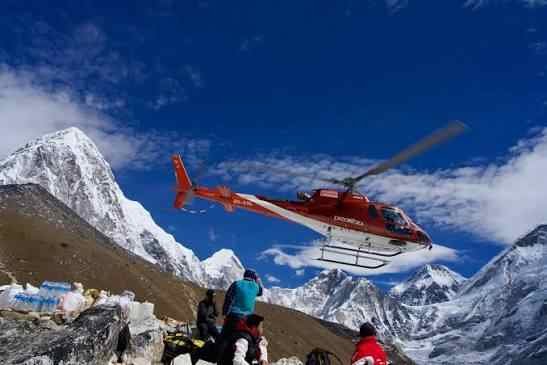
For helicopter rescue, multiple operators based in Lukla and Kathmandu can respond to emergency calls. In good weather, response times from first contact to aircraft landing are typically two to four hours. Mountain weather creates real windows and genuine constraints: a helicopter cannot fly to Gorak Shep in cloud or strong wind, regardless of how urgent the situation. This is why recognizing altitude symptoms early and responding before they become critical is the most important safety practice on this trek, not helicopter availability.
Every trekker on a Next Trip Nepal Everest Base Camp trek is required to carry travel insurance that includes helicopter evacuation coverage to a minimum value of USD 100,000. We verify this before the trek departs. The cost of a helicopter evacuation from the upper Khumbu ranges from USD 2,000 to USD 6,000 depending on pickup elevation and weather conditions. A hospital stay in Kathmandu following a serious altitude illness adds to that cost. No evacuation coverage means either a crushing financial burden or a delayed decision to descend, and delay on altitude illness is medically dangerous.
Our guides carry a pulse oximeter, a basic first aid kit, and a satellite-capable communication device on all treks above Namche. In sections of the route where mobile phone coverage is reliable (Namche, Tengboche, Dingboche, Pheriche), they stay in direct contact with our Kathmandu operations team. Above those points, the satellite device provides backup communication.
Packing for the Everest Base Camp Trek: What You Actually Need
The standard equipment list for the EBC trek is widely available, but the following reflects what we see consistently underpacked or overpacked by trekkers who arrive in Kathmandu.
Footwear is the most consequential choice. Waterproof, ankle-supporting trekking boots with adequate insulation are essential. The trail above 4,000 meters often has frost in the early morning, occasional snow patches, and wet rock after rain. Boots that are not waterproof will be wet within minutes of the first frosty section. Lightweight trail runners are not suitable for this route. Neither are brand new boots that have not been broken in before the trek begins.
Sleeping bag should be rated to at least minus 15 degrees Celsius. Lodge blankets are provided but are not sufficient alone in cold conditions above 4,500 meters. A quality sleeping bag makes a material difference to your sleep quality and consequently to your recovery and acclimatization.
Layering system for the upper body: a synthetic or merino wool base layer for moisture management, a midlayer fleece or softshell, a down jacket rated to minus 15 or colder, and a waterproof hardshell outer. Wind at Lobuche and Gorak Shep can be significant even on otherwise clear days, and the wind-chill at 5,000 meters on a 15 knot breeze feels very different from what that sounds like in lower-elevation experience.
Trekking poles are worth bringing. The descent from Kala Patthar to Pheriche, the descent from the Thukla memorial ridge to Dughla, and the rocky moraine sections near Lobuche all benefit significantly from the stability poles provide.
Headlamp with fresh batteries is essential for the pre-dawn Kala Patthar climb and the early morning departures common on several days of the trek. Alkaline batteries lose performance in cold temperatures; lithium batteries maintain performance reliably.
Blister prevention is underrated. Properly fitted boots with quality wool or synthetic socks and the preventive application of moleskin or anti-blister balm at the first sign of hot spots can determine whether days eight through fourteen are comfortable or miserable.
Keep your main trekking bag (the one the porter carries) between 10 and 14 kilograms. Keep your daypack between 6 and 8 kilograms with water, layers, camera, snacks, and the items you need throughout the walking day. Heavy daypacks are a common contributor to fatigue above 4,000 meters.
Everest Base Camp Trek Cost: What You Should Expect to Pay
The cost of a responsibly run Everest Base Camp Trek with a quality local operator is not the lowest price you will find online. The following breakdown reflects realistic figures for 2025 and 2026.
Trekking services (guide, porter, permits, accommodation, full-board meals during trek, Lukla flights, Kathmandu airport transfers): USD 1,200 to 1,600 per person on a private basis. Group trek packages for two or more trekkers booked together typically range from USD 1,100 to 1,400 per person. These figures are for a 14-day itinerary and include all core costs.
Kathmandu accommodation (pre and post trek): USD 30 to 80 per night depending on hotel category. Budget at least two nights before the trek and one night after.
Lukla flights: Typically included in the trekking package when booking with Next Trip Nepal. The round-trip fare is approximately USD 160 to 200 per person. Note that October and November flights from Ramechap (rather than Kathmandu) require an overnight stay in Ramechap, which adds a hotel night.
Travel insurance: USD 80 to 250 depending on nationality, age, and provider. Ensure it explicitly covers helicopter rescue from elevations above 5,000 meters.
Personal spending during the trek: Budget USD 10 to 20 per day for hot drinks, wifi charges, battery charging, and occasional hot showers. Lodge hot showers above Namche are typically USD 2 to 5 per use.
Tips: The standard tipping guideline in the Khumbu is USD 15 to 20 per day for a guide and USD 8 to 12 per day for a porter, calculated over the full trekking days (not the Kathmandu days). Tips are distributed at the farewell dinner and are a meaningful part of guide and porter income.
Total realistic budget including all items: USD 1,800 to 2,600 per person for most trekkers. The upper end includes more comfortable Kathmandu hotels, premium insurance, generous tipping, and significant personal spending along the trail.
Any quote substantially below USD 1,100 for a full package with guide, porter, permits, accommodation, and meals merits careful scrutiny about what is not included.
Why Trekkers Choose Next Trip Nepal for the Everest Base Camp Trek
Next Trip Nepal operates on a straightforward premise: the trekker’s safety and genuine satisfaction come before our bookings count. This shapes decisions that some operators consider commercially inconvenient.
We limit our group sizes to a maximum of eight trekkers on the Everest Base Camp route. This is not a marketing choice. Smaller groups acclimatize more consistently, receive more individual attention from guides, and can make real-time adjustments to the daily plan that are impossible with twelve or fifteen people. If you join a Next Trip Nepal trek, you will know your guide’s name, and your guide will know yours, from the first meeting in Kathmandu through the farewell dinner thirteen days later.
Our guides are chosen based on field experience, not on English language scores. We verify licensing with the Nepal Tourism Board directly. We do not hire seasonal guides who spend part of the year in other industries. Our Khumbu team works the Everest region consistently and maintains the local relationships and current trail knowledge that makes a real difference when conditions change.
We are also transparent about limitations. We cannot guarantee Lukla flight schedules, which are weather-dependent and occasionally delayed by days. We cannot guarantee that altitude will not affect you regardless of your preparation. We cannot guarantee the behavior of other trekking groups on the trail. What we can guarantee is that our operations are professionally managed, our guides are genuinely qualified, and every trekker who walks with us has the benefit of everything our years in the Khumbu have taught us.
If you are planning the Everest Base Camp Trek or Everest Three Passes Trek and want an honest conversation about what it involves, what it costs, and what the right approach looks like for your specific fitness level and experience, we are straightforward to reach. Our pre-booking consultations are free and carry no obligation.
Frequently Asked Questions About the Everest Base Camp Trek
Do I need prior trekking experience for Everest Base Camp?
Prior experience above 3,000 meters is helpful but not mandatory for a well-prepared trekker. What matters more is sustained cardiovascular fitness, the ability to walk six hours on hilly terrain carrying a daypack, and the mental patience to follow an acclimatization schedule even when you feel capable of going faster. If your previous outdoor experience is limited to day hikes below 1,000 meters, three to four months of consistent training before the trek is a realistic minimum.
How many people fail to reach Everest Base Camp?
Success rates vary by source, but well-prepared trekkers with proper acclimatization and a qualified guide complete the route at a high rate. The most common reasons for turning back before Base Camp are altitude sickness, knee injuries on the descent, and in rare cases, severe weather. Rushing the itinerary to save days significantly increases the risk of the first two.
Can I do the EBC trek if I am over 60?
Yes, and many of our best trekkers have been in their sixties and seventies. Age is not a disqualifying factor. The meaningful questions are cardiovascular health, joint condition, and willingness to pace carefully. We recommend a physician consultation before booking, particularly regarding heart health and any history of respiratory conditions.
What is the best way to prepare physically?
Walking uphill for extended periods carrying a weighted pack is the most specific preparation. Hiking, stair climbing with a loaded pack, cycling, and swimming all build the cardiovascular base. Three to four months of consistent training with at least three sessions per week is a practical minimum. Leg strength matters for the descents. Core strength helps with stability on uneven terrain.
Can the itinerary be shortened to 12 days?
A 12-day itinerary is possible and is offered by many operators. We consider it acceptable for trekkers with prior high-altitude experience who have acclimatized recently. For most first-time high-altitude trekkers, we recommend the 14-day schedule because the extra acclimatization time directly reduces altitude sickness risk.
Is solo trekking allowed in the Khumbu?
As of 2025, the Khumbu Pasang Lhamu Rural Municipality has not adopted Nepal’s national mandatory guide regulation, so solo trekking is technically permitted. This regulation is subject to periodic government review. Regardless of legality, we do not recommend solo trekking the EBC route for reasons of safety, navigation, and altitude emergency response.
What happens during a helicopter evacuation?
Your guide contacts the helicopter operator directly using their emergency line. The helicopter operator requires confirmation of insurance coverage before dispatching. Response time in clear weather is typically two to four hours. Poor weather can delay this significantly. All trekkers must carry insurance with evacuation coverage before the trek begins.
Can I see Everest clearly from Base Camp?
Everest’s summit is not visible from Base Camp itself. The camp sits at the foot of the Khumbu Icefall with Nuptse’s west spur blocking the direct summit view. The finest viewpoint for Everest on the entire trek is Kala Patthar at 5,545 meters, particularly at sunrise when the light on the summit pyramid is extraordinary.
Conclusion: The Everest Base Camp Trek Is Worth Doing Right
Thousands of people walk toward Everest Base Camp every year. The vast majority who do it properly, with adequate preparation, correct acclimatization, and a guide who knows what they are doing, come back with an experience they describe in a specific way: not just as a physical achievement, but as something that changed how they understand their own capacity and the world’s scale.
The trail from Lukla to Base Camp and back takes you through landscapes that are genuinely unlike anything most people have seen. It puts you in contact with a mountain culture that is generous, deeply layered, and entirely authentic. And it delivers you, at the end of ten days of walking, to the foot of the highest mountain on earth, where the air is thin and the silence between wind gusts carries the weight of centuries of human ambition.
That experience is available to anyone who prepares honestly and makes good decisions about who to walk with. At Next Trip Nepal, the Everest Base Camp Trek is not a product we sell. It is a route we know and respect, and we take seriously the trust trekkers place in us when they hand over that responsibility.