
NEPAL FAMILY TOUR AT A GLANCE
10-Day vs 12-Day Nepal Tour: Which Is Right for Your Family?
| What You Get | 10-Day Family Tour | 12-Day Highlights Tour |
|---|---|---|
| Duration | 10 days | 12 days |
| Kathmandu full days | 2 | 3 |
| Pokhara nights | 2 | 3 |
| Chitwan safari days | 2 | 2 |
| Lumbini option | No (can add) | Yes |
| Best for | Families with kids | All travelers |
| Price from | $1,300 | $1,300 |
Why Nepal Is Perfect for Family Travel
Nepal is one of the most family-friendly travel destinations in Asia, for reasons that go beyond the obvious attractions. The practical barriers to family travel are low here: English is widely spoken in every hotel, restaurant and tourist site the tour visits. The terrain on this itinerary involves no altitude problems — the highest point is Sarangkot viewpoint above Pokhara at 1,592 metres, well below the threshold where altitude sickness becomes a real concern. The roads between cities are fully paved. The tour moves by private vehicle rather than shared bus, which means rest stops happen when the family needs them, not on a fixed schedule. Food is genuinely kid-friendly — Nepali restaurants in tourist areas serve pasta, pizza, fried rice, omelettes, pancakes and momos (steamed dumplings), alongside the national dish of dal bhat which most children enjoy once they try it.
The safety record for foreign families in Nepal is excellent. Violent crime against tourists is rare. The Nepali relationship with children is warm by cultural default — locals take a genuine interest in foreign children, which creates positive interactions in every market, temple and village the tour passes through. Kathmandu’s heritage sites are living religious spaces, not museum reconstructions, which means children encounter actual Hindu and Buddhist practice in real time: cremation fires on the Bagmati River ghats at Pashupatinath (handled with age-appropriate context from our guides), monks circumambulating Boudhanath at dawn, and potters still working traditional foot-wheel wheels in Bhaktapur’s Pottery Square.
Nepal has direct flight connections from most major Asian hub cities — Bangkok, Singapore, Kuala Lumpur, Dubai, Delhi, Mumbai, Hong Kong, Doha, Guangzhou — making the international journey accessible from most parts of the world without long layovers. Visa on arrival at Tribhuvan International Airport takes 15 to 30 minutes for the whole family at the same counter, and children under 10 are sometimes waived from the visa fee (confirm at the counter on arrival). The Nepal visa process is one of the least complicated in Asia for international families.
For families with children interested in wildlife, Chitwan National Park is the standout reason to visit Nepal beyond the temples. It holds one of the highest concentrations of one-horned rhinoceros and Bengal tigers in Asia — 752 rhinos and 128 tigers in 952 square kilometers of subtropical lowland forest. A morning jeep safari with a trained naturalist, a dugout canoe ride along the Rapti River where gharial crocodiles bask on the sandbanks, and the Elephant Breeding Center where baby elephants can be observed at close range: these are experiences that leave a lasting impression on children of any age. Families who have done safaris in East Africa often say the Chitwan experience is more intimate, more accessible, and more affordable.
What Families Love Most: Chitwan National Park
Chitwan National Park is consistently the highlight of this tour for families, and it tends to be particularly memorable for children aged 5-15. The park, established in 1973, is a UNESCO World Heritage Site covering 952 square kilometers of subtropical lowland forest, grassland, and riverine habitat in Nepal’s Terai region. The park sits at 100 to 415 meters above sea level — significantly warmer than Kathmandu — and receives a mix of flat jeep-accessible terrain and dense forest that makes it Nepal’s premier wildlife viewing destination.
The one-horned rhinoceros is the species that makes the strongest impression on children in Chitwan. With a population of 752 individuals in the park as of the 2024 census (one of the two highest-density rhino habitats in the world, alongside Kaziranga in India), rhino sightings on jeep safaris are almost guaranteed in the grassland sections of the northern park. These are large animals — a fully grown one-horned rhino weighs 1,800 to 2,700 kg and stands 1.5 to 1.8 metres at the shoulder. Seeing one at 20 to 30 metres distance from an open jeep, with a trained naturalist guide explaining its behavior and biology, is a hands-on wildlife education that no classroom can replicate.
The Bengal tiger population in Chitwan stands at approximately 128 individuals, making sightings possible but not guaranteed. Tiger probability on morning safaris runs approximately 25 to 40% depending on the season — higher in the dry months (October to March) when tall grasses are cut and visibility improves. Our naturalist guides read tracks, pugmarks and alarm calls from deer and birds to locate tiger activity. Even when a tiger is not seen directly, the naturalist’s teaching process around tiger tracking is itself a valuable safari experience for children. Alongside rhino and tiger, the park holds wild Asian elephant, sloth bear, leopard, gaur (the world’s largest bovine, weighing up to 1,000 kg), sambar deer, spotted deer (chital), four-horned antelope and wild boar — a full safari docket.
The dugout canoe ride on the Rapti River is the calmest, most accessible wildlife activity in the park and universally popular with children. Traditional wooden canoes paddled by local boatmen move slowly downstream along the park boundary for 45 to 60 minutes. Mugger crocodiles bask on the southern sandbanks throughout the year. Gharial crocodiles — critically endangered globally but with a healthy recovering population in the Narayani-Rapti system — lie in the deeper channels. The Rapti also holds Gangetic river dolphins, seen occasionally in the river bends. Over 100 bird species are visible from the water level, including multiple kingfisher species, storks, herons, eagles and cormorants. The calm water makes this activity safe and comfortable for children of all ages. We provide life jackets for all children under 12. For full details of our Chitwan jungle safari program, see the activity page.
Packing Guide for Nepal Family Travel
The 10-day Nepal Family Tour moves through three climate zones: Kathmandu (temperate, 1,400m, 15 to 28°C), Pokhara (warm subtropical, 884m, 18 to 32°C), and Chitwan (hot subtropical lowland, 100 to 415m, 25 to 38°C in peak season). Packing light and layering smartly is the best approach for the whole family.
Clothing: Light, breathable clothing for Chitwan — neutral or khaki colors are recommended for safari (avoid bright red, orange or white which can draw animal attention). One warm fleece or light down jacket per person for Kathmandu evenings and the 4:30 AM Sarangkot departure. A packable waterproof shell is useful in spring and shoulder months. Comfortable walking shoes (not hiking boots — no trekking on this tour). Sandals for evenings. A wide-brim hat and UV-protective sunglasses for all outdoor activities. UV50+ sunscreen.
For children specifically: Insect repellent with DEET for Chitwan (essential, particularly at dawn and dusk in the jungle). Small daypack per child (15 to 20 litres) so they carry their own water bottle, snack and camera. Rehydration salts (one sachet per day, especially for the first two days of adjustment). Any prescription medication the child takes regularly brings a 30% larger supply than needed in case of travel delays. A small activity book or tablet for the longer drives (Kathmandu to Pokhara is 6 hours, Pokhara to Chitwan is 4 to 5 hours). Motion sickness medication if your children are prone to car sickness on winding mountain roads.
Documents and money: 2 passport-sized photos per person for the Nepal visa-on-arrival form. USD cash for the visa fee ($30 per person for 15 days, $50 for 30 days — bring exact or close amounts as change can be limited at the airport counters). A small USD or EUR float for the first day before reaching a Kathmandu currency exchange. Travel insurance documents for every family member. Emergency contact list in printed form separate from phones.
Nepal Visa for Families in 2026
Nepal offers a visa on arrival at Tribhuvan International Airport (KTM) for citizens of most countries. The entire family can apply at the same immigration counter together. The standard process: collect the arrival form on the plane or download and pre-fill it from the Nepal immigration portal before departure, proceed to the visa counter on arrival (before the main immigration hall), pay the fee and submit two passport photos per person, receive visa stamps, then proceed through immigration. Total processing time for a family of four is typically 20 to 35 minutes.
Visa fees: USD 30 per person for a 15-day single entry visa, USD 50 per person for a 30-day single entry visa. Children under 10 years old are often waived from the visa fee at the discretion of the immigration officer — this is not a guaranteed exemption but is frequently applied. Bring USD cash in denominations that allow you to pay exact amounts per person; card payment is accepted at most counters but can be slow and sometimes fails. Your passport must be valid for at least 6 months beyond your entry date. Citizens of India do not need a visa. Citizens of China must arrange a visa at a Nepal embassy before travel. Citizens of SAARC nations have reduced or waived fee arrangements depending on nationality.
We help all families with the visa process — your guide will brief you on exactly what to expect at the counter before you land, and if any issue arises on arrival, our Kathmandu office is reachable by WhatsApp 24 hours a day. We recommend applying for the 30-day visa even for a 10-day tour, as the USD 20 difference per person is minor and the 30-day window gives you full flexibility if your travel plans shift.
Accommodation for Families
All hotels on the 10-day family tour offer family rooms or connecting room arrangements. In Kathmandu, we use comfortable 3-star hotels in the Thamel area with outdoor spaces, in-house restaurants and swimming pools — particularly useful for children who need to burn energy after a long flight or a full day of temple sightseeing. In Pokhara, lakeside 3-star hotels with views toward Phewa Lake and the Annapurna range, where the outdoor setting does a great deal of the work of keeping children engaged.
In Chitwan, the jungle lodge accommodation in Sauraha is specifically designed for the outdoor experience. Rooms are comfortable with en-suite bathrooms and hot water, set in a garden compound that gives children space to move freely in the evenings. The open-air dining area at most lodges faces the garden, where fireflies are visible at night in October and November. The lodge compound is fenced — no wildlife access to the accommodation area — but the sounds of the jungle are present throughout the stay.
When booking, tell us the ages and number of your children. We arrange the accommodation configuration that works best for your family group — whether that is a large family room, two connected standard rooms, or a combination. We can also request ground-floor rooms for families with very young children or mobility considerations. Hotel upgrades to 4-star properties in Kathmandu and Pokhara are available at a supplement if preferred.
Tour Extensions and Customization
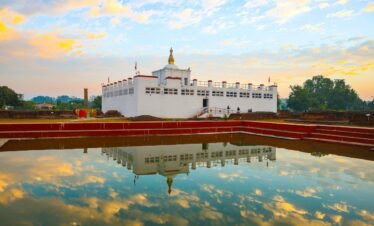
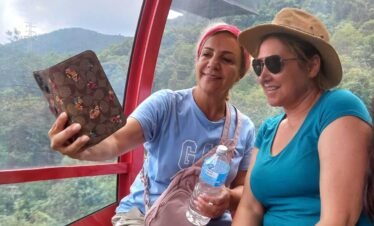
The 10-day itinerary is a strong self-contained Nepal experience, but we customize every tour at no extra modification charge. For families who want more time in Nepal, the most natural extensions are: adding Lumbini (birthplace of the Buddha, 4 hours from Chitwan, 1 to 2 extra days) as a cultural and historical addition; adding a day at Manakamana Temple by cable car on the return drive from Chitwan to Kathmandu (a 10-minute cable car ride over the Trishuli River gorge, very popular with children); or extending Pokhara by one night to add the World Peace Pagoda hike or optional paragliding for older children and teenagers.
For families with teenagers who want a trekking component, we can attach the Annapurna Base Camp Trek from Pokhara as an add-on for fit family members while others continue the standard tour program. The full 12-day Nepal Highlights Tour (see our 12-day Nepal tour page) is a natural step up for families who have a few extra days available. Use our customization page or contact us directly to discuss your family’s specific travel dates and preferences.


Local Guide Note — Sunil Tiwari, Trekking Guide, Next Trip Nepal: I have led family groups through Nepal with children from age 7 upward and the pace difference from a standard tour is significant across every day. We build 90-minute rest windows into every family tour day, schedule all Jeep safaris before 07:00 am for the best wildlife activity, and confirm hot water and air conditioning at every hotel before every booking.
Critical Safety and Logistics
- No trekking permits required for Kathmandu, Pokhara, and Chitwan itineraries. Chitwan National Park entry permit (NPR 2,000 per person) applies for the jungle safari component.
- Kathmandu to Pokhara by road: 180 km, 7 hours by private vehicle. Internal flight available: 30 minutes, USD 90 to 150 depending on season.
- Chitwan National Park jungle activities conducted with government-licensed naturalist guides. All wildlife Jeep safaris and canoe trips depart from the designated park zone.
The 10 Days Nepal Family Tour is the itinerary we recommend most often when a family with children contacts us and asks what to do in Nepal for the first time. It covers the three destinations that define Nepal — the ancient temple cities of the Kathmandu Valley, the lakeside mountain setting of Pokhara, and the wildlife habitat of Chitwan National Park — in a schedule designed specifically for families traveling with children. There is no high altitude, no trekking, no physical challenge beyond normal walking. The highest point on the entire tour is Sarangkot viewpoint above Pokhara at 1,592 metres, well below the 2,500-metre threshold where altitude sickness becomes a realistic concern. All transport is by private vehicle. The guide is with you for all 10 days. The pace is flexible — we slow down or speed up based on how the family is feeling each day.
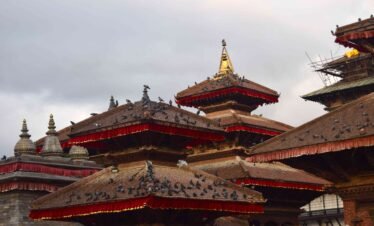
The Kathmandu Valley has been continuously inhabited for over 2,000 years, and its concentration of living temples, royal squares and Buddhist monasteries is without parallel in South Asia. We cover five of the seven UNESCO World Heritage Sites in the valley across two full days of sightseeing. Pashupatinath Temple on the Bagmati River — the most important Hindu pilgrimage site in Nepal and the largest Shiva temple complex in South Asia — is where your guide will give your family its first real introduction to Hindu culture in practice. The morning aarti ritual, the river ghats, the sadhus in meditation: these are not staged demonstrations, they are daily religious life in Nepal, and children encounter them with a context and curiosity that is different from what adults experience. Our guides are trained to explain the cremation practices at Pashupatinath in ways that are honest, respectful and age-appropriate for children from about eight years old upward.
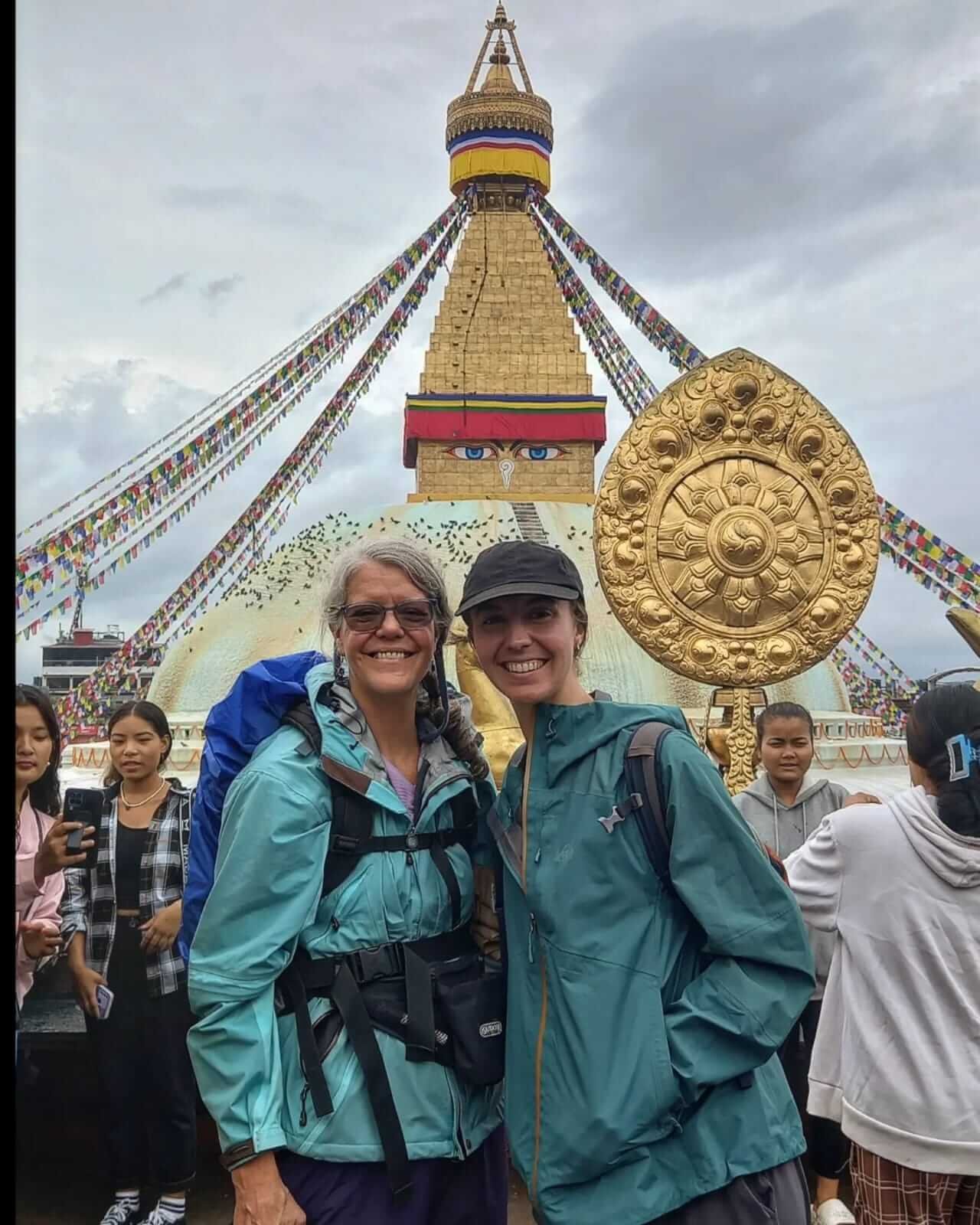
Boudhanath Stupa is consistently the highlight of the Kathmandu days for younger children. The stupa’s outer circuit has a full ring of prayer wheels that children can spin as they walk, which is both permitted and encouraged. The open courtyard around the stupa is wide enough for children to move freely while parents observe the Buddhist monasteries and butter lamp shrines that line the circumambulation path. The Tibetan community around Boudhanath is welcoming to foreign visitors and children in particular. Swayambhunath — the Monkey Temple — is the other guaranteed family favourite. The resident population of rhesus macaque monkeys lives freely on the hilltop complex and approaches visitors at close range throughout the day. The 365 stone steps up the eastern face of the hill are manageable for children from about age 5 upward. For families with very young children or mobility considerations, the road access to the top of the hill allows direct vehicle access.
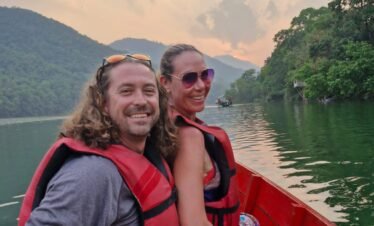
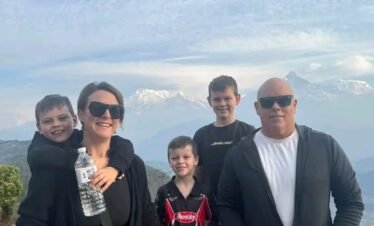
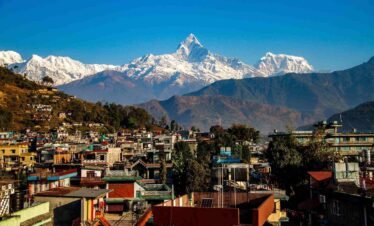
Pokhara is the natural midpoint of the tour — calmer than Kathmandu, centred on Phewa Lake, with the Annapurna massif rising directly to the north. The Sarangkot sunrise is the activity most families remember from Pokhara: a 4:30 AM departure from the hotel, a 45-minute drive up the ridge to 1,592 metres, and a panorama of Dhaulagiri, Annapurna I, Manaslu and Machhapuchhre in a single sweep as the sun rises over the hills to the east. Children who were reluctant to get up at 4:30 AM are invariably glad they did by 6:15 AM. The afternoon in Pokhara is spent on the lake — rowboating on Phewa Lake with Machhapuchhre (6,993m) visible across the water is one of those experiences that sits in the background of a family’s memory of Nepal for years. Davis Falls and Gupteshwor Cave — an underground cave from which you can look up at the base of the waterfall — are reliable hits with children of all ages.
Chitwan is the reason many families book this tour specifically. Chitwan National Park holds approximately 752 one-horned rhinoceros (one of the two highest-density rhino populations in the world) and approximately 128 Bengal tigers in 952 square kilometres of subtropical forest and grassland. The two-day safari program on this tour includes a morning jeep safari, an afternoon jeep safari, a dugout canoe ride on the Rapti River, a guided jungle walk with a trained naturalist, an elephant bathing visit at the Khorsor Elephant Breeding Center, and a Tharu cultural dance evening at the lodge. Families with children aged 5 to 15 typically report Chitwan as the single best day of the 10-day tour. The naturalist guide adjusts the explanation of wildlife biology and behavior for the age range of the group — children leave with a genuine understanding of conservation, habitat and the specific pressures facing tigers and rhinos in the 21st century.
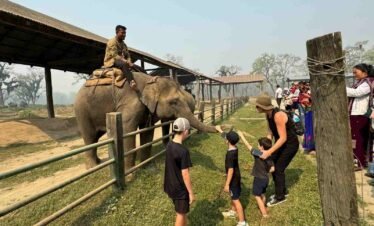
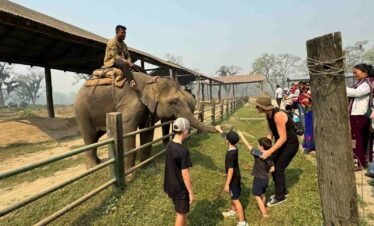
The Elephant Breeding Center at Khorsor, 1.5 kilometres east of Sauraha village, is a separate activity from the jungle safari that deserves special mention for families. The center breeds domesticated Asian elephants for conservation and park management work. Afternoon visits (3:00 PM to 5:00 PM daily) coincide with the elephants’ river bathing time — a routine that involves young calves as well as adult animals. Children can observe the elephant-mahout relationship, see calves born at the facility, and understand the conservation challenge facing Asian elephants in Nepal and across South Asia. It is one of the most direct and positive human-animal encounters available on this tour.
The tour price starts at USD 1,300 per person for two adults, with child rates available depending on age. The package covers all accommodation with daily breakfast, your licensed English-speaking guide for the full 10 days, private vehicle and driver for all transfers and city touring, all entrance fees to UNESCO heritage sites and Chitwan National Park, the full Chitwan safari package, Sarangkot transfer for sunrise, and all government taxes. International flights, Nepal visa fees, travel insurance, personal meals outside included breakfasts, tips, and optional activities are not included. We arrange everything else. Contact our Kathmandu team or check our Pokhara destination page for more detail on each city.
Further Reading from Our Kathmandu Guides
How to Book the 10 Days Nepal Family Tour 2026
Highlights
- Chitwan National Park jeep safari and dugout canoe — one-horned rhinos (752+ in the park), Bengal tigers, and over 500 bird species in a UNESCO World Heritage forest
- Swayambhunath Monkey Temple — hundreds of resident rhesus macaques on the 365 stone steps to the hilltop stupa, loved by children of all ages
- Sarangkot sunrise above Pokhara: Dhaulagiri (8,167m), Annapurna I (8,091m), Manaslu (8,163m) and Machhapuchhre (6,993m) in a single panorama
- Elephant Breeding Center in Chitwan (Khorsor area) — afternoon elephant bathing, baby calves at close range, conservation education for children
- Private vehicle and licensed English-speaking guide for all 10 days — no shared buses, flexible daily pace adjusted to your family
- Rowboating on Phewa Lake in Pokhara with Machhapuchhre (Fishtail Mountain) reflected in the water — calm and accessible for all ages
- Five UNESCO World Heritage Sites in the Kathmandu Valley covered across two days: Pashupatinath, Boudhanath, Swayambhunath, Patan Durbar Square and Bhaktapur
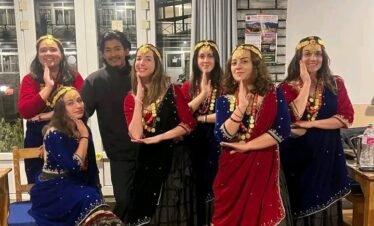
- Tharu cultural dance evening at the Chitwan jungle lodge — traditional dance and music from the indigenous Tharu community of the Terai lowlands
- Optional Manakamana Cable Car on the return drive (10-minute aerial crossing of the Trishuli River gorge, very popular with children)
- Family rooms and connecting rooms available at all hotels — 3-star with pools in Kathmandu and Pokhara, jungle lodge in Chitwan
Write a Review
You must be logged in to post a comment.