Lobuche East Peak Climbing

1 Day

The Lobuche East Peak Climbing package offered by Next Trip Nepal is an 18-day expedition that combines the full classic Everest Base Camp trek with the technical ascent of Lobuche East at 6,119 meters — one of the most popular and accessible 6,000-meter peaks in the Nepal Himalayas. This expedition is designed for trekkers who want to go beyond Base Camp and experience what real summit climbing feels like: rising before dawn, putting on crampons, fixing an ice axe, clipping onto a rope, and standing on a genuine Himalayan peak with Everest, Lhotse, Makalu, and Cho Oyu filling the horizon in every direction.

What is Lobuche East Peak?

Lobuche East is a rocky and glaciated summit in the Khumbu Himalaya of northeastern Nepal, located directly above Lobuche village at 4,940 meters near the western edge of the Khumbu Glacier. It is one of two main summits on the Lobuche massif — Lobuche West (6,145m) and Lobuche East (6,119m) — and Lobuche East is by far the more frequently climbed of the two, drawing hundreds of climbers each year during the spring and autumn seasons.

The peak is registered as a trekking peak with the Nepal Mountaineering Association (NMA), which means the permit process is straightforward and the route is considered suitable for non-professional climbers when guided by a licensed NMA climbing guide. The standard route follows the South East Ridge, gaining the ridge from the High Camp at approximately 5,400 meters and following a mix of snow slopes, rocky sections, and short technical ice pitches to the summit. The round trip from High Camp to summit and back takes 6 to 9 hours depending on conditions.

Why Lobuche East is the Perfect First 6,000m Himalayan Peak

Most trekkers who complete Everest Base Camp return home with an achievement they are deeply proud of — but also with the feeling that they were close to something greater without quite touching it. Lobuche East is the natural next step. It sits in the same valley, uses the same trail to reach Lobuche village, and then adds a genuine summit climb on top of the EBC experience. Because the acclimatization for EBC and Kala Patthar is essentially the same acclimatization needed for Lobuche East, the combined itinerary is highly efficient and safe.

The technical difficulty of Lobuche East is appropriate for motivated, physically fit trekkers with no prior mountaineering experience. You will be using crampons, an ice axe, and fixed ropes for the first time on the South East Ridge — and your NMA-certified climbing guide will provide detailed instruction at High Camp before the summit push. The key factors for success are physical fitness, good acclimatization, and the willingness to push through discomfort at high altitude. Prior experience is an advantage but not a requirement.

The Trek to Base Camp: Khumbu at Its Best

The first ten days of the Lobuche East Peak Climbing expedition follow the same route as the classic Everest Base Camp Trek — one of the most celebrated and scenically varied trekking routes in the world. The journey begins with a 35-minute mountain flight from Kathmandu to Lukla and the famous Tenzing-Hillary Airport, named after the men who made the first ascent of Everest in 1953. From Lukla the trail descends through forest to Phakding and then makes the steep climb to Namche Bazaar at 3,440 meters.

Namche Bazaar is the cultural heart of the Khumbu Sherpa world — a surprisingly well-equipped mountain town with coffee shops, gear stores, ATMs, a weekly market, and the Sherpa Culture Museum. An acclimatization day hike from Namche to the Everest View Hotel at 3,880 meters delivers one of the most dramatic mountain panoramas in Nepal: Everest, Lhotse, Nuptse, and Ama Dablam all visible from the hotel's outdoor terrace.

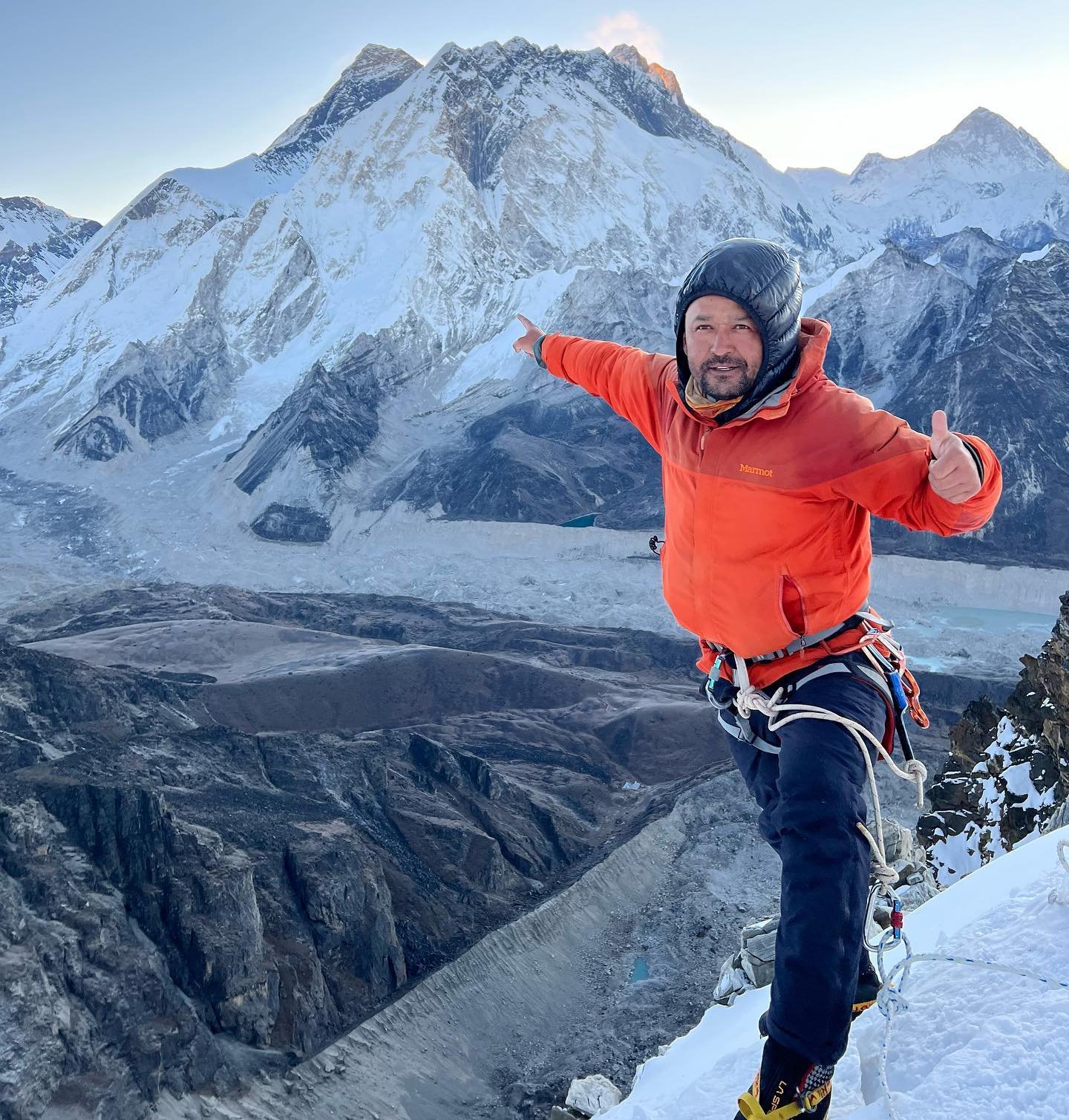
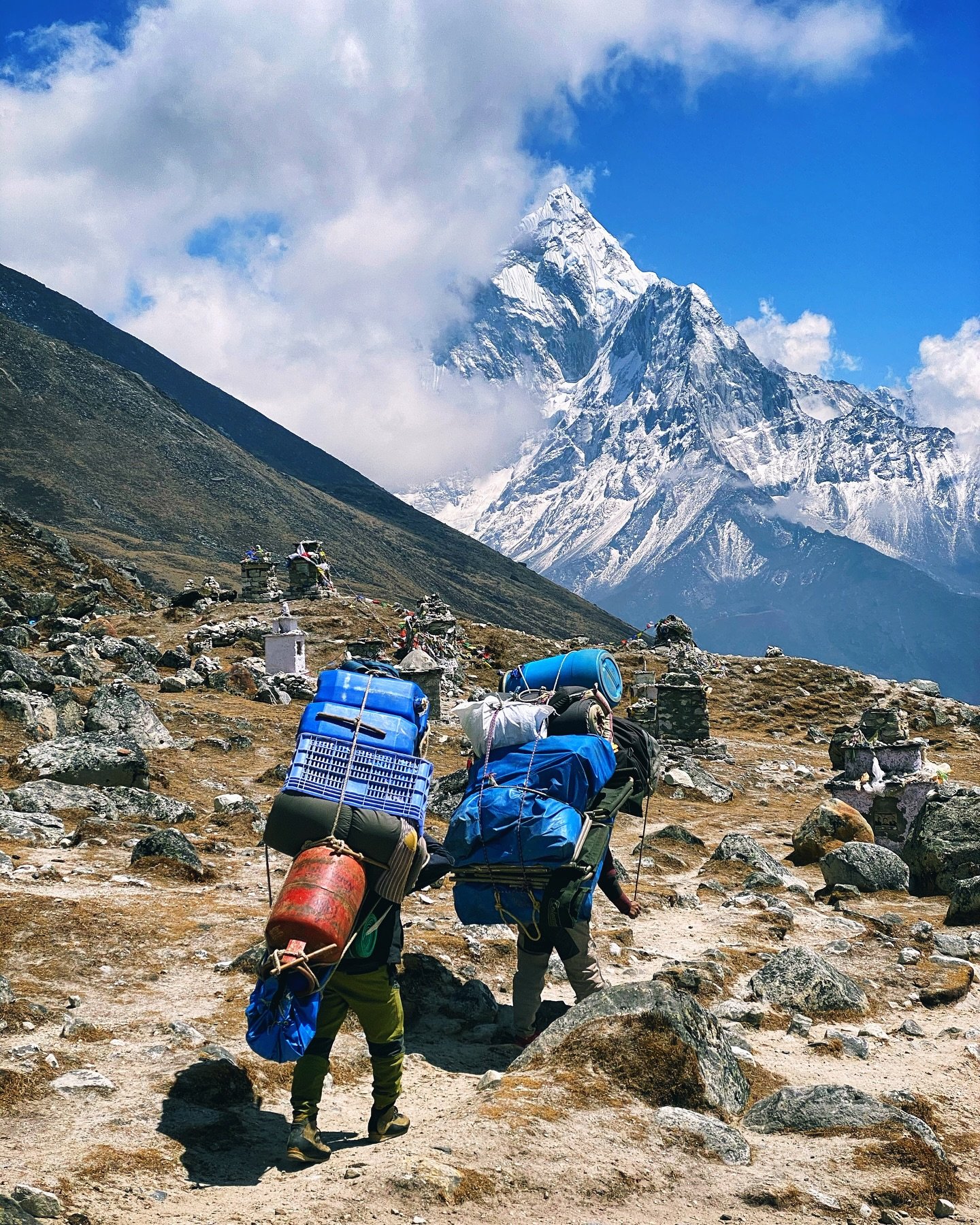
Above Namche, the trail passes through Tengboche Monastery at 3,870 meters — the most sacred and visually stunning monastery in the Khumbu, with Ama Dablam soaring directly above it — and continues through the Sherpa villages of Dingboche and Lobuche to Gorakshep at 5,170 meters. From Gorakshep, a side trip reaches Everest Base Camp at 5,364 meters at the foot of the Khumbu Icefall, and the following morning's pre-dawn climb to Kala Patthar at 5,545 meters delivers the most iconic close-up sunrise view of Mount Everest available anywhere on the planet. Both of these days also function as critical final acclimatization days before the Lobuche summit push.

The Climb: High Camp and Summit Day

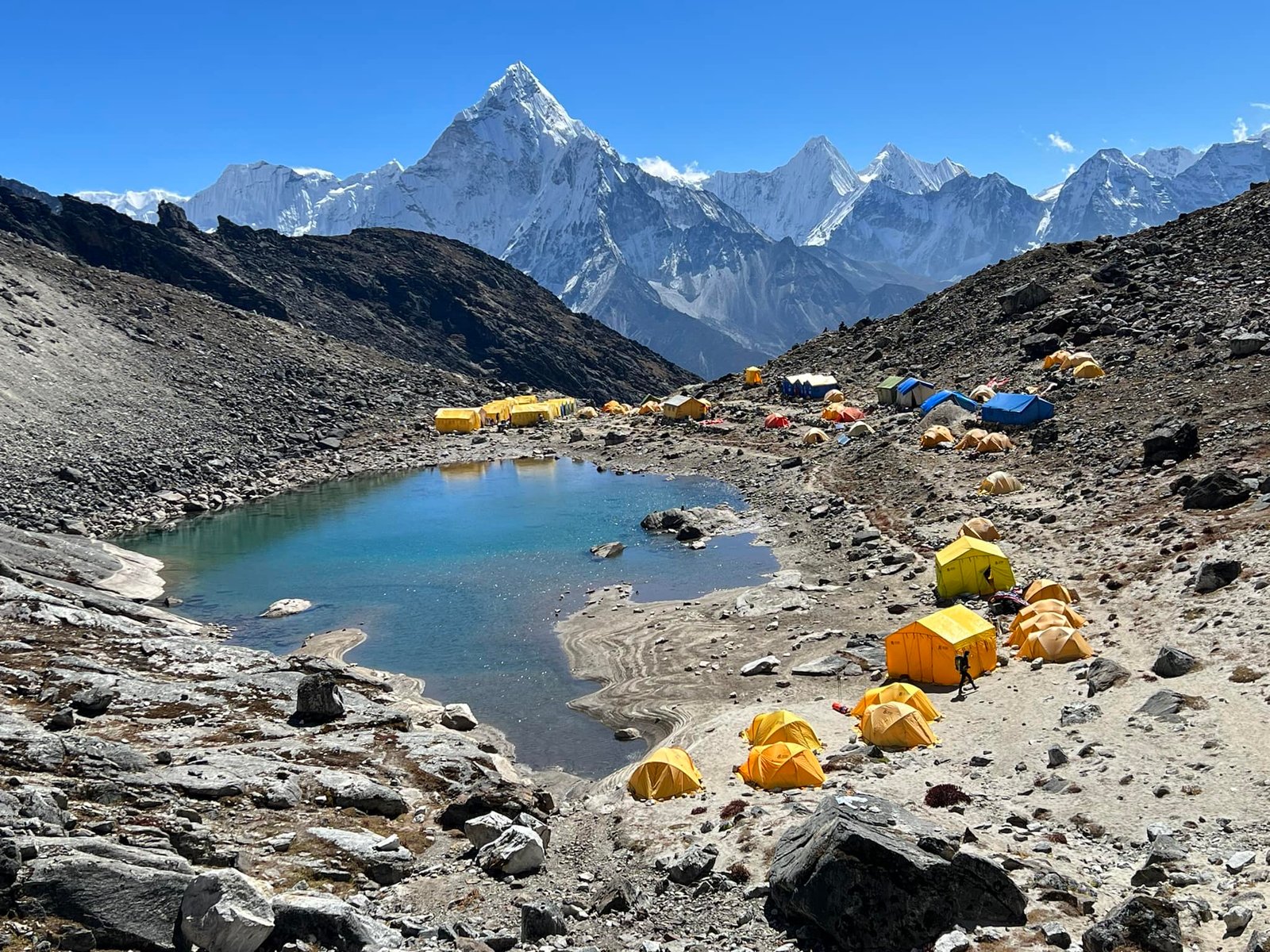
After the EBC and Kala Patthar days, the expedition descends back to Lobuche and begins the climbing phase. From Lobuche the route follows the rocky glacier moraine up toward Lobuche East Base Camp and continues to High Camp at approximately 5,400 meters. High Camp is a tented camp on a glacial shelf below the South East Ridge, and the afternoon here is spent in briefing, gear preparation, rest, and early sleep before the summit attempt.

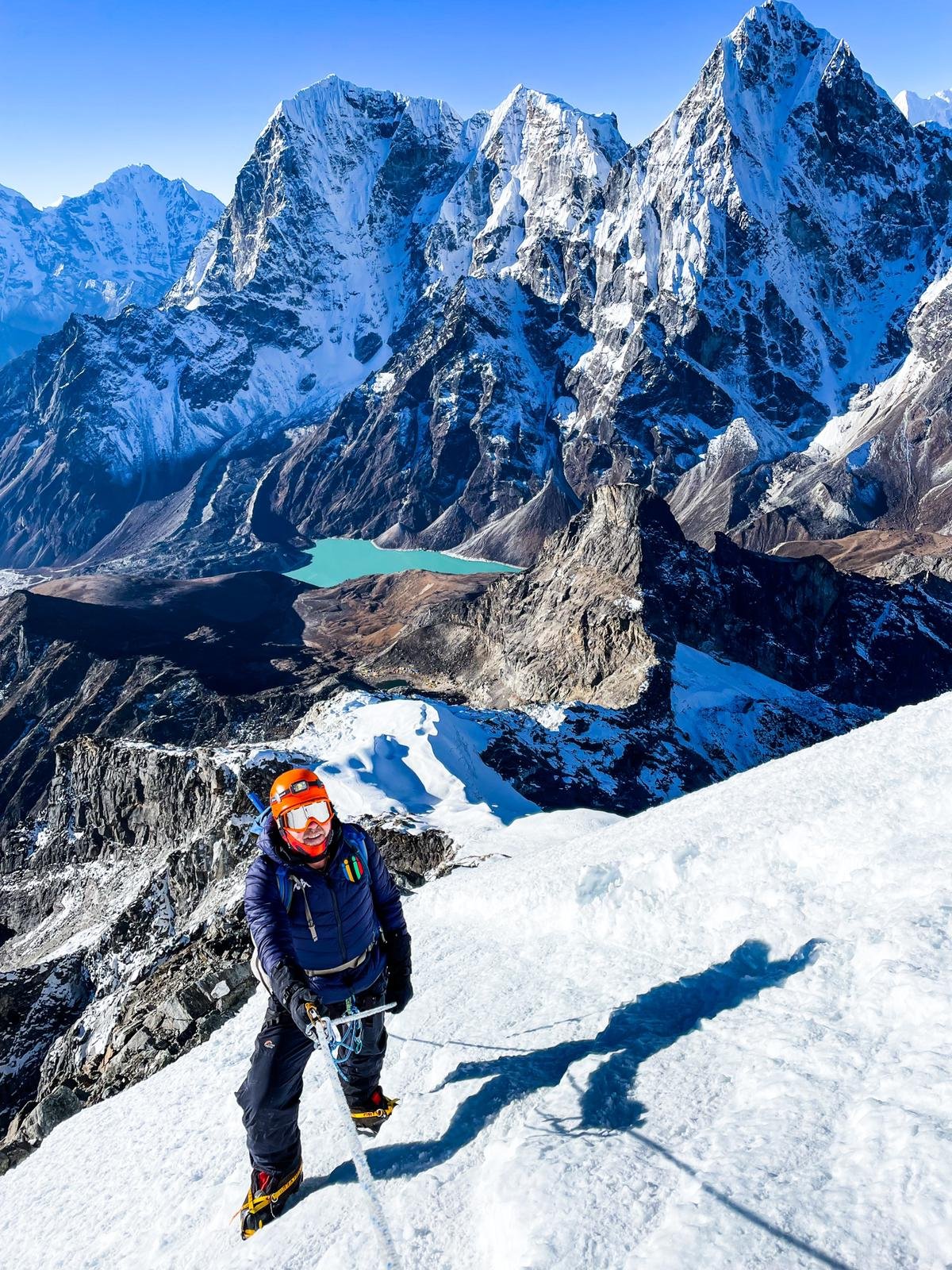
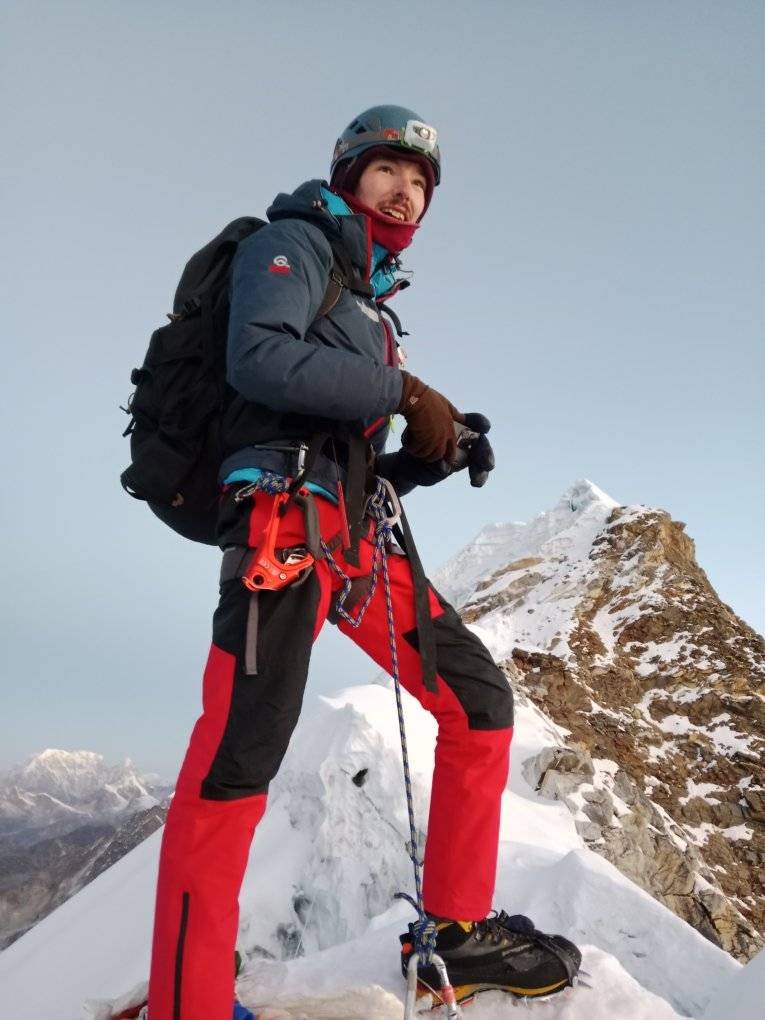
Summit day begins in the early hours of the morning, typically between 2:00 and 3:00 AM, to reach the summit in the stable pre-wind window before mid-morning. The route from High Camp gains the South East Ridge via steep snow slopes and moves along the ridge through rocky and icy terrain, with fixed ropes in place on the most technical sections. At extreme altitude the climbing is demanding — each step requires deliberate effort and careful crampon placement — but the technical moves themselves are manageable for any climber who is properly fit and acclimatized.

The summit of Lobuche East at 6,119 meters offers a 360-degree panorama that exceeds almost anything visible from the trekking trail. Mount Everest (8,848m) dominates the northern horizon. Lhotse (8,516m) and Nuptse (7,861m) flank it on either side. Makalu (8,481m), the world's fifth-highest mountain, is visible to the east. Cho Oyu (8,188m) sits to the west. Ama Dablam (6,814m), one of the world's most beautiful mountains, rises to the south. The entire Khumbu Glacier lies spread out below you. This view — from a summit you reached on your own two feet using crampons and an ice axe — is a moment that stays with climbers for the rest of their lives.

Altitude, Acclimatization, and Safety

The Lobuche East Peak Climbing itinerary reaches a maximum altitude of 6,119 meters — well above the threshold at which altitude sickness becomes a serious concern for all humans regardless of fitness. The 18-day itinerary is carefully structured with two dedicated acclimatization days at Namche Bazaar (3,440m) and Dingboche (4,360m), plus the natural acclimatization effect of the EBC and Kala Patthar days at 5,364m and 5,545m respectively. This staged ascent profile gives your body the time it needs to produce additional red blood cells and adapt to progressively lower oxygen levels.

All Next Trip Nepal guides carry pulse oximeters and comprehensive first aid kits throughout the expedition. Our guides are trained to recognize the symptoms of Acute Mountain Sickness (AMS), High Altitude Pulmonary Edema (HAPE), and High Altitude Cerebral Edema (HACE) and know when descent is the required response. Trekking insurance that covers helicopter evacuation up to 6,500 meters is mandatory for all participants — your guide will have your insurance details and can activate an emergency rescue rapidly if required.

Sagarmatha National Park and the Khumbu Ecosystem

The entire route above Monjo passes through Sagarmatha National Park, a 1,148 square kilometer UNESCO World Heritage Site established in 1976. The park protects the Khumbu Himalayan ecosystem including Everest, Lhotse, Cho Oyu, and numerous other peaks above 7,000 meters. At lower elevations, forests of rhododendron, birch, and juniper support red pandas, Himalayan tahr, snow leopards, musk deer, and over 150 bird species. The spring trekking season fills the lower forests with spectacular red and pink rhododendron blossoms. Both the Sagarmatha National Park permit and the Lobuche Peak climbing permit are included in the Next Trip Nepal package.

Sherpa Culture and the People of the Khumbu

The Sherpa people are central to the Lobuche East Peak Climbing experience. Originally from the Kham region of Tibet, the Sherpa migrated to the Solukhumbu valley several centuries ago and built a remarkable mountain culture rooted in Tibetan Buddhism. The monasteries at Tengboche and Pangboche, the prayer wheels and mani walls along every trail, the colorful prayer flags strung above every high pass, and the genuine warmth of teahouse owners and mountain guides are all expressions of a living and active spiritual tradition that remains strong despite the region's exposure to international trekking tourism.

Your licensed climbing guide and porter are Sherpa men who know the Khumbu intimately — they were raised in these villages, went to school here, and have spent their working lives in these mountains. Taking time to learn about their culture, ask about their families, and listen to their stories adds a depth to the Lobuche East expedition that goes far beyond the summit itself.

Book Lobuche East Peak Climbing with Next Trip Nepal

Next Trip Nepal is a Kathmandu-based trekking and peak climbing company offering fully guided, all-inclusive Lobuche East expeditions on private departure dates throughout the spring and autumn seasons. Our packages cover everything from airport transfers and Lukla flights to all permits, accommodation, meals, NMA-certified climbing guide, trekking guide, porter support, climbing ropes, and high camp tented accommodation. Group sizes are kept small for a safe and personal experience at every stage.

Whether you are tackling your first Himalayan peak or adding Lobuche East to a list of completed summits, our team has the experience and local knowledge to give you the best possible chance of reaching the top. Contact us today via phone, email, or WhatsApp to confirm dates, check availability, and start preparing for your Lobuche East summit.

Overview

Local Guide Note — Susam Suywal, Senior Trek Leader, Next Trip Nepal: I have led Lobuche East (6,119m) expeditions 8 times and the east ridge demands genuine mixed-terrain competence — it is a harder technical route than Island Peak or Mera. We use 8mm dynamic rope on all technical sections for every Lobuche East group, because at these temperatures it provides better fall protection than static rope.

Live Trail and Permit Status

Permits required: Sagarmatha NP Permit (NPR 3,000) + Khumbu Fee (NPR 2,000) + NMA Peak Climbing Permit (USD 400 per person, spring season)
Current rule: Technical route requiring prior high-altitude experience. Dynamic rope mandatory on east ridge sections. NMA permit fee reflects greater technical grade versus Mera or Island Peak.
Trail status: OPEN (spring and autumn). East ridge mixed terrain requires guided ascent at all times.
Entry point: Mountain flight to Lukla then EBC approach trek, days 1 to 5.
Verified by Next Trip Nepal operations team, June 2026

Critical Safety and Logistics
  • NMA peak climbing permit required in addition to Sagarmatha NP and municipality fee. Obtain only through a licensed Nepal trekking agency before departure.
  • Technical pre-climb briefing on crampon and jumar technique is mandatory for all group members before the approach begins.
  • Emergency evacuation landing zone confirmed at Dingboche (4,410m) or Pheriche (4,371m). Verify helicopter evacuation insurance cover above 5,000m with your insurer before booking.

The Lobuche East Peak Climbing package is the perfect combination of Nepal's most iconic trekking route and a genuine technical mountain ascent. Over 18 days, this expedition takes you through the heart of the Khumbu Sherpa region — past Namche Bazaar, Tengboche Monastery, and Everest Base Camp — and then directly to the summit of Lobuche East at 6,119 meters, one of the most rewarding and accessible 6,000-meter peaks in the entire Himalayan range. It is the ideal first high-altitude mountaineering objective for trekkers who want to move beyond Base Camp and experience what real summit climbing feels like.

Lobuche East is classified as a trekking peak by the Nepal Mountaineering Association (NMA), which means it requires a climbing permit but does not demand the full expedition infrastructure of an 8,000-meter mountain. However, the ascent via the South East Ridge involves steep snow slopes, sections of glacial ice, and fixed-rope climbing at high altitude — giving it a genuinely technical character that separates it from simpler treks. You will use crampons, an ice axe, and a harness, and your licensed climbing guide will brief you on the techniques required. Most physically fit trekkers with good acclimatization complete the climb successfully.

The journey begins with a scenic flight to Lukla and follows the classic Everest trail through Sagarmatha National Park to EBC and Kala Patthar before descending to Lobuche Base Camp and High Camp for the summit push. Next Trip Nepal manages every detail of the expedition — permits, guides, climbing equipment, teahouse bookings, and camp logistics — so you can focus entirely on the mountains. This package departs on private dates year-round and can be customized to match your schedule and experience level.

How to Book the Lobuche East Peak Climbing

1Choose Your Trip. First, choose the Lobuche East Peak Climbing package that matches your travel plan, budget, and travel style.
2Check Availability. Go to the Availability section on this trip page. There you can see our departure dates for different months.
3Group Departure or Private Trip. Join one of our group departures, or choose a private trip for more flexibility, personal care, and your own travel date.
4Customize If Needed. Want to change the itinerary, add extra days, upgrade transport or accommodation, or include a porter? Contact us directly.
5Contact Us. Reach us anytime on WhatsApp at +977 9869225929 or email nexttripnepal@gmail.com.
6Book Your Trip. Choose your package and date, then book. No advance payment is required. Confirm first, pay after arrival in Nepal.
7Use the Booking Box. On a laptop or desktop, use the booking box on the right side of this page to book your trip or send us your question.

Highlights

  • Summit Lobuche East Peak (6,119m) — one of Nepal's most accessible 6,000m technical climbs
  • Reach Everest Base Camp (5,364m) and stand at the foot of the world's highest mountain
  • Climb Kala Patthar (5,545m) for the most iconic close-up panorama of Mount Everest
  • Traverse the Khumbu Glacier moraine and see the Khumbu Icefall from the base
  • Stunning 360° summit views of Everest, Lhotse, Nuptse, Makalu, Cho Oyu, and Ama Dablam
  • Scenic 35-minute mountain flight to Lukla via Tenzing-Hillary Airport
  • Explore Namche Bazaar — the Sherpa capital with mountain views, museums, and culture
  • Visit the sacred Tengboche Monastery framed by towering Himalayan peaks
  • Trek through Sagarmatha National Park, a UNESCO World Heritage Site
  • Guided technical climbing with crampons, ice axe, and fixed ropes on the South East Ridge

Itinerary

  • Day
    01

    Day 1: Arrival in Kathmandu (1,400m) — Airport Transfer and Expedition Briefing

    A Next Trip Nepal representative meets you at Tribhuvan International Airport and transfers you to your hotel in Thamel by private vehicle. After check-in, our team holds a detailed pre-expedition briefing covering the full 18-day itinerary, gear checklist, climbing permits, acclimatization strategy, and summit day procedures. This is the right time to raise questions and ensure you are fully prepared before the mountains begin. Overnight at a 3-star hotel in Kathmandu.

    Breakfast
    3 Stars Hotel in Thamel
  • Day
    02

    Day 2: Kathmandu — Permits, Gear Check, and Free Day for Preparation

    Morning trek orientation with your guide at your hotel. Climbing permits including the Lobuche Peak climbing permit and Sagarmatha National Park entry permit are collected. Your gear is reviewed and any missing items can be purchased in Thamel. The afternoon is free for sightseeing at Boudhanath Stupa or Pashupatinath Temple. Early rest is recommended before the Lukla flight tomorrow. Overnight in Kathmandu.

    Breakfast
    3 Stars Hotel in Thamel
  • Day
    03

    Day 3: Fly Kathmandu to Lukla (2,840m) — Trek to Phakding (2,652m) | 3–4 hrs

    An early transfer to the domestic terminal for the 35-minute scenic mountain flight to Tenzing-Hillary Airport in Lukla — one of the world's most dramatic airstrips, carved into a hillside at 2,840m. After meeting the full climbing crew, you begin trekking downhill through pine and rhododendron forest following the Dudh Koshi River to Phakding. Walk gently today as your body begins adjusting to the altitude. Overnight in a teahouse in Phakding.

    Breakfast + Lunch + Dinner
    Tea House or Lodge
  • Day
    04

    Day 4: Trek Phakding to Namche Bazaar (3,440m) | 5–6 hrs

    The trail passes through the Sherpa villages of Bengkar, Monjo, and Jorsale before crossing the Sagarmatha National Park entrance checkpoint at Monjo. After crossing the famous Hillary Suspension Bridge high above the Dudh Koshi gorge, a steep 600-meter climb brings you to Namche Bazaar — the vibrant Sherpa capital of the Khumbu with bakeries, gear stores, coffee shops, ATMs, and your first clear view of Everest's summit above the ridge. Overnight in Namche Bazaar.

    Breakfast + Lunch + Dinner
    Tea House or Lodge
  • Day
    05

    Day 5: Acclimatization in Namche Bazaar — Hike to Everest View Hotel (3,880m)

    An acclimatization day using the essential principle of climbing high and sleeping low. The highlight is a 3 to 4 hour hike to the Everest View Hotel at 3,880m — the Guinness World Record holder for the world's highest hotel — where Everest, Lhotse, Nuptse, and Ama Dablam fill every inch of the horizon. Visit the Sherpa Culture Museum and the local weekend market. Return to Namche for overnight. This day significantly reduces altitude sickness risk on the days ahead.

    Breakfast + Lunch + Dinner
    Tea House or Lodge
  • Day
    06

    Day 6: Trek Namche Bazaar to Tengboche (3,870m) | 5–6 hrs

    Descend from Namche to Punki Thanka then climb steadily through rhododendron and juniper forest to Tengboche at 3,870m. Tengboche Monastery — the largest and most sacred monastery in the Khumbu — sits on a dramatic ridge with Ama Dablam rising directly behind it and Everest dominating the northern horizon. Attend the evening prayer ceremony with resident monks if timing allows. Overnight in a teahouse in Tengboche.

    Breakfast + Lunch + Dinner
    Tea House or Lodge
  • Day
    07

    Day 7: Trek Tengboche to Dingboche (4,360m) | 5–6 hrs

    Descend through mixed birch and rhododendron forest to Deboche, pass the Pangboche Monastery, and follow the Imja Khola valley through increasingly alpine terrain past stone-walled yak pastures and mani walls to the windswept village of Dingboche at 4,360m. Outstanding views of Ama Dablam, Island Peak, Lobuche Peak, and Makalu open up as the vegetation thins out above Pangboche. Overnight in Dingboche.

    Breakfast + Lunch + Dinner
    Tea House or Lodge
  • Day
    08

    Day 8: Acclimatization in Dingboche — Hike to Nagarjun Hill (approx. 5,100m) | 4–5 hrs

    Second acclimatization day with a hike to Nagarjun Hill above Dingboche for panoramic views of Makalu (8,481m), Lobuche Peak, Thamserku, Ama Dablam, and Island Peak. This hike to above 5,000m prepares your cardiovascular system for the demanding high-altitude days during the climb. Afternoon rest in Dingboche with time to review climbing equipment. Overnight in Dingboche.

    Breakfast + Lunch + Dinner
    Tea House or Lodge
  • Day
    09

    Day 9: Trek Dingboche to Lobuche (4,940m) | 5–6 hrs

    The trail climbs from Dingboche to Dughla (Thukla Pass) where stone cairns and prayer flags serve as memorials to climbers lost on Everest, including Scott Fischer and Babu Chiri Sherpa. Beyond the pass the route follows the edge of the Khumbu Glacier lateral moraine with dramatic views of Pumori, Khumbutse, and Lingtren before descending to Lobuche village at the glacier's edge. Overnight in Lobuche — your base for the summit approach.

    Breakfast + Lunch + Dinner
    Tea House or Lodge
  • Day
    10

    Day 10: Trek Lobuche to Gorakshep (5,170m) — Then to Everest Base Camp (5,364m) | 7–8 hrs

    Walk alongside the Khumbu Glacier on a rocky moraine trail to Gorakshep, the last teahouse stop before Base Camp, then continue to Everest Base Camp at 5,364m — the launching point for all Everest expeditions and the foot of the Khumbu Icefall. This is one of the most powerful moments of the entire expedition. During the spring climbing season you may see expedition teams preparing for summit attempts on Everest. Return to Gorakshep for overnight.

    Breakfast + Lunch + Dinner
    Tea House or Lodge
  • Day
    11

    Day 11: Trek Gorakshep to Kala Patthar (5,545m) — Then Return to Lobuche (4,940m) | 7–8 hrs

    Rise before dawn for the climb to Kala Patthar at 5,545m — the best panoramic viewpoint for Mount Everest on earth. Watch the golden sunrise light the summit pyramid of Everest and the surrounding peaks. After the view, descend to Gorakshep for breakfast then continue down to Lobuche. This day reaches your highest non-climbing altitude and serves as final acclimatization before the summit push on Lobuche East. Overnight in Lobuche.

    Breakfast + Lunch + Dinner
    Tea House or Lodge
  • Day
    12

    Day 12: Trek Lobuche to Lobuche East High Camp (5,400m) | 3–4 hrs

    From Lobuche the route heads toward Lobuche East Base Camp and then climbs steeply to High Camp at approximately 5,400m on the glacier moraine below the peak. This is a shorter but demanding day at extreme altitude. Your licensed climbing guide briefs the entire team on the summit route, rope technique, crampon use, and ice axe self-arrest. The afternoon is dedicated to resting, hydrating, eating a strong meal, and checking all climbing equipment. Overnight in tented high camp.

    Breakfast + Lunch + Dinner
    Tented Camp
  • Day
    13

    Day 13: Summit Day — Lobuche East Peak (6,119m) — Then Descend to High Camp

    Summit day begins at 2:00–3:00 AM. You ascend via the South East Ridge of Lobuche East using crampons, ice axe, and fixed ropes on the steep glacial sections. The climb is technical but does not require prior mountaineering certification — your licensed NMA-certified guide manages all rope systems and safety decisions throughout the ascent. From the summit at 6,119m the views are overwhelming: Everest (8,848m), Lhotse (8,516m), Nuptse, Makalu, Cho Oyu, Changtse, and Ama Dablam in every direction. After celebrating your achievement at the summit, descend carefully to High Camp. Overnight in tented high camp.

    Breakfast + Lunch + Dinner
    Tented Camp
  • Day
    14

    Day 14: Trek High Camp to Pangboche (3,930m) | 8–9 hrs

    After the summit achievement, begin the long descent retracing the trail through Lobuche and Pheriche, skirting the Khumbu Glacier moraine and passing familiar landmarks of the upper Khumbu. The altitude drop from High Camp to Pangboche at 3,930m brings significant physical relief and noticeably richer air. Pangboche is a traditional Sherpa village home to one of the oldest monasteries in the Khumbu. Overnight in a teahouse in Pangboche.

    Breakfast + Lunch + Dinner
    Tea House or Lodge
  • Day
    15

    Day 15: Trek Pangboche to Namche Bazaar (3,440m) | 4–5 hrs

    Follow the Imja River back through birch and rhododendron forest past Tengboche Monastery, cross the Dudh Koshi gorge via the Hillary Bridge, and descend through pine forest to Namche Bazaar. Himalayan fauna including Danphe pheasants and mountain tahr are frequently spotted on this lower section. Celebrate the successful summit with your guide and porter team over dinner in Namche. Overnight in Namche Bazaar.

    Breakfast + Lunch + Dinner
    Tea House or Lodge
  • Day
    16

    Day 16: Trek Namche Bazaar to Lukla (2,840m) | 6–7 hrs

    The final trekking day follows the Dudh Koshi River all the way down from Namche through Monjo, Benkar, Phakding, and Cheplung to Lukla. The descent is long but well-graded and the noticeably richer air makes the walking feel easy compared to the high-altitude days. Arriving in Lukla marks the true completion of your Lobuche East Peak Climbing expedition. Overnight in a teahouse in Lukla.

    Breakfast + Lunch + Dinner
    Tea House or Lodge
  • Day
    17

    Day 17: Fly Lukla to Kathmandu (1,400m) — Rest and Celebration

    An early-morning flight from Lukla back to Kathmandu offers one last aerial view of the Everest region and the peaks you just conquered. After landing in Kathmandu the rest of the day is free for rest, souvenir shopping in Thamel, or sightseeing at Boudhanath Stupa or Patan Durbar Square. Overnight at a 3-star hotel in Kathmandu.

    Breakfast
    3 Stars Hotel in Thamel
  • Day
    18

    Day 18: Final Departure from Kathmandu

    A private vehicle transfers you to Tribhuvan International Airport 3 hours before your scheduled departure. If your flight is in the afternoon or evening, the morning is free for any last sightseeing or shopping. Your Lobuche East Peak Climbing expedition with Next Trip Nepal concludes here. Congratulations on summiting a 6,000-meter Himalayan peak.

    Breakfast
    3 Stars Hotel in Thamel

Cost Includes / Excludes

What is Included

  • Airport pickup and drop-off in Kathmandu by private vehicle
  • 3 nights hotel accommodation in Kathmandu (3-star, with breakfast)
  • Domestic round-trip flight: Kathmandu to Lukla and back
  • Lobuche East Peak climbing permit (Nepal Mountaineering Association)
  • Sagarmatha National Park Entry Permit
  • All government VAT and local taxes
  • Teahouse accommodation throughout the trek (Days 3–16)
  • Tented high camp accommodation on Days 12 and 13
  • All meals during the trek and climb: breakfast, lunch, and dinner
  • Licensed English-speaking Sherpa trekking guide
  • NMA-certified climbing guide for the Lobuche East ascent
  • Climbing equipment provided: ropes, snow stakes, ice screws for group use
  • Porter service (1 porter per 2 trekkers, up to 15kg per person)
  • Guide and porter wages, meals, accommodation, and insurance
  • Pulse oximeter and comprehensive first aid kit carried by guide
  • Next Trip Nepal trekking duffle bag, map, and achievement certificate
  • Free luggage storage at our Kathmandu office during the expedition

What is Not Included

  • International airfare to and from Kathmandu
  • Nepal tourist visa fee (USD 30 for 15 days / USD 50 for 30 days)
  • Personal travel and expedition insurance covering climbing and helicopter rescue up to 6,500m (mandatory)
  • Personal climbing gear: mountaineering boots, crampons, ice axe, harness, helmet, sleeping bag (can be rented in Kathmandu)
  • Extra meals and beverages in Kathmandu beyond included breakfasts
  • Hot showers, Wi-Fi, battery charging, and personal drinks during trek
  • Tips for guides, porters, and staff (appreciated but not mandatory)
  • Any costs from weather delays, early return, or medical evacuation
  • Personal travel expenses and souvenirs

Best Time & Training

Best Time to Climb Lobuche East Peak

The two ideal seasons for the Lobuche East Peak Climbing expedition are spring (March to May) and autumn (September to November). Both offer stable weather windows, low wind speeds at high altitude, and excellent summit visibility. Spring brings warmer temperatures and the famous rhododendron blooms in the lower forests. Autumn delivers crystal-clear post-monsoon skies with the sharpest mountain views of the year.

SeasonMonthsConditionsRecommended
SpringMarch – MayWarm days, rhododendrons in bloom, busy on EBC trailYes — best season
MonsoonJune – AugustHeavy rain, poor visibility, unstable snowNo
AutumnSeptember – NovemberCrystal skies, stable weather, excellent visibilityYes — best season
WinterDecember – FebruaryVery cold, strong winds, fewer crowdsFor experienced climbers only

Physical Training for Lobuche East Peak

Start training at least 8 to 10 weeks before your expedition. The most effective training activities are long-distance hiking with a loaded pack (10–15kg), sustained uphill cardio on a stairmaster or inclined treadmill, cycling, swimming, and high-intensity interval training for cardiovascular endurance. Aim for 5 to 6 hour training hikes at least twice per week in the final month. Leg strength is critical — incorporate squats, lunges, step-ups, and calf raises into your weekly routine.

Consult your doctor before departure if you have any respiratory, cardiovascular, or joint conditions. Bring Diamox (acetazolamide) as a preventive option for altitude sickness after medical consultation. On the mountain: stay well hydrated (3–4 liters per day), eat full meals even when appetite decreases, rest when your guide advises, and always prioritize acclimatization over schedule. The summit will only happen if your body is ready.

FAQs

How difficult is the Lobuche East Peak climb?

Lobuche East is classified as a trekking peak by the Nepal Mountaineering Association (NMA), but the ascent via the South East Ridge is genuinely technical. You will use crampons, ice axe, and fixed ropes on steep snow and glacial ice at over 5,400 meters. No prior mountaineering certification is required, but you must be physically fit, well-acclimatized, and mentally prepared for a 6 to 8 hour summit day at extreme altitude. A licensed climbing guide manages all technical rope systems.

What is the summit altitude of Lobuche East Peak?

Lobuche East Peak stands at 6,119 meters (20,075 feet) above sea level. It is located in the Khumbu Himalaya of the Solukhumbu district in northeastern Nepal, near the Khumbu Glacier and Lobuche village at 4,940m. The climbing route follows the South East Ridge from the High Camp at approximately 5,400m.

What permits are required for Lobuche East Peak Climbing?

You need two permits: the Lobuche Peak Climbing Permit issued by the Nepal Mountaineering Association (NMA), and the Sagarmatha National Park Entry Permit. Both permits are included in the Next Trip Nepal package cost. You will not need to handle the paperwork yourself — our team arranges everything before departure from Kathmandu.

What climbing equipment do I need for Lobuche East?

Essential climbing gear includes mountaineering boots (crampon-compatible), crampons, ice axe, harness, carabiner set, ascender/jumar, helmet, and a warm layering system rated to at least -20°C. A sleeping bag rated to -20°C or lower is required for the High Camp nights. Next Trip Nepal provides a detailed gear checklist on booking. Some items can be rented in Kathmandu or Namche Bazaar if needed.

What is the best time to climb Lobuche East Peak?

The two best seasons are spring (March to May) and autumn (September to November). Spring offers stable weather, warmer days, and rhododendron forests in bloom. Autumn delivers the clearest skies and best visibility after the monsoon rains. Summit success rates are highest in these seasons. Winter (December to February) is possible for experienced climbers who can manage extreme cold. Monsoon season (June to August) is not recommended for the climb due to unstable weather and snow conditions.

Is prior climbing experience required for Lobuche East?

Prior high-altitude climbing experience is not strictly required, but it is strongly recommended. Trekkers who have previously reached altitudes above 4,000 meters and are comfortable with steep terrain will have a significant advantage. Your licensed NMA-certified guide will provide technical instruction at High Camp on crampon use, ice axe technique, and rope systems before the summit push. However, basic fitness and strong acclimatization are the most important factors for success.

How is acclimatization managed in this itinerary?

The 18-day itinerary includes two dedicated acclimatization days — one at Namche Bazaar (3,440m) with a hike to the Everest View Hotel (3,880m), and one at Dingboche (4,360m) with a hike to Nagarjun Hill (5,100m). The EBC and Kala Patthar days also serve as high-altitude acclimatization before the summit push. This staged altitude gain significantly reduces the risk of acute mountain sickness (AMS) and gives most climbers the body adaptation needed to reach 6,119m.

What happens if the summit attempt fails due to weather?

Summit days can be affected by high winds, snowfall, or poor visibility. If the first summit window is not suitable, we wait at High Camp for conditions to improve. If a second window is not available within the schedule, we descend and the climb is counted as attempted but not completed. Travel insurance with expedition coverage is mandatory — our guides will always prioritize safety over summit ambition. We do not take unnecessary risks in poor conditions.

Is travel insurance mandatory for this expedition?

Yes, travel and expedition insurance is mandatory. Your policy must cover trekking and peak climbing at altitudes up to 6,500 meters and must include helicopter rescue and emergency evacuation. Please send a copy of your insurance certificate to our team before departure. Without valid coverage we cannot confirm your booking. Ensure the policy specifically states altitude and expedition coverage — standard travel insurance is usually not sufficient.

How many people can join this expedition at once?

The Lobuche East Peak Climbing package is offered as a private expedition departing on your chosen date. Group size typically ranges from 1 to 10 climbers. Larger groups receive reduced per-person pricing. Each group has a dedicated licensed climbing guide, plus trekking support staff and porters. The small group format ensures a safe, personal, and well-managed summit experience.