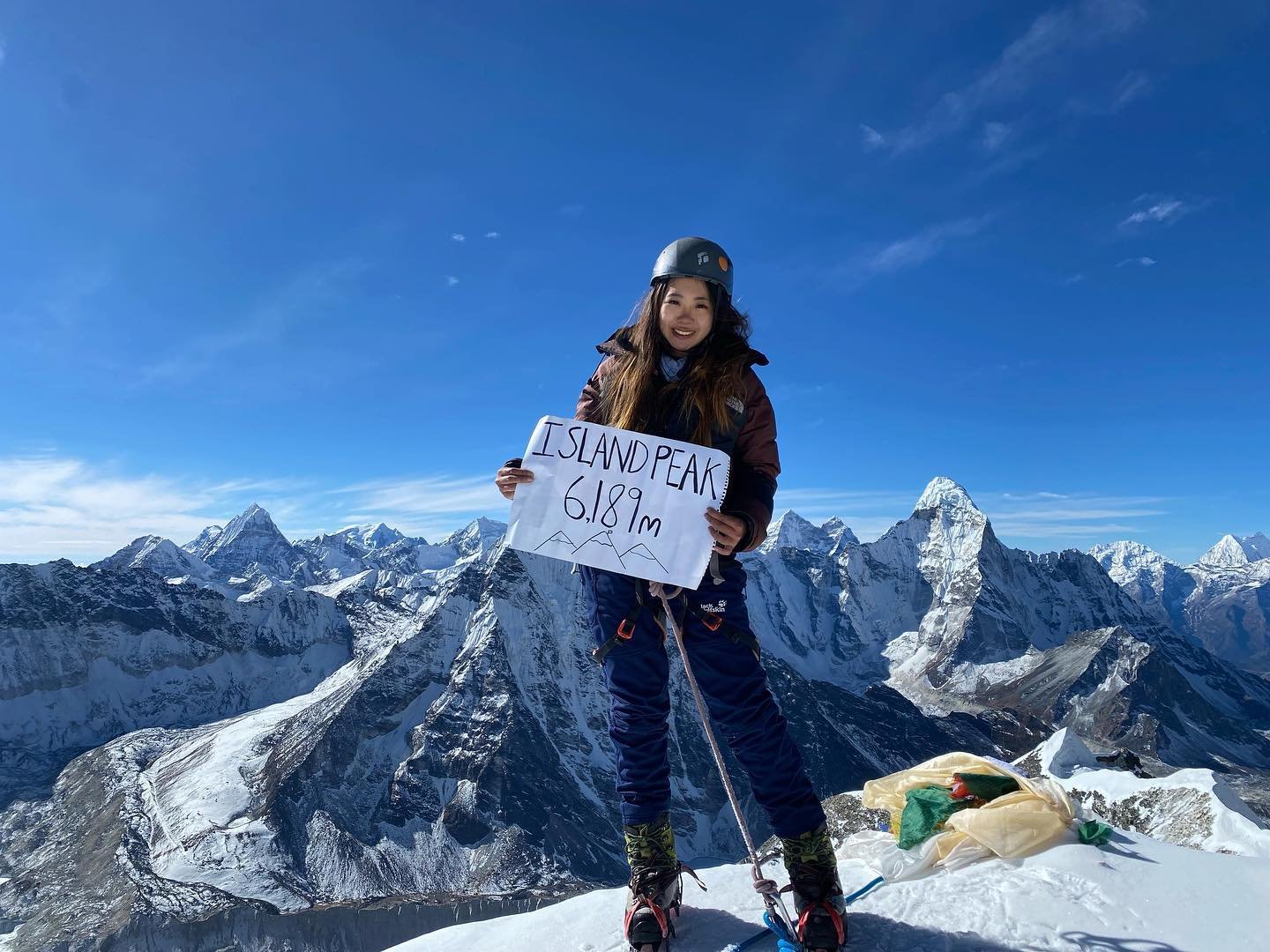
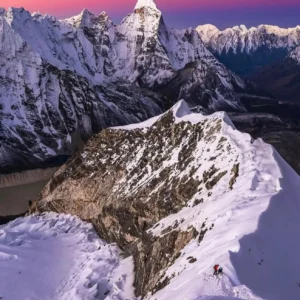
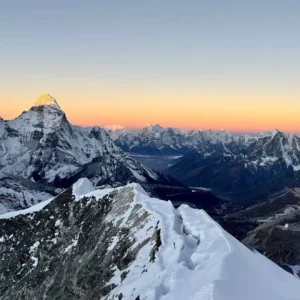
Climbing Island Peak is one of the most thrilling trekking experiences you can have in Nepal. Nestled in the breathtaking Khumbu region, this peak stands tall at 6,189 meters and is officially known as Imja Tse. The journey to the summit is nothing short of spectacular, offering stunning views of the Khumbu valleys along the way.
What makes Island Peak truly special is the combination of a genuine climbing challenge and the stunning scenery. It requires using crampons, fixed ropes, ice axes, and navigation skills on glaciers, making it perfect for those who want to push beyond the typical base camp trek. If you're eager to reach a summit above 6,000 meters, Island Peak is definitely the place to aim for.
Island Peak Climbing Cost 2026
| Group Size |
Price Per Person |
| 1 Person |
US$2750 |
| 2 - 4 Persons |
US$2250 |
| 5 - 8 Persons |
US$2150 |
What is Island Peak (Imja Tse)?
Island Peak was named in 1951 by the British mountaineer and explorer Eric Shipton during his reconnaissance of the Everest approach routes. When viewed from Dingboche village at 4,360 meters in the Imja Khola valley, the peak appears as a dramatically isolated white pyramid rising above the surrounding glacial moraines and valley floors, like an island in a frozen sea. The local Sherpa name Imja Tse refers to its position above the Imja glacier and Imja valley, which drains east toward the Arun River system.
The mountain was first climbed in 1956 by a British expedition that included Charles Evans. It was opened to commercial trekking peak climbing in the 1970s and has since become one of the most climbed peaks in the Nepal Himalaya. The Nepal Mountaineering Association classifies Island Peak as a trekking peak, which means it can be climbed with a trekking peak permit rather than the expedition permit required for higher mountains. This regulatory classification, combined with the mountain's accessibility via the established Khumbu trail network, has made it consistently one of the top three most climbed peaks in Nepal.
Island Peak Climbing Route
The standard and only regularly used route on Island Peak is the Northwest Face route, approaching from the southwest via Island Peak Base Camp at approximately 5,100 meters. The route can be divided into three distinct sections, each with its own character and demands.
Base Camp to High Camp Plateau (5,100m to 5,600m)
From base camp the route crosses boulder and scree terrain before reaching the lower edge of the glacier. A short section of rocky scrambling leads onto the glacial ice. The glacier here is relatively gentle with some crevasse navigation required. Most teams use crampons from this point even on the lower glacier sections. The route threads through the upper glacier plateau, which is broad and relatively safe, toward the base of the headwall. This section takes approximately 2 hours from base camp and provides the first real views back down the Imja valley toward Lhotse's enormous south face.
The Headwall Fixed Rope Section (5,600m to 5,950m)
The headwall is the technical crux of Island Peak. A rope fixed by guides or early season expedition teams ascends approximately 200 vertical meters of steep snow and ice at a consistent gradient of 50 to 60 degrees. Climbers ascend using a jumar (rope ascender) clipped to the fixed rope with the ice axe in hand for balance and security. The fixed rope eliminates the need for lead climbing skills but requires comfort and technique with the jumar tool. At peak season there can be queues on the fixed rope so starting early in the pre dawn hours is important for both timing and fresh snow surface conditions. Above the headwall the angle eases as you gain the upper snowfield leading to the summit ridge.
Summit Ridge and Top (5,950m to 6,189m)
The summit ridge of Island Peak is corniced on the north side and requires careful route finding to stay on the safe southern aspect. The ridge walk to the highest point is approximately 300 to 400 meters long with moderate exposure. In good conditions with stable snow the ridge is straightforward but in wind or fresh snow it demands focused movement. The summit is a small snow dome at 6,189 meters. The 360 degree panorama from the top is one of the greatest views available from any trekking peak in Nepal, taking in Lhotse at 8,516 meters directly to the north, Makalu at 8,485 meters to the east, Ama Dablam at 6,812 meters to the west, Baruntse at 7,129 meters to the south, and on clear days the unmistakable summit pyramid of Everest visible over the Lhotse Nuptse ridge.
Island Peak Climbing Permit Cost 2026/2027
The Island Peak climbing permit is issued by the Nepal Mountaineering Association and the cost varies by season. For the peak season months of spring (March to May) and autumn (September to November) the permit fee is USD 250 per person. For the off season winter months of December to February and the pre monsoon summer period of June to August the fee is USD 125 per person. The permit covers the entire climbing period for a standard expedition and is valid for 30 days from the permit issue date.
In addition to the climbing permit, all climbers require the Sagarmatha National Park entry permit and the Khumbu Pasang Lhamu Rural Municipality permit. The national park permit costs NPR 3,000 (approximately USD 23) for SAARC nationals and NPR 3,000 for foreigners. The rural municipality fee is an additional NPR 2,000 per person. All permit costs are included in the Next Trip Nepal Island Peak Climbing Package price.
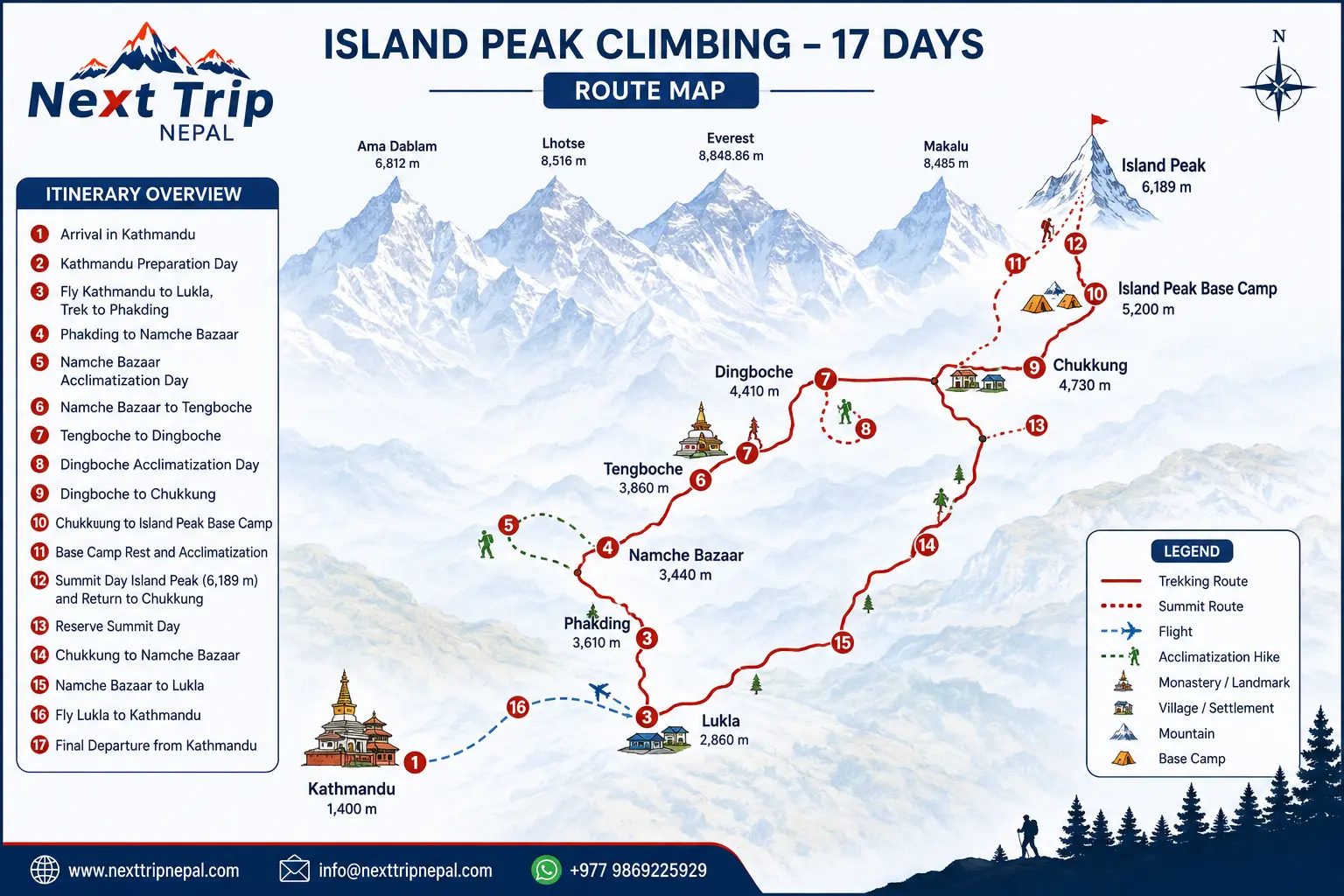
Island Peak Climbing 17 Days Outline Itinerary
| Day |
Itinerary |
Walking Distance |
Approx. Time |
| Day 1 |
Arrival in Kathmandu |
- |
- |
| Day 2 |
Kathmandu Preparation Day |
- |
- |
| Day 3 |
Fly Kathmandu to Lukla, Trek to Phakding |
8 km |
3-4 hours |
| Day 4 |
Phakding to Namche Bazaar |
10 km |
6-7 hours |
| Day 5 |
Namche Bazaar Acclimatization Day |
5 km |
3-4 hours |
| Day 6 |
Namche Bazaar to Tengboche |
10 km |
5-6 hours |
| Day 7 |
Tengboche to Dingboche |
11 km |
5-6 hours |
| Day 8 |
Dingboche Acclimatization Day |
5 km |
3-4 hours |
| Day 9 |
Dingboche to Chukkung |
5 km |
2-3 hours |
| Day 10 |
Chukkung to Island Peak Base Camp |
6 km |
4-5 hours |
| Day 11 |
Base Camp Rest and Acclimatization |
- |
- |
| Day 12 |
Summit Island Peak (6,189 m) and Return to Chukkung |
12 km |
10-12 hours |
| Day 13 |
Reserve Summit Day |
- |
- |
| Day 14 |
Chukkung to Namche Bazaar |
21 km |
8-9 hours |
| Day 15 |
Namche Bazaar to Lukla |
18 km |
6-7 hours |
| Day 16 |
Fly Lukla to Kathmandu |
- |
35-minute flight |
| Day 17 |
Final Departure from Kathmandu |
- |
- |
Island Peak vs Other Nepal Trekking Peaks
Island Peak is frequently compared to Mera Peak (6,476m) as the two most popular trekking peaks in Nepal. Mera Peak is technically easier with a less steep summit route and no fixed rope headwall, but it is a higher mountain at 6,476 meters making altitude management more demanding. Mera Peak approaches through the Hinku valley which sees far fewer trekkers than the Khumbu route to Island Peak. If you want a higher summit with a gentler technical profile, Mera Peak is your peak. If you want the full Khumbu experience combined with a genuine technical challenge on a well-established route with excellent logistical support, Mera Peak is the better choice.
Lobuche East Peak at 6,119 meters in the Khumbu region is also frequently compared to Island Peak. Lobuche East is generally considered harder than Island Peak with more sustained technical climbing and a more serious ridge traverse near the summit. Lobuche East should be attempted after Island Peak or by climbers with prior technical experience. Cholaste (6,440m), Pokalde (5,806m), and Kongma Tse (5,820m) are other Khumbu region trekking peaks that are quieter alternatives but with less established infrastructure and a more committing feel.
Acclimatization Strategy for Island Peak
Proper acclimatization is the single most important factor determining both summit success and safety on Island Peak. The mountain sits at 6,189 meters and base camp is at 5,100 meters, meaning you will spend multiple nights above 5,000 meters. The body needs time to produce additional red blood cells and adapt its respiratory response to the reduced oxygen at altitude. Rushing this process leads to altitude sickness, poor physical performance, and in serious cases life threatening high altitude pulmonary or cerebral edema.
The Next Trip Nepal itinerary includes two planned rest and acclimatization days, the first at Namche Bazaar at 3,440 meters on Day 5 and the second at Dingboche at 4,360 meters on Day 8. On both acclimatization days the team does a day hike to a higher altitude, 3,880 meters from Namche and approximately 5,050 meters from Dingboche, before sleeping at the lower altitude. This follows the proven mountaineering principle of climb high, sleep low which drives the body's adaptation more effectively than simply resting at the same altitude. An additional base camp rest day on Day 11 allows final recovery before the summit push.
Signs of altitude sickness to watch for include persistent headache that is not relieved by ibuprofen or paracetamol, nausea or vomiting, significant fatigue out of proportion to the day's exertion, loss of coordination, confusion, or dry cough. Any of these symptoms reported to the guide will result in a descent of at least 500 meters and assessment before any further ascent. Our guides are trained in Wilderness First Responder high altitude protocols and carry Gamow bags, supplemental oxygen, and emergency medications on every expedition.
Island Peak Base Camp and Summit Day
Island Peak Base Camp at approximately 5,100 meters is a well established camp on a flat moraine shelf below the southwest face of the mountain. During the peak seasons in April, May, and October the base camp can host 10 to 20 tents from various commercial expeditions simultaneously. Our team sets up a camp with sleeping tents for all climbers, a mess tent for eating and briefing, and a separate tent for cooking. The camp has no running water but snow can be melted for drinking and cooking.
Summit day begins with a wake up call between midnight and 1:00 AM. A high calorie breakfast of porridge, boiled eggs, and hot drinks is served at camp. Departure from base camp is between 1:30 AM and 2:30 AM. Starting this early is essential for three reasons. First, the snow on the headwall is frozen and firm in the pre dawn cold which makes crampon purchase much more secure. Second, arriving at the summit in the morning before afternoon cloud build up gives the best views and safest descent conditions. Third, early teams avoid the fixed rope queues that form later in the morning during peak season.
The summit is typically reached between 7:00 AM and 10:00 AM depending on team pace and conditions. After the summit photographs and a short rest, the descent follows the same route back to base camp, usually arriving between 11:00 AM and 1:00 PM. The team then packs the tents and descends the trail to Chukkung for the overnight. The full summit day from wake up to arrival at Chukkung teahouse is approximately 14 to 18 hours. It is the longest and hardest day of the entire expedition and requires strong mental determination as much as physical fitness.
Why Book Island Peak Climbing with Next Trip Nepal?
Choosing the right team is one of the most important parts of a successful Island Peak expedition. Next Trip Nepal, we focus on safety, proper acclimatization, and personalized service rather than rushing clients to the summit. Our experienced climbing team has guided numerous expeditions to Island Peak and understands the challenges and changing conditions of the Khumbu region.
10 Reasons to Climb Island Peak with Next Trip Nepal
- Experienced Local Team
- We are a Kathmandu-based trekking and climbing company operated by Nepali mountain professionals.
- Certified Climbing Guides
- Our lead guides are certified by the Nepal Mountaineering Association and have extensive experience on Island Peak.
- Multiple Successful Ascents
- Every climbing guide has summited Island Peak several times and is familiar with the route throughout different seasons.
- Well-Planned Acclimatization
- Our itinerary is designed to maximize safety and increase summit success, not simply shorten the trip.
- Reserve Summit Day Included
- An extra day is built into the itinerary in case weather conditions delay the summit attempt.
- Small Group Sizes
- Smaller groups allow our guides to provide better support and individual attention during the technical sections of the climb.
- Complete Pre-Trip Support
- We provide detailed equipment lists and answer all your questions before you arrive in Nepal.
- No Middlemen
- You communicate directly with our Kathmandu office and the team responsible for organizing your expedition.
- Transparent Pricing
- No hidden costs, no mandatory add-ons, and flexible booking options with free cancellation.
- 24/7 Support Throughout Your Journey
- From your arrival in Kathmandu until the end of the expedition, our team is always available to assist you.
Local Guide Note — Amar Khand, Trekking Guide, Next Trip Nepal: I have summited Island Peak (6,189m) 9 times with clients across different fitness levels and the section that separates successful ascents from turnarounds is the near-vertical headwall above ABC — fixed rope technique must be practiced before you reach it at altitude. We run a mandatory pre-climb technical skills session for every Island Peak group before the summit attempt begins.
Critical Safety and Logistics
- NMA peak climbing permit required in addition to Sagarmatha NP and municipality fee. Obtain only through a licensed Nepal trekking agency before departure.
- Technical pre-climb briefing on crampon and jumar technique is mandatory for all group members before the approach begins.
- Emergency evacuation landing zone confirmed at Dingboche (4,410m) or Pheriche (4,371m). Verify helicopter evacuation insurance cover above 5,000m with your insurer before booking.
Island Peak, locally known as Imja Tse, stands at 6,189 meters in the Khumbu region of Nepal and is one of the most popular trekking peaks in the country. The mountain was named by Eric Shipton's 1951 Everest reconnaissance expedition because, when viewed from Dingboche village, it resembles an island rising above a sea of glacial ice. Today Island Peak is climbed by thousands of mountaineers each year and serves as an ideal introduction to Himalayan technical climbing for those with a solid trekking background and a desire to push beyond walking altitude.
The Island Peak Climbing Package with Next Trip Nepal combines a classic Khumbu valley trek with a structured summit attempt on one of Nepal's most celebrated trekking peaks. The approach follows the main Everest Base Camp trail from Lukla through Phakding, Namche Bazaar, Tengboche, and Dingboche before turning off toward Chukkung and the Island Peak Base Camp at approximately 5,100 meters. The route passes through some of the most dramatic and photographed mountain scenery on earth, with the massive south faces of Lhotse and Makalu visible for much of the upper valley.
The technical section of the climb begins above base camp on the headwall that forms the northeast face of the peak. A fixed rope section leads up approximately 200 meters of steep snow and ice at a gradient of around 50 to 60 degrees before reaching the corniced summit ridge. No previous glacier experience is required to attempt Island Peak, but participants must be physically fit, comfortable with heights, and capable of completing a demanding multi day trek at altitude. Our guides conduct a full equipment training session at base camp before the summit push.
The 18 day package departs from Kathmandu with a preparation day before flying to Lukla. Two full acclimatization days are included at Namche Bazaar (3,440m) and Dingboche (4,360m), plus a base camp rest day and a reserve summit day to account for weather delays. This itinerary has been refined over many years of running Island Peak expeditions and gives participants the best possible physical foundation for a successful summit. Next Trip Nepal's Island Peak success rate exceeds 85 percent, one of the highest among operators running this peak.
Further Reading from Our Kathmandu Guides
How to Book the Island Peak Climbing
1Choose Your Trip. First, choose the Island Peak Climbing package that matches your travel plan, budget, and travel style.
2Check Availability. Go to the Availability section on this trip page. There you can see our departure dates for different months.
3Group Departure or Private Trip. Join one of our group departures, or choose a private trip for more flexibility, personal care, and your own travel date.
4Customize If Needed. Want to change the itinerary, add extra days, upgrade transport or accommodation, or include a porter? Contact us directly.
6Book Your Trip. Choose your package and date, then book. No advance payment is required. Confirm first, pay after arrival in Nepal.
7Use the Booking Box. On a laptop or desktop, use the booking box on the right side of this page to book your trip or send us your question.
Highlights Of Island Peak Climbing
-
Stand on the summit of Island Peak (Imja Tse) at 6,189 meters, one of Nepal's most accessible and rewarding trekking peaks
-
Trek through the heart of the Khumbu region on the same trails used by Everest expeditions, passing legendary villages like Namche Bazaar and Tengboche
-
Experience two acclimatization days built into the itinerary at Namche Bazaar and Dingboche to maximize your summit success rate
-
Witness jaw dropping panoramic views of Lhotse (8,516m), Makalu (8,485m), Ama Dablam (6,812m), and Baruntse (7,129m) from the Island Peak summit ridge
-
Walk through the famous Sagarmatha National Park, a UNESCO World Heritage Site, surrounded by glaciers, moraines, and pristine Himalayan wilderness
-
Experience Sherpa culture at its most authentic in remote Khumbu villages where monasteries, prayer flags, and centuries old traditions remain alive
-
Train and climb with UIAA certified climbing guides who have multiple Island Peak summit ascents and know every section of the route intimately
-
Summit day technical climb using fixed ropes on the headwall section, crampons, ice axe, and harness for the final glacier approach to the top
-
Stay in well established teahouses throughout the trek with hot meals, warm beds, and stunning views at every overnight stop
-
All climbing permits, Sagarmatha National Park fees, and Khumbu Pasang Lhamu Rural Municipality charges fully arranged and covered in the package
Best Time to Climb Island Peak
The two primary windows for Island Peak are the autumn season from late September through November and the spring season from March through May. Autumn, specifically October and early November, is the most reliable season with stable high pressure systems, the best visibility of the year following the monsoon cleansing of the atmosphere, firm consolidated snow on the climbing sections, and moderate temperatures at base camp. October is considered the single best month.
Spring from late March through May is the second best season. Temperatures are warmer, particularly in March and April, and the Khumbu valley is alive with rhododendron blooms on the approach. May sees more afternoon cloud build up as the monsoon approaches from the south but morning windows remain reliable. The spring climbing season also coincides with Everest expedition season meaning you will encounter more activity on the trails and at teahouses.
Winter from December through February is very cold at altitude, with temperatures at base camp dropping below minus 15 degrees Celsius at night, but weather windows can be excellent and the mountain is significantly quieter. Experienced and well equipped teams can have outstanding climbs in winter. The monsoon months of June through August are not recommended due to heavy snowfall, poor visibility, wet rock and ice conditions, and high risk of avalanche on the approach slopes.
Physical Preparation
Training for Island Peak should begin at least 3 to 4 months before your expedition departure date. The most important fitness component is cardiovascular endurance. Running, cycling, swimming, and rowing machine training at moderate to high intensity builds the aerobic base needed for sustained effort at altitude where oxygen is reduced to about 47 percent of sea level. Aim for 45 to 60 minute sessions 4 to 5 times per week in the months leading up to the climb.
Hill walking and hiking with a loaded backpack is the most specific training you can do. Weekend hikes of 6 to 8 hours duration with a 10 to 12 kilogram pack on varied terrain replicate the demands of the trek more closely than gym work. If you can build up to back to back long days on consecutive weekends, you are well prepared for the trekking portion. Stair climbing with a pack is excellent training for those in flat urban areas.
Leg strength training including squats, lunges, step ups, and calf raises builds the muscular endurance needed for descent on tired legs at the end of a long summit day. Core stability exercises help with balance on uneven moraine terrain. Flexibility and mobility work reduces injury risk on steep ground.
Equipment Preparation
Book your mountaineering boots and crampons as early as possible and break the boots in completely before the expedition. Blisters and pressure points from new boots are a significant cause of failed summit attempts. Wear your boots on multiple training hikes of increasing duration. Test your crampons fit on the exact boots you will climb in. Practice removing and attaching crampons while wearing gloves as you will need to do this at 5,000 meters in cold conditions.
Pack your down sleeping bag, base layers, mid layers, and shell clothing well in advance and test all zips, buckles, and velcro closures. Cold temperatures cause zips to seize and buckles to become difficult to operate with gloved hands. Practice your layering system so you know exactly what to wear in which conditions. Test your headlamp with fresh batteries on a night walk before the expedition as the summit push begins in darkness.