Planning your Everest Three Passes Trek?
A complete pre-booking guide covering the three passes in detail, difficulty, altitude, clockwise versus counterclockwise, permits, cost, fitness requirements, and what separates this trek from the standard Everest Base Camp route.
If you decide the three passes are more commitment than you want, our Everest Base Camp Trek with Helicopter Return reaches the same Base Camp in considerably less time.
The Everest Three Passes Trek is widely regarded as the most complete trekking experience available in Nepal’s Khumbu region. Where the classic Everest Base Camp trek follows a single linear trail in and out of the Khumbu valley, the Three Passes route forms a true loop by crossing three high Himalayan passes above 5,000 m, connecting four distinct valleys and visiting the Khumbu’s most celebrated destinations in a single continuous journey.
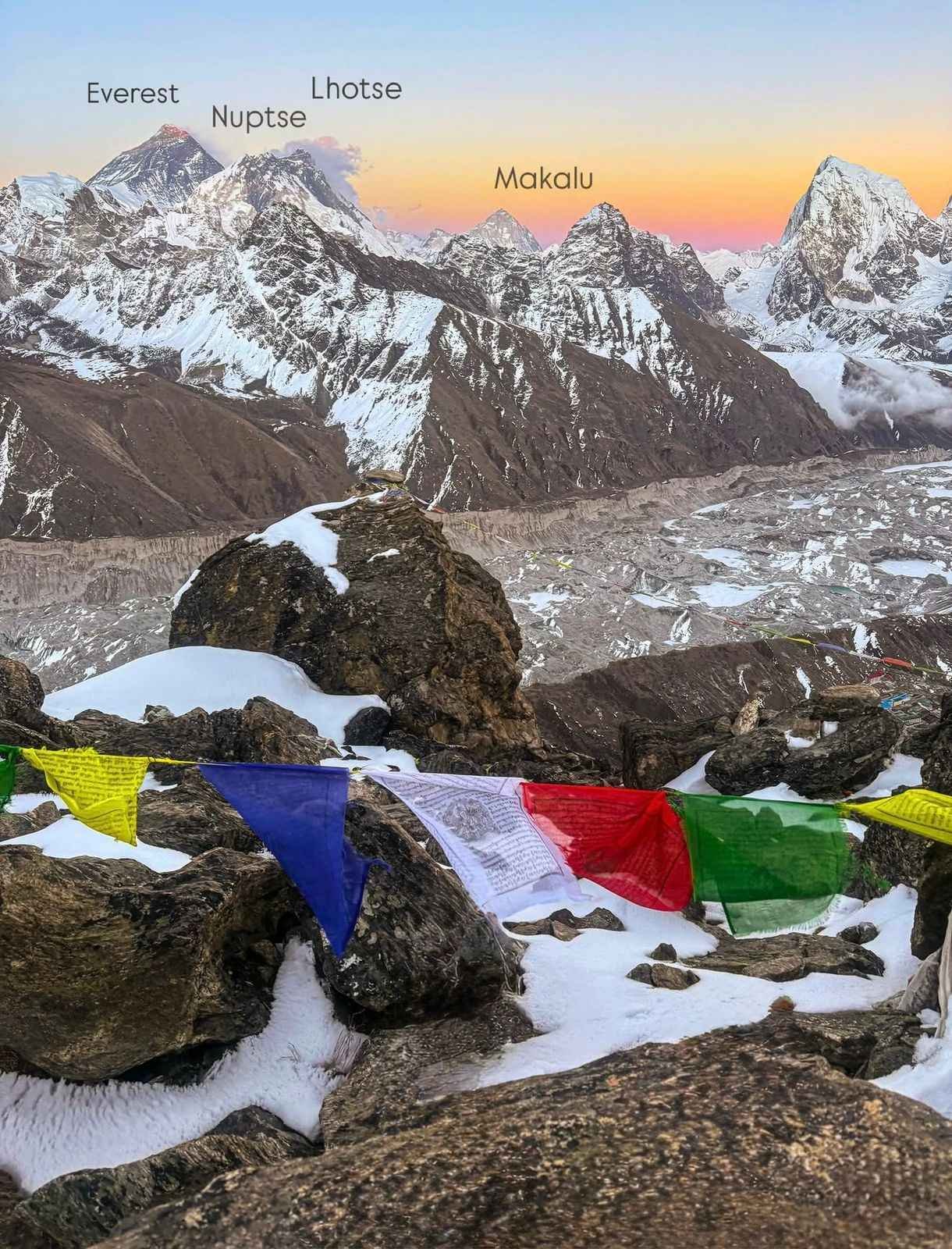
The three passes are Kongma La at 5,535 m, Cho La at 5,420 m, and Renjo La at 5,360 m. Together with Everest Base Camp at 5,364 m, Kala Patthar at 5,545 m, Gokyo Ri at 5,357 m, and the sacred Gokyo Lakes, this trek takes trekkers to six of the highest points accessible on foot in the entire Everest region.
It is also significantly harder than the standard base camp route. The total trail distance covers approximately 150 to 160 km over 18 to 22 days. Multiple days are spent at or above 5,000 m. Two of the three pass crossings involve glaciated terrain where crampons and careful navigation are required in certain seasons. The physical and logistical demands are substantial, and the consequences of poor preparation at this altitude are serious.
This guide gives you everything you need to know before committing to a booking. It covers each pass individually, the clockwise versus counterclockwise direction debate, altitude and acclimatization strategy, permits, cost, training requirements, what to pack, and how this trek compares to the Everest Base Camp route alone. The goal is for you to arrive in Nepal having already made the informed decisions that most first-time Three Passes trekkers make mid-trail.
1,299
What the Everest Three Passes Trek Actually Is
The Everest Three Passes Trek is a circuit route through the Khumbu region of Nepal that connects four major valleys by crossing three high mountain passes. Unlike the traditional Everest Base Camp route, which follows the Khumbu valley in and then the same valley out, the Three Passes Trek forms a complete loop that starts and ends at Lukla without retracing a single kilometer of trail.
The loop connects the Imja Valley, the Khumbu Valley, the Gokyo Valley, and the Bhote Koshi Valley. Each valley presents a distinctly different Himalayan environment: the dramatic glacial terminus of the Khumbu icefall visible from Everest Base Camp, the serene turquoise expanse of the Gokyo Lakes at 4,700 to 5,000 m, and the remote trading-route villages of the Thame valley that historically connected the Khumbu Sherpa communities with Tibet.
The route also includes the standard Everest Base Camp and Kala Patthar viewpoint, so trekkers who choose the Three Passes route are not sacrificing the iconic destinations of the classic route. They are adding to them. This is the core appeal of the Three Passes Trek: it gives you everything the classic route offers and then continues into territory that most Everest trekkers never reach.
The trek begins with a flight from Kathmandu to Lukla’s Tenzing-Hillary Airport, one of the most dramatic mountain airstrips in the world. From Lukla, the route heads into the Khumbu through Namche Bazaar, the commercial and cultural hub of the Sherpa world at 3,440 m. From there, the specific direction and sequence of the passes depends on whether you trek clockwise or counterclockwise, which we cover in full in the direction section below.
The Everest Three Passes Trek is classified as a Grade 5 (strenuous to extreme) high-altitude trek. It is the highest-grade standard trekking route available in Nepal’s Khumbu region. No technical mountaineering skills are required for the standard circuit, but glacier navigation experience and crampon familiarity are strongly recommended before departure.
The Three Passes Explained Individually
Each of the three passes has its own character, technical demands, and rewards. Understanding them individually before you trek helps you pace and prepare appropriately. The order in which you cross them depends on your chosen direction.
Kongma La Pass
Cho La Pass
Renjo La Pass
| Pass | Altitude | Technical Demand | Everest Visible | Notable Views | Crossing Time |
|---|---|---|---|---|---|
| Kongma La | 5,535 m (18,159 ft) | High | No | Ama Dablam, Nuptse, Lhotse, Khumbu Glacier | 6 to 8 hours total |
| Cho La | 5,420 m (17,782 ft) | Very High (glacier) | Yes (partial) | Ama Dablam, Cholatse, Lobuche East | 7 to 9 hours total |
| Renjo La | 5,360 m (17,585 ft) | Moderate to High | Yes (direct) | Everest, Gokyo Lakes, Cho Oyu, Makalu | 7 to 9 hours total |
How the Three Passes Trek Compares to Everest Base Camp Trek
This comparison is the first question most trekkers planning a Khumbu adventure ask. The two routes share a significant portion of trail and several key destinations. The differences are equally significant.
Everest Base Camp Trek
- 12 to 16 days standard duration
- Highest point: Kala Patthar at 5,545 m
- Out-and-back on same trail
- No pass crossings requiring glacier navigation
- Well-established teahouse infrastructure throughout
- Suitable for first-time high-altitude trekkers
- Visits EBC, Kala Patthar, Namche, Tengboche
- Lower overall cost
- Busier trail especially in October
Everest Three Passes Trek
- 18 to 22 days required
- Highest point: Kongma La at 5,535 m (plus Kala Patthar at 5,545 m)
- True circuit, never retracing the same trail
- Three passes including glaciated Cho La terrain
- More remote upper sections with basic facilities
- Prior high-altitude trekking experience strongly recommended
- Adds Gokyo Lakes, Gokyo Ri, Thame Valley, Renjo La views
- Higher cost due to duration and complexity
- Significantly quieter in upper valleys
The critical distinction is that the Three Passes Trek is not simply an extended version of the base camp route. It is a fundamentally different type of expedition. Trekkers spend multiple consecutive days above 5,000 m. They cross glaciated terrain on Cho La. They reach villages like Lungden and Marlung that see a fraction of the foot traffic of the main EBC corridor. This is what experienced trekkers mean when they say the Three Passes route feels less like a tourist trail and more like an expedition into the Himalayan wilderness.
For a detailed look at the Everest region’s trekking options, the terrain, and what makes each route distinct, Next Trip Nepal’s Everest destination guide provides the broader context for planning any Khumbu journey.
Difficulty Level and Physical Demands
The Everest Three Passes Trek is classified as Grade 5, the highest standard difficulty rating applied to non-technical trekking routes in Nepal. It is harder than Everest Base Camp, harder than the Annapurna Circuit, and comparable in overall physical demand to the Manaslu Circuit, though with more time spent above 5,000 m on consecutive days.
What Makes It Genuinely Difficult
- Duration at altitude. Multiple consecutive days above 5,000 m are required for the pass crossings. By the time you cross Kongma La on Day 9 of a standard itinerary, you will have been walking 6 to 9 hours daily for over a week. Cumulative fatigue at altitude compounds in ways that flat-land fitness does not prepare you for.
- The Cho La glacier section. The western descent from Cho La toward Gokyo involves crossing a section of the Ngozumpa Glacier. The terrain here is ice, moraine, and snow depending on conditions. Crampons are frequently required. An experienced guide navigating this section is not a luxury. It is a safety requirement.
- Kongma La altitude. At 5,535 m, Kongma La is the highest trekking pass in the Khumbu. By comparison, the Annapurna Circuit’s Thorong La sits at 5,416 m. The additional 100 m matters at this level of altitude.
- Total pass-crossing days. Each of the three passes requires a full-day commitment of 7 to 9 hours of active trekking. Three pass days, embedded in an 18 to 22 day circuit, represent the three most demanding days of any Nepal trek that does not involve technical climbing.
- Remote sections. The Bhote Koshi valley between Renjo La and Thame sees far fewer trekkers than the main Khumbu corridor. Tea house infrastructure is more basic, communication is limited, and bail-out options are reduced.
This trek is not appropriate for someone who has never trekked above 4,000 m before. The recommendation of several agencies to allow beginners with “good fitness” to attempt this route is not inaccurate, but it significantly underweights the reality of consecutive days at 5,000 m with glaciated terrain. Prior experience on a multi-day high-altitude trek in Nepal or a comparable mountain environment should be considered a genuine prerequisite, not a suggestion.
Clockwise Versus Counterclockwise: Which Direction Should You Trek?
The Everest Three Passes Trek can be walked in either direction. Both offer spectacular scenery and access to all three passes, EBC, Kala Patthar, and the Gokyo Lakes. The directional choice affects acclimatization progression, crowd dynamics, and the sequence in which you encounter technical terrain.
Clockwise Direction (Recommended by Most Agencies)
The clockwise route heads from Namche toward Thame first, crossing Renjo La (5,360 m) before descending to the Gokyo valley. From Gokyo, trekkers cross Cho La (5,420 m) to reach the main Khumbu valley and proceed to Everest Base Camp and Kala Patthar. The final pass is Kongma La (5,535 m), crossed from Chhukung to Lobuche.
This direction offers progressive altitude gain. You cross the lowest pass first (Renjo La at 5,360 m), then the intermediate pass (Cho La at 5,420 m), and finish with the highest pass (Kongma La at 5,535 m) after the most thorough acclimatization of the entire trek. The Buddhist tradition of walking clockwise around sacred sites also applies here, as the circuit loops around the Khumbu region.
Counterclockwise Direction
The counterclockwise route begins with the standard Everest Base Camp approach via Tengboche and Dingboche, crossing Kongma La (5,535 m) first before reaching EBC and Kala Patthar. From there, the route crosses Cho La to Gokyo and finishes with Renjo La.
This direction front-loads the most technically demanding passes before maximum acclimatization is achieved. It is more popular with trekkers who are following the standard EBC trail with other groups for the first section, but the trade-off is reaching the hardest terrain at the point of least altitude adaptation. Experienced agencies generally recommend clockwise for this reason.
| Factor | Clockwise | Counterclockwise |
|---|---|---|
| Pass order by altitude | 5,360 m then 5,420 m then 5,535 m (gradual) | 5,535 m then 5,420 m then 5,360 m (front-loaded) |
| Acclimatization at hardest pass | Maximum (best) | Minimum (riskiest) |
| Crowd level in early days | Quieter (Thame valley first) | Busier (main EBC trail first) |
| Buddhist convention | Clockwise (traditional) | Counterclockwise |
| Technical section timing | Cho La glacier after strong acclimatization | Cho La glacier earlier in trek |
| Recommended for beginners | Yes | Only with strong prior experience |
Altitude and Acclimatization on the Three Passes Trek
Altitude sickness is the most significant health risk on the Everest Three Passes Trek. Studies indicate that 40 to 60 percent of trekkers above 3,500 m experience some degree of Acute Mountain Sickness (AMS). The Three Passes route keeps trekkers at or above 4,000 m for most of the circuit, and above 5,000 m on pass-crossing days. This is the highest sustained altitude exposure of any standard trekking route in Nepal.
Key Acclimatization Stops
| Location | Altitude | Acclimatization Activity | Why It Matters |
|---|---|---|---|
| Namche Bazaar | 3,440 m | Rest day with hike to Everest View Hotel (3,880 m) | First major acclimatization stop; critical for all trekkers regardless of prior experience |
| Dingboche or Chhukung | 4,360 to 4,730 m | Rest day with optional Chhukung Ri hike (5,550 m) | Mandatory before Kongma La; Chhukung Ri hike is one of the best acclimatization exercises on the circuit |
| Gorak Shep | 5,164 m | EBC visit and Kala Patthar climb | Highest sleeping altitude on the standard circuit; the two high-activity days here require maximum preparation |
| Gokyo | 4,750 m | Rest day with Gokyo Ri hike (5,357 m) | Recovery and acclimatization before Renjo La; the Gokyo Ri hike is the best viewpoint on the entire circuit |
The Non-Negotiable Rules at Altitude
- Do not increase your sleeping altitude by more than 300 to 500 m per night above 3,000 m.
- The “climb high, sleep low” principle: ascend to higher altitudes during the day and return to a lower elevation to sleep where possible.
- Drink 3 to 4 liters of water daily. Dehydration accelerates all altitude symptoms.
- Never ascend with AMS symptoms. Symptoms include persistent headache, nausea, loss of appetite, dizziness, and disrupted sleep. If symptoms worsen after rest, descend immediately.
- Carry and understand how to use Diamox (acetazolamide) as prescribed by your doctor. It aids acclimatization but does not replace acclimatization days.
- At Gorak Shep (5,164 m), many trekkers experience their worst altitude symptoms. This is the highest sleeping altitude on the circuit. Your guide will conduct daily health checks with a pulse oximeter. Communicate every symptom immediately.
Recommended Itinerary Overview
The standard clockwise itinerary for the Everest Three Passes Trek runs 18 to 21 days from Kathmandu arrival to departure. The schedule below represents a well-paced 19-day structure. Specific day times and walking hours vary by group fitness and conditions.
| Day | Route | Altitude | Walking Hours |
|---|---|---|---|
| Day 1 | Arrive Kathmandu; permits, briefing | 1,400 m | Rest |
| Day 2 | Fly Kathmandu to Lukla; trek Lukla to Phakding | 2,610 m | 3 to 4 hrs |
| Day 3 | Phakding to Namche Bazaar (enter Sagarmatha NP) | 3,440 m | 5 to 6 hrs |
| Day 4 | Namche acclimatization: hike to Everest View Hotel (3,880 m) | 3,440 m | 4 hrs (day hike) |
| Day 5 | Namche to Thame (clockwise start) | 3,800 m | 4 to 5 hrs |
| Day 6 | Thame to Marlung via Lungden | 4,380 m | 6 to 7 hrs |
| Day 7 | Marlung / Lungden to Renjo La (5,360 m) and descend to Gokyo | 4,750 m | 7 to 9 hrs |
| Day 8 | Gokyo acclimatization: Gokyo Ri hike (5,357 m); 4th and 5th Lake optional | 4,750 m | 5 to 6 hrs |
| Day 9 | Gokyo to Thangnak via Ngozumpa Glacier approach | 4,700 m | 4 to 5 hrs |
| Day 10 | Cross Cho La Pass (5,420 m) to Dzongla | 4,830 m | 7 to 9 hrs |
| Day 11 | Dzongla to Lobuche | 4,940 m | 4 to 5 hrs |
| Day 12 | Lobuche to Gorak Shep; afternoon visit Everest Base Camp | 5,164 m | 7 to 8 hrs |
| Day 13 | Gorak Shep: Kala Patthar (5,545 m) sunrise; descend to Dingboche | 4,410 m | 7 to 8 hrs |
| Day 14 | Dingboche to Chhukung (acclimatization); optional Chhukung Ri | 4,730 m | 3 to 6 hrs |
| Day 15 | Cross Kongma La (5,535 m) to Lobuche | 4,940 m | 6 to 8 hrs |
| Day 16 | Lobuche to Tengboche via Pheriche | 3,860 m | 6 to 7 hrs |
| Day 17 | Tengboche to Namche Bazaar | 3,440 m | 5 hrs |
| Day 18 | Namche to Lukla | 2,840 m | 6 hrs |
| Day 19 | Fly Lukla to Kathmandu; departure | 1,400 m | Flight |
Always build one to two buffer days into your overall travel schedule beyond the 19-day itinerary. Lukla flights are the most weather-affected domestic flights in Nepal. Weather delays of one to three days are common in both spring and autumn. If your international departure has zero flexibility, you risk missing it due to a Lukla weather event. The financial cost of a buffer day in Kathmandu is far lower than a missed international flight.
Permits Required for the Everest Three Passes Trek in 2026
The Everest Three Passes Trek does not pass through any restricted areas, which means the complex multi-permit structure required for routes like the Manaslu Circuit or Upper Mustang does not apply. However, three permits are mandatory and must be arranged before or at the point of entry into the national park.
| Permit | Issuing Body | Cost (Foreign Nationals) | Where Obtained | Notes |
|---|---|---|---|---|
| Sagarmatha National Park Entry Permit | Nepal Tourism Board / Department of National Parks | USD 30 per person | Kathmandu NTB office or Monjo checkpoint | UNESCO World Heritage Site entry; mandatory for all trekkers in the Khumbu region |
| Khumbu Pasang Lhamu Rural Municipality Permit | Local government of Khumbu | USD 20 per person | Lukla or at checkpoint | Local permit introduced in recent years; separate from the national park permit |
| TIMS Card (if applicable) | Nepal Tourism Board / TAAN | USD 10 per person | Kathmandu NTB office | Requirement varies; some agencies include this in packages. Verify with your agency for 2026 status. |
| Total estimated permit cost | USD 50 to 60 per person | All permits typically handled by your trekking agency as part of the package |
Your trekking agency handles all permit applications as part of a standard package. You will need to provide copies of your passport and passport-sized photographs. Permits are checked at multiple checkpoints along the route. Always carry originals plus copies in a separate waterproof pouch. A registered trekking agency in Nepal that specializes in the Khumbu region is the fastest and most reliable way to ensure correct permit documentation before departure.
For guidance on choosing the right agency, Next Trip Nepal’s guide to the best Everest Three Passes Trek companies in Nepal covers what to look for, questions to ask before booking, and the key qualifications that distinguish a reliable local operator from a generic reseller.
Cost Breakdown for the Everest Three Passes Trek in 2026
The cost of the Everest Three Passes Trek varies significantly depending on whether you book through a local Nepal agency or an international operator, the duration of your itinerary, group size, and the level of service included.
| Cost Category | Estimated Cost (2026) | Notes |
|---|---|---|
| Permits (all three) | USD 50 to 60 per person | Sagarmatha NP, Khumbu Pasang Lhamu, TIMS if required |
| Lukla flights (round trip) | USD 360 to 440 per person | KTM-Lukla-KTM; prices rise in peak season; Manthali airport may be used in peak periods |
| Licensed guide (per day) | USD 25 to 35 per day | Local Khumbu guides with NTB certification; mandatory since April 2023 |
| Porter (per day) | USD 20 to 25 per day | Optional but strongly recommended; carry max 25 kg |
| Teahouse accommodation | USD 5 to 15 per night | Price increases with altitude; Gorak Shep and Gokyo are the most expensive locations |
| Meals (3 per day) | USD 20 to 40 per day | Dal bhat, noodles, eggs; prices increase significantly at altitude above 4,000 m |
| Lukla flight weather buffer | USD 300 to 500 contingency | Allow for weather delays in both Kathmandu and Lukla |
| Travel insurance | USD 100 to 200 | Must cover helicopter evacuation to at least 6,000 m and emergency medical treatment |
| Full package (local agency) | USD 1,299 to 1,795 per person | All-inclusive of permits, guide, porter, accommodation, meals, transport |
| Full package (international operator) | USD 2,200 to 4,500 per person | Higher margin for international booking and Western-market markups |
Where the Money Goes and Why Booking Local Saves Significantly
The difference between a USD 1,299 local package and a USD 3,500 international operator package is almost entirely margin and overhead, not quality of service on the trail. The guides, porters, teahouses, and logistics are identical. The guides on both bookings are the same Nepali-licensed professionals who grew up in the Khumbu. Booking directly through a reputable local Nepal trekking company cuts the intermediary margin and puts more money into the hands of the guides and communities who actually provide the experience.
Hot showers cost USD 3 to 5 per use. Device charging costs USD 3 to 5 per device. Wi-Fi at tea houses costs USD 5 to 10 per session. Bottled water at altitude can cost USD 3 to 5 per liter. These costs are not included in any package and accumulate significantly over 18 to 22 days. Budget an additional USD 400 to 600 for personal daily expenses beyond the package inclusions. Carry Nepalese Rupees in cash; above Namche, ATMs are not available.
Best Time to Trek the Everest Three Passes
The Everest Three Passes Trek highlights change substantially by season. Two windows offer reliable conditions for safe pass crossings and clear mountain visibility.
| Season | Months | Pass Conditions | Mountain Visibility | Crowds | Recommendation |
|---|---|---|---|---|---|
| Spring | April to May | Good; consolidated snow on passes | Excellent in early April; some cloud builds in May | High (second busiest season) | Highly Recommended |
| Autumn | Oct to Nov | Best conditions; dry and stable | October is clearest of the year | Busiest (October) | Best Overall |
| Late Autumn | November | Good; colder at night | Very good; less cloud than October | Moderate; quieter than October | Good Alternative |
| Early Spring | March | Heavy snow on all three passes | Good on clear days | Low | Experienced Only |
| Monsoon | June to Aug | Dangerous; heavy snowfall risk | Very poor; persistent cloud | Very low | Avoid |
| Winter | Dec to Feb | Extreme snow; all three passes potentially impassable | Clear but extreme cold | Very low | Not Recommended |
October is the single best month for this trek. Post-monsoon skies produce the clearest mountain visibility of the year. Pass conditions are stable and dry. All teahouses are open and fully stocked. The trade-off is that October is also when the main Khumbu trail is at its busiest; however, the Three Passes route’s upper sections remain significantly quieter than the main EBC corridor even in peak season.
Fitness and Training Requirements
The Everest Three Passes Trek requires genuine physical preparation starting at least 3 to 6 months before departure. The trek involves 6 to 9 hours of daily walking with a daypack for up to 22 consecutive days, three pass crossings that each require sustained cardiovascular effort above 5,000 m, and glacier navigation on Cho La that demands physical stability and coordination.
Training Programme Framework
- Cardiovascular training (3 to 6 months out): Running, cycling, swimming, and stair climbing three to five times per week. The goal is to comfortably sustain 60 to 70 percent of maximum heart rate for 45 to 90 minutes without excessive recovery time.
- Long hike training (2 to 4 months out): Weekend hikes of 4 to 7 hours with a loaded pack of 8 to 10 kg. The emphasis is on sustained output over duration, not pace. Include elevation gain wherever possible.
- Leg strength (ongoing): Squats, lunges, step-ups, and calf raises directly condition the muscles most heavily loaded on steep Himalayan terrain. Knee stability is particularly important for the long descents from all three passes.
- Boot break-in (6 to 8 weeks out): Wear your trekking boots on every training hike from this point. Blisters from unbroken boots at altitude are a genuine trek-ending risk.
- Altitude pre-conditioning (if accessible): If you live near or can access elevation above 3,000 m, time spent there before the trek provides measurable physiological benefit. Alternatively, altitude training masks or hypoxic tents are used by some serious trekkers, though their real-world benefit is less clear.
You should be comfortable completing a 6-hour hike with 800 to 1,000 m of elevation gain while carrying a 7 to 10 kg pack, without requiring more than one to two days of recovery. This is the baseline from which the Three Passes Trek begins. The altitude will reduce your effective fitness by approximately 30 percent at 5,000 m, meaning anyone at this baseline will find the pass-crossing days genuinely demanding but achievable.
What to Pack for the Everest Three Passes Trek
The packing list for the Three Passes Trek is more demanding than for a standard EBC trek because the duration is longer, the altitude is higher, and the Cho La glacier crossing requires specific technical equipment.
Clothing and Footwear
- Waterproof high-ankle trekking boots (well broken-in)
- Crampons or microspikes (mandatory for Cho La glacier)
- Camp shoes or lightweight sandals for teahouses
- 5 to 7 pairs merino wool trekking socks
- Moisture-wicking thermal base layers (2 sets)
- Fleece mid-layer jacket
- Down jacket rated to minus 20°C
- Waterproof Gore-Tex shell jacket
- Waterproof trekking trousers
- Insulated trousers for camp and high passes
- Warm beanie and sun hat
- Balaclava (essential for early-morning pass starts)
- Liner gloves plus expedition-weight outer gloves
- Gaiter (for glacier sections and snow)
Technical and Safety Gear
- Crampons (10 to 12 point; required for Cho La)
- Trekking poles (collapsible; essential for descent load)
- Headlamp with spare lithium batteries (early pass starts)
- Sleeping bag rated to minus 15 to minus 20°C
- Sleeping bag liner
- Pulse oximeter (daily monitoring above 4,000 m)
- First aid kit with altitude sickness medication
- Diamox (acetazolamide) — prescription required
- Emergency whistle
- Water purification tablets or filter bottle
- Reusable water bottle 1.5 to 2 liters
- 50 to 70L duffle bag (porter carries this)
- 30 to 40L daypack with rain cover
- Power bank minimum 20,000 mAh
- NTC SIM card (purchased in Kathmandu)
- Offline maps downloaded before departure (Gaia GPS or Maps.me)
- Camera or smartphone with protective case
- Solar charger (useful on sunny high-altitude days)
Personal and Documents
- Passport (original) and copies
- 4 to 6 passport-sized photographs
- All permit copies (agency provides)
- Travel insurance documents (helicopter evacuation required)
- Cash in Nepalese Rupees NPR 25,000 to 35,000 minimum
- Sunscreen SPF 50+ (UV intensity extreme above 4,000 m)
- Lip balm with SPF protection
- Sunglasses with UV400 protection (glacier glare risk)
- Microfiber travel towel
- High-calorie snacks: energy bars, nuts, chocolate
- Rehydration salts
- Personal medications with extra supply
Unlike many Nepal trekking routes where crampons are listed as “useful in certain conditions,” the Cho La Pass glacier section makes them a genuine safety requirement on the Three Passes Trek in most seasons. The glacier surface changes year to year, and in colder months (March, November), the ice coverage extends further down both approaches. If your agency does not specifically address crampon requirements and glacier navigation during your pre-trek briefing, ask directly before departure. Quality crampons can be rented in Kathmandu’s Thamel district for approximately USD 5 to 10 per day.
Guide Requirement and Choosing a Trekking Company
Nepal has required licensed guides for all trekkers in national park areas since April 2023. The Everest Three Passes Trek passes through Sagarmatha National Park, meaning a licensed guide is legally mandatory regardless of your experience level.
On this particular route, the guide requirement has practical safety implications that go well beyond regulatory compliance. The Cho La glacier navigation genuinely requires a guide who knows the current state of the ice and the correct line across the Ngozumpa Glacier approach. Weather windows for all three passes change with little warning, and an experienced guide makes departure-time decisions for each pass crossing based on observed conditions from the camp below. Altitude sickness management, daily health assessment using a pulse oximeter, and emergency evacuation coordination all require a competent guide who has managed these situations before.
What to Look for in a Trekking Company
- NTB-licensed guides who have completed the Three Passes circuit at minimum 30 to 40 times.
- A transparent, fixed-cost itinerary with no hidden fees and a clearly stated refund or rescheduling policy for weather delays.
- Insurance coverage for guides and porters included in the package price.
- A pre-trek online briefing after booking confirmation that covers gear, itinerary, altitude sickness protocol, and emergency contact procedures.
- Honest communication about difficulty. An agency that tells you the trek is “suitable for most fitness levels” without qualification is a red flag on a route this demanding.
- Verifiable reviews from previous clients specifically on this route, not general Nepal trekking reviews.
The best Everest Three Passes Trek company in Nepal will be transparent about what is genuinely included, will not compress the itinerary below a safe number of days to offer a cheaper price, and will put your safety and acclimatization ahead of commercial schedule pressure.
What to Confirm Before You Book
Before confirming a booking for the Everest Three Passes Trek, these are the specific questions to ask your agency.
| Question to Ask | Why It Matters |
|---|---|
| How many acclimatization days are built into the itinerary? | A minimum of two full acclimatization days (Namche and Chhukung/Dingboche) are required. Any itinerary shorter than 18 days almost certainly compresses acclimatization to unsafe levels. |
| Does the guide have specific experience on all three passes in the current season? | Cho La conditions change year to year. A guide who last crossed two seasons ago may not know the current glacier state. |
| Are crampons and glacier crossing equipment included or available to rent? | This is a non-negotiable safety item. If the agency is unclear on this, probe further before committing. |
| What is the exact Lukla flight cancellation and rebooking policy? | Weather delays are extremely common. Understand exactly what happens to your itinerary and costs if flights are delayed 1, 2, or 3 days at either end. |
| Does the guide carry a pulse oximeter and a basic first aid kit? | Both are standard on a professionally operated high-altitude trek. Absence is a concern. |
| What is the guide-to-trekker ratio? | One licensed guide per group of up to seven is the regulation. Private treks with a 1:1 ratio provide the most individualized altitude monitoring. |
| Is travel insurance required, and does the company verify it covers helicopter evacuation to 6,000 m? | Any reputable agency requires proof of insurance that covers helicopter evacuation. If they do not ask, that is a warning sign. |
| What is the cancellation and descend protocol if a trekker develops serious AMS? | The protocol should be clearly defined: specific oxygen saturation thresholds at which descent is mandatory, and the emergency helicopter contact procedure. |
Final Thoughts Before You Commit to the Booking
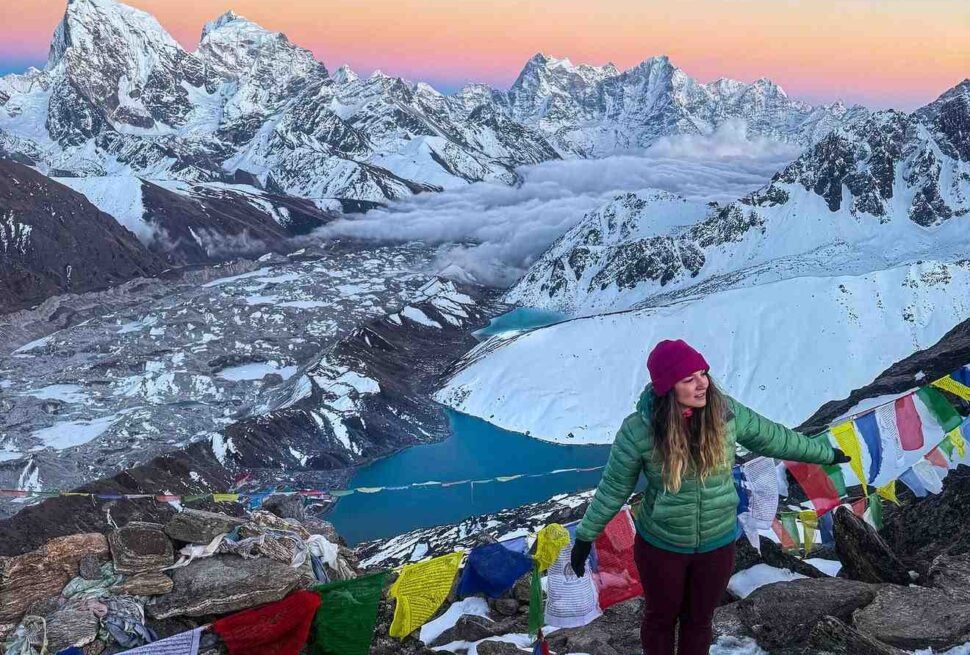
The Everest Three Passes Trek is one of the most complete and rewarding trekking experiences available anywhere in the Himalayas. It combines the most celebrated destination in the trekking world, Everest Base Camp, with three extraordinary pass crossings that open up the full geographic breadth of the Khumbu. The highlights of the Everest Three Passes Trek include standing on Kala Patthar at sunrise with Everest’s summit pyramid filling the horizon, watching the Gokyo Lakes reflect the surrounding 8,000 m peaks at dawn, and arriving at the Renjo La summit to see Everest directly ahead and the Gokyo valley stretching out below.
These are not ordinary travel experiences. They are genuinely rare moments that most people on this planet will never access. The physical effort, the altitude, the logistical complexity, and the financial investment are all substantial. They are also entirely commensurate with what you receive in return.
Go in with accurate expectations, proper preparation, a conservative itinerary that does not compromise acclimatization, and a licensed guide who has made this specific circuit many times. Those four conditions produce a successful trek on the Everest Three Passes route. The mountains will do the rest.
For full trip details, available departure dates, and package inclusions, visit the Everest Three Passes Trek page on Next Trip Nepal. To understand the full scope of the Everest region and how this route fits within the broader Khumbu trekking landscape, our Everest destination guide covers every major route in the region.
Ready to Book the Everest Three Passes Trek?
Next Trip Nepal’s experienced Khumbu specialists handle every detail from permits to glacier-equipped guides. Get a detailed itinerary and personalized quote today.
View Trip Details and BookNext Trip Nepal | Registered Nepal Trekking Operator | Kathmandu
How difficult is the Everest Three Passes Trek?
The Everest Three Passes Trek is considered one of the most challenging treks in the Everest region. It includes three passes above 5,300m and requires strong fitness, stamina, and previous trekking experience.
Which three passes are crossed during the Everest Three Passes Trek?
The trek crosses Kongma La Pass (5,535m), Cho La Pass (5,420m), and Renjo La Pass (5,360m), offering some of the best mountain views in the Khumbu region.
How many days are needed for the Everest Three Passes Trek?
Most itineraries take around 18–21 days, including acclimatization days and travel to and from Lukla.
Is Everest Base Camp included in the Three Passes Trek?
Yes. Most Everest Three Passes itineraries include Everest Base Camp and Kala Patthar along with the three high passes.
What is the highest point on the Everest Three Passes Trek?
Kongma La Pass at 5,535m is usually the highest point of the trek
Do I need previous trekking experience?
Previous multi-day trekking experience is strongly recommended. While technical climbing is not required, long days at high altitude can be demanding.
What permits are required for the Everest Three Passes Trek?
Trekkers need the Sagarmatha National Park Permit and the Khumbu Pasang Lhamu Rural Municipality Permit.
What is the best time for the Everest Three Passes Trek?
Spring (March–May) and autumn (late September–November) offer the most stable weather and mountain visibility.
Is altitude sickness a concern on the Three Passes Trek?
Yes. Since the route spends several days above 5,000m, proper acclimatization and a gradual itinerary are essential.
Can beginners do the Everest Three Passes Trek?
The Everest Three Passes Trek is not generally recommended for complete beginners. The route includes long trekking days, three high passes above 5,300m, and demanding altitude conditions. Previous multi day trekking experience and good physical preparation are strongly recommended.