-
Day
01Drive from Kathmandu to Machha Khola (900 m)
A full day drive west out of Kathmandu to Machha Khola, following a mix of paved highway and rougher unpaved road for the final stretch. This marks the start of the trek and the entry point into the Budhi Gandaki river valley.
-
Day
02Trek from Machha Khola to Jagat (1,340 m)
The trail follows the Budhi Gandaki River, crossing several suspension bridges and passing through small riverside villages before reaching Jagat, where permits are checked in detail for the first time.
-
Day
03Trek from Jagat to Lokpa (2,240 m), entering the Tsum Valley side trail
A steady climb away from the main river trail brings you to Lokpa, the last village before the trail splits toward Tsum Valley. From here the route leaves the standard Manaslu Circuit path and turns into the Shiar Khola valley.
-
Day
04Trek from Lokpa to Chumling (2,386 m), Lower Tsum Valley
The trail climbs into the Shiar Khola valley and enters Tsum Valley proper at Chumling, where the character of the trek shifts from river gorge walking to a quieter side valley.
-
Day
05Trek from Chumling to Chhekampar (3,010 m), Upper Tsum Valley
A moderate day of walking brings you into Upper Tsum, with fields of barley and buckwheat common along the trail depending on the season, along with the first clear views of the peaks surrounding the valley.
-
Day
06Trek from Chhekampar to Nile (3,361 m), via Rachen Gompa
The trail passes close to Rachen Gompa, a working nunnery worth a short visit, before continuing to Nile, one of the highest permanently inhabited villages in Tsum Valley.
-
Day
07Day hike from Nile to Mu Gompa (3,700 m) and back
A day hike to Mu Gompa, the largest monastery in the Tsum Valley region and the highest point reached on this side of the trip, before returning to sleep at Nile.
-
Day
08Trek from Nile back to Chumling (2,386 m)
A long descent retracing the route back down the Shiar Khola valley to Chumling, with views facing a different direction than on the way up.
-
Day
09Trek from Chumling to Deng (1,860 m), rejoining the main Manaslu Circuit
The trail passes back through Lokpa and on to Deng, where it rejoins the standard Manaslu Circuit route. From this point the itinerary follows the same trail a standalone circuit trekker would walk.
-
Day
10Trek from Deng to Namrung (2,660 m)
A steady climb through forest and small settlements to Namrung, where the local architecture and culture begin to show a stronger Tibetan influence.
-
Day
11Trek from Namrung to Shyala (3,180 m)
A scenic day with the first close views of Manaslu itself, as the trail climbs out of forest into more open alpine terrain.
-
Day
12Trek from Shyala to Samagaon (3,530 m)
A relatively short day to Samagaon, one of the main acclimatization hubs on the circuit and the base for the rest day that follows.
-
Day
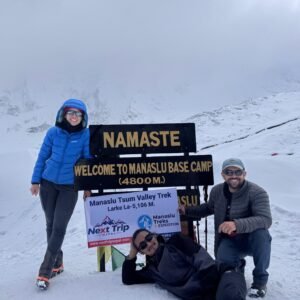
13Acclimatization day at Samagaon (3,530 m), optional hike toward Manaslu Base Camp
A planned rest day at Samagaon, commonly used for an optional day hike toward Manaslu Base Camp or the Pungyen Gompa viewpoint before returning to sleep at the same elevation.
-
Day
14Trek from Samagaon to Samdo (3,875 m)
A shorter, gentler day to Samdo, a village close enough to the Tibetan border that it was historically a trading post.
-
Day
15Trek from Samdo to Dharmashala (4,460 m)
A short day in distance but a meaningful one in altitude, reaching Dharmashala, also called Larkya Phedi, which exists mainly to stage the pass crossing the next day.
-
Day
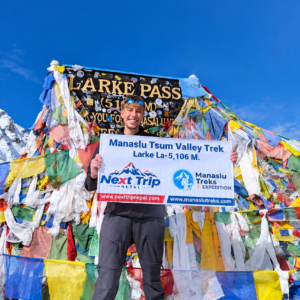
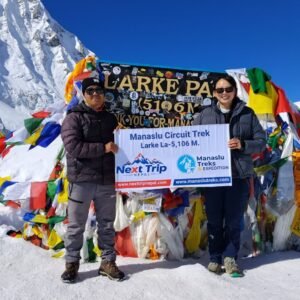
16Cross Larkya La Pass (5,106 m) and descend to Bimthang (3,590 m)
The longest and most demanding day of the trek. An early start gets you over Larkya La before the wind typically picks up later in the day, followed by a long descent to Bimthang.
-
Day
17Trek from Bimthang to Tilije (2,300 m)
A descent through forest and pasture land as the trail drops into the Marsyangdi Valley system, with the vegetation and terrain changing noticeably along the way.
-
Day
18Drive from Tilije to Besisahar (760 m) via Dharapani
A drive rather than a trekking day, through Dharapani and on to Besisahar, where the restricted area portion of the trek effectively ends.
-
Day
19Drive from Besisahar to Kathmandu
A road transfer back to Kathmandu, typically most of a day depending on road and traffic conditions.
-
Day
20Final departure from Kathmandu
A buffer day built into the itinerary to absorb any delays earlier in the trip, particularly around the pass crossing, before the onward flight home.
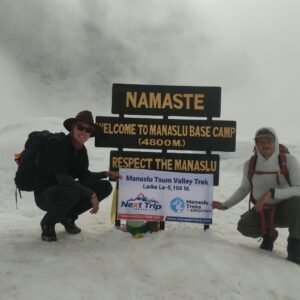
Manaslu Tsum Valley Trek
20 DaysItinerary
Cost Includes
- Airport pickup and drop off in Kathmandu by private vehicle
- All ground transportation on the stated itinerary, Kathmandu to Machha Khola and Besisahar back to Kathmandu
- Twin sharing teahouse accommodation throughout the trek
- Full board meals during trekking days, breakfast, lunch and dinner
- Manaslu Restricted Area Permit, Manaslu Conservation Area Permit, Annapurna Conservation Area Permit and the Chum Nubri municipality fee
- A licensed, English speaking trekking guide
- Porter support, up to 20 to 22 kilograms combined per two trekkers
- All government taxes and service charges
- A basic first aid kit and pulse oximeter carried by your guide
- Farewell dinner in Kathmandu at the end of the trip
Cost Excludes
- Nepal entry visa fee
- International flights to and from Kathmandu
- Travel insurance with high altitude and evacuation cover
- Personal expenses such as bottled or boiled water and snacks
- Hot showers, WiFi, and battery charging fees along the trek
- Laundry costs
- Tips for your guide and porter team
Frequently Asked Questions
How long is the Manaslu Tsum Valley Trek?
Our standard itinerary runs 20 days from Kathmandu back to Kathmandu, including 2 driving days at each end and 17 full trekking and acclimatization days on the trail. It can be adjusted slightly with extra buffer days around the Larkya La crossing if your schedule allows.
What is the maximum altitude on this trek?
The highest point is Larkya La Pass at 5,106 meters, crossed roughly two thirds of the way through the itinerary. Dharmashala, where you sleep the night before the crossing, sits at around 4,460 meters, which is also the highest overnight stop on the route.
Do I need previous trekking experience for this route?
Prior multi day trekking experience is strongly recommended given the altitude, length, and the Larkya La crossing. This is not the right first trek for a complete beginner, though trekkers with some hiking background and a genuine training program beforehand generally do well.
What is the best time of year to do this trek?
Autumn, from late September through November, and spring, from March through May, offer the most reliable weather and the clearest mountain views. October is generally considered the single best month, while April is the strongest spring option thanks to blooming rhododendron forest.
Is a licensed guide mandatory for this trek?
Yes. Manaslu and Tsum Valley are both classified as restricted areas, which by Nepal government regulation requires every trekker to travel with a licensed guide through a registered agency. Independent, unguided trekking is not permitted on this route.
Can solo trekkers join this trek without a group?
Yes. Since the March 2026 rule change, solo trekkers can book a restricted area permit for Manaslu and Tsum Valley with a single licensed guide, without needing a second person to meet an old two person minimum. You can join a scheduled group departure for company or book privately.
What kind of accommodation can I expect on this trek?
You stay in teahouses throughout, with twin sharing rooms as standard. Facilities are comfortable in the lower Budhi Gandaki villages and become progressively more basic above Samagaon and inside Tsum Valley, where shared bathrooms and squat toilets are the norm and hot showers carry an extra charge.
What permits do I need for the Manaslu Tsum Valley Trek?
You need the Manaslu Restricted Area Permit, the Manaslu Conservation Area Permit, the Annapurna Conservation Area Permit, and the Chum Nubri municipality fee for the Tsum Valley section. We handle the full application through our registered agency once you send your documents, and all of these are included in our package price.
How much does the Manaslu Tsum Valley Trek cost?
Our standard group package for this trek starts at 1,290 US dollars per person, which includes all required permits, a licensed guide, porter support, twin sharing teahouse accommodation, and full board meals during the trek. This excludes your Nepal visa, international flights, insurance, and personal expenses. Private departures and group discounts are available on request.

See it online https://nexttripnepal.com/trip/manaslu-tsum-valley-trek/